Showing posts with label Allegiant Airlines and bag fees. Show all posts

Monday, January 7, 2019

Airline Seat Selection Fees: It's Pay To Play

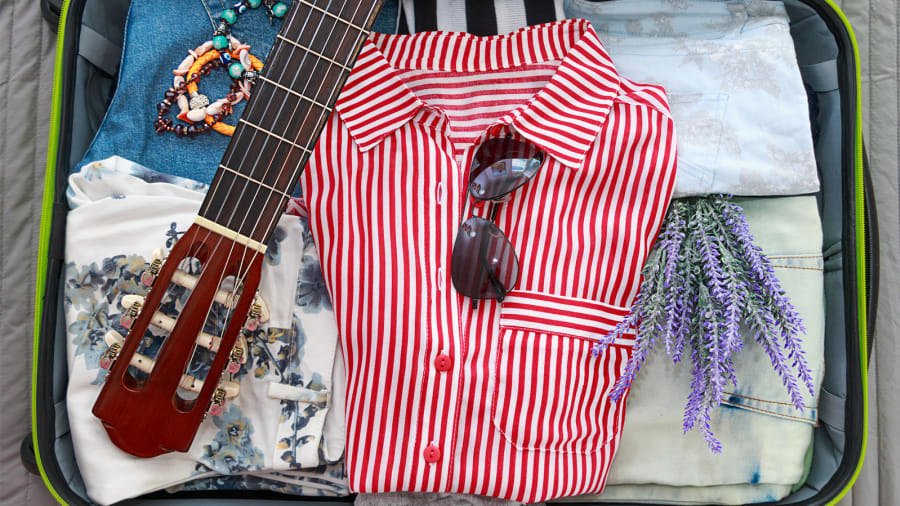
packing guitar suitcase


(CNN) — Historically, January has been a great time to scoop up discount deals on airfares for the year.
This year, however, would-be travelers will have to double- and triple-check search results to make sure their fares include an important element: A preboarding seat assignment.
The reality is the sign of a curious new travel trend that effectively charges passengers more money for tickets with confirmed seats. This approach to pricing has been common among low-cost carriers such as Spirit and Allegiant for ages. Now, it seems, the nation's largest airlines are giving it a whirl, too.
United was the latest big-name carrier to take the plunge: On December 14, the company unveiling a new "Preferred" option that comprises a limited number of aisle and window seats toward the front of economy on every flight. Other traditional carriers — American, Delta and Alaska among them — offer some form of upgraded fare class that includes seat assignments for a small premium.
Airlines say the moves are part of a concerted effort to diversify products and give customers more options, a pay-to-play environment in which customers who are willing to spend more receive the peace of mind that comes with confirmed seat assignments and the comfort of larger seats with more legroom.
Critics say the move is yet another push for profits at a time when other perks such as bag allowances and on-board food have been monetized.
The bottom line: Assigned seats are no longer a given with every purchase, which is a departure from how the booking process has generally worked until recently.
"Airplane cabins are a type of real estate. And as with all types of real estate, some locations are more appealing than others," said Henry Harteveldt, president of Atmosphere Research Group, a travel industry analysis firm in San Francisco. "In a way, this is no different than how a Broadway theater or a music concert venue sells its tickets: The better seats cost more than those that are less appealing."

Understanding a trend

To be clear, most airlines still have options for travelers who don't wish to pay more for seat assignments. These are considered basic economy fares, and all major airline carriers have them in one form or another. In these cases, a passenger would purchase a ticket that gets him or her on the plane, then get a seat assignment upon check-in or at the gate before boarding.
The upside to this approach: Rock-bottom prices. The downsides: Significant baggage restrictions (in some cases, no carry-ons), and no guarantees as to what part of the economy cabin you'll sit.
These basic economy fares work for budget-minded travelers but are dicey propositions if you have specific seat preferences or you're traveling with others, according to George Hobica, creator and founder of the Los Angeles-based Airfare Watchdog, a website that tracks low fares.
"If you're traveling with an elderly parent and you can't afford to pay extra for the peace of mind that you can sit together, rules of these basic fares can feel particularly diabolical," he said. "The same is true for families with young kids, though some airlines will attempt to seat you next to your child at no additional charge."
Tickets with seat assignments eliminate this uncertainty. A recent check of the three major airlines revealed economy fare classes with confirmed seats ranged from $9 to as much as $59 more than the most basic fares available.
During peak travel times or on international flights, the differences can be even more significant.
Most airlines automatically upgrade frequent travelers who have achieved certain status levels in their loyalty programs. Everybody else must pay the difference. This could explain why some have dubbed the differences in price as "seat-assignment fees." Technically, they're not fees at all. But they feel like fees. And that hurts—especially at a time when fees represent major revenue for the airline industry.
The most recent statistics from the Bureau of Transportation Statistics indicate that U.S.-based airlines collected more than $4.5 billion in baggage fees alone in 2017—a record amount and a nearly 10 percent increase over the $4.1 billion reported in 2016.
To put that into perspective, U.S. airlines profited $15.5 billion in 2017, up from $14 billion in 2016.
Richard Quest and Samuel Burke discuss a study that found widening airplane seats by an inch helped people sleep better.

Passengers clap back

Not surprisingly, many passengers and passenger advocates have had trouble adjusting to the new reality of paying more for seat assignments.
Brett Snyder, a former airline employee who now writes the Cranky Flier blog, described the phenomenon as "effectively a money grab" on the part of the carriers. Douglas Kidd, executive director of the National Association of Airline Passengers, said "unless it involves an upgrade to a better class of service, we do not believe that seat selection charges in economy are appropriate or justified."
Then there's Caitlin Childs, a 34-year-old nonprofit executive from Northern California who experienced the new seat situation for the first time while booking a weekend trip from the Bay AAt American, spokesperson Ross Feinstein explained that the airline keeps a small number of seats on every flight open, so gate agents can respond to individual requests from passengers who haven't confirmed spots before arriving at the airport.
Ultimately, Harteveldt said the future of airline pricing may be linked to the economy, and that a slowdown could nix airlines' desires to add fees or increase prices for optional products they sell now.
"I'm not sure what's left for airlines to monetize, but where there's a will, there's a way," he said.
Matt Villano is a writer and editor in Northern California. Learn more about him at whalehead.comrea to New York.
After doing a preliminary search with online travel agencies such as Expedia and Kayak, Childs was excited to see round-trip fares for about $275 per person. Upon closer inspection, however, she realized those prices were basic fares -- tickets with confirmed seat assignments were an additional $68 each.
"I totally felt like it was a bait and switch," said Childs, who ended up spending just over $342 per ticket. "Ultimately I ate the cost but was frustrated about it."
Childs added that if the airline had done a better job of communicating from the beginning about the differences in fares, she would have felt less betrayed and would have been less irritated about paying more for tickets with seat assignments.

What's next

Perhaps better communication is on the horizon.
Delta has laid out all its ticket options on a new webpage, while United openly is preaching the benefits of "segmentation" of the passenger cabin. During a conference call with reporters around the Preferred launch in mid-December, United CEO Oscar Munoz defended the new fare class by explaining that the airline is trying to offer more products to appeal to a broader number of customers, adding that "there's certainly not a 'piss-off-the-customer-factor' in anything we do."
At American, spokesperson Ross Feinstein explained that the airline keeps a small number of seats on every flight open, so gate agents can respond to individual requests from passengers who haven't confirmed spots before arriving at the airport.
Ultimately, Harteveldt said the future of airline pricing may be linked to the economy, and that a slowdown could nix airlines' desires to add fees or increase prices for optional products they sell now.
"I'm not sure what's left for airlines to monetize, but where there's a will, there's a way," he said.

Sunday, June 28, 2015

Travelore Tips: Air travelers Must Commonly Navigate A Range Of Fees

(AP) Common airline fees fliers face this summer
As a record 222 million people prepare to fly on U.S. airlines this summer, here's a reminder about some of the fees fliers will face.
— Checked bag. Most airlines now charge $25 each way for a checked suitcase. Southwest Airlines and JetBlue Airways do not, although JetBlue is about to start charging for some types of tickets.
— Reservation changes. Airlines charge up to $200 to change a domestic ticket and that is before any difference in fare. International flights cost even more to alter.
— Preferred seats. For short flights, it could cost as little as $9 extra to get a better seat. For long-distance international flights, it could be $300. Typically, passengers pay $25 to $50 more.
— WiFi. Up to $30 a flight. Large discounts are given for purchasing it in advance with Internet provider Gogo selling one-day passes for $16.
— Other common needs. Discount airlines like Spirit, Allegiant and Frontier charge for things most fliers assume are free, like water, carry-on bag and printing a board pass at the airport. Read the fine print before booking.

Monday, February 23, 2015

Five Myths About Carry-On Bags

GTY 459622980 A TRN WEA USA PA


Many airline passengers seek to avoid those hefty checked-bag charges that the airlines levy by resorting to traveling only with carry-on luggage, using bags that seem to run the gamut of shape and size. The result is that aircraft bin space has emerged as the most hotly contested real estate on any flight. But what constitutes a carry-on bag? Here are five myths about carry-ons to read before your next flight.
1. There is a standard size for carry-on bags that's used by all of the major airlines.
Unfortunately, there isn't. JetBlue is one of the most generous carriers, permitting you to bring aboard a carry-on bag that measures 24 by 16 by 10 inches. But in 2014, United, American and Delta all changed the size limits of permissible carry-on bags to 22 inches long by 14 inches wide by 9 inches tall. That's an inch narrower than the previous 15-inch wide bag they had all allowed. Now an inch may not sound like much, but a lot of fliers got a rude awakening when their bags were placed in a bag sizer and rejected as carry-ons, forcing them to check the bag and pay a fee.
"Airlines have become more strict in enforcing carry-on rules," says George Hobica of Airfarewatchdog.com. "The three majors now have that 22 by 9 by 14 inch rule and have been known to enforce it to the inch in some airports at busy travel times, occasionally at the gate, but sometimes even before entering the TSA security lines. Other U.S. domestic airlines have a slightly more generous size limit. Some international carriers restrict the weight of carry-on bags as well."
While large domestic carriers seem to turn a blind eye to the weight of a carry-on bag, international carriers and smaller aircraft that are flown virtually anywhere in the world often have strict weight restrictions for every piece of luggage that a passenger brings on the plane. That's true for puddle jumpers in the Caribbean, small commuter planes and regional aircraft in the American West. The smart thing to do is to visit your carrier's website before you fly to see what the current rules are.
2. Carry-on bags are really all the same, it's not worth it to buy a better one.
There's no question that designing and selling carry-on bags is a growth industry for luggage manufacturers, who wrangle with changing airline restrictions about bag size and customer demand for even more packing space. But a well-designed carry-on can get past airline scrutiny and allow you to pack what you need. Steve Jordan, senior product developer of luggage at L.L. Bean, says that that the company sees "robust sales of our carry-on luggage as the airlines continue to charge fees for checked bags."
In particular, Jordan cites carry-on size rolling Pullmans and rolling duffle bags as the biggest sellers.
"We are also seeing the trend of travelers using travel packs and daypack-type backpacks," Jordan notes, "which allows folks to carry a second bag or keep their hands free altogether. Most of the daypacks have a larger capacity than a briefcase."
In your quest for the perfect carry-on bag, make sure that the dimensions listed include any wheels that protrude from the bag. Probably the hottest trend right now is luggage that expands for packing and then compress for traveling, allowing travelers to squeeze more into a bag. At the top end are bags like the Briggs & Riley U122CX Baseline, which measures 21 by 14 by 7.7 inches when closed but expands 25% for packing. It retails for $469. A more wallet-friendly choice is Eagle Creek's Tarmac 22, which measures 22 by 14 by 11 when open but compresses to 22 by 14 by 9. The retail price is $290.
3. The TSA has relaxed the laws about what they allow in a carry-on bag.
No, they haven't, but this was apparently news to domestic passengers who packed more than 2,200 firearms in their carry-on bags in 2014, which the TSA said was a 22% increase from the year before. Guns aside, there is a long list of other items that are forbidden in carry-on bags, from pepper spray and knives to baseball bats, ski poles, lacrosse sticks and realistic replicas of firearms.
On the other hand, there's a new item that the TSA recently said must go into your carry-on and not in your checked bag: e-cigarettes. The FAA made the call to ban them from checked luggage because they utilize lithium batteries and there's a concern over overheating or fires inside the cargo hold. You still can't smoke them on board, however.

If you're sick of paying checked bag fees every time you fly, Matt Granite has some news for you. Here are his top 5 ways to never pay those fees again. VPC
4. It's the flight attendant's job to make sure your carry-on fits.
"Making sure a bag fits doesn't mean it's my job to make it fit," says Heather Poole, a flight attendant and author of Cruising Attitude: Tales of Crashpads, Crew Drama, and Crazy Passengers at 30,000 Feet. "Or lift it! Heck no. I can help you, but I'm not doing it for you. We're doing it together."
Stowing bags properly is not just a matter of efficiency but safety and departure time. The gate agent, says Poole, "isn't allowed to shut the aircraft door until all bins are closed and passengers are seated. If the bag doesn't fit, off it goes."
It also comes down to money, since delays are costly. That's also true for flight attendants, who, remarkably, are not compensated for their time helping you stow your bag.
"We're paid for flying time only," Poole says. "The time clock doesn't start ticking until the brakes are released and we back away from the gate."
5. The airlines may nickel and dime us, but at least they're not charging for carry-on bags.
Get out your wallet. Frontier charges between $25 and $35 for carry-on bags, depending on what level of economy-class ticket you have. Think you can outsmart them and just gate check? Think again. They charge $50 for any bag that has to be gate checked, a fee that is going up to $60 on May 1, 2015. Spirit is even more onerous, charging anywhere from $26, if you pay during online check-in, to $100 if you wait to pay at the gate. Allegiant is another airline charging for carry-on bags. These carriers do permit one free "personal item," such as a purse or backpack, but it can measure no more that 18 by 14 by 8.
So will the major US carriers follow suit and begin charging us for carry-ons? George Hobica of Airfarewatchdog says that it's "very doubtful this will happen, but never say never."
Contributed by Everett Potter, Special for USA TODAY
Follow us on Twitter: @TraveloreReport