Showing posts with label #LGBTTravel. Show all posts
Showing posts with label #LGBTTravel. Show all posts
Friday, February 14, 2020
Travelore Report, Monthly In Print Since 1971: TRAVELORE DESTINATION REPORT: Puerto Vallarta, Mex...
Travelore Report, Monthly In Print Since 1971: TRAVELORE DESTINATION REPORT: Puerto Vallarta, Mex...: Puerto Vallarta is a colorful resort town on Mexico's Pacific coast, in Jalisco state. It is best known for its friendly Engl...

Wednesday, June 13, 2018
TRAVELORE DESTINATION REPORT: Puerto Vallarta, Mexico And The Exclusive Casa Vilas Luxury All-Inclusive Boutique Hotel.

Puerto Vallarta is a colorful resort town on Mexico's Pacific coast, in Jalisco state. It is best known for its friendly English speaking people, beaches and Gay friendly nightlife. Its charming cobblestone center is home to the beautiful Nuestra Senora de Guadalupe church, craft shops, pharmacies, restaurants and bars. El Malecon is a beachside promenade with nearby restaurants. Stars including Richard Burton and Elizabeth Taylor brought early fame to the area when they filmed John Huston's "The Night of the Iguana". Casa Kimberly, adjoining homes that they shared have been converted to a boutique hotel. www.casakimberly.Com
The Gustavo Diaz International Airport, served by most major US and Canadian airlines, is located just minutes from the Casa Velas where we stayed. We observed transportation from most of the major hotels, Cabs rides can be purchased at the official taxi kiosk in main airport atrium, otherwise you could be roped into a timeshare presentation. To learn about Puerto Vallarta's new public transportation system please view our post here: http://travelorereport.blogspot.com/2018/04/puerto-vallarta-changes-entire-urban.html
We were hosted by the intimate adults only Casa Velas, an intimate luxury all-inclusive boutique hotel and ocean club reminiscent of a Spanish hacienda. The hotel features a private ocean club and is just minutes from the beach. The hotel is only 15 from the popular downtown area, art galleries and "El Malecon" (the boardwalk). There are only 80 spacious suites, some with private pools and Jacuzzis. The hotel offers guests complimentary golf at three nearby signature-designed 18-hole courses.


ABJA Spa at Casa Velas encompasses treatment rooms for singles and couples, a hydrotherapy area, garden-view fitness center equipped with state-of-the-art exercise equipment, and a beauty salon. A novel service is a handbag bar where guests can enjoy use of a "loaner" designer handbag at no extra charge.

Emiliano, the AAA Four Diamond rated a la carte fine dining restaurant, is in the hands of one of the area's leading chefs serving Mexican and international cuisine. Guests can also enjoy dining privileges at the sister resort, Grand Velas Riviera Nayarit, with three gourmet specialty options as well as full access to Velas Vallarta. Forbes Travel Guide has awarded Casa Velas Four Stars, the only boutique hotel on the Mexican Pacific coast to receive. A member of SLH (Small Luxury Hotels of the World), it has been in the top two (five) in TripAdvisor for Puerto Vallarta since 2010. For more information please call 1-888-407-4869 or visit https://www.hotelcasavelas.com.
Canopy River in Puerto Vallarta and Nuevo Vallarta offers Ziplining on a 11 line course with mountain hiking, mule riding, Tequila tasting, and ATV tours. They follow all rules of environmental protection and are part of a Select Group advised by the Mexican National Forestry Commission. Four Elements Nature Park just 15 minutes from downtown Puerto Vallarta. We found their operation to be one of the best and safest adventure courses we've experienced in our world travels. Please visit: http://www.canopyriver.com/en


Mike's Charters and Tours offers yacht sailings for fishing expeditions and visits to their beach club along with unlimited margaritas and very good fresh ceviche.

https://youtu.be/pjYFYzpaeGU
For more details please visit: https://pvmikesfishing.com
When seeking a creative and flavorful meal we recommend Azafran Restaurante Bar with a very nice outside cafe great for people watching. For more details please visit: www.azafranpv.com

For more details about planning your visit to Puerto Vallarta please visit: visitpuertovallarta.com/
Tuesday, April 26, 2016
The Latest Travel News From Israel

|
THE LATEST TRAVEL NEWS FROM ISRAEL
ISRAEL GOVERNMENT TOURIST OFFICE NORTH AMERICA
#VisitIsrael
|
 |
|


|

|

|

|

|

|

|
JERUSALEM BAR SERVES UP 'BIBLICAL BEER'
| |
| |
|
Award-winning Herzl
Brewery in Jerusalem has created 'biblical beer,' an expert-crafted
beer believed to taste like the fermented beverage served during ancient times. In addition to hops, yeast and water, the brewers used a replicated strain of 2,000-year-old wheat
developed by geneticists at Tel Aviv University. "It's unlike anything I
have ever tasted," stated brewery owner Itai Gutman. "It has a very dry
taste, but it also has a strong aroma and suggestion of red fruit -
almost like a syrup." This could be the beginning of a trend to recreate beer, wine, and other boozy delights from biblical times.

Itai Gutman at the Herzl Brewery in Jerusalem
(Photo Credit: Emil Salman)
Find more information here.
|
Tuesday, September 15, 2015
New York's Greatest Design Icons: From Macy's Balloons To The Yankees Logo
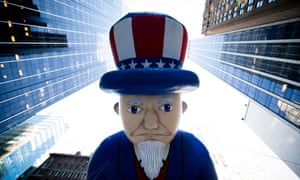
A giant Uncle Sam balloon on 6th Avenue during the 2013 Thanksgiving Day parade. Photograph: John Minchillo/AP
The Design Museum asked New York architecture critic Julie Iovine to sum up the spirit of her city in 50 design icons. Here are 10 of her favorites
Macy’s Thanksgiving Day balloons
What is six stories tall, nine metres wide and 18m long? Any kid at heart in New York City knows the answer: Macy’s Thanksgiving Day parade balloons. Of the more than 50 on show each year, the largest, character balloons – whether Kermit the Frog, Snoopy, Dora the Explorer or Spider-Man – are so huge (weighing a minimum of 54kg/120lb) that each one takes up to 70 handlers to keep them tethered and afloat during the parade’s three-hour march to Macy’s home in Herald Square.
The parade, made even more famous by the 1947 Christmas classic Miracle On 34th Street, first took place on 27 November 1924. It was organised by Macy’s employees and, for the first few years, started in Harlem at 145th Street, rather than at the Natural History Museum on Central Park West. Originally, the parade included camels, donkeys, elephants and goats from the Central Park Zoo, with Santa Claus bringing up the rear on the last float – an ongoing tradition. But in 1927 the live animals were replaced by rubber balloons. The first character was Felix the Cat, made by a marionette-maker. In 1934 Mickey Mouse made his debut; Donald Duck arrived only in 1962. Today the chosen characters are an annual litmus test of pop-culture icons.
Most of the balloons are fabricated in a former Tootsie Roll factory called Macy’s Parade Studio, in Hoboken. Consultants in engineering and aerodynamics calculate each character’s flying pattern – vertical, horizontal or in between. Painted clay models are made to scale before the fabric is cut. The balloons were made of rubber up until World War II but are now made of polyurethane, with multiple chambers for all that helium.
The Macy’s Thanksgiving Day parade is attended by some 3.5 million people and watched by 50 million more on television. But for many New Yorkers the most memorable event takes place the night before the parade, when people are allowed to gather at 77th Street and Columbus Avenue to watch the gargantuan figures come to life as they are inflated through the night.
Anthora coffee cup
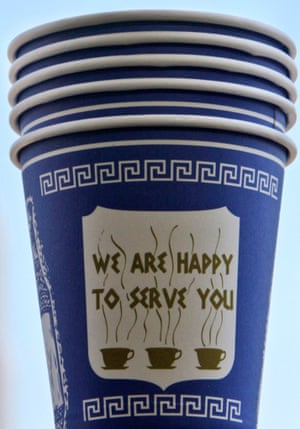
Whether crumpled in a trashcan or stacked on the shelves of the Museum of Modern Art design store, the New York coffee cup is instantly recognisable with its white-on-blue stencil, Greek key trim and three golden cups of steaming brew beneath the chiselled message, “We are happy to serve you”.
It is the to-go paper cup that launched a thousand Manhattan meetings (every morning) and served as instant shorthand for readymade New York attitude on innumerable television shows, from NYPD Blue to Mad Men.
Leslie Buck designed the paper coffee cup in 1963 as a gimmick to appeal to the Greeks who had taken ownership of many of the city’s coffee shops. Buck (originally Laszlo Büch, a concentration camp survivor from Ukraine) was an executive of the Sherri Cup Company in Connecticut. He made the cup blue and white like the Greek flag, added amphora-shaped vessels to the seams and called it the Anthora. It was an instant success.
At its peak in 2004, the company sold 500m of the cups, before merging into the Solo Cup Company. Ultimately, the cup design was retired from active sales, and took up a profitable new life as an iconic graphic appearing on key chains, cufflinks and ceramic mugs. Sightings of the real thing have become rare these days, as are the Greek diners themselves.
Flatiron Building
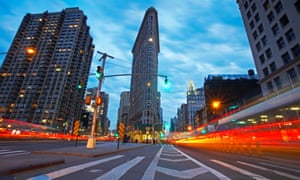
Never the tallest New York building but from the start one of the most inspiring to artists, the Flatiron Building is that wedge of steel, limestone and decorative terracotta forging skyward from the odd-shaped block created where Broadway and Fifth Avenue converge and cross below Madison Square.
Almost as soon as the Flatiron was built in 1902, Alfred Stieglitz photographed it in snowy twilight, balancing a crooked tree branch against its blackened geometry. Childe Hassam painted it in numerous portraits celebrating city life. HG Wells admired the way it went “ploughing up through the traffic” and Joseph Stella put it at the centre of his 1922 skyscraper-romancing five-panel, Voice of the City of New York Interpreted. Then, as now, the Flatiron possessed more stature than its modest 22 storeys would suggest, embodying in its unconventional shape and Renaissance detailing the dynamic thrust and romanticism of the city as it started to flex its powers.
Originally named the Fuller Building, the Flatiron was designed by the prominent Chicago firm DH Burnham & Co (Burnham was the architectural mastermind of the 1893 World’s Columbian Exposition) as the headquarters for the Fuller Construction Company. It was not always so popular with critics, who complained that there were too many windows, leaving no walls for bookcases and desks. And its early nickname, Burnham’s Folly, hints at the temporary reluctance of New Yorkers to accept the inexorable transformation of Madison Square from a posh residential neighbourhood into a hub of commerce. Soon enough, however, the whole area became known simply as the Flatiron District.
National Debt Clock
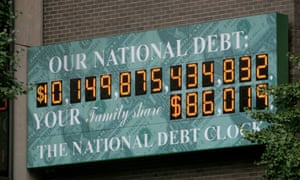
The National Debt Clock, ratcheting away in Midtown, was the brainteaser conceit of real-estate developer Seymour Durst, who personally researched and uploaded the numbers to a dot-based segment display (replaced in 2004 by faster LEDs) until his death in 1995.
Now racing past $18 trilllion, the clock stood at $2.7tn when Durst first determined to alert taxpayers to the total debt – along with numbers indicating their own slice of responsibility. It cost him $100,000 to install the 3m x 7.6m billboard, which was originally located a block from Times Square and then later moved to its present location at 1133 Avenue of the Americas.
In 2000 the clock stopped – the national debt was actually decreasing and the clock was not equipped to run backwards. It started up again in 2002 at $6.1tn and caused a brief, unfounded news flurry when it reached $10tn in 2008 and the clock seemed to have run out of digits.
The National Debt Clock is not the only counter around. In Union Square there is the Metronome, a 1999 art installation by Kristin Jones and Andrew Ginzel with a 15-space digital clock investigating the “nature of time” by simultaneously ticking off the seconds, minutes and hours until and away from midnight.
Jones Beach
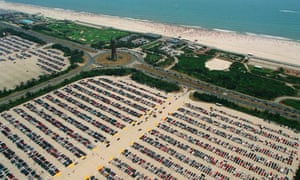
There is no understanding New York City today without factoring in Robert Moses, the 1920s “good government” functionary turned 1960s indomitable urban overlord, so brilliantly detailed in Robert Caro’s classic 1974 tome, The Power Broker.
Every expressway except the East Side Drive, seven major bridges, more than a thousand public housing towers, the United Nations, the Lincoln Center for the Performing Arts, 658 playgrounds and 673 baseball diamonds are just some of the projects he made happen, along with indiscriminate slum clearance, displacement of more than half a million people from their homes, and expenditure of more than $68bn (in 1968 dollars) on projects of his own devising, and almost entirely without accountability to city, state or federal government.
Moses’s ultimate dreams of an infinitely expandable car-centric metropolis, slashed by elevated super-highways and plugged full of mega-structures, were never fully realised – brought down by a middle-aged Greenwich Village lady, Jane Jacobs, who countered his Goliath-like visions with an even more powerful antidote, neighbourhood-scale community. Moses’s reputation has never fully recovered.
And yet some of Moses’s early accomplishments improved city life for all in still-tangible ways, especially the parkways and beaches he created on Long Island in the 1920s. There, his sensitivity to good design – stone overpasses, each one different from the others; bevel-edged wooden guardrails; luxuriously proportioned parks – made good on his belief that “nothing is too good for the people of the Empire State”.
His culminating effort was the 10-mile stretch of Jones Beach on the Atlantic, created entirely out of sand dredged from Jamaica Bay with parking for more than 14,000 cars, a water tank modelled on a Venetian bell tower, and an 8,200-seat amphitheatre (added in 1952) with an orchestra island set off by a moat. This middle-class leisure landscape – constructed in the teeth of violent opposition from Long Island’s Gatsby-esque estate owners – was entirely free to the public and of a standard, scale and quality rarely, if ever, since matched anywhere else in the world.
New York Yankees logo
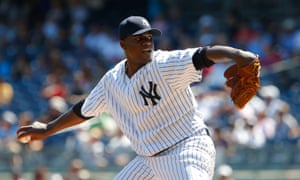
Arguably the most famous logo in sports history, the interlocked N and Y of the Yankees’ insignia, worn on cap or T-shirt, is the sign of a true New Yorker, either in the flesh or spirit. The 1909 logo not only predates the white-with-pinstripes home uniform from 1936 (the oldest in Major League Baseball), but even precedes the team name: the Yankees were once known as the Highlanders, after the Hilltop Park ballpark at West 168th Street where they played until 1913.
The logo’s origins are a classic instance of cross-pollination in a city where money, power and style have always mixed. It was a former Irish police chief turned team owner who appropriated the distinctive lettering from an 1877 commemorative medal (honouring a policemen killed in the line of duty) that had been designed by Tiffany & Co, the luxury merchandiser.
In a sport as obsessed with traditions as it is with players’ statistics, the Yankee insignia is prized above all else: Sports Illustrated magazine keeps a running record of celebrities in Yankee regalia. Or, as New York Times reporter Richard Morgan put it: “The [Yankees] logo is just flat-out quintessential, distilled, pure New York.”
Water tanks
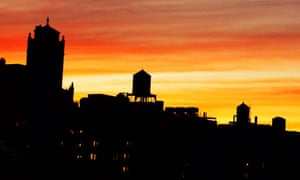
As urban icons go, the water tanks of New York seem one of the most primordial, with their rudimentary wooden materials, ubiquitous hut-like silhouettes, and sludge at the bottom of the barrel. They remain graphic holdovers from the moment when New York City burst through the barrier of being a low-rise trade town on its way to becoming a skyscraper city
These water tanks became necessary when buildings grew taller than six storeys – too high for the pipes channelling water down from the Adirondack reservoirs. With tanks on the roof, water could be pumped up and then gravity would do the rest, maintaining water pressure below for everything from taps to toilets to fire hydrants. It still does.
There are around 15,000 water tanks in the city – virtually all installed and maintained by two families that have been in business since the 1860s: the Rosenwach Tank Company in Queens, and Isseks Brothers of Manhattan. Canadian cedar is the material of choice because it is lightweight enough to haul up to the roof, and because three inches of wood insulates as well as 24in of concrete.
Fashioned in the same way as barrels and strapped with galvanised steel bands, the wood expands when wet to stop leaks without the need for adhesives. The barrels can hold up to 37,850 litres (10,000 gallons) of water, and can last as long as 35 years.
By the 20th century, water tanks had become an enduring emblem of the city. In 1971, dancer and choreographer Trisha Brown composed her Roof Piece with dancers flitting against a backdrop of water tanks; in 1998, British artist Rachel Whiteread, looking for something quintessentially of the city, cast a water tower in resin for her first New York installation on a rooftop in SoHo.
Stonewall Inn
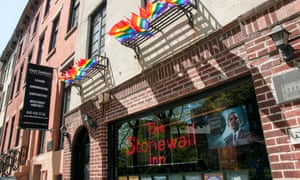
Long before the letters LGBT signalled anything, there was The Stonewall Inn at 51–53 Christopher Street. It was a dumpy nondescript joint in Greenwich Village but events here launched the gay liberation movement.
Originally a stables, then a speakeasy in the 1930s, The Stonewall Inn was turned into a gay bar by the mafia in 1966. It was the largest in the city, and the only one that allowed dancing. Inside, there was a long black plywood bar sturdy enough to support cross-dressing go-go dancers, a jukebox and a light bulb dangling from the ceiling that flashed to alert patrons to the frequent police raids.
But on the night of 28 June 1969, when some half-dozen police officers turned up, the patrons refused to budge and a riot broke out that lasted three days. However spontaneous and disorganised, it was the first time that gay, lesbian, bisexual and transgender people and Villagers had all united in common cause – and the world took notice. Within two years, there were gay rights groups in every major city in the United States and many other countries worldwide.
The Stonewall Inn itself lost its lease just three months later. A variety of local businesses occupied the space; renovations and alterations were made, but the spot has remained a touchstone site for gay people who set out from Christopher Street every June for one of the wildest, most inspired annual parades in the city. In 2000, The Stonewall Inn was made a National Historic Landmark.
The Dakota
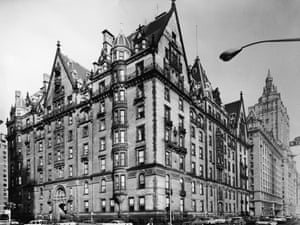
The Dakota, so named because it was so far away from any place that mattered when it was built in 1884, has always stood out. Stranded on the edge of 72nd Street, across from a brand-new Central Park, the Dakota was not only the city’s first luxury apartment house but also, at a stately nine storeys, one of the tallest buildings in the city. A famous photograph from the 1890s shows skaters on a pond with the Dakota behind standing in splendid isolation.
It was developed by Edward Severin Clark, president of the Singer Sewing Machine Company, and designed by Henry J Hardenbergh, architect of the Plaza Hotel, in German chateau style. Facade ornaments play up the pioneering theme with carved arrowheads, ears of corn and the figure of a Dakota Indian over the entrance. Dragons are coiled around the cast-iron exterior railings for good measure. Loaded with luxurious innovations including its own electric generator, a wine cellar and nine-inch layers of sand and concrete between floors (for soundproofing), the Dakota was sold out before it was completed, although it attracted merchants and business folk rather than the high society Clark had hoped for.
Ultimately, the Dakota became best known for the many artists and performers in residence, including Lauren Bacall, Leonard Bernstein, Rudolf Nureyev, Judy Garland and, most famously, John Lennon, who was shot while leaving the building on 8 December 1980. Strawberry Fields, the memorial to Lennon organised by his widow, Yoko Ono (not without controversy when members of the city council attempted to have the spot dedicated instead to another song man, Bing Crosby), is right across the street from the Dakota in Central Park. Thousands converge there each year to enjoy the strawberry bushes and a mosaic, Imagine, donated by the city of Naples.
Zuccotti Park
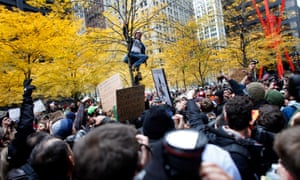


Originally named Liberty Plaza Park, Zuccotti Park has since become famous as the granite-paved strip between Broadway and Church at Liberty Street where the protest group known as Occupy Wall Street (OWS) set up their camp in the autumn of 2011.
The choice of Zuccotti Park was no coincidence. Not only is Wall Street two blocks away, Zuccotti Park also turns out to be one of the city’s little-understood POPS, or “privately owned public spaces”. There are over 520 POPS around the city, often adjacent to the corporate towers that created them as concessions to building taller.
The Pittsburgh-based US Steel installed Liberty Plaza Park in 1968 as an added obligation mandated by 1961 zoning laws. Unlike public parks that close at curfew or POPS designated in later years that close from dusk to dawn, Liberty Park would be kept open 24 hours a day. In 2006, new owners renamed it Zuccotti Park.
It is said that the OWS organisers had planned to take over Chase Manhattan Plaza – more symbolically potent when targeting banks – but it was closed. Perhaps it was an urban planner among them who alerted the group to the technicality that made it very difficult to dislodge protesters from what they insisted on calling, once again, Liberty Park. Meeting tents, a kitchen, a generator and even a library were all part of the OWS encampment for more than two months, before a court order forced them to leave.
A clash on New Year’s Eve 2011 between 500 “We kick the ass of the ruling class” protesters and the NYPD was the last confrontation before the movement subsided, and Zuccotti Park resumed its life as a lunchtime retreat for office workers.
New York in Fifty Design Icons by Julie Iovine & The Design Museum is published by Conran Octopus (£12.99). Follow Guardian Cities on Twitter and Facebook and join the discussion
By Julie Iovine, www.theguardian.com
Subscribe to:
Posts (Atom)