Showing posts with label #Munich. Show all posts

Sunday, February 7, 2016

Top 10 Reasons To Visit Bavaria

High-tech and traditional, conservative and innovative, quaint and quirky – there’s much more to the Free State (as Bavaria is known) than the stereotypical Lederhosen and felt hat image.
World-class museums, thigh-slapping beer halls, speedy cars, Alpine vistas, dreamy castles, belly-filling food, top-notch beer…there are hundreds of reasons to visit Germany’s southeast corner – here we list the ten most compelling.

1. The Alps

Geography may have handed Germany’s south a mere sliver of the Alps, but the region certainly makes the most of its peaks, many of which are but a short train ride from central Munich. The ski resort of Garmisch-Partenkirchen is the place to head for the best fun in the snow, as it sits under Germany’s highest mountain, the Zugspitze, the top of which can be reached by train.
bavarian-alps-1500-csThe Bavarian Alps in winter © canadastock / Shutterstock Images
Surrounded by Austria on three sides, the Berchtesgadener Land in Bavaria’s far southeast keeps all the region’s clichéd Alpine promises, providing dramatic mountain scenery, great hiking and Germany’s prettiest lake, theKönigssee.

2. The beer

Munich has often been called 'the city of art and beer’, and when you are done with the art by day, the evenings belong to the 1L steins of frothy brews in typical beer halls such as the Hofbräuhaus, the Augustiner Bräustuben and the Weisses Brauhaus. Of course the best time for disciples of the hop to make a pilgrimage to the Bavarian capital is during Oktoberfest (annually late September to the first weekend in October), during which around six million litres of beer are slurped. Outside Munich the beer is just as good, better in fact, according to drinkers in Franconia(Bavaria’s northern region), where countless village breweries pump out an astonishing variety of Landbier (small-scale regional beers) not available anywhere else.

3. The castles

Every Bavarian town and hilltop seems to host a medieval noble pile or two, but it’s to three 19th-century follies commissioned by Bavaria’s King Ludwig II that most outsiders flock. Rising out of Alpine forest near the town ofFüssenSchloss Neuschwanstein is Germany’s most popular tourist attraction, its dreamy turrets and dramatic location having inspired Walt Disney’s Sleeping Beauty castle. Ludwig’s other two sugary creations are theHerrenchiemsee, a Versailles-inspired palace on an island in the Chiemsee, Bavaria’s biggest lake, and compactLinderhof in a remote Alpine location near Oberammergau.
neuschwanstein-fussen-bavaria-1500-csSchloss Neuschwanstein, King Ludwig II's towering masterpiece © canadastock / Lonely Planet

4. The cars

Bavaria is home to some of the highest-octane names of the motoring world – BMW in Munich and Audi inIngolstadt. Munich’s space-age BMW Welt (BMW World) is a petrolhead’s dream come true, a huge free exhibition of the company’s latest models which can be sat in, fiddled with and admired from the driver’s seat. Next door is the excellent BMW Museum, and intriguing tours of the nearby factory can be easily arranged.

5. The traditions

From the world-famous Oktoberfest and Christmas markets to Oberammergau’s once-a-decade Passion Play and the glass-blowing traditions of the Bavarian Forest; from the beer-brewing monks of Andechs and folk-costumed bashes in Alpine taverns to Bayreuth’s Wagner obsession – Bavaria is a place where culture and traditions form an easily accessible link with a colourful, folksy past.
Golden glass and crystal christmas ornaments on saleGolden glass and crystal Christmas ornaments on sale at Christkindlesmarkt, Nuremberg © AnkNet / Lonely Planet

6. The museums

You could devote many months to Bavaria’s exceptional museums, some of which rank as the best of their kind inEurope. It would be easy to while away a week ‘doing’ Munich’s art museums alone, including the world-class Pinakotheken (Alte PinakothekNeue Pinakothek and Pinakothek der Moderne). The Deutsches Museum is a highly enjoyable repository of the technical past, while Nuremberg boasts the Deutsche Bahn Museum, Germany’s top railway museum, and the Nationalmuseum, the country’s most comprehensive exhibition of Germanic culture. Of course, Bavaria witnessed one of the most sinister chapters in European history – the rise of the Nazis – and many places such as Berchtesgaden’s Dokumentation Obersalzberg and Nuremberg’s Reichsparteitagsgelände – where the largest Nazi rallies were held in the 1930s – relate that dark story.

7. The shopping

Traditional Bavarian folk costume makes for a truly unique souvenir. Central Munich’s Loden-Frey sells the real deal, but those on a budget should head for Holareidulijö which sells second hand outfits. Nymphenburg porcelain is another popular take-home item, best sourced at the Porzellan Manufaktur Nymphenburg factory shops. Glassware from the Bavarian Forest area, Nuremberg gingerbread and new and antique beer steins are other mementoes to take home from a Bavaria trip. More unusual shopping experiences are provided by Käthe Wohlfahrt shops, where you can source your Christmas decorations all year round, a surreal experience in July when the mercury is pushing 30ºC.
nymphenburg-porcelain-factory-bavaria-1500-csIntricate porcelain can be bought at Nymphenburg Porcelain factory shops © Michael Zegers / Getty Images

8. The lakes

Between Munich and the Alps, many picturesque foothill lakes reflect quaint villages and onion-domed churches in their glassy waters. Easily accessible by S-Bahn from Munich, the Fünf-seen-land is an area of five lakes including the pretty Lake Starnberg, a popular, gentle retreat for stressed out city folk and the place King Ludwig II mysteriously drowned in 1886. Southeast of Munich, the Chiemsee is a great place to mess around in boats, but top marks among the region’s lakes must go to the Königssee, Germany’s most stunningly beautiful body of water, which is cupped by alpine slopes. Take an electric boat along its length.

9. The food

Bavarian cuisine may not enjoy worldwide renown, but the region’s meat-heavy menus are the perfect accompaniment to the unsurpassed beer. Eating out is not all about soaking up the beer, however. Munich has a thriving culinary scene, with vegetarian, vegan, Asian and Michelin-starred gourmet restaurants, and boasts more Italian eateries than most cities in Italy. Out in the sticks things are more traditional, though there’s still a lot of variety, especially where tourists congregate in numbers.

10. The romance

Running along the western edge of Bavaria, the Romantic Road is Germany’s most popular tourist route, extending for 350km from Würzburg in the north to Füssen in the south.
rothenburg-ob-der-tauber-bavaria-1500-csThe impossibly quaint Rothenburg ob der Tauber © CALLE MONTES / Getty Images
It’s a ribbon of quaintness punctuated by perfectly preserved walled towns such as Rothenburg ob der Tauber,Dinkelsbühl and Nördlingen. The route is travelled by millions of visitors over the summer; go in winter when a blanket of snow adds some authentic romance to these special places.

  , www.lonelyplanet.com

Wednesday, December 23, 2015

Germany For First-Timers

Germany is a combination of cutting-edge cool and timeless tradition, wrapped up in a package of spectacular landscapes, vibrant metropolises and idyllic half-timbered villages, architectural masterpieces and fairy-tale palaces.
The world’s fourth-largest economy is also a powerhouse when it comes to spirit-lifting culture, with an extraordinary wealth of museums, a thriving art scene, renowned orchestras and high-octane nightlife. And in a country that’s given the world the Hanseatic League and the Reformation – among many other key moments in history – it’s no surprise that you'll find fascinating vestiges of the past around many a bend in the road. If you're visiting Germany for the first time, here are the highlights you shouldn't miss.

Berlin

More than a generation after reunification, the German capital has become increasingly grown-up, but it hasn't surrendered its indie spirit and contagious energy. Berlin spoils visitors with classic and quirky diversions. There’s haute cuisine in an ex-brewery, all-night parties in power stations, world-class art in a WWII bunker and the chance to chill in a river barge-turned-swimming pool.
Brandenburg Gate at sunset © RICOWde / Lonely PlanetBrandenburg Gate at sunset © RICOWde / Lonely Planet
Buildings marking milestones in history – the Reichstag, the Brandenburg Gate and Checkpoint Charlie among them – rub shoulders with 175 museums, including such top acts as the Pergamonmuseum, with its monumental antiquities, and the Hamburger Bahnhof, which boasts bold contemporary art. Sweeping views unfold from the TV Tower and the Reichstag Dome, while down below, tourist boats glide past the Nikolaiviertel, the site of Berlin’s medieval beginnings.

Munich

The Bavarian capital is always happy to oblige when it comes to delivering on the clichés that visitors to Germany expect. Yes, Munich is indeed a city of bosoms in Dirndls and beer halls with oompah bands. But beneath the cutesy veneer lies a sophisticated, proud and wealthy town.
The Monopterus monument in Munich's Englischer Garten © clearlens / Shutterstock ImagesThe Monopterus monument in Munich's Englischer Garten © clearlens / Shutterstock Images
Art lovers can feast on fabulous canvases from the Middle Ages to today in the trio of Pinakothek museums (Alte PinakothekNeue Pinakothek and Pinakothek der Moderne) or in the exquisite Lenbachhaus. Munich’s arc of masterful architecture spans from the medieval Frauenkirche to the futuristic BMW Museum. Cafe culture thrives in such boho-chic quarters as the Glockenviertel and the Gärtnerviertel, which also teem with trendy indie boutiques. One of Europe’s most beautiful city parks, the vast Englischer Garten, with its beer gardens and surfing wave, also invites a sightseeing break.

Romantic Rhine Valley

Few rivers have captured the imagination of artists and travellers so passionately as the Rhine, especially the Unesco-protected Middle Rhine section linking Bingen and Koblenz.
Bacharach sits on the banks of the Rhine River © JeniFoto / Shutterstock ImagesQuaint Bacharach sits on the banks of the Rhine River © JeniFoto / Shutterstock Images
Also known as the Romantic Rhine Valley, it’s a landscape of magical beauty where legend-shrouded castles lord over villages full of half-timbered buildings, embraced by steeply terraced vineyards that yield some of Germany’s most fabled Rieslings. Like a fine wine, this region needs to be savoured in sips, not gulps. It can be explored by car, train, bicycle, on foot and – most romantically – by boat. Each village has its merits, of course, but highlights include Braubach with the mighty Marksburg Castle; the wine village of Bacharach; and Kaub with Burg Pfalzgrafenstein, a boat-shaped former toll castle right in the river.

Romantic Road

Germany’s most popular holiday route is the Romantic Road, a scenic ribbon of cultural, natural and historical riches. It meanders for 400km from Würzburg – famous for its wine and Unesco-listed baroque Residenz palace – to Füssen, where the Alpine foothills cradle King Ludwig II’s mock-medieval fantasy palace of Neuschwanstein(which reportedly inspired Disney’s Sleeping Beauty Castle).
neuschwanstein-castle-1500-csNeuschwanstein: the castle of fairy princesses' dreams © Rudy Balasko / Lonely Planet
A highlight along the way is the half-timbered gem of Rothenburg ob der Tauber which has intriguing crime and Christmas museums and is still sheltered by its medieval ramparts. The same is true of Dinkelsbühl andNördlingen, which are similarly quaint but less overrun. The latter has the additional distinction of being situated within a massive crater gouged by a meteor some 15 million years ago.

Bavarian Alps

The Bavarian Alps fan out from south of Munich and east to the Austrian border, and are an intoxicating pastorale of muscular mountains, clattering brooks, forests of towering evergreens and meadows smothered in wildflowers.
Climbers reach the summit of Zugspitze, Germany's highest peak © Mildax / Shutterstock ImagesClimbers reach the summit of Zugspitze, Germany's highest peak © Mildax / Shutterstock Images
Royal groupies get to compare Ludwig II’s flamboyant Neuschwanstein to his frilly Linderhof pad and the Versailles-style Herrenchiemsee. Rising from an Alpine meadow, the sumptuous Wieskirche represents the pinnacle of rococo exuberance. Peak baggers are drawn to Garmisch-Partenkirchen for its famous ski slopes and breathtaking cogwheel-train ride to the top of the Zugspitze, Germany’s highest mountain. Meanwhile, Berchtesgaden draws history buffs and dark tourism fans with the Eagle’s Nest, Hitler’s mountaintop retreat, and the Dokumentation Obersalzberg, an exhibit about Berchtesgaden’s stint as the Nazi party’s southern headquarters.

Black Forest

Steeped in timeless mystique, the Black Forest is a sylvan slice of Germany where patches of woods are indeed so dark and thick that one might expect to stumble upon the witch’s house in the Hansel and Gretel fairy tale.
Hikers in the magical Black Forest © Juergen Wackenhut / Shutterstock ImagHikers in the magical Black Forest © Juergen Wackenhut / Shutterstock Images
Unfolding east of the Rhine between the Swiss border and elegant Baden-Baden, with its glorious thermal baths and casino, the region is a gourmet paradise with no fewer than 26 Michelin-starred restaurants. It’s also the birthplace of the black forest cake, a creamy, kirsch-drenched confection; Cafe Schäfer in Triberg has some of the best.Triberg also happens to be Germany’s cuckoo clock capital, with countless souvenir shops and the world’s two largest cuckoo clocks, each of them the size of a house. From here, it’s just a short hop to Freiburg, a charismatic university town with a grand minster and lively, cafe-rimmed plazas.

Make it Happen

Frankfurt and Munich are the most popular airports, but there are dozens of others, many of them served by budget airlines such as easyJet and Germanwings. Germany has an excellent train network that links most towns, large and small. Check schedules and buy tickets on the Deutsche Bahn website (bahn.de). Travelling around by car buys flexibility and makes it easier to get off the beaten track, especially in rural areas. All major international rental agencies have offices in the main cities. The cheapest way to get around is by long-distance bus. Check which operator goes where, when and for how much on the Busradar website (busradar.com).
It’s perfectly possible to travel in Germany without speaking a word of German, but it helps to master a few simple phrases. People are more likely to speak English in big cities, in the western part of the country and in tourist hotspots. Peak season is July and August but some holiday weekends in May and June can be busy too. Check the Public Holidays website (publicholidays.de) for dates, and book ahead during busy times. Bring an umbrella, a coat and closed shoes – rain is a possibility any time of year.

Wednesday, November 11, 2015

Munich City Guide: What To See, Plus The Best Bars, Hotels And Restaurants

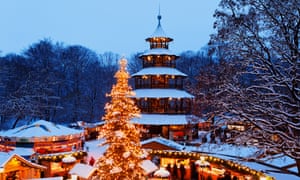
A Christmas market in Munich
A Christmas market in Munich’s English Garden, by the Chinese Tower. Photograph: Getty Images/Look

Outside Oktoberfest, the Bavarian capital is a graceful city – green in summer, atmospheric in winter, and buzzing with great museums and bars year round

Often portrayed as the strait-laced, industrious counterpart to hedonistic Berlin, Munich tends to steer clear of the limelight. Save for its annual six-million-person beer binge on Theresienwiese open space for Oktoberfest, the Bavarian capital’s reputation abroad remains one of luxury, livability and lederhosen.
Behind the staid and steady veneer, however, lies a thriving younger culture, an embarrassment of world-class museums and galleries, and burgeoning art, student and after-hours scenes.
All this in an eminently green city, laced with 750 miles of tree-lined bike paths and the winding banks of the Isar river – perfect for picnicking or swimming. Winter, though, is an atmospheric time to visit, with pretty Christmas markets to explore and cosy beer halls to warm up in.

WHAT TO SEE

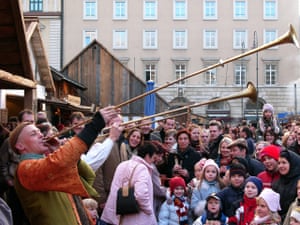
Mittelaltermarkt is a cross between market and medieval fair
Pinterest
 Mittelaltermarkt is a cross between market and medieval fair

Christmas markets

Advertisement
Weihnachtsmärkte, or Christmas markets, are all but inescapable in every major German city. They can be crass, commercial affairs decked out in blaring neon, but many of Munich’s are of a different sort, with evergreen boughs, fairy lights and a genuine sense of holiday cheer. Veer away from the Christkindlmarkt on Marienplatz, which packs in more than three million visitors a year, and head toAlpenwahn (Viktualienmarkt 15, daily 2pm-11pm, 19 November-1 January, closed 24-25 December) at Viktualienmarkt, where you can browse the wares while snacking on chilli-laced currywurst and drinking red or white mulled wine. In a courtyard just off of Odeonsplatz, Weihnachtsdorf in der Residenz (daily 11am-9pm, 23 November-22 December) is the city’s newest market, where live bands or choirs often perform and the scent of caramelised almonds perfumes the air. On the whimsical side, the Mittelaltermarkt (Wittelsbacherplatz, Brienner Strasse 6-10, open daily 11am-8pm, 26 November- 23 December) hovers somewhere between traditional market and medieval fair, with steamingDrachenblut (dragon’s blood) served in goblets and roast suckling pig inflammkuchen (pizza-like flatbread with crème fraîche, bacon and onions).

Culture and art

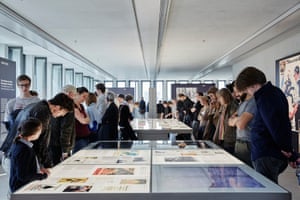
Munich Documentation Centre for the History of National Socialism
Pinterest
 The Munich Documentation Centre for the History of National Socialism exposes Bavaria’s role in the development of Nazism in ‘unflinching detail’
Munich has more than 80 museums for culture hounds, including Museum Brandhorst (Theresienstrasse 35a, admission €7), with more than 1,000 works spanning classical avant-garde to American pop. The Lenbachhaus (Luisenstrasse 33, admission €10) has a Norman Foster-designed wing housing expressionist pieces. Equally impressive are the trio of municipal galleries – the Alte and Neue Pinakothek and the Pinakothek der Moderne (day pass to all three €12). Don’t miss the Munich Documentation Centre for the history of National Socialism: it’s a stark white, €28.2m modernist structure that opened its doors in May on the former site of the Nazi headquarters. The centre chronicles the rise of the party, as well as Bavaria’s role in it, in unflinching detail (entrance €5).

WHERE TO EAT

Burger & Lobster Bank

Burger and Lobster Bank, Munich
Pinterest
Housed in a former bank – and not connected with the international surf and turf chain – this is the city’s buzziest restaurant. It is decorated with gleaming safety boxes and other swanky touches from its former tenant, with formidable filet steaks (€22.50) and blistered, frico-sprinkled pimientos de padrón cosying up to the sous-vide Canadian lobster (€29.50). Burgers run the gamut from 24-hour slow-cooked pork belly to a ramen bun, but I stick to The Classic One, which comes on a brioche so buttery it all but liquefies on the tongue. Both the kitchen and bar go on until the wee hours, a rarity in Munich. Live DJs and an expansive cocktail list, littered with house infusions – think vodka with bacon, or Maker’s Mark with roasted walnuts – fuel weekend parties in the courtyard.
 Prannerstrasse 11, +49 15 227 272 782, blb-munich.com

Tian

Tian
Pinterest
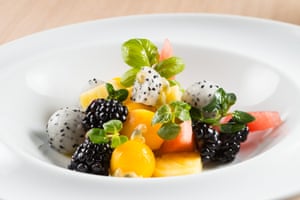
If Munich conjures up visions of poodle-sized pork knuckles, this newcomer is a stylish, meat-free alternative. Every brilliantly hued dab and squiggle is composed of seasonal produce, much of it local, and the tasting menus are indulgent rather than restrictive. Try dishes like the lush appetiser of mozzarella and artichokes with mint, basil-sponge cake and lemon zest-perfumed gel (€15), or a main of porcini gnocchi (€16). Chef Christoph Mezger trained at Tian’s Michelin-starred sister restaurant in Vienna.
 Frauenstrasse 4, +49 89 885 656 712, taste-tian.com

Wirtshaus Hohenwart

Genuine Bavarian restaurants are increasingly scarce, which is why this one is both a throwback and a revelation. The 1896 building was gutted and refurbished to its rustic glory last year. Original furnishings, including a vintage bowling lane, were kept wherever possible, while newer additions – such as the looping recording in the restrooms of comedian Gerhard Polt, who filmed Man Spricht Deutsch here – add a wry edge. Save for a few concessions to modern tastes – a tartare here, a salad with chanterelles there – the menu excels at the classics. Order fish from nearby Starnberger See lake or the regal veal schnitzel, cloaked in butter-fried breadcrumbs.
 Gietlstrasse 15, +49 89 6939 7575, hohenwart.net

Spezlwirtschaft

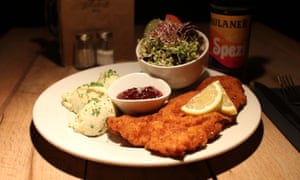
Schnitzel at Spezlwirtschaft
Pinterest
It may be located in a space dating back to 1264, but there’s nothing stodgy or stuffy about Spezlwirtschaft and its spin on the regional cuisine. Subtle twists, such as kohlrabi schnitzel or spinach knödel (dumplings), freshen up the menu, while the hip-hop club downstairs draws a lively crowd on weekends. But the beats can’t upstage the German grandmother-worthy portions, or the staples, such as gooey käsespätzle (like macaroni with cheese, €9.80) in a miniature skillet, with a crown of fried onions.
 Lederer Strasse 3, +49 89 2323 2973, spezlwirtschaft.me

Prowl the food markets

Any trip to the city would be lacking without an afternoon perusing the charcuterie, foraged mushrooms and artisan breads at Viktualienmarkt in the city centre. Munich’s most famous market is a people-watching extravaganza ideal for both scouting edible souvenirs and sipping a radler (beer with lemonade). Local foodies mourned the recent loss of Schrannenhalle, a glass-enclosed former granary next to the outdoor market, but are already looking forward to the Eataly destined to take its place early next year. Hipsters swarm the street food market’sHall of Taste in search of venison burgers from Vogl Wild, paleo-friendly fare fromThe Cave, and miso ramen from Nipponoodles.

WHERE TO DRINK

Visit the beer gardens – even in winter

Augustiner-Keller beer garden.
Pinterest
 Augustiner-Keller beer garden. Photograph: Alamy
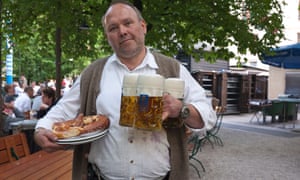
Beer is still consumed in Munich outside Oktoberfest, albeit with slightly less gusto. On sunny days, Müncheners pass the time in the city’s beer gardens, and when the weather turns foul, they carry on in the indoor restaurants and beer cellars they are usually attached to.
Augustiner-Keller (Arnulfstrasse 52) has been pouring foaming ales from immense wooden barrels since 1812 and remains one of the most popular. For a less rowdy atmosphere, Park Café (Sophienstrasse 7) in the Old Botanical Garden has a shady courtyard and a restaurant serving gut-busting renditions of German dishes. In the English Gardens, the Chinesischer Turm (Englischer Garten 3) hosts bands beneath the wooden pagoda in summer. Come now for glühwein ladled from copper kettles at the most festive Christmas market in town (daily noon-8.30pm, 27 November-23 December).

Les Fleurs du Mal

Les Fleurs du Mal
Pinterest
Charles Schumann has opened a cocktail bar above his main eponymous establishment, a spare room with a lone table carved from a walnut tree. The furnishings may be minimalist, but the cocktail menu features impressive selections of more than 150 types of whiskies, and absinthes, cognacs and rare spirits aplenty.
 Second floor, Schumann’s Bar, Odeonsplatz 6-7, +49 89 229 060,schumanns.de

Theresa Bar

Theresa Bar
Pinterest
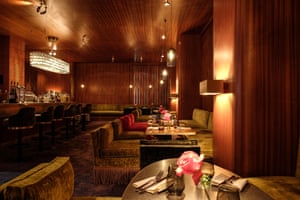
Step into the courtyard, past the industrial-sleek Theresa Grill, where waiters in plain white T-shirts serve 35-day dry-aged hunks of Bavarian beef, to this newer watering hole. Velvet and crystal adorn the room, and pretty people whisper to one another over corpse revivers and cherry mint juleps.
 Theresienstrasse 31, +49 89 2880 7538, theresa-restaurant.com

Jaded Monkey

Bill Fehn presides over the slickest of speakeasies, not far from Karlsplatz. No one will sneer at your “usual” order, but with house creations including the monkey’s gimlet – Monkey 47 gin, lime, house-made lavender syrup and rosemary liqueur – you’re better off trusting the wizards behind the bar.
 Herzog-Wilhelm-Strasse 25, +49 89 2694 9401, jadedmonkey.de

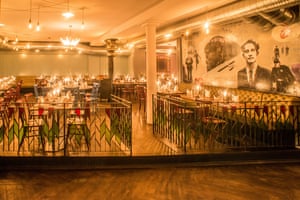
Goldene Bar

Goldene Bar
Pinterest
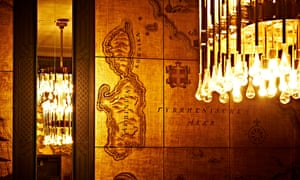
On fine autumn days, join the throngs sipping Lillet aperitifs on the pleasant terrace at Goldene Bar, behind Haus der Kunst. When the weather turns chilly, scurry indoors for a steaming mug of rum with coconut water and homemade spice butter. The gilded interior, with its antique crystal chandelier and original 1930s cartographic murals, references the darker days of the building, when it served as a propaganda piece for the Third Reich.
 Prinzregentenstrasse 1, +49 89 54 804 777, goldenebar.de

Mixed Munich Arts

This towering techno temple which opened last year rivals any in Berlin. But the thundering bass isn’t the only draw: the venue opened last year in an abandoned power plant, and its cavernous concrete halls also feature classical concerts, art exhibitions, street-food fests and fine dining.
 Katharina-von-Bora-Strasse 8A, mixedmunicharts.de

Zephyr

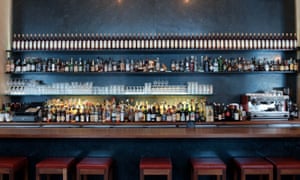
Sparsely decorated and perpetually cramped, Zephyr keeps the fanfare squarely on the drinks, which are served with elaborate garnishes – such as coffee beans and charred cinnamon sticks. A Renaissance still life’s worth of fresh ingredients and an unfailingly meticulous staff make this a must.
 Baaderstrasse 68, +49 17 3599 5335, zephyr-bar.de

WHERE TO STAY

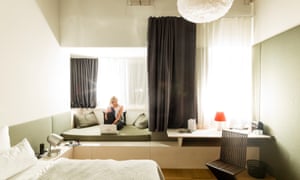
A room at Hotel Lux, Munich
Pinterest

Hotel Lux

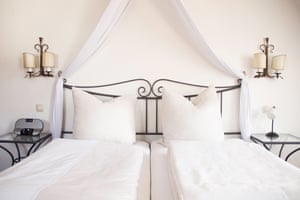
A dizzying ascent up Hotel Lux’s handsome spiral staircase takes guests to the individually designed suites. Accommodation is on the small side, but the thoughtfully chosen works of art and dead-central location more than make up for it. If you’re feeling flush, head to the street-level bar and press the bell labelled “Ring for Champagne” for two glasses of bubbly.
 Doubles from €149 B&B, +49 89 4520 7300, munich.hotel-lux.info

Louis Hotel

At the Louis, tastefully understated interiors, in timber and stone, hide behind the hotel’s baroque facade. Head to Emiko on the roof terrace in summer months for sashimi and one of the best views in the city. For winter evenings, Chocolaterie Beluga, by the entrance, offers 30 different types of gourmet hot chocolate.
 Doubles from €159 room only, +49 89 4111 9080, louis-hotel.com

Hotel Laimer Hof

Hotel Laimer Hof
Pinterest
Located near the grand old Nymphenburg Palace and 8,000-seat Hirschgarten beer garden, this charming small hotel, run by husband and wife team Sebastian and Alexandra Rösch, as quiet rooms off the main drag. Although the refurbished 1890 structure lacks some of the comforts of newer, flashier hotels, it’s hard to quibble with a welcome this warm.
 Doubles from €75 room only, +49 89 178 0380, laimerhof.de

The Flushing Meadows Hotel & Bar

The Flushing Meadows Hotel & Bar
Pinterest
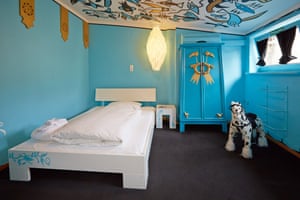
What if you gave a bunch of creative types – a hip-hop musician, a painter, a DJ – the chance to design their dream room? That’s exactly what happened with the 11 loft studios on the third floor of this converted post office, which opened last year as quirky-cool Flushing Meadows. Austrian actress Birgit Minichmayrincluded a selection of her favourite films, while pro surfer Quirin Rohlederinsisted on a board and a giant hammock. In the evenings, sip craft cocktails in the rooftop lounge.
 Doubles from €115 room only, +49 89 5527 9170, flushingmeadowshotel.com

By Diana Hubbell, www.theguardian.com