Showing posts with label #NewOrleans. Show all posts

Thursday, March 10, 2016

What To Drink In New Orleans, Where Cocktail Is King


Abigail Gullo prepares a De La Louisiane cocktail at Compère Lapin. CreditSara Essex Bradley for The New York Times

All stories about New Orleans drinking lore must now begin with the same disclaimer: Cocktails were invented there. Except they weren’t.
For years, many considered the city the birthplace of the cocktail. The tale is immortalized by Stanley Clisby Arthur in his lively 1937 book, “Famous New Orleans Drinks & How to Mix ’Em”: In the first half of the 19th century, Antoine Amédée Peychaud began to mix his spicy, neon-red bitters — which still bear his name — with spirits. “Peychaud had a unique way of serving his spiced drink of brandy,” Arthur wrote: He poured it into a coquetier, a double-ended egg cup. Coquetier (pronounced ko-kay-TAY) became “cock-tay,” then cocktail. “Presently, all New Orleans was drinking brandy-cocktails,” Arthur wrote. “In such fashion did the inconspicuous little crockery coquetier or egg-cup become the christening font of the cocktail.”
It’s a fun story — but it’s not the real origin of the cocktail. (The indefatigable historian David Wondrich has traced the word a few decades further back, probably to upstate New York, or possibly England, depending on how you define a cocktail.)
No matter. If New Orleans wasn’t the birthplace of the cocktail, it is certainly its spiritual center — where it is most passionately celebrated and where some of its most wondrous and varied iterations were invented: the Sazerac, the Ramos gin fizz, the Vieux Carré. “The quality of mixed drinks as served in New Orleans has always appealed to the sophisticated taste,” Arthur wrote, “but the drinks and their histories are forever linked with the past of this pleasure-loving city.”
Over a few winter evenings in New Orleans, I sought out some of those classic versions at decades-old bars and more recent additions, where bartenders are reinvigorating the cocktail scene amid a broader post-Katrina revival.
The links to the past that Arthur described are evident everywhere. AtCompère Lapin, a restaurant and bar in the Warehouse District and the newest spot I visited on my crawl, I chatted with the charming and gregarious bartender Abigail Gullo. She made me, upon request, a De La Louisiane, one of the city’s lesser-known inventions — a rye-based drink punched up with Peychaud’s bitters and absinthe.
I asked Ms. Gullo why Compère Lapin doesn’t have classic drinks on its menu. “Because we can make them,” she said, and everyone knows it. “And then if they have a Sazerac, what do they have next? I can guide them.”
  1. Photo
    Bar manager Mark Schettler at Bar Tonique. CreditSara Essex Bradley for The New York Times
    Bar Tonique
    A few days before, I had started myself off with one of those classics. Having finished a book in Louis Armstrong Park midafternoon, I called a friend to make plans. “You know, you’re across the street from Bar Tonique,” he said. “And don’t worry about day drinking. No one in this town is going to give you a weird look for drinking in the afternoon.”
    So I headed across North Rampart Street to Tonique, a boxy spot that opened in 2008, with a three-sided bar, a few off-white banquettes and plenty of exposed brick. Colorful, handwritten slates outlined the ordering options: a collection of classic cocktails, with some originals mixed in, all at astoundingly reasonable prices (at least to this New Yorker’s eyes) of $5 to $10 (including happy hour specials) for almost all mixed drinks.
    Despite its modest size, the place had a pleasant airiness — there were only four other drinkers (I was the only one without tattoos, including the bartender). I ordered a Corpse Reviver No. 2, a tangy absinthe-tinged gin cocktail that dates to at least 1930. I was not the first to enjoy one in daylight: The name refers to its use as a hangover treatment.
  2. Photo
    A Pimms Cup at the Napoleon House.CreditSara Essex Bradley for The New York Times
    Napolean House
    That evening, I met friends at Napoleon House, a French Quarter favorite that has functioned as a restaurant since 1914. It’s long on charm — heavily distressed walls; portraits of the Impastato family, who owned the restaurant until it was bought by the New Orleans dining impresario Ralph Brennan last year; dramatic swells of classical piano on the soundtrack — and short on drink choices. The list features fewer than a dozen options, though one is clearly the focus: the Pimm’s Cup, which gets its own section, with variations and the option of a souvenir glass for an extra $12.25.
    We tried the original (a simple mix of gin-based Pimm’s, lemonade, a little lemon-lime soda and a cucumber slice) and the ginger version (with mint syrup and ginger — too sweet for my taste), along with a Sazerac and, later, a bourbon milk punch. We asked for a Vieux Carré, a drink named for the very neighborhood we were in, but the bartender did not know the recipe.
  3. Photo
    The bar at Cane & Table, as reflected in the dining room mirrors.CreditSara Essex Bradley for The New York Times
    Cane & Table
    Our next stop was Cane & Table, a short walk away on the eastern end of the Quarter. The bar, which opened in 2013, describes itself as “proto-tiki”; cocktails are drawn not from the 20th-century movement that brought us the mai tai and the scorpion, but from its spiritual predecessor out of the Caribbean, an area with complicated and important ties to New Orleans.
    Half of the menu ties drinks directly to their source, including the Labat’s Planter’s Punch, with three kinds of rum, lime and Caribbean spices (the menu dates it to 1694; Labat was a French-born clergyman, writer and botanist), and the boozy and sultry United Fruit, with gin, Bénédictine and Spanish vermouth (1935, from the “Bar La Florida” cocktail book). Even better, though, was a Cane & Table original, the sprightly Silver Tongue, which seamlessly combined bourbon, ginger, arrack and cream sherry.
    It was a busy evening at the bar, which was celebrating a Cuban-themed night. Customers seemed right out of central casting for a hip-and-young spot: bearded 20-somethings in jaunty hats and scarves shared tables and bar space with bearded 20-somethings in full drag. Everyone seemed to be having a great time, and it wasn’t difficult to imagine we were in ’30s-era Havana.
    1. Compère Lapin
      The next night, I visited Compère Lapin, where Ms. Gullo’s floral-patterned dress stood out amid the bar and restaurant’s brick, dark wood and white and black floor tile. (The cocktail program is by Ricky Gomez, an alum of the popular New Orleans bar Cure.) Over dinner, I sampled two original concoctions: the Mayor Rock, a challenging mix of mezcal, apple brandy, agave syrup and bitters (a friend accurately compared its scent to that of a Band-Aid, which somehow didn’t bother me); and the 17th Hour, a dry and herbaceous blend of barrel-aged gin, pear brandy, aromatized wine and bitters, served in a glass pinned with a sprig of rosemary.
    2. Photo
      Matthew Steinvorth prepares a Ramos gin fizz at the Sazerac Bar.CreditSara Essex Bradley for The New York Times
      Sazerac Bar
      After dinner, we headed to the Roosevelt Hotel. Inside its gleaming brass and marble interior is the Sazerac Bar, which migrated around town until it landed at the hotel (formerly the Fairmont) in 1930. It suffered damage duringHurricane Katrina and was closed until 2009, its gorgeous curvilinear Art Deco interior restored.
      We ordered a Ramos gin fizz, legendarily a favorite of Gov. Huey P. Long, and, of course, aSazerac, and parked ourselves in a banquette under one of the Deco murals by Paul Ninas. The Sazerac was satisfying, though the bar still uses Herbsaint, an absinthe stand-in (I prefer the real deal).
      The gin fizz, which Arthur said was introduced to the city in 1888 by Henry C. Ramos of Baton Rouge, is a tall, frothy number of gin, sugar, lemon and lime juice, cream, egg white, club soda and, most notably to the nose, floral orange flower water. I’ve heard it described as an adult milkshake, which isn’t far off.
      The vibe was mellow: jazz played in the background as about a dozen customers milled around the bar and banquettes. But we were fading and soon called it a night.
    3. Photo
      Pouring a Felix Leiter cocktail at Barrel Proof. CreditSara Essex Bradley for The New York Times
      Barrel Proof
      I began my final night of imbibing at Barrel Proof, which opened in 2014 in the Lower Garden District. It was packed with a young and rowdy crowd, possibly prepping their livers for Krewe du Vieux, the first parade of the season, the next night. The spacious interior does, in fact, feel a bit like the inside of a barrel, with its slatted wood ceiling, flanked by a stained corrugated metal wall on one side and dozens of bottles lining a long bar on the other.
      There are over 250 whiskeys, available in one- or two-ounce pours; I sampled a Hibiki 12 year, from Japan, and a Bowman Brothers Small Batch bourbon, from Virginia. And from the tiny cocktail list, I chose a frothy, almost purple-hued drink called the Felix Leiter — an apparent reference to a scene in “Live and Let Die,” in which Leiter, James Bond’s C.I.A. counterpart, is drinking with our hero in New Orleans and orders two Sazeracs. (“This is New Orleans. Relax!”) The menu listed the ingredients as “whiskey, cinnamon, lies”; I was too pleased with the mystery to inquire further.
      1. French 75 Bar
        I headed back to the French Quarter and theFrench 75 Bar at Arnaud’s restaurant, a warm and eclectically decorated staple. The restaurant is about a century old; the bar, long a gentlemen-only club, opened to the public (and both sexes) in 1979 and got its current name in 2003. I grabbed an empty seat at the bar, behind which Chris Hannah, the head bartender, was wearing his usual white tux jacket and deadpan expression. I felt obliged to order the bar’s namesake cocktail, a combination of Cognac (lesser versions use gin), simple syrup, lemon and Champagne that dates to at least the 1920s.
        Seeing my glass empty, Mr. Hannah asked if I was in from out of town and what I liked to drink. New York, whiskey. “You want a Brooklyn?” he asked, referencing a classic rye-based cocktail that you rarely see, largely because it includes Amer Picon, a French digestif not available in the United States. “You have the Amer?” I asked. He nodded (like other ambitious mixologists, Mr. Hannah makes his own replica), then added: “Or a Creole,” which substitutes Bénédictine for the Brooklyn’s maraschino liqueur. “A Brooklyn if you’re homesick. But a Creole since you’re in New Orleans.”
        Less homesick than enjoying the moment, I went with the Creole. Delicious — and potent. I soon headed out past the scrums of drunken imbibers in the Quarter. It was a shockingly cold night, but I felt warmed by the drinks, and also by some genuine New Orleans hospitality.
      2. IF YOU GO
        Bars Both Old and New
        OLD
        French 75 Bar at Arnaud’s, 813 Bienville Street; 504-523-5433;arnaudsrestaurant­.com/bars/french-75.
        Napoleon House, 500 Chartres Street; 504-524-9752; napoleonhouse­.com.
        Sazerac Bar, Roosevelt Hotel, 130 Roosevelt Way; 504-648-1200;therooseveltneworleans­.com.
        NEW
        Bar Tonique, 820 North Rampart Street; 504-324-6045; bartonique­.com.
        Barrel Proof, 1201 Magazine Street; 504-299-1888; barrelproofnola­.com.
        Cane & Table, 1113 Decatur Street; 504-581-1112; caneandtablenola­.com.
        Compère Lapin, 535 Tchoupitoulas Street; 504-599-2119;comperelapin­.com.
      3. By 

Thursday, February 18, 2016

French Quarter Festival Reveals 2016 Lineup For April 7th-10th Event


NEW ORLEANS (AP) — Considered the largest showcase of Louisiana music in the world, the free French Quarter Festival is bringing several first-time artists to this year's lineup that spans musical genres from zydeco and blues to rock and soul.
"They say we're the kickoff to Louisiana's festival season, and we love that we are that," said Marci Schramm, the festival's executive director.
Organizers released the schedule Wednesday for the April 7-10 event held in the city's famous historic neighborhood. It includes debuts by rock band Cowboy Mouth, blues musician Sonny Landreth, Buckwheat Zydeco and soul singer Jean Knight, who's known for her classic hit "Mr. Big Stuff."
They're among more than 1,700 artists scheduled to perform on 23 stages, including Kermit Ruffin, Irma Thomas, Little Freddie King, Davell Crawford and Bonerama.
Schramm said even with 23 stages they can never book all of the talent seeking to participate in the festival. "We just don't have enough spots for the endless stream of talent Louisiana has."
Schramm said they're hoping for better weather this year. "We're praying to our weather gods for sunshine. Last year, we had three days of rain, so we're just looking to do a solidly good, musically strong, delicious festival this year," she said.
In addition to the music, the festival showcases Louisiana's cuisine. "We provide fine dining in a festival environment," Schramm said. "For a reasonable price, festgoers can say they ate at Galatoire's or Antoine's."
Other vendors include Dickie Brennan's, Muriel's, Restaurant R'evolution, GW Fins, Jacques-Imo's and Three Muses.
The 33rd annual event will include an April 8 tribute to Allen Toussaint, who died in November, and had made his festival debut in 2015.
"He was the face of our festival last year, and we're still reeling from that loss," Schramm said. "A substantial tribute is planned."
The festival will kick off with a second line parade that will wend its way from Bourbon Street to Jackson Square on April 7. "Conversations about Louisiana Music" will return with free presentations and performances at the Louisiana State Museum's Old U.S. Mint on April 9 and April 10.
Schramm noted that the festival has grown into one of the city's largest free events, ranked just under Mardi Gras, and has an average economic impact of about $200 million.
"Because we produce this event in the French Quarter neighborhood, there's no gate access to the area so people are free to eat in the restaurants, drink in the bars and shop in the shops located here in the area. At other events, like Jazz Fest — and I love Jazz Fest — you walk in the gate and all the commerce takes place inside the gate with some of that profit leaving the state," she said. "With us, there's more of a freedom there. You can be as much a part of it as you want or you can duck off into one of the neighborhood's restaurants or bars if you want out of it and the money stays here."
The festival's title sponsor, Chevron, returns along with major sponsors Abita, Brown-Forman, Omni Royal Orleans Hotel, Tropical Isle, Rouses, GE Digital and The Outlet Collection at Riverwalk.


___
Online: www.fqfi.org

Tuesday, November 24, 2015

The National WWII Museum Presents New Permanent Exhibit Road to Tokyo: Pacific Theater Galleries


Museum completes Campaigns of Courage pavilion with 10 immersive galleries on
World War II in the Pacific, opens additional stand-alone gallery on US Merchant Marine

On December 12, 2015, The National WWII Museum will open its newest permanent exhibit: Richard C. Adkerson & Freeport-McMoRan Foundation Road to Tokyo: Pacific Theater Galleries. Retracing the grueling trail that led from Pearl Harbor to Tokyo Bay, Road to Tokyo explores the evolving strategy for fighting relentless Japanese forces in Asia and the Pacific, examining cultural differences, logistical challenges and the staggering range of extreme conditions that confronted American military forces in Asia and the Pacific.

Along with Road to Tokyo, a new exhibit on the US Merchant Marine is scheduled for completion in December. LTJG Ralph E. Crump Merchant Marine Gallery is a stand-alone gallery that honors the mariners who risked their lives transporting weapons, men and matériel to distant warfronts. Features include a video, artifacts, a model of a Liberty ship and an engaging array of personal narratives. The gallery will be situated in the Solomon Victory Theater complex, at the end of the American Spirit Bridge – a new glass-and-metal bridge that connects the Museum’s Louisiana Memorial Pavilion with the rest of the six-acre campus for the first time.

Rich in content and expansive in scope, Road to Tokyo, Merchant Marine and the American Spirit Bridge offer visitors a more complete story than ever before of the American experience in World War II. After visitors begin their WWII journey in the Museum’s replica Union Pacific train car (just like new recruits heading to boot camp in the United States), the American Spirit Bridge takes them “overseas” to immersive exhibits that explore how the war was fought and won in Europe (Road to Berlin), and now the Pacific (Road to Tokyo).

Road to Tokyo encompasses 10 richly layered galleries showcasing over 400 artifacts (including a shark-faced P-40 Warhawk), interactive oral-history kiosks, serialized Dog Tag profiles, short films and re-created wartime environments. Located on the second floor of the Museum’s Campaigns of Courage pavilion, the galleries collectively explore the story of a world that was unimaginably alien to American GIs, a conflict of searing brutality and a victory so devastating it is hotly debated even today.

“The United States plunged into World War II following the Japanese surprise air attack on the Pacific Fleet at Pearl Harbor,” said Dr. Keith W. Huxen, Samuel Zemurray Stone Senior Director of Research and History for The National WWII Museum. “The war forced President Roosevelt and his chief advisors to confront strategic challenges on an epic scale. Securing US victory in the Pacific required mobilizing American industry, gaining control of sea lanes and air zones, developing new technologies, executing  amphibious landings and overcoming vast distances.”

Road to Tokyo also highlights the story of the tenacious American spirit that carried the day. “The men and women who fought in the Pacific were courageous and deeply determined,” Huxen continued. “The exhibit features content on the relentless work of the Seabees who built runways for island-hopping aircraft, and the steadfast scientists who created vaccines against devastating new diseases. This is the story of the Americans who literally forged a path to Tokyo through ingenuity and great sacrifice.”

The opening of Road to Tokyo will complete Campaigns of Courage: European and Pacific Theaters, a pavilion that addresses the heart of the Museum’s mission: telling the vast story of how the war was won. Set in the center of the institution’s campus, Campaigns opened in December 2014 with the launch of Road to Berlin on the first floor. Together, the two exhibit floors draw visitors through a riveting narrative in a way that leaves a lasting impact and redefines the Museum experience – with emphasis placed on experiential storytelling.

Campaigns of Courage is also the primary setting for the Museum’s Dog Tag Experience, an interactive  exhibit that allows visitors to select a servicemember or civilian and follow the individual’s story through the war. As guests move through the galleries, they use digitally enabled dog tag cards to check in with one American’s unfolding story, viewing that gallery’s events through the lens of a personal narrative. Following their Museum experience, users can revisit the stories online and add digital artifacts and oral histories to create a personalized online gallery atdogtagexperience.org.

“Campaigns of Courage contains more than 19,000 square feet of exhibit space so that we can take visitors inside the details of each major challenge, deepening understanding of the heroic story of the war generation,” said Dr. Gordon H. “Nick” Mueller, President and CEO of the Museum. “This tale is one of determination and sacrifice, and we’re honored to share firsthand narratives directly from those who fought to bring the war to an end. Completing this pavilion helps us complete our mission. We’re excited to forge ahead with our expansion while we still have WWII veterans alive to see it.”

A series of private and public Grand Opening events will be announced at the beginning of December. These events serve as a capstone to a year of accomplishment for the Museum, which celebrated its 15th anniversary in June and was recognized as the No. 3 Museum in the nation by TripAdvisor Travelers’ Choice™ awards – up from No. 4 last year.


The National WWII Museum tells the story of the American experience in the war that changed the world – why it was fought, how it was won, and what it means today – so that future generations will know the price of freedom, and be inspired by what they learn. Dedicated in 2000 as The National D-Day Museum and now designated by Congress as America’s National WWII Museum, it celebrates the American Spirit, the teamwork, optimism, courage and sacrifices of the men and women who fought on the battlefront and served on the Home Front. For more information, call 877-813-3329 or 504-528-1944 or visit nationalww2museum.org.
###

Friday, August 28, 2015

What’s New In New Orleans? The City’s Post-Katrina Highlights

The Old No. 77 Hotel & Chandlery, New Orleans

Back to basics … at the stylish new Old No. 77 Hotel & Chandlery, New Orleans Photograph: PR


Nola is back and buzzing with new bars, hotels, restaurants and markets that showcase its history as well as its bright future. Here, with the help of locals, we pick fresh places to experience this grand city’s charm


The Old No 77 Hotel and Chandlery

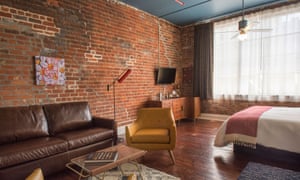
This is how to refurb a hotel. Not by over-stuffing it with designer gubbins but by paring the whole place (including the rooms) right back and letting the history of the building – an 1850s warehouse with hardwood floors and exposed brick walls made from Mississippi mud clay – shine through. There are 166 rooms but it has the feel of an easygoing and very friendly boutique hotel. The new restaurant,Compère Lapin is also several cuts above your standard hotel eatery. St Lucia-born chef Nina Compton blends the tropical flavours of her homeland with the rich New Orleanean cuisine – a heady, flavourful mix that includes curried goat with plantain gnocchi, spiced pig ears, snapper crudo and marinated shrimp with roasted jalapeño jus. The bar mixes great cocktails, too, and it’s only four blocks from the French Quarter.
 Doubles from $109 a night plus tax, room-only, +1 504 527 5271,old77hotel.com

The Country Club outdoor pool

Country Club, New Orleans
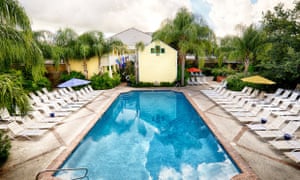
New to this Bywater neighbourhood institution this year – ending 35 years of optional au naturel bathing – is compulsory swimwear. This comes after a ruling by the state’s alcohol and tobacco control board put a stop to the “louche” behaviour. This strikes me as an odd piece of legislation, given that bathers are not only still allowed to smoke and drink around the pool but actually in it, too. The baking afternoon I visited, I counted 17 people in the water, and I was the only one swimming lengths. Everyone else was just hanging out in the water, cocktail in hand, to cool off. So I gave up, ordered a margarita and joined them. Only in New Orleans … what a fabulous place.
 Entry $10-$15, meals $6-$14, cocktails from $6,thecountryclubneworleans.com

St Roch Market

St. Roch market
Pinterest
 Photograph: Max Becherer/AP
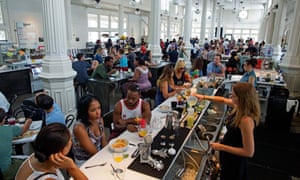
With the city booming and Katrina causing an unprecedented population shift (to and from the city), gentrification conundrums abound in New Orleans, and the exciting but controversial new St Roch food market is a textbook example. The beautiful building is home to 15 different types of vendor, selling oysters, coffee, seafood, charcuterie, Creole-fusion food and so on, plus a well-stocked bar at the back. The problem is that for over a century this very cool, and sensitively restored space was home to a fish market until it closed right after Katrina, and that is exactly what the local community says it wanted back … but wasn’t consulted on. Politics aside, the place has a friendly and welcoming vibe and all the food I tried was excellent – and affordable enough that few could complain of being priced out of here.
 Open daily 7am-10pm (11pm Thurs-Sat), 2381 St Claude Avenue,strochmarket.com

Cocktail bars

Cellar Door, New Orleans
Pinterest
 Speakeasy charm … Cellar Door.
The New Orleans cocktail fraternity speak of Jeff “Beachbum” Berry in reverential terms, and after spending a couple of hours in his bar, Latitude 29, which opened in the French Quarter at the end of last year, I can see why. The signature Latitude 29 (eight-year Demerara rum, passion fruit puree, Madagascar vanilla syrup, orange, pineapple and lemon) is a delicious drink, a perfect modern-day example of the tiki art. The bar snacks are great here, too (bahn mi, steak frites, curly fries), and during happy hour these cost just a few dollars.
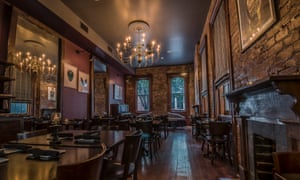
A large number of restaurants and cocktail bars have opened in New Orleans in the last couple of years – the Cellar Door is a bit of both. It’s housed in one of the city’s oldest buildings (once one of its longest-running brothels), and has an atmospheric speakeasy feel. The craft cocktails are on the money and small plates (tuna tartare, chicken wings, fried green tomato sandwich) soak up the booze nicely.

The Lafitte Greenway

The Lafitte Greenway, New Orleans
Pinterest
 Way to go … the proposed Lafitte Greenway will from City Park to Louis Armstrong Park
Chosen by Lindsay Pick, co-founder, Louisiana Lost Lands Environmental Tours
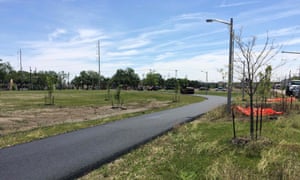
The Lafitte Greenway is a 2.6-mile park that will run through the heart of New Orleans from City Park to Louis Armstrong Park. Originally a canal connecting Bayou St John to the edge of the French Quarter, it was a vital historical transportation corridor that has been unused since the mid-20th century. The Greenway will include scenic transportation routes via a bike and walking path, and provide much needed storm water-retention areas with native plant meadows and bioswales. It will also provide recreational areas with football and soccer fields. The Greenway is scheduled to open this summer.
 lafittegreenway.org

Out of town kayak tours

Lost Lands Tours, New Orleans
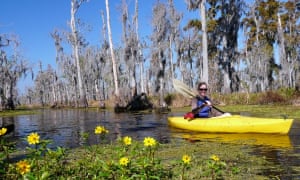
Lost Lands’ kayaking trips couldn’t be more different from a touristy feed-the-gators swamp tour. It offers a chance to paddle Louisiana’s cypress and tupelo forests, meandering bayous, and the sprawling wetlands that sit on New Orleans’ doorstep and once laced the city itself. It is a fascinating but also sobering tour, focussing not only on the region’s mesmerising beauty but also its natural history and the catastrophic environmental damage – as a result oil drilling, dredging and mining – that is causing the Louisiana coast to steadily sink into the Gulf of Mexico.
 Tours from $95pp, lostlandstours.org

New shops

Krewe, New Orleans
Pinterest
 The new Krewe store in the French Quarter. Photograph: Hunter Holder
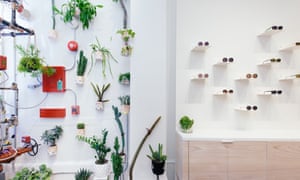
People don’t give a damn what you wear in New Orleans – and I mean that in a good way – but in such sultry climes, a cool pair of sunglasses is a must. Krewe (as in a Mardi Gras crewe) is a local sunglasses company that has become phenomenally successful across the States and beyond (Beyonce has worn them) in just two years. The high-quality shades created by founder Stirling Barrett have a classic retro look, and were in such demand locally that it opened a small impromptu shop under the office (800 Common Street) and is launching another in the French Quarter (809 Royal Street) any day now.
Solange Knowles, Beyonce’s little sister, opened Exodus Goods (518 Conti Street) in the French Quarter last year. It’s the kind of minimalist boutique that has just one rail of very expensive clothes (though I did spot a bargain or two) and the male assistant wears a turban as a fashion statement. And the brilliant Euclid Recordswhich we featured last year, has moved just around the corner to 3401 Chartres Street and now has an even bigger selection of vinyl over two floors.

RESTAURANTS

Doris Metropolitan

Doris Metropolitan, New Orleans
Pinterest
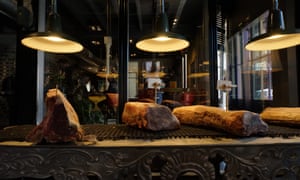
This modern, buzzing Israeli-owned steakhouse typifies the city’s booming restaurant scene: you would never have seen anything remotely this sophisticated at the touristy end of the French Quarter pre-Katrina. My steak (butcher’s cut with mushroom ragù, $38) was as flavourful and well-cooked as you’d expect from a restaurant that hangs aged hunks of beef in its window like pieces of art and has a Japanese Wagyu Striploin for a ridiculous $185 on the menu. But even better was my tuna tartar starter ($15), laced with ginger emulsion, tobiko, salicornia, radish, avocado, soy pearls, wasabi – a memorably beautiful and delicious plate of food. And while this is anything but a typical Nola restaurant, it is still big on the region’s gorgeously rich seasoning – the French fries are flavoured with truffle oil and the mashed potatoes (I had both, for research purposes) thick with cream and garlic.
 620 Chartres Street, +1 504 267 3500, dorismetropolitan.com. Open daily 5.30pm-10.30pm for dinner and Fri-Sun noon-2.30pm for lunch

Pêche Seafood Grill

Peche Seafood Grill, New Orleans
Pinterest
 Photograph: Chris Granger
Chosen by Stirling Barrett, founder, Krewe du Optic
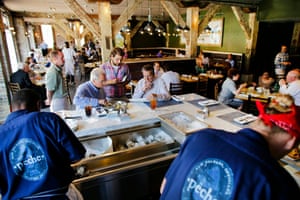
Until you visit New Orleans, you may not realise how walkable this city is. Or, in my case, bike-able. Most of my favourite haunts are a few hundred peddles from my front door, but restaurant number one these days happens to be a few steps away. Pêche, owned by Louisiana chef Donald Link, is one the busiest restaurants in the city. It has a fresh, modern take on our coastal seafood and cooks many of its dishes on an open hearth over hardwood coals – which you can see in the open kitchen. But I usually bypass the line at the door, take a bar seat and settle in for the best oysters in town, smoked tuna dip and something crispy from the wine list.
 800 Magazine Street, +1 504 522 1744, pecherestaurant.com. Open Mon-Thurs 11am-10pm, Fri-Sat 11am-11pm

1000 Figs

1000 Figs, New Orleans
Pinterest
Chosen by Gregory Gremillion, owner, Cellar Door cocktail bar
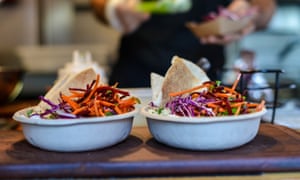
These guys started out as a food truck called the Fat Falafel in 2012, and opened this restaurant a few months ago. It’s in Mid-City, a world away from the French Quarter, the place is tiny (about 25 seats), it doesn’t take reservations, and it’s BYOB. Go to Swirl, the wine shop next door, and ask for a suggestion on what would go with the restaurant’s current seasonal menu. We went for the Falafel Feast for Two ($28), with hummus, baba ghanoush, yogurt, pickled vegetables, root slaw, local greens, tahini, cilantro chile sauce, and toum. It was delicious.
 3141 Ponce De Leon Street, 1000figs.com. Open Tues-Sat 11am-9pm, closed Mondays

Private Dining Room supper club

The PDR Nola supper club, New Orleans
Pinterest
Chosen by Will Donaldson, co-founder, St Roch market
I have been very impressed by the Private Dining Room; it reflects something unique about New Orleans culture and also took great start-up gumption. Rita and Will opened a weekly speakeasy supper club in their kitchen and dining room, something I think you’ll see more of as people jump into business in new and different ways when they have something to add to the local food scene. Hesitation goes out of the window and people try new models. That ties back into the rich and innovative creative culture we have here in New Orleans. And most importantly, the food is excellent!
 1026 Henriette Delille Street, thepdrnola.com

New Orleans Traditional Jazz Camp

If you play trad jazz at any level, even in your bedroom, the New Orleans Traditional Jazz Camp would be the holiday of a lifetime. It is in it’s seventh year but still growing, and in 2016 there will be two camps. Participants from all over the world are based at the grand old Bourbon Orleans hotel in the French Quarter, and take classes and rehearsals led by professional local musicians, building up to a double-finale at the end of the week: playing a concert at legendary jazz venuePreservation Hall and in a marching band through the French Quarter. For an amateur musician this is the equivalent of a pub football team playing at Wembley, twice in one week.
 2016 camps run 19-24 June and 30 July-4 August and cost $1,800pp, including instruction and six nights half-board at the Bourbon Orleans hotel but excluding flights, neworleanstraditionaljazzcamp.com

Where Y’Art

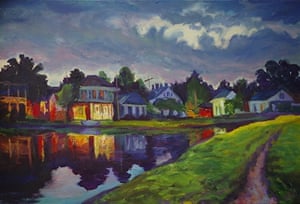
Where Y'Art …  Original piece, Path Down Bayou St John, by Adam K Hall.
 Where Y’Art … Original piece, Path Down Bayou St John, by Adam K Hall. Photograph: Adam K Hall
Chosen by John Price, manager, Old No 77 Hotel and Chandlery
Where Y’Art came into existence almost exactly a year ago with the mission of creating a community of artists and art-lovers throughout New Orleans. Co-founders Collin Ferguson and Cat Todd have a unique and collaborative approach to showcasing local artists and designers. They do so not only through their gallery space on Julia Street but also on their website. It’s a brilliant way to provide a venue for artists to reach a global audience and an equally marvellous way for art-lovers to connect with some of the ground-breaking work that is emerging in New Orleans’ art scene. Where Y’Art is a great example of that wonderful synthesis that is happening in New Orleans: the merging of traditional culture with more of a contemporary approach – and creating a distinctive nuance of the sharing-economy.
 835 Julia Street, whereyart.net
 Flights were provided by Netflights (01772 394466, netflights.com), which has returns from Heathrow to New Orleans, via a US hub, from £723. Accommodation was provided by The Old No 77 Hotel and Chandlery (+1 504 527 5271,old77hotel.com), which has doubles from $109 plus tax a night, room-only. For visitor information see neworleanscvb.com
From , www.theguardian.com