Showing posts with label #Wine. Show all posts

Tuesday, May 5, 2020

South African Wine Harvest Report 2020: Great Season, Remarkable Wines


Wines of South Africa excited to showcase the exceptional new vintage
South Africa's 2020 wine grape crop will bring exceptional wines to consumers, following favorable conditions throughout the season. This according to the South African wine industry's annual Wine Harvest Report 2020.
"Although it's always important to take our diversity over 10 wine grape growing regions into account, the industry had a very good season overall, which we believe will bring great quality wines to consumers," says Conrad Schutte, consultation service manager of the wine industry's representative body Vinpro.
The 2020 wine grape crop is estimated at 1,487,991 tons, according to the latest estimate of industry body SAWIS (South African Wine Industry Information & Systems) on April 24, 2020. It is 8.2% larger than the 2019 harvest.
Weather conditions were favorable in general and the bunch numbers looked promising early in the season, but windy conditions during the set and sensitive berry growth stages resulted in smaller berries and a lighter crop. The season was also characterized by great variation between and even within the same vineyard blocks in areas that experienced dry conditions.
The Stellenbosch, Swartland, Cape South Coast, Paarl and Breedekloof regions all harvested more wine grapes than in 2019, with the Olifants River region almost returning to its normal production levels after being one of the regions hardest hit by the recent drought. The Klein Karoo region still struggles with the ongoing drought, also experienced in certain parts of the Robertson region, while frost damage resulted in great crop losses in the Northern Cape.
The COVID-19 scurry
Although the harvesting season kicked off around two weeks earlier than usual, the unexpected announcement of the COVID-19 lockdown, in effect from March 26, 2020, created a scurry among many producers to harvest the last grapes of the season and complete winemaking processes in cellars. Wine-related activities were initially prohibited, but Government made a last-minute concession which allowed for the harvesting and storage activities essential to prevent the wastage of primary agricultural goods during the lockdown. At the time, around 44,092 tons still needed to be harvested.
"With uncertainties during the announcement of the lockdown some producers decided to harvest the grapes without prejudice just to get it to the cellar, while others waited for optimal ripeness to ensure exceptional quality," Conrad says.
Wine quality exceptional
"We are excited about the exceptional wines that will flow from the 2020 wine grape crop, with Chenin Blanc and Chardonnay leading the pack," Conrad says. "The early cultivars showed very good acidity, and the color and tannin analyses in the red wines promise full wines with concentrated flavor profiles."
The 2020 wine harvest – including juice and concentrate for non-alcoholic purposes, wine for brandy and distilling wine – is expected to amount to 276,377 gallons at an average recovery of 204.7 gallons per ton of grapes.
Ready to take our wines to the market
Following restrictions on both local sales and wine exports during South Africa's COVID-19 lockdown, the industry was relieved that Government allowed for the export of alcoholic products from May 1, 2020, including transport to ports and airports, as well as related activities to prepare wine for exports such as bottling and labeling.
"As an industry we are grateful and relieved to be able to resume exports. This finally enables us to showcase our exceptional new 2020 vintage wines to trade, media and consumers around the world," comments Siobhan Thompson, CEO of Wines of South Africa.
She continues, "We would like to thank all of our international networks of agents, importers and friends who have never wavered in their support of our wine and our people, despite the challenges we've faced as an industry."
South Africa is the ninth biggest wine producer worldwide and produces about 3.3% of the world's wine. The wine industry contributes $1.95 billion to the country's gross domestic product (GDP) and employs nearly 300,000 people.
2019/20 Growing season
Most regions experienced a better post-harvest period than previous years. The leaves fell around the same time or later than usual, vines were healthier and producers had access to post-harvest irrigation water.
Sufficient cold units were accumulated during the winter to break dormancy, while rainfall varied across regions but was mostly below average.
With spring came mostly favorable conditions, which contributed to a somewhat earlier but even budbreak. The early growing season was especially known for good, homogenous shoot growth.
During summer, temperatures were moderate during the ripening period, with the absence of characteristic heat peaks. These conditions particularly bode well for the flavor retention in the grapes. Rainfall during the ripening period relieved pressure on water resources in some regions, while it resulted in a surge in diseases (downy mildew, sour rot and botrytis) and necessitated proper weed control in other areas.
Overview of regions:
Breedekloof
Slightly larger crop than in 2019, mainly driven by the occurrence of wind during berry growth, which had a negative effect on flowering and set.
Cape South Coast
Better yields than the previous season, thanks to favorable climatic conditions, the implementation of Guyot pruning systems, utilization of chemicals to break dormancy and amendments to fertilization programs.
Klein Karoo
Yet another small crop due to the ongoing drought and a shrinking area under vines.
Northern Cape
Lower than expected production, due to severe frost experienced at the end of October in the lower lying areas east of Upington.
Olifants River
A great year as vines are recovering well following the drought and the region had better water supplies than during the previous season.
Paarl
A better crop than in 2019, owing to beneficial post-harvest conditions, sufficient water for irrigation and moderate temperatures during ripening.
Robertson
Smaller yields due to water shortages in certain parts of the region, as well as smaller berries caused by wind during set, a decline in new plantings and the occurrence of botrytis and sour rot following rain in January.
Stellenbosch
A bigger wine grape crop than in 2019, thanks to good reserves being accumulated in the post-harvest period, rain during critical berry growth stages and moderate climate throughout the growing season.
Swartland
Bigger yields than in 2019, characterized by good bunch figures thanks to good post-harvest and winter conditions. Soil profiles were also supplemented well through late winter rainfall.
Worcester
Varying yields throughout the region, with producers recording a somewhat larger crop than in 2019.
See https://vinpro.co.za/ for the full harvest report per region.
About Wines of South Africa
Wines of South Africa (WOSA) is the organization representing all South African producers of wine who export their products. WOSA, which was established in its current form in 1999, has over 500 exporters on its database, comprising all the major South African wine exporters. It is constituted as a not-for-profit company and is totally independent of any producer, wholesaling company or government department but is recognized by the South African Export Council. WOSA's mandate is to promote the export of all South African wines in key international markets including the United States.


SOURCE Wines of South Africa

Friday, June 15, 2018

La Jolla Art & Wine Festival Presented By Wells Fargo Celebrating 10 Years Of Prestigious Art, Wine & Family Fun


Saturday, October 6th and Sunday, October 7th, 2018
***FREE EVENT***

La Jolla, CA – Nothing compares to San Diego’s chic coastal town of La Jolla, where eclectic shops and top-rated restaurants align the streets, and the soft breeze of the Pacific Ocean keeps you cool in the summer heat. For the past 10 years, this quaint beach town has also been home the beloved La Jolla Art & Wine Festival. Widely recognized as one of Southern California’s most prestigious art and wine festivals, this FREEtwo-day festival will return to la Jolla on October 6th and October 7th, from 10 am to 6 pm, to once again showcase spectacular art, fine wine, San Diego’s best craft beers, live entertainment, and family-friendly activities.

This expertly curated festival features over 150 sought after artists from across the U.S. and Mexico. Their exquisite creations come in a variety of mediums including painting, sculpture, jewelry design, fine glass, ceramics, woodwork, mixed media and photography. But this Festival isnot just for the art connoisseur… budding artists can create their own innovations here as well! The Geppetto’s Family Art Center + Lab offers interactive demos, hands-on experiments, and an assortment of arts and crafts for children of all ages. Kids can paint on a car, learn about 3-D printing, test their skills on the gymnastics obstacle course, and much more in this FREE activity center! 

The La Jolla Art & Wine Festival has also become a national destination where vino enthusiasts and craft beer lovers unite. The iconic Wine & Beer Garden highlights over 40 local craft breweries and international wineries. Let the libations specialists guide your taste buds on a savory journey of some of the world’s finest beverages! Along with a gourmet marketplace, a two-day silent auction, 15 pet adoption stations, and an all-star line-up of live entertainment and music, there is truly something for everyone at the 2018 La Jolla Art & Wine Festival.

All profits raised benefit underfunded programs such as art, music, science, physical education, technology, and on-site medical care at La Jolla public elementary and middle schools. For more information visit www.ljawf.com or call 619.233.5008.

Sunday, March 25, 2018

Recommended Essentials For Your Travel Adventures

The Case+Drift All-Purpose Travel Companion towel is designed to be quick drying and compact for all your travel adventures, 100% cotton and made in Turkey. For more details and how to order please visit: Www.CaseAndDrift.Com


The technologically advanced insulated Swig Stemless Wine Cup will keep your wine cold up to 9 hours on a hot day by the pool; stainless steel, with copper coated insulation and BPA-free lid. For more details please visit: Www.Swigbyom.Com


 mk5 Isolator EarphonesHigh quality noise isolation earphones are essential for travelers. One of the issues we've had with many other options is weight; The Isolator earphones weigh less than 1 oz. and provide 98% noise isolation (35-42dB) and frequency response of 20Hz-15kHz. For more details please visit: Www.etymotic.Com 

Monday, January 29, 2018

2015 Wines: A Very Good Year For Bordeaux


2015 is a very good year for the wines of Bordeaux. This is the year fruit rose to stardom and tannins and acidity realized important supporting roles. August rains and cool nights brought balance to the crop after several weeks of drought in the early summer.
Location, Location, Location
The Bordeaux region is equidistant between the North Pole and the equator. The 45th parallel appears to offer an ecosystem that is noted as being ideal for the over 6 thousand winegrowing estates in this geographical area.
Grape Superstars
Cabernets and Merlots hold the leading roles for red wines (over 90 percent of wines produced), while Sauvignon and Semillon are the headliners for dry and sweet whites.
Vine to Wine: Checking In

On a very cold, damp, and otherwise horrible afternoon in Manhattan, swirling and sipping the wines of 2015 Bordeaux at Cipriani’s 42nd Street converted bank building appeared to be a perfect way to spend this precious (and dismal) mid-week afternoon. As a Cathedral of Commerce, the former Bowery Building (built in 1921 by architects Edward York and Philip Sawyer) offers guests a step back in history, grandly showcasing Italian Renaissance design complete with marble columns, 65-ft high ceilings, old world chandeliers along with stone carved figures and motifs that symbolize money.

Cheese and More Cheese
It is never a good idea to drink wine on an empty stomach – so the first stop for wine aficionados started at the buffet table that offered the hundreds of wine industry professionals a cheese assortment, alongside olives, fruits, vegetables, bread sticks and rolls.

The Union des Grands Crus de Bordeaux

Hundreds of wine industry leaders found their way to crowded tables to sample wines from Graves, Pessac Leognan, St. Emilion Grand Cru, Pomerol, Listrac-Medoc, Moulis-en-Medoc, Haut-Medoc, Medoc, Margaux, St. Julien, Pauillac, St. Estephe, and Sauternes et Barsac.
Curated Selections:
  1. Chateau Villemaurine Rouge. 2015. 80 percent Merlot, 20 percent Cabernet-Franc

In the 7th century the Villemaurine name is found at a Moors camp at a site originally termed Ville Maure. It is also the locale where Emilion, a monk, settled in the 8th century. In the 17th century, Villemaurine was transferred to Antoine Limouzin – the first Clerk in the port of Libourne. Prior to the French Revolution, the estate was in the hands of Jean Combret de Faurie who also owned Chateau Soutard. By the end of the mid-18th century there was an established vineyard and the owners stopped farming all other crops. At the beginning of the 19th century, Jacques Combret de Milon inherited the estate and then it was acquired by to Jean Laveau. The estate continued to change ownership throughout the 19th century. By 1874, the “Feret” (Bordeaux wine directory) mentioned Villemaurine as a “Saint Emilion First Growth.” In 1893 the parcels were joined into one vineyard by Raoul Passemard and received acclaim at the Bordeaux International Exhibition. At that time, Chateau Villemaurine was referred to as one of the best Saint-Emilion “First Growths” and won awards at various international events. In 2007 the Chateau was purchased by Justin Onclin who recently brought Hubert de Bouard of Chateau Angelus to the winery as a consultant.
Chateau Villemaurine includes 30 acres in the heart of the Saint-Emilion limestone plateau.  The fruit is fermented in double-walled stainless steel vats for approximately 20-25 days; malolactic fermentation takes place in French oak barrels for 16-18 months, (70-90 percent in new oak and the rest in second-fill barrels) and bottled at the estate for 18-20 months.
Notes:

Deep ruby red to the eye and a wave of sour cherries and young strawberries tempered by a whiff of green fir trees pleasures the nose. Rich in soft tannins that are enhanced by wood and earth, tobacco and leather offersexciting taste adventures. Complex, impeccably balanced, long delicious lush finish encourages a reach and pour for the next glass.
  1. Chateau Giscours. Crus de Margaux. Appellation. Bordeaux, commune Labarde. 60 percent Cabernet Sauvignon, 32 percent Merlot, 5 percent Cabernet Franc and 3 percent Petit Verdot.

Classified as one of the 14 Troisiemes Crus (Third Growths) in the Bordeaux Wine Official Classification of 1855. The terroir includes deep gravels from the Garonne River and sand from the Ice Age. The vines range in age: from 4-10 years – 15 percent; 10-25 years – 50 percent and 25 years – 33 percent; handpicked followed by hand-sorting. Vinification: Concrete and stainless steel tanks.  Aged in 100 percent French oak barrels (fine grain and medium toast). Ageing time: 15-18 months. Racking: every 3 months with candle Fining –with egg white albumen.
The President of the Chateau is Eric Albada Jelgersma and General Manager is Alexander van Beek. The Consulting oenologist is Denis Duborudieu.

Notes:
Dense and deep maroon to the eye with a bouquet to the nose that is rich and powerful sending flashes of light fresh cherries, strawberries, leather, pipe tobacco, oak and leather with a hint of bananas to the palate. This complex wine offers layers of soft tannins, deep cherries, and oak barrels that lead to a long and delicious finish.
  1. Chateau La Lagune. Haut Medoc 65 percent Cabernet Sauvignon, 30 percent Merlot and 5 percent Petit Verdot
17
Chateau LaLagune dates back to the 16th century, during the reign of King Henri IV. At this point in history, Dutch engineers initiated the modern age for Bordeaux by draining the water from the marshes and swamps. The Chateaux was built in 1715 by Baron Victor Louis (who also designed the Grand Theater of Bordeaux). The LaLagune Chateau’s fame started in the mid-18th century and was owned by the de Seze family for many generations.
The vineyards uses 100 percent organic farming techniques, having earned their certification with the 2016 vintage. The wine is fermented in 72 different, temperature controlled, stainless steel vats to allow for parcel -by- parcel vinification. Malolactic fermentation takes place in vat and the wine is blended before the aging process is started. The wine is aged between 50-60 percent in new French oak barrels for 18 months before bottling.
Notes:
The eye appeal trends from deep garnet to light coral pink. A mélange of fruits delivers ripe black cherries blended with fresh sweet tobacco, leather, earth and roasting chestnuts that rewards the palate. The perfectly balanced finish conjures up images of après-skiing, huge roaring fires and cushy leather chairs.
  1. Chateau Doisy Daene. Region/Appellation – Barsac; Country: Sauvignon Blanc, Bordeaux, France; Varietal: Sauvignon Blanc and Semillon
Located in Barsac, in the Sauternes appellation, this Chateau has been in the Dubourdieu family since the early 20th century, engaging three generations in the enterprise. The terroir of the Barsac plateau highlights a layer of clay sands (Barsac red sands) above a chalky subsoil. The cracked calcareous rock layer limits the rooting depth of the vine to approximately 20 inches. The water is stored within the slightly porous rock throughout the summer and dispensed to the vine during the winter, preventing too much water. The soil nurtures the making of elegant and distinguished white wines. Fermented in barrels. Ageing – 8 months with the lees regularly stirred.
Viticulture: traditional ploughing with no weed killer introduced. Organic manures are made with vegetal-based composts. Bud removal, trellising and leaf removal are done by hand. To balance the carbon footprint, a forest area equal in size to the vineyards is maintained.
Notes:

Lordy, Lordy, this is a delicious wine. Think of bright yellow apples and you can imagine the hues of this wine. The nose does a “happy dance,” inhaling honey, honey suckle, a Monet blend of citrus with grapefruit, lemon and lime highlights with flashes of bananas. Soft and seductive on the palate, delivering lush blends of citrus and honey-buttered bread. A drop of acidity takes it from sweet to striking.

  1. Chateau Suduiraut Premier Cru Classe en 1885. Sauvignon Blanc -94 percent, Semillon – 6 percent. This Suduiraut delivers 123 grams per liter of residual sugar and 4.56 grams per liter of acidity.
It may be hard to accept, but it is ROT that makes Sauterne so very extraordinary. The vineyards of Sauterne and Barsac make the areas around the Garonne and Ciron rivers their resting points. In the early autumn The Garonne is warm and when the cool spring-fed water of the Ciron feeds into it the temperature differences create an evening mist. In this case fog is a good thing as it creates the ideal conditions for Botrytis cinerea, Noble Rot.
Here again, MOLD is a good thing because it is vital to Sauterne. The Noble Rot creates tiny holes in the grape skins and the water inside evaporates and concentrates the juice. The mold chemically alters the juice, usually Semillon and Sauvignon Blanc, adding to the complexity and aroma. The mold is not a one – off so the best chateaux harvest multiple times and may even go through the vineyard selecting berry by berry.
Success is determined by the sweetness of the wine plus its liveliness that is dependent upon acidity and spice plus a mélange of flavors that includes tobacco, mint, oak, orange, saffron and jasmine brought together in honeyed ecstasy.
Chateau Suduiraut dates back to the mid-16th century in Satuerne. In the 17th century Count Blaise de Suduiraut hired the designer of the gardens of Versailles to plan the grounds, lakes and greenery of Chateau Suduiraut. Currently the estate is owned by the French insurance company AXA who also holds Chateau Pichon Baron in Pauillac and Chateau Petit Village in Pomerol.
Notes:
Golden to the eye, with lemons, limes, honey, bananas, kiwi, apricots, pears mixed with sunshine softly delivered to the nose. Look out for an OMG palate experience that carries botrytis spice and rich vivid fresh lemons and limes mixed with honey to the palate leaving a sweet but not saccharin finish that suggests juicy golden yellow raisins.
For additional information www.ugcb.net

Source: http://wines.travel/2015-wines-good-year-bordeaux-3055/

Thursday, January 25, 2018

Customizable Wines

One of the best ways the best way to support the businesses and people of wine country is to support their biggest export, and nothing is as classic to drink and gift than classic California Cabernet or Chardonnay. Vintage Wine Estates—a parent company of many wineries in Northern California (including for the wines below)—is continuing to contribute to its Heart of the Vine Campaign, which provides funds to those who were affected by the fires.

The DIY folks at Windsor Vineyards have mastered the art of making tremendous wine with an intensely personal twist. On their website, you can choose from their templates or design your own custom label—for no cost—to affix to any of their wines.

Image result for 2015 Platinum Series Napa Valley Cabernet SauvignonTheir 2015 Platinum Series Napa Valley Cabernet Sauvignon (SRP $32) is balanced and impactful, a splendid example of a quintessential California Cabernet. Flavors of black cherry, licorice and black peppercorn dominate to front palate but are are backed by smooth, sweet vanilla bean. Rich tannins and lively acid then burst forth, with the wine ending in a resounding finish of spice, coco nib and charred cedar.

Image result for windsor vineyards 2016 ChardonnayEqually exciting is Windsor's 2016 Chardonnay Russian River Valley Platinum Series (Evelyn Parrish Vineyard) [SRP $32] is an exquisite take on the grape, lush and round with aromas of honey, lemon, and vanilla. On the palate the flavors are juicy, with toasted almond and Asian pear; the finish evolves into a crisp finale with a final wash of balanced acidity.

Wednesday, December 6, 2017

Tuesday, November 21, 2017

Travelore's 2018 Gift Giving Recommendations

The BauBax Bomber Jacket, with both men's and women's versions , is designed to be most efficient for travelers with easy access to everything you need including a fast inflating/deflating neck pillow. We recommend a size larger since we found the fit snug. For information please visit: wwwBauBax.Com

For holiday and everyday celebrations Prosecco has become the choice of many wine lovers. One of our recommended selections is Mionetto Prosecco DOC made with organically grown grapes. Expect the delicate bubbles of a fine champagne with undertones of elder-flower and green apples. 

Please visit: www.mionettousa.com/When you need to look your best for a special occasion, Luster Now toothpaste makes your teeth appear whiter and brighter for up to 5 hours after just one brushing, developed by dentists to be gentle on enamel and dental restorations. For details please visit: www.LusterPremiumWhite.Com  


Image result for toad and co
Travel clothing from Toad & Co is designed to go from trail to casual evening wear. One of
their more unique features is their Insect Shield treated garments that will repel mosquitoes,
ticks, ants, flies, chiggers, and midges that will be effective for 70 washings. For more
details please visit  www.toadandco.com

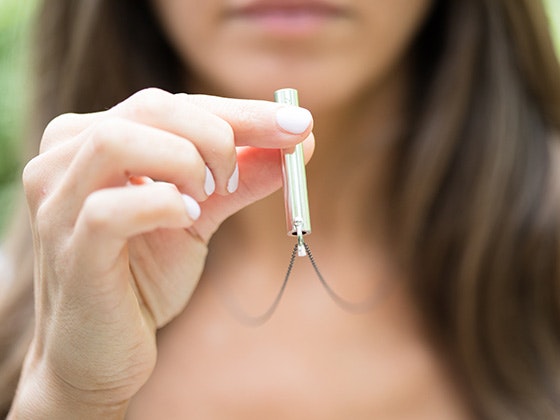
Image result for komuso necklaceThe Komuso Design "The Shift Necklace" is designed as a reminder to breathe and be still in our busy lives. For more information please visit Www.KomusoDesign.Com


Friday, October 27, 2017

Northern California Wine Country Inns Are Open For Business

Image result for Northern California Wine Country Inns


SACRAMENTO, CA [October 27, 2017] -- Despite the television images of fires raging across swaths of California’s wine country and the reports of catastrophic damage, the vast majority of the region’s wine and tourism industry escaped unscathed. But they’re suffering now that the smoke has cleared.

“Many boutique hotels and bed and breakfast inns in the region are receiving cancellations because travelers don’t realize that they are open for business,” said Jenn Iliff, Program Manager for the California Association of Boutique and Breakfast Inns (CABBI).

Of the 46 CABBI-member inns in Napa, Sonoma and Mendocino Counties, none were damaged by the fires and all but one are open for business.  The one inn that remains closed—Kenwood Inn & Spa—expects to re-open shortly. 

The Beazley House Bed & Breakfast Inn in Napa has been hosting guests and PG&E workers without interruption since fires began just over two weeks ago.  Owner Jim Beazley said the City of Napa was never evacuated; nor did anyone in the city lose phones, power or services. 
Beazley and his wife Carol toured Napa Valley from Napa to Calistoga this week along the two the major wine tasting routes: Highway 29 and Silverado Trail.  Though some fire damage is visible along Silverado Trail, Beazley said that none of the most famous wineries along Highway 29 were damaged. “Of the 450-plus wineries in Napa Valley, only seven wineries were severely damaged or lost,” said Beazley. “Over 99% of Napa’s wineries remain open.”

It’s a similar story in Sonoma County, where Farmhouse Inn owner Joe Bartolomei said that of the hundreds of wineries in the region, only a handful were damaged or destroyed. 
Bartolomei has been fielding reservation calls from guests who wanted to cancel because they thought the inn had burned down or wanted to postpone because they were uncomfortable visiting while the region is recovering.  Bartolomei tells them, “The best thing you can do right now is come and support the tourism businesses.”

CABBI has set up quick links on its website for visitors to search for inns in Napa, Sonoma and Mendocino Counties.
For more information about CABBI and its member inns, visit www.cabbi.com.

Wednesday, October 25, 2017

California Wine Country Has Not Burned Down And Is Welcoming Visitors #Wine

Meggan Driscoll Napa Valley © Bob Ecker


On the night of Sunday, October 8, Northern California Wine Country was hit with a dangerous “perfect storm” of atmospheric conditions combining: warm temperatures, extremely low humidity, bone-dry fields and forests, and very strong winds. Beginning at 9:52 pm, 17 wildfires sprung up throughout the wine country counties of Napa, Sonoma, Lake, and Mendocino counties. These were considered wildland urban interface fires, meaning forest fires within close proximity to human habitation and businesses. And these fires were big and fast-moving, among the worst in California’s history. The result was a tragic toll on some communities, notably in Santa Rosa in Sonoma County. Some people lost their lives, many were evacuated, and some people are still displaced.
Yet it could have been much worse. Firefighters mobilized quickly, and crews from around California and beyond poured in to battle the Atlas, Nuns, Tubbs, and Redwood Valley fires among others. As heavy smoke shrouded much of Wine Country, teams of first responders made headway against the blazes and of this writing, almost all of these fires have been extinguished. Volunteers helped out, and nearby unaffected communities rallied to assist. Happily, the smoke has long since blown away as Wine Country gets back to business. Most wineries, restaurants, hotels, and related businesses are back open and undamaged. Another fortunate development was that when the fires hit, about 90% of the grapes in Wine Country had already been harvested. And it turned out that the healthy vineyards proved to be a very effective firebreak.


Solano County © Bob Ecker
Dr. Anita Oberholster is Cooperative Extension Specialist in Enology, University of California, Davis. This university offers America’s premier Enology and Viticulture program. She said, “Although any loss is heartbreaking, we currently have confirmed reports of 15 wineries that were totally destroyed or severely damaged by the fires. This is a very small percentage, and we urge potential visitors to continue their planned visits and support the grape and wine industry in Northern California.” Approximately 1,200 of California’s 4,600 wineries are situated in Lake, Mendocino, Napa, and Sonoma counties.
“Aside from heavy smoke the first few days, there was no damage to us or our employees’ property in the Napa area. We had many cancellations of visits these first two weeks,” said Delia Viader, President of Viader Vineyards & Winery.
Shelley Post is the President of Four Sisters Inns, a group of premier inns primarily located in Northern California. Two of their properties remain closed, but the others are fully open for business. “We had an interesting mix of people staying at our properties including some good regular guests, people displaced by the fires, and first responders from all over,” said Post. “Our hearts reach out to all of those people affected.”
Like some other hotel properties, the Fairmont Sonoma Mission Inn was able to help to feed displaced locals and first responders. They also opened their locker rooms to anyone who needed hot showers. The luxury hotel sustained no damage and has fully reopened to the public.
View from my house © Bob Ecker
“There’s no physical damage to our properties, but our psyche has been disrupted! We’ve experienced tremendous anxiety, sadness, and stress caused by the loss of lives, the length and uncertainty of the wildfires, and their destruction, said Amelia Ceja, President and Founder of Ceja Vineyards. “We extend our deepest appreciation to the brave firefighters, first responders, and community members for their tireless efforts.”
Violet Grgich, Vine President, Grgich Hills Estate, said: “Most important, all of our employees and their families are safe. Sadly, we had three employees lose their homes due to the fires, but we did not lose any buildings or vineyards.”
Smoke Taint?
Another potential post fire issue is that of “smoke taint” that may occur in the 2017 grape vintage. There is no absolute consensus, but most suggest that this will not be a factor considering that most grapes were already harvested, and smoke did not last for an extended period of time. In fact, 2017 was looking like an outstanding year for the grapes.
Ehlers Estate in the Northern Napa Valley town of St. Helena was untouched by the fires. “The fragrance of the fermenting grapes is now far stronger than the smell of smoke,” said Winemaker Kevin Morrisey. “We’ll get through this, as we always do. We’re farmers after all.”
Remi Cohen, Vice President and GM of Cliff Lede Family Wines in Yountville, said: “Thankfully, most wineries in Napa and Sonoma were nearing the completion of harvest by the time the wildfires started. At Cliff Lede Vineyards, only 3% of our fruit remained on the vines when the fires began.” The Owner, Cliff Lede, is originally from Edmonton.
Dr. Oberholster from UC Davis stated: “At low levels, smoke adds complexity to the wine. It is only at very high levels that it will be seen as a fault or taint and can decrease the quality of the wine. We do not expect a significant economic impact on Northern California’s wine regions due to the fact that only a small percentage of wines may be affected by the fires and smoke.”
David Duncan, President & CEO, of Silver Oak Winery, said: “Other than the tasting rooms being closed for a week, we had little direct impact from the fires. All of our fruit was picked, and the wines in the winery will be totally unaffected.”
Megghen Driscol, Communications Director, Terlato Wine Group, told me: “The vast majority of our fruit was picked prior to the fire; in fact, we were night harvesting Chimney Rock’s estate fruit the night the fire broke out! A few of our smaller vineyard blocks still had fruit on the vine after the fire, and because of road closures, we had to halt harvesting for a few days. Once we were allowed back in, we elected to continue picking. We are taking a very methodical approach to these lots and are not rushing to judgement.”
Violet Grgich said: “We’ve sent samples of the fermenting wines to ETS lab in St. Helena, and we have no discernable sign of smoke taint. We’ll keep a close eye on the wines, of course. Overall, we think this will be a very good vintage!”
Fire Wooden Valley © Bob Ecker
Helping:
Many people across the world have asked how they can help. Most in Wine Country simply say: “Come back – California Wine Country is alive and well. Patronize the restaurants, inns, and wineries. Purchase California wines at home.” This will undoubtedly help local families and businesses to slowly recover. Additionally, many wineries in Napa Valley are donating tasting room fees as well as hosting fundraisers for fire relief. For those who wish to donate recovery and relief efforts, the Napa Valley Vintners recommends the Napa Valley Community Disaster Relief Fund.
“Visiting will help Sonoma County’s hospitality community get back to work,” said Tim Zahner, interim CEO of Sonoma County Tourism. “Fans of the area are urged to continue to support Sonoma County wineries, breweries, cheese makers, farmers, and local artisans. Purchases of items that were bottled in, made in, grown in, brewed in, or otherwise came from Sonoma County help local families recover economically.”
“We encourage our neighbors and guests from across the country to visit us to enjoy our delicious wines and legendary hospitality and please also support our wine country community in the Napa and Sonoma Counties,” said Amelia Ceja.
Most hotels and Inns are fully open, but visitors should check in with Airbnb before flying out. Restaurants and wineries are virtually all open, and in fact, now less crowded than usual. The small Charles M. Schulz-Sonoma County Airport has also reopened.
Soda Rock Winery’s Sales Director Isabelle Adams said: “Our doors are open, and we look forward to welcoming our customers once again. My new mantra: rebuilding Sonoma one case at a time.”