Southwest Airlines plans to drop its tradition of more than 50 years and start assigning seats and selling premium seating for customers who want more legroom.
The airline said Thursday that it has been studying seating options and is making the changes because passenger preferences have shifted. The moves could also generate revenue and boost financial performance.
Southwest made the announcement on the same day that both it and American Airlines reported a steep drop in second-quarter profit despite higher revenue.
Airlines are struggling with higher costs and reduced pricing power, especially on flights within the United States, as the industry adds flights faster than the growth in travel demand.
Southwest, based in Dallas, said its second-quarter profit fell 46% from a year earlier, to $367 million, as higher costs for labor, fuel and other expenses outstripped an increase in revenue. The results met Wall Street expectations.
American Airlines also reported a 46% drop in profit, to $717 million, and said it would break even in the third quarter — well below Wall Street expectations of 48 cents per share profit in the July-through-September period.
American “did not perform to our initial expectations” because of a since-abandoned sales strategy and an oversupply of domestic flights, CEO Robert Isom said. He said the airline was responding with a strategy that boosts profits and “makes it easy for customers to do business with American.”
Southwest’s unusual boarding process started decades ago as a way for the airline to save money by reducing the amount of time it took for a plane to land, load new passengers, and take off again — turn time, as it is called in the business.
Most airlines assign each passenger to a seat when they buy a ticket. Southwest requires customers to check in exactly 24 hours before departure unless they pay extra to guarantee a better place in the boarding line. Those who hate it call it a “cattle call” but many Southwest loyalists love it.
However, as flights have become more full it has gotten harder to score a window or aisle seat without paying extra. Also, some passengers appear to game the system: They use a wheelchair to get to the gate, where they are given priority in boarding, then miraculously walk off the plane without assistance after the flight.
The airline said in surveys 80% of its customers — and 86% of “potential” customers — want an assigned seat. It said open seating is the top reason that travelers stop flying Southwest and choose another airline.
Southwest also said it will offer redeye flights for the first time.
Southwest said that its first overnight, redeye flights will land on Feb. 14, 2025, on nonstop routes including Las Vegas to Baltimore and Orlando; Los Angeles to Baltimore and Nashville; and Phoenix to Baltimore. It plans to add more redeyes over time.
The changes in seating policy and redeye flights come as Southwest is under pressure from Elliott Investment Management. The hedge fund argues that the airline lags rivals in financial performance and has failed to change with the times. It wants to replace CEO Robert Jordan and Chairman Gary Kelly.
The airline said it will provide more details about its upcoming changes at an investor day in September.
Shares of all major airlines dipped before the opening bell Thursday. Southwest Airlines Co. fell 6% and American Airlines Group Inc. fell 7%. Delta, JetBlue and United slipped more than 1%.
AP
Showing posts with label Business news. Show all posts
Thursday, July 25, 2024
Monday, March 4, 2024
Travelore News: JetBlue, Spirit Airlines Call Off $3.8 Bln Merger On Antitrust Hurdle
Low-cost air carriers JetBlue Airways opens new tab and Spirit Airlines opens new tab canceled their $3.8-billion merger agreement on Monday, seeing no path forward after a U.S. judge blocked the deal in January on anti-competition concerns.
A successful deal would have created the fifth-largest carrier in the United States and helped Spirit ensure its survival, but the deal had been on the ropes ever since a Boston judge said it would harm consumers by reducing competition.
"With the ruling from the federal court and the Department of Justice’s continued opposition, the probability of getting the green light to move forward with the merger anytime soon is extremely low," JetBlue CEO Joanna Geraghty told employees in an internal note seen by Reuters.
"Even if the ruling was overturned on appeal, we simply don’t see a path to regulatory approval by the required July 24 deadline."
Spirit CEO Ted Christie said in a statement, "we concluded that current regulatory obstacles will not permit us to close this transaction in a timely fashion under the merger agreement." Under the agreement, JetBlue will pay Spirit $69 million. While the merger agreement was in effect, Spirit stockholders received approximately $425 million in total pre-payments.
Without the JetBlue deal, Spirit, the seventh-largest U.S. carrier, faces a rough road ahead. The ultra-low-cost carrier has grappled with weak demand in its key markets as it seeks to return to sustainable profitability. Some analysts have even suggested the company could face bankruptcy if it cannot shore up finances.
Spirit shares fell 14% in premarket trading, while JetBlue, the sixth-largest U.S carrier, shares rose 5.5%.
The decision is a victory for the Biden Administration, which has taken a hard line against tie-ups in the aviation sector and argued the deal would boost ticket prices for consumers.
The administration has used antitrust action and other enforcement efforts to try to bring down prices for U.S. residents across several industries.
The ruling by U.S. District Judge William Young found the proposed deal was likely to hurt competition in the U.S. aviation market and could hike ticket prices.
That prompted JetBlue to raise doubts over the future of its deal, saying it might be unable to meet certain conditions required as part of the agreement.
The Justice Department and Transportation Department did not immediately comment.
JetBlue opted not to appeal a separate ruling that had declared its Northeast partnership with American Airlines anticompetitive.
JetBlue, which last month hiked baggage fees, said is working on numerous near-term efforts to boost revenue by more than $300 million and said it is on track to deliver $175-200 million in cost savings from its structural cost program and $75 million in maintenance savings from its fleet modernization.
A judge in May sided with the Justice Department and six states in a lawsuit challenging the joint venture that American and JetBlue entered into in 2020, called the "Northeast Alliance," joining forces for flights in and out of New York City and Boston, coordinating schedules and pooling revenue.
Spirit said it was taking steps to ensure the strength of its balance sheet and ongoing operations and retained Perella Weinberg & Partners and Davis Polk & Wardwell as advisors.
Reporting by Aatreyee Dasgupta in Bengaluru and David Shepardson in Washington; Editing by David Gaffen, Devika Syamnath, Arun Koyyur and Nick Zieminski
A successful deal would have created the fifth-largest carrier in the United States and helped Spirit ensure its survival, but the deal had been on the ropes ever since a Boston judge said it would harm consumers by reducing competition.
"With the ruling from the federal court and the Department of Justice’s continued opposition, the probability of getting the green light to move forward with the merger anytime soon is extremely low," JetBlue CEO Joanna Geraghty told employees in an internal note seen by Reuters.
"Even if the ruling was overturned on appeal, we simply don’t see a path to regulatory approval by the required July 24 deadline."
Spirit CEO Ted Christie said in a statement, "we concluded that current regulatory obstacles will not permit us to close this transaction in a timely fashion under the merger agreement." Under the agreement, JetBlue will pay Spirit $69 million. While the merger agreement was in effect, Spirit stockholders received approximately $425 million in total pre-payments.
Without the JetBlue deal, Spirit, the seventh-largest U.S. carrier, faces a rough road ahead. The ultra-low-cost carrier has grappled with weak demand in its key markets as it seeks to return to sustainable profitability. Some analysts have even suggested the company could face bankruptcy if it cannot shore up finances.
Spirit shares fell 14% in premarket trading, while JetBlue, the sixth-largest U.S carrier, shares rose 5.5%.
The decision is a victory for the Biden Administration, which has taken a hard line against tie-ups in the aviation sector and argued the deal would boost ticket prices for consumers.
The administration has used antitrust action and other enforcement efforts to try to bring down prices for U.S. residents across several industries.
The ruling by U.S. District Judge William Young found the proposed deal was likely to hurt competition in the U.S. aviation market and could hike ticket prices.
That prompted JetBlue to raise doubts over the future of its deal, saying it might be unable to meet certain conditions required as part of the agreement.
The Justice Department and Transportation Department did not immediately comment.
JetBlue opted not to appeal a separate ruling that had declared its Northeast partnership with American Airlines anticompetitive.
JetBlue, which last month hiked baggage fees, said is working on numerous near-term efforts to boost revenue by more than $300 million and said it is on track to deliver $175-200 million in cost savings from its structural cost program and $75 million in maintenance savings from its fleet modernization.
A judge in May sided with the Justice Department and six states in a lawsuit challenging the joint venture that American and JetBlue entered into in 2020, called the "Northeast Alliance," joining forces for flights in and out of New York City and Boston, coordinating schedules and pooling revenue.
Spirit said it was taking steps to ensure the strength of its balance sheet and ongoing operations and retained Perella Weinberg & Partners and Davis Polk & Wardwell as advisors.
Reporting by Aatreyee Dasgupta in Bengaluru and David Shepardson in Washington; Editing by David Gaffen, Devika Syamnath, Arun Koyyur and Nick Zieminski
Tuesday, January 30, 2024
Travelore News: JetBlue, Spirit Seek Expedited Appeal Of Ruling Blocking Merger
JetBlue Airways opens new tab and Spirit Airlines opens new tab are seeking an expedited appeal aimed at reversing a lower court ruling that blocked their $3.8 billion merger.
The airlines in a joint court filing asked the First U.S. Circuit Court of Appeals to reverse the decision that they argue "disregards the benefits of the transaction to the majority of the flying public."
The airlines said if the appeal is not expedited, the court may have no opportunity to review the decision because the merger agreement includes an outside closing date of July 24.
"If the merger agreement terminates before this Court can issue its decision" benefits from the deal will be lost, they argued.
On Friday, JetBlue raised doubts about the merger deal, saying it might be unable to meet certain conditions required as part of the agreement for unspecified reasons.
JetBlue said it continues to evaluate options under the agreement and, unless the agreement is terminated, it would abide by its merger obligations. In response, Spirit said Friday there was no basis for terminating the merger agreement. It said it would continue to abide by its obligations and was expecting JetBlue to do the same.
Without the JetBlue deal, Spirit faces a rough road ahead as the ultra-low-cost carrier has grappled with weak demand in its key markets as it seeks to return to sustainable profitability. Some analysts have even suggested the company could face bankruptcy if it cannot shore up finances.
Earlier this month, a U.S. judge blocked the airline's planned merger with JetBlue, after finding that the proposed deal could threaten competition in the U.S. aviation market and harm ticket prices.
JetBlue said on Tuesday it was evaluating deeper cost cuts after the company forecast a fall in revenue and higher costs in the first quarter as it grapples with uneven travel demand.
Reporting by David Shepardson in Washington and Shivansh Tiwary in Bengaluru; Editing by Anil D'Silva and Mark Potter
The airlines in a joint court filing asked the First U.S. Circuit Court of Appeals to reverse the decision that they argue "disregards the benefits of the transaction to the majority of the flying public."
The airlines said if the appeal is not expedited, the court may have no opportunity to review the decision because the merger agreement includes an outside closing date of July 24.
"If the merger agreement terminates before this Court can issue its decision" benefits from the deal will be lost, they argued.
On Friday, JetBlue raised doubts about the merger deal, saying it might be unable to meet certain conditions required as part of the agreement for unspecified reasons.
JetBlue said it continues to evaluate options under the agreement and, unless the agreement is terminated, it would abide by its merger obligations. In response, Spirit said Friday there was no basis for terminating the merger agreement. It said it would continue to abide by its obligations and was expecting JetBlue to do the same.
Without the JetBlue deal, Spirit faces a rough road ahead as the ultra-low-cost carrier has grappled with weak demand in its key markets as it seeks to return to sustainable profitability. Some analysts have even suggested the company could face bankruptcy if it cannot shore up finances.
Earlier this month, a U.S. judge blocked the airline's planned merger with JetBlue, after finding that the proposed deal could threaten competition in the U.S. aviation market and harm ticket prices.
JetBlue said on Tuesday it was evaluating deeper cost cuts after the company forecast a fall in revenue and higher costs in the first quarter as it grapples with uneven travel demand.
Reporting by David Shepardson in Washington and Shivansh Tiwary in Bengaluru; Editing by Anil D'Silva and Mark Potter
Tuesday, September 19, 2023
Disney Pouring $60 Billion Into Theme Parks, Cruises Over The Next 10 Years
The Walt Disney Co. is planning to invest approximately $60 billion into its theme parks and cruise lines over the next decade, as the company looks to continue growing one of its more successful business segments.
The company said in a regulatory filing on Tuesday that the planned investment is nearly double what it spent in the prior 10-year period.
The Disney Parks, Experiences and Products segment continues to do well for the company, with revenue rising 13% in its fiscal third quarter. That’s helped to offset the struggles in its Disney Media and Entertainment Distribution unit, which saw revenue dip 1% in the period.
Disney is confident in its plans, saying in a prepared statement that it’s seen growth following previous periods of significant investment, which included the additions of Cars Land at Disney California Adventure, Star Wars Galaxy’s Edge at Disneyland and Hollywood Studios at Walt Disney World, Avengers Campus at California Adventure and Walt Disney Studios Park in Paris.
It’s also opening new Frozen-themed lands at its Hong Kong, Paris and Tokyo properties, along with a Zootopia-themed land in Shanghai. And during a presentation at its Destination D23 event earlier this month, Disney made several parks announcements, including plans to create a new Pirates of the Caribbean-themed lounge in Magic Kingdom and the reimagining of the Test Track ride at Epcot.
Disney’s theme parks have been a top priority for Bob Iger since he returned in November to take over the CEO post from Bob Chapek.
The Burbank, California-based company’s theme parks are widely viewed by industry experts as a critical component of its business. To that end, Iger has been prioritizing reconnecting with the Disney theme park die-hards and restoring their faith in the brand. Shortly after his return, changes rolled out at U.S. parks.
While the company didn’t provide details on any specific plans it has for the $60 billion investment, it did say that “there is a deep well of stories” that haven’t been fully explored at its theme parks yet.
Disney said that it has significant room to expand its theme parks further, with more than 1,000 acres of land for possible future development to expand theme park space across its existing sites. That’s equal to about seven new Disneyland parks.
Some of the company’s cruise line plans are already in place, as it previously announced that it will be adding two ships in fiscal 2025 and another in 2026.
BY MICHELLE CHAPMAN
The company said in a regulatory filing on Tuesday that the planned investment is nearly double what it spent in the prior 10-year period.
The Disney Parks, Experiences and Products segment continues to do well for the company, with revenue rising 13% in its fiscal third quarter. That’s helped to offset the struggles in its Disney Media and Entertainment Distribution unit, which saw revenue dip 1% in the period.
It’s also opening new Frozen-themed lands at its Hong Kong, Paris and Tokyo properties, along with a Zootopia-themed land in Shanghai. And during a presentation at its Destination D23 event earlier this month, Disney made several parks announcements, including plans to create a new Pirates of the Caribbean-themed lounge in Magic Kingdom and the reimagining of the Test Track ride at Epcot.
Disney’s theme parks have been a top priority for Bob Iger since he returned in November to take over the CEO post from Bob Chapek.
The Burbank, California-based company’s theme parks are widely viewed by industry experts as a critical component of its business. To that end, Iger has been prioritizing reconnecting with the Disney theme park die-hards and restoring their faith in the brand. Shortly after his return, changes rolled out at U.S. parks.
While the company didn’t provide details on any specific plans it has for the $60 billion investment, it did say that “there is a deep well of stories” that haven’t been fully explored at its theme parks yet.
Disney said that it has significant room to expand its theme parks further, with more than 1,000 acres of land for possible future development to expand theme park space across its existing sites. That’s equal to about seven new Disneyland parks.
Some of the company’s cruise line plans are already in place, as it previously announced that it will be adding two ships in fiscal 2025 and another in 2026.
BY MICHELLE CHAPMAN
Monday, September 13, 2021
Travelore News: US Will Give Aircraft Companies $482 Million For Pandemic
The Biden administration is making $482 million available to aviation industry manufacturers to help them avert job or pay cuts in the pandemic.
The taxpayer-funded relief will cover up to half of the payroll costs at 313 companies, according to the Transportation Department, which said Thursday will help save up to 22,500 jobs.
Air travel plummeted due to the spread of COVID-19. The delta variant has led to elevated cancellations and diminished travel in recent months. More than 100,000 aerospace jobs have been lost in an industry that had employed about 2.2 million people, according to the Transportation Department.
The largest recipient the fund funds announced Monday is Spirit Aerosystems, a Boeing supplier based in Kansas, which stands to get $75.5 million that the government says will help protect 3,214 jobs. Parker-Hannifin Corp. of Ohio, which makes hydraulic systems for planes, will get $39.7 million. The avionics unit of Japan’s Panasonic, based in California, will get $25.8 million, and several U.S. subsidiaries of France’s Safran S.A. will get a total of $24.8 million.
Money for the aerospace companies is coming from a $1.9 trillion package approved by Congress and signed by President Joe Biden in March.
The relief is similar to a much larger aid program for U.S. airlines, which have received $54 billion in the past year and a half. The airlines also agreed not to furlough any workers, but they eliminated tens of thousands of jobs anyway by offering incentives for employees to quit or retire early.
Critics labeled the airline aid a bailout that amounted to several hundred thousand dollars for each job that was spared — 75,000 jobs, by some estimates. Defenders such as American Airlines CEO Doug Parker say that without the government’s help, airlines would have been forced to shut down when traffic fell to levels not seen since the 1950s.
The Federal Aviation Administration, part of the Transportation Department, recently awarded $100 million to aerospace companies including Boeing, General Electric’s aviation division and jet engine maker Pratt & Whitney to make planes less polluting and quieter.
The taxpayer-funded relief will cover up to half of the payroll costs at 313 companies, according to the Transportation Department, which said Thursday will help save up to 22,500 jobs.
Air travel plummeted due to the spread of COVID-19. The delta variant has led to elevated cancellations and diminished travel in recent months. More than 100,000 aerospace jobs have been lost in an industry that had employed about 2.2 million people, according to the Transportation Department.
The largest recipient the fund funds announced Monday is Spirit Aerosystems, a Boeing supplier based in Kansas, which stands to get $75.5 million that the government says will help protect 3,214 jobs. Parker-Hannifin Corp. of Ohio, which makes hydraulic systems for planes, will get $39.7 million. The avionics unit of Japan’s Panasonic, based in California, will get $25.8 million, and several U.S. subsidiaries of France’s Safran S.A. will get a total of $24.8 million.
Money for the aerospace companies is coming from a $1.9 trillion package approved by Congress and signed by President Joe Biden in March.
The relief is similar to a much larger aid program for U.S. airlines, which have received $54 billion in the past year and a half. The airlines also agreed not to furlough any workers, but they eliminated tens of thousands of jobs anyway by offering incentives for employees to quit or retire early.
Critics labeled the airline aid a bailout that amounted to several hundred thousand dollars for each job that was spared — 75,000 jobs, by some estimates. Defenders such as American Airlines CEO Doug Parker say that without the government’s help, airlines would have been forced to shut down when traffic fell to levels not seen since the 1950s.
The Federal Aviation Administration, part of the Transportation Department, recently awarded $100 million to aerospace companies including Boeing, General Electric’s aviation division and jet engine maker Pratt & Whitney to make planes less polluting and quieter.
Friday, September 18, 2015
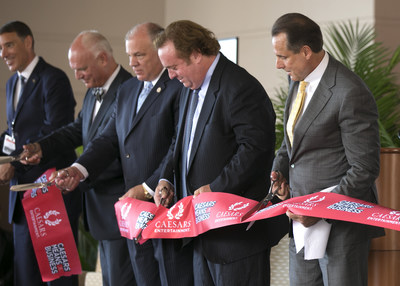
Caesars Entertainment Corporation Celebrates The Grand Opening Of The Harrah's Resort Atlantic City Waterfront Conference Center
With bookings through 2019, the Harrah's Waterfront Conference Center brings the meetings
business and Atlantic City a new option for business travel
Caesars Entertainment Corporation officially opened on Thursday, September 17thits Waterfront
Conference Center at Harrah's Resort Atlantic City. The $125.8 million center's grand opening
was celebrated with a ribbon cutting, fireworks and customer event. The Harrah's Waterfront
Conference Center has already booked meetings and conventions through 2019. Harrah's
Resort Atlantic City is an indirect subsidiary of Caesars Entertainment Corporation (NASDAQ: CZR).
Due to the addition of the conference center, there has been an increase of 90,000 advance
room bookings for the upcoming 12 months at Harrah's Resort Atlantic City, compared to
7,000 advance room bookings for the previous 12 months. The 97 confirmed meetings to date
include Bradley Caldwell, Rita's Italian Ice and Meeting Professionals International's 2016
World Education Congress.
The investment in the Harrah's Waterfront Conference Center comes at a time when there is
significant demand for meetings facilities in the Northeast and no clear leader to serve the
business traveler's needs. The 100,000 square foot state-of-the-art facility is now the largest
conference-hotel complex from Baltimore to Boston, providing an attractive new option for the
$280 billion national meetings industry that has a $16 billion foothold in the Northeast.
"The Waterfront Conference Center demonstrates our commitment to the revitalization of
Atlantic City through major developments and investments in the booming meetings business,"
said Mark Frissora, President and CEO of Caesars Entertainment Corporation. "For Atlantic City,
this is an opportunity to attract a new type of customer to the city and significantly increase
hotel occupancy, as well as drive revenue for local restaurants, retail outlets and other businesses."
Designed by Friedmutter Group and located in Atlantic City's Marina District, the Harrah's
Waterfront Conference Center can accommodate up to 5,000 attendees and has the flexibility
to seamlessly convert from meetings, to banquets, to large assembly spaces. The 100,000
square feet of flexible meetings space offers versatile area volume that can be broken down
into 56 separate small meeting rooms with up to 300 different configurations – reception,
banquet and pre-function space.
"We are excited to introduce Harrah's Resort Atlantic City Waterfront Conference Center as
a major player in not only the Northeast, but the national meetings business," said Michael
Massari, Senior Vice President of National Meetings and Events for Caesars Entertainment
Corporation. "The state-of-the-art center is conveniently located within driving distance of
one-third of the nation's population. Now, these convention goers can meet, eat and sleep
all under one roof in a facility accompanied with dynamic hospitality offerings and amenities."
About Meetings and Events at Caesars Entertainment
Caesars Entertainment offers meeting and event planners one dedicated team, united nationwide,
committed to providing the most successful meeting experiences possible. With one call or
email, planners have access to 40 properties in 20 unique destinations, with 1.9 million sq. ft.
of meeting space and more than 42,000 guest rooms. Mix and match properties and venues
within a destination under a single contract and minimum. Enjoy elite perks, rewards and
privileges with our Total Rewards Meeting Diamond Program. For more information,
please visit www.CaesarsMeansBusiness.com .
About Caesars Entertainment Corporation
Caesars Entertainment Corporation (CEC) is the world's most diversified casino-entertainmen
t provider and the most geographically diverse U.S. casino-entertainment company. CEC is
mainly comprised of the following three entities: the majority owned operating subsidiary
Caesars Entertainment Operating Company, wholly owned Caesars Entertainment Resort
Properties and Caesars Growth Properties, in which we hold a variable economic interest.
Since its beginning in Reno, Nevada, 75 years ago, CEC has grown through development
of new resorts, expansions and acquisitions and its portfolio of subsidiaries now operate 50
casinos in 13 U.S. states and five countries. The Company's resorts operate primarily under
the Caesars®, Harrah's® and Horseshoe® brand names. CEC's portfolio also includes the
London Clubs International family of casinos. CEC is focused on building loyalty and value
with its guests through a unique combination of great service, excellent products, unsurpassed
distribution, operational excellence and technology leadership. The Company is committed to
environmental sustainability and energy conservation and recognizes the importance of being
a responsible steward of the environment. For more information, please visit www.caesars.com.
Subscribe to:
Posts (Atom)