Showing posts with label European Union holidays. Show all posts

Tuesday, May 28, 2024

As Tourists Move In, Italians Are Squeezed Out On Holiday Island Of Capri

Famed for its blue seas, breathtaking views and cove-studded coastline, the Mediterranean island of Capri has been a tourist haven since the early years of the Roman empire.

Unlike in the imperial heyday, when emperors made it their exclusive playground, Capri now attracts visitors from around the world, clogging its narrow alleys, packing the piazzas and blocking the beaches during the hot summer months.

As many as 16,000 tourists a day pour onto the rocky isle in peak season, outnumbering the 12,900 residents. Most are day trippers, but increasing numbers stay the night as ever more homes are given over to holiday lets, bringing its own problems.

"Capri is becoming a dormitory for tourists," said Teodorico Boniello, head of the local consumers' association. "There are more people coming than we can cope with and families can't set down roots because they can't afford to stay."

Capri is a microcosm of many European holiday hotspots. Locals depend on visitors for their livelihoods, but the advent of mass tourism risks turning their picture-perfect beauty spots into blobs of shuffling humanity. Some Italian towns and islands are starting to push back, albeit gently.

Venice last week became the first city in the world to introduce an entrance fee for visitors in peak periods, Florence has banned new holiday lets in the city centre and the Cinque Terre park on the Italian Riviera started charging 15 euros for access to a popular coastal footpath to tackle overcrowding.

Capri has doubled its own visitors' fee from 2.5 euros to 5 euros, which outsiders pay when they catch a ferry from nearby Naples or Sorrento from April through to October.

"We are looking to persuade more people to visit during winter," Capri Mayor Marino Lembo told Reuters, sitting in his office with the smog of Naples hanging far in the distance.

But such a fee looks unlikely to dissuade tourists from travelling to an island which has more than four million tagged photos on Instagram, drawing in an endless flow of visitors eager to add the same views to their social media pages.

Moreover, locals say it will do nothing to help ease the housing crisis, which forces many essential workers, including teachers and medics, to live on the mainland.

EARLY STARTS

Antonio De Chiara, 22, wakes up every morning at 5.20 a.m. in his hometown near Naples in order to be sure to catch the 7.00 a.m. ferry, which takes 50 minutes to reach Capri. Around 400 other commuters join him on the ride across the bay.

Barely out of Naples, those on a tight schedule start queuing in the aisles to ensure they are first off the boat to grab a seat on one of a handful of small buses that head up the hill to town. Stragglers risk a lengthy wait.

"It would be lovely to live in Capri, but it is very difficult. Even if I could find a place, the rent would take up all my salary," said De Chiara, who recently got a job as a child therapist on the island.

Stefano Busiello, 54, teaches maths in a Capri high school but lives in Naples and has commuted back and forth for 20 years. "I have never even tried to find a house here. I could never afford one and things are getting harder."

Only 20% of staff in his school actually live on Capri, he said, with everyone else arriving on the ferries -- a daily grind that means most of his colleagues stay no more than two or three years before seeking a transfer to mainland schools.

Roberto Faravelli, who runs a Bed and Breakfast near the port, says people like himself might be willing to rent their properties to workers if the region offered incentives to close the gap on lucrative holiday lets. "The government needs to encourage homeowners to offer long-term rents. What we lack is anyone trying to resolve these problems," he said.

But mayor Lembo did not expect the authorities to intervene. "It is unfortunate, but this is the market economy at work."

POST-COVID SURGE

Vacation rental platform Airbnb lists more than 500 properties on Capri against around 110 in 2016. This is just the tip of the iceberg, with local families renting out their properties during the summer months on unregulated portals.

"This short-term rental market is chaotic. There are no controls," said Lembo.

Despite obvious resentment over the lack of viable housing, Capri has not yet witnessed the sort of protests seen elsewhere -- such as Spain's Canary Islands, where thousands took to the streets this month to demand limits on tourist arrivals.

The end of the COVID pandemic has seen tourism surge across Europe as global travellers seek to make up for lost time.

Italy had near record overnight stays in 2023, according to data collated by the Florence centre of tourism studies, and was the 5th most visited country in the world in 2023, with tourists drawn to its quaint villages and culture-rich cities.

But none were built for mass travel.

In the morning during high season, a fleet of ferries disgorge up to 5,000 visitors into Capri's tiny port in just two hours. Everyone wants to head up to the town of Capri and the smaller Anacapri, but the buses can only carry 30 people at a time and the funicular 50.

"You can easily wait two or even three hours to get up the hill in summer. The quays get packed. Noone can move," said Boniello, flicking through videos on his phone of people crammed one against the other.

Lembo acknowledges the problems, but denies tourism is ruining an island his ancestors have lived on for centuries. "I don't agree with nostalgics who say Capri was more beautiful 100 years ago. There was misery and poverty back then. Now there is wealth, and that is thanks to tourism."

($1 = 0.9381 euros)

https://www.reuters.com/authors/crispian-balmer/

Thursday, June 16, 2016

Gorgeous Montenegro: The Best Of The Coast


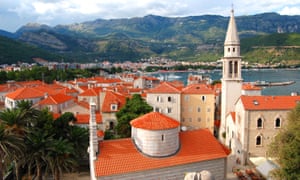
Drink it in … the old town at Budva
Drink it in … the old town at Budva. Photograph: Alamy
Montenegro’s beauty has not gone unnoticed by the yacht set, but new flights from Gatwick and Manchester have opened up the quieter stretches of its stunning coastline

With its new, multi-million pound marina – Porto Montenegro in Tivat – and a host of five-star hotel openings, Montenegro has become a magnet for wealthy Russian holidaymakers and Europe’s yachting fraternity. But beyond this affluent scene, the coast remains quirky and friendly, with pantiled villages clinging to the steep shoreline, uncrowded beaches and smoky konoba restaurants where you can spend the afternoon with a €5 bottle ofvranac.


And with easyJet flights from Gatwick to Tivat starting 16 June (flights from Manchester launched earlier this year), it’s easy to visit the Montenegro seaside and avoid the bling.

Bay of Kotor


The Bay of Kotor taken behind Kotor town.
Pinterest
 The Bay of Kotor taken behind Kotor town. Photograph: Alamy

East of Herceg Novi, this long, forested bay is lined with a mix of old Greek and Turkish settlements, and small, concrete hotels that time forgot. The eight-room Palace Hotel in Zelinka (doubles from €42, +382 31 678 102) has more character than most, and there’s a pebbly beach just 50 metres away. In Baosici, a good place to visit is the house of Pierre Loti (the French sailor whose memoirs inspired Madama Butterfly). He lived for a while on the shore here, and wrote another romantic short story. The house is a ruin but has tranquil views. Aurora Hotel on the quayside in Herceg Novi is owned by Serbian film director Emir Kusturica, and is full of his wife’s art work (doubles from €61 B&B). There’s a lively cafe-bar and small cinema downstairs. For food, Konoba Feral (Vasa Ćukovića 4), below the castle in Herceg Novi, has some good Montenegrin wines from the Savina Monastery and serves excellent (and affordable) grilled calamari, black risotto and swordfish. Restoran Olimpija in Kumbor is a lovely family affair. Diners can hear mama in the kitchen while her sons are out front, and the local seafood and fish soup (€5) are excellent.

Kotor


Oblatno beach, near Kotor.
Pinterest
 Oblatno beach, near Kotor. Photograph: Laurie Noble/Getty Images

This showpiece of Venetian Montenegro, with its mountainous city walls and pantiled roofs, is in danger of being swamped by tour groups but for the moment the shopkeepers are still keen to chat. Hotel Marija (doubles from €120) was opened in 1995 by Voljin Radanovic. These days his 17-bedroom mansion feels a touch over-modernised and the street outside can get noisy, but it is right in the centre. Cats are the unofficial symbol of Kotor and feline fans can check out theCat Museum and the Cats of Kotor Shop, both full of locally made moggyphernalia. When it comes to food, avoid the tourist traps and head toBastion, a decent old restaurant that does good-value fish dishes in the quieter North Gate end of the city.

Budva


Visitors take an evening stroll in Budva
Pinterest
 Photograph: Alamy

Budva was President Tito’s Benidorm, a long arc of beach framed by 1960s high-rise hotels. It’s creeping upmarket these days, but the old Venetian city at the end of the beach (restored after an earthquake in 1979) has some quiet streets and cafe-strewn piazzas. The Hotel Astoria (doubles from €110) is a modern boutique hotel built into the old sea wall, with an attractive roof terrace. The best sights include the citadel and the four churches (two Orthodox and two Catholic) that stand shoulder to shoulder in the square below. Mogren beach is one of Montenegro’s best – it’s only 1km from the old town, down a narrow path that keeps the crowds away. For somewhere different to eat and drink the Budva Beer & Bike Club hosts local rock bands.

Bar/Stari Bar


Stari Bar, a ruined Byzantine fortified city.
Pinterest
 Photograph: Alamy

Four kilometres inland from the new port of Bar stands Stari Bar, a ruined Byzantine fortress-city that was conquered first by the Venetians and then the Ottomans, then abandoned after an explosion at the beginning of the 20th century. Locals refer to it as “our Pompeii”. Once you’ve wandered the steep streets of the old city and visited its 17th-century Turkish hammam, seek out one of the world’s oldest olive trees: it’s called Stara Maslina, it’s said to be over 2,000 years old, and it grows just below the city. Kaldrma is a justifiably popular restaurant. It’s scruffy, with an outside seating area of unstable furniture and tatty cushions, but the owner serves gorgeous japrak (stuffed vine leaves made to his mother’s own recipe). There are no hotels in Stari Bar itself, but The Princess(doubles from €86), down by the archaeological museum in New Bar, is comfortable. Ask for a room with a sea-view balcony and you’ll soon forget the slightly corporate ambience.

Ulcinj


Ulcinj
Pinterest
 Photograph: Alamy

This pretty, 90% Albanian city in Montenegro has a delightful old town centre, full of fountains. Check out Bregut mosque and the adjacent food market, with its distinctly Ottoman flavour. On a rocky outcrop of Ulcinj’s old town stands the nine-room Hotel Kalaja (doubles from €30, + 382 85 421 435), owned by the Bushati family. It has great sea views and is only 200 metres from Malla Plaza (a small beach). For food, Bazar (Hafiz Ali Ulqinaku, + 382 30 421 639) is a balconeyed restaurant overlooking the city’s main drag, and run by three brothers, who catch the fish every morning – the sea bass is excellent. Wine lovers should take a taxi up to Vinarija Milović, in the hills north-east of the old city, which is Montenegro’s southernmost wine producer – fill your suitcase with its Vranac Status Barrique.
 Flights from Gatwick to Dubrovnik, on the Croatian coast north of Montenegro, were provided by British Airways, from £124 return. Car hire from Dubrovnik starts at £8 per day from Rhino, plus a €4 surcharge for each day spent outside Croatia, up to a maximum of €12

By Adrian Mourby