Showing posts with label Free things to do in Washington DC.. Show all posts

Thursday, September 13, 2018

Historic Exhibition Of Animals In Japanese Art Opens May 2019 At The National Gallery Of Art In Washington, DC.

Historic Exhibition of 16 Centuries of Animals in Japanese Art Will Showcase Masterpieces That Rarely Leave Japan
Unknown Artist, Deer Bearing Symbols of the Kasuga Deities, Nanboku-chō period, 14th century, bronze, Hosomi Museum
Unknown Artist, Deer Bearing Symbols of the Kasuga Deities, Nanboku-chō period, 14th century, bronze, Hosomi Museum
Washington, DC—Artworks representing animals—real or imaginary, religious or secular—span the full breadth and splendor of Japanese artistic production. Today, the National Gallery of Art, Washington, announced The Life of Animals in Japanese Art, the first exhibition devoted to the subject, covering 16 centuries (from the sixth century to the present day) and a wide variety of media—sculpture, painting, lacquerwork, ceramics, metalwork, textile, and the woodblock print. On view from May 5 through July 28, 2019, the exhibition will feature 315 works, drawn from 66 Japanese and 30 American public and private collections. The artists represented range from Sesson Shūkei, Itō Jakuchū, Soga Shōhaku, Katsushika Hokusai, Utagawa Kuniyoshi, to Okamoto Tarō, Kusama Yayoi, Issey Miyake, Nara Yoshitomo, and Murakami Takashi.
Many of the nearly 180 works traveling from Japan are masterpieces that rarely—if ever—leave the country, including seven designated as an Important Cultural Property by the Japanese government. Three of the registered artworks are from the Tokyo National Museum: the six-foot-tall Monju Bosatsu Seated on a Lion, with Standing Attendants (1273) by the Buddhist sculptor Kōen; the intricately carved wood Buddhist sculpture Aged Monkey (1893) by Takamura Kōun; and the Footed Bowl with Applied Crabs (19th century) by Miyagawa Kōzan I. Two are on loan from the Nara National Museum: a hanging scroll, Sword with Kurikara Dragon and Two Child Acolytes (13th century); and a Buddhist hanging scroll, Fugen Enmei (13th century). Finally, the wood sculpture Fugen's Elephant(13th century) is on loan from a private collection, and a spectacular bronze, Deer Bearing Symbols of the Kasuga Deities (14th century), is on loan from the Hosomi Museum, Kyoto.
This historic exhibition is co-organized by the National Gallery of Art, Washington, the Japan Foundation, and the Los Angeles County Museum of Art (LACMA), with special cooperation from the Tokyo National Museum, and curated by Robert T. Singer, curator and department head, Japanese art, LACMA, and Masatomo Kawai, director, Chiba City Museum of Art, in consultation with a team of esteemed historians of Japanese art. LACMA is presenting an abbreviated version of the exhibition, titled Every Living Thing: Animals in Japanese Art from September 8 through December 8, 2019. The Gallery's presentation of the exhibition, covering 18,000 square feet in the East Building Concourse, is organized into thematic sections that explore the various roles animals have played in the art of Japan. A fully illustrated catalog is being published in association with Princeton University Press.
"The Gallery is honored to partner with the Japan Foundation and LACMA to present the first exhibition to consider the representation of animals across the history of Japanese art," said Earl A. Powell III, director, National Gallery of Art. "It is a privilege to work with the Japan Foundation to share these Japanese masterpieces with American audiences, and we are grateful to the Foundation for making this incredible group of loans possible. As the largest single Japanese lender, the Tokyo National Museum has also played a significant role in this exhibition and we are pleased to welcome nearly 30 works from the Museum's unparalleled collection."
"The Japan Foundation creates global opportunities to foster friendship, trust, and mutual understanding through culture, language, and dialogue, to cultivate friendship and ties between Japan and the world. We believe this is a basis for building a truly peaceful and rich world," said Hiroyasu Ando, president, the Japan Foundation. "To achieve this mission, the Japan Foundation has organized numerous cultural events around the world and in the U.S. Among them, the upcoming exhibition of The Life of Animals in Japanese Art is one of the most ambitious and creative projects, and will display artworks of high quality for everyone's enjoyment. One may call these works of art—created through long, close interactions between animals and Japanese people over 1,500 years—a gift from humans to animals. I very much look forward to sharing this gift with our American friends."
Exhibition Support
The exhibition is made possible through the generous support of the E. Rhodes and Leona B. Carpenter Foundation. Additional funding is provided by The Exhibition Circle of the National Gallery of Art.
Exhibition Organization and Curators
The exhibition is co-organized by the National Gallery of Art, Washington, the Japan Foundation, and the Los Angeles County Museum of Art, with special cooperation from the Tokyo National Museum.
The exhibition's curators Robert T. Singer, curator and department head, Japanese art, LACMA, and Masatomo Kawai, director, Chiba City Museum of Art, worked in consultation with a team of esteemed historians of Japanese art: Ryusuke Asami, chief curator sculpture, Tokyo National Museum; Masaaki Arakawa, professor, Gakushuin University; Hiroyuki Kano, former professor, Doshisha University; Mika Kuraya, chief curator, Museum of Modern Art, Toyko; Yasuyuki Sasaki, curator, Suntory Museum of Art; Tomoko Matsuo, curator, Chiba City Museum of Art; Nobuhiko Maruyama, professor, Musashi University; and Hiroshi Ikeda, honorary researcher, Toyko National Museum.
Exhibition Dates
National Gallery of Art, Washington, May 5–July 28, 2019
Los Angeles County Museum of Art, September 8–December 8, 2019
Exhibition Highlights
The Life of Animals in Japanese Art takes an expansive look at the representation of animals in a variety of art forms including painted screens, hanging scrolls, woodblock prints, netsuke, ceramic plates, kimono, and samurai helmets. The selection portrays all types of creatures—from foxes and frogs, snakes and sparrows, to mythical animals such as dragons, phoenixes, and kappa river sprites. To explore the many roles animals have played in Japanese culture, objects are divided into eight sections: Ancient Japan;The Japanese Zodiac; Religion: Buddhism, Zen, Shinto; Myth and Folklore; The World of the Samurai; The Study of Nature; The Natural World: Creatures on Land, in the Air, and in Rivers and Seas; and The World of Leisure.
Since antiquity, animals have held spiritual and symbolic significance in Japanese culture, as evidenced by haniwa, ancient clay sculptures that were placed around gravesites, possibly to protect the dead in the afterlife. A sixth-century haniwahorse on loan from LACMA—standing nearly four feet tall—is one of the largest known sculptures of this animal from the period. In Buddhism, Shinto, and Zen, artworks depicting animals were commonly given places of prominence in temples and shrines according to the creatures' divine duties. For instance, Shinto deer were revered as messengers to—or even stand-ins for—the gods, as illustrated by the 15th-century Kasuga Deer Mandala, on loan from the Art Institute of Chicago.
The allegorical power of animals is not limited to the spiritual realm; they carry many meanings in secular works of art as well. Objects portraying the Japanese zodiac animals individually were commonly collected as symbols of an individual's identity. Even rarer are works that depict all 12 animals of the zodiac together. The exhibition includes several examples: a set of 19th-century woodblock prints by Utagawa Kuniyoshi on loan from the Arthur M. Sackler Gallery, a finely embroidered 19th-century Kosode with the Twelve Zodiac Animals on loan from the National Museum of Japanese History, and a remarkable mid-to-late-19th-century netsuke by Kaigyokusai Masatsugu on loan from LACMA, with all 12 zodiac animals intertwined in one small piece of carved ivory.
Animals were popularly described in myth and folklore in anthropomorphic terms, often as a means of disguising social critiques. One of the most well-known works in the exhibition is a scene from the handscroll Frolicking Animals (12th-13th century), on loan from the collection of Robin B. Martin, courtesy of the Brooklyn Museum. Long attributed to the Buddhist monk Toba Sōjō, the scene depicts monkeys, a rabbit, and a deer as protagonists in a thinly veiled satire of priests. Humans also adopted the form of, or decorated themselves with, animals for their symbolic energy. Samurai commonly wore armor decorated with dragons or helmets in the shapes of rabbit ears, deer antlers, or the mythological shachihoko, which has the head of a tiger and body of a carp.
In the 18th and 19th centuries, artists developed an interest in the study of the natural world and thus in drawing individual animals directly from life. Inspiration for most images of animals had previously come from earlier examples in art. Whereas Itō Jakuchū painted with lifelike detail every barb in every vane of a feather in Pair of Cranes and Morning Sun(c. 1755–1756), on loan from the Tekisuiken Memorial Foundation of Culture, while Utagawa Hiroshige carved every scale of a seabream in A Shoal of Fishes, his 19th-century woodblock print series on loan from the Harvard Art Museums/Arthur M. Sackler Museum. Many artists depicted numerous animals within a single species in order to convey their auspicious meanings. An elaborate formal kimono like the 19th-century Uchikake with Phoenix and Birds, on loan from the Kyoto National Museum, would have brought its wearer good luck, while giving someone a hanging scroll like One Hundred Rabbits (1784) by Maruyama Ōkyo, on loan from a private collection in Japan, conveyed a wish for prosperity and plenitude.
Contemporary artworks spread throughout the exhibition demonstrate the influence of traditional representations of animals on the work of living Japanese artists. The medieval Deer Bearing Symbols of the Kasuga Deities is installed alongside Kōhei Nawa's PixCell-Bambi 14 (2015), while Kusama Yayoi's polka-dotted three-dimensional dogs are in conversation with haniwa animals, illustrating the similarities in their forms and expressions. On loan from the Broad Art Foundation, Murakami Takashi's 82-foot-long vibrant painting In the Land of the Dead, Stepping on the Tail of a Rainbow (2014) was created in response to the 2011 earthquake and tsunami in Japan. Murakami drew inspiration from a series of scrolls on the 500 arhats, Buddhists who achieved enlightenment, created by Kanō Kazunobu over a ten-year period that included the 1855 Edo earthquake. For his painting, Murakami embellished the background, arhats, and animals such as the shachihokowith his signature flourish and vibrant palette. Many of the works exhibited employ distinctly contemporary techniques to depict animals. Whimsical creations by designer Issey Miyake transform wearers into a starfish, a monkey, or a swallow. In a digital work, Chrysanthemum Tiger (2017), from the Tokyo-based collective teamLab's Fleeting Flower series, flowers and petals coalesce to form a moving image of a tiger which then dissolves, scatters, and takes shape again.
Exhibition Catalog
Published by the National Gallery of Art, Washington, in association with Princeton University Press, a richly illustrated catalog features contributions by the exhibition's curators and an international team of esteemed experts in Japanese art. Included are essays by scholars Barbara Rossetti Ambros, department chair, religious studies, University of North Carolina at Chapel Hill; Thomas Hare, William Sauter LaPorte '28 Professor in Regional Studies and professor of comparative literature, Princeton University; and Federico Marcon, associate professor of East Asian studies and history, Princeton University. With 425 illustrations and some 400 pages, the catalog will be available in Spring 2019 at shop.nga.gov, or by calling (800) 697-9350 or (202) 842-6002; faxing (202) 789-3047; or emailing mailorder@nga.gov.
The exhibition catalog is made possible through the generous support of the E. Rhodes and Leona B. Carpenter Foundation. Additional funding for the catalog is provided by Janice Holland.
Related Programs
Lecture
Introduction to the ExhibitionThe Life of Animals in Japanese Art
May 5, noon
East Building Auditorium
Robert T. Singer, curator and department head, Japanese art, Los Angeles County Museum of Art, and chief curator of The Life of Animals in Japanese Art
Public Symposium
The Role and Representations of Animals in Japanese Art and Culture
June 7, 10:30 a.m. to 5:00 p.m.
East Building Auditorium
Moderated by Robert T. Singer, with illustrated lectures by noted scholars, including Barbara Rossetti Ambros, department chair, religious studies, University of North Carolina at Chapel Hill; Rory Browne, director of the academic advising center and associate dean of Morrissey College of Arts and Sciences, Boston College; R. Keller Kimbrough, professor of Japanese, department of Asian languages and civilizations, University of Colorado, Boulder; Federico Marcon, Associate Professor of East Asian Studies and History, Princeton University; Daniel McKee, Adjunct Assistant Professor, Department of Asian Studies, Cornell University; and Miwako Tezuka, consulting curator, Reversible DestinyFoundation.
Concert
Yumi Kurosawa, koto
With special guests Anubrata Chatterjee, tabla, and Virgil Gadsen, dancer
May 19, 3:30 p.m.
West Building, West Garden Court
This performance brings together the elements of Japan's spiritual philosophy and the importance of the animal world, as represented in literature, art, dance, and music. To illustrate the soundscape of our story, the koto's melodic timbre recalls Japan's history with chant, the tabla reminds us of the heartbeat, and the featured element of dance echoes the natural world of movement.
Films
The Life of Animals in Japanese Cinema
Summer 2019
Japanese filmmaking has over the years made rich use of animal forms as symbol and object, offering varied meanings and observations about the natural world. This series of approximately 30 films—narrative features, documentaries, and shorts, both contemporary and classic—includes Hachi: A Dog's TaleGodzilla (1954 original), What the Snow BringsPom PokoPrincess Raccoon, Ghost Cat of Arima PalaceSamurai CatMadadayoThe Hidden FortressRanI Am a Cat, and Song of the Horse. Animations by Koji Yamamura and Osamu Tezuka, Kihachirō Kawamoto puppet shorts, plus two productions from the famed Shochiku series Cinema Kabuki—Triple Lion Dance (Renjishi) and The Heron Maiden—are also featured.
The Japan Foundation
To cultivate friendship and ties between Japan and the world, the Japan Foundation creates global opportunities to foster friendship, trust, and mutual understanding through culture, language, and dialogue. The Japan Foundation was established in October 1972 as a special legal entity supervised by the Ministry of Foreign Affairs. In October 2003, it was reorganized as an independent administrative institution. Based on a government endowment of 78 billion yen, the activities of the Japan Foundation are financed by annual government subsidies, investment revenue, and donations from the private sector.

General Information
The National Gallery of Art and its Sculpture Garden are at all times free to the public. They are located on the National Mall between 3rd and 9th Streets at Constitution Avenue NW, and are open Monday through Saturday from 10:00 a.m. to 5:00 p.m. and Sunday from 11:00 a.m. to 6:00 p.m. The Gallery is closed on December 25 and January 1. For information call (202) 737-4215 or visit the Gallery's Web site at www.nga.gov. Follow the Gallery on Facebook at www.facebook.com/NationalGalleryofArt, Twitter at www.twitter.com/ngadc, and Instagram at http://instagram.com/ngadc.
Monday, March 19, 2018

Major Exhibition Of Paul Cézanne's Portraits At The National Gallery Of Art In Washington DC, March 25 through July 1, 2018

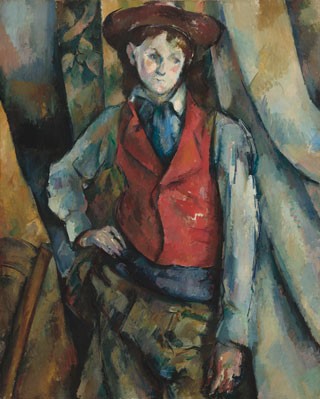
Paul Cézanne, Boy in a Red Waistcoat, 1888–1890, oil on canvas National Gallery of Art, Washington, Collection of Mr. and Mrs. Paul Mellon, in Honor of the 50th Anniversary of the National Gallery of Art
Paul Cézanne, Boy in a Red Waistcoat, 1888–1890, oil on canvas
National Gallery of Art, Washington, Collection of Mr. and Mrs. Paul Mellon, in Honor of the 50th Anniversary of the National Gallery of Art
Washington, DC— Bringing together some 60 paintings drawn from collections around the world, Paul Cézanne's Cézanne Portraits is the first exhibition devoted exclusively to this often-neglected genre of his work. The revelatory exhibition explores the pictorial and thematic characteristics of Paul Cézanne's (1839–1906) portraits, the chronological development of his style and method, and the range and influence of his sitters. The sole American venue, Cézanne Portraits will be on view on the main floor of the West Building from March 25 through July 1, 2018.
"This exhibition provides an unrivaled opportunity to reveal the extent and depth of Cézanne's achievement in portraiture," said Earl A. Powell III, director, National Gallery of Art. "The partnership between the National Gallery of Art, the National Portrait Gallery in London, and the Musée d'Orsay in Paris has made it possible to explore his working techniques as well as his intellectual solutions to representation in these exceptional portraits."
Cézanne painted almost 200 portraits, including 26 self-portraits and nearly 30 portraits of his wife, Hortense Fiquet, as well as portraits of his son Paul and his uncle Dominique Aubert, art dealer Ambroise Vollard, critic Gustave Geffroy, and the local men and women in his native Aix-en-Provence. The exhibition presents a selection of portraits that reveals the most personal and human aspects of Cézanne's art.
Exhibition Organization and Support
The exhibition is organized by the National Gallery of Art, Washington, the National Portrait Gallery, London, and the Musée d'Orsay, Paris.
The exhibition in Washington is made possible through the generous support of the Anna-Maria and Stephen Kellen Foundation.

The exhibition is supported by an indemnity from the Federal Council on the Arts and the Humanities.
About the Exhibition
Cézanne Portraits explores the artist's series of portraits of the same sitter; traces his portraits chronologically, revealing changes in style and method; and shows the full range of his sitters and how they influenced his practice. Cézanne's unique vision was informed by a desire to see through appearances to the underlying structure using mass, line, and shimmering color. The exhibition traces the development of Cézanne's portraits and the changes that occurred through style and method and the understanding of resemblance and identity.
Cézanne made his first portrait in the early 1860s, although it was not until 1866 that he began to paint portraits in earnest. Often painting family and friends with whom he felt comfortable, his early works were stylistically influenced by Gustave Courbet's and Édouard Manet's Parisian portraits. The family paintings include large portraits of his father, small paintings of his mother and sisters, and about nine portraits of his uncle, the bailiff Dominique Aubert, and provocative paintings of poet and art critic Antony Valabrègue and the artist Achille Emperaire.
By the end of the 1860s Cézanne's portraits became more refined and more sympathetic to his sitters. He began to produce fewer portraits until 1875, when he created a group of self-portraits painted in an impressionist style prominently featuring his bald head. Between 1876 and 1877 he began to incorporate heightened hues in which areas of prismatic color help to shape a vivid human presence, as seen in Madame Cézanne in a Red Armchair (c. 1877), on view in the exhibition. Over the following seven or eight years, Cézanne created portraits of sculptural gravity, including paintings of his wife, their young son, and his son's friend Louis Guillaume, as well as self-portraits.
Between 1872 and 1892 Cézanne painted 28 portraits of his wife. Seventeen of these, painted during the second half of the 1880s, form three distinct stylistic groups. The first group, a set of small, lightly painted canvases, were painted around 1886 and includes the most expressive images of her made to date, marking a major shift in his portraiture practice. The second group, made a few years later, is more explicit in its description of emotion and more heavily painted. The third group of four portraits depicts Hortense wearing a red dress. Fifteen of these portraits will be on view.
Cézanne also painted several portraits of the model Michelangelo de Rosa in Italian garb. The Gallery's version, Boy in a Red Waistcoat (1888–1890), is the largest, most resolved of these portraits. Influenced by 16th-century mannerists such as Bronzino and Pontormo who painted iconic images of urban, male adolescents, Cézanne presents a moving, formally innovative image of a boy morphing into manhood.
During the 1890s Cézanne began to paint portraits of local people in and around his native Aix-en-Provence. His portraits of agricultural laborers record his admiration for people who had grown old without changing their ways. The paintings of domestic servants and children indirectly reflect Cézanne's increasing preoccupation with old age. Included among these works are Child in a Straw Hat (1896), Man in a Blue Smock (c. 1897), Portrait of a Woman (c. 1900), and Seated Peasant (c. 1900–1904), all of which are in the exhibition.
Of the 100 paintings Cézanne made between 1900 and 1906, only about 20 are portraits, seven of which were painted outside. During this period, Cézanne painted his final self-portrait, Self-Portrait with Beret (1898–1900), on view in the exhibition, which depicts a fragile, prematurely aged but still vehement figure. The subjects of these later portraits are local men, women, and children as well as a pair of portraits of his sister, Marie, depicted in a blue dress, and five paintings of his gardener, Vallier, three of which are on view.

Exhibition Curators
The exhibition is curated by John Elderfield, chief curator emeritus of painting and sculpture at the Museum of Modern Art, New York, with Mary Morton, curator and head of the department of French paintings at the National Gallery of Art, Washington, and Xavier Rey, formerly director of collections at the Musée d'Orsay, now director of the museums of Marseille.

Related Activities
Lectures
Introduction to the Exhibition—Cézanne Portraits
March 25, 2:00 p.m.
East Building Auditorium
Mary Morton, curator and head, department of French paintings, National Gallery of Art. A signing of the exhibition catalog follows.
Cézanne's Portraits: Doubt, Certainty, and Painting in Series
June 3, 2:00 p.m.
East Building Auditorium
John Elderfield, chief curator emeritus of painting and sculpture, Museum of Modern Art, New York. A signing of the exhibition catalog follows.

Concert

Benedetto Lupo, piano
March 25, 3:30 p.m.
West Building, East Garden Court
In conjunction with Cézanne Portraits and on the 100th anniversary of the death of French composer Claude Debussy, Lupo performs an entire concert of Debussy's most important solo piano works.
Film
Cézanne—Portraits of a Life
March 25, 4:30 p.m.
East Building Auditorium
American premiere
Award-winning filmmaker Phil Grabsky and his cinema production house known as Exhibition on Screen had access to the creators of the landmark exhibition Cézanne Portraits. Filming extensively in Paris and Provence, the team delved deeply into the biography of the great artist. Cézanne’s letters are read by Emmy-winning actor Brian Cox. Participating curators include Mary Morton from the National Gallery of Art. (Phil Grabsky, 2018, English and French with subtitles, 85 minutes)

Cézanne-Inspired Dining
In celebration of the exhibition, the Garden Café presents an assortment of specialty French dishes featuring regional cheeses, seasonal ingredients, and decadent desserts. Cézanne-inspired items are available during the week and weekend brunch buffet.

Cézanne Portraits: Gallery Shops
The Gallery Shops will celebrate the exhibition with a full suite of specialty items, including a very special 96-page companion guide to this genre of the the artist's ouevre—Paul Cézanne: Painting People. This publication presents 24 highlights from the exhibition and includes an introductory essay on the artist and his portraiture by art historian Mary Tompkins Lewis. Additional specialty items include scarves and accessories inspired by elements in the exhibition, music, DVDs, and other scholarly publications to enhance the exhibition experience in both English and French. An assortment of stationery items and reproductions highlights several other key works by Cézanne, and a selection of images will also be available through NGA Custom Prints, to be designed to the customer's specifications.
The exhibition is accompanied by a 256-page, fully illustrated catalog with essays by the exhibition curators—John Elderfield, chief curator emeritus of painting and sculpture at the Museum of Modern Art, New York, with Mary Morton, curator and head of the department of French paintings at the National Gallery of Art, Washington, and Xavier Rey, director of the museums of Marseille. Also included are a biographical essay on Cézanne's sitters by biographer Alex Danchev and a chronology of the artist's life by Jayne Warman.
This exhibition catalog establishes portraiture as an essential practice for Cézanne, from his earliest self-portraits in the 1860s to his famous depictions of figures including his wife Hortense Fiquet, the writer Émile Zola, and the art dealer Ambroise Vollard, and concluding with a poignant series of portraits of his gardener Vallier, made shortly before Cézanne's death. Featured essays explore the special pictorial and thematic characteristics of Cézanne's portraits and address the artist's creation of complementary pairs and multiple versions of the same subject, as well as the role of self-portraiture for Cézanne. They investigate the chronological evolution of his portrait work, with an examination of the changes that occurred within his artistic style and method, and in his understanding of resemblance and identity. They also consider the extent to which particular sitters influenced the characteristics and development of Cézanne's practice. Beautifully illustrated with works of art drawn from public and private collections around the world, Cézanne Portraits presents an astonishingly broad range of images that reveals the most personal and human qualities of this remarkable artist.

Both the exhibition catalog and the companion guide are published by the National Portrait Gallery, London and distributed by the Princeton University Press.
Items are available for purchase at special installations near the exhibition and in the West Building, Concourse, and East Building Shops; shop.nga.gov; (800) 697-9350 (phone); (202) 789-3047 (fax); or mailorder@nga.gov

The National Gallery of Art and its Sculpture Garden are at all times free to the public. They are located on the National Mall between 3rd and 9th Streets at Constitution Avenue NW, and are open Monday through Saturday from 10:00 a.m. to 5:00 p.m. and Sunday from 11:00 a.m. to 6:00 p.m. The Gallery is closed on December 25 and January 1. For information call (202) 737-4215 or visit the Gallery's Web site at www.nga.gov. Follow the Gallery on Facebook at www.facebook.com/NationalGalleryofArt, Twitter at www.twitter.com/ngadc, and Instagram at http://instagram.com/ngadc.

Visitors will be asked to present all carried items for inspection upon entering. Checkrooms are free of charge and located at each entrance. Luggage and other oversized bags must be presented at the 4th Street entrances to the East or West Building to permit x-ray screening and must be deposited in the checkrooms at those entrances. For the safety of visitors and the works of art, nothing may be carried into the Gallery on a visitor's back. Any bag or other items that cannot be carried reasonably and safely in some other manner must be left in the checkrooms. Items larger than 17 by 26 inches cannot be accepted by the Gallery or its checkrooms.

Thursday, January 16, 2014

Andrew Wyeth’s Window Paintings Showcased For The First Time; Organized ByThe National Gallery of Art, Washington; Sole Venue Worldwide, May 4–November 30, 2014


Andrew Wyeth "Wind from the Sea", 1947 tempera on hardboard overall: 47 x 70 cm (18 1/2 x 27 9/16 in.) framed: 66.4 x 89.5 x 7 cm (26 1/8 x 35 1/4 x 2 3/4 in.) Gift of Charles H. Morgan
Andrew Wyeth, Wind from the Sea, 1947
tempera on hardboard
overall: 47 x 70 cm (18 1/2 x 27 9/16 in.)
framed: 66.4 x 89.5 x 7 cm (26 1/8 x 35 1/4 x 2 3/4 in.) Natinal Gallery of Art
Gift of Charles H. Morgan
© Andrew Wyeth
Andrew Wyeth's fascination with windows is explored for the first time in an exhibition on view at the National Gallery of Art, its sole venue, from May 4 through November 30, 2014.Andrew Wyeth: Looking Out, Looking In will present some 60 tempera paintings, watercolors, and drawings that stand out from among 300 or more works of art by Wyeth depicting windows in figureless compositions. Inspired by the gift of Wyeth's first and one of his most important paintings on the theme—Wind from the Sea (1947), donated to the Gallery in 2009— the exhibition will include several works from private collections that have never been on public view.

"In these spare, elegant, and abstract window paintings and works on paper, Wyeth tackled the complexities presented by the subject throughout his career. We hope that this exploration both on the walls and in the catalogue will encourage a much closer look at Wyeth's work and contribute to the reassessment of his achievement that is well underway," said Earl A. Powell III, director, National Gallery of Art, Washington.

Exhibition Highlights
Deceptively realistic, Wyeth's window paintings and works on paper are skillfully manipulated constructions. The exhibition will be organized into thematic sections that group related preliminary drawings and watercolors with final tempera paintings, offering the clearest understanding of Wyeth's creative process.
Over the course of many decades, Wyeth studied neighboring buildings and his own studios in both Chadds Ford, PA, and in Cushing, ME, as subjects for his investigation of windows. He explored windows utilizing multiple visual devices, such as vantage points (far, near, inside, outside, ground level, upstairs), curtains (still and flowing), reflections, landscapes seen through windows, and even windows seen through windows.
Wyeth was working in the Olson House in Maine that appears in his renowned painting, Christina's World (1948),when an ocean breeze lifted curtains near an open window. He made a quick sketch and within a few weeks Wind from the Sea was complete. Wyeth described the moment: "That summer in 1947 I was in one of the attic rooms feeling the dryness of everything and it was so hot I pried open a window. A west wind filled the dusty, frayed lace curtains and the delicate crocheted birds began to flutter and fly. . . . My whole idea is to keep myself open for the elusive something [that might catch me] off balance when [I] least expect it. I drew a very quick sketch and had to wait for weeks for another west wind for more studies."
In addition to never-before-seen works, the exhibition will include several familiar ones that address the subject of windows. From Spring Fed (1967), linked to the tragic death of his father, N. C. Wyeth, and the interior view in Rod and Reel (1975), to the austere and mathematically precise Off at Sea (1972) and the very spare Evening at Kuerners (1970), these paintings and works on paper represent a significant but little explored component of Wyeth's achievement.
Andrew Wyeth (1917–2009)
Born in Chadds Ford, PA, Andrew Wyeth was 15 when he began training as an artist in the studio of his famous father, N.C. Wyeth. Five years later, his first one-man exhibition at Macbeth Gallery in New York sold out in two days. During a career that spanned more than seven decades, Wyeth produced a large and compelling body of work that included one of the most famous paintings in 20th-century American art—Christina's World  (Museum of Modern Art, New York).
Awarded the National Medal of Arts in 2007 and the Congressional Gold Medal in 1988, Wyeth was the first artist to receive the Presidential Medal of Freedom in 1963. His work is in the collections of most major American art museums, as well as museums throughout Europe, Russia, and Japan.
The Gallery's collection includes 19 paintings and works on paper by Andrew Wyeth.
Curator, Publications, and Related Activities
The exhibition and catalogue have been organized by Nancy K. Anderson, curator and head of the department of American and British paintings, with assistance and contributions from Charles Brock, associate curator, American and British paintings, National Gallery of Art.
Copublished by the National Gallery of Art and D.A.P., the richly illustrated exhibition catalogue includes essays by Anderson and Brock and addresses the creation and history of Wind from the Sea,links to Robert Frost and first-generation American modernists Charles Sheeler and Edward Hopper, and the abstract qualities of Wyeth's window paintings.
Also copublished by the National Gallery of Art and D.A.P., Andrew Wyeth: A Spoken Self-Portrait includes five monologues composed by Richard Meryman—a journalist and lifelong friend of the artist—from taped interviews with Wyeth, his friends, family, neighbors, and critics. It is a sampling of the hundreds of hours of recorded conversations with Wyeth that will eventually be made available to the public. The book includes reproductions of the works of art discussed by the artist, as well as previously unpublished photographs of Wyeth’s studio taken in 2009. Both publications are available for purchase in the Gallery Shops. To order, please visit http://shop.nga.gov/; call (800) 697-9350 or (202) 842-6002; fax (202) 789-3047; or e-mail mailorder@nga.gov.
On Sunday, May 4, 2014, at noon, Anderson and Brock will present the opening day lecture.
General Information
The National Gallery of Art and its Sculpture Garden are at all times free to the public. They are located on the National Mall between 3rd and 9th Streets at Constitution Avenue NW, and are open Monday through Saturday from 10:00 a.m. to 5:00 p.m. and Sunday from 11:00 a.m. to 6:00 p.m. The Gallery is closed on December 25 and January 1. With the exception of the atrium and library, the galleries in the East Building will be closing gradually beginning in July 2013 and will remain closed for approximately three years for Master Facilities Plan and renovations. For specific updates on gallery closings, visithttp://www.nga.gov/content/ngaweb/Collection/modern-art-during-renovation.html.
For information call (202) 737-4215 or the Telecommunications Device for the Deaf (TDD) at (202) 842-6176, or visit the Gallery's Web site at www.nga.gov. Follow the Gallery on Facebook atwww.facebook.com/NationalGalleryofArt and on Twitter at www.twitter.com/ngadc.
Visitors will be asked to present all carried items for inspection upon entering. Checkrooms are free of charge and located at each entrance. Luggage and other oversized bags must be presented at the 4th Street entrances to the East or West Building to permit x-ray screening and must be deposited in the checkrooms at those entrances. For the safety of visitors and the works of art, nothing may be carried into the Gallery on a visitor's back. Any bag or other items that cannot be carried reasonably and safely in some other manner must be left in the checkrooms. Items larger than 17 by 26 inches cannot be accepted by the Gallery or its checkrooms.

Follow us on Twitter: @TraveloreReport