Showing posts with label Washington DC. Show all posts

Tuesday, July 14, 2026

Inside The New Museum Of Exploration: National Geographic’s $300M Masterpiece In D.C.

For over a century, National Geographic has brought the furthest corners of the Earth directly into our living rooms through yellow-bordered magazines and breathtaking documentaries. Now, the iconic institution is inviting you to step directly inside those stories.


Following a massive, four-year, $300 million transformation, the National Geographic Society is officially opening the doors to its brand-new Museum of Exploration (MOE) in Washington, D.C. located right at its historic downtown campus.


Spanning over 100,000 square feet of reimagined public space, this state-of-the-art hub seamlessly blends a century of historic archival treasures with modern, interactive technology. Here is your first look inside Washington's most anticipated new cultural landmark.


1. A Stunning New Architectural Landmark

The adventure begins before you even step inside. The museum greets visitors with a striking, fluid new Pavilion entrance at 1600 M St NW.


Designed by architecture firm Hickok Cole, the exterior boasts a sweeping architectural silhouette, complete with an expansive front courtyard filled with greenery and outdoor seating. The interior mirrors this organic, nature-inspired philosophy, using flowing shapes and warm wooden elements that reflect National Geographic's deep-rooted environmental mission.


2. Immersive Exhibitions & Galleries

The Museum of Exploration is designed to put you in the boots of the world's greatest scientists, photographers, and adventurers.


  • The Archives: For the first time, National Geographic is opening its vault to display more than 130 years of history. Visitors can explore early maps hand-drawn by legendary cartographers, examine historic expedition gear, and interact with a digital research station holding over 300 photos, film clips, and sound recordings.

  • Rolex Explorers Landing: This major gallery focuses on the human element of discovery. Divided into four thematic journeys—Spark, Trek, Purpose, and Impact—it showcases the tools, triumphs, and stories of real-world National Geographic Explorers.

  • In Focus: Photographs of National Geographic: A breathtaking gallery displaying the organization's most enduring images. Highlights include George Shiras' historic first-ever nighttime wildlife photograph and Ami Vitale's deeply moving portrait of the world's last male northern white rhinoceros.


3. Stunning Inaugural Showcase: "Photo Ark"

The crown jewel of the grand opening is the museum's inaugural temporary exhibition: "Photo Ark: Animals of Earth."


This exhibition features the globally renowned work of photographer Joel Sartore, who has spent years documenting every species living in human care. The gallery offers a 360-degree view of Earth's wildlife, utilizing stunning, intimate portraits designed to connect visitors to the beauty—and vulnerability—of the animal kingdom.


4. More Than Just Exhibits: The Global Food Hall & Beyond

National Geographic ensures that your culinary exploration matches your visual one:


  • Explorers Eatery & Ballard Bar: The campus features an international food hall serving authentic, globally inspired dishes. Afterward, you can grab a drink at the Ballard Bar, aptly named after famed Explorer-at-Large Bob Ballard (the oceanographer who discovered the wreck of the Titanic).

  • Grosvenor Auditorium: A state-of-the-art, nearly 400-seat theater built to host film screenings, live panels, and direct-from-the-field presentations by active explorers.


Planning Your Visit

The National Geographic Society has placed accessibility and sustainability at the core of the museum. The project is actively tracking LEED Platinum status (the highest rating in green building), and all exhibition signage is seamlessly presented in both English and Spanish, with Braille, captioning, and American Sign Language integrated heavily into the media.


  • Location: 1600 M St NW, Washington, D.C. (National Geographic Global Headquarters)

  • Tickets: General admission starts at $29.99 for adults.

  • Discounts: In partnership with the Museums for All initiative, discounted admission is available to ensure the museum remains accessible to low-income families and community members.


Monday, July 6, 2026

The Uncertain Future Of The Smithsonian's Anacostia Community Museum Under The Trump Administration

The Smithsonian Institution’s Anacostia Community Museum (ACM) has long stood as a trailblazer in the museum world. Founded in 1967 as the nation’s first federally funded community museum, the ACM has spent nearly six decades documenting local Black history, urban ecology, and contemporary social issues right from its home in Southeast Washington, D.C.

However, a major shift in federal priorities has placed the future of this historic Ward 8 cultural anchor in a state of sudden uncertainty.

The 2026 Budget Proposal: Elimination or Absorption?

The Trump administration’s federal budget proposal recommended completely eliminating independent funding for the Anacostia Community Museum.

For a museum that operates on a relatively modest annual budget of roughly $3.1 million and employs about 17 staff members, this funding cut represents a massive structural threat. Rather than closing the doors entirely, the administration’s proposal outlines a plan to fold the ACM into the National Museum of African American History and Culture (NMAAHC) on the National Mall.

While merging with a massive, high-profile sister institution might sound like a stabilizing corporate move on paper, local advocates, community leaders, and museum staff view the proposal with deep concern.

Why the Community is Sounding the Alarm

The primary worry surrounding the proposed absorption into the NMAAHC is the threat of losing the museum's hyper-local identity.

Loss of Neighborhood Roots: The ACM was intentionally built away from the National Mall to serve as a direct, accessible resource for the local neighborhood. It has dedicated decades to chronicling hyper-local D.C. history—from the legacy of Frederick Douglass and the evolution of Black churches to the deep-seated roots of D.C. go-go music and environmental justice along the Anacostia River.

A Shift in Mission: Current director Melanie Adams has heavily emphasized community-based partnerships and deep-dive local storytelling. Critics of the budget proposal fear that being absorbed into a massive national museum will dilute this grassroots focus, turning a unique neighborhood hub into an overlooked satellite office.

The "Mall vs. Community" Dynamic: As Adams previously noted, the ACM was never designed to compete with the massive foot-traffic numbers of the National Mall. Its power lies in its intimacy and its direct relevance to the residents of Southeast D.C.

What Happens Next?

It is important to note that the administration's budget proposal is not yet a final decision.

The Smithsonian Institution has stated that it will wait for Congressional review and approval before taking any structural action regarding the White House proposal. Historically, federal budget proposals undergo significant revisions when they hit Congress, where local representatives and cultural advocates have the chance to fight for discretionary spending line items.

For now, the Anacostia Community Museum continues its mission of documenting urban community life, but its staff, supporters, and neighbors will be watching Capitol Hill very closely as the battle over the 2026 federal budget unfolds.

Sunday, June 28, 2026

Travelore News: Reagan National Airport To Halt Flights July 3 And 4 for Massive America 250 Celebrations


If you have plans to fly into or out of the nation’s capital over the Independence Day weekend, it is time to check your itinerary immediately.


In an unprecedented move, the Metropolitan Washington Airports Authority (MWAA) has announced that Ronald Reagan Washington National Airport (DCA) will temporarily halt all flight operations for significant stretches on July 3 and July 4.

The sweeping airspace closures are required to accommodate extensive military flyovers, aerial displays, parachute jumps, and pyrotechnic fireworks over downtown Washington, D.C., marking the monumental America 250 milestone celebrations.

While brief ground stops for evening fireworks are a regular tradition at DCA, a multi-day, half-day cessation of operations marks the most significant holiday disruption in the airport's history.


The Shutdown Schedule: What to Expect

The disruptions will impact two consecutive days of the holiday weekend, so travelers need to plan around these specific windows:
  • Friday, July 3 (Rehearsal Day): No flights will land or depart DCA for several hours in the early afternoon to allow military aircraft and flight demonstration teams to complete full-scale aerial rehearsals.
  • Saturday, July 4 (Independence Day): All flight operations will be completely grounded starting at 12:00 PM (noon). Arrivals and departures will cease entirely for the rest of the day, and terminal services will operate at a heavily reduced capacity. Normal flights are only scheduled to resume on the morning of Sunday, July 5.

On a typical day, DCA handles upwards of 400 to 450 departures. On July 4, airlines have already slashed schedules to just 146 departures—all squeezed entirely into the morning window before the hard noon cutoff.


How to Navigate the Closures: Alternative Options

If you absolutely must travel to or from the D.C. metro area by air during these pre-planned windows, you still have highly reliable alternatives:

1. Book via Dulles (IAD) or Baltimore (BWI)
Operations at Washington Dulles International Airport (IAD)—located 32 miles out in Northern Virginia—and Baltimore/Washington International Thurgood Marshall Airport (BWI) will not be impacted by the downtown D.C. airspace restrictions. Both airports will maintain normal, full-service operations. Travelers landing at IAD can seamlessly connect directly to the district via the Washington Metro's Silver Line.

2. Ride the Rails with Amtrak
For those traveling along the Northeast Corridor, Amtrak has confirmed that its operations out of Washington's Union Station will face no impacts or pre-planned cancellations over the holiday weekend.


Advice for Travelers

MWAA notes that many airlines have already preemptively modified their flight schedules to bypass the pre-planned closure times. However, downstream delays, rolling air traffic control holds, and summer weather could still impact flights on adjacent days.

If you are booked to fly anytime between July 2 and July 5, make sure you download your carrier's mobile app and monitor your flight status closely. Additionally, MWAA has reminded the public that there are no approved locations to view the fireworks or aerial displays from airport property, and airport parking will be strictly limited to active airline passengers.


Wednesday, May 27, 2026

The Libertyliner 250: The High-Speed Rail Proposal That Could Transform Travel From Philly To D.C.

If you’ve ever sat in bumper-to-bumper gridlock on I-95 or stared at a delayed flight board at PHL, you’ve probably asked yourself: Why don’t we have a better train for this? While Amtrak’s newly launched NextGen Acela fleet is officially turning heads along the Northeast Corridor with its sleek 160 mph top speed, a bold new private proposal is aiming to push the envelope even further.

A Delaware-based private rail company called AmeriStarRail has made waves by officially submitting an ambitious concept called the Libertyliner 250. If approved, this proposal would completely rebrand and reshape transit between Philadelphia, New York, and Washington, D.C.—bringing hourly high-speed express service, radically cheaper fares, and onboard luxury straight to Philly's William H. Gray III 30th Street Station.

What is the Libertyliner 250 Proposal?

According to reporting from Islands and Philadelphia Today, AmeriStarRail's proposal isn't about laying down thousands of miles of new, disruptive tracks. Instead, it’s an operating and rebranding partnership designed to maximize Amtrak's existing infrastructure and newly deployed rolling stock.

The vision is simple but massive: Double the frequency of high-speed rail service to key East Coast hubs like Philadelphia, Baltimore, and Wilmington, while offering a nonstop express between New York City and Washington, D.C. in just under two hours.

What Makes It Different from Current Amtrak Service?

Right now, Northeast Corridor travelers usually face a choice between two extremes: the budget-friendly but slower Northeast Regional, or the fast but premium-priced Acela. The Libertyliner 250 aims to destroy that trade-off by offering a true three-class system on a high-speed platform.

AmeriStarRail's pitch relies heavily on bringing unparalleled, European-style amenities to every price point:

AmeriStarRail’s Libertyliner 250 proposal breaks away from traditional Amtrak setups by introducing a premium three-class system designed to appeal to every type of traveler. Luxury and executive passengers in First Class would enjoy upscale perks like door-to-door baggage service, built-in massage chairs, and high-end dining. For professionals looking to stay productive on the move, Business Class offers dedicated on-the-go workstations, private conference rooms, and a complimentary shoe-shine service. Meanwhile, Coach Class is designed to democratize high-speed rail for families and budget travelers by featuring free high-speed Wi-Fi, onboard entertainment, and dedicated family-friendly play zones.

Beyond the luxury perks, the proposal actively addresses family travel by pitching dedicated play areas for children and potential programs for discounted or free travel for kids—a massive departure from the typically quiet, commuter-heavy vibe of current high-speed options.

Speed Meets Affordability

The true kicker of the Libertyliner 250 proposal is its focus on the wallet. High-speed rail in the U.S. has historically been viewed as an elite corporate luxury. By introducing a heavily optimized Coach class onto 160 mph trainsets, the plan hopes to democratize fast travel, pulling everyday drivers off the highway and putting them onto the rails.

"Amtrak Libertyliners will be faster, safer, and more comfortable than driving," AmeristarRail noted in its proposal.

Is It Going to Happen?

For now, the Libertyliner 250 remains a private proposal under review. Navigating the operational, political, and financial realities of partnering with Amtrak on the nation's busiest rail corridor is a monumental task, and a green light is far from guaranteed.

However, the proposal is landing at the perfect cultural moment. With major federal investments trickling into the Northeast Corridor and travelers demanding eco-friendly, stress-free alternatives to driving and flying, the hunger for true high-speed rail has never been higher.

Whether the Libertyliner 250 brand ever pulls into 30th Street Station or not, it's proof that the conversation around American transit is moving fast—and Philadelphia sits right at the center of the tracks.

Sunday, August 3, 2025

Smithsonian National Air And Space Museum Reopens 5 Renovated Galleries Starring SpaceX Rocket Parts, A 3D-Printed Mars Habitat And More

The museum's flagship building on the National Mall drew thousands of visitors on Monday who were among the first to tour reimagined displays.
The newly renovated Boeing Milestones of Flight Hall at the Smithsonian's National Air and Space Museum in Washington, D.C. displays some of the museum's most iconic objects. (Image credit: Smithsonian National Air and Space Museum)

Hundreds of people lined up outside of the Smithsonian's National Air and Space Museum on Monday morning (July 28), waiting for the doors to open and the curtains to drop on five newly renovated galleries devoted to aviation and space exploration history.

The museum's flagship building on the National Mall in Washington, D.C. was on track to have more than 6,000 visitors be among the first to see the returning exhibits, like John Glenn's Mercury capsule "Friendship 7," and all new displays, such as SpaceX Falcon 9 rocket parts, a Blue Origin crew cabin and an immersive 3D-printed Mars habitat.

"Reopening our main hall with so many iconic aerospace artifacts, as well as completely new exhibitions, will give visitors much more to see and enjoy," said Chris Browne, the John and Adrienne Mars Director of the National Air and Space Museum, in a statement. "We are thrilled to open this next phase of exhibitions to the public."
The newly renovated north entrance to the National Air and Space Museum on the National Mall in Washington, D.C. (Image credit: Smithsonian National Air and Space Museum)

The new galleries are part of a $900 million, full-building overhaul that began in 2018 and is expected to be complete by the museum's 50th anniversary in July 2026. The five galleries that premiered to the public on Monday were the second set of reimagined and relaunched halls to reopen after a similar debut in 2022.

The new experiences began outside the building as its north entrance re-opened to the public for the first time in three years. Located alongside Jefferson Drive, the new entryway features a wing-like vestibule.

From there, the doors led directly into the "Boeing Milestones of Flight Hall," which displays some of the museum's most iconic objects. The hall underwent a restoration in 2014, so the artifacts remain mostly the same, but during its closure, the floor and ceiling were replaced and wall-length screens were added to preview what awaits visitors further into the museum.

Adjacent to "Milestones" is the new "Futures in Space" exhibition, which aims to recapture the visitor experience from when the National Air and Space Museum first opened and the space artifacts on exhibit were still contemporary to the day. Premiering in this gallery are items from the companies and other venues exploring space today, including Virgin Galactic and Axiom Space, as well as SpaceX and Blue Origin.

Rather than organize the displays by program or historic period, "Futures in Space" uses the objects it exhibits to explore the answers to a series of questions, such as: Who decides who goes to space? Why do we go? And what will we do when we get there?
A mockup of Blue Origin's New Shepard crew capsule sits alongside SpaceX Falcon 9 flown parts, a Virgin Galactic engine and a model of Axiom Space's commercial space station in "Futures in Space," newly opened at the National Air and Space Museum in Washington, DC. (Image credit: Smithsonian National Air and Space Museum)

Artwork from the museum's extensive collection and imagery from pop culture references to the future of spaceflight complete the hall, which also includes a stage and seating area for live talks and presentations.

The other galleries that opened to the public on Monday explore aviation history, including the "Barron Hilton Pioneers of Flight," "World War I: The Birth of Military Aviation" and the "Allan and Shelley Holt Innovations Gallery." The Lockheed Martin IMAX Theater was also upgraded and is open again.

"We look forward to welcoming many more people into these modernized and inspiring new spaces," said Browne.

Entrance to the National Air and Space Museum remains free, but time entry passes available from the Smithsonian's website are required.

https://www.space.com/author/robert-z-pearlman

Friday, August 1, 2025

Smithsonian Removes Trump's Name From Impeachment Exhibit

The Smithsonian Institution's National Museum of American History has removed explicit reference to President Donald Trump from an exhibit about impeachment.

The museum in Washington D.C. made the change as part of a review that it agreed to undertake following White House pressure to remove an art museum director. The Washington Post first reported the removal.

Trump signed an executive order in March calling for "improper, divisive or anti-American ideology" to be removed from the Smithsonian - the vast museum and research institution that is a premier exhibition space for U.S. history and culture.

The order raised concern of political interference at the institution as well as fear that his administration is undoing decades of social progress and undermining the acknowledgment of critical phases of American history.

In September 2021, the museum installed a temporary label on content concerning the impeachments of Donald J. Trump. It was intended to be a short-term measure to address current events at the time, however, the label remained in place until July 2025.

The Washington Post reported the exhibit now notes that "only three presidents have seriously faced removal."

The temporary label - which read "Case under redesign (history happens)" - also offered information about the impeachments of former presidents Andrew Johnson in 1868 and Bill Clinton in 1998, as well as Richard Nixon, who would have faced impeachment had he not resigned in 1974, the newspaper reported, citing a photograph of the label.

The spokesperson said that after a content review, the Smithsonian decided to restore the exhibit to how it looked in 2008.

The Smithsonian receives most of its budget from the U.S. Congress but is independent of the government in decision-making.

In June, Kim Sajet stepped down as director of the National Portrait Gallery, which is part of the Smithsonian, after criticism from Trump.

In Trump's first term in office from 2017 to 2021, he became the first president to be impeached twice - the first time over a request that Ukraine investigate former President Joe Biden and his son Hunter, and the second over the January 6, 2021, attack on the U.S. Capitol by Trump supporters.

The three presidents impeached - or charged with misconduct - by the House of Representatives were acquitted by the Senate.

Wednesday, November 9, 2022

The Museum of Illusions Washington DC Opening December 13th

Tickets for the The Museum of Illusions Washington DC (925 H Street NW) are now available to purchase, starting at $23.95. Be one of the first to experience the new and exciting museum, the 40th to open globally. As the newest addition to CityCenterDC, MOIDC offers a totally original, educational and instagrammable experience to visitors of all ages. The more than 50 interactive exhibits will debut on December 13, 2022. The museum's unique hands-on experience is designed to include illusionistic rooms, optical illusions and a playroom with didactic games and puzzles. All exhibits on science, mathematics and psychology allow visitors to learn about vision, perception, and the human brain through interaction and fun.

MOIDC takes inspiration from its surroundings, featuring iconic Washingtonian throughout its more than 50 exhibits. Guests can expect to be followed by the wandering eyes of George Washington as they take in a beautiful Capitol Hill mosaic. The Museum offers an ode to the Blue Metro Line in the Reverse Room, where guests can seemingly "hang" from the subway's ceiling. The Ames Room is the perfect place to have fun with height as guests appear to grow and shrink walking from one corner to the next. The Vortex Tunnel tricks the mind and body into feeling like the ground is moving, providing the perfect backdrop for a mind-boggling social media post.

"We are thrilled to be opening the Museum of Illusions in Washington DC, providing both residents and visitors with a completely unique and immersive experience unlike anything else in the district," said Ghida Damirji, MOIDC's owner.

Before officially opening next month, visitors can catch a glimpse of what's to come at the MOIDC pop-up, moving to the Downtown Holiday Market, which opens November 18th (F Street between 7th & 9th Streets, NW), just blocks from CityCenterDC. No registration is required.

The museum will be open 10am-8pm Monday through Saturday and on Sunday, 11am-6pm. Guests are encouraged to visit MOIDC online to purchase tickets in advance and to sign up for a regular newsletter with special offers.

About Museum of Illusions

In the heart of Washington DC, The Museum of Illusions offers guests an unforgettable and mind-bending experience, testing the limits of the human brain's perception. The original concept was launched in Zagreb, Croatia, in 2015 and quickly became an iconic attraction. With locations in New York, Chicago, Paris, Madrid, Athens, Cairo, Doha, Dubai, Shanghai, New Delhi, and Toronto, MOI has been noted as one of the fastest growing educational and entertainment businesses. MOI is dedicated to showcasing mesmerizing illusions covering science, mathematics, and psychology to capture the spirit of the world, blurring the lines of reality. Learn more at https://moiwashington.com/

Friday, September 2, 2022

Biden To Help Unveil Obama White House Portrait

WASHINGTON (AP) — It’s been more than a decade since President Barack Obama and his wife, Michelle, welcomed back George W. Bush and his wife, Laura, for the unveiling of their White House portraits, part of a beloved Washington tradition that for decades managed to transcend partisan politics.

President Joe Biden and his wife, Jill, are set to revive that ritual — after an awkward and anomalous gap in the Trump years — when they host the Obamas on Wednesday for the big reveal of their portraits in front of scores of friends, family and staff.

The Obama paintings will not look like any in the White House portrait collection to which they will be added. They were America’s first Black president and first lady.

The ceremony will also mark Michelle Obama’s first visit to the White House since Obama’s presidency ended in January 2017, and only the second visit for Barack Obama. He was at the White House in April to mark the 12th anniversary of the health care law he signed in 2010.

Portrait ceremonies often give past presidents an opportunity to showcase their comedic timing.

“I am pleased that my portrait brings an interesting symmetry to the White House collection. It now starts and ends with a George W,” Bush quipped at his ceremony in 2012.

Bill Clinton joked in 2004 that “most of the time, till you get your picture hung like this, the only artists that draw you are cartoonists.”

Recent tradition, no matter the party affiliation, has had the current president genially hosting his immediate predecessor for the unveiling — as Clinton did for George H.W. Bush, George W. Bush did for Clinton and Obama did for the younger Bush.

Then there was an unexplained pause when Donald Trump did not host Obama.

Two spokespeople for Trump did not respond to emailed requests for comment on the lack of a ceremony for Obama, and whether artists are working on portraits of Trump and former first lady Melania Trump.

The White House portrait collection starts with George Washington, America’s first president. Congress bought his portrait.

Other portraits of early presidents and first ladies often came to the White House as gifts. Since the 1960s, the White House Historical Association has paid for most of the paintings.

The first portraits financed by the association were of Lyndon Johnson and Lady Bird Johnson, and John F. Kennedy and Jacqueline Kennedy, said Stewart McLaurin, president of the private, nonprofit organization established by first lady Kennedy.

Before presidents and first ladies leave office, the association explains the portrait process. The former president and first lady choose the artist or artists, and offer guidance on how they want to be portrayed.

“It really involves how that president and first lady see themselves,” McLaurin said in an interview with The Associated Press.

The collection includes an iconic, full-length portrait of Washington that adorns the East Room. It is the only item still in the White House that was in the executive mansion in November 1800 when John Adams and Abigail Adams became the first president and first lady to live in the White House.

Years later, first lady Dolley Madison saved Gilbert Stuart’s portrait of Washington from almost certain ruin. She had White House staff take it out of the city before advancing British forces burned the mansion in 1814. The painting was held in storage until the White House was rebuilt.

President and first lady portraits are seen by millions of White House visitors, though not all are on display. Some are undergoing conservation or are in storage.

Those that are on display line hallways and rooms in public areas of the mansion, such as the Ground Floor and its Vermeil and China Rooms, and the State Floor one level above, which has the famous Green, Blue and Red Rooms, the East Room and State Dining Room.

Portraits of Mamie Eisenhower, Pat Nixon, Lady Bird Johnson and Lou Henry Hoover grace the Vermeil Room, along with a full-length image of Jacqueline Kennedy. Michelle Obama’s portrait likely will join Barbara Bush, Hillary Clinton and Laura Bush along the Ground Floor hallway.

The State Floor hallway one floor above features recent presidents: John F. Kennedy, Lyndon B. Johnson, Jimmy Carter, Ronald Reagan and George H.W. Bush. Gerald Ford’s portrait and the likeness of Richard Nixon — the only president to resign from office — are on view on the Grand Staircase leading to the private living quarters on the second floor.

Past presidents’ images move around the White House, depending on their standing with the current occupants. Ronald Reagan, for example, moved Thomas Jefferson and Harry S. Truman out of the Cabinet Room and swapped in Dwight Eisenhower and Calvin Coolidge.

In the Clinton era, portraits of Richard Nixon and Reagan, idols of the Republican Party, lost their showcase spot in the Grand Foyer and were replaced with pictures of Franklin D. Roosevelt and Truman, heroes of the Democrats. Nancy Reagan temporarily moved Eleanor Roosevelt to a place of prominence in the East Room in 1984 to mark the centennial of her birth.

One of the most prominent spots for a portrait is above the mantle in the State Dining Room and it has been occupied for decades by a painting of a seated Abraham Lincoln, hand supporting his chin. It was placed there by Franklin Roosevelt.

Bill Clinton’s and George W. Bush’s portraits hang on opposing walls in the Grand Foyer.

Clinton’s would be relocated to make room for Barack Obama’s if the White House sticks to tradition and keeps the two most recent Oval Office occupants there, McLaurin said.

“That’s up to the White House, to the curators,” he said.

The association, which is funded through private donations and the sale of books and an annual White House Christmas ornament, keeps the portrait price well below market value because of the “extraordinary honor” an artist derives from having “their work of art hanging perpetually in the White House,” McLaurin said.

Details about the Obamas’ portraits will stay under wraps until Wednesday.

Biden will be the rare president to host a former boss for the unveiling; he was Obama’s vice president. George H.W. Bush, who held Ronald Reagan’s ceremony, was Reagan’s No. 2.

Betty Monkman, a former White House curator, said during a 2017 podcast for the White House Historical Association that the ceremony is a “statement of generosity” by the president and first lady. “It’s a very warm, lovely moment.”

The White House portraits are one of two sets of portraits of presidents and first ladies. The National Portrait Gallery, a Smithsonian museum, maintains its own collection and those portraits are unveiled before the White House pair. The Obamas’ unveiled their museum portraits in February 2018.

Linda St. Thomas, chief spokesperson for the Smithsonian Institution, said in an email that a $650,000 donation in July from Save America, Trump’s political action committee, was earmarked for the couple’s museum portraits. Two artists have been commissioned, one for each painting, and work has begun, St. Thomas said.

Thursday, March 24, 2022

US Capitol Reopening For Limited Public Tours After 2 Years

The U.S. Capitol will reopen to the public on Monday for guided tours for limited groups of people who have registered in advance, congressional officials said, two years after the coronavirus pandemic prompted the cessation of such visits.

Officials said that the resumption would occur in phases, beginning on Monday for school groups and other groups of up to 15 people who would be led by lawmakers or their aides. Congressional offices would each be limited to leading one tour weekly.

The move, announced Wednesday, marked Congress’ latest relaxation of COVID-19 restrictions as Washington, D.C., and the world struggle to return to normalcy as the omicron variant wave wanes in the U.S. Mask requirements inside the Capitol were relaxed weeks ago in a gradual easing that has been colored by politics, with Republicans pushing for more aggressive easing of restrictions than Democrats.

A health screening form for all visitors was being “recommended,” according to the statement by House Sergeant at Arms William J. Walker and Brian P. Monahan, the Capitol’s attending physician.
The Capitol Visitor Center, an adjacent underground complex that has exhibits and a restaurant, would tentatively reopen to limited numbers of visitors on May 30, officials said.

Walker and Monahan said the renewed tours would be monitored with an eye to revamping the new restrictions if needed. They also said they would be guided by how widespread COVID-19 is in the Washington area.

“We appreciate your continued patience and cooperation as we work together to resume public tours of the Capitol for the American people in a way that protects the health and safety of visitors and institutional staff alike,” they wrote.

The two officials said the decision to renew limited tours was made by congressional leaders, the Capitol’s medical and visitors services staff, the U.S. Capitol Police and the board that oversees that force.

In normal times, around 3 million people visit the Capitol every year.

Tuesday, January 22, 2019

AMNH Announces T. Rex: The Ultimate Predator, Opening March 11


THE AMERICAN MUSEUM OF NATURAL HISTORY ANNOUNCES
T. REX: THE ULTIMATE PREDATOR

From fluffy hatchling to massive killing machine: new exhibition explores the life history, remarkable abilities, and ancient relatives of tyrannosaurus rex

Opens for member preview days on March 8, 2019, and to the public on March 11, 2019

T. rex.jpg
Illustration by Zhao Chuang; Courtesy of Xi'an Yiniao Age Culture Media Co.
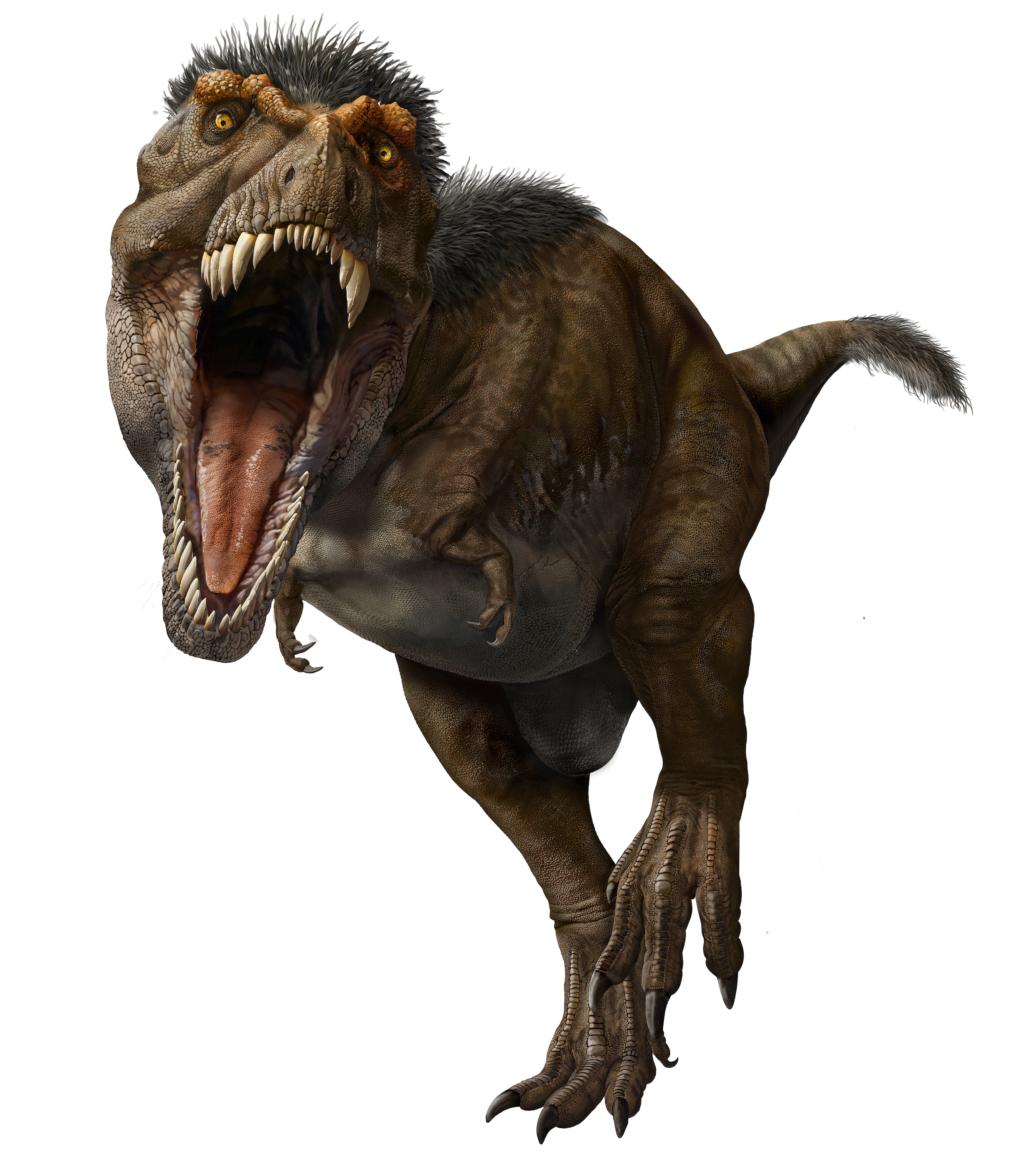
It’s the star of blockbuster movies and children’s imaginations, the inspiration for viral memes and inflatable Halloween costumes. Yet despite its high profile in the public consciousness, our perception of Tyrannosaurus rex and its relatives is often much different than the reality. T. rex: The Ultimate Predator, a new exhibition opening at the American Museum of Natural History this spring, will explore the latest research and discoveries about the genus of dinosaurs known as tyrannosaurs, with an emphasis on the most famous and impressive member of the family—T. rex.

The full tyrannosaur story includes dozens of different species and spans over 100 million years of evolution, with T. rex appearing only at the very end of that period. Most tyrannosaurs were not giants like T. rex, which, fully grown, weighed between 6 and 9 tons. Early species were small and fast, likely avoiding confrontations with larger dinosaurs. So how did mega-predators like T. rex evolve from such humble origins? How did T. rex grow so quickly in adolescence, ballooning from the size of a chicken to the size of a truck in just 21 years, gaining up to 4.6 pounds per day? And what kind of super sensory skills and traits did it use to become such an efficient killer? T. rex: The Ultimate Predator addresses these questions and more with life-sized reconstructions of tyrannosaurs at various life stages, real fossils and casts, large-scale video projections, hands-on interactives, and an exhilarating virtual reality experience that lets visitors work in a group to assemble a T. rex skeleton.

Visitors will encounter a massive life-sized model of a T. rex with patches of feathers—which, as scientists now know, were likely present on nearly all non-avian dinosaurs (all dinosaurs other than birds)—as well as reconstructions of a fluffy, helpless T. rex hatchling and a four-year-old juvenile T. rex; a “roar mixer” where visitors can imagine what T. rex might have sounded like by blending sounds from other animals; a shadow theater where a floor projection of an adult T. rex skeleton will come to life; and a magnetic wall where visitors will be tasked with placing various tyrannosaur family members in the correct time period. They will also encounter a life-sized animation of T.rex in the Cretaceous and explore real data from fossil specimens, CT scans, and microscope images at a tabletop Investigation Station.

In collaboration with HTC VIVE, the Museum will present V. rex (working title) as its first interactive, multi-player virtual reality experience. Visitors will team up to build a T. rex skeleton bone by bone and then watch as it comes to life in what is now Montana, as it was 66 million years ago.

T. rex and its relatives have a long history at the Museum. The first T. rex skeleton was discovered in 1902 by the Museum’s legendary fossil hunter, Barnum Brown, and the Museum boasts one of the few original specimens of T. rex on public display, in the Hall of Saurischian Dinosaurs. Mark Norell, who is curator of T. rex: The Ultimate Predator, joined the Museum in 1989 and has led and participated in a number of scientific investigations into the biology and evolutionary history of tyrannosaurs and other theropods—the group of dinosaurs most closely related to modern birds—including the first discovery of a feathered tyrannosaur, Dilong paradoxus, in 2004. Many of the studies led by Norell, who is chair and Macaulay Curator in the Museum’s Division of Paleontology, and his colleagues and former students are reflected in the new exhibition. Gregory Erickson, professor of anatomy and vertebrate paleontology at Florida State University, is a consultant for the exhibition.

T. rex: The Ultimate Predator will be open to the public starting Monday, March 11, 2019. Members will be able to preview the exhibition starting on Friday, March 8, through Sunday, March 10.

Major funding for T. rex: The Ultimate Predator provided by the Lila Wallace-Reader’s Digest Endowment Fund.

Generous support also provided by:
Dana and Virginia Randt
Chase Private Client

V. rex (working title) virtual reality experience in collaboration with HTC VIVE.


American Museum of Natural History (amnh.org)
The American Museum of Natural History, founded in 1869, is one of the world’s preeminent scientific, educational, and cultural institutions. The Museum encompasses 45 permanent exhibition halls, including those in the Rose Center for Earth and Space and the Hayden Planetarium, as well as galleries for temporary exhibitions. It is home to the Theodore Roosevelt Memorial, New York State’s official memorial to its 33rd governor and the nation’s 26th president, and a tribute to Roosevelt’s enduring legacy of conservation. The Museum’s five active research divisions and three cross-disciplinary centers support approximately 200 scientists, whose work draws on a world-class permanent collection of more than 34 million specimens and artifacts, as well as on specialized collections for frozen tissue and genomic and astrophysical data and on one of the largest natural history libraries in the world. Through its Richard Gilder Graduate School, it is the only American museum authorized to grant the Ph.D. degree and also to grant the Master of Arts in Teaching degree. Annual visitation has grown to approximately 5 million, and the Museum’s exhibitions and Space Shows are seen by millions more in venues on six continents. The Museum’s website, mobile apps, and massive open online courses (MOOCs) extend its scientific research and collections, exhibitions, and educational programs to additional audiences around the globe. Visit amnh.org for more information.
# # # #

Follow
Become a fan of the American Museum of Natural History on Facebook at facebook.com/naturalhistory, follow us on Instagram at @AMNH, Tumblr at amnhnyc, or Twitter at twitter.com/AMNH. 

Thursday, September 13, 2018

Historic Exhibition Of Animals In Japanese Art Opens May 2019 At The National Gallery Of Art In Washington, DC.

Historic Exhibition of 16 Centuries of Animals in Japanese Art Will Showcase Masterpieces That Rarely Leave Japan
Unknown Artist, Deer Bearing Symbols of the Kasuga Deities, Nanboku-chō period, 14th century, bronze, Hosomi Museum
Unknown Artist, Deer Bearing Symbols of the Kasuga Deities, Nanboku-chō period, 14th century, bronze, Hosomi Museum
Washington, DC—Artworks representing animals—real or imaginary, religious or secular—span the full breadth and splendor of Japanese artistic production. Today, the National Gallery of Art, Washington, announced The Life of Animals in Japanese Art, the first exhibition devoted to the subject, covering 16 centuries (from the sixth century to the present day) and a wide variety of media—sculpture, painting, lacquerwork, ceramics, metalwork, textile, and the woodblock print. On view from May 5 through July 28, 2019, the exhibition will feature 315 works, drawn from 66 Japanese and 30 American public and private collections. The artists represented range from Sesson Shūkei, Itō Jakuchū, Soga Shōhaku, Katsushika Hokusai, Utagawa Kuniyoshi, to Okamoto Tarō, Kusama Yayoi, Issey Miyake, Nara Yoshitomo, and Murakami Takashi.
Many of the nearly 180 works traveling from Japan are masterpieces that rarely—if ever—leave the country, including seven designated as an Important Cultural Property by the Japanese government. Three of the registered artworks are from the Tokyo National Museum: the six-foot-tall Monju Bosatsu Seated on a Lion, with Standing Attendants (1273) by the Buddhist sculptor Kōen; the intricately carved wood Buddhist sculpture Aged Monkey (1893) by Takamura Kōun; and the Footed Bowl with Applied Crabs (19th century) by Miyagawa Kōzan I. Two are on loan from the Nara National Museum: a hanging scroll, Sword with Kurikara Dragon and Two Child Acolytes (13th century); and a Buddhist hanging scroll, Fugen Enmei (13th century). Finally, the wood sculpture Fugen's Elephant(13th century) is on loan from a private collection, and a spectacular bronze, Deer Bearing Symbols of the Kasuga Deities (14th century), is on loan from the Hosomi Museum, Kyoto.
This historic exhibition is co-organized by the National Gallery of Art, Washington, the Japan Foundation, and the Los Angeles County Museum of Art (LACMA), with special cooperation from the Tokyo National Museum, and curated by Robert T. Singer, curator and department head, Japanese art, LACMA, and Masatomo Kawai, director, Chiba City Museum of Art, in consultation with a team of esteemed historians of Japanese art. LACMA is presenting an abbreviated version of the exhibition, titled Every Living Thing: Animals in Japanese Art from September 8 through December 8, 2019. The Gallery's presentation of the exhibition, covering 18,000 square feet in the East Building Concourse, is organized into thematic sections that explore the various roles animals have played in the art of Japan. A fully illustrated catalog is being published in association with Princeton University Press.
"The Gallery is honored to partner with the Japan Foundation and LACMA to present the first exhibition to consider the representation of animals across the history of Japanese art," said Earl A. Powell III, director, National Gallery of Art. "It is a privilege to work with the Japan Foundation to share these Japanese masterpieces with American audiences, and we are grateful to the Foundation for making this incredible group of loans possible. As the largest single Japanese lender, the Tokyo National Museum has also played a significant role in this exhibition and we are pleased to welcome nearly 30 works from the Museum's unparalleled collection."
"The Japan Foundation creates global opportunities to foster friendship, trust, and mutual understanding through culture, language, and dialogue, to cultivate friendship and ties between Japan and the world. We believe this is a basis for building a truly peaceful and rich world," said Hiroyasu Ando, president, the Japan Foundation. "To achieve this mission, the Japan Foundation has organized numerous cultural events around the world and in the U.S. Among them, the upcoming exhibition of The Life of Animals in Japanese Art is one of the most ambitious and creative projects, and will display artworks of high quality for everyone's enjoyment. One may call these works of art—created through long, close interactions between animals and Japanese people over 1,500 years—a gift from humans to animals. I very much look forward to sharing this gift with our American friends."
Exhibition Support
The exhibition is made possible through the generous support of the E. Rhodes and Leona B. Carpenter Foundation. Additional funding is provided by The Exhibition Circle of the National Gallery of Art.
Exhibition Organization and Curators
The exhibition is co-organized by the National Gallery of Art, Washington, the Japan Foundation, and the Los Angeles County Museum of Art, with special cooperation from the Tokyo National Museum.
The exhibition's curators Robert T. Singer, curator and department head, Japanese art, LACMA, and Masatomo Kawai, director, Chiba City Museum of Art, worked in consultation with a team of esteemed historians of Japanese art: Ryusuke Asami, chief curator sculpture, Tokyo National Museum; Masaaki Arakawa, professor, Gakushuin University; Hiroyuki Kano, former professor, Doshisha University; Mika Kuraya, chief curator, Museum of Modern Art, Toyko; Yasuyuki Sasaki, curator, Suntory Museum of Art; Tomoko Matsuo, curator, Chiba City Museum of Art; Nobuhiko Maruyama, professor, Musashi University; and Hiroshi Ikeda, honorary researcher, Toyko National Museum.
Exhibition Dates
National Gallery of Art, Washington, May 5–July 28, 2019
Los Angeles County Museum of Art, September 8–December 8, 2019
Exhibition Highlights
The Life of Animals in Japanese Art takes an expansive look at the representation of animals in a variety of art forms including painted screens, hanging scrolls, woodblock prints, netsuke, ceramic plates, kimono, and samurai helmets. The selection portrays all types of creatures—from foxes and frogs, snakes and sparrows, to mythical animals such as dragons, phoenixes, and kappa river sprites. To explore the many roles animals have played in Japanese culture, objects are divided into eight sections: Ancient Japan;The Japanese Zodiac; Religion: Buddhism, Zen, Shinto; Myth and Folklore; The World of the Samurai; The Study of Nature; The Natural World: Creatures on Land, in the Air, and in Rivers and Seas; and The World of Leisure.
Since antiquity, animals have held spiritual and symbolic significance in Japanese culture, as evidenced by haniwa, ancient clay sculptures that were placed around gravesites, possibly to protect the dead in the afterlife. A sixth-century haniwahorse on loan from LACMA—standing nearly four feet tall—is one of the largest known sculptures of this animal from the period. In Buddhism, Shinto, and Zen, artworks depicting animals were commonly given places of prominence in temples and shrines according to the creatures' divine duties. For instance, Shinto deer were revered as messengers to—or even stand-ins for—the gods, as illustrated by the 15th-century Kasuga Deer Mandala, on loan from the Art Institute of Chicago.
The allegorical power of animals is not limited to the spiritual realm; they carry many meanings in secular works of art as well. Objects portraying the Japanese zodiac animals individually were commonly collected as symbols of an individual's identity. Even rarer are works that depict all 12 animals of the zodiac together. The exhibition includes several examples: a set of 19th-century woodblock prints by Utagawa Kuniyoshi on loan from the Arthur M. Sackler Gallery, a finely embroidered 19th-century Kosode with the Twelve Zodiac Animals on loan from the National Museum of Japanese History, and a remarkable mid-to-late-19th-century netsuke by Kaigyokusai Masatsugu on loan from LACMA, with all 12 zodiac animals intertwined in one small piece of carved ivory.
Animals were popularly described in myth and folklore in anthropomorphic terms, often as a means of disguising social critiques. One of the most well-known works in the exhibition is a scene from the handscroll Frolicking Animals (12th-13th century), on loan from the collection of Robin B. Martin, courtesy of the Brooklyn Museum. Long attributed to the Buddhist monk Toba Sōjō, the scene depicts monkeys, a rabbit, and a deer as protagonists in a thinly veiled satire of priests. Humans also adopted the form of, or decorated themselves with, animals for their symbolic energy. Samurai commonly wore armor decorated with dragons or helmets in the shapes of rabbit ears, deer antlers, or the mythological shachihoko, which has the head of a tiger and body of a carp.
In the 18th and 19th centuries, artists developed an interest in the study of the natural world and thus in drawing individual animals directly from life. Inspiration for most images of animals had previously come from earlier examples in art. Whereas Itō Jakuchū painted with lifelike detail every barb in every vane of a feather in Pair of Cranes and Morning Sun(c. 1755–1756), on loan from the Tekisuiken Memorial Foundation of Culture, while Utagawa Hiroshige carved every scale of a seabream in A Shoal of Fishes, his 19th-century woodblock print series on loan from the Harvard Art Museums/Arthur M. Sackler Museum. Many artists depicted numerous animals within a single species in order to convey their auspicious meanings. An elaborate formal kimono like the 19th-century Uchikake with Phoenix and Birds, on loan from the Kyoto National Museum, would have brought its wearer good luck, while giving someone a hanging scroll like One Hundred Rabbits (1784) by Maruyama Ōkyo, on loan from a private collection in Japan, conveyed a wish for prosperity and plenitude.
Contemporary artworks spread throughout the exhibition demonstrate the influence of traditional representations of animals on the work of living Japanese artists. The medieval Deer Bearing Symbols of the Kasuga Deities is installed alongside Kōhei Nawa's PixCell-Bambi 14 (2015), while Kusama Yayoi's polka-dotted three-dimensional dogs are in conversation with haniwa animals, illustrating the similarities in their forms and expressions. On loan from the Broad Art Foundation, Murakami Takashi's 82-foot-long vibrant painting In the Land of the Dead, Stepping on the Tail of a Rainbow (2014) was created in response to the 2011 earthquake and tsunami in Japan. Murakami drew inspiration from a series of scrolls on the 500 arhats, Buddhists who achieved enlightenment, created by Kanō Kazunobu over a ten-year period that included the 1855 Edo earthquake. For his painting, Murakami embellished the background, arhats, and animals such as the shachihokowith his signature flourish and vibrant palette. Many of the works exhibited employ distinctly contemporary techniques to depict animals. Whimsical creations by designer Issey Miyake transform wearers into a starfish, a monkey, or a swallow. In a digital work, Chrysanthemum Tiger (2017), from the Tokyo-based collective teamLab's Fleeting Flower series, flowers and petals coalesce to form a moving image of a tiger which then dissolves, scatters, and takes shape again.
Exhibition Catalog
Published by the National Gallery of Art, Washington, in association with Princeton University Press, a richly illustrated catalog features contributions by the exhibition's curators and an international team of esteemed experts in Japanese art. Included are essays by scholars Barbara Rossetti Ambros, department chair, religious studies, University of North Carolina at Chapel Hill; Thomas Hare, William Sauter LaPorte '28 Professor in Regional Studies and professor of comparative literature, Princeton University; and Federico Marcon, associate professor of East Asian studies and history, Princeton University. With 425 illustrations and some 400 pages, the catalog will be available in Spring 2019 at shop.nga.gov, or by calling (800) 697-9350 or (202) 842-6002; faxing (202) 789-3047; or emailing mailorder@nga.gov.
The exhibition catalog is made possible through the generous support of the E. Rhodes and Leona B. Carpenter Foundation. Additional funding for the catalog is provided by Janice Holland.
Related Programs
Lecture
Introduction to the Exhibition—The Life of Animals in Japanese Art
May 5, noon
East Building Auditorium
Robert T. Singer, curator and department head, Japanese art, Los Angeles County Museum of Art, and chief curator of The Life of Animals in Japanese Art
Public Symposium
The Role and Representations of Animals in Japanese Art and Culture
June 7, 10:30 a.m. to 5:00 p.m.
East Building Auditorium
Moderated by Robert T. Singer, with illustrated lectures by noted scholars, including Barbara Rossetti Ambros, department chair, religious studies, University of North Carolina at Chapel Hill; Rory Browne, director of the academic advising center and associate dean of Morrissey College of Arts and Sciences, Boston College; R. Keller Kimbrough, professor of Japanese, department of Asian languages and civilizations, University of Colorado, Boulder; Federico Marcon, Associate Professor of East Asian Studies and History, Princeton University; Daniel McKee, Adjunct Assistant Professor, Department of Asian Studies, Cornell University; and Miwako Tezuka, consulting curator, Reversible DestinyFoundation.
Concert
Yumi Kurosawa, koto
With special guests Anubrata Chatterjee, tabla, and Virgil Gadsen, dancer
May 19, 3:30 p.m.
West Building, West Garden Court
This performance brings together the elements of Japan's spiritual philosophy and the importance of the animal world, as represented in literature, art, dance, and music. To illustrate the soundscape of our story, the koto's melodic timbre recalls Japan's history with chant, the tabla reminds us of the heartbeat, and the featured element of dance echoes the natural world of movement.
Films
The Life of Animals in Japanese Cinema
Summer 2019
Japanese filmmaking has over the years made rich use of animal forms as symbol and object, offering varied meanings and observations about the natural world. This series of approximately 30 films—narrative features, documentaries, and shorts, both contemporary and classic—includes Hachi: A Dog's Tale, Godzilla (1954 original), What the Snow Brings, Pom Poko, Princess Raccoon, Ghost Cat of Arima Palace, Samurai Cat, Madadayo, The Hidden Fortress, Ran, I Am a Cat, and Song of the Horse. Animations by Koji Yamamura and Osamu Tezuka, Kihachirō Kawamoto puppet shorts, plus two productions from the famed Shochiku series Cinema Kabuki—Triple Lion Dance (Renjishi) and The Heron Maiden—are also featured.
The Japan Foundation
To cultivate friendship and ties between Japan and the world, the Japan Foundation creates global opportunities to foster friendship, trust, and mutual understanding through culture, language, and dialogue. The Japan Foundation was established in October 1972 as a special legal entity supervised by the Ministry of Foreign Affairs. In October 2003, it was reorganized as an independent administrative institution. Based on a government endowment of 78 billion yen, the activities of the Japan Foundation are financed by annual government subsidies, investment revenue, and donations from the private sector.

General Information
The National Gallery of Art and its Sculpture Garden are at all times free to the public. They are located on the National Mall between 3rd and 9th Streets at Constitution Avenue NW, and are open Monday through Saturday from 10:00 a.m. to 5:00 p.m. and Sunday from 11:00 a.m. to 6:00 p.m. The Gallery is closed on December 25 and January 1. For information call (202) 737-4215 or visit the Gallery's Web site at www.nga.gov. Follow the Gallery on Facebook at www.facebook.com/NationalGalleryofArt, Twitter at www.twitter.com/ngadc, and Instagram at http://instagram.com/ngadc.