Showing posts with label #FreeThingsInWashingtonDC. Show all posts

Monday, March 19, 2018

Major Exhibition Of Paul Cézanne's Portraits At The National Gallery Of Art In Washington DC, March 25 through July 1, 2018

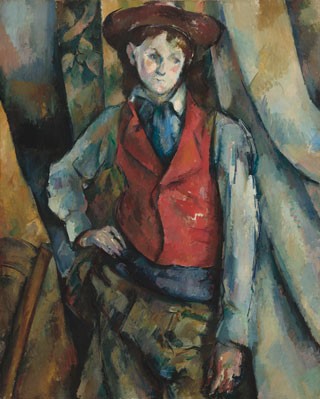
Paul Cézanne, Boy in a Red Waistcoat, 1888–1890, oil on canvas National Gallery of Art, Washington, Collection of Mr. and Mrs. Paul Mellon, in Honor of the 50th Anniversary of the National Gallery of Art
Paul Cézanne, Boy in a Red Waistcoat, 1888–1890, oil on canvas
National Gallery of Art, Washington, Collection of Mr. and Mrs. Paul Mellon, in Honor of the 50th Anniversary of the National Gallery of Art
Washington, DC— Bringing together some 60 paintings drawn from collections around the world, Paul Cézanne's Cézanne Portraits is the first exhibition devoted exclusively to this often-neglected genre of his work. The revelatory exhibition explores the pictorial and thematic characteristics of Paul Cézanne's (1839–1906) portraits, the chronological development of his style and method, and the range and influence of his sitters. The sole American venue, Cézanne Portraits will be on view on the main floor of the West Building from March 25 through July 1, 2018.
"This exhibition provides an unrivaled opportunity to reveal the extent and depth of Cézanne's achievement in portraiture," said Earl A. Powell III, director, National Gallery of Art. "The partnership between the National Gallery of Art, the National Portrait Gallery in London, and the Musée d'Orsay in Paris has made it possible to explore his working techniques as well as his intellectual solutions to representation in these exceptional portraits."
Cézanne painted almost 200 portraits, including 26 self-portraits and nearly 30 portraits of his wife, Hortense Fiquet, as well as portraits of his son Paul and his uncle Dominique Aubert, art dealer Ambroise Vollard, critic Gustave Geffroy, and the local men and women in his native Aix-en-Provence. The exhibition presents a selection of portraits that reveals the most personal and human aspects of Cézanne's art.
Exhibition Organization and Support
The exhibition is organized by the National Gallery of Art, Washington, the National Portrait Gallery, London, and the Musée d'Orsay, Paris.
The exhibition in Washington is made possible through the generous support of the Anna-Maria and Stephen Kellen Foundation.

The exhibition is supported by an indemnity from the Federal Council on the Arts and the Humanities.
About the Exhibition
Cézanne Portraits explores the artist's series of portraits of the same sitter; traces his portraits chronologically, revealing changes in style and method; and shows the full range of his sitters and how they influenced his practice. Cézanne's unique vision was informed by a desire to see through appearances to the underlying structure using mass, line, and shimmering color. The exhibition traces the development of Cézanne's portraits and the changes that occurred through style and method and the understanding of resemblance and identity.
Cézanne made his first portrait in the early 1860s, although it was not until 1866 that he began to paint portraits in earnest. Often painting family and friends with whom he felt comfortable, his early works were stylistically influenced by Gustave Courbet's and Édouard Manet's Parisian portraits. The family paintings include large portraits of his father, small paintings of his mother and sisters, and about nine portraits of his uncle, the bailiff Dominique Aubert, and provocative paintings of poet and art critic Antony Valabrègue and the artist Achille Emperaire.
By the end of the 1860s Cézanne's portraits became more refined and more sympathetic to his sitters. He began to produce fewer portraits until 1875, when he created a group of self-portraits painted in an impressionist style prominently featuring his bald head. Between 1876 and 1877 he began to incorporate heightened hues in which areas of prismatic color help to shape a vivid human presence, as seen in Madame Cézanne in a Red Armchair (c. 1877), on view in the exhibition. Over the following seven or eight years, Cézanne created portraits of sculptural gravity, including paintings of his wife, their young son, and his son's friend Louis Guillaume, as well as self-portraits.
Between 1872 and 1892 Cézanne painted 28 portraits of his wife. Seventeen of these, painted during the second half of the 1880s, form three distinct stylistic groups. The first group, a set of small, lightly painted canvases, were painted around 1886 and includes the most expressive images of her made to date, marking a major shift in his portraiture practice. The second group, made a few years later, is more explicit in its description of emotion and more heavily painted. The third group of four portraits depicts Hortense wearing a red dress. Fifteen of these portraits will be on view.
Cézanne also painted several portraits of the model Michelangelo de Rosa in Italian garb. The Gallery's version, Boy in a Red Waistcoat (1888–1890), is the largest, most resolved of these portraits. Influenced by 16th-century mannerists such as Bronzino and Pontormo who painted iconic images of urban, male adolescents, Cézanne presents a moving, formally innovative image of a boy morphing into manhood.
During the 1890s Cézanne began to paint portraits of local people in and around his native Aix-en-Provence. His portraits of agricultural laborers record his admiration for people who had grown old without changing their ways. The paintings of domestic servants and children indirectly reflect Cézanne's increasing preoccupation with old age. Included among these works are Child in a Straw Hat (1896), Man in a Blue Smock (c. 1897), Portrait of a Woman (c. 1900), and Seated Peasant (c. 1900–1904), all of which are in the exhibition.
Of the 100 paintings Cézanne made between 1900 and 1906, only about 20 are portraits, seven of which were painted outside. During this period, Cézanne painted his final self-portrait, Self-Portrait with Beret (1898–1900), on view in the exhibition, which depicts a fragile, prematurely aged but still vehement figure. The subjects of these later portraits are local men, women, and children as well as a pair of portraits of his sister, Marie, depicted in a blue dress, and five paintings of his gardener, Vallier, three of which are on view.

Exhibition Curators
The exhibition is curated by John Elderfield, chief curator emeritus of painting and sculpture at the Museum of Modern Art, New York, with Mary Morton, curator and head of the department of French paintings at the National Gallery of Art, Washington, and Xavier Rey, formerly director of collections at the Musée d'Orsay, now director of the museums of Marseille.

Related Activities
Lectures
Introduction to the Exhibition—Cézanne Portraits
March 25, 2:00 p.m.
East Building Auditorium
Mary Morton, curator and head, department of French paintings, National Gallery of Art. A signing of the exhibition catalog follows.
Cézanne's Portraits: Doubt, Certainty, and Painting in Series
June 3, 2:00 p.m.
East Building Auditorium
John Elderfield, chief curator emeritus of painting and sculpture, Museum of Modern Art, New York. A signing of the exhibition catalog follows.

Concert

Benedetto Lupo, piano
March 25, 3:30 p.m.
West Building, East Garden Court
In conjunction with Cézanne Portraits and on the 100th anniversary of the death of French composer Claude Debussy, Lupo performs an entire concert of Debussy's most important solo piano works.
Film
Cézanne—Portraits of a Life
March 25, 4:30 p.m.
East Building Auditorium
American premiere
Award-winning filmmaker Phil Grabsky and his cinema production house known as Exhibition on Screen had access to the creators of the landmark exhibition Cézanne Portraits. Filming extensively in Paris and Provence, the team delved deeply into the biography of the great artist. Cézanne’s letters are read by Emmy-winning actor Brian Cox. Participating curators include Mary Morton from the National Gallery of Art. (Phil Grabsky, 2018, English and French with subtitles, 85 minutes)

Cézanne-Inspired Dining
In celebration of the exhibition, the Garden Café presents an assortment of specialty French dishes featuring regional cheeses, seasonal ingredients, and decadent desserts. Cézanne-inspired items are available during the week and weekend brunch buffet.

Cézanne Portraits: Gallery Shops
The Gallery Shops will celebrate the exhibition with a full suite of specialty items, including a very special 96-page companion guide to this genre of the the artist's ouevre—Paul Cézanne: Painting People. This publication presents 24 highlights from the exhibition and includes an introductory essay on the artist and his portraiture by art historian Mary Tompkins Lewis. Additional specialty items include scarves and accessories inspired by elements in the exhibition, music, DVDs, and other scholarly publications to enhance the exhibition experience in both English and French. An assortment of stationery items and reproductions highlights several other key works by Cézanne, and a selection of images will also be available through NGA Custom Prints, to be designed to the customer's specifications.
The exhibition is accompanied by a 256-page, fully illustrated catalog with essays by the exhibition curators—John Elderfield, chief curator emeritus of painting and sculpture at the Museum of Modern Art, New York, with Mary Morton, curator and head of the department of French paintings at the National Gallery of Art, Washington, and Xavier Rey, director of the museums of Marseille. Also included are a biographical essay on Cézanne's sitters by biographer Alex Danchev and a chronology of the artist's life by Jayne Warman.
This exhibition catalog establishes portraiture as an essential practice for Cézanne, from his earliest self-portraits in the 1860s to his famous depictions of figures including his wife Hortense Fiquet, the writer Émile Zola, and the art dealer Ambroise Vollard, and concluding with a poignant series of portraits of his gardener Vallier, made shortly before Cézanne's death. Featured essays explore the special pictorial and thematic characteristics of Cézanne's portraits and address the artist's creation of complementary pairs and multiple versions of the same subject, as well as the role of self-portraiture for Cézanne. They investigate the chronological evolution of his portrait work, with an examination of the changes that occurred within his artistic style and method, and in his understanding of resemblance and identity. They also consider the extent to which particular sitters influenced the characteristics and development of Cézanne's practice. Beautifully illustrated with works of art drawn from public and private collections around the world, Cézanne Portraits presents an astonishingly broad range of images that reveals the most personal and human qualities of this remarkable artist.

Both the exhibition catalog and the companion guide are published by the National Portrait Gallery, London and distributed by the Princeton University Press.
Items are available for purchase at special installations near the exhibition and in the West Building, Concourse, and East Building Shops; shop.nga.gov; (800) 697-9350 (phone); (202) 789-3047 (fax); or mailorder@nga.gov

The National Gallery of Art and its Sculpture Garden are at all times free to the public. They are located on the National Mall between 3rd and 9th Streets at Constitution Avenue NW, and are open Monday through Saturday from 10:00 a.m. to 5:00 p.m. and Sunday from 11:00 a.m. to 6:00 p.m. The Gallery is closed on December 25 and January 1. For information call (202) 737-4215 or visit the Gallery's Web site at www.nga.gov. Follow the Gallery on Facebook at www.facebook.com/NationalGalleryofArt, Twitter at www.twitter.com/ngadc, and Instagram at http://instagram.com/ngadc.

Visitors will be asked to present all carried items for inspection upon entering. Checkrooms are free of charge and located at each entrance. Luggage and other oversized bags must be presented at the 4th Street entrances to the East or West Building to permit x-ray screening and must be deposited in the checkrooms at those entrances. For the safety of visitors and the works of art, nothing may be carried into the Gallery on a visitor's back. Any bag or other items that cannot be carried reasonably and safely in some other manner must be left in the checkrooms. Items larger than 17 by 26 inches cannot be accepted by the Gallery or its checkrooms.

Thursday, November 30, 2017

Major Exhibition Of Paul Cézanne's Portraits At The National Gallery Of Art, March 25 Through July 1, 2018


Paul Cézanne, Boy in a Red Waistcoat, 1888–1890, oil on canvas National Gallery of Art, Washington, Collection of Mr. and Mrs. Paul Mellon, in Honor of the 50th Anniversary of the National Gallery of Art
Paul Cézanne, Boy in a Red Waistcoat, 1888–1890, oil on canvas
National Gallery of Art, Washington, Collection of Mr. and Mrs. Paul Mellon, in Honor of the 50th Anniversary of the National Gallery of Art
Washington, DC—Bringing together some 60 paintings drawn from collections around the world, Cézanne Portraits is the first exhibition devoted exclusively to this often-neglected genre of his work. The revelatory exhibition explores the pictorial and thematic characteristics of Paul Cézanne's (1839–1906) portraits, the chronological development of his style and method, and the range and influence of his sitters. The sole American venue, Cézanne Portraits will be on view on the main floor of the West Building from March 25 through July 1, 2018.
"This exhibition provides an unrivaled opportunity to reveal the extent and depth of Cézanne's achievement in portraiture," said Earl A. Powell III, director, National Gallery of Art. "The partnership between the National Gallery of Art, the National Portrait Gallery in London, and the Musée d'Orsay in Paris has made it possible to explore his working techniques as well as his intellectual solutions to representation in these exceptional portraits."
Cézanne painted almost 200 portraits, including 26 self-portraits and nearly 30 portraits of his wife, Hortense Fiquet, as well as portraits of his son Paul and his uncle Dominique Aubert, art dealer Ambroise Vollard, critic Gustave Geffroy, and the local men and women in his native Aix-en-Provence. The exhibition presents a selection of portraits that reveals the most personal and human aspects of Cézanne's art.
Exhibition Organization and Support
The exhibition is organized by the National Gallery of Art, Washington, the National Portrait Gallery, London, and the Musée d'Orsay, Paris.
The exhibition in Washington is made possible through the generous support of the Anna-Maria and Stephen Kellen Foundation.
About the Exhibition
Cézanne Portraits explores the artist's series of portraits of the same sitter; traces his portraits chronologically, revealing changes in style and method; and shows the full range of his sitters and how they influenced his practice. Cézanne's unique vision was informed by a desire to see through appearances to the underlying structure using mass, line, and shimmering color. The exhibition traces the development of Cézanne's portraits and the changes that occurred through style and method and the understanding of resemblance and identity.
Cézanne made his first portrait in the early 1860s, although it was not until 1866 that he began to paint portraits in earnest. Often painting family and friends with whom he felt comfortable, his early works were stylistically influenced by Gustave Courbet's and Édouard Manet's Parisian portraits. The family paintings include large portraits of his father, small paintings of his mother and sisters, and about nine portraits of his uncle, the bailiff Dominique Aubert, and provocative paintings of poet and art critic Antony Valabrègue and the artist Achille Emperaire.
By the end of the 1860s Cézanne's portraits became more refined and more sympathetic to his sitters. He began to produce fewer portraits until 1875, when he created a group of self-portraits prominently featuring his bald head painted in an impressionist style. Between 1876 and 1877 he began to incorporate heightened hues in which areas of prismatic color help to shape a vivid human presence, as seen in Madame Cézanne in a Red Armchair (c. 1877), on view in the exhibition. Over the following seven or eight years, Cézanne created portraits of sculptural gravity, including paintings of his wife, their young son, and his son's friend Louis Guillaume, as well as self-portraits.
Between 1872 and 1892 Cézanne painted 28 portraits of his wife. Seventeen of these, painted during the second half of the 1880s, form three distinct stylistic groups. The first group, a set of small, lightly painted canvases, were painted around 1886 and includes the most expressive images of her made to date, marking a major shift in his portraiture practice. The second group, made a few years later, is more explicit in its description of emotion and more heavily painted. The third group of four portraits depicts Hortense wearing a red dress. Fifteen of these portraits will be on view.
Cézanne also painted several portraits of the model Michelangelo de Rosa in Italian garb. The Gallery's version, Boy in a Red Waistcoat (1888–1890), is the largest, most resolved of these portraits. Influenced by 16th-century mannerists such as Bronzino and Pontormo who painted iconic images of urban, male adolescents, Cézanne presents a moving, formally innovative image of a boy morphing into manhood.
During the 1890s Cézanne began to paint portraits of local people in and around his native Aix-en-Provence. His portraits of agricultural laborers record his admiration for people who had grown old without changing their ways. The paintings of domestic servants and children indirectly reflect Cézanne's increasing preoccupation with old age. Included among these works are Child in a Straw Hat (1896), Man in a Blue Smock (c. 1897), Portrait of a Woman (c. 1900), and Seated Peasant (c. 1900–1904), all of which are in the exhibition.
Of the 100 paintings Cézanne made between 1900 and 1906, only about 20 are portraits, seven of which were painted outside. During this period, Cézanne painted his final self-portrait, Self-Portrait with Beret (1898–1900), on view in the exhibition, which depicts a fragile, prematurely aged but still vehement figure. The subjects of these later portraits are local men, women, and children as well as a pair of portraits of his sister, Marie, depicted in a blue dress, and five paintings of his gardener, Vallier, three of which are on view.
Exhibition Curators
The exhibition is curated by John Elderfield, chief curator emeritus of painting and sculpture at the Museum of Modern Art, New York, with Mary Morton, curator and head of the department of French paintings at the National Gallery of Art, Washington, and Xavier Rey, formerly director of collections at the Musée d'Orsay, now director of the museums of Marseille.
Related Activities
Lecture
Introduction to the Exhibition—Cézanne Portraits
March 25, 2:00 p.m.
East Building Auditorium
Mary Morton, curator and head, department of French paintings, National Gallery of Art
Concert
Benedetto Lupo, piano
March 25, 3:30 p.m.
West Building, East Garden Court
In conjunction with Cézanne Portraits and on the 100th anniversary of the death of French composer Claude Debussy, Lupo performs an entire concert of Debussy's most important solo piano works.
Exhibition Catalog
The exhibition is accompanied by a 256-page, fully illustrated catalog with essays by the exhibition curators—John Elderfield, chief curator emeritus of painting and sculpture at the Museum of Modern Art, New York, with Mary Morton, curator and head of the department of French paintings at the National Gallery of Art, Washington, and Xavier Rey, director of the museums of Marseille. Also included are a biographical essay on Cézanne's sitters by biographer Alex Danchev and a chronology of the artist's life by Jayne Warman.
This catalog establishes portraiture as an essential practice for Cézanne, from his earliest self-portraits in the 1860s to his famous depictions of figures including his wife Hortense Fiquet, the writer Émile Zola, and the art dealer Ambroise Vollard, and concluding with a poignant series of portraits of his gardener Vallier, made shortly before Cézanne's death. Featured essays explore the special pictorial and thematic characteristics of Cézanne's portraits and address the artist's creation of complementary pairs and multiple versions of the same subject, as well as the role of self-portraiture for Cézanne. They investigate the chronological evolution of his portrait work, with an examination of the changes that occurred within his artistic style and method, and in his understanding of resemblance and identity. They also consider the extent to which particular sitters influenced the characteristics and development of Cézanne's practice. Beautifully illustrated with works of art drawn from public and private collections around the world, Cézanne Portraits presents an astonishingly broad range of images that reveals the most personal and human qualities of this remarkable artist.
The catalog is available for purchase at special installations near the exhibition and in the West Building, Concourse, and East Building Shops; shop.nga.gov; (800) 697-9350 (phone); (202) 789-3047 (fax); or mailorder@nga.gov

The National Gallery of Art and its Sculpture Garden are at all times free to the public. They are located on the National Mall between 3rd and 9th Streets at Constitution Avenue NW, and are open Monday through Saturday from 10:00 a.m. to 5:00 p.m. and Sunday from 11:00 a.m. to 6:00 p.m. The Gallery is closed on December 25 and January 1. For information call (202) 737-4215 or visit the Gallery's Web site at www.nga.gov. Follow the Gallery on Facebook at www.facebook.com/NationalGalleryofArt, Twitter at www.twitter.com/ngadc, and Instagram at http://instagram.com/ngadc.

Monday, April 20, 2015

Travelore Tips: Free Things To Do In Washington, D.C.

Picture of the lobby of the National Building Museum, Washington, D.C.
Towering columns and arches line the perimeter of the National Building Museum's lobby.
Photograph by Tyler Metcalfe, National Geographic Travel
Washington, D.C., is full of memorials and museums to visit, many of which are free to explore. But dig a little deeper, and you'll find even more activities and sites that don't cost a thing. Here are some ideas to get you started.
Attractions
The National Building Museum, acclaimed for its architectural splendor, celebrates the history and methods of architecture, design, and engineering through exhibitions and hands-on activities. There is a fee to see the exhibitions ($8 for adults; $5 for those under the age of 17, seniors, and students), but access to the Great Hall is free, as are tours of the historic building, offered every day at 11:30 a.m., 12:30 p.m., and 1:30 p.m., based on docent availability. Opening hours are Monday to Saturday from 10 a.m. to 5 p.m., and Sunday from 11 a.m. to 5 p.m.
Prearranged guided tours of the Diplomatic Reception Rooms of the Department of State are conducted Monday to Friday at 9:30 a.m., 10:30 a.m., and 2:45 p.m. While touring the rooms used for official functions hosted by the secretary of state and other government officials, visitors learn about the 18th-century American furniture, paintings, and other decorative arts housed in the rooms. Reservations must be made at least 90 days in advance.
The U.S. Supreme Court offers public lectures every hour beginning on the half hour, Monday to Friday from 9:30 a.m. to 3:30 p.m. on days when the Court is not sitting. On certain Mondays, Tuesdays, and Wednesdays from October to April, visitors may listen to an oral argument heard by the Supreme Court. Seating is available on a first-come, first-seated basis. Refer to the calendars posted online for a schedule of arguments and court sessions.
The National Mall and Memorial Parks are some of the most famous free attractions in D.C. Try visiting the monuments—such as the Lincoln Memorial,the World War II Memorial, and the FDR Memorial—at night to enjoy dramatic lighting and smaller crowds. The monuments are open 24 hours a day; rangers are on duty from 9:30 a.m. to 11:30 p.m. to answer questions.
The U.S. Botanic Garden is a great place to visit, rain or shine. Find permanent exhibits such as the primeval landscape of ferns inside the Conservatory, walk through the home landscape demonstration garden of Bartholdi Park, or experience the National Garden, which focuses on mid-Atlantic plants. Check the website for a list of free events, including tours and lectures. Some preregistration is required. The Conservatory and National Garden are open daily from 10 a.m. to 5 p.m.; Bartholdi Park opens at 10 a.m. and closes at dusk.
The National Geographic Society headquarters is home to the National Geographic Museum at Explorers Hall. View changing photography exhibitions on a variety of scientific, geographic, and cultural themes daily from 10 a.m. to 6 p.m. The full gallery spaces are ticketed and charge admission for entry.
Visitors are welcome to tour the Islamic Center of Washington, D.C., which includes a library and mosque. The center offers free Arabic classes and courses on Islam. Contact the center through its website for details and schedules.
The African American Civil War Memorial and Museum offers free tours and lectures about the role of African-American troops in the Civil War. Reservations are suggested for groups of 20 or more. Open Tuesday to Friday from 10 a.m. to 6:30 p.m.; Saturday from 10 a.m. to 4 p.m.; and Sunday from noon to 4 p.m.
Admission is free at the Daughters of the American Revolution Museum, which exhibits collections of American historical objects and more than 30 period rooms displaying antique furniture from the 17th to the early 20th centuries. The museum gallery is open Monday to Friday from 9:30 a.m. to 4 p.m. and Saturday from 9 a.m. to 5 p.m. Docent-led tours are every hour and half hour Monday to Friday from 10 a.m. to 2:30 p.m. The period rooms are accessible for self-guided tours Monday to Friday from 9:30 a.m. to 4 p.m. and Saturday from 9 a.m. to 5 p.m.
At the Kennedy Center, take a free guided tour of the Hall of States and Hall of Nations, the main theaters, and view the artwork and sculptures donated to the center by foreign countries. Tours depart approximately every ten minutes from the tour desk on the A level and are available Monday to Friday from 10 a.m. to 5 p.m. and Saturday and Sunday from 10 a.m. to 1 p.m.
On the first Sunday of every month, the National Museum of Women in the Artsoffers Free Community Days. View the museum's diverse permanent collection of art by women from the 16th century to the present and see rotating special exhibitions, such as a recent show that explored womanhood through Renaissance and baroque-era works depicting the Virgin Mary. Admission is always free to anyone age 18 and under. Open Monday to Saturday from 10 a.m. to 5 p.m. and Sunday from noon to 5 p.m.
Eastern Market, located in the Capitol Hill neighborhood, welcomes visitors to browse a flea market, farmers market, and arts-and-crafts market. The farmers market is open Tuesday to Friday from 7 a.m. to 7 p.m., Saturday from 7 a.m. to 6 p.m., and Sunday from 9 a.m. to 5 p.m. The flea market is open Sunday from 10 a.m. to 5 p.m.
Culture
At the Kennedy Center Millennium Stage, see free performances of all types, from the National Symphony Orchestra to Afghan music and dance, daily at 6 p.m. A free shuttle bus transports guests from the Foggy Bottom Metro station to the Kennedy Center. After the show, take the elevator up to the roof for a free 360-degree view of the city lit up at night.
The Smithsonian Institution provides free admission to most of its 19 museums and the National Zoo. Many of the following also offer films, workshops, craft demonstrations, special tours, gallery talks, lectures, seminars, and/or performances (check each museum's website for details and schedules): the Anacostia Community Museum, the Freer Gallery of Art and Arthur M. Sackler Gallery, the Hirshhorn Museum and Sculpture Garden, theNational Air and Space Museum, the National Museum of African Art, theNational Museum of American History, the National Museum of Natural History, the National Museum of the American Indian, the National Portrait Gallery, the National Postal Museum, the Smithsonian American Art Museumand the Renwick Gallery, and the Smithsonian Institution Buildingalso known as the Castle.
Take a guided tour of the Folger Shakespeare Library building, including a glimpse of Shakespeare's First Folio. The Folger is open to the public Monday to Saturday from 10 a.m. to 5 p.m. and Sunday from noon to 5 p.m. Docents lead tours Monday to Friday at 11 a.m. and 3 p.m., Saturday at 11 a.m. and 1 p.m., and Sunday at 1 p.m. The reading room is open to the public every Saturday from noon to 1 p.m. At 10 a.m. and 11 a.m. every first and third Saturday of the month from April to October, docents lead tours of the Elizabethan Garden, the design of which was inspired by the Bard's plays.
The Library of Congress offers guided tours of the Thomas Jefferson Building Monday to Friday starting on every half hour from 10:30 a.m. to 3:30 p.m.; and Saturday at 10:30 and 11:30 a.m. and 1:30 and 2:30 p.m. Visitors should arrive at least 15 minutes early for a security check.
Walk along the stretch of Massachusetts Avenue between Dupont Circle and the National Cathedral known as Embassy Row, and pass by many of the foreign embassies located in the District. Kids can go trick-or-treating at most of the embassies on Halloween.
The Carnegie Institute of Washington hosts free monthly lectures on timely scientific topics. These Capital Science Evenings were launched in 1990 to make science more accessible to the general public (and are now also available via webcast). Check the website for details and schedules; registration is recommended.
The Shakespeare Theatre Company's Happenings Happy Hour at the Harman Center for the Arts presents free monthly performances featuring local musicians, dancers, actors, and puppeteers, including the Washington Balalaika Society and Liz Lerman Dance Exchange. No reservations required; check the website for details.
Admittance to the National Gallery of Art Sunday Evening Concerts is on a first-come, first-served basis. Seating begins at 6 p.m.; concerts begin at 6:30 p.m. on the second and fourth Sunday of every month from May to October.
Explore Mexican culture and art at the Mexican Cultural Institute, a mansion turned art gallery. Open Monday to Friday from 10 a.m. to 6 p.m. and Saturday from noon to 4 p.m. (only during exhibitions).
During the week, admission to the permanent collection at the Phillips Collection is by donation only (Tuesday to Friday from 10 a.m. to 5 p.m.). The cost of admission to a ticketed exhibition is $12 for adults and $10 for students and seniors. (The museum has extended hours every Thursday from 5 to 8:30 p.m.)
A dozen or so art galleries in Dupont Circle hold open houses on the first Fridayof the month from 6 to 8 p.m.
Experience the song, dance, performance, crafts, and food of diverse cultural traditions at the Smithsonian Folklife Festival, held on the National Mall for two weeks every summer (overlapping the Fourth of July holiday).
The Folger Shakespeare Library celebrates Shakespeare's birthday on a Sunday in April from noon to 4 p.m. A variety of entertainment is offered, including performances, lectures, poetry readings, sword-fighting lessons for kids and, of course, birthday cake. Check the website for the date and full schedule of events.
The ethnically diverse Adams Morgan neighborhood hosts the Adams Morgan Day Festival on the second Sunday in September, offering food, crafts, and entertainment to celebrate the multicultural area.
Food/Drink
Enjoy complimentary wine tasting every Tuesday from 6 to 8 p.m. at Bistrot Lepic's wine bar on Wisconsin Avenue in Georgetown.
Check out Bar DC for a comprehensive listing of drink and food specials throughout the city.
Kids
The National Theatre hosts free performances for children Saturdays at 9:30 a.m. and 11 a.m. Past shows include an interactive presentation of the story of baseball great Jackie Robinson by Bright Star Touring Theatre. Seats are limited; tickets are distributed 30 minutes before each show.
Part of the Smithsonian Institution, the National Zoo charges no admission. Giant pandas Mei Xiang and Tian Tian and their cub Bao Bao are the big attractions. The grounds are open daily from 6 a.m. to 6 p.m., and exhibits are open from 10 a.m. to 4:30 p.m.
The National Building Museum hosts free annual family festivals featuring hands-on activities and performances. Check the website for the dates of the Discover Engineering Family Day, the National Cherry Blossom Festival Family Day, and the Big Build.
D.C.'s beloved Politics & Prose Bookstore holds occasional readings for children, as well as author talks for adults and other events that are free and open to the public.
The Smithsonian Institution offers many programs for children and families, including storytelling, special tours, family days, arts and crafts, and other hands-on activities. At the Imaginasia Family Program at the Freer and Sackler Gallery, children and adults view an exhibition and then make a craft related to the exhibit.
See an active beehive, a "water-wise garden," and other environmental exhibits at the Rock Creek Park Nature Center, open Wednesday to Sunday from 9 a.m. to 5 p.m. The center's planetarium presents shows exploring the solar system and galaxy on Wednesdays at 4 p.m. and on Saturdays and Sundays at 1 p.m. and 4 p.m. Free tickets are available at the nature center's information desk a half hour before the show. Monthly evening stargazing sessions are hosted from April to November.
Outdoors
Walk, bike, or cycle the Mount Vernon Trail, an 18-mile stretch that runs from Mount Vernon to Theodore Roosevelt Island and borders the Potomac River on the Virginia side, offering a great view of the D.C. skyline.
Dedicated to the 26th president—an avowed naturalist who loved to hike in the region's "wild" areas—Theodore Roosevelt Island offers roughly two and a half miles of peaceful pathways on boardwalk and gravel. Check the website for free ranger-led programs.
Explore 446 acres of gardens at the National Arboretum, including the National Bonsai and Penjing Museum (open Friday to Monday, 10 a.m. to 4 p.m.), the National Herb Garden, and the National Grove of State Trees. The arboretum grounds are open Friday to Monday, 8 a.m. to 5 p.m.
At Arlington National Cemetery, watch the changing of the guard at the Tomb of the Unknown Soldier. The guard changes every half hour from April 1 to September 30 between 8 a.m. and 7 p.m. and every hour for the rest of the year between 8 a.m. and 5 p.m.
Explore the many offerings of Rock Creek Park, including the historic Peirce Mill and Barn, open Wednesday to Sunday from noon to 4 p.m. See a demonstration of corn grinding on the second and fourth Saturdays of each month from 11 a.m. to 2 p.m. The park also offers free ranger-led programs through different trails and sites.
Dumbarton Oaks, a research institute run by Harvard University, includes ten acres of formal gardens. Although admission is charged from March 15 to October 31, you can visit for free from November 1 to March 14 between 2 and 5 p.m. The museum is open from 11:30 a.m. to 5:30 p.m. and is always free. Closed Mondays.
Experience the famous National Cherry Blossom Festival in late March and early April. Highlights of the festival include a parade (grandstand tickets are $20, but viewing along the route between 9th and 15th Streets NW is free) and the Blossom Kite Festival, which showcases kites from around the country. Didn't bring one? Kids can make their own kites at an activity station. Some events are ticketed; check the website for details.
During the summer, bring your blanket and picnic supper to the National Mall and view classic films at the outdoor Screen on the Green. These free film screenings are shown at sunset every Monday from July to August.
Contributed by http://travel.nationalgeographic.com/
Follow us on Twitter: @TraveloreReport