Showing posts with label NMAJH. Show all posts

Sunday, July 7, 2019

Free Admission In July 2019 At National Museum Of American Jewish History In Philadelphia

Screen Shot 2017-02-09 at 12.59.24 PM


PHILADELPHIA—The National Museum of American Jewish History (NMAJH) is pleased to announce free admission for all visitors throughout the month of July, thanks to the support of Parkway Corporation.
Free admission includes complimentary access to the Museum’s Core Exhibition highlighting more than 360 years of life in America, told through a Jewish lens, plus complimentary access to the current special exhibition, Sara Berman’s Closet.

In addition to regular Museum hours, NMAJH will now be open Mondays from 10am–5pm starting on July 8, and open late on Thursdays, from 10am-7pm, starting July 11.

“This year the Museum will be free for the entire month of July! Come and share the gratitude we have for our freedoms and the opportunities they provide all of us. Celebrate your ‘Only in America’ story by learning about our ‘Only in America’ story,” says NMAJH Board Chair, Phil Darivoff.

Parkway Corporation’s Chairman and NMAJH Trustee, Joe Zuritsky says, “Tourists and local residents come to Independence Mall, especially in July, to explore America’s founding through our nation’s most treasured buildings and artifacts. The National Museum of American Jewish History helps bring that history to life through the specific but universal stories of how an immigrant community and religious minority shaped, and was shaped, by this country.”

Parkway Corporation’s support is making free admission in July possible.
The Museum is thrilled to feature extraordinary original documents and images from defining moments in American history that speak to the ideal of freedom:

 George Washington’s handwritten 1789 proclamation establishing November 26 as a national day of thanksgiving. Washington celebrated the “tranquility, union, and plenty” that had accompanied Constitution’s ratification, highlighting “the civil and religious liberty with which we are blessed.”

These words foreshadow Washington’s historic 1790 letter to the Jewish community of Newport in which he bravely proclaimed that the nation’s new government would give “to bigotry no sanction, to persecution no assistance,” and quoted the prophet Micah to assure “the Children of the Stock of Abraham” all Americans “shall sit in safety under his own vine and fig tree, and there shall be none to make him afraid.”

 And they are recalled in a signed copy of Franklin Delano Roosevelt’s Four Freedoms Speech, his 1941 State of the Union Address – on view at NMAJH for the first time – in which he declared that all people had a right to the freedom of speech, the freedom of worship, the freedom from want, and the freedom from fear.

 Roosevelt’s speech will be accompanied by original printings of the four iconic Norman Rockwell posters depicting each of the four freedoms, later reproduced in the Saturday Evening PostAccording to a 1945 New Yorker article, these images were “received by the public with more enthusiasm, perhaps, than any other paintings in the history of American art.”

FDR’s speech and Rockwell’s posters will be displayed on the Museum’s first floor along with a visitor-centered interactive asking visitors to suggest what they believe should be a fifth freedom. “These documents and images vividly illustrate our nation’s essential values,” states Dr. Josh Perelman, Chief Curator and Director of Exhibitions and Interpretation, “and remind us about our roles as ensuring they are extended to all, now and in the future.”
On July 4, in conjunction with Wawa Welcome America, visitors are invited to celebrate Independence Day here at NMAJH. Visitors can watch Philadelphia’s 4thof July parade from the Museum’s fifth floor terrace with sweeping views of Independence Mall, and enjoy interactive gallery talks, story time, arts and crafts projects, and meet celebrated artists Maira Kalman and Alex Kalman, who created the Museum’s buoyant current special exhibition, Sara Berman’s Closet, about Sara’s journey from Belarus to Tel Aviv to New York and making a life of meaning.

SPECIAL PROGRAMS
Free Admission throughout July
Admission is free for all visitors during the month of July, and includes complimentary access to the Museum’s core exhibition highlighting more than 360 years of life in America told through a Jewish lens and complimentary access to current exhibition, Sara Berman’s Closet. Advanced tickets are not required but recommended. To reserve, nmajh.org/letfreedomring.
Visitor Guides are available in five languages at the Museum and online. A new guide for July will be available in three languages.


Throughout the Summer
“Sara Berman was wild about Fred Astaire and watched all his movies.” Enjoy drop-in screenings of Sara Berman’s favorite Fred Astaire and Danny Kaye films. For dates, nmajh.org/sbc.
For more information, visit nmajh.org.

Wednesday, October 11, 2017

"Leonard Bernstein: The Power of Music" At The National Museum Of American Jewish History in Philadelphia, Mar. 16 - Sept. 2, 2018

Bernstein’s piano, conducting suit, and family heirlooms are among the approximately 
100 artifacts that will illustrate his life, Jewish identity, and social activism

 Bernstein
PHILADELPHIA—The National Museum of American Jewish History (NMAJH) announces Leonard Bernstein: The Power of Music, the first large-scale museum exhibition to illustrate the famed conductor and composer’s life, Jewish identity, and social activism. The exhibition will feature approximately 100 historic artifacts—from Bernstein’s piano and conducting suit to family heirlooms—along with original films and immersive sound installations. Taking place during the worldwide centennial celebration of Bernstein’s birthday, Leonard Bernstein: The Power of Music will be on view March 16 – September 2, 2018.

Audiences may be familiar with many of Bernstein’s works, notably West Side Story (1957), but not necessarily how his approach to music was informed by the political and social crises of his day. Bernstein used the arts to express the restlessness, anxiety, fear, and hope of an American Jew living through World War II and the Holocaust, the Vietnam War, and turbulent social change that shook his faith: in God, in humanity, and in government. The exhibition will focus on this theme in Bernstein’s work—what he referred to as his “search for a solution to the 20th‐century crisis of faith.” It will explore how he confronted this “crisis” by breaking racial barriers in his casting decisions for On the Town (1944), addressing America’s changing ideas about race and ethnicity in West Side Story, and giving a voice to the human rights crisis during the Vietnam era in his provocative theater piece, MASS(1971), as examples.

Ivy Weingram, NMAJH Associate Curator and curator of Leonard Bernstein: The Power of Music, says, “Leonard Bernstein is remembered as a passionate, larger-than-life personality—a charismatic conductor, devoted educator, and skilled musician. This exhibition will delve into his memorable works while also exploring a lesser known side of Bernstein—the second-generation American Jew who inspired social progress, both on and off the stage. As our nation continues to confront issues of race, religion, and what it means to be an ‘American’, Bernstein’s music takes on new, personal meanings for every audience that experiences it.”

Alexander Bernstein, Leonard Bernstein’s son and member of the exhibition’s Advisory Committee, shares, “I think it is so extraordinary that the National Museum of American Jewish History is putting on this exhibition about my father and his life as a Jewish American icon. While the Museum looks back at great figures in American Jewish history, it also is so actively looking forward. My sisters and I are very conscious of bringing our father’s legacy to a new generation, and the Museum is doing a fantastic job of that.”

Romeo and JulietThe exhibition will bring together approximately 100 original artifacts, some never-before-exhibited in public. Artifact highlights include Bernstein’s piano, an annotated copy of Romeo and Juliet used for the development of West Side Story (originally imagined as East Side Story), the program for his Carnegie Hall debut, his conducting suit, his easel used for studying scores and composing, and much more. Bernstein’s Jewish heritage, so deeply ingrained in him by his parents and so intricately woven through his life and work, will be conveyed through a number of artifacts, including themezuzah that hung in his studio, the Hebrew prayer book he carried with him when he traveled, his ketubah (Jewish marriage contact), his family’sPassover seder plate, and the Talmud (book of Jewish law) given to Bernstein by his father.

The exhibition will also feature a variety of films, sound installations, and interactive media. Visitors will hear from Bernstein himself through archival recordings and documentary footage, alongside interviews with those who knew him best. Film clips of Bernstein conducting, his visit to Israel in 1967, and excerpts of West Side Story will highlight key moments in Bernstein’s life and career. A state-of-the-art multimedia interactive will invite visitors to explore how Bernstein wove elements of synagogue music into his compositions for film, Broadway, and orchestra. To communicate the significance of Bernstein’s visit to a Displaced Persons camp in Germany during Spring 1948—where he led an orchestra of Holocaust survivors—the Museum will display video testimonies from those who participated in this little-known moment in Bernstein’s life. Lastly, anoriginal film will convey the enduring impact of Bernstein’s MASS, re-contextualizing the monumental composition by combining it with contemporary examples of the power of music.


Bernstein familyLeonard Bernstein (1918 – 1990) was born in Massachusetts to Jewish immigrant parents. He learned the Hebrew Bible and Talmud from his father, and the family belonged to a Conservative synagogue that featured approaches to worship and liturgy that were progressive for their day. He began private piano lessons at age 10 and studied at the prestigious Boston Latin School, Harvard University, the Berkshire Music Center at Tanglewood, and the Curtis Institute in Philadelphia. Within months of graduating with a conducting diploma, he led the Boston Pops, and famously made his Carnegie Hall conducting debut at the age of 25. In January 1944, Bernstein premieredJeremiah, his first of three symphonies. Dozens of additional original works, many of which drew on his Jewish heritage, followed. Along with his two additional symphonies, Bernstein composed numerous works for concerts, theater, film, and ballet. In 1958, Bernstein took the helm as Music Director of the New York Philharmonic Orchestra—the first American born-and-trained conductor to hold this position. In addition to his Young People’s Concerts with the New York Philharmonic, Bernstein taught at Tanglewood, Harvard, and Brandeis University.

Leonard Bernstein: The Power of Music received generous support from the National Endowment for the Humanities, which awards grants to programs demonstrating the highest scholarship and excellence. The exhibition will be complemented by public and educational programs, to be announced at a later date. For more informationvisit 
NMAJH.org/Bernstein.

NEH logo.JPG
Leonard Bernstein: The Power of Music has been made possible in part by major grants from the National Endowment for the Humanities: Exploring the human endeavor. Major support provided by The Horace W. Goldsmith Foundation. Additional support provided by: Judith Creed and Robert Schwartz; Lindy Communities; David G. and Sandra G. Marshall; The Leslie Miller and Richard Worley Family Foundation; Cheryl and Philip Milstein; The Savitz Family Foundation, Norma z”l and Abe z”l Shanzer. Special thanks to The Leonard Bernstein Office, the Bernstein Family, Jacobs Music, and the Milken Archive of Jewish Music.


About the National Museum of American Jewish History
The National Museum of American Jewish History, located on historic Independence Mall in Philadelphia, brings to life the more than 360-year history of Jews in America. Tracing the stories of how Jewish immigrants became Jewish Americans, the Museum invites visitors of all backgrounds to share their own stories and reflect on how their histories and identities shape and are shaped by the American experience. An open door for all, NMAJH honors the past and contributes to a better future by sharing the power of imagination and ideas, culture and community, leadership and service, in ways that turn inspiration into action.
The National Museum of American Jewish History is located at 101 South Independence Mall East at the corner of Fifth and Market Streets in Philadelphia. Museum hours are Wednesday to Friday, 10:00 am - 5:00 pm, and Saturday and Sunday 10:00 am - 5:30 pm. The Museum will also be open Tuesday, 10:00 am - 5:00 pm during Leonard Bernstein: The Power of Music.  Museum admission is $15.00 for adults, $13.00 for senior citizens and youth, free for children 12 and under, Museum Members, and active military with ID; reduced prices available if purchased online. Connect with the Museum on FacebookInstagramTwitter, and Pinterest. For more information, visit NMAJH.org or call 215.923.3811.

Thursday, August 3, 2017

National Endowment For The Humanities Awards National Museum of American Jewish History Grant For Leonard Bernstein Exhibition


The exhibition will feature more than 100 one-of-a-kind historic artifacts, sound installations, and interactive media.
Leonard Bernstein
Leonard Bernstein Al Ravenna
National Endowment for the Humanities (NEH) has awarded a $250,000 grant to the National Museum of American Jewish History (NMAJH) in Philadelphia in support of its upcoming exhibition, Leonard Bernstein: The Power of Music. The exhibition, to launch next spring, is part of Leonard Bernstein at 100, a two-year global celebration of the life and career of the late cultural icon who composed the scores to West Side Story, On the Town, Wonderful Town, and Candide.
Leonard Bernstein: The Power of Music will be on at the museum view March 16–September 2, 2018. It will feature more than 100 one-of-a-kind historic artifacts, sound installations, and interactive media, and will illustrate Bernstein’s life, Jewish identity, and social activism.
“This show of support by the NEH is reinforcement of the scholarly, public value of our work and confirmation of our strong programmatic track record,” said Ivy Barsky, NMAJH’s CEO and Gwen Goodman Director in a press statement. “A vote of confidence from the discerning NEH is valuable leverage for securing other prospective donors. We are delighted to have this recognition—in order to do justice to the legacy of Leonard Bernstein.”
The NEH also awarded NMAJH a $40,000 planning grant in April 2016 to support the exhibition’s early development.
As previously announced, the Leonard Bernstein at 100 celebration will kick off this September at the John F. Kennedy Center for the Performing Arts. The multitude of presentations will feature Broadway stars, the National Symphony Orchestra, Washington National Opera, NSO Pops, American Ballet Theatre, and more.

Wednesday, March 29, 2017

Exhibition Schedule 2018- Leonard Bernstein: The Power of Music - At The National Museum Of American Jewish History

NMAJH logo


NATIONAL MUSEUM OF AMERICAN JEWISH HISTORY
 2018


Leonard Bernstein: The Power of Music
March 16 – September 2, 2018

Bernstein_2.JPGLeonard Bernstein: The Power of Music, organized by NMAJH, will celebrate the centennial birthday of one of the 20th century’s most influential cultural figures, who personified classical music and produced a rich repertoire of original compositions for orchestra and the theater. Audiences may be familiar with many of Bernstein’s works, notably West Side Story, but not necessarily how he grappled with his own religious, political, and sexual identity, or how he responded to the political and social crises of his day. Visitors will find an individual who expressed the restlessness, anxiety, fear, and hope of an American Jew living through World War II and the Holocaust, Vietnam, and turbulent social change – what Bernstein referred to as his “search for a solution to the 20th‐century crisis of faith.” The exhibition will focus on his Jewish identity and social activism in the context of his position as an American conductor and his works as a composer. It will feature one‐of‐a‐kind historic artifacts, from Bernstein’s personal effects to rich photography and original writings and scores in Bernstein’s hand, all brought to life through immersive film, sound
installations, and interactive media.


Image: Young Leonard Bernstein at the piano. Courtesy of the Leonard Bernstein Office, Inc.

Leonard Bernstein: The Power of Music has been made possible in part by the National Endowment for the Humanities: Exploring the human endeavor.

About the National Museum of American Jewish History
The National Museum of American Jewish History, located on historic Independence Mall in Philadelphia, brings to life the more than 360-year history of Jews in America.  Tracing the stories of how Jewish immigrants became Jewish Americans, the Museum invites visitors of all backgrounds to share their own stories and reflect on how their histories and identities shape and are shaped by the American experience. An open door for all, NMAJH honors the past and contributes to a better future by sharing the power of imagination and ideas, culture and community, leadership and service, in ways that turn inspiration into action.
The National Museum of American Jewish History is located at 101 South Independence Mall East at the corner of Fifth and Market Streets in Philadelphia. Museum hours are Tuesday to Friday, 10:00 am - 5:00 pm, and Saturday and Sunday 10:00 am - 5:30 pm. NMAJH is closed most Mondays, including federal holidays and some Jewish holidays. Museum admission is $12.00 for adults, $11.00 for senior citizens and youth, free for children 12 and under, Museum Members, and active military with ID. Connect with the Museum on FacebookInstagramTwitter, and Pinterest. For more information, visit NMAJH.org or call 215.923.3811.

Wednesday, June 22, 2016

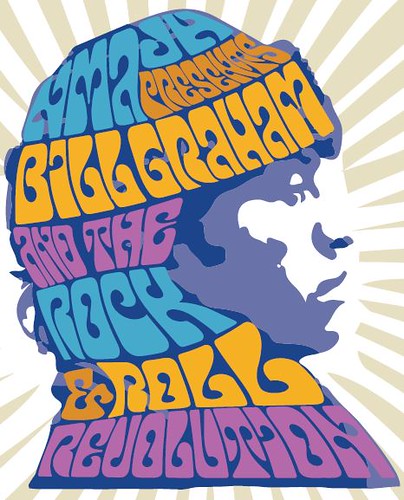
Bill Graham And The Rock And Roll Revolution Exhibition At The National Museum Of American Jewish History In Philadelphia - Exclusive East Coast Venue!


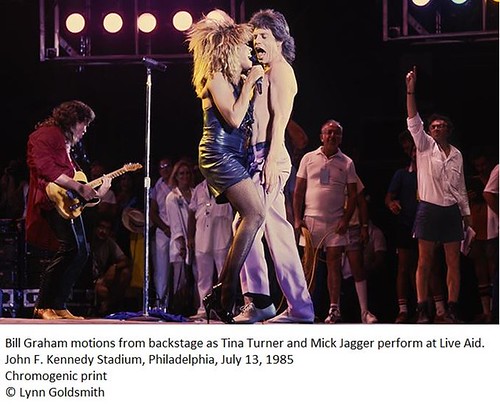
The National Museum of American Jewish History (NMAJH) in Philadelphia will be the exclusive East Coast venue for Bill Graham and the Rock and Roll Revolution. The exhibition, which opens on September 16 and will run through January 16, 2017, presents the first comprehensive retrospective about the life and career of legendary rock impresario Bill Graham (1931–1991). Recognized as one of the most influential concert promoters in history, Graham played a pivotal role in the careers of iconic artists including the Grateful DeadJefferson Airplane,Janis JoplinJimi HendrixSantanaFleetwood Macthe WhoLed Zeppelin,the Doors, and the Rolling Stones. He conceived of rock & roll as a powerful force for supporting humanitarian causes and was instrumental in the production of milestone benefit concerts such as Live Aid (1985)—which took place in Philadelphia and London—and Human Rights Now! (1988). The Museum will be open late on Wednesday nights (until 8 pm) throughout the run of the show.*

Bill Graham lived the America Dream, and helped to promote and popularize a truly American phenomenon: Rock & Roll. The exhibition illuminates how his childhood experiences as a Jewish emigrant from Nazi Germany fueled his drive and ingenuity as a cultural innovator and advocate for social justice. Born in Berlin, Graham immigrated to New York at the age of ten as part of a Red Cross effort to help Jewish children fleeing the Nazis. He went to live with a foster family in the Bronx and spent his teenage years in New York City before being drafted to fight in the Korean War. In the early 1960s, he relocated to San Francisco, just as the counterculture was gathering steam, and became the business manager for the San Francisco Mime Troupe, a radical theater company that performed for free in parks.

Graham mounted his first concert, a benefit to support the legal defense of one of the Mime Troupe’s actors, featuring an eclectic mix of performers including the Fugs, Lawrence Ferlinghetti, and Jefferson Airplane. It was a transformative moment: Graham had discovered his calling. He soon took over the lease on San Francisco’s famed Fillmore Auditorium, where he produced groundbreaking shows throughout the ’60s—including sold-out concerts by the Grateful Dead, Cream, Big Brother & the Holding Company, and the Doors, before going on to present pivotal shows by Jimi Hendrix; Crosby, Stills, Nash & Young; Bob Dylan; and The Band at his venues in San Francisco and New York City. Graham’s mastery at promoting, marketing, and managing artists propelled him to become one of rock & roll’s most influential figures.

“Graham entered the music scene at a pivotal moment and harnessed the spirit of the 1960s, marked by the Vietnam War and the civil rights movement,” says Josh Perelman, PhD, chief curator and director of exhibitions and collections at the Museum. “His genius was to understand the opportunity that the energy and idealism of the times presented to make rock and roll the voice of a generation. The fact that we are hosting the exhibition in Philadelphia is particularly meaningful, as it was the American site for the 1985 Live Aid concert and is now the home to a new Fillmore.”
Bill Graham and the Rock & Roll Revolution was organized by the Skirball Cultural Center, Los Angeles. Featuring iconic psychedelic concert postersrock memorabilia, photographs, films, and ephemera, the exhibition explores the momentous cultural transformations of the ’60s, ’70s, and ’80s through the lens of rock & roll. The exhibition includes more than 200 objects from lenders across the country—many being shown in public for the first time, including Janis Joplin’s tambourinea handwritten note from Donovan to GrahamPete Townshend’s 1968 Gibson SG Special used during a performance of Tommy, and Graham’s personal scrapbooks. Treasured photographs and artifacts from Graham’s early life and career are loan from the Graham family, many on view to the public for the first time. Also for the first time ever, preparatory drawings and the original artwork of several iconic Fillmore concert posters will be on museum display, revealing the signature visual styles and creative process of poster artists Bonnie MacLean, Wes Wilson, David Singer, and Greg Irons. A New Year’s Eve themed concourse takeover featuring Graham’s famous Father Time costume will be featured, as well as an installation of “The Joshua Light Show,” the trailblazing liquid light show conceived in 1967 by multimedia artist Joshua White, which served as a backdrop to many Graham-produced concerts. Unique to NMAJH’s run of the exhibition will be a number of items from Philadelphia’s Live Aid concert and the city’s music scene.
Bill Graham and the Rock & Roll Revolution will be complemented by several public and education programs to be announced at a later date.
*The Museum will be closed on the evening of October 27 for a private event.
Bill Graham and the Rock and Roll Revolution is organized and circulated by the Skirball Cultural Center, Los Angeles, in association with the Bill Graham Memorial Foundation, and made possible by the support of Alex Graham, David Graham, and Danny Scher.


About the National Museum of American Jewish History
The National Museum of American Jewish History, located on historic Independence Mall in Philadelphia, brings to life the 360-year history of Jews in America.  Tracing the stories of how Jewish immigrants became Jewish Americans, the Museum invites visitors of all backgrounds to share their own stories and reflect on how their histories and identities shape and are shaped by the American experience. An open door for all, NMAJH honors the past and contributes to a better future by sharing the power of imagination and ideas, culture and community, leadership and service, in ways that turn inspiration into action.

The National Museum of American Jewish History is located at 101 South Independence Mall East at the corner of Fifth and Market Streets in Philadelphia. Museum hours are Tuesday to Friday, 10:00 am - 5:00 pm, and Saturday and Sunday 10:00 am - 5:30 pm. NMAJH is closed most Mondays, including federal holidays and some Jewish holidays. Museum admission is $12.00 for adults, $11.00 for senior citizens and youth, free for children 12 and under, Museum Members, and active military with ID. From Memorial through Labor Day*, and for the run of Bill Graham and the Rock & Roll Revolution (September 16, 2016 – January 16, 2017), the Museum will stay open until 8 pm on Wednesday evenings. Admission after 5 is pay-what-you-wish. For more information, visit NMAJH.org or call 215.923.3811. *The Museum will be closed for a private event on the evening of July 27.

Tuesday, March 11, 2014

National Museum of American Jewish History Explores America’s Favorite Pastime in Chasing Dreams, The Groundbreaking Exhibition Opens in Philadelphia March 13, 2014


Jewish Jocks


There are people whose contributions to baseball history went far beyond mere batting averages or stolen bases. They didn’t just play the game, they changed the game. For generations of American Jews and other minorities, they served as athletic, cultural, and ethical role models.

 On March 13, 2014, just in time for the start of baseball season, the National Museum of American Jewish History (NMAJH) will open a groundbreaking new exhibition highlighting these game changers and—just as importantly—the fans, ideals, and culture they inspired. Chasing Dreams: Baseball and Becoming American is the first large-scale exhibition to use the story of Jews and baseball as an opportunity to highlight ways in which our national pastime is part of the history, and ongoing story, of how immigrants and minorities of many different backgrounds—including Italians, Asians, Latinos, African-Americans, and many others—become American, to feel a part of the society in which they might otherwise be on the margins.

 The exhibition is co-curated by Dr. Josh Perelman, chief curator and director of collections and exhibitions at NMAJH, and Ivy Weingram, associate curator. It will be on view at the Museum through October 26, 2014.

With major support from the National Endowment for the Humanities, in close collaboration with Major League Baseball, and featuring important loans from the Baseball Hall of Fame, Chasing Dreams features more than 130 original objects, including game-worn uniforms, game-used objects, correspondence, newspaper accounts, board games, awards, baseball cards, signed baseballs, Jewish ritual objects, ballpark giveaways, stadium seats, Little League memorabilia, and more. Objects from the Museum’s collection will be complemented by loans from public and private collections, as well as the Museum’s public collecting initiative on Tumblr. Original films feature interviews with baseball executives and everyday fans. Interactive displays will offer visitors various opportunities to play, participate, and learn.

“Since the nineteenth century, baseball has been an exhilarating metaphor for America, a land of so much promise and opportunity,” says Perelman. “And for minority communities in this country, the sport has long served as a path to learning and understanding American values, representing a shared American identity and sometimes highlighting our differences. It is, in short, a mirror of America.”

Visitors to Chasing Dreams will explore baseball’s legends and myths, its heroes and flops, its struggles and its moments of triumph. The exhibition will celebrate well-known Jewish heroes such as Hank Greenberg and Sandy Koufax and iconic baseball pioneers like Jackie Robinson, Joe DiMaggio, Roberto Clemente, and Ichiro Suzuki, as well as baseball’s extended family of vendors, team owners, minor leaguers, amateur
players, scouts, broadcasters, journalists, novelists—and especially, fans. Chasing Dreams explores how baseball has served as an arena in which values, identity, ethnicity, and race have been projected, contested, and occasionally solidified. It poses questions such as: Why have so many immigrant groups and minority communities identified with, taken pride in, and felt connected to the nation’s pastime? Did baseball impact how American Jews established affinities with other racial and ethnic minorities? What does it mean that Jews consider Jackie Robinson to be one of their own heroes?

Chasing Dreams addresses these questions through the exhibition’s four key sections:
Introduction to the exhibition and early baseball history: Establishes the exhibition’s principal themes and immerses visitors in the early history of the game and its key figures, from Lipman Pike to Helen Dauvray and Barney Dreyfuss, co-inventor of the World Series.

Shaping Identity: Examines baseball as a lens through which to learn and understand the values of a rapidly changing nation. Features players such as Hank Greenberg and Joe DiMaggio, who proved their mettle on the field and in their conspicuous patriotism. Highlights Moe Berg, who showed that a catcher could also be a spy and Thelma “Tiby” Eisen of the All-American Girls Professional Baseball League, who proved that women could play at a competitive level.

Overcoming Adversity: Explores how baseball has been intertwined with the history of racial, ethnic, and gender integration, as well as the complexities of Jewish racial identity. Beginning with Jackie Robinson’s debut, this gallery features notable barrier-breakers such as Hank Aaron, Roberto Clemente, Ichiro Suzuki, and Justine Siegal, the first woman to pitch major league batting practice. Special attention will be paid to
Sandy Koufax, whose unparalleled athleticism yielded millions of flashbulb memories and whose decision not to pitch the first game of the 1965 World Series because it fell on Yom Kippur unexpectedly made him a hero

Family and Community: Examines how baseball has impacted communities, shaped relationships within families and established new, personal meanings for each generation of fans in Little League, at camp, or through ballpark concessions. This section will feature memorabilia culled from the Museum’s Tumblr-based public collecting initiative, objects related to broadcasters and journalists such as Mel Allen, more recent players like Shawn Green and Brad Ausmus, and an illustrated timeline of notable events in baseball history.
Within this thematic exploration, Chasing Dreams also provides several opportunities for pure, playful fun. Museum-goers are invited to interact with a simulation game created specifically for Chasing Dreams called Catching History. Visitors are invited to “field” balls hit by a variety of baseball greats and are rewarded with facts and trivia for every play. An interactive, touchscreen database entitled People of the Game will provide an encyclopedic exploration of approximately 200 Jews in the major leagues—each represented by a baseball card, as well as biographical and statistical information—and an opportunity to build one’s own virtual “dream team” which visitors can then e-mail to themselves. The Museum’s concourse level will feature Koufax on the Koncourse, an interactive experience complete with Koufax’s rookie jersey and a pitcher’s mound that invites baseball fans of all ages to don a reproduction jersey, then pick up a ball and try their hand at pitching like the indomitable Dodgers’ ace. As a celebration of passionate fandom, the Museum’s first floor will feature nearly 100 original baseball cards, along with some of their stories.

Chasing Dreams will be complemented by a dedicated website, educational and public programming, school curricula, and a family guide. Title I schools are eligible to bring their students to the exhibition free of charge and additional funding is available to subsidize other schools and camp groups. A fully illustrated, 256-page companion book will also be available. The book includes original pieces by more than 40 notable
authors, including John Thorn, the Official Historian of Major League Baseball who often appears on ESPN, MLB, The History Channel, and other television outlets as a sports authority and commentator; Ira Berkow, former New York Times sports columnist and recipient of the Pulitzer Prize for National Reporting; Doug Glanville, retired major league player for the Philadelphia Phillies, Chicago Cubs, and Texas Rangers, an ESPN baseball analyst, and a regular contributor to ESPN.com and The New York Times. The book and related exhibition merchandise, including a set of baseball cards developed by Jewish Major Leaguers, Inc. for the Museum and the American Jewish Historical Society, will be available at the Museum Store onsite and online.

After closing in Philadelphia, Chasing Dreams will tour to museums nationwide. A panel version of the exhibition (without artifacts) will also travel to ballparks, historical societies, libraries, community centers, and synagogues.


Chasing Dreams has received the endorsement of MLB Commissioner Allan “Bud” Selig. The full project team in addition to Mr. Selig includes John Thorn (chief historian for Major League Baseball, Daniel Okrent (author of the baseball classic Nine Innings and first public editor of the New York Times), Josh Perelman (chief curator and director of collections and exhibitions at NMAJH), Martin Abramowitz (founding president of Jewish Major Leaguers, Inc.), Rabbi Rebecca Alpert (author and professor of religion at Temple University), Adrian Burgos, Jr., (author and director of graduate studies and professor of history at the University of Illinois), Jeffrey S. Gurock (Libby M. Klaperman Professor of Jewish History at Yeshiva University, as well as author and past-chair of the Academic Council of American Jewish Historical Society), Jane Leavy (journalist and Sandy Koufax biographer), Peter Levine (author and sports historian), William Ressler (assistant professor of strategic communication at Ithaca College), Steven A. Reiss (author and sports historian), Justine Siegal (barrier-breaking pitcher, coach and founder of the non-profit organization Baseball for All), Scott Simon (author, journalist, and host of NPR’s Weekend Edition), Ivy Weingram (NMAJH associate curator and co-curator of Chasing Dreams) and Beth Wenger (director of the University of Pennsylvania’s History Department and Jewish Studies program).


The National Museum of American Jewish History, located on historic Independence Mall in Philadelphia, brings to life the 360-year history of Jews in America. Tracing the stories of how Jewish immigrants became Jewish Americans, the Museum invites visitors of all backgrounds to share their own stories and reflect on how their histories and identities shape and are shaped by the American experience. An open door for all, NMAJH honors the past and contributes to a better future by sharing the power of imagination and ideas, culture and community, leadership and service, in ways that turn inspiration into action.

The National Museum of American Jewish History is located at 101 South Independence Mall East at the corner of Fifth and Market Streets in Philadelphia. Museum hours are Tuesday to Friday, 10:00 am - 5:00 pm, and Saturday and Sunday 10:00 am - 5:30 pm. NMAJH is closed most Mondays, including federal holidays and some Jewish holidays. Museum admission is $12.00 for adults, $11.00 for senior citizens and youth, free for children 12 and under, Museum Members, and active military with ID.

 For information on the Museum please call 215.923.3811 or visit the website at NMAJH.org.