Showing posts with label Washington. Show all posts

Tuesday, October 15, 2024

Pandas Arrive In The US. Next Stop Is The National Zoo

The National Zoo’s long dark panda drought is coming to an end.

Eleven months after the zoo sent its three wildly popular pandas — Mei Xiang, Tian Tian and their cub Xiao Qi Ji — back to China, a new pair of bears arrived in the United States on Tuesday. They will be transported from Dulles International Airport in suburban Virginia to the zoo.

A pair of three-year old giant pandas, named Bao Li and Qing Bao, have left a research facility in the southwestern Chinese city of Dujiangyan and will soon be flown to Washington, according to a statement by the China Wildlife Conservation Association.

“Food prepared for the trip includes corn bread, bamboo and carrots, as well as water and medicine,” the statement said, adding that the partnership will “make new contributions in protecting global biodiversity and enhance the friendship of the people from the two countries.”

Once the bears arrive in Washington, there will likely be an extended quarantine and acclimation period before they are introduced to the public. On Monday evening, the zoo’s website posted an alert that the entire facility would be closed Tuesday, without giving a reason. The lead article on the site still said the pandas would be coming sometime before the end of the year.

Bao Li (precious vigor) and Qing Bao (green treasure) arrive in Washington as part of a new 10-year agreement with Chinese authorities. The previous deal expired last year, leading to some concern among American panda-lovers that Beijing was gradually pulling its furry friendship ambassadors from American zoos amid rising diplomatic tensions.

Breeding pairs in zoos in Memphis and San Diego had already returned to China earlier and the four pandas in the Atlanta zoo left for China last week.

That anxiety turned to optimism last November when Chinese President Xi Jinping publicly stated a desire to continue the panda exchange programs. This year, a new pair of bears has been delivered to the San Diego Zoo, while another pair has been promised to San Francisco.

In Washington, National Zoo officials remained conspicuously silent about negotiations for a new panda agreement, but they expressed optimism about striking a new deal and launched a multimillion-dollar renovation of its panda enclosure in anticipation. Then in late May, zoo director Brandie Smith teamed up with first lady Jill Biden to announce that Bao Li and Qing Bao would be arriving by the end of this year.

The Chinese announcement said the National Zoo had sent “three experienced keepers and veterinary experts” to China to assist the transport and accompany the bears.

Zoo officials on Monday declined to confirm the Chinese announcement. Zoo spokesperson Jennifer Zoon said in an email, “For the safety of animals and staff, we are not able to confirm any details at this time.” But signs at the zoo and on its social media site have heralded the planned return of the pandas and panda-themed merchandise still dominates the gift shops.

“The giant pandas are an iconic part of the Washington, D.C., story, both for locals and incoming travelers alike,” said Elliott L. Ferguson, II, president and CEO of Destination DC. “The interest and excitement associated with their return directly benefits the entire city, bringing further interest and visitors to our hotels, restaurants and other attractions.”

The exact terms of the deal are still unclear; under previous 10-year agreements the Chinese government receives $1 million per year, per bear. Any cubs born in overseas zoos are typically returned to China before they reach age four.

Pandas have become one of the unofficial symbols of the nation’s capital, dating back to 1972 when the first pair — Ling Ling and Hsing Hsing — were sent as a gift from Chinese Premier Zhou Enlai following President Richard Nixon’s historic diplomatic visit to China. Later, a rolling series of 10-year cooperation agreements was struck.

Liu Pengyu, a spokesperson for the Chinese embassy in Washington, credited the decades of cooperation with advancing research into panda preservation and breeding. During the lifespan of these agreements, giant pandas have been reclassified from an endangered species to merely vulnerable.

“The current round of cooperation will focus on prevention and treatment of major diseases, and protection of habitats and wild giant panda populations,” Liu said in an email. “We hope the arrival of the pandas will inject fresh impetus into exchanges between China and the U.S., and help to stabilize the broader bilateral relationship as well.”

By ASHRAF KHALIL and DIDI TANG

Saturday, August 22, 2020

Walla Walla Valley Voted 'America's Best Wine Region' In The 2020 USA Today 10Best Readers' Choice Awards


WALLA WALLA, Wash.- The Walla Walla Valley has been named America's Best Wine Region in the 2020 USA Today 10Best Readers' Choice awards following a month-long nationwide public vote. Walla Walla Valley has been selected as a finalist for the prestigious award three consecutive years, but this marks the first time it has earned first place. In addition to the Walla Walla Valley's first-place win in Best Wine Region category, Long Shadows Vintners took fourth place in the Best Tasting Room category for the second consecutive year.
"I can think of no better way to honor wines from Washington state in general, and Walla Walla Valley wines specifically, than being recognized as America's Best Wine Region by a vote of the public," said Robert Hansen, executive director of the Walla Walla Valley Wine Alliance. "It's a testament to the outstanding terroir, meticulous craftsmanship, and to the men and women who are committed to elevating the Walla Walla Valley from both a wine production and tourism perspective."
A panel of five wine industry experts chose 20 finalists from a list of more than 250 American wine-growing regions. The public was then asked to vote daily for their favorite region between July 13 and Aug. 12.
"The Walla Walla Valley is no stranger to being recognized for the quality of its wines and the experience that awaits those who visit, including being recognized as America's Best Wine Town in the 2018 Sunset Travel Awards," said Visit Walla Walla board chair Tabitha Crenshaw. "Given today's proliferation of American wines and wine regions, this is a particularly proud moment. It is truly special when the very people who purchase and enjoy your wines, and who choose to visit our incredible community, validate the quality and experience you are striving to achieve."
For more information on the Walla Walla Valley and its wines, visit www.wallawalla.org or www.wallawallawine.com.
About Walla Walla:
As the unofficial capital of Washington wine country, Walla Walla is home to more than 120 wineries, a nationally recognized culinary scene, access to an abundance of outdoor recreation, and an arts & entertainment scene that rivals cities many times its size. This community of just over 30,000 residents is known for many things, including its friendliness and hospitality, the quality of its wine, and of course the famous Walla Walla Sweet Onion. An easy and scenic four-hour drive from Seattle, Portland, or Boise, Walla Walla can also be accessed via Alaska Airlines daily non-stop flights from Seattle. For more information and to begin planning a trip to Walla Walla, visit www.wallawalla.org.
About the Walla Walla Valley Wine Alliance:
The Walla Walla Valley Wine Alliance is a nonprofit wine industry membership organization whose primary mission is to build an internationally acclaimed Walla Walla Valley wine brand among consumers, media, and trade by providing marketing programs on behalf of member wineries, vineyards, and partners.  The Wine Alliance functions as the leading informational resource for consumers, media, and trade interested in learning more about the Valley's wine industry.


SOURCE Walla Walla Valley Wine Alliance

Thursday, November 30, 2017

Major Exhibition Of Paul Cézanne's Portraits At The National Gallery Of Art, March 25 Through July 1, 2018


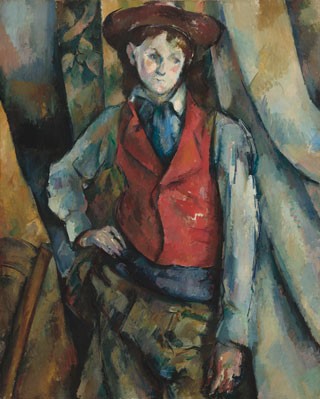
Paul Cézanne, Boy in a Red Waistcoat, 1888–1890, oil on canvas National Gallery of Art, Washington, Collection of Mr. and Mrs. Paul Mellon, in Honor of the 50th Anniversary of the National Gallery of Art
Paul Cézanne, Boy in a Red Waistcoat, 1888–1890, oil on canvas
National Gallery of Art, Washington, Collection of Mr. and Mrs. Paul Mellon, in Honor of the 50th Anniversary of the National Gallery of Art
Washington, DC—Bringing together some 60 paintings drawn from collections around the world, Cézanne Portraits is the first exhibition devoted exclusively to this often-neglected genre of his work. The revelatory exhibition explores the pictorial and thematic characteristics of Paul Cézanne's (1839–1906) portraits, the chronological development of his style and method, and the range and influence of his sitters. The sole American venue, Cézanne Portraits will be on view on the main floor of the West Building from March 25 through July 1, 2018.
"This exhibition provides an unrivaled opportunity to reveal the extent and depth of Cézanne's achievement in portraiture," said Earl A. Powell III, director, National Gallery of Art. "The partnership between the National Gallery of Art, the National Portrait Gallery in London, and the Musée d'Orsay in Paris has made it possible to explore his working techniques as well as his intellectual solutions to representation in these exceptional portraits."
Cézanne painted almost 200 portraits, including 26 self-portraits and nearly 30 portraits of his wife, Hortense Fiquet, as well as portraits of his son Paul and his uncle Dominique Aubert, art dealer Ambroise Vollard, critic Gustave Geffroy, and the local men and women in his native Aix-en-Provence. The exhibition presents a selection of portraits that reveals the most personal and human aspects of Cézanne's art.
Exhibition Organization and Support
The exhibition is organized by the National Gallery of Art, Washington, the National Portrait Gallery, London, and the Musée d'Orsay, Paris.
The exhibition in Washington is made possible through the generous support of the Anna-Maria and Stephen Kellen Foundation.
About the Exhibition
Cézanne Portraits explores the artist's series of portraits of the same sitter; traces his portraits chronologically, revealing changes in style and method; and shows the full range of his sitters and how they influenced his practice. Cézanne's unique vision was informed by a desire to see through appearances to the underlying structure using mass, line, and shimmering color. The exhibition traces the development of Cézanne's portraits and the changes that occurred through style and method and the understanding of resemblance and identity.
Cézanne made his first portrait in the early 1860s, although it was not until 1866 that he began to paint portraits in earnest. Often painting family and friends with whom he felt comfortable, his early works were stylistically influenced by Gustave Courbet's and Édouard Manet's Parisian portraits. The family paintings include large portraits of his father, small paintings of his mother and sisters, and about nine portraits of his uncle, the bailiff Dominique Aubert, and provocative paintings of poet and art critic Antony Valabrègue and the artist Achille Emperaire.
By the end of the 1860s Cézanne's portraits became more refined and more sympathetic to his sitters. He began to produce fewer portraits until 1875, when he created a group of self-portraits prominently featuring his bald head painted in an impressionist style. Between 1876 and 1877 he began to incorporate heightened hues in which areas of prismatic color help to shape a vivid human presence, as seen in Madame Cézanne in a Red Armchair (c. 1877), on view in the exhibition. Over the following seven or eight years, Cézanne created portraits of sculptural gravity, including paintings of his wife, their young son, and his son's friend Louis Guillaume, as well as self-portraits.
Between 1872 and 1892 Cézanne painted 28 portraits of his wife. Seventeen of these, painted during the second half of the 1880s, form three distinct stylistic groups. The first group, a set of small, lightly painted canvases, were painted around 1886 and includes the most expressive images of her made to date, marking a major shift in his portraiture practice. The second group, made a few years later, is more explicit in its description of emotion and more heavily painted. The third group of four portraits depicts Hortense wearing a red dress. Fifteen of these portraits will be on view.
Cézanne also painted several portraits of the model Michelangelo de Rosa in Italian garb. The Gallery's version, Boy in a Red Waistcoat (1888–1890), is the largest, most resolved of these portraits. Influenced by 16th-century mannerists such as Bronzino and Pontormo who painted iconic images of urban, male adolescents, Cézanne presents a moving, formally innovative image of a boy morphing into manhood.
During the 1890s Cézanne began to paint portraits of local people in and around his native Aix-en-Provence. His portraits of agricultural laborers record his admiration for people who had grown old without changing their ways. The paintings of domestic servants and children indirectly reflect Cézanne's increasing preoccupation with old age. Included among these works are Child in a Straw Hat (1896), Man in a Blue Smock (c. 1897), Portrait of a Woman (c. 1900), and Seated Peasant (c. 1900–1904), all of which are in the exhibition.
Of the 100 paintings Cézanne made between 1900 and 1906, only about 20 are portraits, seven of which were painted outside. During this period, Cézanne painted his final self-portrait, Self-Portrait with Beret (1898–1900), on view in the exhibition, which depicts a fragile, prematurely aged but still vehement figure. The subjects of these later portraits are local men, women, and children as well as a pair of portraits of his sister, Marie, depicted in a blue dress, and five paintings of his gardener, Vallier, three of which are on view.
Exhibition Curators
The exhibition is curated by John Elderfield, chief curator emeritus of painting and sculpture at the Museum of Modern Art, New York, with Mary Morton, curator and head of the department of French paintings at the National Gallery of Art, Washington, and Xavier Rey, formerly director of collections at the Musée d'Orsay, now director of the museums of Marseille.
Related Activities
Lecture
Introduction to the Exhibition—Cézanne Portraits
March 25, 2:00 p.m.
East Building Auditorium
Mary Morton, curator and head, department of French paintings, National Gallery of Art
Concert
Benedetto Lupo, piano
March 25, 3:30 p.m.
West Building, East Garden Court
In conjunction with Cézanne Portraits and on the 100th anniversary of the death of French composer Claude Debussy, Lupo performs an entire concert of Debussy's most important solo piano works.
Exhibition Catalog
The exhibition is accompanied by a 256-page, fully illustrated catalog with essays by the exhibition curators—John Elderfield, chief curator emeritus of painting and sculpture at the Museum of Modern Art, New York, with Mary Morton, curator and head of the department of French paintings at the National Gallery of Art, Washington, and Xavier Rey, director of the museums of Marseille. Also included are a biographical essay on Cézanne's sitters by biographer Alex Danchev and a chronology of the artist's life by Jayne Warman.
This catalog establishes portraiture as an essential practice for Cézanne, from his earliest self-portraits in the 1860s to his famous depictions of figures including his wife Hortense Fiquet, the writer Émile Zola, and the art dealer Ambroise Vollard, and concluding with a poignant series of portraits of his gardener Vallier, made shortly before Cézanne's death. Featured essays explore the special pictorial and thematic characteristics of Cézanne's portraits and address the artist's creation of complementary pairs and multiple versions of the same subject, as well as the role of self-portraiture for Cézanne. They investigate the chronological evolution of his portrait work, with an examination of the changes that occurred within his artistic style and method, and in his understanding of resemblance and identity. They also consider the extent to which particular sitters influenced the characteristics and development of Cézanne's practice. Beautifully illustrated with works of art drawn from public and private collections around the world, Cézanne Portraits presents an astonishingly broad range of images that reveals the most personal and human qualities of this remarkable artist.
The catalog is available for purchase at special installations near the exhibition and in the West Building, Concourse, and East Building Shops; shop.nga.gov; (800) 697-9350 (phone); (202) 789-3047 (fax); or mailorder@nga.gov

The National Gallery of Art and its Sculpture Garden are at all times free to the public. They are located on the National Mall between 3rd and 9th Streets at Constitution Avenue NW, and are open Monday through Saturday from 10:00 a.m. to 5:00 p.m. and Sunday from 11:00 a.m. to 6:00 p.m. The Gallery is closed on December 25 and January 1. For information call (202) 737-4215 or visit the Gallery's Web site at www.nga.gov. Follow the Gallery on Facebook at www.facebook.com/NationalGalleryofArt, Twitter at www.twitter.com/ngadc, and Instagram at http://instagram.com/ngadc.

Thursday, March 31, 2016

D.C. Metro, America's 'Best' Subway, May Shut Down For Months

Getty
More than 829,000 people ride Metro on an average weekday...for now.


Officials announced that the Metro needs a massive overhaul that could take months.
A mere month ago, Washington, D.C.'s public transportation system, known as Metro, was rated the best in the country based on its efficiency. But that crown may be in jeopardy: yesterday, Metro officials announced that the aging subway system is in such dire need of repair that entire lines may be shut down for up to six months.
D.C.'s Metro is the country's second-largest subway system by ridership, with 271 million riders annually. It does not run 24 hours a day, and until now, most repair work has been done at night when the subway is closed, or on weekends. Officials, however, say it is not enough to address all the problems. "The system right now, in order to do the maintenance that needs to be done, cannot be done on three hours a night and on weekends. It just can’t," said Metro Board Chairman and City Council Member Jack Evans, at an invitation-only summit.. "So in order to do repairs that are necessary, it may come to the point where we have to close the entire Blue Line for six months. People will go crazy. But there are going to be hard decisions that have to be made in order to get this fixed."
In the meeting that included high-ranking city officials, business executives and transit experts, Evans twice singled out the Blue Line, which runs from Northern Virginia to Lake Largo in Maryland and stops at popular tourist destinations like the Smithsonian museums and Foggy Bottom, but made sure to emphasize that any of the system's six lines could be subject to long-term closures. At the same meeting, officials emphasized the "dire" need for an increase in annual funding of $1 billion; adding that they expect to decide on closures within a month to six weeks.
D.C. residents were given a preview of the mayhem that unfolds without its subway, when on March 16 the entire system was closed for the day for emergency track maintenance. After the one-day shutdown led to increased congestion both on the road and in the bike lane, officials have vocally expressed concern about what it could mean for commuters if the system was even partially closed for months. Mayor Muriel E. Bowser, who was reportedly not given advance warning of the one-day closure, expressed her concerns in a very Washingtonian (read: ambiguous) way: "Shutting down Metro for one workday was an inconvenience; shutting it down for months at a time will have far-reaching consequences for riders and the entire region,” said her spokesperson Michael Czin. Bowser herself called it a "Homeland Security event," likening it to a blizzard or hurricane.
Written by , www.cntraveler.com

Sunday, April 5, 2015

Smithsonian American Art Museum to Present The Work Of Yasuo Kuniyoshi

Smithsonian American Art Museum to present the work of Yasuo Kuniyoshi

Honda is proud to partner with the Smithsonian American Art Museum in the first comprehensive, domestic overview of Yasuo Kuniyoshi's work in over 65 years.
The "Artistic Journey of Yasuo Kuniyoshi" at the Smithsonian American Art Museum celebrates the career of one of America's great modernist painters. Sixty-six of Kuniyoshi's finest works reveal the unique vision of an extraordinary artist.
Though separated by time, Honda and Kuniyoshi share similar stories of traveling far from home to seek out new dreams, and ultimately, finding success in the United States.
After coming to the United States as a teenager in the early years of the 20th century – and despite being labeled an "enemy alien" during World War II – Kuniyoshi was able to defy negative sentiment and triumph in the American art world. He challenged conventional ideas, blending American folk art with Japanese influences as only he could.
Sharing Kuniyoshi's journey, in 1959 Soichiro Honda sent a group of eight associates to set up operations for the company's fledgling motorcycle business in a storefront shop in Los Angeles, California. The success of Honda's motorcycles in the U.S. eventually led to the introduction of automobiles. Today, the company has a major U.S. presence with 11 manufacturing facilities in six states, 14 research and development facilities, and nearly 30,000 employees, building everything from cars to race engines to jet airplanes.
"Like Kuniyoshi-san, our journey in America is built on what we call 'The Power of Dreams,'" said Takuji Yamada, president of Honda North America. "These dreams inspire us to create innovative products that enhance human mobility, and ultimately, benefit society."
The "Artistic Journey of Yasuo Kuniyoshi" at the Smithsonian American Art Museum opens April 3 and runs through August 30, 2015.
For more details please visit: americanart.si.edu/

Sunday, March 15, 2015

Turkish Airlines Launches Istanbul-San Francisco Nonstop

Istanbul-San Francisco now nonstop
Turkish Airlines added its 2nd destination in California and 11th in the Americas by inaugurating flights to San Francisco.
With existing services to Buenos Aires, Sao Paulo, Toronto, Chicago, Houston, Los Angeles, New York, Washington, Boston and Montreal, Turkish Airlines adds flights to San Francisco as its 11th destination in the Americas.
Beginning on April, 13, 2015, San Francisco flights will be operated 5 times per week on Mondays, Tuesdays, Thursdays, Fridays and Sundays in both directions.

Thursday, March 12, 2015

Etihad Airways to fly Boeing 787 to Washington, DC.

Etihad Airways to fly Boeing 787 to Washington, DC
Etihad Airways, the national airline of the United Arab Emirates, will deploy a state-of-the-art Boeing 787-9 Dreamliner aircraft on its daily Washington, DC service from March 11, 2015, marking the US debut of its next generation First, Business and Economy class products.
The airline's acclaimed interiors for the Boeing 787-9 include eight First Suites, 28 Business Studios and 199 Economy Smart Seats, offering superior levels of comfort, entertainment and in-flight connectivity. Onboard décor and lighting have been inspired by contemporary Arabian design, complementing Etihad Airways' new 'Facets of Abu Dhabi' livery design.
James Hogan, President and Chief Executive Officer of Etihad Airways, said: "As the most technologically advanced aircraft in its class, the Boeing 787 will reduce the operating costs and carbon emissions on our Washington, D.C. route and provide maximum efficiency and reliability. Importantly, we have customized the aircraft with the world's most innovative and sophisticated First, Business and Economy class cabins, providing our guests with superior levels of comfort and attention to detail not previously enjoyed by the modern air traveler."
Etihad Airways commenced its daily non-stop flights between Abu Dhabi and Washington, D.C. in March 2013, creating the first direct air link between the two capitals. The service has attracted strong demand from government and business travellers, and has also supported the continued growth of leisure travel between and beyond the two cities.
Guests travelling to Washington, D.C. experience the unique benefit of arriving having pre-cleared US Customs and Border Protection at Abu Dhabi Airport. The process allows passengers to pass through all required checks including US customs, immigration and security before they board their flight to the US, enabling them to avoid queues on arrival.
Another key benefit of US preclearance is that baggage security screening meets United States TSA security standards, allowing air travellers who connect onto a domestic flight in the US to have their baggage checked through from Abu Dhabi to their final destination.
Guests travelling from Washington, D.C. have the convenience of an attractively timed evening departure, allowing them to travel after completion of their business day.
Etihad Airways' premium guests are also provided with access to the airline's lounge at Dulles International Airport. The split-level facility offers soothing relaxation spaces, elegant fine dining areas, state-of-the-art business amenities, family entertainment areas, and luxurious bathrooms with invigorating shower facilities. With a prime location next to Etihad Airways' departure gate in Terminal A, it also provides unfettered and convenient direct access to the aircraft without having to go through a traditional departure gate.
Washington, D.C. is one of six destinations served by Etihad Airways in the United States, alongside San Francisco, Los Angeles, Dallas-Fort Worth, Chicago and New York.
Mr Hogan said: "Etihad Airways operates 45 flights a week to and from the US and connects the country with our extensive global network, including 34 destinations in the Middle East and Indian Subcontinent. We continue to experience strong demand for travel between the US and India, where we serve 11 cities in our own right and 15 in combination with our partner Jet Airways, providing unparalleled reach into the country. In addition, our guests benefit from some of the fastest journey times in the industry from Washington D.C. to popular destinations such as Ahmedabad, Mumbai, Delhi, Hyderabad and Chennai."
Etihad Airways' order for two variants of the B787 (-9 and -10), is one of the largest for the type, totalling 71 aircraft. The lightweight composite materials used in the aircraft mean that the B787 uses up to 30 per cent less fuel than other aircraft in its category and therefore produces a comparable reduction in carbon dioxide emissions. New technologies are also used to ensure its noise footprint is more than 60% smaller than other aircraft of its size.
Etihad Airways schedule for Washington D.C. flights, effective March 15, 2015:
Flight No. Origin Departs Destination Arrives Frequency Aircraft
EY 131 Abu Dhabi (AUH) 11:30 a.m. Washington D.C. (IAD) 6:45 p.m. Daily B787
EY 130 Washington D.C. (IAD) 10:50 p.m. Abu Dhabi (AUH) 7:45 p.m.+1 Daily B787
Note: All departures and arrivals are listed in local time.

Saturday, March 7, 2015

Long Layover? The HotelsByDay App Will Book You A Daytime Stay