The Vatican on Tuesday opened the doors to one of Renaissance Rome’s most spectacular palazzos, normally hidden from public view since it houses some of the Holy See’s most secretive offices: the ecclesial tribunals that decide everything from marriage annulments to plenary indulgences.
The Palazzo della Cancelleria is located near the Campo dei Fiori market at the start of the Via del Pellegrino, named for the religious pilgrims who used it to walk towards St. Peter’s Basilica on the other side of the Tiber River. It was built in the late 1400s on the ruins of a paleo-Christian church as a residence for Cardinal Raffaele Riario, whose uncle, Pope Sixtus IV, is perhaps best known for having commissioned an even more spectacular masterpiece, the Sistine Chapel.
The head of the Vatican’s patrimony office, Monsignor Nunzio Galantino, invited television cameras into the imposing, block-long palazzo as part of what he said was Pope Francis’ call for the Holy See to be more transparent. For Galantino, whose office has published a consolidated Vatican budget for the past three years, that spirit of transparency extends to the Vatican’s vast real estate holdings.
“Transparency isn’t just quantitative knowledge of the patrimony; transparency also touches on knowing the qualitative patrimony,” he said, standing in one of the palazzo’s grand reception rooms that art historian Claudia Conforti said was decorated as a “colossal propaganda machine” for the then-reigning Pope Paul III.
Galantino has spearheaded the Vatican’s most recent efforts to clean up its financial act and be more forthcoming about budgets, revenue, investments and spending after a series of financial scandals again soured donors on writing checks to the Holy See. He presided over the opening to Vatican-accredited media of a palazzo normally closed to public view, but transparency doesn’t go much beyond that: The rooms aren’t being opened up to regular public tours, though they are occasionally used for conferences and private events.
Today, the Cancelleria palazzo houses three of the Vatican’s most important courts: the Roman Rota, which decides marriage annulments; the Apostolic Signatura, which handles internal church administrative cases; and the Apostolic Penitentiary, which issues indulgences, among other things. As Vatican property, it enjoys extraterritorial status equal to that of an embassy, in the heart of Rome.
During a tour of the building, which underwent a recent, years-long renovation, visitors passed by priests in cassocks pouring over canonical files in rooms decorated with frescoes of cherubs, gilded ceiling panels and tromp l’oeil columns. Off to one side was the wood-paneled library where Napoleon Bonaparte kept the imperial archives during the period in the early 1800s that Rome was his second capital.
At the end of a series of rooms where Rota-accredited lawyers are trained sat a small intimate, frescoed studio with a balcony pitched over Via del Pellegrino. Here, architect Maria Mari explained, Cardinal Riario would greet the pilgrims walking along the Pellegrino route but also the pope when he travelled from his seat across town at St. John Lateran to St. Peter’s.
The tour ended underground, where today the palazzo hosts a permanent exhibit of Leonardo da Vinci’s mechanical inventions.
In one room was a small pool fed by a canal built during the time of the Emperor Augustus (63 BC-14 AD) to drain the water from the periodic floods of the swampy area back into the Tiber. And behind a nondescript door off one of the Leonardo exhibit rooms were the ruins of the ancient paleo-Christian San Lorenzo in Damaso church, on which the palazzo was built.
BY NICOLE WINFIELD, AP
Showing posts with label the Vatican. Show all posts
Saturday, September 23, 2023
Thursday, September 24, 2015
The Vatican By Train: A New Kind Of Papal Visit

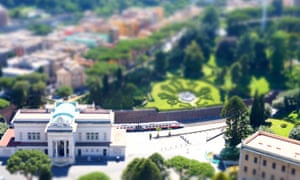
Panoramic (tilt-shift) view of the Vatican City and train station. Photograph: Alamy
Visitors can now combine a tour of the Vatican with a wander around the pope’s summer palace – travelling by the Pontiff’s railway. Our writer was among the first passengers on board
Things don’t come more Da Vinci Code than a ride on the Pope’s railway – the centrepiece of a new tour launched by the Vatican Museums this month. The train departs the Vatican City’s private railway station – a marble building in the shadow of St Peter’s basilica – on a stretch of track that originates in a tunnel dug into the hillside beneath the Vatican Gardens. It travels along the 300-metre Vatican railway line – the shortest in the world – into Rome, then rumbles on to the Pope’s sumptuous Castel Gandolfo summer palace in the Alban hills south of the city.
This day-long excursion combines existing tours of the Vatican Museums and gardens with a tour of the grounds of the Castel Gandolfo. And for the first time the locations are linked by a ride on the Papal railway. At €40pp, it’s also the cheapest way to explore the papal properties: a guided tour of the museums and gardens in the Vatican alone costs €32.

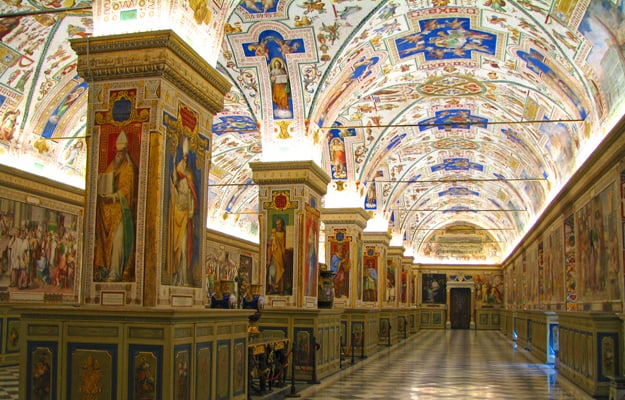
I joined the tour on its inaugural Saturday, my pre-booked ticket letting me dodge the queue that, at 8am, already snaked around the walls of the Vatican City. The first two hours are unchaperoned, so my recommendation would be to avoid the Sistine Chapel cattle-run and visit the quiet contemporary religious art galleries, which include works by Dali and Matisse.
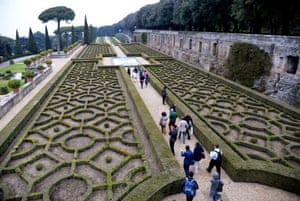
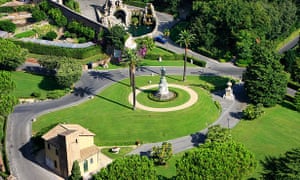
The guided walk through the Vatican gardens that follows is the perfect antidote to the rammed museums. It meanders between fountains and grottos, past the monastery where the retired pope, Benedict XVI, lives, and on to Stazione Vaticana, the city’s only station.
The train – ordinary Trenitalia rolling stock, sadly, not the Papal steam train – takes an hour to reach the town of Albano Laziale, where a shuttle bus takes passengers to the summer palace (a separate tour of the palace interior is available at extra cost). Tourism in the towns around the palace suffered when Pope Francis decided not to spend his summer there, and this decision to open it to the public has been interpreted as a helping hand.

The tour of the grounds, aboard a tiny land train, is revelatory. Formal gardens are interrupted by fields of alfalfa grazed by the cows that provide milk to the Vatican. Roman ruins – including a theatre built for the Emperor Domitian in the first century AD – jut out from behind fragrant trees.
Back in Albano Laziale, some exploration leads me to organic, vegetarian restaurant Le Bioalchimie (Via San Filippo Neri 16) for a €15 buffet lunch of local produce. The train back to Rome departs Albano Laziale at 5.18pm, depositing us at San Pietro, a station just outside the Vatican walls.
A stroll to St Peter’s Square, where high walls obscure the gardens and the Basilica hides the 60-metre Vatican hill, makes for a tantalising end to a fascinating day.
• Vatican by Train tours run on Saturdays only at 8am. Book online atbiglietteriamusei.vatican.va/musei/tickets/do
By Liz Dodd, www.theguardian.com
Wednesday, July 23, 2014
Travel Through Europe Like A VIP With Private 'Insiders' Access To Important Sites
Tour the Vatican without the crowds or step beyond the velvet ropes of Versailles and into secret rooms with Viator.com’s exclusive and VIP tours across and Europe.
Thanks to long-standing partnerships with the best tour operators around the world, Viator has a collection of travel experiences that you can’t book anywhere else. That feature, typically-reserved-for-the- rich-and-famous offers exclusive benefits like unprecedented access to private and off-limit areas, after hours’ private tours of iconic attractions and the ability to skip lines.
Here are the top picks for VIP and Exclusive tours across Europe.
Viator VIP
Sistine Chapel private viewing of the Vatican’s secret rooms
The tour (exclusive to Viator) includes access through a reserved entrance, a rare private tour of the Sistine Chapel after it has closed to the public (with guide commentary – normally forbidden) and a visit to hidden corridors and secret rooms that are usually closed to the public like the Niccoline Chapel or the Bramante Staircase.
Viator VIP
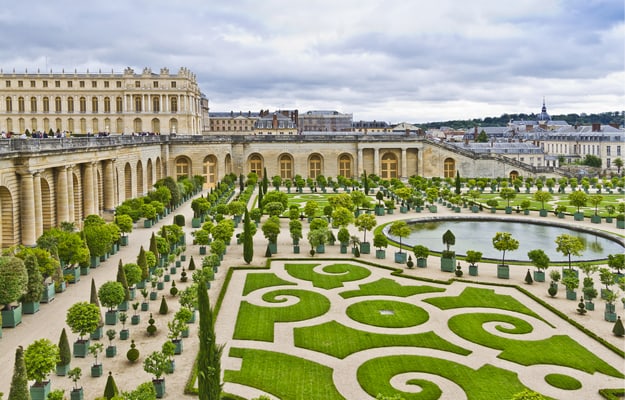
Palace of Versailles small group tour
This VIP tour includes a private viewing of the palace’s Royal Quarters, priority entrance through a reserved door, access to off-limits private rooms like Louis XVI’s library, and first entry to the State Apartments and Hall of Mirrors.
Viator VIP
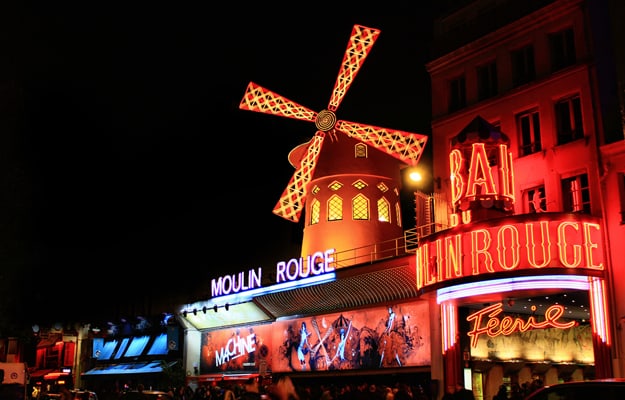
Moulin Rouge Show with exclusive seating and 3-course dinner
The VIP experience delivers the ultimate night out in Paris with VIP seating in a private balcony providing the best views in the house, along with skip-the-line entry, a fabulous 3-course Parisian dinner complete with Champagne and wine.
Viator Exclusive
Game of Thrones private walking tours in Malta and Dubrovnik
The two tours (both exclusive to Viator) offer unprecedented access to the landmarks and locations used in the filming of the popular HBO series. The walking tours come complete with insider gossip from the set and expert commentary on the locations.
All of Viator’s VIP tours can be booked online at www.viator.com or via the Viator Tours and Activities App.
Subscribe to:
Posts (Atom)