Thursday, June 26, 2014

Age 5 and Rock Climbing? Moab Adventure Center In Utah Introduces Families to Life-long Adventures


 Children as young as five can be introduced to an active, adventurous lifestyle with such recreational activities as rafting and rock climbing through the guide and outfitting services of Utah’s Moab Adventure Centerhttp://www.moabadventurecenter.com/, hub of a natural playground surrounded by snowcapped mountains, red rock canyons and two national parks.
 
Jamie Pearce manages the Moab Adventure Center, conveniently located at 225 South Main Street in downtown Moab. Here families may consult with regional specialists about where and how to engage their children during a visit, book a tour and get recommendations on area lodgings and restaurants. They can also pick up any last minute gear and equipment at the center’s outdoor store.
 
“Every year, Moab seems to be getting more and more family friendly,” says Pearce about the wide range of tours and activities that are now geared for younger ages. “Visitors are pleasantly surprised by how many cool things there are now to do with kids and teens.”  Below are her team’s Top Ten Things to Do with Kids in Moab.
 
1.         Rock Climb (minimum age 5):  Expert guides teach experienced climbers and novices how to climb and rappel down Moab sandstone.  http://www.moabadventurecenter.com/trips/rock-climbing/basic-climbing.php
 
2.         Hike up a Creek: Looking for a cooler activity in the heat of day? Kids can blow off steam in the stream bed of a shadowed canyon on a five-mile out-and-back hike in Negro Bill Canyon off of Scenic Byway 128.
http://www.utahredrocks.com/hike_negro_bill.htm
 
3.         Discover Dinosaur Tracks and Petroglyphs on Potash Road: Head up Highway 279 (Potash Road) about 15 minutes from Moab for spectacular views of Native American Petroglyphs etched into rock. Go a little farther for Dinosaur Tracks! (For more about dinosaurs, check out the Mill Canyon Dinosaur Trail).http://www.americansouthwest.net/utah/potash-road/index.html
 
4.         Earn Junior Ranger Badges at National Parks: Both Arches and Canyonlands National Parks offer free Junior Ranger programs and booklets. Youngsters who complete five activities and exercises receive an official badge and certificate!
 
5.         Glide on a Hummer Slickrock Safari (minimum age 3): This is a slow ride that can feel like being on a roller coaster on the sandstone hills on Moab’s popular Hell’s Revenge trail. This activity is safe enough for little ones and wild enough for the cool kids. http://www.moabadventurecenter.com/trips/hummer/slickrock.php

6.         Raft the Colorado River (minimum age 5): Families take on playful class I and II rapids in a 16-foot paddle boat with the option to try a hand at paddling a two-person inflatable kayak. http://www.moabadventurecenter.com/trips/rafting/pm.php
 
7.         Weave through Fisher Towers: Ever wanted to explore Mars? The scenic Fisher Towers hike off of Highway 128 lets kids weave in and out of red rock spires and castles with scenic views of the Colorado River in the distance. http://www.discovermoab.com/pdf/fishertowers.pdf
 
8.         Tackle a High Ropes Course: Ages 6 and up (minimum height 4 feet) can scramble up a uniquely crafted climbing wall, climb a giant cargo net, ride a skateboard zipline, walk a 25-foot balance beam, and tons more.http://www.moabadventurecenter.com/trips/ropes-course-moab-utah/high-ropes-challenge-course.php
 
9.         Moab Recreation and Aquatic Center: It’s not a vacation for the kids if there’s not a pool. This swimming pool has slides, short diving boards, and, best of all, an indoor pool out of the heat!  http://moabrecreation.com/index.aspx?NID=112
 
10.       Making Music and More: Located five minutes from downtown Moab at 680 Millcreek Drive, the Music Park is a must for amateur musicians of all ages. Industrial materials have been shaped into eclectic musical instruments—a one-of-a-kind experience!  http://freenotesharmonypark.com/blog/2010/05/21/musical-playground-rotary-park-moab-utah/.  And when it’s just time to sit down, Moab Backyard Theater offers magic shows, jazz and bluegrass music, and Western movie nights!http://www.moabbackyardtheater.com/
 
Through the Moab Adventure Center families may combine half, full and multiple-dayactivities in the Moab region. There’s a 10 percent discount when combining three or more full- or half-day activities in a package.
 
Moab Adventure Center can also arrange a variety of basic-to-luxury lodging options and suggest family-friendly dining venues.
 
About Moab Adventure Center
Moab Adventure Center is a division of Western River Expeditions (http://www.westernriver.com/), an adventure travel company headquartered in Salt Lake City, with operations and offices in Moab, Utah and Fredonia, Arizona. The company is the largest single tour provider in Moab, UT. Its programs are available from March through October.
 
The Moab Adventure Center is located at 225 South Main Street, Moab, Utah 84532. For information and reservations please call (435) 259-7019 or (866) 904-1163 or send an email from http://www.moabadventurecenter.com/contact/. The center also has a 2,000-square-foot retail space selling adventure related gear and clothing as well as souvenirs.

Wednesday, June 25, 2014

Travelore Money-Saving Tip: Search Airfares One Person At A Time, Even If Flying With A Group

A03 AIRPORT SECURITY  24


This oldie but goodie is worth revisiting for anyone traveling with family or a group of friends this summer. Even if it's just two of you, you can still save some money.
Tip: When you initially shop for multi-passenger airline tickets, use the two-step method
Step 1: Begin by checking prices for the total number of people in your party in one window or tab. But don't buy tickets before testing step two.
Step 2: Shop for a single passenger in a different window or tab.
If you see a difference in tickets prices on these two shopping requests for your intended itinerary, shop one-passenger-at-a-time separately, then try adding another passenger until there is no price difference.
Why all the fuss?
A quirk in airline reservation systems requires all passengers booked in a single reservation to get the same price - even if there are a few cheaper seats at a lower price.
This simple multi-passenger shopping technique will let you test if there are some cheaper seats for a portion of your party, and if so, you can simply make two bookings at the different rates. Otherwise, if shopping for everyone in a single booking, you'd pay the higher price for all.
Changes and seat assignments
Your bookings are covered - meaning you can change/cancel them - using either your airline's 24-hour hold policy or its 24-hour cancellation-with-refund policy, per the recent wave of consumer-friendly Department of Transportation (DOT) rules.
When it comes to most airline seat assignments (basic, non-premium free seats), take note of empty or available seats during your initial booking so you'll be able to scoop them up when you make your second booking.
I have used this technique several times over the past few years and it has saved me thousands of dollars. It's especially cost-effective on big family trips overseas.
Sometimes there just aren't any cheaper seats for you to snag with this shop-one-passenger-at-a-time method, but if that's the case, at least you'll be confident you covered all the bases in your quest for the best deal.
Contributed by Rick Seaney 
Follow us on Twitter: @TraveloreReport


What Nobody Tells You About Your Favorite Tourist Attractions

We've all felt the blow of a travel letdown and ridden the high when a place far exceeds our expectations.
Before your next visit to a major tourist attraction, brace yourself -- for better or for worse -- by learning what you're really in for.
The Great Wall of China is STEEP.
One trekker recalls ascending 4,000 stairs just to get to the lowest possible entry point for a walk along the Wall. Sure there’s a gondola, but that’s beside the point -- we would just wish someone had told us what a monster the thing was before we decided to hike it. 
146276832
There's a Pizza Hut at the Pyramids. 
...and it's right on top of a KFC, which means the views of Giza are priceless. Watch out for the camel handlers outside, though: they've been known to pitch a modest price for a ride, then make you pay exorbitant amounts to get down from the camel. 
pizza hut giza
The "Mona Lisa" plays hard to get. 
A line divider keeps visitors far from the painting itself. Stuck behind hordes of camera-wielding tourists, you'll be even farther.
149699625
You can touch stuff at Pompeii.
If the "Mona Lisa" is so off-limits, you'd think ancient ruins would be encased in a massive glass box. Yet you can touch, stand and sit on many of Pompeii's remnants. 
pompeii ruins
Dead Sea salt will fry your eyeballs.
"Fry" might not be the correct medical term, but it will indeed burn like crazy. The Dead Sea is one of the saltiest bodies of water in the world, so you should avoid shaving your legs a few days before your dip and make sure you don't dunk your face -- it'll hurt. And "if you swallow seawater, request help from the lifeguard."
200241104002
Iguazu Falls can be... brown?
When imagining "one of the most spectacular waterfalls in the world," cascades of turquoise blue likely come to mind. But be warned: the water is closer to the tone of rich Brazilian coffee in some spots due to deforestation and during times ofheavy rainfall
450608346
There's a quicker way up the Eiffel Tower.
Ascending the Parisian jewel is no easy experience: it's not unusual to wait hours for an elevator. Sneaky shortcuts include buying tickets online to pre-book an arrival slot or climbing the stairs to the second level instead of taking a lift from the bottom like most tourists.
lpi229_603
The Leaning Tower of Pisa isn't "leaning" as much anymore.
"Straightening out" is the more appropriate verb -- the tower recovered almost an inch of its vertical incline between 2001 and 2013. Visitors also complain that there's not much to do in Pisa itself (though some would disagree). Most guided tours drive you in, let you snap some photos, and bus you right back out.
200403174001
Lady Liberty is exclusive.
You must reserve a spot ahead of time to enter the Statue of Liberty's headpiece. There's a maximum of four crown reservations allowed per order and only one reservation per person during any six-month period.
88819912
The Gardens of Versailles are better than the Palace.
This isn't the dinky plot of flowers behind most castles -- the gardens and park spill over almost 2,000 acres of fairytale-ish fountains, grottoes and pathways. Don't skip them!
garden of versailles
You can't just "go see 'The Last Supper.'"
Da Vinci's famous painting is in the refectory (aka dining hall) of the Santa Maria delle Grazie convent in Milan, but don't you dare think it's possible to just saunter in. You'll need to reserve a visitation time up to two months in advance, and you can only stay inside the refectory for 15 minutes. If tickets are sold out, risk it by going standby, or consider joining a guided tour that includes the painting as a stop.
130124377
Old Faithful isn't very faithful.
You could wait around for almost two hours before that big guy erupts. 
200333956001
Photos are forbidden in the Sistine Chapel.
Even sneaking a shot is near impossible.
lpi229_603
The Grand Canyon doesn't take drop-ins.
It's a stunning sight from the rim. But if you're craving more, don't count on a casual jaunt to the Canyon floor. The National Park Service warns there are no easy trails into or out of the Canyon: "the difference between a great hike or a trip to the hospital is up to you." Day hikes exist, but can be long and might include unpaved trails, icy conditions or a total absence of water stops. Don't forget thatcoming up takes twice as long as hiking down.
hike grand canyon
Solo shots at the Trevi Fountain are RARE.
Photos come easy for Lizzie McGuire, but you'll have to fight for yours. Do you SEE those crowds?!
470645133

 |Contributed By Suzy Strutner,The Huffington Post 
Follow us on Twitter: @TraveloreReport 

Tuesday, June 24, 2014

Travelore Tips: Airport Lounges, How To Get VIP Treatment With An Economy Ticket

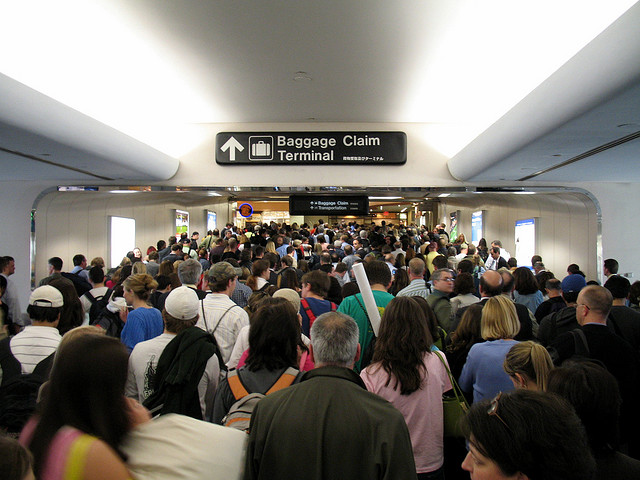
2014-06-12-AirportChaos.jpg
Airport lounges ooze exclusivity and warm muffins. They are also a revolving door for the travel elite and road warriors - the "cool kids" of the air. But how can the everyday traveler escape the hustle and bustle, and gain access into this coveted airport territory?
While most airline lounges are reserved for premium class travelers and top-tier status holders, there are ways to 'cheat' the system and ditch the crowds.
Purchase a Day Pass
If you're flying with an American airline, you're in luck. Most major North American airline clubs offer day passes. In addition, a trend in independently operated airport lounges have begun to take-off.
Here's the low-down on the most popular clubs offering day passes:
Admirals Club
American Airlines was the first to start VIP lounges back in 1939 starting with LaGuardia Airport in New York. The Admirals club now has over 40 airport lounges worldwide that accept day-passes.
Amenities: Complimentary wine, beer, spirits, light snacks and Wi-Fi.
Known for: Impeccably kept lounges.
Cost: $50 per person, or $100 for a 30-day membership.
Best Lounge: Dallas, TX (DFW).
What the DFW Lounge Boasts: 7 showers, business centre, music room, and exercise facilities.
United Club
This United Airlines club has over 45 locations worldwide.
Amenities: Complimentary beverages, light snacks, phone service, and Wi-Fi.
Cost: $50 per person.
Known For: Great staff and service.
Best Lounge: Houston, TX (IAH).
What the IAH Lounge Boasts: Showers, conference room, family room, and fun bar staff.
US Airways Club
This US Airways club has over 20 American locations.
Amenities: Complimentary beverages, snacks, and Wi-Fi.
Cost: $50 per person (or $29 online), or $120 for 90-day membership.
Known For: A wide range of free eats.
Best Lounge: Philadelphia, PA (PHL).
What the PHL Lounge Boasts: Large lounge with healthy snacks, conference room, comfy chairs and tons of plugs.
Independent Lounges
Recently, a new wave of independent VIP lounges have been popping up, and opening their doors to travelers willing to pay a flat rate. Some examples are the Airspace Lounge in BWI Airport and the Oasis Lounge in JFK Airport. Pricing ranges from $15-50 per person daily, or hourly rates starting at $10.
Servisair is an independent Executive Lounge company that has mostly a European presence, but also has a global reach to countries like Hong Kong and United Arab Emirates. Depending on your lounge and flight departure time, you are quoted a price (starting at $28 for a 3-hour stay). The amenities include the usual beverages, snacks and Wi-Fi.
Snag a Guest Pass
Annual airline club memberships don't just give members lounge access, but often grant access to member guests as well.
Road-warriors are often flying solo, and are looking for someone to bide their time with. If you're not interested in loitering around lounge entrances and profiling the right members to leverage your potential for free entry, there are often posts made on travel blogs and forums by these travellers offering to bring in guests. Blind date anyone?
Flyertalk and Milepoint are two good forums that often have these types of posts made by club members or Business-class flyers. In addition, lounge guest passes and day-passes tend to pop-up on Kijiji and Craigslist at discounted prices.
Memberships
Buying a membership requires more commitment since on average they cost about $500 every year. But if your office is in the sky and you haven't earned status with an airline, buying a membership could be a worthwhile investment.
Admirals, United and US Airways Clubs
On top of the American lounges you can access with a standard day pass, with club membership you also get access to international airports. However, you generally have to fly with the same alliance (i.e. American Airlines = OneWorld, United = Star Alliance).
US Airways has the most reasonable annual fee at $450, while Admirals and United clubs are both at $500. If you travel often with your spouse, they have free entry, as well as children under 18 (21 for United and US). But if you and your spouse travel independently a lot, then a combined membership works out cheaper ($675 for US Airways, $750 for United and $825 for Admirals)
---
Ultimately, many lounges are accessible to the everyday economy traveler. With a little exploration, you'll be ready to ditch the seedy airport bar, and head straight for the lounge with confidence.
Contributed by 
This article was originally published on Flightfox, a human-powered travel platform.
Follow us on Twitter:@TraveloreReport

Viking Ocean Cruises Celebrates Float Out Of First Ship With 2-for-1 Pricing On Cruises And Savings Up to $2,000 Per Couple On International Air


Set to Debut in Spring 2015, Viking Star Meets Water for First Time
 Viking Ocean Cruises® (www.vikingoceancruises.com) today
 announced its first ship – the 930-passenger Viking Star – was "floated out," marking the latest major
 construction milestone, and the first time that the new ship touches water. The traditional ceremony took 
place on Monday, June 23, at Fincantieri's Marghera shipyard outside Venice, Italy. With a total of three
 sister ships now under construction, Viking Star will be the first to debut in early 2015 with maiden voyages
 in Scandinavia and the Baltic; and the Western and Eastern Mediterranean.
A shipyard worker is seen next to the hull of the new 930-passenger cruise ship, Viking Star. The ship was "floated out" on Monday, June 23, in a traditional ceremony that took place at Fincantieri’s Marghera shipyard outside Venice, Italy. Debuting in spring 2015, Viking Star is the first of three new ships from Viking Ocean Cruises (www.vikingoceancruises.com), with maiden voyages in Scandinavia and the Baltic; and the Western and Eastern Mediterranean.

  •  wellness philosophy of Scandinavia in mind—from the centuries-old tradition of the sauna to a "snow 
  • grotto" where snowflakes gently descend from the ceiling through chilled air.

  • Explorers' Lounge and Wintergarden: Spaces designed to facilitate mingling and storytelling, the
  •  two-deck Explorers' Lounge at the bow is the perfect spot for taking in scenery through double-height
  •  windows over a glass of aquavit or pint of local craft beer; and the Wintergarden is a serene environment 
  • in which to relax and enjoy afternoon tea service complete with a hand-selected teas.

  • Dining Choices: Viking Star offers multiple restaurant locations and food choices—from The Restaurant 
  • and the World Cafe, serving a variety of global cuisines and regional specialties—to intimate dining
  •  experiences at The Chef's Table, Italian Grill and The Kitchen Table, all serving meals prepared with fresh, local ingredients. Furthermore, with multiple choices for outdoor seating during meals, Viking's ocean ships offer more al
  •  fresco dining than any other ships.

  • Enriching Entertainment: Connecting passengers to their destinations through authentic experiences
  •  is central to Viking Cruises, and onboard venues include a dramatic three-deck atrium where passengers
  •  can enjoy musicians playing regional and classical music; the Star Theater, home of enrichment lectures from scholars and experts; an onboard cooking school where guests can learn local specialties; and the Viking Piano
  •  Lounge, where guests can relax, mingle, and exchange stories after a day of exploring.

  • Sustainable Features: Designed with the environment in mind, Viking Star features energy-efficient
  •  hybrid engines, hydro-dynamically optimized streamlined hulls and bows for maximum fuel efficiency,
  •  onboard solar panels, and equipment that minimizes exhaust pollution and meets the strictest 
  • environmental regulations.
Booking Details
From now through June 30, 2014, Viking is offering U.S. residents an Early Booking Discount with. Contact a travel agent
 or call Viking toll free at 1-855-8-VIKING (1-855-884-5464).

com
About Viking Cruises
Viking Cruises offers destination-centric river and ocean cruising designed for experienced travelers with an
 interest in geography, culture and history. Featuring onboard cultural enrichment and included shore excursions, Viking's journeys are competitively priced for genuine value. Debuting its maiden season of ocean cruising in 2015, the sophisticated
 state-of-the-art Viking Star will host 930 guests on itineraries in Scandinavia and the Baltic; the Western and
 Eastern Mediterranean; and the British Isles. Two additional ocean ships, Viking Sea and Viking Sky, will
 debut in 2016.  As the world's leading river cruise line, since its 1997 inception the company has grown to a
 fleet of 53 river vessels (in 2014) offering scenic cruising along the rivers of Europe, Russia, Egypt, China, and
 Southeast Asia. Viking has been honored multiple times in Travel + Leisure's "World's Best" Awards and 
Conde Nast Traveler's "Gold List" as well as recognized by the editors of Cruise Critic as "Best River Cruise
 Line," with the entire Viking Longships® fleet being named "Best New River Ships of 2012" in the website's
 Editors' Picks Awards. The travel trade has ranked Viking as the "Best River Cruise Line" by Travel Weekly,
 Recommendand Travel Agent magazines, "Best Cruise Line for Luxury River Cruises" at the Luxury Travel
 Advisor Awards of Excellence and as "Best Overall Cruise Line for River Cruising," "Best New River Cruise Ship" and for the sixth consecutive year, "Best River Cruise Line for Travel Agent Support" in the 2014 TravelAge West's WAVE
 Awards. For additional information, contact Viking Cruises at 1‑855‑8-VIKING (1‑855‑884‑5464) or visit
Artist's rendering of the new 930-passenger Viking Star, debuting in spring 2015. The ship is currently under construction outside Venice, Italy and was "floated out" in a traditional ceremony on Monday, June 23. For more information, visit www.vikingoceancruises.com.


Follow us on Twitter: @TraveloreReport

Monday, June 23, 2014

VAT Refunds 101: How To Save On Shopping In Europe

458713385


When visiting Europe, you'll find that many goods and services are assessed a "value added tax," or VAT. It's a tax on consumption rather than income, and it ranges from 15-25%. If you pay this tax when shopping abroad, you can often get your money back after you've returned home, since travelers are typically entitled to a refund for the VAT portion of prices for goods. But getting that refund can be a headache. Here are 10 things you need to know about claiming VAT refunds.
Refunds from goods, not services
Countries generally exempt exports from VAT. So when you buy merchandise or other goods as a tourist, what you take home is considered an export. Accordingly, you are entitled to a refund for the VAT portion of the price.
On the other hand, when you stay in a hotel or eat a restaurant meal, those services are consumed locally rather than exported. Accordingly, tourists are not entitled to VAT refunds on those purchases. Some business travelers are allowed to recover VAT on services, but the process is so complicated that only large corporations with heavy business travel ever try to recover it.
VAT can be big
VAT is the English-language term; other terms include IVA, TVA, moms, MwST, and a handful of unique local terms. EU (much of Western Europe) rules require that member countries impose a VAT of at least 15%; most rates are in the range of 19-25%. Many countries exempt some purchases entirely or apply reduced percentages on "essential" purchases such as food, rent, transportation, and medical services. A few countries also exempt certain regions from VAT or apply reduced rates because of quasi-independent status or to encourage economic development. Among Europe's reduced- or no-VAT areas are the Aegean Islands, the Azores, the Canary Islands, and the Channel Islands.
VAT rates in Europe's four non-EU countries are 25.5% in Iceland, 25% in Norway, 8% in Switzerland, and 18% in Turkey, again with some exempted or reduced rates.
Keep in mind that the VAT rate is the amount added to a pretax base price, not a percentage of the final price. Thus, a 20% VAT rate amounts to 16.7% of the purchase price.
It's included in the price
As a practical matter, merchandise prices you see in stores almost always include VAT. So do posted hotel rates and restaurant prices. The general rule is that what you see is what you pay. Online travel agencies (OTAs) usually post hotel prices inclusive of VAT—but not always, so check the fine print! Also, some localities impose the equivalent of sales taxes, in addition to VAT, on hotel accommodations, but they do not include these in the posted price; these additional taxes are usually quite low.
Your goods must leave the country
Most European countries allow you to recover VAT when you "export" an item. But you must prove that the goods actually left the taxing authority before collecting your refund. (For countries in the European Union, this means you must leave the EU, not just cross an internal EU border.) If you leave by plane, you have to show the goods after you pass through the customs formalities.
To qualify for a refund, the goods must be new and unused. If you buy some high-fashion accessories in Paris, for example, you shouldn't use them until you leave the EU.
There are minimum qualifying amounts
Many countries establish a minimum price per item or daily value per store to qualify for a VAT refund. This minimum ranges from zero in Ireland, Germany, and the U.K. to CHF 300 (about $333 USD according to XE.com) in Switzerland, €175 (about $237) in France, €155 (about $210) in Italy, €125 (about $169) in Belgium, and €90 (about $122) in Spain.
Where to buy
Buy from stores that handle VAT-refund paperwork. Most stores that do this post a "Tax Free" or similar sign somewhere on a door or window; big department stores often have special VAT offices. On the other hand, street vendors, sidewalk artists, many small-town stores, and such generally don't provide this service, so you're out of luck when you buy from them.
When you buy, have the merchant provide the necessary paperwork, sometimes called a "cheque," and complete the paperwork before you leave the store. (You'll probably have to prove that you're from outside the country or VAT area.)
When you leave the EU or the country in which you bought the items, take the merchandise and the paperwork to the border station and have the documents stamped by a local customs agent. Typically, the agent will ask to see the items, so don't pack them in checked baggage—or, at least, be able to check bags after you've cleared customs. This is critical: You won't get the refund without the stamp.
Work with your merchant
The easiest way to get a refund is to have the merchant handle it at the point of sale. Some merchants ask you to sign two credit card chits: one for the pre-VAT price and another for the VAT. You still have to do the paperwork and have it stamped, but when you clear the checkpoint, you just mail the completed paperwork to the merchant to prove that you really took the goods out of the area. When the merchant gets the paperwork, he or she tears up the credit card slip for the VAT. Alternatively, you sign one chit for the full price and the merchant later refunds the VAT to your card.
You can also avoid VAT by having a merchant ship the goods to you directly at your home address. In most cases, however, this isn't a good solution. Shipping charges can be very high, and you have to pay U.S. duty, even if you haven't used up your import allowance.
Let the pros do it
Two agencies specialize in facilitating VAT refunds. Typically, you want to shop at stores that participate in one of these agencies' programs; this will be displayed on a sign. Go through the purchase and customs paperwork, as described. Then, after passing through customs and getting your paperwork stamped, find an agency office to process the refund. The big agencies maintain refund desks in the departure areas of major international-gateway airport terminals, at some ship and ferry terminals, and at some downtown offices. Typically, you have a choice of getting a cash, check, or credit card refund. These outfits generally deduct as much as 30% of the refund amount as a fee for services.
Global Blue is the largest; it operates throughout Western Europe, as well as in several Eastern European countries, Argentina, Japan, Morocco, Singapore, South Korea, Turkey, and Uruguay. Premier TaxFree operates in a limited number of European countries but covers Jordan. Check the agencies' websites for more details.
Buy at tax-free airport stores
You can avoid paying VAT by waiting to buy in a "tax-free" airport store, usually located after the departure formalities at major international airports. The post-customs areas of many big European airports are now more like upscale shopping malls than airports. But store prices at most airports are pegged to be just a little below local "high street" VAT-inclusive prices, not at the local price minus the VAT. Those fat markups help fund the airport.
Beware of the gotchas
As noted, the paperwork and the customs stamp are critical to the process. Unfortunately, you can sometimes miss out on the chance to comply. One way to miss out is to buy from a supplier who doesn't do the paperwork. Independent artists, street merchants, and many other sellers don't participate in the programs and don't provide paperwork.
You can also miss getting the paperwork if you cross an unattended border. These days, you can pass out of a tax zone without encountering any customs office or official at all—for example, when you drive a rented car or take a train or bus through a lightly used border crossing. If you fly home from Geneva but return a rented car on the French side of Geneva International Airport, you'll find that the customs kiosks in the corridor between the French and Swiss lobbies of the terminal building are generally unattended by either country.
Some countries have work-arounds for these problems. Check the agency websites for details, preferably before you encounter a problem.


When visiting Europe, you'll find that many goods and services are assessed a "value added tax," or VAT. It's a tax on consumption rather than income, and it ranges from 15-25%. If you pay this tax when shopping abroad, you can often get your money back after you've returned home, since travelers are typically entitled to a refund for the VAT portion of prices for goods. But getting that refund can be a headache. Here are 10 things you need to know about claiming VAT refunds.
Refunds from goods, not services
Countries generally exempt exports from VAT. So when you buy merchandise or other goods as a tourist, what you take home is considered an export. Accordingly, you are entitled to a refund for the VAT portion of the price.
On the other hand, when you stay in a hotel or eat a restaurant meal, those services are consumed locally rather than exported. Accordingly, tourists are not entitled to VAT refunds on those purchases. Some business travelers are allowed to recover VAT on services, but the process is so complicated that only large corporations with heavy business travel ever try to recover it.
VAT can be big
VAT is the English-language term; other terms include IVA, TVA, moms, MwST, and a handful of unique local terms. EU (much of Western Europe) rules require that member countries impose a VAT of at least 15%; most rates are in the range of 19-25%. Many countries exempt some purchases entirely or apply reduced percentages on "essential" purchases such as food, rent, transportation, and medical services. A few countries also exempt certain regions from VAT or apply reduced rates because of quasi-independent status or to encourage economic development. Among Europe's reduced- or no-VAT areas are the Aegean Islands, the Azores, the Canary Islands, and the Channel Islands.
VAT rates in Europe's four non-EU countries are 25.5% in Iceland, 25% in Norway, 8% in Switzerland, and 18% in Turkey, again with some exempted or reduced rates.
Keep in mind that the VAT rate is the amount added to a pretax base price, not a percentage of the final price. Thus, a 20% VAT rate amounts to 16.7% of the purchase price.
It's included in the price
As a practical matter, merchandise prices you see in stores almost always include VAT. So do posted hotel rates and restaurant prices. The general rule is that what you see is what you pay. Online travel agencies (OTAs) usually post hotel prices inclusive of VAT—but not always, so check the fine print! Also, some localities impose the equivalent of sales taxes, in addition to VAT, on hotel accommodations, but they do not include these in the posted price; these additional taxes are usually quite low.
Your goods must leave the country
Most European countries allow you to recover VAT when you "export" an item. But you must prove that the goods actually left the taxing authority before collecting your refund. (For countries in the European Union, this means you must leave the EU, not just cross an internal EU border.) If you leave by plane, you have to show the goods after you pass through the customs formalities.
To qualify for a refund, the goods must be new and unused. If you buy some high-fashion accessories in Paris, for example, you shouldn't use them until you leave the EU.
There are minimum qualifying amounts
Many countries establish a minimum price per item or daily value per store to qualify for a VAT refund. This minimum ranges from zero in Ireland, Germany, and the U.K. to CHF 300 (about $333 USD according to XE.com) in Switzerland, €175 (about $237) in France, €155 (about $210) in Italy, €125 (about $169) in Belgium, and €90 (about $122) in Spain.
Where to buy
Buy from stores that handle VAT-refund paperwork. Most stores that do this post a "Tax Free" or similar sign somewhere on a door or window; big department stores often have special VAT offices. On the other hand, street vendors, sidewalk artists, many small-town stores, and such generally don't provide this service, so you're out of luck when you buy from them.
When you buy, have the merchant provide the necessary paperwork, sometimes called a "cheque," and complete the paperwork before you leave the store. (You'll probably have to prove that you're from outside the country or VAT area.)
When you leave the EU or the country in which you bought the items, take the merchandise and the paperwork to the border station and have the documents stamped by a local customs agent. Typically, the agent will ask to see the items, so don't pack them in checked baggage—or, at least, be able to check bags after you've cleared customs. This is critical: You won't get the refund without the stamp.
Work with your merchant
The easiest way to get a refund is to have the merchant handle it at the point of sale. Some merchants ask you to sign two credit card chits: one for the pre-VAT price and another for the VAT. You still have to do the paperwork and have it stamped, but when you clear the checkpoint, you just mail the completed paperwork to the merchant to prove that you really took the goods out of the area. When the merchant gets the paperwork, he or she tears up the credit card slip for the VAT. Alternatively, you sign one chit for the full price and the merchant later refunds the VAT to your card.
You can also avoid VAT by having a merchant ship the goods to you directly at your home address. In most cases, however, this isn't a good solution. Shipping charges can be very high, and you have to pay U.S. duty, even if you haven't used up your import allowance.
Let the pros do it
Two agencies specialize in facilitating VAT refunds. Typically, you want to shop at stores that participate in one of these agencies' programs; this will be displayed on a sign. Go through the purchase and customs paperwork, as described. Then, after passing through customs and getting your paperwork stamped, find an agency office to process the refund. The big agencies maintain refund desks in the departure areas of major international-gateway airport terminals, at some ship and ferry terminals, and at some downtown offices. Typically, you have a choice of getting a cash, check, or credit card refund. These outfits generally deduct as much as 30% of the refund amount as a fee for services.
Global Blue is the largest; it operates throughout Western Europe, as well as in several Eastern European countries, Argentina, Japan, Morocco, Singapore, South Korea, Turkey, and Uruguay. Premier TaxFree operates in a limited number of European countries but covers Jordan. Check the agencies' websites for more details.
Buy at tax-free airport stores
You can avoid paying VAT by waiting to buy in a "tax-free" airport store, usually located after the departure formalities at major international airports. The post-customs areas of many big European airports are now more like upscale shopping malls than airports. But store prices at most airports are pegged to be just a little below local "high street" VAT-inclusive prices, not at the local price minus the VAT. Those fat markups help fund the airport.
Beware of the gotchas
As noted, the paperwork and the customs stamp are critical to the process. Unfortunately, you can sometimes miss out on the chance to comply. One way to miss out is to buy from a supplier who doesn't do the paperwork. Independent artists, street merchants, and many other sellers don't participate in the programs and don't provide paperwork.
You can also miss getting the paperwork if you cross an unattended border. These days, you can pass out of a tax zone without encountering any customs office or official at all—for example, when you drive a rented car or take a train or bus through a lightly used border crossing. If you fly home from Geneva but return a rented car on the French side of Geneva International Airport, you'll find that the customs kiosks in the corridor between the French and Swiss lobbies of the terminal building are generally unattended by either country.
Some countries have work-arounds for these problems. Check the agency websites for details, preferably before you encounter a problem.
Contributed by Ed Perkins, SmarterTravel.com
Follow us on Twitter: @TraveloreReport