Showing posts with label How to find the best airfares. Show all posts

Thursday, March 15, 2018

Best And Worst Airlines According To Consumer Reports Readers

Image result for Best And Worst Airlines According To Consumer Reports Readers

In our latest survey, 55,000 members rate carriers on staff service, seat comfort, pricing transparency and more

For most passengers, air travel has become a constant struggle to avoid ultra-tight seating, hefty luggage fees, and itinerary-wrecking delays. But a small number of carriers deliver consistently good travel experiences, according to our readers in the latest airline ratings survey conducted by Consumer Reports.
To identify the best and worst airlines, we surveyed more than 55,000 members last summer, who reported on nearly 98,000 domestic economy flights and 8,700 first-class and business-class flights. These readers weighed in on almost a dozen factors, including their airline seat’s comfort and legroom, cleanliness, service by airline staff, food and beverage selection, WiFi connectivity, and pricing transparency.
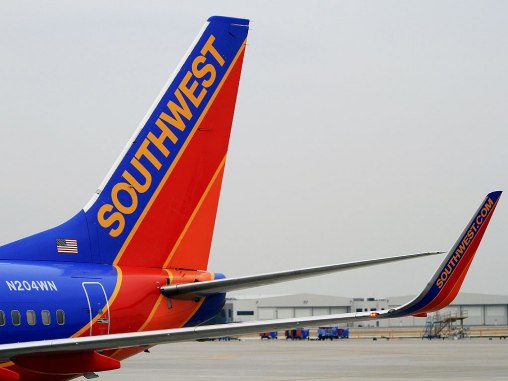
Out of the 11 airlines surveyed, Southwest landed at the top of the ratings chart for overall satisfaction by passengers on economy flights. It earned high scores for staff service and ease of check-in, and cabin cleanliness. And it was the only airline to earn top marks for pricing transparency—this no-frills carrier clearly lists its fees and lets you check two bags for free.
Alaska Airlines, JetBlue, Virgin America, and Hawaiian Airlines are also among the highest rated airlines for economy flights. Like Southwest, these airlines also received favorable ratings for staff service, check-in ease, and cabin cleanliness.
Among the lowest-rated airlines by coach passengers are Frontier, Spirit, United, American and Allegiant Airlines. Additionally, Spirit and Frontier Airlines received low marks in all the categories we rated.
We also asked first-class and business-class travelers to rate their experiences. Hawaiian Airlines and Alaska Airlines are among the highest rated airlines for overall satisfaction by passengers.

Surprise Fees Rankle Travelers

Our survey found that pricing remains a crucial issue for coach passengers. Some four in ten travelers who booked their flight said they chose their airline because it had the cheapest flight available.
Yet more airlines are adding basic economy seating, which means flyers are increasingly paying additional fees for what used to be standard service. More than half of economy passengers in our survey were charged to select a better seat, and 40 percent who checked a bag were charged an extra fee.
It’s often difficult to avoid add-on charges, which may not be immediately clear when booking online. Half of those surveyed said they were unsure or could not remember if any extra fees were added to their bill when they purchased their ticket. 
Travelers also say that they are often confused during the booking process, according to Anna Laitin, director of financial policy for Consumers Union, the advocacy division of Consumer Reports. “Often, with some of these budget airlines, travelers think that they have to pay for a seat on top of the cost of the ticket,” Laitin says. 
Advocates say the airlines must do a better job of fee transparency. Last December the U.S. Department of Transportation dropped proposals that would have required airlines to disclose checked and carry-on bag fees at the start of a ticket purchase rather than later on.

Less Comfort in Coach

Although more than half of coach passengers did not experience in-flight or onboard problems with their flight, nearly 30 percent reported that their seat was uncomfortable. In fact, all the airline economy flights rated by Consumer Reports received low scores for the seat comfort and legroom categories.
That’s no surprise, since airlines are cramming more seats into their coach sections, even as the average American is growing larger. “These seats, in order to fit more of them in each plane, don’t have the foam padding of yesteryear,” says airline analyst George Hobica, founder of AirfareWatchdog, a travel site. 
For all the carriers, the complimentary and paid food and beverage choices were marked below average by coach passengers. Most airlines also received low scores for their WiFi connectivity and in-flight entertainment options.
The most common check-in or on-ground problem reported by survey respondents was a flight delay—12 percent of the flights we asked about were delayed, with the median wait lasting 76 minutes. 
Hawaiian Airlines and Alaska Airlines had the fewest flight holdups. Though Consumer Reports didn’t have enough data to report median wait time for Hawaiian Airlines, for those airlines that we did, Alaska and Southwest Airlines had the shortest reported delay times.

Winning in First Class

Of the five airlines rated for first-class and business-class travel, Hawaiian and Alaska Airlines are among the highest rated carriers. Hawaiian Airlines was the only airline to receive top marks for legroom. Alaska Airlines received the highest score for pricing transparency during the booking process. 
Though all five airlines receive higher overall satisfaction scores from first-class and business-class travelers, Delta landed in the middle of the pack. United and American Airlines are among the lowest rated, with average marks for seat comfort and below average scores for WiFi and in-flight entertainment.
Still, all five carriers received average or above average scores for staff service. And first-class and business-class passengers were generally more satisfied with their flight experience, compared with coach travelers—about what you’d expect given the extra amenities these carriers provide their higher-paying passengers. 

How to Find the Best Fares

More travelers pick airlines based on convenience rather than cost, our survey found. But you would do well to shop around. “No single travel site or airline consistently offers the best deals in all cases,” says William McGee, airline consultant for Consumers Union.
And if you can be flexible in your timing, you will improve your odds of finding a lower-cost ticket. Here are three tips for nabbing a cheaper airfare: 
Shift your travel dates. About 60 percent of passengers said the main reason for choosing their carrier was it had a flight that best fit their schedule. But if you have some leeway, check to see how ticket prices would change if you fly a day or two earlier or later, or if you leave early in the morning or late at night.
Compare flights at more than one airport. Some 36 percent of passengers cited availability of flights out of their preferred airport as the key reason for their choice. If you live near more than one airport, however, you may be able to trim your costs by broadening your search.
A quick check of airfares from the New York City area to Los Angeles found a nonstop economy flight departing from JFK airport in the mid-morning was $412, while the least expensive flight, priced at $332, left from Newark Airport, also mid-morning. 
Consider flying on a holiday. If you’re flexible enough to fly on Christmas Eve or Christmas Day and return on New Year’s Eve or New Year’s Day, airfares can be 25 percent to 50 percent less.

Wednesday, June 25, 2014

Travelore Money-Saving Tip: Search Airfares One Person At A Time, Even If Flying With A Group

A03 AIRPORT SECURITY  24


This oldie but goodie is worth revisiting for anyone traveling with family or a group of friends this summer. Even if it's just two of you, you can still save some money.
Tip: When you initially shop for multi-passenger airline tickets, use the two-step method
Step 1: Begin by checking prices for the total number of people in your party in one window or tab. But don't buy tickets before testing step two.
Step 2: Shop for a single passenger in a different window or tab.
If you see a difference in tickets prices on these two shopping requests for your intended itinerary, shop one-passenger-at-a-time separately, then try adding another passenger until there is no price difference.
Why all the fuss?
A quirk in airline reservation systems requires all passengers booked in a single reservation to get the same price - even if there are a few cheaper seats at a lower price.
This simple multi-passenger shopping technique will let you test if there are some cheaper seats for a portion of your party, and if so, you can simply make two bookings at the different rates. Otherwise, if shopping for everyone in a single booking, you'd pay the higher price for all.
Changes and seat assignments
Your bookings are covered - meaning you can change/cancel them - using either your airline's 24-hour hold policy or its 24-hour cancellation-with-refund policy, per the recent wave of consumer-friendly Department of Transportation (DOT) rules.
When it comes to most airline seat assignments (basic, non-premium free seats), take note of empty or available seats during your initial booking so you'll be able to scoop them up when you make your second booking.
I have used this technique several times over the past few years and it has saved me thousands of dollars. It's especially cost-effective on big family trips overseas.
Sometimes there just aren't any cheaper seats for you to snag with this shop-one-passenger-at-a-time method, but if that's the case, at least you'll be confident you covered all the bases in your quest for the best deal.
Contributed by Rick Seaney 
Follow us on Twitter: @TraveloreReport


Monday, June 9, 2014

Frequent Fliers Check Travel Sites, Then Buy From Airline Sites

Frequent business travelers favor airline websites to book a flight but are open to using online travel agents' websites if they improve.

 
Frequent business traveler Dennis Morris of Fox Island, Wash., uses a three-step process to book a flight online.
He finds a desired flight and a fare at an airline website, compares the fare with those cited by Expedia or Kayak and, if fares are comparable, returns to the airline website to book the flight.
"I prefer to work directly with the airline in case changes or issues come up," explains Morris, the CEO of a boat manufacturing company and a USA TODAY Road Warrior who volunteers travel information. "My experience dealing with non-airline sites is that, if issues arise, addressing them is much more difficult."
Many travelers like Morris favor airline websites, according to a survey released Monday by FlightView, which sells travel apps for mobile phones and daily travel information for airlines, airports and technology companies.
The survey — based on 2,066 people who used FlightView's mobile app in April — reveals that 36% "typically search for" airline tickets on airline websites.
Twenty-nine percent say they typically search for airline tickets on websites of online travel agents such as Expedia and Orbitz, and 22% say they use travel search engines such as Kayak and TripAdvisor.
Most survey respondents — 59% — say they usually buy their tickets from airlines. Nearly 30% buy them from online travel agents, 8% buy them from traditional travel agents and 3% say they don't book their own travel.
The survey also shows that —like Morris — travelers routinely go to non-airline websites to gather price or other flight information before using an airline to book a ticket.
Forty-one percent of respondents say they "sometimes" go to non-airline websites to get such information; 29% say they do that "most of the time," and 19% say they "always" do that.
For business travelers, the results show that they "are incredibly connected and have hundreds of travel tools, mobile apps and services at their disposal," says FlightView CEO Mike Benjamin.
"The choice to use one over another often comes down to the experience that the travel provider offers, and how well the provider keeps business travelers informed and engaged during their trip."
Road Warrior Ashok Adur of Parsippany, N.J., is one business traveler who uses various Internet tools.
"For work-related travel we have been asked to go to orbitzforbusiness.net," says Adur, who works in the plastics industry. "For other travel, I use different websites —airline, TripAdvisor, Expedia, CheapTickets, Bravofly or Kayak."
FlightView's survey shows that the most popular travel websites for "first searches" are Expedia and Kayak.
They were cited by 27% of respondents, followed by Travelocity (12.5%); Orbitz (11%); Priceline (5%) and TripAdvisor (4%).
Boston-based Road Warrior Tom Kelly says he uses Kayak or Google Flights first, then books a ticket on an airline's website.
"Sometimes Kayak will have better flight combinations that are not available on the carrier's site," says Kelly, a supply chain manager in the aerospace and defense industries. "I also like the trending charts and flexible date options on Google Flights. You can also search by airline marketing alliance or see prices for regions on a map."
FlightView's survey shows that 46% of respondents say they would be more willing to book a flight with an online travel agent if they were assured they would automatically be rebooked on another flight if their original flight was canceled. Forty-two percent say they would be more likely to book with an online agent if the agent made it easier to manage their travel itineraries on a mobile device or a website.
Adur says he never uses online travel agents' mobile apps, because some "are limited, especially for multiple flights and complicated travel itineraries."
He likes to use airlines' mobile apps, but they don't always work, and some have "limited capability."
Morris says he doesn't use airlines' mobile apps to book flights for several reasons, including problems with connectivity, speed and "readability for long or complex bookings."
He uses airlines' mobile apps "fairly regularly" after a booking is made, though, for changing a seat, flight status or check-in.
Find cheap fares
George Hobica of Airfarewatchdog.com offers some tips for travelers searching online for low airfares.
• Many airlines have private sales, reserving their best fares for their own websites.
• Check the websites of online travel agencies.
• If your travel dates are flexible, try a flexible-date search. Kayak.com has a good flexible-date calendar that can be used when you register at the website.
• Search often, because fares fluctuate throughout the day, and the number of seats offered at the cheapest fares changes frequently.
• Sign up for airfare alert e-mails, which are provided by many travel websites.
Contributed by Gary Stoller, www.usatoday.com
Follow us on Twitter: @TraveloreReport

Thursday, May 15, 2014

Travelore Tips: Three Ways To Find The Lowest Airfare


Contributed by Wendy Perrin, CNTraveler.com
2014-05-14-cn_image.size.howtofindthelowestairfare.jpg
"Google 'best time to buy airfare' and you'll find 50 different competing theories. And they're all wrong," George Hobica told me over lunch the other day. George is the founder of AirfareWatchdog, the airfare deals site that includes some low fares not found on other sites. "Don't listen to anyone who says there's a magic time or day to buy airfare. There is no secret time. You need to look four times a day -- minimum -- every day of the week, as far in advance as you can."
Sounds like a ton of work. Not nearly as simple as looking on Tuesdays at 3 p.m. Eastern or on Wednesdays at 1 a.m. But George has just compiled his "12 Tips for Finding Low Airfares, 2014 Edition" to make your airfare shopping easier. You probably already do many of the 12, as do I, but I thought I should share three nifty new takeaways from lunch:
Keep your airfare search results page open on your computer screen all day.
Whatever airfare search site you're using, just leave your Web browser window open on your computer screen and hit "Refresh" at least four times a day. Airlines change fares all day long, says George, and "even if the fares don't change, the number of seats available at that fare will change."When you can be flexible with your travel dates, use Kayak or Google Flights.
Flexible date search allows you to look for airfares within a certain window of time and pinpoint the least expensive days to fly within that window. I've always used ITA Software for this, but George recommends two tools that may be easier for many people to use. At Kayak, register your email address, click on "Flights," then click on "More search options" and choose "Flex Month." As for Google's Explore Flights tool, you can specify a trip length and month, allowing you to search for the lowest fares within whatever window of time you've got.
If you are flexible about your destination as well, use Adioso.
When you're open to suggestions for where to go and you just want a great airfare, Adioso works well because it lets you search not just for a specific destination city but for an entire region. Instead of having to limit your search to, say, "New York City to Copenhagen," you can punch in "New York City to Europe" and see what's available in, say, April or May.
Of course, the easiest way to get around time-consuming airfare shopping might be simply to have low fares emailed to your inbox. AirfareWatchdog's fare alerts include discounted promo-code fares as well as low fares on Southwest Airlines that other sites' alerts may not include. Personally, my favorite of the three types of fare alerts is the "Departure City alerts" because I want to know what surprise deals crop up from my home airport as well as other airports within a reasonable driving distance of home.

Tuesday, March 25, 2014

12 Travelore Tips For Finding The Best Airfares

No question about it, airfares on some routes are higher than they were four or five years ago, although Airfarewatchdog airfare searchers frequently find hundreds of fares crisscrossing the country for $250 or less round-trip. And even though fares seem higher, let's not forget that, adjusted for inflation, most fares are actually lower than they were 10 or 20 years ago. That said, here is my best advice for making your airfare dollars go further.

1. There's no "magic" day or lead time to buy the best airfare.
A lot of airfare experts think they're clairvoyant, so they know where airfares are headed or how far in advance you should start looking for a fare. The latest myth is to buy exactly 54 days in advance. Others say buy on Tuesday at 3 p.m. or Wednesday at midnight or when the moon is full (just kidding). But airlines are unpredictable, and anyone who claims he or she knows that airfares will be lower or higher in the coming months or the coming days should trade in their crystal ball. No one can accurately predict where airfares are heading, any more than we can predict the stock market. Think about it: if they really knew, they'd put every other airfare search operation out of business, and that hasn't happened. Don't believe me? Here's what an airline revenue manager has to say about this.
2. So search often, over a long lead time, and pounce when there's a deal
Fares fluctuate throughout the day, and the number of seats offered at the lowest fares also changes frequently. Or someone might be holding the only seat at the lowest fare and not book it, so it goes back into inventory--and then it will be yours. So if you don't like the fare at 10 a.m., check at 2 p.m. or the next day or the next week and pounce when the fare is affordable. It's easy to leave open the browser page where you're searching for a fare and keep on hitting the refresh.
3. Airfare alerts by email
This is perhaps the easiest way to track airfares. Many travel web sites offer emailed airfare alerts, letting you know when fares go down, and they all have something to offer. Do a browser search for "airfare alerts" and you'll see what's available. They all work a bit differently so sign up for more than one. One thing to note: these sites use essentially the same airfare data provided by the airlines' computer systems or ITA Software (which is now owned by Google), so they won't include discounted promo code fares, and they don't include Southwest Airlines (airfarewatchdog's fare alerts do, however, include hand-picked fares on Southwest).
4. Sign up for the airlines' email feeds and frequent flyer programs
Speaking of promo codes, the airlines want to develop a relationship with you, so they'll send you special deals, such as 50 percent off promo codes or two-fers, if you sign up for their emails. Here are links to US domestic airline sign up pages and for international airlines. We signed up for Virgin America's frequent flyer program and because we hadn't flown them yet we keep on getting promo code discount offers to give them a try.
5. Use Twitter
Email is great, but some of the most amazing airfare deals last only a short time (even if they're valid for travel over a long period), or you open the email too late. Twitter is more immediate. Our advice? Follow @Airfarewatchdog where we tweet unusual airfare deals every day of the week and alert followers to promo codes and other airfare deals.

6. Be a flexible travel date flyer
If you don't care when you go as long as the fare is low, try a flexible date search. It's getting harder to search airfares based on flexible travel dates now that many sites (Orbitz, Hotwire, Travelocity and Expedia among them) have eliminated their flexible date calendars. But Kayak.com still has a good one (you must register as a user to see it under Flights/more options/flex month). Another good site is Adioso.com and Google has two sites worth exploring: Google Flight Explore and Google Flights.More about flexible travel date search. 

7. Search airline sites individually, but online travel agencies are still useful

Many airlines have "private" sales, reserving their very best fares for their own sites. These are different from promo code sales mentioned above. International airlines such as Aer Lingus, Iberia and Qantas regularly offer lower fares (i.e., $100-$400 less) on their own web sites compared to what you'll find on Kayak or Orbitz. And yet, you shouldn't ignore online travel agencies such as Expedia and Travelocity, because these sites will tell you if it's cheaper flying out on one airline and back on another (United won't tell you it's cheaper to fly out on United and back on American).


8. Use Priceline for last minute trips
If you don't have a 7-, 14-, or 21-day advance purchase window to buy your fare, your best bet is the "name your own price" feature of Priceline.com. True, you won't know the exact flight times or airline you're flying until to pay for your trip, but you can save 50% or more.
9. Use consolidators, but beware of the restrictions
Consolidators specializing in premium cabins will have some great deals, and the airlines themselves will often heavily discount their premium cabins in the summer and just before Christmas, so check the specials on their web sites. Sites like Vayama.com, airfare.com and Asia.com also sometimes sell consolidator fares, but read this to understand how these fares work and what the extra restrictions might be.
10. Consider the extra fees before you buy
If Southwest has a fare of $198 round-trip and United has one for $148, and you are checking three bags, then Southwest actually has the lowest fare because Southwest charges nothing for the first two checked bags, whereas United would charge you an additional $165 each way for three. (See Airline fee chart). 

11. Combine two separate fares rather than buying one fare
If you're flying to a destination in Europe, you might save money by purchasing one fare from the US to, say, Dublin, and another from Dublin onward on Ryanair.com (just beware of Ryanair's onerous fees). Same holds true for some destinations in Asia (fly into Singapore and catch a low cost carrier such as Airasia.com from there) and to some smaller Caribbean destinations via San Juan or the Bahamas. Even domestically, two fares are often less than one, such as the recent scenario where Dallas to Honolulu was selling for $350 round-trip with tax, but Houston/Honolulu was $800. As you're no doubt aware, you can fly Houston-Dallas for a lot less than $450! Just be sure to give yourself plenty of time between connecting flights in case one flight is delayed.

12. Buy tickets on an airline that will refund the difference if a fare goes down
Let's say you've found the lowest fare, and then the day after purchase your non-refundable fare for the same itinerary goes down. If you ask for it you can get a refund for the difference. But some airlines will charge you a costly "administrative" fee of $200 or more, wiping out any savings. Others will give you the entire fare difference in the form of a travel voucher without extracting a fee. All airlines used to do this but no longer. The only ones left are JetBlue, Southwest, and Alaska.