Showing posts with label #Chocolate. Show all posts

Wednesday, April 15, 2020

Indulge In New Mexico's Centuries-Old Chocolate Customs

The tradition of cacao has endured in the region for more than a thousand years
Kakawa Chocolate House in Santa Fe makes traditional chocolate elixirs, as well as such treats as chocolate-dipped chile de árbol — Photo courtesy of Kakawa Chocolate House

Today, cacao is a staple of Valentine’s Day chocolates, but the food is hardly a modern marvel. Indigenous peoples were consuming cacao in what is now the American Southwest more than a thousand years ago, long before it was shaped into truffles and packaged in heart-shaped boxes.
University of New Mexico archeology professor Dr. Patricia Crown led a team of researchers to two ground-breaking discoveries that placed chocolate in the Southwest centuries before it was thought to have arrived in the region.
Previously, the Spanish were thought to have carted it into the area in the 15th century. Crown and her team — which included W. Jeffrey Hurst, formerly of the Hershey Technical Center in Hershey, Pennsylvania — found that the Hohokam peoples consumed cacao in what is now Arizona between 750 and 900 A.D.
Crown also traced chocolate consumption to today’s Chaco Culture National Historical Park, in western New Mexico, to around 900 and 1100 A.D. To discover this connection, the team looked for biomarkers for specific substances in centuries-old ceramics. They found residue of theobromine: a telltale chemical in cacao.
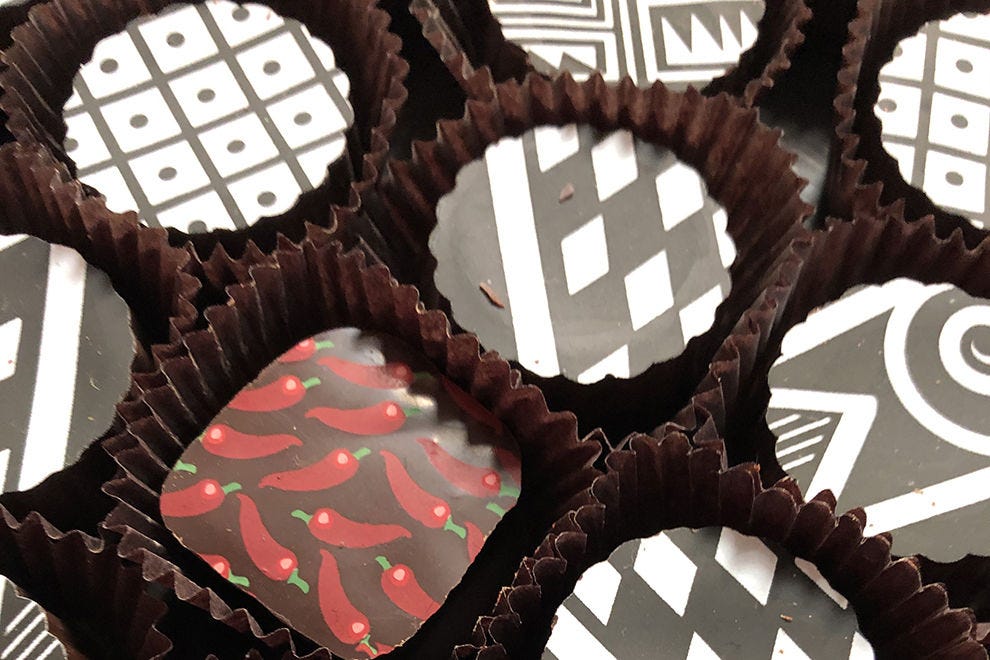
Art of Chocolate / Cacao Santa Fe creates chocolate truffles with pottery-inspired designsArt of Chocolate / Cacao Santa Fe creates chocolate truffles with pottery-inspired designs — Photo courtesy of Art of Chocolate / Cacao Santa Fe
Because cacao can’t grow in the arid southwest, Crown says these discoveries point to trade between the ancient peoples who resided there and Mesoamerica. “It had to come from the tropics. It was a trade item,” she explains. “If you’re going to use it in ritual activity, which is what we think they were doing, you’d have to establish an ongoing supply.”
Crown believes the cacao was consumed as drinking chocolate, similar to how the Aztecs and Maya consumed it. These ancient civilizations have an even longer history of consuming the plant. Their drinking chocolate wasn’t the milky, hot chocolate popular today; cacao powders were dissolved into water, making for a complex, potent elixir.
At Chaco, the team discovered cacao in cylindrical pottery jars made in pairs with lids of sandstone discs. “Hard chocolate, like candy bars, is a relatively recent invention. In the past, cacao was consumed by drinking it or in sauces, like moles,” she says. “Throughout Mesoamerica, the froth was considered the most delicious part. At Chaco, we believe they created froth by pouring the chocolate back and forth between cylindrical jars. That’s why they were made in sets of two to four jars.”
More than a thousand years after cacao’s arrival in the American Southwest, several chocolate shops in Arizona and New Mexico are continuing to tap into these traditions and regional flavors.
Monsoon Chocolate creates truffles sourced from local ingredientsMonsoon Chocolate creates truffles sourced from local ingredients — Photo courtesy of Monsoon Chocolate / Julius Schlosburg
Located in Santa Fe, New Mexico, Kakawa Chocolate House and Art of Chocolate/Cacao Santa Fe both serve chocolate elixirs. Kakawa celebrates historic European elixirs as well as more traditional Mesoamerican elixirs. Using archeological research and accounts by Spanish settlers, the intimate chocolate house has recreated recipes using ground cacao beans, spices, chile, and herbs.
The Art of Chocolate/Cacao Santa Fe too blends drinking chocolates and elixirs. Historical documents also inspire their recipes, which use unsweetened chocolate that begins in bean form and is roasted and ground in-house. The Zapotec Tejate incorporates ground blue corn, which the indigenous peoples of the Southwest have long cultivated. The Tolteca Notchli is sweetened with prickly pear cactus juice (another local ingredient) and chile powder.
Although they specialize in hardened chocolate bars that the peoples of the ancient Southwest wouldn’t recognize, the bean-to-bar makers at Taos, New Mexico's Chokolá celebrate the “food of the gods.” The craft chocolaterie specializes in single-origin chocolate bars, truffles and mousses. Often its chocolate originates in Central and South America.
In Arizona, Tucson chocolate maker and confectioner Monsoon Chocolate creates truffles utilizing regional flavors — some that may have even been present when the Hohokam were first consuming cacao more than a thousand years ago. For example, the Chiltepin truffle uses dark-chocolate ganache infused with chiltepin pepper: the wild chile pepper native to the Southwest consumed by indigenous peoples. The Sonoran Sea Salt Dark Chocolate truffle is garnished with Tohono O’odham salt from the Sonoran flats at the Gulf of California.
Monsoon Chocolate also draws from more modern inspirations, such as in the Whiskey del Bac Dorado truffle, which layers caramel and chocolate. The chocolate makers infuse both elements with mesquite-smoked whiskey from Tucson spirit-maker Hamilton Distillers. Though it’s a contemporary creation, it’s still imbued with the tastes of the desert where America’s obsession with chocolate first began.
All of the chocolate artisans discussed here – Kakawa Chocolate HouseThe Art of Chocolate/Cacao Santa FeChokolá, and Monsoon Chocolate – ship at least some of their confections through their websites. As of this writing, many of them also offer local delivery or curbside pickup as well.

Monday, December 12, 2016

New Food Tour Takes Chocolate Lovers Inside the World of Swiss Chocolate


ZURICH, Dec. 12,  "Chocolate bliss," that exquisite moment where a cacao bean expresses its finest creamy dark essence on your tongue, is an elusive experience for the chocolate lover—but one that can easily become a global quest. Rhapsodic chocolate moments like these are loaded into the itinerary of a new culinary adventure: Tour de Chocolat.
Tour de Chocolat participant works with chocolatier Blaise Poyet at Laderach studios in Vevey Switzerland
Designed for those who hunger for the snap of a perfectly tempered piece of single-source dark chocolate, this food tour provides the opportunity to spend a week in the workshops and kitchens of artisan chocolatiers in Switzerland—the birthplace of chocolate as we know it.
Participants discover the fascinating backstory of chocolate and dive into the world of fine chocolate. It's a deluxe, small-group tour where guests learn time-honored traditional methods as well as cutting-edge techniques.
Tour de Chocolat, conceived as an insider's dream tour, gives guests hands-on opportunities to participate in the creation of delectable chocolate creations and work with top chocolatiers. Each day there are exclusive chocolate experiences—workshops, tastings, and demonstrations.
In addition to the daily dose of unforgettable chocolate, participants taste their way through Switzerland's other culinary treasures. While in Gruyere, they discover the 900-year-old techniques of making the region's signature cheese—followed by a dinner of bubbling fondue and freshly baked regional bread.
On the same day as tasting chocolate truffles, guests travel to the moist soil of the Jura forests to unearth fragrant and prized forest truffles—with the assistance of a truffle-hunting dog. Guests dine in a Michelin-starred restaurant and enjoy the depth and innovation of Swiss cuisine. 
Understandably, artisans who have built their career around a single ingredient like chocolate, are passionate and meticulous. Blaise Poyet of Läderach, hosts a custom workshop for Tour de Chocolat guests which allows them to work in his chocolate studio with top quality raw ingredients. Poyet is committed to his exotic chocolate artistry. "The flavors must take you on a journey. I work with the ingredients until the blend captures the feelings and memories you connect with a certain place—Thailand, Morocco, India, Tibet or Switzerland. It must be distinctive, memorable, and delicious."
Interspersed between the chocolate events and culinary experiences is guided touring in Luzern, Gruyeres, Montreux, and Zurich. Guests visit a medieval castle, take a cogwheel railway, and cruise on Lake Luzern at sunset. A special feature is a private guided vineyard walk and wine tasting at the ancient terraced vineyards of Lavaux. 
Greg Witt, owner of the tour operator Alpenwild, explains that, "Guests have been asking for a 'chocolate tour' for years. The itinerary was developed in consultation with local chocolatiers. It's the perfect balance of fine cuisine and fine chocolate in the shadow of the majestic Alps."
Tour de Chocolat is a deluxe culinary tour in Switzerland. Accommodations are in 4- and 5-star luxury hotels. Meals, transportation, excursions, and admissions are included. Cost: $3595pp for the 6-night/7-day tour. Weekly departures available from May-October 2017.

Friday, November 4, 2016

Five Not-To-Miss December Events In Annapolis And Anne Arundel County

AAACCVB Communications Press Release Heading(1)


What’s happening in Annapolis and Anne Arundel County in December 2016? Plenty! To make it easier for you, Visit Annapolis & Anne Arundel County (VAAAC) is highlighting five celebrations you won’t want to miss! For a more complete listing of events large and small, visit our online calendar of events at VisitAnnapolis.org.
Midnight Madness Holiday Shopping I and IIThursdays, December 1 and 8
6:00 p.m. to midnight
Downtown Annapolis
Admission: Free
http://www.downtownannapolispartnership.org/
Lights, garland, action! Historic Annapolis shops throw open their doors in a glorified block party that’s open to all. Enjoy outside musical performances as well as food and refreshments at many stores as you stroll along Main Street, Maryland Avenue, Inner West Street, and State Circle in search of that perfect gift. To enhance the experience, the first block of Main Street will be closed traffic for the first time this year. Sponsored by the Downtown Annapolis Partnership.
2nd Annual Chocolate Binge FestivalSunday, December 4
Noon to 5 p.m.
First blocks of West Street in downtown Annapolis
Admission: $5.00 suggested cash donation
443-452-7321
www.annapolischocolatefestival.com
Are you a chocoholic in need of a fix? You won’t want to miss the 2nd Annual Chocolate Binge Festival. A dozen local chocolate vendors will be selling chocolate specialties, including chocolate caramels, cakes, chocolate bars, truffles, fudge, cookies, candies, hot chocolate, fondue, martinis and more. The afternoon also includes family-friendly entertainment, holiday shopping and the lighting of the newly expanded West Street Holiday Light Canopy. Enjoy live music, a marshmallow roast, a gingerbread house moon bounce, giant snowball run, hot chocolate with members of the Annapolis Police Department and a visit with Santa. He’ll be collecting toys and clothing for the We Care and Friends Holiday Party for kids in need. Presented by the Annapolis Arts District and Inner West Street Association.
34th Annual Eastport Yacht Club Lights ParadeSaturday, December 10
6:00 p.m. to 8:00 p.m.
Annapolis Harbor and Spa Creek 
Admission: Free
www.eastportyc.org, or facebook.com/EastportYachtClubLightsParade  
Brightly decorated boats parade around the Annapolis waterfront in one of the City’s signature events. Thousands of lights and a host of jolly revelers make this a fun holiday event for the entire family. Prime viewing areas include: Eastport, Spa Creek, City Dock and Naval Academy sea wall. Sponsored by the Eastport Yacht Club.
2016 Military BowlTuesday, December 27
3:30 p.m.
U.S. Navy-Marine Corps Memorial Stadium, 550 Taylor Avenue, Annapolis
Admission: Check website
Tickets: 888-841-2787
http://www.militarybowl.org/
The Military Bowl® presented by Northrop Grumman, benefiting the USO, will match a team from the Atlantic Coast Conference (ACC) against an opponent from the American Athletic Conference (AAC).
City of Annapolis New Year’s Eve CelebrationSaturday, December 31
3:00 p.m. to 6:00 p.m. for kids; 8:00 p.m. to midnight for adults
Ball Fields behind Maryland Hall, 801 Chase Street, Annapolis
Susan Campbell Park, City Dock, Annapolis
Admission: Free
410-263-7997
http://www.annapolis.gov/government/city-departments/mayors-office/special-events/2017-new-year-celebration

Family activities fill the day and music and dancing fills the night at this annual celebration welcoming the New Year. For the first time, kid’s activities will take place on the ball fields behind Maryland Hall and Bates Middle School. Participants are invited to park at Park Place garage and take City of Annapolis-provided shuttles to and from the new location. Activities will include face painting, an obstacle course, moon bounce and music performed by kids’ rock bands. The first round of festivities wraps up with on-site fireworks at 5:30 p.m. Then it’s off to area restaurants for dinner with the kids. The second round of festivities includes live music and dancing at Susan Campbell Park at City Dock beginning at 8:00 p.m. and ending with midnight fireworks.
VAAAC is a nonprofit, membership-based destination marketing organization that generates revenues for the local economy by promoting Annapolis and Anne Arundel County to leisure and business travelers across the country and around the world.
To begin receiving story ideas and news updates “like” Visit Annapolis Media Resources on Facebook and follow us on Twitter @visitanapMR.

Sunday, March 27, 2016

Where To Find The Best Chocolate In The World


Kate Weiser in Dallas

There is nothing conventional about Kate Weiser’s chocolate bars. They are painstakingly crafted, yes, but from there Weiser goes rogue, taking the grandest Venezuelan cocoa and adding acai berries, or, in the ultimate rebellious act, going blonde with a caramel and sesame seed brittle bar. Her riotous, Jackson-Pollack-splatter-painted candy bars and bonbons are beautiful the way a punk rock romance might be—exuberant and irreverent in style and taste.
Courtesy Kate Weiser


Compartés in Los Angeles

In 2005, when John Grahm took over this mid-century Los Angeles shop where Marilyn Monroe once purchased her sweets, he fashioned it into an edgy and modern version of Old Hollywood elegance. Partnering with designer Kelly Wearstler, Grahm created a line of stunning bars covered in edible crystal, filled with tortilla chips and cayenne pepper, and flavored with balsamic vinegar. But tradition still rules atCompartés, so everything is handmade and people (not machines) do the packaging.
Courtesy Compartés


Rozsavolgyi in Budapest

Katalin Csiszar and her husband, Zsolt Szabad, began the award-winning Rozsavolgyi in their home in Budapest in 2004. They source beans from Venezuela growers, and roast them very lightly to preserve their true flavors. Only organic cane sugar and a small amount of of cocoa butter goes in before they are formed into intricate patterns meant to mimic fireplace tiles, and wrapped by hand in paper that looks like your chic grandma’s vintage silk scarf. Purists rave about their Criollo and Trincheras bars, but those who like surprises go for inclusions like olives and bread, and flavors of Japanese matcha, and Indian masala spices.
Courtesy Rozsavolgyi


Original Beans in Amsterdam

Since 2008, Original Beans has taken the “bean to bar” idea full circle with their “bar to bean” commitment to plant a seedling for every chocolate bar sold. Details of their Grand Cru Blend No. 1 80 percent organic dark chocolate are kept secret, but they claim to use some of the rarest cacaos from South America and Africa. And with only raw cane sugar added, the bars are also vegan.
Courtesy Original Beans


Jacques Torres in New York

Because Jacques Torres is as serious about technique as he is about fun, it’s possible to walk out of one of his eight New York City stores without a pure, single origin bar of dark chocolate and a bag full of chocolate-covered Cheerios (the idea for which he had when a mother quieted her wailing baby with a handful of the cereal.) His 80 percent Porcelana cocoa bars are unusually sweet and silky for chocolate with such a high cocoa content, but Torres says the qualities of these rare, special beans allow him to ratchet up the cocoa without adding more sugar.
Courtesy Jacques Torres


Teuscher in Zurich

For over 80 years, this Swiss chocolate house has produced some of the finest sweets in the world. Its Champagne truffles are renown, and their handmade floral packaging is unparalleled, but when it comes to their bars Teuscher goes for pure unadulterated chocolate. Beginning with only the thin-shelled Criollo beans (surely the rarest, and some say the highest quality), the Teuscher chocolate-makers produce every bar by hand in Zurich, adding only cocoa butter and sugar (and sometimes very little, as in their 99 percent cocoa bar). While its headquarters are in Switzerland, lucky for us, Teuscher has shops all over the world—including in nine U.S. cities. For U.S. orders please visit www.TeuscherPhiladelphia.Com or call at 215-546-7600
Courtesy Teuscher


Mary in Brussels

The 97-year-old chocolatier known for it’s eye-popping displays of bon bons is a favorite of the Belgian royal family. But its high-class tablets, packaged in charming, pastel boxes, are worthy of a taste as well. Perhapsmost worthy is Mary's 72 percent dark chocolate bar made with beans from the equatorial (and volcanic) African island of São Tomé. All ten of its fanciful shops are in Belgium except one, which is in Oakwood, Ohio.
Courtesy Mary


À La Mère de Famille in Paris

At 255 years old, this candy shop on Rue du Faubourg-Montmatre is the oldest in Paris, and luck for everyone who visits, it’s precious façade is historically landmarked and it’s interior lovingly preserved. On the shelves at À La Mère de Famille sit sweets and treats of all kinds, including bars of 100 percent pure origin Venezuelan cocoa. Surprisingly melty and vibrantly aromatic, the plain chocolate is smooth, while the inclusion bars are beautifully strewn by hand with whole hazelnuts, almonds, and tidy little chunks of candied ginger.
Courtesy À La Mère de Famille


Bonnat in Lyon

There may be bars with frillier packaging and more envelope-pushing additions, but when it comes to pure, classic chocolate, Bonnat can lay claim to the crown. This family company began in 1884 and was beloved by Jackie Kennedy Onassis who gave bars to White House guests during the holidays. The Juliana bars are made from specially-grown Brazilian cacao beans, fermented, then dried in the sun slowly, over seven days. Back in France, the beans are painstakingly refined and tempered over five days. It’s an intricate process but, as Stephane Bonnat says, “In the Alps, we have time.”
Courtesy Bonnat

Written by 
www.cntraveler.com