Showing posts with label Alaska. Show all posts

Monday, August 7, 2023

Crammed With tourists, Alaska’s Capital Wonders What Will Happen As Its Magnificent Glacier Recedes

Thousands of tourists spill onto a boardwalk in Alaska’s capital city every day from cruise ships towering over downtown. Vendors hawk shoreside trips and rows of buses stand ready to whisk visitors away, with many headed for the area’s crown jewel: the Mendenhall Glacier.

A craggy expanse of gray, white and blue, the glacier gets swarmed by sightseeing helicopters and attracts visitors by kayak, canoe and foot. So many come to see the glacier and Juneau’s other wonders that the city’s immediate concern is how to manage them all as a record number are expected this year. Some residents flee to quieter places during the summer, and a deal between the city and cruise industry will limit how many ships arrive next year.

But climate change is melting the Mendenhall Glacier. It is receding so quickly that by 2050, it might no longer be visible from the visitor center it once loomed outside.

That’s prompted another question Juneau is only now starting to contemplate: What happens then?

“We need to be thinking about our glaciers and the ability to view glaciers as they recede,” said Alexandra Pierce, the city’s tourism manager. There also needs to be a focus on reducing environmental impacts, she said. “People come to Alaska to see what they consider to be a pristine environment and it’s our responsibility to preserve that for residents and visitors.”

The glacier pours from rocky terrain between mountains into a lake dotted by stray icebergs. Its face retreated eight football fields between 2007 and 2021, according to estimates from University of Alaska Southeast researchers. Trail markers memorialize the glacier’s backward march, showing where the ice once stood. Thickets of vegetation have grown in its wake.

While massive chunks have broken off, most ice loss has come from the thinning due to warming temperatures, said Eran Hood, a University of Alaska Southeast professor of environmental science. The Mendenhall has now largely receded from the lake that bears its name.

Scientists are trying to understand what the changes might mean for the ecosystem, including salmon habitat.

There are uncertainties for tourism, too.

Most people enjoy the glacier from trails across Mendenhall Lake near the visitor center. Caves of dizzying blues that drew crowds several years ago have collapsed and pools of water now stand where one could once step from the rocks onto the ice.
Manoj Pillai, a cruise ship worker from India, took pictures from a popular overlook on a recent day off.

“If the glacier is so beautiful now, how would it be, like, 10 or 20 years before? I just imagine that,” he said.

Officials with the Tongass National Forest, under which the Mendenhall Glacier Recreation Area falls, are bracing for more visitors over the next 30 years even as they contemplate a future when the glacier slips from casual view.

The agency is proposing new trails and parking areas, an additional visitor center and public use cabins at a lakeside campground. Researchers do not expect the glacier to disappear completely for at least a century.

“We did talk about, ‘Is it worth the investment in the facilities if the glacier does go out of sight?’” said Tristan Fluharty, the forest’s Juneau district ranger. “Would we still get the same amount of visitation?”

A thundering waterfall that is a popular place for selfies, salmon runs, black bears and trails could continue attracting tourists when the glacier is not visible from the visitor center, but “the glacier is the big draw,” he said.

Around 700,000 people are expected to visit this year, with about 1 million projected by 2050.

Other sites offer a cautionary tale. Annual visitation peaked in the 1990s at around 400,000 to the Begich, Boggs Visitor Center, southeast of Anchorage, with the Portage Glacier serving as a draw. But now, on clear days, a sliver of the glacier remains visible from the center, which was visited by about 30,000 people last year, said Brandon Raile, a spokesperson with the Chugach National Forest, which manages the site. Officials are discussing the center’s future, he said.

At the Mendenhall, rangers talk to visitors about climate change. They aim to “inspire wonder and awe but also to inspire hope and action,” said Laura Buchheit, the forest’s Juneau deputy district ranger.

After pandemic-stunted seasons, about 1.6 million cruise passengers are expected in Juneau this year, during a season stretching from April through October. The city, nestled in a rainforest, is one stop on what are generally week-long cruises to Alaska beginning in Seattle or Vancouver, British Columbia. Tourists can leave the docks and move up the side of a mountain in minutes via a popular tram, see bald eagles perch on light posts and enjoy a vibrant Alaska Native arts community.

On the busiest days, about 20,000 people, equal to two-thirds of the city’s population, pour from the boats.

City leaders and major cruise lines agreed to a daily five-ship limit for next year. But critics worry that won’t ease congestion if the vessels keep getting bigger. Some residents would like one day a week without ships. As many as seven ships a day have arrived this year.

Juneau Tours and Whale Watch is one of about two dozen companies with permits for services like transportation or guiding at the glacier. Serene Hutchinson, the company’s general manager, said demand has been so high that she neared her allotment halfway through the season. Shuttle service to the glacier had to be suspended, but her business still offers limited tours that include the glacier, she said.

Other bus operators are reaching their limits, and tourism officials are encouraging visitors to see other sites or get to the glacier by different means.

Limits on visitation can benefit tour companies by improving the experience rather than having tourists “shoehorned” at the glacier, said Hutchinson, who doesn’t worry about Juneau losing its luster as the glacier recedes.

“Alaska does the work for us, right?” she said. “All we have to do is just kind of get out of the way and let people look around and smell and breathe.”

Pierce, Juneau’s tourism manager, said discussions are just beginning around what a sustainable southeast Alaska tourism industry should look like.

In Sitka, home to a slumbering volcano, the number of cruise passengers on a day earlier this summer exceeded the town’s population of 8,400, overwhelming businesses, dragging down internet speeds and prompting officials to question how much tourism is too much.

Juneau plans to conduct a survey that could guide future growth, such as building trails for tourism companies.

Kerry Kirkpatrick, a Juneau resident of nearly 30 years, recalls when the Mendenhall’s face was “long across the water and high above our heads.” She called the glacier a national treasure for its accessibility and noted an irony in carbon-emitting helicopters and cruise ships chasing a melting glacier. She worries the current level of tourism isn’t sustainable.

As the Mendenhall recedes, plants and animals will need time to adjust, she said.

So will humans.

“There’s too many people on the planet wanting to do the same things,” Kirkpatrick said. “You don’t want to be the person who closes the door and says, you know, ‘I’m the last one in and you can’t come in.’ But we do have to have the ability to say, ‘No, no more.’”

BY BECKY BOHRER, AP “Where do we go with the Begich, Boggs Visitor Center?” Raile said. “How do we keep it relevant as we go forward when the original reason for it being put there is not really relevant anymore?”

Monday, July 25, 2022

Alaska Experiencing Wildfires It’s Never Seen Before

ANCHORAGE, Alaska (AP) — Alaska is burning this year in ways rarely or ever seen, from the largest wildfire in a typically mainly fireproof southwest region to a pair of blazes that ripped through forests and produced smoke that blew hundreds of miles to the the Bering Sea community of Nome, where the normally crystal clear air was pushed into the extremely unhealthy category.

Already more than 530 wildfires have burned an area the size of Connecticut and the usual worst of the fire season lays ahead. While little property has burned, some residents have been forced to evacuate and one person was killed — a helicopter pilot died last month when he crashed while attempting to carry a load of equipment for firefighters.

Recent rains have helped but longer-term forecasts are showing a pattern similar to 2004, when July rains gave way to high-pressure systems, hot days, low humidity and lightning strikes that fueled Alaska’s worst fire year.

In 2004, the acreage burned by mid-July was about the same as now, But by the time that fire season ended, 10,156 square miles (26,304 square kilometers) were charred.

“The frequency of these big seasons has doubled from what it was in the second half of the 20th century,” said Rick Thoman, a climate specialist with the Alaska Center for Climate Assessment and Policy at the University of Alaska’s International Arctic Research Center. “And there’s no reason to think that’s not going to continue.” .

Heat waves and droughts, which are exacerbated by a warming climate, are making wildfires more frequent, destructive, and harder to fight in many places. This month, wildfires have torn through Portugal, Spain, France, England and Germany, which have seen record-high temperatures.

California has recorded its largest, most destructive and deadliest wildfires in the last five years and with the state deep in drought authorities are girding for what may be a late summer and fall filled with smoke and flames.

Alaska, the nation’s largest state, also has been dry. Parts saw an early snow melt and then a largely rain-free June that dried out the duff layer — the band of decaying moss and grasses that blankets the floors of boreal forests and the tundra. This organic matter can be up to 2 feet (0.61 meters) thick but in various stages of decay.

On May 31, a lightning strike on the duff layer in the Yukon–Kuskokwim Delta started the East Fork fire, an area in southwest Alaska that rarely burns. Two communities with a combined population of about 700 were threatened but no mandatory evacuations were ordered in what became the largest wildfire ever in the delta at 259 square miles (671 square kilometers). Firefighters were able to protect the communities.

A fire like that one was directly attributable to climate change, Thoman said. There’s more vegetation growing on the tundra, willow and alder trees are thicker in the transition area between the tundra and forests, and spruce along river valleys are growing thicker and moving farther uphill from those valleys.

“There’s been a significant increase in the amount of fuel available, and that’s from decades of warmer springs and summers in the region, direct result of a warming climate,” he said. “And, of course, fires with more fuels available burn hotter. They burn longer. They’re more resistant to changes in weather.”

In Alaska, a little more than half of all wildfires are started by lightning and the rest are caused by humans accidentally, intentionally or through negligence. Of the 4,687 square miles (12,140 square kilometers) burned so far this year, only 2 square miles (5 square kilometers) have been from human-caused fires.

It isn’t feasible or necessary to try to fight all Alaskan wildfires. Fire play a key role in the state’s ecology by cleaning out low-lying debris, thinning trees and renewing habitats for plants and animals, so Alaska typically lets most burn themselves out or wait until rain and snow does the job. Firefighting resources are used to battle fires in populated areas.

So far this year, there’s been about 145,000 lightning strikes in Alaska and adjacent areas of Canada, as counted by the Bureau of Land Management’s lightning detection network. A staggering 42% occurred between July 5-11 when weather systems produced rain but about 50 fires also were started.

“Having concentrated lightning, where we get a significant fraction of the entire season’s lightning in a row in a few days, that’s actually fairly typical for Alaska lightning,” Thoman said. “Lots of lightning in that concentrated area that did spark quite a few fires in areas that had not had fires up to that point.”

While there’s been little loss of property, smoke from the fires has caused dangerous breathing conditions. In one case, two fires burning near Lake Iliamna joined and in one day burned about 75 square miles (194 square kilometers) of boreal forest, creating smoke and ash that strong winds transported hundreds of miles northwest to Nome, pushing the air quality index into the extremely unhealthy category.

“I would never have thought that you could get that poor of air quality back 400 miles from the active fires, and that is a testament to how hot those fires were,” Thoman said.

Sunday, October 24, 2021

Alaska Museums Condemn Anti-Semitic Vandalism In Anchorage Linked To Mask Mandate

JUNEAU, Alaska (AP) — Officials at museums across Alaska have condemned repeated acts of antisemitic vandalism this year targeting the Alaska Jewish Museum in Anchorage.

During instances in May and September, someone has placed swastika stickers on the building or carved the symbol associated with the Nazis into the museum door, the Juneau Empire reported.

“Alaskan museums are appalled by the attacks, and they are eager to show support for the Alaska Jewish Museum and the Alaska Jewish Campus as they seek to address these crimes and ensure the safety of their facilities and community,” Dixie Clough, director of Museums Alaska, a statewide museum association, said in a statement.

The September acts of vandalism came as the Anchorage Assembly held public hearings about instituting a mask mandate for 60 days amid a spike in COVID-19 cases.

Many opponents of the mandate packed the assembly chamber to protest, including some wearing yellow Star of David stickers, similar to the patches Holocaust victims wore, to compare the mandate to what Jews faced under the Nazi regime in Germany.

Anchorage Mayor Dave Bronson, who opposes all COVID-19 mandates, initially defended the use of the stars. At the time he said: “There was a formal message that came out within Jewish culture about that and the message was, ‘never again.’ That’s an ethos. And that’s what that star really means is, ‘We will not forget, this will never happen again.’ And I think us borrowing that from them is actually a credit to them.”

The next day, he apologized. “I understand that we should not trivialize or compare what happened during the Holocaust to a mask mandate, and I want to apologize for any perception that my statements support or compare what happened to the Jewish people in Nazi Germany,” Bronson said in a statement.

“History reveals that malicious acts increase during uncertain times, and they flourish when encouraged or ignored by people in leadership positions,” Clough said her statement. “We will not ignore this spiteful act and we will work with the Alaska Jewish Museum to combat bigotry and prejudice in all its forms.”

Sunday, June 13, 2021

US Will Revisit Trump-Era Decision For Alaska Rainforest

JUNEAU, Alaska (AP) — The federal government announced plans Friday to “repeal or replace” a decision by the Trump administration last fall to lift restrictions on logging and road building in a southeast Alaska rainforest that provides habitat for wolves, bears and salmon.

Conservationists cheered the announcement as a positive step. Republican Alaska Gov. Mike Dunleavy criticized it and vowed to use “every tool available to push back.”

The U.S. Department of Agriculture’s plans were announced on a federal regulatory site with little detail. They were described as consistent with a January executive order from President Joe Biden that called for reviewing agency actions during the Trump administration that could be at odds with Biden’s environmental priorities. The U.S. Forest Service falls under the Agriculture Department.

The Tongass National Forest is the country’s largest national forest. In a statement, Matt Herrick, an Agriculture Department spokesperson, said the Trump administration decision “did not align with the overwhelming majority of public opinion across the country and among Alaskans.”

“Future decisions about the role of the Tongass National Forest should continue to reflect the best interests of Alaskans and the country as a whole,” Herrick said.

The statement did not outline the next steps the Agriculture Department would take to repeal or replace the Trump administration decision.

The Agriculture Department last October decided to exempt the Tongass from the so-called roadless rule, which prohibited road construction and timber harvests with limited exceptions. The roadless rule, dating to 2001, has long been the subject of litigation.

In 2018, Alaska under then-Gov. Bill Walker, an independent, asked the federal government to consider an exemption. Dunleavy supported the request, as have members of Alaska’s Republican congressional delegation.

U.S. Sen. Lisa Murkowski, Alaska’s senior senator, said the Trump administration, through the Forest Service and Agriculture Department, “put considerable work and effort into the final rule and now the Biden administration is literally throwing it all away.”

“We need to end this ‘yo-yo effect’ as the lives of Alaskans who live and work in the Tongass are upended every time we have a new President. This has to end,” she said in a statement.

U.S. Sen. Dan Sullivan called the decision “misguided,” and U.S. Rep Don Young said it was “yet another nail in the coffin for economic opportunity” in southeast Alaska. The region, heavily reliant on tourism, was hard-hit by the pandemic last year.

The congressional delegation, in a statement, said the exemption is needed “to restore balance in federal management on the Tongass.” Sullivan has said the roadless rule is a hindrance to activities such as mineral development, building energy projects and connecting communities.

The Biden administration earlier this month suspended oil and gas leases in Alaska’s Arctic National Wildlife Refuge, following a January lease sale that drew a tepid response. A law passed by Congress in 2017 called for two lease sales to be held.

But U.S. government attorneys also have defended a decision made during the Trump administration to approve a major oil project on Alaska’s North Slope that Alaska political leaders have supported.

The Agriculture Department in its decision about the Tongass National Forest last fall concluded that a policy change for the forest could be made “without major adverse impacts to the recreation, tourism and fishing industries, while providing benefits to the timber and mining industries, increasing opportunities for community infrastructure, and eliminating unnecessary regulations.”

More than 9 million of the Tongass’ roughly 16.7 million acres are considered roadless areas, according to a federal environmental review last year. The majority of the Tongass is in a natural condition, and the forest is one of the largest relatively intact temperate rainforests in the world, the review said.

Meredith Trainor, executive director of the Southeast Alaska Conservation Council, said those who supported keeping the roadless rule provisions in place for the Tongass “heartily encourage the administration to put this thing to bed by repealing the Trump rule once and for all.”

Josh Hicks, senior campaign manager with The Wilderness Society, in a statement said forests are “highly effective at sequestering carbon and, if left standing, are one of the strongest natural solutions to combating the climate crisis.”

Saturday, April 17, 2021

Alaska To Offer Tourists COVID-19 Vaccines Starting June 1

JUNEAU, Alaska (AP) — Alaska Gov. Mike Dunleavy said Friday that COVID-19 vaccines would be made available at key airports in the state starting June 1, in unveiling plans aimed at bolstering the state’s pandemic-battered tourist industry.

Dunleavy, a Republican, outlined plans for a national marketing campaign aimed at luring tourists using federal aid money and said the vaccine offering is “probably another good reason to come to the state of Alaska in the summer.”

Dunleavy and other state leaders have been pushing to allow large cruise ships to return to Alaska after COVID-19 restrictions kept them away last year, hitting hard businesses and communities, particularly in southeast Alaska, that rely heavily on summer tourism.

He said the state has not ruled out suing the federal government, as Florida has, over the issue.

About 40% of those eligible for a vaccine in Alaska, who are 16 or older, are fully vaccinated, according to the state health department, and health officials have been looking for new ways to encourage more people to get vaccinated.

Alaska was the first state to drop restrictions on who could get a COVID-19 vaccine when last month it opened eligibility to anyone 16 or older who lives or works in the state.

Heidi Hedberg, the state health department’s Division of Public Health director, said there is an ample supply of vaccine. She said the airport program will offer the two-dose Pfizer or Moderna vaccines.

Hedberg said officials are hearing from other states that there is “a lot of vaccine availability,” so if travelers are not still in Alaska when it’s time for their second dose, they can follow-up at a clinic or with their provider when they return home, she said. They would need to make sure that if their first dose was with Pfizer, for example, that their second dose is also a Pfizer shot, Hedberg said.

state plans to offer vaccines at airports in Anchorage, Fairbanks, Juneau and Ketchikan, with the clinics outside the security area, she said. Details released Friday differed from a department solicitation in March that included interest in using a one-dose vaccine subject to availability.

Hedberg said officials would do a “soft rollout” at the Anchorage airport for five days in late April, between 5 p.m. and 2 a.m., to work through logistics. The state will use an existing contractor for mobile clinics for the trial run, and it would be for Alaskans traveling in or through the airport, she said.

Vaccinations would open more widely, to anyone passing through, starting June 1, she said.

State health officials also have encouraged travelers to test for COVID-19, though the state no longer requires that.

Friday, April 16, 2021

Alert Level Raised For Aleutian Islands Volcano Emitting Ash

JUNEAU, Alaska (AP) — A volcano in Alaska’s Aleutian Islands chain has continued to emit ash, the Alaska Volcano Observatory reported Thursday, prompting officials to raise the alert level.

Satellite views suggested ash emissions from the Semisopochnoi volcano that started in the morning are continuing with no decrease in intensity. The observatory listed the volcano being under a watch.

The ash cloud extends more than 217 miles (350 kilometers) southeast of the volcano and has reached heights of up to 20,000 feet (6 kilometers) above sea level, the observatory said.

Adak is about 160 miles (257 kilometers) east of the volcano.

Friday, February 5, 2021

Travelore Cruise News: Canada Blocks Cruise Ships For A Year, Ending Alaska Trips

ANCHORAGE, Alaska (AP) — The Canadian government has extended a ban on cruise ships through February 2022, which is expected to block trips from visiting Alaska this year.

Transport Canada on Thursday announced the extension of the ban enacted because of the COVID-19 pandemic. Canada blocked cruise ships of more than 100 passengers starting in spring 2020.

The ban was set to expire at the end of February, but Transport Canada said “cruise vessels in Canadian waters pose a risk to our health care systems.”

Most large cruise ships visiting Alaska are registered in foreign countries.

U.S. federal law prohibits foreign-registered ships from sailing between two American ports without stopping at a foreign port between. Large cruise ships bound for Alaska either begin voyages in Canada or stop there on the way.

Most of Alaska’s 1.3 million visitors two years ago were cruise ship passengers visiting southeast Alaska. Many disembarked for excursions in Anchorage, Denali National Park and Fairbanks.

Last year, the pandemic and Canadian restrictions resulted in only 48 cruise ship passengers visiting Southeast Alaska, Juneau-based Rain Coast Data reported.

Juneau City Manager Rorie Watt said he was not surprised by the extended ban, although he thought it might last a few months instead of the entire year.

“Three months ago, we thought we’d see ships in May,” Watt said. “A month ago maybe we’d see them in June, two weeks ago maybe we’d see them in July and last week, we thought maybe we’d see them in August.”

The order could be rescinded if pandemic conditions improve. But Skagway Mayor Andrew Cremata did not see a possibility for relief for now.

“Any idea that there could be some kind of workaround is off the table now, because the Canadian government has stated very clearly that cruise ships will not even be allowed in Canadian waters,” Cremata said.

Watt said Southeast Alaska port communities weathering another year without revenue from cruise ship passengers and related businesses will need help.

“We are going to be hoping and praying for a large federal stimulus package,” Watt said.

For most people, the coronavirus causes mild or moderate symptoms, such as fever and cough that clear up in two to three weeks. For some — especially older adults and people with existing health problems — it can cause more severe illness, including pneumonia, and death.

Wednesday, September 16, 2020

Explore Fairbanks 2020-21 Winter Guide Featuring Northern Lights Viewing Is Available for Free


FAIRBANKS, Alaska -- The 2020-21 Fairbanks Winter Guide is now available for free. The 24-page full-color booklet is designed to help plan vacations during the winter season. Fairbanks enjoys world-class northern lights viewing as well as an array of winter fun including ice sculpting and dog mushing. Filled with open winter businesses including accommodations, attractions, adventures, tours and action-packed things to do, the guide presents an enticing view of winter in Alaska's Interior and Arctic. The Guide offers ways that you can explore Fairbanks responsibly while traveling in the time of COVID-19 as well as "Know Before You Go" resources.

Featured prominently in this years' guide is information about the northern lights. Fairbanks has outstanding aurora viewing due to the fact that it is under the "Auroral Oval," a ring-shaped zone over the far north where aurora activity is concentrated. Additionally, Fairbanks' low precipitation, meager light pollution and distance from coastal areas all contribute to consistently clear, dark nights which are ideal for aurora chasing. For chances of seeing the northern lights check out the Aurora Tracker on the Explore Fairbanks website. Utilizing data from the University of Alaska Fairbanks' Geophysical Institute, the Aurora Tracker offers real-time and three-day forecasts based on current aurora activity, weather and amount of daylight for multiple locations in and around Fairbanks.

Also listed in the guide are winter activities and events including skiing, ice skating, ice sculpting, ice fishing, snowmobiling, snow shoeing, dog mushing, fat tire biking, hiking, curling and ice hockey. Indoor attractions include several museums, art galleries, shops with made-in-Alaska items, aurora viewing locations, a visitors' center and more. Listings also include numerous cafes, breweries and distilleries offering local epicurean delights.

Travelers can visit Santa in North Pole, discover Denali National Park and Preserve during the winter months, journey above the Arctic Circle, or delight in the warmth of an Alaskan hot spring at the end of an adventure-filled day. Plan a trip to Fairbanks and knock northern lights viewing off your bucket list, watch two-ton blocks of ice turned into works of art and mush a team of huskies across the wilderness.

For a free copy of the 2019-20 Fairbanks Winter Guide, contact Explore Fairbanks at 1-800-327-5774 or (907) 456-5774 or write to 101 Dunkel Street, Suite 111, Fairbanks, Alaska 99701-4806. You can also order the guide or view it interactively online at http://www.explorefairbanks.com.


About Explore Fairbanks
Explore Fairbanks is a non-profit marketing and management organization whose mission is to be an economic driver in the Fairbanks region by marketing to potential visitors and optimizing the visitor experience. Explore Fairbanks markets Fairbanks as a year-round destination by promoting local events, attractions and activities to independent travelers, group tour operators, travel agents, meeting planners and the media as well as by developing public policy and infrastructure to achieve marketing objectives. Explore Fairbanks encourages travelers to "Explore Fairbanks Responsibly." Due to COVID-19 please confirm all aspects of your trip prior to embarking. Find out more at explorefairbanks.com.


SOURCE Explore Fairbanks

Monday, August 24, 2020

Explore Fairbanks Announces The Arrival Of Aurora Season


Since natural phenomena are unscathed by viruses, locals are still chasing the aurora and have developed ways to safely assist visitors in this pursuit. Find five brand new real time and time lapse aurora videos on the Explore Fairbanks website and virtually engage in northern lights viewing or embark on a trip to Fairbanks following current travel restrictions and travel responsibly protocols and make all your aurora viewing wishes come true.
FAIRBANKS, Ala. Fairbanks' world-famous northern lights lure aurora chasers from around the world. Such is the case with University of Alaska Fairbanks (UAF) physics student Andy Witteman. Andy is so passionate about the aurora that he lives to study, photograph and chase the northern lights. When he discovered UAF's Geophysical Institute was the foremost research center for auroral studies in North America he knew that Fairbanks, Alaska, was where he wanted to follow his dreams. This Aurora Season we are partnering with Andy to showcase a few of his brilliant real time and time lapse aurora videos for those who choose to armchair travel until the time is right. Andy says, "For anyone with an adventurous spirit, the northern lights can become an obsession bringing you to the edges of the world! Big auroras can happen on nights which are seemingly quiet, and cloudy nights can break up just enough to let the purples and greens rain down from the stars!" View Andy Witteman's five brand new videos on the Explore Fairbanks website.
Explore Fairbanks has built the Aurora Tracker to assist visiting aurora chasers. The Aurora Tracker correlates three individual streams of data to predict northern lights viewing opportunities for six locations in the Fairbanks region. Data streams include: aurora forecast data from the Geophysical Institute, weather forecast data for specific northern lights viewing locations and the amount of daylight hours. The aurora will be visible in Fairbanks an average of four out of five nights when the sky is clear and dark enough. Visitors who stay a minimum of three nights and are actively out during the late evening hours increase their chance of seeing the aurora to more than 90 percent.
Spanning all four seasons and nine months of the year Aurora Season, August 21 through April 21, has arrived. Due to the fact that natural phenomena are unscathed by viruses, locals are out chasing the aurora and have developed ways to safely assist visitors in this pursuit. Whether you want to virtually engage in northern lights viewing or you want to plan to see them in person, Explore Fairbanks is at your service. On Explore Fairbanks website you will find a current downloadable PDF list of local accommodations, attractions and tours as well as eating and drinking establishments that are "Open for Business."
As you make your travel plans to Fairbanks, find up-to-date information about Alaska's COVID-19 travel restrictions, including testing requirements, pinned to the top of Explore Fairbanks home page. With careful planning and precautions, including mask wearing, social distancing and hand sanitation, we invite you to come "Explore Fairbanks Responsibly" and make your aurora viewing wishes come true.
Find out about the above and more at http://www.explorefairbanks.com. For specific questions, email info@explorefairbanks.com.
                                                                                                                    
About Explore Fairbanks
Explore Fairbanks is a non-profit marketing and management organization whose mission is to be an economic driver in the Fairbanks region by marketing to potential visitors and optimizing the visitor experience. Explore Fairbanks markets Fairbanks as a year-round destination by promoting local events, attractions and activities to independent travelers, group tour operators, travel agents, meeting planners and the media as well as by developing public policy and infrastructure to achieve marketing objectives. Explore Fairbanks encourages travelers to "Explore Fairbanks Responsibly." Find out more at explorefairbanks.com.


SOURCE Explore Fairbanks

Friday, June 12, 2020

Testing Option Now Provided As An Alternative To Alaska's 14-Day Quarantine For Visitors Or Alaskans Returning Home From Out-Of-State Travel


ANCHORAGE, Alaska-- Effective last Saturday, June 6, at 12:01 a.m., the State of Alaska began requiring travelers entering the state to adhere to new requirements under State of Alaska Health Mandate 10 (as revised on June 3, 2020). According to the revised mandate, travelers entering the state may enter Alaska without undergoing a 14-day quarantine if they:
  • Provide proof of a negative COVID-19 test result taken within 72 hours of departure; tests taken up to five days from departure will be accepted but travelers need to take another test upon arrival; or
  • Test upon arrival in Alaska, maintaining quarantine at their own expense until test results are known; or,
  • Belong to the critical infrastructure workforce and follow their company's protective plan on file with the state; or
  • Previously had COVID-19, are recovered and can provide evidence of both.
The mandate revisions are aimed at protecting the health of Alaskans and visitors while allowing travelers the option to travel into Alaska without having to quarantine.
The State of Alaska is currently providing COVID-19 testing for travelers into Alaska at seven hub airports but is strongly encouraging testing prior to departure. Travelers who test within 72 hours of departure do not have to quarantine in Alaska if they can show a negative result upon landing. If results are pending, travelers must quarantine until a negative test result can be shared with the state. Travelers who test within five days prior to departure also do not have to quarantine if they take another test at the airport when they land in Alaska.
"Testing before you travel – within five days prior of departure – is your best bet for a safe and enjoyable visit to Alaska. You will be able to enjoy your time in Alaska without quarantine," said Alaska Department of Health and Social Services Commissioner Adam Crum. "We realize it's not easy in many places to get tested without having any symptoms, but we're asking travelers to try. This is the best option for travelers and will also help conserve our state's resources."
Beginning on Saturday, travelers arriving by air into Alaska were greeted at eight airports by screeners and asked to complete and sign the Alaska Travel Declaration Form and then follow protocols based on their COVID-19 test status. (See the attached chart for details). Travelers are also given a testing voucher for a follow-up test to be taken 7-14 days after arrival in Alaska, if the traveler is staying that long in the state. The voucher offsets the costs of testing in Alaska after insurance is billed. The state is first rolling out these mandate revisions with air travelers but will soon be increasing engagement with travelers arriving into Alaska by land and sea.
The following Alaska airports currently have testing on site: Anchorage, Fairbanks, Juneau, Ketchikan, Sitka, Wrangell and Gustavus. The Petersburg airport is receiving travel declaration forms but is not yet providing testing at the airport. A testing site there will be opening soon. 
Travelers need to "watch the window"  In addition to testing, all travelers into Alaska are being asked to minimize interactions with others until the 14-day window of possible infection is over. Just like Alaska residents, travelers will need to keep at least 6 feet from others, wear a cloth face covering in public and wash hands often. They should also keep track of interactions with other people and the places they visit. Also, instead of dining inside a restaurant or going into a store, visitors are asked to use restaurant delivery and takeout options, visit outdoor venues and minimize time indoors around others. Local jurisdictions may have individual requirements and restrictions. It is the responsibility of every traveler to educate themselves ahead of time to understand local conditions.
"Traveling during a pandemic comes with risks and challenges," said Alaska's Chief Medical Officer Dr. Anne Zink. "We want everyone to have a safe and enjoyable trip, so please take precautions and prepare ahead. We recommend travelers purchase evacuation, medical and travel insurance and use online options to obtain fishing licenses or other needed items. Travelers should know that Alaska's medical infrastructure is limited, so please come prepared."
Cases are already being identifiedAs of Wednesday, two travelers tested so far at Alaska airports have turned up positive – one at the  Ketchikan airport and a second in Juneau. Both travelers are isolating themselves from others and are being monitored by public health officials. They must remain in isolation until cleared by public health officials.
"Increased testing of travelers is going to help us detect some cases sooner," Zink added. "We need to continue to find ways to live with this virus and the faster we can detect cases, the better we can box in the virus by isolating sick individuals and tracing close contacts. As we work to provide more options that reopen Alaska, we'll be following the data and if the numbers tell us we need to step back, we will."
"While we are still working out details and improving systems, overall this is going well," said Tessa Walker Linderman, DHSS Port of Entry Coordinator. "Travelers have been understanding of the need for these rules to protect the health of Alaskans while reopening our economy and have been compliant and understanding. Wait times at airports have been less than anticipated and about a quarter of all travelers have proof of their negative test with them when they arrived.  Those with negative tests in hand are able to move through the airport screening very quickly."
Starting this week, the state will be piloting an online application that allows travelers to complete the Alaska Travel Declaration Form via the app, as well as receive results for testing done at the airports. This is being tested at the Ted Stevens Anchorage International Airport by Capstone Clinic with possible expansion statewide. 
"Safe travel is essential to Alaska's economy, and the Alaska way of life. We have a relatively low number of cases in Alaska, and we would like to keep it that way by encouraging safe and responsible travel within the state," said DHSS Commissioner Adam Crum.
For more information on properly preparing for your travels to Alaska, please visit: covid19.alaska.gov/travelers.


SOURCE Alaska Department of Health and Social Services

Tuesday, February 27, 2018

Cunard Partners With Rocky Mountaineer to Offer Guests Luxury by Rail


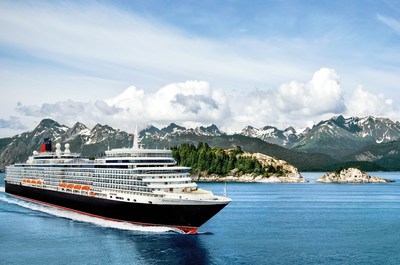
Luxury cruise brand Cunard has announced its partnership with Rocky Mountaineer   to offer passengers unmatched experiences in Alaska. Recently it was announced that the legendary Cunard experience will return to Alaska in 2019, for the first time in over two decades.
The Rocky Mountaineer railroad is the only of its kind to travel its historic routes and is celebrated for the majestic views of mountains and curious wildlife. Since 1990, Rocky Mountaineer has welcomed over 2 million passengers. The supreme experience onboard the all-dome fleet offers opulent, historic storytelling, top-notch cuisine, and a first-hand look at the vast and untouched wild beauty that lies in the Pacific Northwest.
"As we return to Alaska for the first time in twenty years, we are excited to partner with the Rocky Mountaineer, ensuring our passengers enjoy the remarkable scenery and Alaskan wildlife in the utmost of luxury both by land and by sea," said Josh Leibowitz, Senior VP, Cunard North America.
Rocky Mountaineer tours are offered pre- and post-voyage and includes either three or five nights' accommodation and two full days aboard the train. The expedition travels through a spectacular array of scenery with glacier and snow-capped peaks of the Canadian Rockies, through winding river canyons, mountain passes and remarkable tunnels. Highlights include the Continental Divide, Kicking Horse Canyon, Spiral Tunnels and the rushing waters of Hell's Gate in the Fraser Canyon.
More information on Cunard's Alaska voyages can be found here: www.cunard.com/cruise-types/alaska-cruises.
For more information about Cunard, or to book a voyage, contact your Travel Consultant, call Cunard Line at 1-800-728-6273 or visit www.cunard.com.
For travel agents interested in further information, please contact your Business Development Manager, visit OneSource or call Cunard toll free at 1-800-528-6273.
About Rocky Mountaineer
Rocky Mountaineer is the world's largest privately owned luxury tourist train and, since 1990, has welcomed more than two million guests to inhale the mountain air and let nature take their breath away. Guests can choose from four unique rail routes that travel through iconic destinations such as Seattle, WA, Vancouver, B.C., and the majestic Canadian Rockies in Alberta. The unparalleled experience onboard the all domed fleet offers rich, historic storytelling, world-class cuisine, and a first-hand look at the vast, untouched beauty of Western Canada and the Pacific Northwest.  Rocky Mountaineer is considered one of the best ways to see the Rocky Mountains, having received numerous international awards and accolades for service excellence. These honours include eight World Travel Awards for "World's Leading Travel Experience By Train" and "World's Leading Luxury Train," and being listed as one of the world's "Dream Trips" by Travel + Leisure magazine.
Cunard
Cunard is the operator of luxury cruise ships Queen Mary 2®, Queen Victoria® and Queen Elizabeth®. Renowned for impeccable White Star Service, gourmet dining and world-class entertainment, all three Queens offer luxury accommodations in Britannia, Britannia Club, Princess Grill Suite and Queens Grill Suite staterooms. Cunard is the only line to offer regularly scheduled Transatlantic service between New York and London, and it continues to celebrate the freedom of travel on exciting World Voyage and Grand Voyage itineraries that visit Europe, North America, South America, Africa, Asia and Australia.
Awarded '#1 Mega-Ship Ocean Cruise Line' by Travel + Leisure's 2017 and 2016 World's Best Awards and 'Best World Cruise Itineraries' and 'Best Trans-Atlantic Itineraries' by Porthole Cruise Magazine's 2016 Readers Choice Awards, Cunard is a proud member of World's Leading Cruise Lines, a part of Carnival Corporation & plc (NYSE/LSE: CCL; NYSE: CUK), the largest cruise vacation company in the world. Together Cunard, Carnival Cruise Line, Holland America Line, Princess Cruises, Seabourn, AIDA Cruises, Costa Cruises, P&O Cruises (Australia) and P&O Cruises (UK) operate 102 ships visiting over 700 ports around the world and totaling 226,000 lower berths.

Tuesday, November 10, 2015

Celebrate America's National Parks Centennial With A Small Ship Cruise

Small ship cruise expert AdventureSmith Explorations (http://www.adventuresmithexplorations.com/) in the spirit of 2016’s National Park Centennial Celebration offers the most unique way to experience our National Parks: cruise a park.
 
While Alaska has the whale’s share of cruises in National Parks, and thus choices of ship size and amenities, the San Juan Islands and Oregon’s Columbia River are key players as well.
 
ALASKA
Glacier Bay National Park and Preserve covers over three million acres with open ocean and fjord coastlines spanning most of its perimeter. This means that the small vessels that AdventureSmith Explorations employs access many of the coves and landings around hundreds of miles. Examples of itineraries here are three eight-day programs: Exploring Muir’s Wilderness on the 84-guest Safari Endeavor; Northern Passages & Glacier Bay on the 60-guest Wilderness Adventurer, 74-guest Wilderness Explorer or 76-guest Wilderness Discoverer; and Discoverers Glacier Country on the 22-guest Safari Quest, the 36-guest Safari Explorer, the 60-guest Wilderness Adventurer or the 84-guest Safari Endeavour. Itineraries have themed departures the week of Aug. 25, 2016 celebrating the Centennial, with commemoration gifts, guest speakers, evening onboard presentations focused on the history of the National Parks, surprise birthday celebrations and special presentations by Park Rangers on board while in Glacier Bay.
 
For those that want to see as much of Glacier Bay National Park as possible on a cruise, the six-day Glacier Bay Adventure Cruise is the only Inside Passage small ship cruise that spends most of its itinerary inside the park. The itinerary travels from waterfall-laden Geike Inlet to the barren mountain faces of the East and West arms of Glacier Bay National Park, then routes outside the park to Point Adolphus for whale watching. Hundreds of miles of glacial fjords are here for kayaking, hiking and small ship cruising. The base of exploration is the historic 12-passenger small ship M/V Sea Wolf, owned and operated by Alaskans.
 
Kenai Fjords National Park, on the edge of the Kenai Peninsula south of Anchorage, covers an area of nearly 670,000 acres, 51 percent of which is ice. A number of lodge-based itineraries allow guests to spend ample time on the water boating through Kenai Fjords. To access most of these remote lodges, guests embark by boat from Seward on a five-hour wildlife and tidewater glacier journey. Kenai Fjords Backcountry Explorer over seven days reveals by raft and boat and on shore the many of the activities and animals on the Native-owned, 1,700-acre Pedersen Lagoon Wildlife Sanctuary. The eight-day Ultimate Alaska Adventure pairs backcountry adventure and wild Alaska by sea kayaking in Kenai Fjords National Park, a helicopter landing onto a glacial snowpack, a floatplane journey to a remote mountain lake and more.
 
LOWER 48
Olympic National Park, at nearly 1 million acres along Washington’s coast, is famed for its diversity of ecosystems and rich cultural history. Olympic Wilderness & San Juan Islands is an eight-day-expedition along this coastline from the comfort of the 60-guest Wilderness Adventurer or the 76-guest Wilderness Discoverer. Kayaks and paddleboards sail aboard, allowing guests to actively explore the park’s coves and canals.  
 
Lewis & Clark National Historical Park at Fort Clatsop in Astoria, Oregon, is a hub focusing on the lore of early explorers. Two small ship itineraries visiting here herald the legacy of two great western rivers: the Columbia and the Snake. Columbia & Snake Rivers Journey over seven days embraces culture and history with food and wine bounties of the Pacific Northwest. This trip recently acquired Food Alliance affiliation ensuring that local and sustainable are prominent in in every culinary presentation. Guests will be on board either 62-passenger National Geographic Sea Bird or 62-passenger National Geographic Sea Lion. Over eight days on Legacy of Discoveryguests aboard the 88-guest S.S. Legacy that emulates a turn-of-century steamer traverse the nearly 1,000 miles of history on the Columbia River Gorge.
 
ARRIVE BY TRAIN OR PLANE
Some of AdventureSmith Explorations’ itineraries define remote to its core, with guests going beyond the boat, being transported to a National Park by small plane or train. There are fly-to itineraries accessing Katmai National Park including Brown Bears of Katmai, a five-day program recommended as a cruise extension. On Denali Backcountry Explorerguests explore the wilderness from a lodge deep in Denali National Park and Preservewith access that may include a bus or train from Anchorage.
 
Alaska Coast to Denali is a cruise-a-park highlight, visiting two national parks over seven days via boat and train. The itinerary starts with a small boat cruise into a Kenai Fjords National Park lodge, travels overland to Denali National Park and Preserve and then concludes with a scenic train ride on the Alaska Railroad to Anchorage.
 
See this blog post for a comprehensive list of 18 ways to “Cruise a Park”:
http://www.adventuresmithexplorations.com/cruise-a-park-national-centennial-small-ship. Learn more unique ways to travel our National Parks by following AdventureSmith’s #cruiseapark hashtag.
 
For current cruise specials and early-booking offers worldwide see:http://www.adventuresmithexplorations.com/special-offers. For information on all of AdventureSmith’s small ship cruises, itineraries, availability and 2015-2016 reservations, Phone: 800-728-2875 toll-free or visit www.adventuresmithexplorations.com.
 
About AdventureSmith Explorations - Think Outside the Boat!
Founded in 2003, AdventureSmith Explorations is based in Tahoe City, CA, along the northern shore of Lake Tahoe. A recognized leader in small ship cruising, in 2012 owner Todd Smith joined the ranks of Conde Nast Traveler's prestigious Annual Travel Specialists List as the world’s expert on small ship expeditions. 

Friday, July 24, 2015

Top 10 Unusual Places To Go Wine Tasting In The US

Think wine in the US only comes from the west coast? Intrepid and weather-defying vintners are beating the odds and producing wines across this diverse land, from the bucolic shores of Vermont’s Lake Champlain to the volcano-filled Hawaiian islands. Even cactus-country Arizona, home to the Grand Canyon, grows wine-producing vines. Here are ten states deserving your supping scrutiny.

Hawaii

Vineyards with a volcanic view at Maui's Winery. Image courtesy of Maui's WineryVineyards with a volcanic view at Maui's Winery. Image courtesy of Maui's Winery
Wine tasting in a tropical paradise? Aloha to that! The Big Island’s Volcano Winery (volcanowinery.com), sitting on lava-rich land near Volcano National Park, blends traditional grapes with locally grown products, yielding concoctions like Guava Grape and Macadamia Nut Honey Wine. And Maui’s Winery (mauiwine.com) pours tastes of unique creations like Hula O-Maui, a pineapple sparkling wine from Maui-sourced fruit, from a bar made from a single mango tree. Fun fact: Local artists create all their wine-bottle labels.

Montana

Embrace Big Sky Country with a taste or three at the family-run Mission Mountain Winery (missionmountainwinery.com) situated directly on Flathead Lake, the largest natural freshwater lake west of the Mississippi. With a six-month growing season and -20°F (-28°C) winter temperatures, only hardy varietals like Pinot gris and Chardonnay can hack it in this climate; additional grapes come from their Washington vineyards. Try Sundown, a light berry rosé or the non-oaked Laughing Horse Chardonnay. And the Cocoa Vin, a chocolate port, is a must for sweet-tooths.

Vermont

Vermont’s first winery, Shelburne Vineyard (shelburnevineyard.com) sits close to the shores of pristine Lake Champlain 30 minutes south of Burlington. Try the Cayuga, a Chardonnay-Riesling blend or the Vidal Blanc Late Harvest, a balanced dessert wine. Over in Central Vermont, the Neshobe River Winery (neshoberiverwinery.com) offers common varietals like their popular red blend, the Purple Haze, plus a handful of black currant wines, iced cider and mead  a honey wine considered to be the ancestor to all fermented drinks.
Harvesting grapes at Shelburne Vineyard. Image courtesy of Shelburne VineyardHarvesting grapes at Shelburne Vineyard. Image courtesy of Shelburne Vineyard

Texas

Texan wine rarely makes it outside the state. Why? Texans are a proud lot and they consume most of it. Pull up to ranches that double as wineries and the guy pouring will likely sport a cowboy hat and Texan boots. Wines here are big and bold, just like the state. And while many wineries source grapes from afar, Perisso Vineyards (perissosvineyards.com) in the Texas Hill country uses only 100% Texan grapes.  Taste their Malbec while perched at a picnic table in view of the local castle.

Alaska

Sample berry-infused wines like Shirazberry (Shiraz grapes with raspberry) at Bear Creek Winery (bearcreekwinery.com) while taking in the view of Kachemak Bay. Don’t want to leave? The winery also boasts luxury lodging; guests can also access an on-site cedar hot tub (while drinking their wine, of course).  Alternatively, try small batch wines made from Alaskan berries and wildflowers at Alaskan Wilderness Wines (alaskawildwine.com). We’re intrigued by their Salmonberry wine, a blend of cinnamon, clove, vanilla and wild Salmonberry, a native Alaskan berry resembling raspberries, but bigger and milder.
Sip with a view of Kachemak Bay, Alaska. Image by Brian / CC BY 2.0Sip on the banks of Kachemak Bay, Alaska. Image by Brian CC BY 2.0

Kansas

Grace Hill Winery (gracehillwinery.com) is another place eschewing traditional wine names: try their dry Beach Day rosé or Leaning Shed red while relaxing on the wide patio overlooking the vines. Meanwhile, the newest Kansas kid on the block, Crooked Post Winery (crookedpostwinery.com), opened in 2014 and offers a small selection of varietals, including a spicy Valvin muscat and a semi-sweet Traminette. During harvest season (August through September), both wineries welcome volunteers to join the fun and help pick grapes (registration required, check their respective websites for schedules).

Florida

The Sunshine State goes beyond oranges and palm trees at San Sebastian Winery (sansebastianwinery.com), which offers tastes in their historic East Coast railway building in historic St Augustine. Note: you’ll probably want to linger with a bottle at their on-site wine bar and jazz club, The Cellar Upstairs. Or try Dakotah Winery’s (dakotahwinery.com) bestselling favorite, the semi-sweet red Noble, before checking out their Zen-like koi carp pond and the resident wood ducks.

Arizona

Arizona wines pack a punch because they work hard to grow in this drier-than-dry desert climate. The Village of Elgin Winery (elginwines.com) still stomps grapes by foot, and wines boast playful names like Tombstone Showdown, a dry white with Sauvignon blanc and Colombard grapes. Located half an hour from Tuscon, the Charron Vineyards (charronvineyards.com) sit 4200ft above sea level at the edge of the Santa Rita Mountains. They say their Rincon Red, a blend of Merlot and Chancellor grapes, goes well with anything from barbeque to chocolate cake. The only way to decide if you agree is to taste, taste, taste... we know, it’s a tough life.
Vineyards in the foothills of the Santa Rita Mountains, Arizona. Image courtesy of Charron Vineyards. Vineyards in the foothills of the Santa Rita Mountains, Arizona. Image courtesy of Charron Vineyards

Nevada

Nevada’s oldest winery, Pahrump Valley Winery (pahrumpwinery.com), beat the odds and produces sensational wines right in the middle of the Mojave Desert. Visiting in October? Don’t miss their annual grape stomp (register online to secure a spot as a stomper, it’s a guaranteed laugh). Or grab dinner at the on-site restaurant, Symphony, named after their award-winning white. Oh, and it’s only an hour away from the Vegas strip.

Kentucky

Equus Run Vineyards (equusrunvineyards.com) pours its wines in a former farm tool shed, rebuilt with stone producing today’s rustic tasting room. Even the vineyards had previous lives as cattle and tobacco fields, and all of it lies in the middle of Kentucky’s bluegrass region surrounded by horse farms. Local musicians perform summer concerts in their outdoor stone amphitheater and the grounds are a joy to roam  check out their life-sized horse sculptures dotted about.
  

Read more: http://www.lonelyplanet.com/usa/travel-tips-and-articles/top-10-unusual-places-to-go-wine-tasting-in-the-us#ixzz3gqakoi7C