American Airlines, brings the Czech Republic and the USA one step closer today, by launching direct service between Václav Havel Airport Prague (PRG) and Philadelphia International Airport (PHL). Flights are operated using Boeing 767-300 aircraft, providing more than 2,800 seats per week between the two cities, every day throughout the summer season.
Onboard, the Business Class cabin offers 28 fully lie-flat, aisle accessible seats arranged in a one-two-one configuration, plus personal Samsung Galaxy tablets loaded with the latest movie releases, hit TV programs, games, music and best-selling book excerpts. Flagship Business Class customers can also enjoy American’s enhanced international premium cabin menus, designed by renowned celebrity chefs. The Main Cabin features 21 ‘Main Cabin Extra’ seats, offering up to 7” of extra leg room. International Wi-Fi is also available for every customer on board.
American is the first airline to connect the Czech Republic and the state of Pennsylvania with a direct flight. From PHL, American’s largest hub in the Northeast, customers can connect onto nearly 120 destinations across North and Central America and the Caribbean. Connections from PHL with American include Los Angeles, Miami, San Francisco, Chicago, Las Vegas, Orlando, Cancun and the Bahamas. With short taxi times, enhanced connection facilities and four ‘Admirals Club’ Business Class lounges spread throughout the airport, PHL is well suited for easy and efficient connections.
“Prague is a vibrant new addition to American’s international network and we are pleased to offer Czech travelers more choice and more connections for transatlantic travel,” said Richard Muise, Director for Europe & Canada operations. “If Philadelphia is their final destination, Czechs will be able to explore all of the history, shopping and culture the “City of Brotherly Love” has to offer.”
Schedule: PRG-PHL PHL-PRG
Arrives at PHL at 3:10 pm Arrives at PRG at 9:05 am (next day)
“I am very pleased that today and for the very first time we welcome American Airlines at Václav Havel Airport Prague, at the opening ceremony of a regular service between Prague and Philadelphia. This step brings us again closer to meeting our strategy of extending our flight offer to North America, as one of our priorities in the route development. There is long-term interest in travelling to the United States, and a major transport hub like Philadelphia will offer our passengers not only a quick connection to this interesting historic city but also a comfortable transfer to other destinations across the USA or Canada. Already today, American Airlines will offer our passengers around 65 connecting flights with a fast transfer within 5 hours of arrival,” said Václav Řehoř, Chairman of the Board of Directors of the Prague Airport, adding: “We will do our best to make American Airlines’ route successful in Prague and make sure that the service can be extended from a seasonal connection at least by the following months until the end of the calendar year.”
American is in the midst of more than $3 billion in planned improvements to give customers a superior travel experience around the world. These investments include fully lie-flat seats; international Wi-Fi; more in-flight entertainment options and power outlets; a new, modern design for lounges worldwide including in PHL; and an upgraded assortment of complimentary healthy food, cocktails and more.
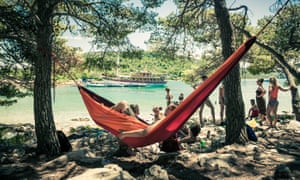
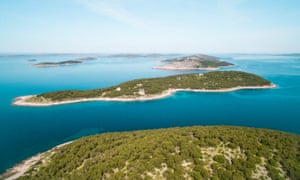
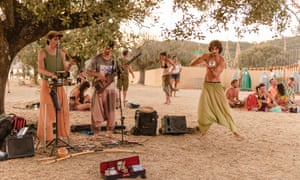
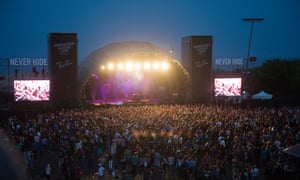
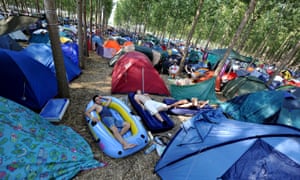
Stop, hammock time … the Garden Resort in Tisno, Croatia, hosts the Love International festival.
Photograph: Tim Ertl
When it comes to cool sounds in the summer sunshine, continental Europe
is your playground. We pick the best (mostly) affordable parties from
Iceland’s Secret Solstice to Croatia’s Love International
Love International, Croatia
As the Croatian festival scene bidding farewell last summer to its
founding father, the Garden Festival, which bowed out after 10 years of
magic, it now falls to Love International to carry the torch. Run by the
team behind Bristol’s Love Saves the Day
(with the Garden’s Nick Colgan also involved), the festival takes place
at the Garden Resort in Tisno, in a natural amphitheatre with a private
bay for cooling dips. It also features the kind of line-up to generate
heart-throbbing party moments, with some of the most discerning house
and disco selectors around: Prosumer, Bicep, Horse Meat Disco … Just
thinking about it is making us want to shoot confetti in the air and
spill our drink hugging a stranger. • 29 June-6 July, full week pass £120, loveinternationalfestival.com
Photograph: Ross Silcocks
Maxing out on Iceland’s out-of-this world landscape, midnight-sun
fest Secret Solstice has announced the world’s first live performance
from inside a volcano as a side-event for this years’ festival weekend.
OK, at £1,380 a ticket and with only 20 available, the volcano gig
sounds like a ridiculously overpriced novelty. More affordable (though
still not cheap at £80-£200) are a series of DJ shows in a glacier and a
thermal pool . But the main festival itself is a lot of fun, with a
line-up headlined by Radiohead (they’re back!) and freaky-as-you-like-it
Die Antwoord. Now in its third year, the festival is a great
opportunity to visit to Reykajavik – where it’s located - and the rest
of the country. •16-19 June, weekend pass £144, secretsolstice.is
Photograph: David Zuber
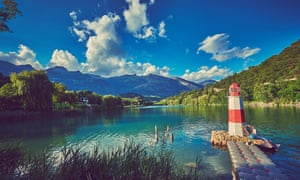
Celebrating its 10th anniversary, Edge of the Lake (Week-end au Bord
l’Eau) remains an incredibly chilled-out proposition. Taking place on a
beach on the Lac de Géronde, east of Sion and surrounded by hills and
vineyards, it’s as much about hanging out and enjoying the setting as it
is about the music. Though the line-up doesn’t compete with the bigger
festivals, you’ll still find the likes of Lindstrom, Deetron and Ninja
Tune DJs on the bill. At just £60 for the weekend, including camping,
it’s one of the most affordable festivals around. •1-3 July, weekend pass €40, with camping €72, aubordeleau.ch
Photograph: Nicole Zaddach
We had our eye on this low-key festival when it launched last year:
it’s a tranquil village fête-style affair in the leafy north German
countryside, not far from Hamburg. This year’s line-up shows that the
organisers have ramped things up a bit: Sigur Rós, Garbage, Fat Freddy’s
Drop and José Gonzalez are among the acts on a bill that leans towards
dreamy, psychedelic, folksy acts. Billy Bragg, of course, will be in
attendance. The festival – essentially a big family-friendly chill-out
session – has a big performing arts contingent, too: dance, theatre and
spoken word, as well as workshops from acro yoga and Japanese tea
tasting to finger knitting and didgeridoo. Alles klar, dude, alles klar. • 10-15 August, four-day pass with camping €169, asummerstale.de
While the attraction of Croatian music festivals has always been a
fusion of some kind of party + beach-chill holiday, it was probably only
a matter of time before someone decided to up the “chill” element.
Enter Obonjan. Co-founded by Dan Blackledge, who was behind Hideout and
Unkown, this new event is part festival, part resort, with a two-month
long programme of music, arts and workshops on a long-abandoned island
in the Adriatic. Music headliners include Roy Ayers, DJ Shadow, Dilated
Peoples and Matthew Herbert. It’s open from July-September and visitors
can just explore the events around the island at their leisure. It’s
like a pick-your-own adventure, but the adventures are always relaxing. •18 July-10 September, from €73pp pn, including accommodation in tents or lodges and entertainment, otokobonjan.com
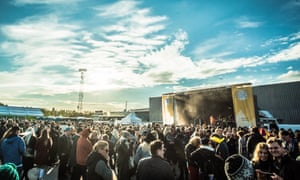
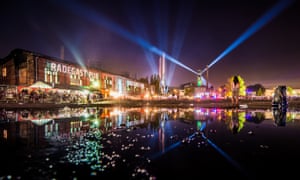
There’s nowhere like eastern Europe for partying in dramatic industrial ruins. There’s Tauron Nowa Muzyka in an old Polish coal mine, while in Germany – not far from Leipzig in the former GDR – Melt!
is held in a huge open-air museum dominated by gigantic industrial
machines. Let’s be honest, it goes pretty damn well with techno. Colours
of Ostrava is run on similar (production) lines, transforming the Dolní
Vítkovice ironworks into a spectacular festival venue. The line-up has
broad appeal but focuses on artists with discerning sounds. Congolese
electronic rhythm-makers Mbongwana Star are on the bill, as is LA punk
band’s Bronx’s Mexicana’s side project, Mariachi el Bronx. Between
performances, play among the heavy machinery (showing due care,
naturally), and there’s also a climbing wall, bike rental, bars and
cafes. The festival also deserves credit for the support it offers to
disabled visitors to make sure everyone can enjoy the festival to the
max. •14-17 July, four-day ticket €84, weekend camping €10, colours.cz
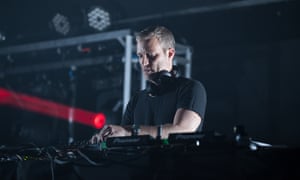
Techno DJ Ben Klock will be performing at this year’s Weather Festival. Photograph: Robbie Golec
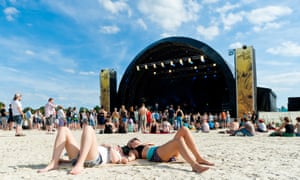
When it comes to Europe’s city-based electronic festivals,
Barcelona’s Sonar usually gets most of the attention. But over the past
four years Weather has been building its profile and attracting the
biggest names in techno and house, while also injecting new energy into
Paris’s club scene. Taking place at Le Bourget airport, in the
north-east of the city, it will welcome campers for the first time this
year, which will no doubt foster a stronger sense of community among the
crowd. As for the line-up, expect the best of Berlin techno (Marcel
Dettmann, Dixon, Ben Klock, Len Faki); underground party starters Motor
City Drum Ensemble and The Black Madonna; and a whole lot more DJs who
know exactly what they’re doing. It’s run by the team behind Paris venue
Concrete, so it’s no surprise the curation of artists is so good. •3-5 June, three-day ticket €84, weatherfestival.fr
Photograph: Alamy
From psychedelic trance implosion to Europe’s leading alt-eco
gathering, Boom festival brings a touch of the Burning Man spirit to
Europe. Taking place every two years, Boom creates a spiritual, shamanic
community that fosters unity and respect. There’s also a lot of people
on acid, and the physical environment is very much geared up for a
tripped-out mindset: expect warped art, visually stimulating
installations and all kinds of creations to play around with/think very,
very deeply about. The programme goes way beyond trance (and music, for
that matter); the talks, yoga classes and healing workshops are as much
a part of Boom as the dancing with thousands of beautiful people
dressed as mythical creatures. •11-18 August, €180, boomfestival.org
Photograph: Jordi Vidal/Redferns via Getty Images
While Sonar has, over 22 years, built a vast international reputation
for pulling together the best of the world’s electronic music,
Barcelona’s other major festival, Primavera Sound, has been rapidly
growing as a broad-spectrum festival with an enviable programme of
international acts. In 15 years it has gone from a two-day event
attended by 8,000 to a five-day party for 190,000. In many ways it has
followed a similar expansion to Sonar, launching a smaller off-shoot – NOS Primavera Sound in Porto – as well as a programme of meetings, workshops and conferences in the form of PrimaveraPro.
This year’s headliners are Radiohead, LCD Soundsystem and PJ Harvey,
and the bill ranges from garage rockers Parquet Courts to Balkan brass
folksters Beirut. All this is backed by a solid list of electronic acts
and DJs from Hudson Mohawke, Floating Points and Optimo. •1-5 June, week ticket €195, day tickets €80, primaverasound.es
Photograph: Andrej Isakovic/AFP/Getty Images
Formed by Serbia’s student movement as the country moved into the
post-Milošević era, Exit has grown into an astonishing international
event that transforms Novi Sad’s Petrovaradin Fortress into a party site
for 200,000 people. The award-winning festival, which retains a social
mission to support young people in the Balkans, has dozens of stages and
sound systems around the castle site. This year’s line-up has acts from
Ellie Goulding to Stormzy, Bastille to Wiz Khalifa – and be sure to get
sucked into the notorious dance arena, too. Be prepared to party hard
in the Balkan sun and – trust us – remember to pack sunscreen. •7-10 July, four-day pass from £79, camping pass £25, exitfest.org
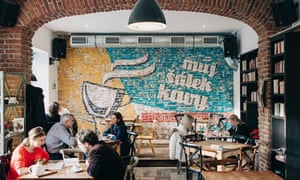
Fresh start: Muj šálek kávy, a speciality coffee shop in Karlín. Photograph: Ondrej Horak
With Old Prague now tourist central, David Farley follows local artists and hipsters to the Czech capital’s newly transformed outer neighbourhoods
The barista with the Salvador Dalí moustache refused to bring milk for my coffee. “Trust me,” he said, adjusting his man-bun. “It’s much better this way.” The snobbery didn’t surprise me. What did was that it happened in Prague, a place where, until the end of the last decade, coffee was little more than sludge. Even more shocking was that this was the Karlín district, a once-crime-ridden part of town closest to the Križíkova metro station that, until recently, offered little reason to visit. I was at Muj šálek kávy, one of a handful of speciality coffee spots sprinkled throughout the city. But a lot more than coffee culture has changed in the Czech capital.
When I lived in the Czech capital for three years in the mid-1990s, I spent my nights in the central Old Town and Malá Strana districts, where all the best places to eat, drink and shop existed. Now the centre of Prague, while still one of the most beautiful cities in the world, has given way to the march of mass tourism, and its denizens have retreated to the outer neighbourhoods. And although it’s hard for anywhere else in the city to compete with the aesthetics of Charles Bridge, Prague Castle and Old Town Square, I yearned for the other Prague, the one where locals – hipsters, scenesters and even coffee snobs – hung out.
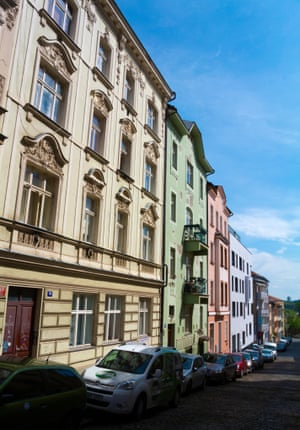
‘Crammed with Art Nouveau and neo-classical buildings, some in need of love more than others’: the colourful Vršovice neighbourhood. Photograph: Alamy
I began my search in Vršovice (pronounced Vir-sho-veetz-say), a neighbourhood that is a 15-minute tram ride from the centre of town. I lived here for about two years and, at the time, found little to entice me, save the bed I passed out in after a long day at work. At first sight, it looks no different from before. Set on a downward slope, Vršovice is crammed with Art Nouveau and neo-classical buildings, some in need of love more than others. The cobblestones are uneven. Many of the streets have an intriguing curve to them. And then you see a shaggy-haired 25-year-old guy in skinny jeans come around the corner and enter what appears to be a vegan restaurant called Plevel. Later, you walk into a café and hear indie bands seeping from the speakers.
My home on this visit was the Czech Inn, a quasi-industrial hotel that towers at the top of Krymská Street, maybe the hippest lane in the city. I met up with Ondrej Kobza, the owner of Café V Lese, the place that got Vršovice’s metamorphosis going. “After I opened Café V Lese five years ago,” said Kobza, who appears to be the unofficial mayor of the town, “I recruited my friends to open up places in the neighbourhood. Soon enough Plevel opened, then Družina, a creative arts studio moved in. That attracted a lot of artists. And it just kept going.”
Kobza always had his sights on more than just cafés. A couple of years ago they shut down the street to traffic and had a day-long party. He put a piano out for anyone to play. Now Kobza has placed pianos all around the city. His next project is public chess tables. “We have to reimagine the city to our liking and that’s what I’m trying to do.”
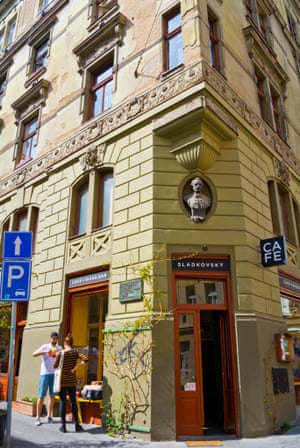
‘Wes Anderson chic’: Sladkovsky bar and cafe, which does a mean goulash. Photograph: Alamy
Later that night I popped into Café Sladkovsky – a pub/café bedecked in old photographs and kitsch wallpaper that could be described as Wes Anderson chic – and ordered goulash. This was a slightly different take on the traditional Czech dish, with boar instead of beef, and a potato pancake in place of the usual dumplings. It was a delicious twist on the original.
The next day, I walked across the Vinohrady and Žižkov neighbourhoods, a pleasant 25-minute stroll, to get to Karlín. Many of my Czech friends in their 30s and 40s had told me they had been hanging out here a lot lately. And so I came to Muj šálek kávy, the coffee spot that frowns upon the marriage of milk and coffee, to meet up with Jan Valenta and Zuzi Danková. They run Taste of Prague, a popular food-themed walking tour.
“The first time I noticed something going on in this neighbourhood was five years ago when this café opened up,” said Jan. But Zuzi pointed out that the area’s regeneration really goes back to the 2002 when the nearby Vltava river flooded, taking out centuries-old buildings and leaving the place practically abandoned. “That made property values very affordable and quickly there were a lot of new investments along the river.”
The office buildings make Karlín feel like an adult version of Vršovice: during the day, upwardly mobile office workers flood the area’s cafés and restaurants. At Garage, a diminutive eatery, I dined on the Canadian snack poutine (French fries smothered in gravy). The owner told me this used to be a rough neighbourhood, “but the floods washed away everything, even the bad parts.”
The liveliest place in the neighbourhood, Lokál, a gastropub, was packed every night; Veltlin, a bar that only serves wine made from within the old border of the Austro-Hungarian Empire, was similarly crowded. But you sensed a difference in the clientele: while the younger locals might gravitate to Vršovice, if you’re over 30, Karlín could be more your style. It certainly was for me – at least, once I’d learned to stop taking milk in my coffee.
Essentials
Flights from London Heathrow to Prague with British Airways (britishairways.com) start from £50 each way. At Czech Inn, dormitory beds start from £4, rooms with a shared bathroom start at £32, and rooms with a private bathroom start at £35 (czech-inn.com)