Showing posts with label Croatia. Show all posts

Friday, July 7, 2023

Major European City Bans Rolling Suitcases

Under a new law suitcases must be carried and not dragged through the streets of the old town in Dubrovnik in Croatia, with anyone caught rolling their luggage facing a fine of £230 ($252).

The Croatian city sees a huge influx of visitors each year, which is great for the hospitality industry there, but not so fantastic for those wound up by the sound of miniature wheels rumbling across cobbles.

The anti-bag legislation is due to get even more severe in November, when all suitcases and bags will have to be left at the walls of the old town before visitors can enter.

Those laden with things who wish to enter the section of Dubrovnik will have to pay a courier to have their bags delivered to their accommodation by electric vehicle.

The laws have been passed by Dubrovnik mayor Mato Franković, who is attempting to lessen the impact of over tourism on the town.

Each year 1.5million people visit the city, which is almost 40 times the 41,000 people who live there full time.

Another additional noise-reducing measure just introduced will see cafes and bars with terraces where the noise level exceeds 55 decibels face fines and be forced to close for seven-day.

A video urging tourists to “respect the city,” will be shown on cruise ships docking at Dubrovnik and on Croatian Airline flights arriving in the country, Lonely Planet reports.

Walking around shirtless, riding bikes or e-scooters in the city centre, and climbing on statues are all behaviours that will be discouraged in the public announcement.

The city is currently trying to keep its world-heritage status six years after UNESCO warned disrespectful hordes were ruining the city.

In a bid to make Dubrovnik more sustainable, the number of tour buses and cruise ships docking in the port have been limited.

Despite this, the reputation of the city has only grown, capturing large numbers of the post-coronavirus-lockdown crowd looking to visit new place now that travel restrictions have been lifted.

Mayor Franković, who is trying to get the still rising tourist numbers to fall, said: “The most important thing is that Dubrovnik has stopped being a city of excessive tourism, although we still have a lot of work left.”

This UNESCO World Heritage site is one of the city's biggest highlights thanks to its eye-catching architecture, picturesque cobbled streets and beautiful Baroque churches.

If you are one of the 1.5million who make it there annually, a walking tour can be a great way of seeing the highlights.

Surrounding the Old Town are impressive walls which make for a scenic stroll as you can enjoy some great views of Dubrovnik and the ocean. The 1940 meters long-walls boast six fortresses.

Rector's Palace is one not to be missed off the itinerary with its intricate Gothic architecture, heaps of fascinating exhibits and plenty of artwork. If you're short on time it is possible to explore it under an hour or so, so if you are nearby it's still worth popping in.

If you're planning to spend a few days in the city it's worth leaving space on the itinerary for a trip to Banje Beach.

Here you'll find everything from high end bars and beach clubs to families tucking into picnics on towels along the shore.

The beach can get quite busy during peak seasons but it offers some pretty views of Dubrovnik, not to mention there are heaps of boat tours you can take to visit the islands.

Source: https://www.mirror.co.uk/

Sunday, July 31, 2022

Croatia Opens Adriatic Coast Bridge, Linking Divided Region

Croatia has opened a long-awaited bridge connecting two parts of the country’s Adriatic Sea coastline while bypassing a small sliver of Bosnia’s territory.

Top officials and guests gathered in the evening for a formal opening ceremony that included a flyover by military jets, speeches, performances and fireworks.

Earlier Tuesday, many Croats braved summer heat to be among the first to cross the Peljesac bridge on foot as it opened for pedestrians ahead of the official inauguration.

Co-funded by the European Union and built by a Chinese company, the elegant, cable-stayed bridge with six pylons is a rare venture of its kind amid concerns in Europe over China’s bid to boost its economic influence through investment in infrastructure.

In a video message aired at the opening ceremony, Chinese Prime Minister Li Keqiang said the bridge “illustrates friendly relations” between his country and Croatia, but also between China and the EU.

“China and the EU present important political forces and leading global economic powers,” said Li.

The 2.4-kilometer (1.5-mile) bridge spans the Adriatic Sea to link Croatia’s mainland to the Peljesac peninsula in the south, allowing easier access to the country’s most important tourism destination — the medieval walled city of Dubrovnik.

Croatian Prime Minister Andrej Plenkovic described the day as historic for the country, which joined the EU in 2013 after splitting from the former Yugoslavia and going through a war in the 1990s.

“I am overwhelmed by the feelings of pride, joy and gratitude,” said Plenkovic.

The Yugoslav federation had no internal borders between its six republics, including Croatia and Bosnia. But when it broke up in the early 1990s, the two parts of Croatia’s Adriatic Sea coastline were split by a narrow strip of Bosnia.

Both residents and tourists had to pass border checks, which slowed down traffic and left the inhabitants of the southern area feeling isolated from the rest of the country.

That area includes Dubrovnik, a stunning medieval town that has been on UNESCO’s protected heritage list and is Croatia’s biggest tourist attraction.

The bridge finally became a reality in 2017 when the EU allocated 357 million euros ($365m), which covered much of the 526 million-euro ($533) cost. The China Road and Bridge Corporation in 2018 won an international tender to construct the bridge.

The project, however, had faced criticism from Bosnia, whose officials complained of unresolved border issues and said the bridge would hamper access to its part of the coastline.

Known for its stunning nature and hundreds of Adriatic Sea islands, Croatia is a major tourism destination, attracting millions from Europe and all over the world every summer. Tourism also is key for Croatia’s economy, which remains among the weakest in the EU.

By DARKO BANDIC

Tuesday, October 29, 2019

10 Most Romantic Places To Live Overseas

Image result for mike cobb live and invest overseas


By Kathleen Peddicord

We here at Live and Invest Overseas are wild romantics. Here, therefore, are the 10 most romantic places to live or retire overseas. Visit one of these beautiful, historic, charming, colorful spots, and your heart will sing, your imagination soar…

Paris, France
It's no contest. Be you a holiday-goer or a retiree, if you’re looking for a romantic destination and you enjoy the distractions of city life, Paris should be at the top of your list.

Trying to make a case for why Paris is romantic seems silly—like trying to explain why an ocean view from your bedroom window might be a nice thing to have. Picnics in the Luxembourg Gardens, long walks along the banks of the Seine, and afternoons lost among the cobblestones of the Latin Quarter… these are among the most romantic pastimes this world of ours has to offer.
In addition, the retiree in Paris has access to the world’s best museums, galleries, cafes, restaurants, shopping, food, wine, parks, and gardens. Life doesn't get better than life in Paris.

Mendoza, Argentina
Mendoza is wine country, and where vines grow, the living generally qualifies as romantic. Argentines enjoy great food, good vino, and interesting conversation, and here, in the interior of this country, these things are the priorities of life. 

A friend, Michael, who retired to the Mendoza region of Argentina recently, gushes in his reports of his new life. “My garden is bursting at the seams,” he writes, “though I don’t look after it. My gardener does. Honestly, it’s a feast for the eyes, and the luscious grapes that hang from the vines around me are going to produce wine with my name on it.”

This region is a great choice for the active retiree who isn’t ready to sit back rocking on his front porch. There’s skiing, hiking, climbing, bird-watching, white-water rafting, kayaking, kite-surfing, and great golfing. Come evening, you could tango the night away (talk about romantic) at one of Mendoza’s many entertainment venues or relax at the spas of Pismanta. 

Medellin, Colombia
The European undertones in Medellin are strong, from the way the women dress to the way people greet you in passing on the street. This is South America, not Central America, and the differences between the two regions can be striking. 

Medellin is a green city, with trees, plants, and small gardens everywhere. It’s architecturally consistent and pleasing. Most every building is constructed of red brick and topped with red clay roof tiles. The overall effect is delightful.

Medellin is a literary and an artistic center with an annual poetry festival, an international jazz festival, an international tango festival, an annual book fair, and, back in 1971, Colombia’s answer to Woodstock, the Festival de Ancon.

Medellin has been named “world’s most innovative city” and is finally beginning to shed its bad-boy image from Escobar days and to become appreciated for the romantic locale that it is. With its good wines, great coffee, outdoor cafes, and open-air music venues, Medellin is an easy place to get swept away.

Istria, Croatia
The cobalt blue of the Adriatic Sea off Istria’s coast is almost otherworldly. This is a sailor’s paradise, and all up and down this coast you see flotillas of white yachts offshore from ancient towns hidden behind thick walls. This is a fairy-tale land of fortresses and bell towers that so attracted and impressed the Romans that they invested in some of their best building here, including a large and largely intact coliseum at Pula where lions and Christians once entertained.
Later, this region was ruled by the Venetians, who also left an architectural legacy. In Istria, both nature and man have worked together over many centuries to create something very special, almost magical. In fact, the ancient Romans named it Tierra Magica.

The hinterland is a beguiling patchwork of meadows, vineyards, and olive groves, plus carefully tended gardens where trees hang heavy with ripening cherries, figs, and walnuts. This fertile land also grows wild asparagus and truffles, for which it is becoming famous. High in the hills, behind more medieval walls, are yet more toy-town settlements of fountains, chestnut trees, and frescoed churches. 
Frankly, I defy you not to fall in love with Istria.

Abruzzo, Italy 
It’s hard to think of a lovelier corner of Italy. The beaches are golden, and the sea rolls out like a giant bolt of turquoise silk. Eagles swoop down from craggy eyries, wild peonies and gentians color the alpine meadows. 

Stitching together seascapes with lush mountain valleys, this region is one of Italy's secret treasures, and you'll love it. No over-crowding, no heavy industry. Hiding away down its curvy roads are castles, vineyards, and villages made of stone and memory. Life in the Abruzzo hasn't changed that much over the years, and it's like wandering into a gentler, kinder yesterday. 
Old ladies in pinafores bring their chairs outside and sit in gossipy groups, stringing onions into plaits. Instead of playing computer games, young boys are outside playing soccer. Families shop at open-air markets, not hypermarkets—and, if they don't produce their own wine, they buy it from local vineyards.

Lake Atitlan, Guatemala
The caldera created by a massive volcanic explosion, one of the strongest explosions in earth's history, formed the basin for what is today arguably the most picturesque lake in the world: Lake Atitlán in Guatemala. Aldous Huxley famously described this lake as, “really, too much of a good thing.” It’s beautiful by day, stunning at sunrise and sunset, and offers a near-perfect, refreshing climate.
A community has developed on the shores of this lovely lake, providing an irresistible opportunity for the retiree looking for peace, quiet, and abundant outdoors adventures on his doorstep. 

Christchurch, New Zealand
New Zealand is one of the world’s premier outdoor playgrounds, being clean and green, with top-notch skiing, hiking, surfing, and fishing. The country is sometimes called the Ireland of the South; the landscapes are similar, as are the people. New Zealand’s climate, though, is better.
Thanks to its showcase botanic gardens, public parks, and nature reserves to community vegetable plots, school planting projects, and well-kept private grounds, Christchurch deserves its moniker “City Within A Garden.” 

All the green space provides a lovely backdrop for the city’s many festivals and public entertainment offerings and tempts residents to get out and about, enjoying all that this one-of-a-kind minor metropolis has to offer.

Cuenca, Ecuador
Cuenca is a UNESCO World Heritage Site and a former Inca capital that retains its Andean-indigenous influence. With its wealth of colonial homes with interior courtyards, thick adobe walls, and iron-railed terraces looking down on to the street, punctuated regularly by plazas and squares, this is a city made for walking. Folks come from all over the world to enjoy these 250 square blocks of history, to study in Cuenca’s world-class language schools, and to experience a rare glimpse of unadulterated life in an Andean colonial city.

Cuenca’s Spanish colonial environment is one of the most genuine in Latin America. Locals wear traditional dress, and colorful indigenous markets dot the city. Afterhours in Cuenca, you’ve got music, theater, dance clubs, shows, and a professional symphony orchestra that is free to all. Perhaps best is the never-ending stream of local festivals, each with its fireworks, parades, food, and drink, every one a chance to join thousands of people on the streets having a great time. 

Antigua, Guatemala
Horse-drawn carriages wait by the plaza, and shoeshine vendors circulate with their little black wooden boxes. Mayan ladies bearing jade necklaces and fabric shawls of vivid colors wander through the park. The benches around the central fountain are fully occupied by young couples in love. The fountain continually splashes water from the breasts of the four young women carved in stone, with four smaller outlying fountains adding to the delightful picture.

This is downtown Antigua. Originally, the square was barren and treeless, the official site of hangings, floggings, and other punishments meted out by the Spanish conquerors and their church brethren for whatever transgression was deemed worthy of the lash. Today the park is tree-filled and alive with the singing of birds and the clip-clop of the horses making their way around the cobblestoned streets.
There are moments in this city of pastel stucco exteriors, clay-tiled roofs, and cobblestones, when the light is just right, that are reminiscent of Santorini. Purple and red bougainvillea branches overhang walls on every street. Markets overflow with bright Mayan weavings.

Antigua has a small-town feel, where everyone knows everyone else and exchanges a “buenos dias” in passing. The pace of life is slow. Take a deep breath and savor the day.

Cayo, Belize
Fields and pastures, trees and jungle, rivers and livestock. Here and there a small house of concrete block or timber, in the distance the outline of the Maya Mountains. This is the region of Belize known as Cayo. You reach Cayo via one of this country’s three highways, the one headed west.
The land in Cayo is fertile. Farmers grow corn and sugarcane, watermelons and citrus. You see Mennonites driving horse-drawn carts and children walking home from school. Everyone going about his or her business, not much bothered by government shutdowns or the mounting deficit. 
Here, in this land of escape, where life is simple, those things don’t seem to matter or even to register. Life here revolves around the land and values independence above all else.
To be truly independent in today’s world, you need to be energy-independent. That’s a big part of what Cayo offers—a chance to take yourself off the grid. This doesn’t have to mean living a backward or burdened existence. 

Thanks to 21st-century technology, the self-sufficient life, including in Cayo, can also be comfortable, even fully appointed. This is a place for like-minded folks to be “independent together,” with some of Mother Nature’s finest work as the backdrop.

Author Kathleen Peddicord is Editor and Publisher of Live and Invest Overseas. She has covered the international beat for more than 30 years and is one of the world’s foremost authorities on overseas living and retirement. She has traveled to more than 75 countries, invested in real estate in 21, established businesses in 7, renovated historic properties in 6, and raised her children in 4. More info at liveandinvestoverseas.com.

Monday, August 29, 2016

Bay Of Pigging Out – Town-Hopping In Croatia’s Kvarner Gulf


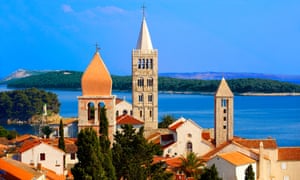
View from St John Church tower over the medieval roof tops of Rab.
Bells and whistles … view from St John Church tower over Rab’s main town. Photograph: Alamy

Touring four towns on three islands, Kevin Rushby enjoys fennel liqueur, sheep’s cheese and seafood, while teenage Maddy prefers a papal cake sugar hit 

Opposite a vast painting of the Last Supper in 13th-century Saint Francis of Assisi monastery in Cres town is a small alcove. Smiley father Zdrak, whose benign presence is like a tonic, leads us there. And in the alcove is another kind of tonic. No, not the half-empty orange Fanta bottle, but a glass urn of greenish liqueur from which the father pours with some glee. “It’s calledkoromac,” he says, “We make it using fennel from our garden.”
It is delicious. We repeat the tasting. My daughter Maddy (13) turns down the koromac and gazes longingly at the Fanta, but it is not offered. It is 9am and Maddy, my partner Sophie and I are just beginning our exploration of the island cities of the Kvarner gulf, the broad bay of Adriatic sea that snuggles up under Croatia’s Istrian chin.
Cres Town is an easygoing place, little frequented by tourists and pleasant to stroll around, even in August. (The pronunciation of the island’s name is subtle and sibilant and not at all like cress, stress or tress, but somewhere between the three. A glass of koromac is probably required for precision.) We buy olive oil from the co-operative and admire the work of Mate Solis, a local artist and character now in his 80s who still finds inspiration in Cres’s pretty boat-filled harbour.
Early morning in Krk town with the day’s first bread delivery.
Pinterest
 Early morning in Krk town with the day’s first bread delivery. Photograph: Kevin Rushby
Next day we take a short ferry ride to Krk, which is a big change after the depopulated harshness of Cres. Krk is verdant and well-inhabited: its main town, also Krk, is busier than Cres but with similar cool stone lanes. A walk through its crowded streets can be slow, but why hurry? There are so many strange highlights: the temple of Venus that is now a beachwear shop, the restaurant (Konoba Maritim) that serves us tangy sheep’s cheese with octopus and squid (Maddy looks wistfully at other diners’ spaghetti), and a little doorway in the city wall that leads to one of the world’s most astonishing cafes: Volsonis.
Volsonis cafe in Krk town, built in Roman walls.
Pinterest
 Volsonis cafe in Krk town, built in Roman walls. Photograph: Kevin Rushby
The building was bought in 1999 by Maria Elena and Goran Stanic, who set about converting it to a cafe, but discovered a Roman wall, and then a tomb under the floor. In some countries that might have ended any hopes of a cafe, but in Krk things are different: they simply integrated a cafe, nightclub and gallery into the structure of an ancient building. The result is startling and original – and they do good coffee.
We take a day trip to Vrbnik, in Krk’s wine region. This handsome hilltop seaside town sees no need to lure tourists: there are few hotels or cafes, and lots of ungentrified winding lanes, including one, Klancic, that is so narrow we have to squeeze through sideways. There is also a luminously brilliant family-run restaurant: Nada. They love their local wines here – all based on the indigenous žlahtina grape. We eat a grand seafood dinner and remember not to attempt the Klancic on our way back to the car.
Octopus,squid and cheese at Maritim restaurant, Krk town.
Pinterest
 Octopus, squid and cheese at Maritim restaurant, Krk town.
Our fourth town is Rab, on the island of the same name and about an hour away by ferry. These inter-island ferries, operated by Jadrolinija, are fast becoming real pleasures on this trip. You queue on the road outside the port and race the other drivers to the ticket office. On board it’s like being on a mini-cruise: lovely views and a decent cafe. If the breeze is right, you can smell the different islands: I swear I can detect Cres’s sage, Krk’s pine and, coming up on the bow, Rab’s lavender. Maddy is unconvinced, claiming that it is chocolate and chips.
Vrbnik, Krk island.
Pinterest
 Vrbnik, Krk island. Photograph: Alamy
Someone on the ferry tells us Rab “fancies itself”. That’s immediately obvious in the super yachts moored by the old town and the chi-chi boutiques that line the main street. But this is a subtle and complex town. An enquiry at the tourist office for “something unusual” leads us to the headquarters of the medieval order of crossbowmen, a surreal mix of weaponry, heraldry and archive photos of Rab in the 1930s. That was when Rebecca West came, writing in her 1941 travel masterpiece Black Lamb and Grey Falcon of stricken people with the faces of “crucified Christs”. The island is, thankfully, a lot more prosperous now.
Maddy is asleep on the hallowed bench of the crossbowmen. She has the face of a crucified teenager in dire need of sugar. But first we must visit the four bell towers of Rab, a sequence that has all the rhythm and resonance of a peal. We climb two before we relent and help our wilting daughter towards the dangling carrot that has kept her feet moving since breakfast: Rab cake.
Rab town. Three of the belltowers
Pinterest
 Another view of three of Rab Town’s belltowers.
When Pope Alexander III came to the island in 1177, the sisters of St Anthony concocted a cake to celebrate: a filling of eggs, almonds, sugar, citrus zest and cherry liqueur baked in a spiral-shaped pastry case. At Rabska Torta on the edge of town they show you how – with great deliberation. Maddy is twitching like an addict awaiting her fix, but finally the cake is done. We retire to the garden half-expecting a refusal followed by demands for Kit Kat, but no: rabska torta is a hit.
Selection of cakes at Rabska Torta.
Pinterest
 Selection of cakes at Rabska Torta. Photograph: Kevin Rushby
She eats more than Pope Alexander, then, sweating, asks about a swim. Simple: there’s a wild forested peninsula next to town, dotted with coves. We stumble to the harbour and hire a boat for the afternoon.
• Accommodation on Rab was provided by Prestige Holidays (01425 480400,prestigeholidays.co.uk), which has a week’s B&B in Hotel Padova from about £469pp, including flights and transfers. For further information, visit croatia.hr

Discovering Croatia: fruits of the sea

Croatia is a seafood lovers’ paradise. Ivana Gamulin from the renowned Villa Spiza restaurant in Split gives her take on the country’s best fish. “The most important thing is seasonality. Sardines are best in May, calamari in summer.Brudet is the classic dish: a stew of garlic, onion, white wine, tomatoes and fish. If I find kosmej or grancigula crabs, I use them, too. A very traditional recipe is fažol na brudet, a bean and fish dish. Wash it down with white wine (bogdanuša or parčgrape) or a light red (plavac mali).”
Next week: Kornati islands