Showing posts with label Stuttgart. Show all posts

Thursday, July 14, 2022

Stuttgart Sheds Remnants Of Pandemic, Fall Festivals Dominate SouthWest Germany’s Capital City

Starting this August, Stuttgart will shed the remnants of the pandemic as the city embraces its beloved festival season. This fall, no less than three enormous festivals will welcome visitors from near and far.

Stuttgart’s annual wine village with hundreds of wines made by local and regional growers will be located under bountiful arbors in the the city center on the Schiller- and Marktplatz from August 17 to September 4. Less than one month afterward, the 175th Stuttgart Beer Festival (September 23 to October 9) will get underway on the Cannstatter Wasen fairground along with the Agricultural Show. Then the Historical Festival (September 24 to October 3), that takes place every four years commemorating the founding of the Stuttgart Beer Festival, will be in full swing on the Palace Square in the city center.

Wine is an important characteristic of Stuttgart’s city life as it is made and sold in the vineyards all around the city. Light fruity reds, such as Trollinger, Lemberger and Spätburgunder (Pinot Noir) and dry whites, including Riesling, Kerner, Weißburgunder (Pinot Blanc) and Sauvignon Blanc are most prevalent. Stuttgart's vineyards stretch right into the heart of the city, making the city the only German metropolis with its own municipal wine estate. Wine has been grown here ever since Roman times, and owes its excellent quality to the first-class soil, the favourable climate and the accumulated expertise. Throughout the year, the wine hills of the Württemberg wine region offer endless opportunities for hiking, biking, tastings and organized tours on foot, in a vintage bus or on a Segway. https://www.stuttgart-tourist.de/en/sights/vineyards-to-the-city-center

The annual wine festival at the end of August is a special time as the whole city comes together to celebrate their city and viniculture. Award winning wines from all over SouthWest Germany, including new wines produced by third and fourth generation wine growers, are presented alongside traditional favorites in beautiful bowers in the city center in the city center. Visitors can mingle with locals and enjoy tasting 500 different types of wines from the region. Cozy wine booths with around 30 hosts serve wines, accompanied by Swabian specialities, such as Käsespätzle (cheesy noodles), Maultaschen (filled pasta), Schupfnudeln (potato noodles) with Sauerkraut, and sweet treats. https://www.stuttgart-tourist.de/en/e-46th-stuttgart-wine-village-2022#2022-08-17

The annual beer festival, or the Stuttgart Beer Festival, is second only to Oktoberfest in terms of size and popularity. Originally a harvest festival, the “Cannstatt Agricultural Festival” has long since developed into a popular public celebration. Seven beer tents, the historic wine tent and the Alpine Village will open their doors on September 23 to the public and the fairground rides will get underway. Approximately 320 showmen, hosts and stallholders, along with a double-looping roller coaster, autoscooters, modern attractions or old favorites will be at the Wasen. In the festival tents hearty dishes such as grilled knuckle of pork, fried steak along with the Maultaschen are served to go with the mugs of beer. Each year the festival opens with a grand procession with magnificently decorated brewery drays drawn by four or six horses, and with groups from all over the region dressed in traditional costumes. https://www.stuttgart-tourist.de/en/e-stuttgart-beer-festival-2022#2022-09-23

Every four years, parallel to the Stuttgart Beer Festival, Southwest Germany's largest trade exhibition for the agriculture, forestry and food sectors with nearly 700 exhibitors is also held at the Wasen fairground. This year the focus will be on livestock, technology, nature and nutrition under the motto "Landwirtschaft erLEBEN!" (the Agriculture Experience).

The Historical Folk Festival, which takes place every four years, celebrates the founding of the beer festival. It founded over 200 years ago by King Wilhelm I of Württemberg and his wife, Queen Katharina to support the country's agriculture, which had suffered greatly in the aftermath of the eruption of the Indonesian volcano Tambora and the Napoleonic Wars. It is a very family friendly event right in the heart of Stuttgart on the Palace Square with old-fashioned bands and costumes, entertainment, including showmen such as jugglers, artiste, illusionists and a flea circus. There are also attractive traditional fairground rides, including a nostalgic big wheel and a rollercoaster from the 1930s. The Jubilee Column in the middle of Palace Square will be decorated in the style of the Fruit Column – the emblem of the Beer Festival – with agricultural produce. www.historisches-volksfest.de/en

Stuttgart is the capital of the state of Baden-Württemberg, known as SouthWest Germany. It is easily accessible from all major European cities by train and plane and hotels are plentiful. A new direct flight from Atlanta to Stuttgart also will be starting this October with Delta Airlines.

Monday, August 1, 2016

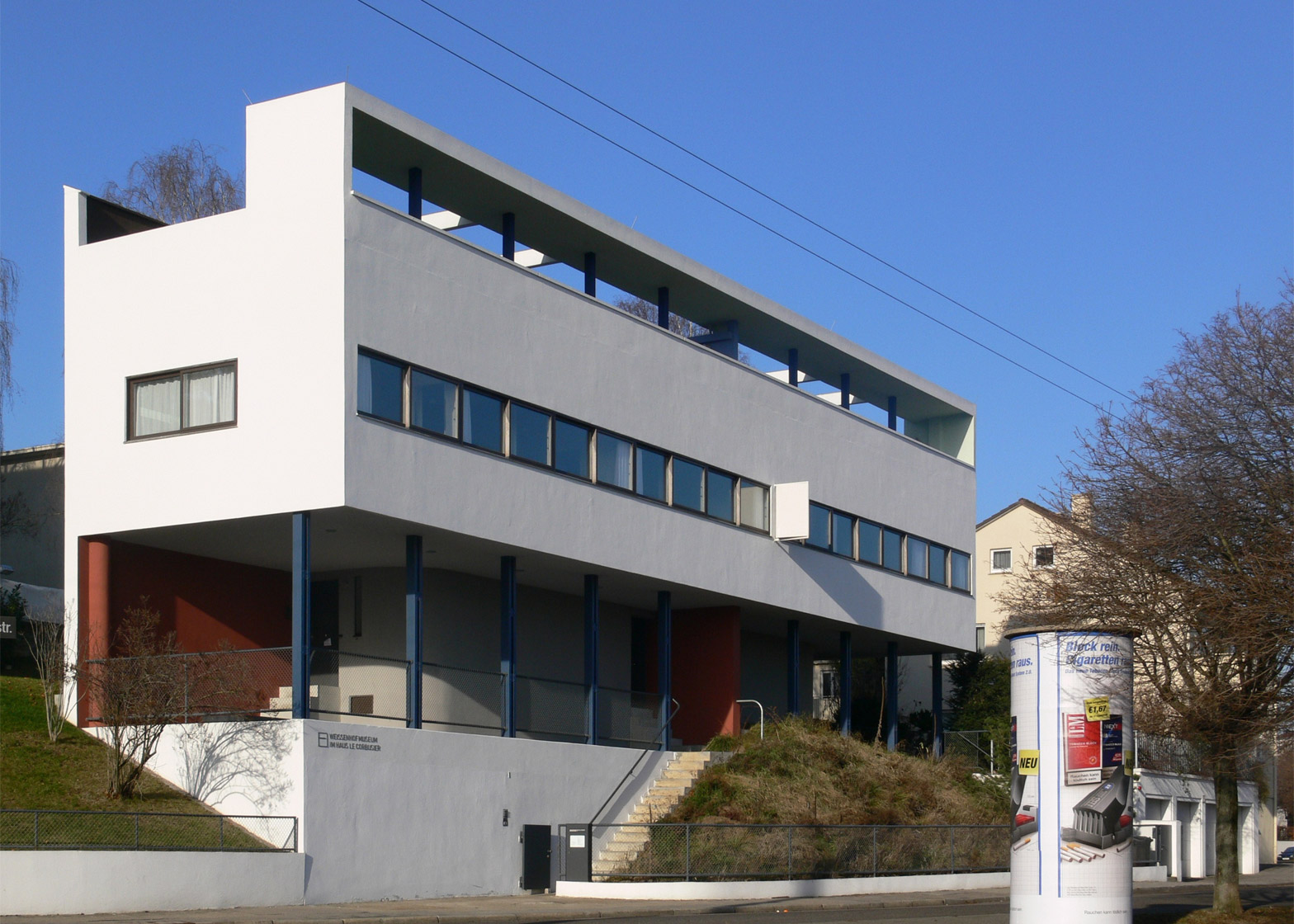
Germany Gains 41st UNESCO World Heritage Site


UNESCO title for Le Corbusier houses in Stuttgart
On July 17, 2016, the two Le Corbusier houses at the Weissenhof Estate in the Southern
German city of Stuttgart were designated as UNESCO World Heritage Sites, making it the first
World Heritage Site for Stuttgart and the 41st for Germany. 

As part of a transnational joint application, Stuttgart and destinations in seven other countries
 applied to have 17 of Le Corbusier’s buildings listed due to the architect's outstanding contribution
 to Modernism. The two Stuttgart houses are the architect’s only buildings in Germany and
include the Weissenhof Museum, which illustrates the radical change in architecture around
 the time of the Second World War as well as Le Corbusier’s visionary thinking. 

Germany’s other 40 UNESCO World Heritage Sites include the majestic Cologne Cathedral,
 the expansive Wadden Sea habitat, Classical Weimar and Regensburg’s charming Old Town.
 They can be explored on eight different themed routes, from natural wonders to architecture
 to palaces and parks. 

For more information about Germany’s UNESCO World Heritage Sites,
 visit www.germany.travel/unesco.

Saturday, July 5, 2014

Car Lover's Guide To Germany

Germans love their cars enough to pick up their new one at the factory, something akin to bringing home a new baby from the hospital. The five big German car manufacturers—Audi, BMW, Mercedes-Benz, Porsche, and Volkswagen—have fueled the passion with museums, factory tours, restaurants and other car-themed attractions to enjoy, even if you aren't buying a new car. Here's a guide to their museums and hometowns, where you'll gain a new appreciation of how the motorized carriage changed the world.

AUDI, INGOLSTADT

The Audi Forum displays vehicles from Horch, DKW, Auto Union, and Wanderer, the brands which merged to form Audi, plus examples of Audi racecar history and technical displays, including the R18 hybrid racecar. Add a factory tour to the museum visit for the full experience.
History: One hour from Munich, Ingolstadt is where the German Beer Purity laws were written in 1674, and which still govern brewing. The city is old enough that its Neue Schloss (New Castle) dates from the 1400s, replacing one from the 1200s. It now contains the country's largest collection of medieval arms and armor. Audi moved here at the end of WWII from Dresden, in what became East Germany, so it could sell cars in the West.
Also See: Assamkirche (Assam Church), built in the 1730s, features an optical illusion painted into the ornate ceiling. No matter where you walk, when you look up, it appears that an archer's bow is following you.

BMW, MUNICH

BMW Welt (World) sits inside Munich Olympic Park, the site of the 1972 summer games. One building houses a car, motorcycle, and boat showroom—where everybody stops to applaud owners picking up their new cars. The museum focuses on BMW's technology and design, past and future, including an original one-door Isetta from the 50s, BMW brands Rolls-Royce and Mini, and examples of art cars painted by artists such as Jeff Koons.
History: Founded in the 12th century, Munich seems to be most famous today for its gargantuan Oktoberfest each fall. BMW, which stands for Bavarian Motor Werks, began as an aircraft and engine manufacturer in 1916 and switched to cars after WWII. It’s an ongoing debate whether the pie-shaped BMW logo represents the blue and white Bavarian flag, an airplane propeller, or both.
Also See: The Residenz (Royal Palace), home of Bavaria's ruling dukes from 1363 to 1918, contains a family portrait gallery longer than a football field, and an astounding collection of royal diamonds, emeralds, and other jewels in the form of crowns, scepters and necklaces.  

MERCEDES-BENZ, STUTTGART

The Mercedes Museum displays vehicles in a historic timeline. A glass elevator takes you to 1888 to see contraptions designed by Gottlieb Daimler and Carl Benz. Follow the circular ramp to successive decades, including the iconic 1950s gullwing roadster, the 300SL, and a 1936 500K roadster, the most powerful street vehicle of its time, which cost the equivalent of $500,000 in today's dollars. A sophisticated, multi-track audio guide, free with museum admission, lets you choose from historic, social, and technical interpretations at each stop. The track for kids offers insights for grown-ups, too.
History: The sixth largest city in Germany, and one of its wealthiest per capita, Stuttgart was settled originally as a Roman fort for its mineral springs, which still attract devotees. Mercedes moved here in 1926.
Also See: The Stadtgalerie (State Gallery) contains one of the finest art collections in Germany, with a treasure trove of Medieval and French Impressionist art.

PORSCHE, STUTTGART

This sleek white museum in the Stuttgart suburb of Zuffenhausen expands upward and outward from the street, much like a sports stadium. The racecar section includes a 1922 Austro-Daimler and 2008 Penske RS Spyder. Hundreds of racing trophies are suspended from see-through filaments that make them appear to be floating in mid-air. The non-racing collection includes an original Type 64 vehicle (better known as the Beetle) designed by Ferdinand Porsche for the company that became Volkswagen. Stand under sound cones to hear the different engines revving, purring, and roaring, from a "James Dean" 550A Spyder to a GT3. 
Also to see: Ludwigsburg is just 15 miles from Stuttgart, an easy daytrip to enjoy Germany's largest Baroque palace, which contains a 74-acre formal garden, and fashion, ceramic, and art museums focusing on the royal clothing and art of the 18th century. 

VOLKSWAGEN, WOLFSBURG

Autostadt (Car City) is a combination automotive theme park and museum, with separate buildings for each VW brand. Bentley and Lamborghini focus on their racing heritage, while the Czech brand Skoda focuses on Bohemian artwork and crystal. The main museum, ZeitHaus, includes everything from a rare 1957 Bugatti AC Atlantic to a 1959 Cadillac Eldorado Biarritz and a jewel-encrusted Beetle.  With the recent merger of Porsche and Audi into the VW family, there also are pavilions showcasing their technology and design. Get behind the wheel to test your driving skills on an off-road track and a mini racetrack. 
History: One hour from Berlin, historic Wolfsburg has preserved the original red brick factory built by Adolph Hitler in the 1930s to build affordable Beetles (Volkswagen translates as "people's car"). It's been turned into a space for concerts and art events.
Also to see: This is the world's only car factory with its own Ritz-Carlton, designed in the same open and airy architectural style as the rest of Autostadt.
Contributed by Evelyn Kanter, a NYC-based travel and automotive journalist who loves merging her two specialties into a single article. A regular visitor to Germany, she updated several chapters of the latest edition of Fodor's Germany guidebook, including Stuttgart.
Photo Credit: Courtesy of Audi Forum (racecar); Courtesy of BMW Museum (Isetta); Courtesy of Mercedes Museum (300SL in front); Courtesy of Porsche Museum; Courtesy of VW Autostadt

Follow us on Twitter:@TraveloreReport