Showing posts with label Museums. Show all posts

Monday, August 3, 2026

Inside Calder Gardens: Philadelphia’s Newest Blend of Art, Architecture, And Nature

Located along Philadelphia’s iconic Benjamin Franklin Parkway, Calder Gardens offers a serene space dedicated to celebrating the legacy and artwork of Alexander Calder.

What to Expect

  • Indoor & Outdoor Spaces: Seamlessly integrating art and nature.
  • Rotating Displays: Featuring Calder’s famous mobiles, stabiles, and monumental sculptures.
  • Lush Landscape Design: Crafted to reflect light, season, and shadow.

Deceptively Expansive Interior Architecture

While the low, wooden-and-metal exterior maintains an unassuming footprint on the Parkway, entering Calder Gardens reveals a deceptively expansive spatial experience designed by Herzog & de Meuron.

Rather than traditional grand museum rotundas, visitors begin in a quiet, domestic-scale wood-lined lobby. From there, the building tucks much of its 18,000 square feet underground, unfolding into a sequence of subterranean galleries:

  • The Highway Gallery & Mezzanine: A mezzanine level framed by a long, low window overlooking the expressway, offering dynamic overhead viewpoints of suspended mobiles against the urban landscape.
  • The Cuboid Stair: A passage lined with rough concrete that transitions visitors down into the main exhibition level.
  • The Open Plan Gallery: Anchored beneath a massive central structural disc, this central vault opens out laterally into daylight and garden views.
  • The Curved Gallery: A quiet, fully light-controlled gallery wrapping around the Sunken Garden wall, ideal for delicate works on paper and smaller mobiles.

Harmonious Garden Design & Landscape Integration

Designed by renowned Dutch landscape designer Piet Oudolf alongside Herzog & de Meuron, the gardens are an essential element of the exhibition experience—not just a backdrop.

The outdoor spaces feature carefully curated native perennials, grasses, and flowering flora that shift dynamically across seasons. The paths lead visitors through sunken garden beds, meadow-like vistas, and tree-lined corridors where Calder’s sculptures interact directly with shifting light, wind, and shadow, blurring the boundary between human design and natural organic beauty.

Guided Tours & Contemplation Walks

For a deeper connection to the site, Calder Gardens offers In-Depth Contemplation Walks led by specially trained guides. These intimate, 45-minute sessions encourage reflective close-looking, conversation, and a unique perspective on how Calder's art interacts with nature and architecture.

  • Schedule: Daily at 11:30 AM and 1:30 PM.
  • Group Size: Limited to 10 visitors per walk (private group options available).
  • Pricing: $30 per person ($15 for members), which includes garden and gallery admission.

"Art should be dynamic, ever-changing, and connected to its surrounding environment."

Plan Your Visit

Calder Gardens is open Thursday through Monday, 11:00 AM to 5:00 PM (with a members-only hour from 10:00 AM to 11:00 AM). General admission is $18 for adults, $16 for seniors, $5 for students and youth, and free for children 12 and under.

Friday, July 31, 2026

A Medieval Homecoming: The Bayeux Tapestry Comes To The British Museum


For nearly a thousand years, one of the most vital artifacts in English history has been housed across the English Channel. But in a monumental historic agreement between the UK and French governments, the iconic Bayeux Tapestry is returning to its country of origin for a blockbuster exhibition at London’s British Museum.


Running from September 10, 2026, to July 11, 2027, this marks the first time the 70-meter-long (230-foot) embroidered masterpiece has been on British soil since its creation in the 11th century. The loan is part of a cultural exchange timed perfectly with the renovation of the Tapestry’s home at the Musée de la Tapisserie de Bayeux in Normandy.


A Whole New Way to View a Masterpiece


Since 1983, visitors to the Bayeux Museum have viewed the tapestry hanging vertically in a curved glass case. However, the British Museum is shaking up centuries of tradition by displaying the masterpiece completely flat in a custom-engineered horizontal case.


This layout offers a fresh perspective, allowing guests to examine the intricate details of its 58 embroidered scenes up close. The physical display will be accompanied by advanced digital elements providing historical context on the political intrigue, warfare, and daily life of 11th-century Norman and Anglo-Saxon cultures.


The Grand Cultural Exchange


Securing a loan of this magnitude required an unprecedented diplomatic and cultural agreement. In exchange for hosting the Bayeux Tapestry, the British Museum is loaning some of its own crown jewels to museums in Normandy, including artifacts from the 7th-century Anglo-Saxon Sutton Hoo ship burial and the world-famous Lewis Chessmen.


Here is a quick overview of what makes this upcoming exhibition so historic:


Exhibition Detail What You Need to Know
Exhibition Dates September 10, 2026 – July 11, 2027
Location The Sainsbury Exhibitions Gallery, British Museum, London
Orientation Shift Displayed entirely flat/horizontal for the first time in modern history
Historical Significance First time in the UK in nearly 1,000 years; likely crafted by English embroiderers in the 1070s
The French Exchange Normandy museums will temporarily host the UK’s Sutton Hoo treasures and Lewis Chessmen


Planning Your Visit: High Demand Warning


As expected for an artifact of this global renown, tickets are highly coveted. The British Museum has reported that the first wave of timed-entry tickets for September through December 2026 has already completely sold out.


Ticket Strategy: If you missed the initial release, don't panic. The British Museum will be releasing its next block of tickets for the January–July 2027 dates later this year. Travelers are highly encouraged to sign up for the museum's official newsletter to catch the exact drop time.

Standard adult tickets are priced at £33 (£27 for off-peak time slots), while children under 16 can enter for free when accompanied by a ticketed adult. Existing British Museum Members will receive two free visits before standard admission rates or discounts apply.


Why the Bayeux Tapestry Still Captivates Us


Though it chronicles a brutal conflict—the 1066 Norman Conquest and the pivotal Battle of Hastings where King Harold lost his life to William the Conqueror—the tapestry is fundamentally a story of human experience. Beyond the warriors, horses, and shields, the linen borders are packed with depictions of medieval agriculture, clothing, food, and even mythical beasts.


Whether you are a seasoned history buff tracking the origin of the modern British monarchy or an art lover marvelling at 950-year-old woollen yarn, this exhibition is a once-in-a-lifetime opportunity to experience a piece of living history on the very soil it depicts.

Saturday, July 25, 2026

The Battle Over Frida Kahlo: Activists Sue To Keep Her Art From Leaving Mexico

In the art world, few names command as much reverence and passion as Frida Kahlo. For travelers and art lovers who flock to Mexico City to experience her profound legacy, seeing her masterpieces in person is a pilgrimage. But a fierce legal battle is currently raging over one of the most important private collections of her work—and whether it will be allowed to leave Mexico indefinitely.


The Gelman Collection’s Controversial Move


At the center of the controversy is the renowned Gelman Collection (recently rebranded as the Gelman Santander collection). Boasting 160 works of 20th-century Mexican art, the collection includes 18 pieces by Frida Kahlo alongside masterpieces by Diego Rivera and José Clemente Orozco. Following a deal with [Banco Santander](https://apollo-magazine.com/defence-of-gelman-collection-lawsuit-mexican-government-banco-santander/), the works are slated to be exported to Spain for a long-term exhibition at the new Faro Santander cultural center.

The agreement allows the artwork to remain in Spain until at least 2030, with the possibility of an extension. For Mexico's cultural community, this sparked immediate outrage.

Activists Take Legal Action


In early July 2026, a citizen collective of historians, artists, and curators calling themselves the [Defence of the Gelman Collection](https://www.theartnewspaper.com/2026/07/10/could-mexicos-treasured-kahlo-works-leave-the-country-forever) filed a lawsuit in a federal court in Mexico City. The group is suing Mexico’s Culture Ministry and the National Institute of Fine Arts and Literature (INBAL), demanding an injunction to stop the collection from leaving.

The activists are not fighting the private ownership of the collection, which was purchased by the Zambrano family in 2023. Instead, they are challenging the legality of the export agreement itself. They argue that the prolonged, renewable timeline acts as a permanent export in disguise—a direct violation of Mexican heritage laws.

The 1984 Presidential Decree


Why is Kahlo's art so fiercely guarded? In 1984, Mexico issued a presidential decree declaring all of Frida Kahlo's work an "artistic monument." Under this strict legal framework, her artwork cannot be permanently exported. Temporary export permits are typically granted for only one or two years for specific cultural exhibitions, and they require strict financial guarantees to ensure the art's return.

Activists argue the Santander deal circumvents these rules, setting a dangerous precedent that could see Mexico's national treasures permanently dispersed abroad. As one historian noted, it is already easier to see Kahlo's work outside of Mexico than within her home country.

What’s Next for Kahlo’s Masterpieces?


As the lawsuit unfolds, the Mexican Supreme Court is also stepping in to examine a separate but related case: whether the 1984 decree banning the permanent export of privately owned Kahlo art is constitutional. The court’s decision could completely reshape how privately owned "artistic monuments" are managed and circulated globally.

For now, the fate of these masterpieces hangs in the balance. Whether they remain a cornerstone of Mexico's cultural heritage or become permanent global ambassadors in Spain, the battle over Frida Kahlo is a powerful reminder of how deeply her legacy is intertwined with Mexican identity.

Monday, July 20, 2026

A Guide to Visiting The Brand-New Theodore Roosevelt Presidential Library

The long-awaited day has finally arrived. On July 4, 2026—coinciding beautifully with America’s 250th birthday—the highly anticipated Theodore Roosevelt Presidential Library officially opened its doors to the world. Perched majestically on a mesa above the Little Missouri River in Medora, North Dakota, this isn't your traditional, dusty archive. It is a stunning, high-tech tribute built right in the heart of the rugged Badlands that T.R. credited with making him the leader he became.

If you are planning a trip to experience this architectural and historical marvel, here is your ultimate guide to what makes a visit to the TRPL absolutely unforgettable.


A Revolution in Eco-Design


Before you even step inside, the building itself will take your breath away. Designed by the world-renowned international architectural firm Snøhetta, the Theodore Roosevelt Presidential Library is the only carbon-neutral presidential library in existence.

The building is low-slung and practically melts right into the top of the North Dakota butte. It features a massive, grass-covered living roof where visitors can take their lunches to go and enjoy expansive views of the rolling prairie. The surrounding 93 acres are part of a massive native plant restoration project, proving that the institution takes T.R.’s fierce conservation legacy seriously.

The "Adventure Galleries": Immersive History


Forget walking silently past glass cases with tiny placard text. The TRPL relies heavily on AI, holograms, and interactive storytelling to let you step directly into Roosevelt’s boots. Upon entry, you are handed an RFID-enabled wristband that customizes your journey. As you explore, you will experience:

  • The Campaign Trail: Pick your top political issues to dynamically generate your own digital election poster.

  • The Amazon Expedition: Climb into a physical boat and float down an uncharted South American river while 16 high-powered projectors transform the room into a vibrant, dangerous jungle around you.

  • The Rough Riders: Track the diverse unit's progress across interactive battle maps from the Spanish-American War.

  • Personal Artifacts: Linger over deeply moving historical objects, like his 1884 pocket diary opened to the heartbreaking entry, "The light has gone out of my life," written on the day both his wife and mother passed away.


Connecting Story and Setting


One of the best features of the library is how seamlessly it transitions from indoors to outdoors. A nearly one-mile-long elevated, fully ADA-accessible boardwalk loops straight out from the library into the prairie. Walking it offers sweeping views of the terrain where a young Teddy built his first ranch, offering a quiet space for reflection.

Best of all, the boardwalk connects directly to the legendary Maah Daah Hey Trailhead, allowing active hikers to venture straight out into the Badlands wilderness.

Pro-Tips for Your Visit


  • Book in Advance: To ensure an unhurried, top-tier experience, the museum utilizes limited timed-entry ticketing. Walk-ups are not guaranteed, so secure your passes online ahead of time. Tickets run $26 for adults and $16 for youth.

  • Give Yourself Time: Plan to spend at least 2 to 3 hours here to fully appreciate both the indoor multimedia galleries and the outdoor landscape trails.

  • Make a Weekend of It: Combine your visit with a trek into the adjacent Theodore Roosevelt National Park. Grab a steak cooked on a pitchfork at the local Pitchfork Steak Fondue, and take in the historic, open-air Medora Musical in the evening.


The Bottom Line


The Theodore Roosevelt Presidential Library isn't just a monument to a past leader; it’s an invitation to challenge yourself, examine your own values, and connect deeply with the American wilderness. Whether you are a history buff, an architecture enthusiast, or a nature lover, Medora’s newest crown jewel is officially open and well worth the pilgrimage.

Saturday, July 18, 2026

The Met Forced To Return $95 Million Of "Stolen" Artifacts To Origin Countries


The Metropolitan Museum of Art (The Met) in New York City is globally celebrated as a treasure trove of human history. However, its world-class collection is facing an unprecedented reckoning. Over the past several years—and escalating into a major wave of confiscations in June 2026—investigators have systematically forced the museum to return millions of dollars worth of ancient antiquities that were determined to be looted, stolen, or illegally trafficked from their countries of origin.


In total, the Manhattan District Attorney's Office has seized more than $95 million worth of artifacts from The Met since 2017. As empty display cases begin to quietly appear in the museum's hallowed halls, the situation has ignited a fierce debate about the ethics of museum collections, cultural heritage, and who truly owns world history.


🏺 What Is Happening at The Met?


The confiscations are part of a massive, ongoing probe led by the Manhattan District Attorney's Antiquities Trafficking Unit. Their goal is to identify and repatriate cultural items that were funneled into the global art market by international smuggling networks—often decades ago—before ultimately landing in the collections of private buyers and major institutions like The Met.


The scale of the issue traces back to the mid-20th century. During the 1960s and 70s, under an aggressive acquisition program meant to rival the British Museum and the Louvre, The Met rapidly expanded its antiquities collection. Unfortunately, the provenance (the documented history of ownership) for many of these items was murky at best, relying on dealers who were later linked to the illicit antiquities trade.


🔍 The Key Artifacts Returned


The $95 million figure encompasses hundreds of items returned to various countries around the world. The most recent seizures in June 2026 highlighted just how valuable and historically significant these pieces are. Some of the most notable recent repatriations include:


  • From Turkey: A 2,000-year-old bronze statuette of Hermes (valued at roughly $500,000).
  • From Greece: A 3,700-year-old terracotta beak-spouted jug and an ancient marble head.
  • From Egypt: An ancient golden headpiece adorned with ram heads, following the earlier high-profile return of the famous gold Coffin of Nedjemankh (which was originally purchased by the museum using falsified export papers).
  • From Cambodia & Thailand: Dozens of pieces, including 10th-century sculptures and pre-Angkorian sandstone lintels, all tied to the disgraced art dealer Douglas Latchford.
  • From Italy: A marble head of Athena and ancient Greek vases valued in the tens of millions of dollars.


⚖️ The Museum vs. The Prosecutors


Publicly, The Met has characterized the process as cooperative. Lucian Simmons, the museum's head of provenance research, has stated that The Met has no interest in holding onto stolen cultural property and views the District Attorney’s office as a vital partner in unlocking information that is otherwise inaccessible to museum researchers.


However, investigators have taken a sharper tone. Matthew Bogdanos, head of the Antiquities Trafficking Unit, has publicly questioned why the DA’s office is doing the heavy lifting of investigating the museum's collection instead of the museum policing itself. The recurring nature of the seizures—which the DA counts at nearly 350 items compared to the museum's internal count of around 200—suggests that this issue is far from resolved.


🌍 Why This Matters to You


If you love history, art, and travel, this wave of repatriations fundamentally shifts the museum experience. On one hand, returning these artifacts rights historical wrongs and restores cultural heritage to the communities that actually created them. It acts as a powerful deterrent against the modern looting of archaeological sites.


On the other hand, for global museum-goers, the removal of key artifacts alters how we experience world history under one roof. The sprawling, dense exhibits of the past are becoming more fragmented. Yet, this might also provide a beautiful excuse to travel to the countries of origin to see these incredible pieces in the context of their true ancestral homes.


The era of unquestioning trust in major museum collections is officially over. As investigations continue, we can expect to see more blank spaces on the walls of our favorite museums—and a much needed, honest conversation about how those walls were decorated in the first place.

Tuesday, July 14, 2026

The Premium of Paris: Why Higher Ticket Prices Aren't Deterring Foreigners from the Louvre or Versailles

For years, a quiet economic shift has been taking place across Europe’s most iconic cultural landmarks: differentiated pricing. It’s a strategy where foreign tourists are charged significantly more for admission than local residents or citizens.

While critics initially worried that bumping up prices for international travelers would spark a backlash or drive crowds away, the reality on the ground in France tells a completely different story. Despite paying a premium, foreign tourists are flocking to landmarks like the Louvre Museum and the Palace of Versailles in record numbers.

Here is an inside look at why differentiated ticket pricing isn't deterring global travelers, and why Paris remains an unstoppable tourism juggernaut.


1. The "Once-in-a-Lifetime" Mindset

For an international traveler flying from New York, Tokyo, or Sydney, the cost of a museum ticket is a drop in the bucket compared to the grand total of their trip.

When a traveler has already spent thousands of dollars on flights, hotels, and dining, an extra €10 or €15 on an admission ticket feels negligible. To someone who has dreamed of seeing the Mona Lisa or walking through the Hall of Mirrors their entire life, the experience is functionally price-inelastic. They are going to pay whatever it takes to get through the gates.

2. A Shift Toward Premium, Frictionless Experiences

Tourists today aren't just paying for entry; they are paying for a smoother experience. Landmarks have successfully softened the blow of higher prices by bundling them with improved digital infrastructure:

  • Mandatory Time-Slot Booking: Virtually eliminating the infamous multi-hour queues of the past.
  • Enhanced Digital Guides: Better apps and interactive maps included or easily added to the premium ticket.
  • Exclusive Access: Special evening hours or combined exhibition passes that make the ticket feel like a premium product rather than a standard entry fee.

When travelers feel they are getting an organized, high-quality experience, the sting of a higher price tag vanishes.

3. The Ethical Acceptance of "Subsidizing" Heritage

Interstingly, modern travelers are increasingly conscious of the cost of cultural preservation. There is a growing, widespread acceptance that local tax dollars keep these historic institutions running year-round.

Foreign visitors generally understand that their higher ticket prices help fund massive restoration projects, maintain security, and keep these world treasures preserved for future generations. Rather than feeling exploited, many see it as a fair trade for consuming another country’s cultural heritage.


The Bottom Line

Landmark The Draw Why Price Doesn't Matter
The Louvre World's largest art museum, home to unrivaled history. Seeing the Mona Lisa is a non-negotiable bucket-list item.
Versailles Peak French royal opulence and sprawling gardens. A full-day excursion where entry cost is secondary to the destination.

As Paris continues to dominate global tourism rankings, the data is clear: travelers value access over economy. Differentiated pricing hasn't dampened the allure of France's greatest treasures—it has simply proven that true cultural icons are genuinely priceless.


Inside The New Museum Of Exploration: National Geographic’s $300M Masterpiece In D.C.

For over a century, National Geographic has brought the furthest corners of the Earth directly into our living rooms through yellow-bordered magazines and breathtaking documentaries. Now, the iconic institution is inviting you to step directly inside those stories.


Following a massive, four-year, $300 million transformation, the National Geographic Society is officially opening the doors to its brand-new Museum of Exploration (MOE) in Washington, D.C. located right at its historic downtown campus.


Spanning over 100,000 square feet of reimagined public space, this state-of-the-art hub seamlessly blends a century of historic archival treasures with modern, interactive technology. Here is your first look inside Washington's most anticipated new cultural landmark.


1. A Stunning New Architectural Landmark

The adventure begins before you even step inside. The museum greets visitors with a striking, fluid new Pavilion entrance at 1600 M St NW.


Designed by architecture firm Hickok Cole, the exterior boasts a sweeping architectural silhouette, complete with an expansive front courtyard filled with greenery and outdoor seating. The interior mirrors this organic, nature-inspired philosophy, using flowing shapes and warm wooden elements that reflect National Geographic's deep-rooted environmental mission.


2. Immersive Exhibitions & Galleries

The Museum of Exploration is designed to put you in the boots of the world's greatest scientists, photographers, and adventurers.


  • The Archives: For the first time, National Geographic is opening its vault to display more than 130 years of history. Visitors can explore early maps hand-drawn by legendary cartographers, examine historic expedition gear, and interact with a digital research station holding over 300 photos, film clips, and sound recordings.

  • Rolex Explorers Landing: This major gallery focuses on the human element of discovery. Divided into four thematic journeys—Spark, Trek, Purpose, and Impact—it showcases the tools, triumphs, and stories of real-world National Geographic Explorers.

  • In Focus: Photographs of National Geographic: A breathtaking gallery displaying the organization's most enduring images. Highlights include George Shiras' historic first-ever nighttime wildlife photograph and Ami Vitale's deeply moving portrait of the world's last male northern white rhinoceros.


3. Stunning Inaugural Showcase: "Photo Ark"

The crown jewel of the grand opening is the museum's inaugural temporary exhibition: "Photo Ark: Animals of Earth."


This exhibition features the globally renowned work of photographer Joel Sartore, who has spent years documenting every species living in human care. The gallery offers a 360-degree view of Earth's wildlife, utilizing stunning, intimate portraits designed to connect visitors to the beauty—and vulnerability—of the animal kingdom.


4. More Than Just Exhibits: The Global Food Hall & Beyond

National Geographic ensures that your culinary exploration matches your visual one:


  • Explorers Eatery & Ballard Bar: The campus features an international food hall serving authentic, globally inspired dishes. Afterward, you can grab a drink at the Ballard Bar, aptly named after famed Explorer-at-Large Bob Ballard (the oceanographer who discovered the wreck of the Titanic).

  • Grosvenor Auditorium: A state-of-the-art, nearly 400-seat theater built to host film screenings, live panels, and direct-from-the-field presentations by active explorers.


Planning Your Visit

The National Geographic Society has placed accessibility and sustainability at the core of the museum. The project is actively tracking LEED Platinum status (the highest rating in green building), and all exhibition signage is seamlessly presented in both English and Spanish, with Braille, captioning, and American Sign Language integrated heavily into the media.


  • Location: 1600 M St NW, Washington, D.C. (National Geographic Global Headquarters)

  • Tickets: General admission starts at $29.99 for adults.

  • Discounts: In partnership with the Museums for All initiative, discounted admission is available to ensure the museum remains accessible to low-income families and community members.


Friday, June 19, 2026

Inside The New Obama Presidential Center in Chicago: A Visitor's Guide

More than a decade after it was first announced, a historic transformation has officially been completed on Chicago’s South Side.


The Obama Presidential Center has celebrated its official Grand Opening Ceremony, with the sprawling, state-of-the-art campus officially opening its doors to the public on June 19, 2026.


Nestled within the historic landscape of Jackson Park, this 19.3-acre, world-class civic hub is much more than a traditional, quiet repository of presidential documents. It has been reimagined from the ground up as an active, bustling town square designed to inspire the next generation of global citizens. Here is a look inside the highly anticipated campus and what you can experience on your first visit.


1. The Striking Museum Building

The undeniable crown jewel of the campus is the breathtaking, eight-story Museum building, soaring 225 feet above the South Side. Designed by the renowned architectural team of Tod Williams Billie Tsien Architects, the building's exterior features a sweeping, geometric silhouette meant to evoke four hands coming together in unity.


The facade also features a stunning, towering glass art installation by artist Julie Mehretu titled “Uprising of the Sun.”


Inside, dynamic exhibits span across four floors, detailing the historic path, campaigns, and enduring legacy of President Barack Obama and First Lady Michelle Obama. Key highlights include an incredibly detailed, full-scale replica of the Obama Oval Office, a massive 88-foot-tall media installation titled Power of Words, and an immersive Opening the White House gallery that recreates iconic moments from the administration in miniature.


At the absolute peak of the tower sits the Sky Room, a glass-enclosed observation space that is completely free and accessible to all visitors, offering sweeping views of Jackson Park, the neighboring Museum of Science and Industry, and Lake Michigan.


2. A Hub for Community: The Forum & Home Court

The center explicitly shifts away from the static nature of past presidential libraries by creating expansive spaces built for physical activity, gathering, and local programming.


  • The Forum Building: This vibrant civic hub houses the Elie Wiesel Auditorium, the Hadiya Pendleton Atrium, and the Democracy in Action Lab—all engineered to host professional conferences, community panels, and local creative workshops.

  • Home Court: A massive, 45,000-square-foot athletic facility anchored by a beautiful, NBA-regulation basketball court. This space is custom-built to host youth sports leagues, wellness workshops, and community events, seamlessly tying President Obama’s legendary love for basketball directly into the campus's neighborhood mission.

  • The Chicago Public Library: The campus features a brand-new, modern neighborhood branch of the Chicago Public Library, seamlessly anchoring the complex into the daily lives of local residents.


3. Reimagined Public Parklands & Gardens

True to its home in Jackson Park, the campus is wrapped in a lush tapestry of beautifully designed outdoor spaces, almost all of which are free and open to the public without a ticket:


  • The Great Lawn & Playground: An expansive, open green lawn ideal for families to picnic, play, or relax. Adjacent to the lawn is a massive, 21,000-square-foot playground featuring custom climbing ropes and multi-tiered slides.

  • The Eleanor Roosevelt Fruit and Vegetable Garden: Located directly atop the roof of the public library, this community garden provides a warm space to explore urban agriculture and cooking.

  • The Wetland Walk & Women's Garden: Tranquil paths wind through a revitalized wetland area, complete with beautiful scenic walkways and an upgraded, fully accessible design surrounding the historic Women's Garden.


Planning Your Visit

The Obama Foundation has designed the campus with a deep commitment to environmental sustainability, actively tracking a LEED Platinum certification. The museum is heavily optimized for inclusion, featuring fully bilingual English/Spanish exhibition displays, integrated Braille, and assistive media technologies.


  • Location: 6001 S Stony Island Ave, Chicago, IL 60637 (Jackson Park)

  • Transit Access: The South Shore Line provides direct service stopping right at the nearby 57th Street Station for convenient access.

  • Tickets: While the park, library, and campus grounds are entirely free to enjoy, entering the Museum requires a timed-entry ticket. Standard adult admission aligns with Chicago’s major cultural institutions, with built-in everyday discounts and designated free days for Illinois residents.


Monday, May 18, 2026

Travelore News: The Met Absorbs the Neue Galerie in Historic $1.5 Billion Deal

In a stunning announcement that has sent shockwaves through the international art world, The Metropolitan Museum of Art and the Neue Galerie New York have unveiled plans for a landmark merger.

Set to take effect in 2028, this monumental agreement will combine the resources of America’s largest art museum with the "jewel box" collection of early 20th-century German and Austrian masterpieces located just down the street on Manhattan's Museum Mile.

The deal—valued at an estimated $1.5 billion—stands as one of the most significant cultural acquisitions and philanthropic gifts in modern museum history.

Future-Proofing a Legacy in Perpetuity

The rare institutional merger was brokered by billionaire cosmetics heir and prominent art collector Ronald S. Lauder, who co-founded the Neue Galerie in 2001 alongside the late art dealer Serge Sabarsky.

Timed to align with the Neue Galerie’s upcoming 25th anniversary, Lauder, 82, framed the decision as a vital step to preserve the museum's carefully curated vision long into the future.

"The merger with The Met in 2028 will preserve and strengthen the Neue Galerie's legacy in perpetuity," Lauder noted in an official statement.

Met Director and CEO Max Hollein, who has served as a trustee for the Neue Galerie for over 20 years, echoed the sentiment, calling the merger "one of the greatest and biggest" gifts ever received by a museum. The acquisition will immediately bridge major avant-garde gaps in the Met's encyclopedic collection.

The Massive Endowment and the "Mona Lisa" of the Collection

The historic agreement ensures that the Neue Galerie won't simply be dissolved into the massive, two-million-square-foot Met flagship. Instead, the institution will maintain its unique, intimate identity.

Key details of the arrangement include:

The Name Change: Upon completion, the museum's historic home will be formally renamed The Met Ronald S. Lauder Neue Galerie (or "The Met Neue").

A $200 Million Endowment: Lauder and his daughter, Aerin Lauder Zinterhofer, alongside more than two dozen Met trustees, are establishing a massive endowment fund dedicated to the long-term care, building preservation, and operating costs of the institution.

Over 600 Masterpieces Transferred: The Met will assume ownership of the Neue Galerie's stellar permanent holdings, which boast iconic works by Egon Schiele, Max Beckmann, and Oskar Kokoschka.

13 Personal Additions: Lauder and his daughter are donating 13 additional paintings from their private collections, including Gustav Klimt’s large-scale portrait Die Tänzerin (The Dancer) and Ernst Ludwig Kirchner's Die Russische Tänzerin Mela.

Most importantly for art lovers, the crown jewel of the collection—Gustav Klimt’s gold-flecked "Portrait of Adele Bloch-Bauer I" (The Woman in Gold)—is legally bound to stay put. Purchased by Lauder in 2006 for a then-record $135 million, the masterpiece has strict stipulations requiring it to remain on permanent display inside the 86th Street building. Lauder has famously referred to the painting as the Neue Galerie's "Mona Lisa.

"What This Means for Museum Visitors

If you are a frequent visitor to the Upper East Side's cultural hubs, you can expect the distinct, transportive atmosphere of the Neue Galerie to remain entirely intact.The six-story Beaux-Arts mansion (the William Starr Miller House, designed by the iconic architects Carrère & Hastings) will keep its operational staff, its specialized design and book shops, and the incredibly popular, Viennese-style Café Sabarsky.

While the formal merger won't finalize until 2028, local museum-goers should take note of a temporary disruption on the horizon. The Neue Galerie is currently scheduled to close on May 27, 2026, for previously planned infrastructure and facility renovations. It is slated to reopen to the public this autumn with a massive exhibition celebrating its 25th anniversary.

By bringing the Neue Galerie under the Met's grand umbrella alongside historic outposts like The Met Cloisters, New York City ensures that this irreplaceable sanctuary of Weimar-era and fin-de-siècle art remains accessible to the public for generations to come.

Monday, October 3, 2022

Stella McCartney Dabbles In Art At Eco-Pioneering Paris Show

It was as much art fair as fashion show for Stella McCartney, who put on an art-infused spring collection at Paris Fashion Week on Monday that vibrated with flashes of color.

Iconic Japanese contemporary artist Yoshitomo Nara collaborated on the designs showcased at Paris’ Pompidou Center Modern Art Museum, while art megastar Jeff Koons casually popped in to say ‘hello’ to McCartney post-show, peering at her comically across an atelier of world-famous sculptures by Constantin Brancusi.

The display also pioneered the use of regenerative cotton.

Here are some highlights of spring-summer 2023 collections:

STELLA GOES ARTSY

A yellow, red and blue carpeted runway dazzled VIP guests for McCartney’s show in the outdoor courtyard of Paris’ Pompidou Center — a set created in homage to the art museum’s famous colored, structuralist exterior.

This vibrancy continued in the spring fare that was typically fluid and sporty, with moments of bright color.

This season, chic garments such as asymmetrical white minidresses cut on the bias, or tight pink scuba tops with a scooped side silhouette, were to become the canvas for Nara’s vivid imagination.

On the front of them, the Japanese artist had created striking images of big-eyed girls and children in animal costumes — which the house described as “sinister.”

The most-fun looks were in all-out-color, such as a stiff looking chalky yellow scuba top and pant look accessorized with bouncy black flip-flops and a blown up handbag.

That cut a fine look against the bright yellow catwalk and had fashion insiders reaching for their cameras.

ECO-MCCARTNEY MAKES REGENERATIVE COTTON

Speaking backstage after a brief greet with her supportive Beatles father Paul McCartney, Stella said she was “chuffed” that this spring collection set a house record for being 87% sustainable.

“It’s my most sustainable yet. I hope nothing was sacrificed; you shouldn’t see any of the sustainability — it should still look luxurious,” she said, to the group of nodding editors amid the sound of popping champagne.

Since her house was acquired by luxury giant LVMH, McCartney has also taken up a lobbying role inside the company for it to be more eco-aware. This season, one of the fruits of that appeared on the runway. The designer said LVMH has paid for a three-year pilot to make regenerative cotton — grown in ways that maintain the health of the soil.

She said that the process “captures carbon in the soil” and “encourages nature as opposed to destroying it with pesticides.”

Elaborating on her advisory role inside the world’s biggest luxury group, McCartney described it as bringing a “positive impact,” especially having CEO Bernard Arnault on the front row seeing up close the success of eco-friendly ready-to-wear.

“He’s not stupid — it filters in,” she said. “He can look at all of those bags and all of those shoes and all of those non-leather jackets and he can compare between his other houses and see that there is no sacrifice visually.”

By THOMAS ADAMSON

Monday, January 9, 2017

Top 10 New Museum Opened In 2017

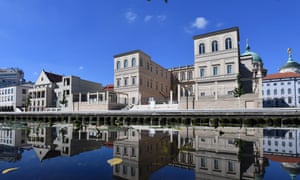
The future art museum Museum Barberini is reflected with other buildings in the Alte Fahrt in Potsdam, Germany.
 Past and present … Potsdam’s Museum Barberini (right) will host work by old masters and contemporary artists when it opens in January 2017. Photograph: Alamy

History, art and design is celebrated in their many forms, and disciplines, at new institutions from Paris to Los Angeles and London to Cape Town

Museum Barberini, Potsdam, Germany

In the magnificent reconstructed palace from which it takes its name, the Museum Barberini is a significant new attraction in the city of Potsdam’s already impressive historic centre. The museum is hosting exhibitions ranging from the old masters to contemporary art.
 museum-barberini.com

Zeitz MOCAA, Cape Town


Artist’s impression of the Zeitz Museum of Contemporary Art Africa in Cape Town, South Africa.
Pinterest
 Artist’s impression of the Zeitz MOCCA. Photograph: Heatherwick Studio

A landmark opening, and not just for South Africa, the Zeitz Museum of Contemporary Art Africa is the biggest museum to open on the continent for over a century. It is an influential place too: the $38m institution will be filled entirely with work created since the year 2000, and house the impressive collection of Jochen Zeitz (German philanthropist and former CEO of Puma), while it continues to acquire work of its own. The museum is inside the 57-metre-high Grain Silo, a towering reminder of Cape Town’s industrial heritage – and  a symbol of its creative future.
 Opens 23 September, zeitzmocaa.museum

National Museum of Contemporary Art (EMST), Athens


Visitors walk on a corridor leading to the top of the new National Museum of Contemporary Art in Athens.
Pinterest
 Visitors walk on a corridor leading to the top of the new museum. Photograph: Angelos Tzortzinis/AFP/Getty Images

The reconstruction of EMST has been quite a tale, with over a decade financial and bureaucratic setbacks. Still, in October 2016 it was finally ready for a soft launch, inaugurating the temporary exhibition space with the show Urgent Conversations: Athens–Antwerp in its newly reconstructed home in the old Fix brewery.
 emst.gr

Museum MACAN, Jakarta, Indonesia


Artist’s impression, by MET Studio Design, of an interior at the Museum of Modern and Contemporary Art in Nusantara (Museum MACAN) in Jakarta, Indonesia. There is a grey marbled floor and smooth white walls with colourful portraits on the walls.
Pinterest
 Artist’s impression, by MET Studio Design, of the museum interior.

Indonesia will get its first museum dedicated to international modern art, when MACAN, the Museum of Modern and Contemporary Art in Nusantara, opens its doors. With spacious interiors designed by London-based MET Studio Design, the museum features works from the collection of Indonesian philanthropist Haryanto Adikoesoemo, who says he has dreamed of creating a museum for the people of Indonesia for over a decade.
 On Facebook

Institute of Contemporary Art, Los Angeles


Concept drawing of the ICA in Los Angeles
 Concept drawing of the ICA. Photograph: theicala.org

With a new logo designed by Mark Bradford, which is meant to evoke the unique urban pace of Los Angeles, the ICA LA represents a rebranding and rehousing of the Santa Monica Museum of Art. It opened in the autumn in a new location in the Downtown LA arts district. Its new space aims to bring together “architecture, urban design, and sustainability to create cutting-edge environments for exhibitions, education, dialogue, and collaboration”.
  theicala.org

Victoria & Albert Museum, London


Elevated view down to the new Sackler Courtyard at the V&A museum in London.
Pinterest
 The new Sackler Courtyard at the V&A. Photograph: V&A

 V&A got an upgrade, with the completion of the Exhibition Road project: the largest architectural scheme the museum has undertaken in the last 100 years. It will consist of a new temporary exhibition space, the Sainsbury’s Gallery, the Sackler Courtyard and a grand new entrance, the Blavatnik Hall. The open courtyard will be used for events, installations and a cafe, revealing a part of the historical facade of the museum’s west side to the public for the first time.
 vam.ac.uk

Design Society, Shēnzhèn, China


Design Society, Shēnzhèn, China, artist’s rendering of the new art centre.
Pinterest
 Artist’s rendering of the new centre in Shēnzhèn. Photograph: Maki and Associates

The V&A  expanded beyond its London home in 2017, by collaborating with a Chinese partner to create a new cultural hub in Shēnzhèn. Design Society will span all creative disciplines and include a theatre, shops and a roof garden. The V&A will also have its own gallery within it, focusing on 20th- and 21st-century design and will host two major touring exhibitions over the next two years.
 designsociety.cn

Museum of the American Revolution, Philadelphia


Workers hang a mural depicting the Battle of Bunker Hill as preparations for opening continue at the Museum of the American Revolution in Philadelphia.
Pinterest
 Workers hang a mural depicting the Battle of Bunker Hill . Photograph: Jacqueline Larma/AP

With US politics as polarised as it is, there has perhaps never been a better time to reflect on the history of a country that was once so divided it endured five years of civil war. The Museum of the American Revolution does just that; taking a non-partisan view of the period through thousands of objects, artworks, manuscripts and artefacts. Exhibitions  take visitors on a chronological journey, from the roots of resistance to the legacy of its outcome.
 Now openamrevmuseum.org

Musées Yves Saint Laurent, Paris and Marrakech


A display at the Musée Yves Saint Laurent in Paris. Mannequins wear a black trouser suit, a 1960s geometric-pattern colourful dress and also a white jacket, and stand in front of a wall of books and magazines.
Pinterest
 A display at the Paris museum. Photograph: Luc Castel

One of the world’s most influential fashion designers, Yves Saint Laurent is also the only designer of his generation who has systematically archived his work since creating his couture house in the 1960s. This year two museums will open, in Paris and Marrakech, to house the thousands of garments, accessories, sketches, photographs and objects that represent his life’s work. The Parisian museum will be in the historical couture house at 5 avenue Marceau, which has been converted over the last year. The Marrakech museum is an impressive new build, near Jardin Majorelle – a garden long associated with the designer.
 Opening in April, fondation-pb-ysl.net

Louvre Abu Dhabi, UAE


The construction site of the Louvre Abu Dhabi, pictured in November 2014.
Pinterest
 The construction site of the Louvre Abu Dhabi, pictured in November 2014. Photograph: Caren Firouz/Reuters

This epic international collaboration between France and Abu Dhabi has had its opening date pushed back several times over the years (it was originally to be completed in 2012). This year, however, will hopefully see the ambitious new museum open its doors to the public. Designed by award-winning architecture firm Ateliers Jean Nouvel, the museum “city” consists of a series of white buildings inspired by the Arab medina.
 louvreabudhabi.ae