Showing posts with label United. Show all posts

Wednesday, February 24, 2016

Travelore News: Delta Changes Policy To Prevent Pet Deaths On Flights


88d066bcd7ce438d824f6222e50cf850
IMAGE: GETTY IMAGES
In an effort to make itself more pet-friendly, Delta is stopping one of the most dangerous methods of flying for pets: As checked baggage.
According to the Department of Transportation, a total of 76 animals died aboard Delta flights over the past 10 years — the highest of any U.S. airline.
The last reported death happened on Nov. 28. Somewhere between Atlanta and Pittsburgh, a Mini Dalmatian puppy died in the cargo hold of a Delta flight. The puppy was flying from Albany, Georgia: After a three-hour layover in Atlanta, it was loaded onto the Pittsburgh-bound flight. When gate crew unloaded the plane, they found the puppy was unresponsive.
This most recent death of a checked pet on a Delta flight will be the last, if the airline can help it. Delta will no longer carry pets as checked baggage starting March 1.
The airline will still allow pets to be transported in the cabin, if they are small enough to fit in a carrier under a seat, or shipped via Delta Cargo's pet shipping Variation Live program. 
The Humane Society recommends that pet owners "do not transport your pet by airplane unless absolutely necessary," and to choose keeping the pet in the cabin if possible.
"We want consumers to be well-informed about the risks of flying," KC Theisen, director of pet care issues at The Humane Society of the United States, told Mashable. "Cargo hold is not the passenger cabin, just a floor down."

"Cargo hold is not the passenger cabin, just a floor down."
Cargo is where the majority of animal incidents happen, usually on long distance flights or flights with several different legs, Theisen said.
Brachycephalic, or short-snouted, animals, like bulldogs, pugs or Persian cats should never be shipped in cargo, according to the Humane Society. These animals can easily overheat or have difficulty breathing in environments that are not temperature controlled. For this reason, many airlines will only allow these breeds as carry-ons. 
The steps that pet owners should take before travel:
  1. Crate train: It's important to crate train pets well before travel, Theisen said. By mimicking travel conditions and building up the amount of time a pet stays crated, owners normalize the experience and help pets understand that they will eventually be let out. 
  2. Talk to the airline: For those about to fly with a pet, the best thing to do is get "in serious contact with the airline well in advance," according to Theisen. Because every airline has different regulations, it's important to find out well in advance what options are available:
  • American Airlines permits pets as carry-ons, cargo or checked luggage — excluding brachycephalic dogs and cats, which are not allowed as checked luggage. 
  • Both JetBlue and Southwest Airlines will accept cats and dogs as carry-ons only, for a $95 to $100 fee. 
  • United allows cats, dogs, rabbits and household birds in the cabin, in addition to carry-on luggage, for $125. Certain United aircraft come equipped with special "PetSafe" compartments that are pressurized like the passenger cabin, for transporting pets in cargo.
  • Alaska Airlines will transport pets as cargo or as a carry-on for $100. Brachycephalic are not allowed for cargo travel.

  • Talk to your vet: Theisen recommends talking to a veterinarian as soon as travel plans are made to get recommendations for a food and water schedule. A veterinarian can tailor advice to specific breeds and help make the experience low-stress, important for both pets and their owners.

  • "The vast majority of pets arrive safely and in good health, but it's important that pet owners are aware of the risks," Theisen said. "The best thing you can do is just protect against risk and take preventative measures."
    Have something to add to this story? Share it in the comments.

    Monday, February 9, 2015

    8 Travel Trends We Hope To See More Of This Year (And Beyond)


    Iceland - Wow Air from Boston travel trend 2015
    Flickr/Andres Nieto Porras
    2014 was a great year for travel. From the introduction of more budget airlines in the U.S. to new hotel loyalty programs, a ton of trends are giving travelers more choices and better prices. Here are our favorites that we hope to see more of, this year and beyond.

    1. Budget Carriers (That Aren't Spirit Airlines)
    WOW Air recently rocked the Internet with unbelievable, under-$300 round-trip flights between Boston and Iceland — a rock-bottom price. More flights from Baltimore and Washington, D.C. will be added seasonally starting this summer, and if all goes well, we can expect more cheap flights from other American hubs. We were also excited when Norwegian Air Shuttle launched a route between NYC and London last July — the first budget carrier to do so in 37 years — with round-trip rates up to $400 less than those on the major carriers. Of course, these types of airlines are best suited to travelers who don’t require any frills, but more options can only mean better prices for consumers.

    2. Cheap Dallas
    Speaking of airfare, can you believe that it used to cost less to fly round-trip from New York City to places like Phoenix, Puerto Rico, and St. Thomas than to Dallas? That finally changed this fall, when Southwest Airlines and Virgin Airlines both brought a whole host of flights to and from either U.S. coast, as well as Denver and Chicago. Pro tip: In general, prices drop whenever Southwest and JetBlue add new routes — that’s where the terms “Southwest effect” and “JetBlue effect” come from.

    3. Free, Open WiFi
    Setting aside Marriott’s embarrassing, major mistake of blocking personal WiFi, the travel industry is starting to come to terms with how important free and open WiFi is to their customers. Major hotel chains now offer free WiFi to either all guests or members of their loyalty programs, most of which are free to join — including Kimpton, IHG, Hyatt, Starwood, and, yes, Marriott. In fact, hotelwifitest said just a week ago that 85 percent of U.S. hotels offer free wifi. (Speed is a different matter, since many brands do differentiate between basic, free internet and premium-speed paid internet.) Up in the skies, JetBlue takes the cake for being the only American carrier to provide free (basic) connectivity, at least for 2015, if not beyond.

    4. Car Sharing
    Uber has experienced its fair share of woes as it aggressively expanded last year, but we’re going to go back to the assumption that more competition means more and better choices for travelers. These car-sharing services have meant cheaper prices (surge hours aside), easier hailing, and easier payment for those in need of a ride. Of course, Uber isn’t the only one out there. Lyft has been trying to take them head on, and Sidecar is another one to watch. And even if they don’t drop their prices, perhaps local taxi commissions will take a leaf from the car sharing book and incorporate more convenient technology into the hailing process — which black car companies are starting to do.

    5. Brand-Agnostic Loyalty Programs
    If it’s difficult to rack up those airline miles, it can be even harder for leisure travelers to accumulate hotel points — especially for those who prefer boutique hotels, independent properties, and inns. Enter programs like Expedia+ Rewards, the less-than-two-year-old iPrefer, and Stash Hotel Rewards. These all allow travelers to earn points at hotels beyond the big chains, enjoy extra perks, and redeem award stays more quickly.

    6. Longer Airfare Price-Holding
    Want more time for price comparison and shopping around than the 24 hours mandated by the U.S. Department of Transportation? You have more options than ever. Just this fall, British Airways started allowing travelers to lock in your price at 72 hours for $10, and other airlines like United and Virgin Atlantic offer similar services for holds up to seven days. There are also independent websites like Options Away, a start-up that lets you lock in a prices between two and 14 days. Of course, there’s no guarantee that prices will drop when you purchase these holds, but the fees are often insignificant enough that it’s worth the potential bet on saving one or two hundred dollars at some point.

    7. Swanky HostelsThe definition of luxury is changing, and, we think, for the better. A ton of chic hostels that are looking more and more like affordable boutique hotels are showing that it’s now about how an experience feels, not just how much it costs. Saving big, making new friends, and still enjoying your privacy — what’s not to love about staying at a hostel as a grown-up?

    8. Rental Apartments…Managed by Hotel Chains
    We all know and love vacation rentals from Airbnb, HomeAway, and the like. You get more space, bigger savings, and a better feel for the local lifestyle. Also cool? Souped up versions managed by hotel chains, through which guests can access extra services like housekeeping and concierge support. The reservations process also more resembles traditional hotel bookings, for less confusion, and you know who to go to in the even that you need troubleshooting. We’ll say it again: Hooray for more choices.

    - See more at: http://blog.shermanstravel.com/2015/8-travel-trends-we-hope-to-see-more-of-this-year-and-beyond/#sthash.27FmVnsn.dpuf

    Contributed by Christine Wei

    Follow us on Twitter: @TraveloreReport


    Thursday, October 16, 2014

    Southwest Fares Drop Below $100 Round Trip In Sale, Available Up To Thursday/Today Up To 11:59 PM

    Southwest rolled out a fare sale  (Oct. 14) in which the price of its flights appear to be based on distance. The sale covers flights in early December and from Jan. 6 through mid-February.
    Southwest in the past has rolled out fare sales in which fares were pegged to mileage thresholds. For example, Southwest rolled out a sale around this date last year in which flights of 500 miles or less costs $49 each way and increased from there. Flights of 501 to 1,000 miles cost $99 each way and flights of 1,001 to 1,500 miles cost $129 each way. Flights of more than 1,500 miles went for $149 each way.
    Southwest says that's not the case this time around, with spokeswoman Thais Conway telling Today in the Sky that "we're not advertising this as a mileage-based sale."
    Still, this Southwest sale appears to closely mimic its previous distance-based promotions. Even the carrier's four sale fares — $49, $99, $129 and $149 each way — match the fares it offered on its distance-based sales of years past.
    Whatever the details, travelers can snag advertised round-trip fares as low as $98 on short routes. Many routes, such as Chicago-Minneapolis and Atlanta-Richmond, Va., showed fares as low as $96.20 (including taxes), with Southwest apparently rounding up the fares in its sale ads. Fares on longer flights appear to increase incrementally more in a a rough correlation with the distance flown.
    Regardless of the fare and distance, deal-seekers will have to act fast to lock in those prices. Southwest's sale runs only through the end of the day Thursday (Oct. 16).
    United, Virgin American and JetBlue were among the airlines matching Southwest's fares on some but not all routes as of 11:40 a.m. ET Tuesday.
    As for Southwest, its sale fares are good for flights in early December and for the first few weeks following the New Year's holiday. Those periods tend to be two of the slowest periods of the year for U.S. airlines. The sale fares are blacked out on flights from Dec. 18 through Jan. 6, a period when demand spikes around the Christmas and New Year holidays.
    Southwest's sale prices also are offered on the few routes still flown by subsidiary AirTran.
    With most shorter routes available at just $49 each way, that makes for round-trip fares of less than $100 on dozens of Southwest and AirTran city pairs.
    Among the dozens of sub-$100 options: Atlanta-Richmond, Va.; Austin-New Orleans; Baltimore-Albany, N.Y.; Boston-Baltimore; Buffalo-Baltimore; Chicago Midway-Des Moines; Dallas Love-Amarillo, Texas; Denver-Salt Lake City; Detroit-St. Louis; Grand Rapids, Mich.-St. Louis; Kansas City-Chicago Midway; Los Angeles-Tucson; Minneapolis/St. Paul-Chicago Midway; New York LaGuardia-Akron/Canton, Ohio; Oakland-Orange County, Calif.; Phoenix-Albuquerque; Portland, Ore.-Sacramento; and San Francisco-Las Vegas.
    As for the fine print, the sale covers nonstop flights from Dec. 3 through Dec. 17 and from Jan. 6 through Feb. 11. All Friday and Sunday flights are excluded. Additional days are excluded from the sale on flights to Florida, Nevada and Puerto Rico. The cheapest sale fares will disappear from flights on all routes as those fares begin to sell out.
    Tickets must be purchased Thursday by 11:59 p.m. in the time zone of the originating city.

    Monday, September 8, 2014

    24 Best First-Class Cabins In The Sky

    Caviar, vintages, and decadent suites aren't just reserved for luxury hotels. The movement towards all that's bigger and badder has soared sky-high.
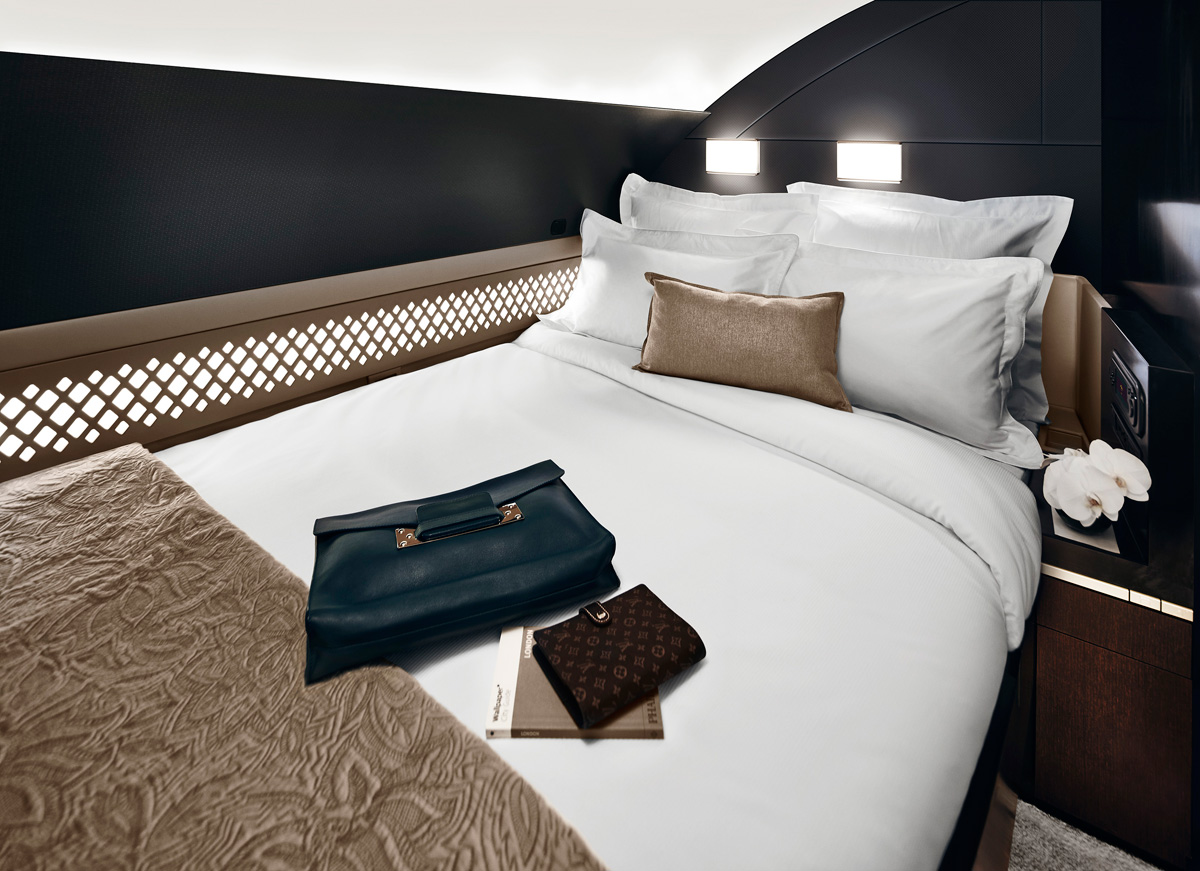
    2014-09-04-TheRes.jpg
    Etihad 'The Residence'
    With Etihad's introduction of "The Residence" -- an elaborate three-room fully staffed suite -- the ante has officially been upped. Compared to "The Residence", traditional flat-bed seats and vintage rouge seem like kitten's play. If Etihad Airways is "Jones", what will the other airlines do to keep up?
    One-upmanship is nothing new when it comes to airlines' premium class flagship products. Singapore Airlines introduced a double bed suite for two, Emirates fired back with the first in-air shower, and come December, Etihad will temporarily end the war with their new mega lux cabin.
    One must wonder--with some of the glitz and glamour aside--what is the best first-class cabin in the world? Does an onboard shower really make an airline number one? Is a bed for two actually more comfortable?
    The Top 24 First-Class Cabins
    2014-09-04-Singapore.jpg
    Singapore Suites A380
    By sorting through the clever marketing, Swarovski crystal, and fine linens, myself and the flight experts at Flightfox have set out for answers. To crack the code of the best first-class cabins in the sky, we weighed: seat size and comfort, the unexplainable "rockstar factor" (pyjamas, private chef, onboard bar, caviar, limo service etc.), and food and wine. In addition, we crunched the numbers to uncover the cheapest routes each first class cabin flies.
    The Top 24 Rankings:
    2014-09-04-RankingsGood.png
    Best Seat Award
    Seat configuration, size, aisle access, and suite privacy. These seats are king.
    1. Lufthansa
    2. Singapore Airlines
    3. Cathay Pacific
    4. Air France
    5. Malaysia Airlines
    Rockstar Factor Award
    The "it' factor is a combination of champagne served, PJ's provided, caviar plating, limo service, onboard bar and onboard chef.
    1. Singapore Airlines
    2. Cathay Pacific 
    3. Emirates
    4. Etihad Airways
    5. Lufthansa
    Food and Wine Award
    Who's got the best dining at 30,000 feet?
    1. Etihad Airways
    2. Lufthansa
    3. ANA All Nippon Airways
    4. Emirates
    5. Cathay Pacific
    Cheapest Routes
    You can test-ride five of the top 24 cabins for less than $850 per flight. First-class doesn't have to mean remortgaging your house after all.
    2014-09-04-ScreenShot20140904at5.39.27PM.png
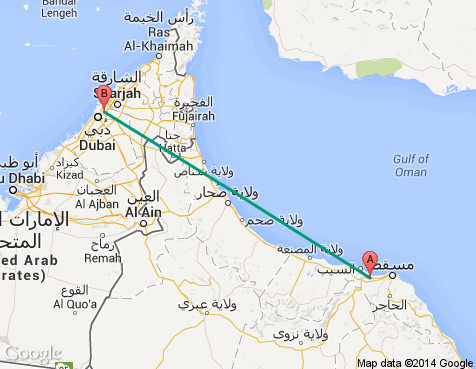
    1. Swiss, $355 from Muscat to Dubai
    2. Qatar, $684 from Riyadh to Doha
    3. Cathay Pacific, $713 from Taiwan to Hong Kong
    4. Emirates, $824 from Auckland to Brisbane
    5. Air China, $849 from Beijing to Guangzhou
    To see the full list of rankings and cheapest routes, check out the original article published on Flightfox.

    Friday, June 13, 2014

    Airlines Change The Carry-On Rules

    AIRPORT

    Recently I had a very unpleasant surprise in the TSA line at New York's JFK airport. No, they did not do a touchy-feely pat-down or confiscate something.
    Just before actually getting to the TSA agent's podium, a red-jacketed person (who I believe was hired by American Airlines as a subcontractor but not an actual employee) insisted that I put my beloved Rimowa four-wheeled suitcase in a bag sizer. Keep in mind that I was flying in business class, and that I've taken this same 21-inch suitcase all around the world on almost every major airline and quite a few not-so-major ones.
    To make a long story short, it was rejected as "too big." What I didn't realize, because it's never become an issue, is that American (as well as Delta and United) have fairly new carry-on bag limits, including a 14-inch maximum width, and my Rimowa is 15 inches wide, as are many carry-ons. Even though it's an inch shorter than the 22-inch length limit, and an inch shorter than the official 9-inch depth limit, back to check-in I went. And the line was so long I almost missed my flight. I was then told that this is a new "FAA regulation" but I doubt that's true, since some airlines still have more generous allowances.
    One of my colleagues insists that this is a revenue ploy by the airlines: enforce the limits to the letter, and they'll get more checked bag fees (since I was flying in business class I didn't pay a fee, but others might not be so lucky).
    And these size limits are fairly recent policies. In fact, United made the change on March 2, 2014. Their previous policy was that no dimension could be over 22 inches and the total overall dimensions no more than 45 inches. So these very specific measurements really change the game, and will be causing a lot of headaches -- and heartaches when people learn they will have to leave their very expensive (in some cases) favorite bags in the closet or sell them on eBay.
    Or change airlines. It's interesting that not all airlines have the same size limits. Southwest and JetBlue have a more generous 24-by-16-by 10-inch carry-on limit, which, again, makes that "FAA" claim suspect.
    If you're looking for the "perfect" carry-on bag, here's some advice.
    First, obviously, make sure it's small enough to comply with even these new, more stringent size limits. Second, four-wheeled suitcases (so-called "spinners"), I've found, are easier to handle than two-wheeled models (and should you ever have to check your bag for whatever reason, spinners are treated more gently by baggage handlers,as this explains). But surprisingly, there aren't that many rolling carry-ons that meet the new Delta/American/United guidelines. The issue isn't with the 22-inch length because there are plenty of those available; where they fall "short" is exactly where I got nabbed: in the 14-inch width. In fact, I couldn't find a single suitcase from my beloved Rimowa brand that qualified, nor could I find a current model from Samsonite.
    And third, consider getting a suitcase with a good warranty.
    Some of the four-wheeled carry-ons that do fit all airlines' limits are the Briggs and Riley U122CX Baseline at 21 by 14 by 7.7 inches and 8.9 pounds (approximately $469) and the Travelpro Platinum Magna at 21 by 14 by 9 inches and 7.6 pounds (approximately $239). Although the Briggs and Riley is more expensive, it does come with an unconditional warranty: no matter who's at fault (you, the airline, or any other party) they'll fix it for free for as long as you own it.
    A great budget choice is the hard-sided CalPak Valley 20-inch Carry-On Spinner at 20 by 13.5 by 9.2 inches and 7 pounds (approximately $60).
    With a little research, you'll find that several other carry-on bags meet the new size requirements, but many current models are too big by just an inch or even a half-inch. And don't assume that you'll be able to sneak by just because your bag is an inch too big. As I discovered, that may not happen.
    George Hobica, founder of Airfarewatchdog.com 
    Follow us on Twitter: @TraveloreReport


    Thursday, May 8, 2014

    The Best And Worst Airlines For Spending Frequent-Flier Points

    Airlines Loosen Their Grip on Free Seats, but Biggest U.S. Carriers Trail International Rivals

    A new survey from IdeaWorks ranked the world's 25 largest frequent-flier programs. Who came out on top? WSJ 'Middle Seat' columnist Scott McCartney discusses the results on Lunch Break. Photo: Getty Images.
    It may not help you score a free ticket to Paris in July, but many airlines have started making it a bit easier for consumers to use frequent-flier miles for trips.
    An annual survey found greater availability of award tickets at the lowest "saver" levels at more than half of the 25 airlines surveyed around the world.
    "There's been a meaningful lift," said Jay Sorensen, president of Wisconsin-based consulting firm IdeaWorks, which conducts the annual survey. "Traditionally airlines cut back on award seats as they enter [financial] recovery because they can sell more seats for cash. But that's not happening this time."
    Delta Air Lines  had one of the biggest changes. Delta has perennially ranked at the bottom of the five-year-old ranking.
    The data show Delta has started to make small improvements. In this year's survey, Delta had two tickets available at the saver level on 55% of the 280 queries made, up from 36% last year. That put Delta on par with American Airlines. Both still trail Alaska, United, JetBlue  and Southwest among U.S. carriers.
    Delta says on Jan. 1 it started to slowly change award seat allocations, telling inventory managers to be less tightfisted with saver-level seats. If flights aren't selling as well as planned, Delta says it now allocates more frequent-flier award seats rather than holding out longer for low-fare ticket purchases.
    "We are taking a slightly less conservative approach in how we manage flights far out," said Delta Vice President Jeff Robertson, who said lack of award availability was Delta's top customer gripe. The airline has bigger changes coming for its program.
    The survey, sponsored by technology company Switchfly Inc., checks online for two seats at the lowest possible mileage level on the busiest routes for each airline. That tends to be a coach ticket for 25,000 miles on U.S. domestic trips. The survey checked travel dates between June and October 2014 on 10 medium-length routes under 2,500 miles, plus 10 long-haul routes, a total of 280 queries for each airline.
    By using each airline's busiest routes, the survey checks where airlines have the most seats to offer and where travelers most often fly. Savvy travelers know an experienced phone agent can help find award seats that might not show up on the airline's website, but this survey represents a more standard search.
    Air Berlin and Southwest Airlines  had seats available on every query made in the survey, ranking them at the top for the third year in a row. JetBlue improved its availability a bit and had seats available for 93% of the requests.
    Southwest has some natural advantages. Its short-haul, high-frequency network means that on its busiest routes, it may have a dozen flights a day or more. "If they can't find two seats, something is wrong," Mr. Sorensen said.
    In addition, Southwest moved to a point-based system several years ago. Every flight is shown with a cash price and a point-based price. Since Southwest's credit card offers one point for every dollar spent, just like other airlines, IdeaWorks looks for trips on Southwest at 25,000 points or lower.
    At the bottom of the rankings were US Airways and Avianca  Taca of Latin America. US Airways, with seats available on only 35% of queries, has consistently found itself around the bottom of the rankings, showing "a management philosophy toward stinginess" on frequent-flier awards, Mr. Sorensen said.

    United

    United boasts of seat availability in its advertising, but suffered a decline this year. Long-haul routes bore the brunt, with an 11% drop in award-seat availability. United said it hasn't changed how it allocates award seats, but thinks demand this year may be higher than last year, so more free seats have already been grabbed.

    American

    For several years US Airways has been the stingiest with free trips at the lowest mileage level. This year IdeaWorks found US Airways was the most expensive of North American carriers, at an average of 31,082 miles per round-trip ticket for trips under 2,500 miles. Most of the new leadership at American Airlines comes from US Airways as the two carriers merge. Will the stinginess carry over?

    Delta

    Out of the cellar, Delta says it began offering more award seats on Jan. 1 and will continue loosening up a tight grip on availability. So far, most of the improvement has come on domestic routes, IdeaWorks found.
    Now those US Airways executives comprise most of the senior management team after the carrier's merger with American Airlines. Regular travelers on the airline may wonder if American will make it more difficult to get seats at saver-mileage levels after the US Airways and American frequent-flier programs merge.
    A spokesman for American said as the two airlines merge frequent-flier programs, "we will offer a loyalty program that supports and reflects our industry-leading position."
    Airlines have been under intense pressure from customers, accountants and banks to make more seats available for awards so consumers can use their miles. It's the accounting rule changes and pressure from banks that seem to be driving the most change now.
    The majority of airline miles and points are sold to banks, which give them out as credit card rewards. When customers have a difficult time cashing in the miles, they may switch to other cards. In addition, accounting rules adopted by many airlines now let carriers record only a portion of revenue when miles are sold to banks and defer the rest until miles are redeemed.
    Airline executives admit that Mr. Sorensen's five-year-old availability survey has also had an impact, quantifying seats available for the first time and comparing airlines head-to-head. United began advertising its strong showing last year; Delta says its low ranking prompted internal debate that pushed changes.
    Many customers still aren't happy. Bob Anderson of Minneapolis boosted his mileage by getting a new American Express  credit card that offered a sign-up bonus in Delta miles. In January, he shopped for two seats to Acapulco, Mexico, telling Delta he'd take any flight any day in January, February or March. Nothing was available. When he complained in writing, Delta responded by urging him to be more flexible.
    "I can't redeem them," Mr. Anderson said.
    Delta announced a dramatic change in its SkyMiles program in February. Beginning in 2015, miles will be awarded based on the fare paid, not distance traveled, with hefty bonuses for elite-level status. As part of the changes, Delta promised to make more award seats available. Mr. Robertson said the airline wanted to ramp up availability over the course of 2014. Delta also plans to roll out enhanced search capabilities for awards on its website.
    "I think customers will really see us start walking the talk over the next six to eight months," Mr. Robertson said. Most of the improvement at Delta came on domestic trips, IdeaWorks noted, rather than long-haul international flights.
    Turkish Airlines posted the biggest turnaround in the IdeaWorks survey. It has used athletes Kobe Bryant, seated left, and Lionel Messi, seated right, in a high-profile U.S. ad campaign. Turkish Airlines
    Turkish Airlines  saw the biggest turnaround. The carrier is pushing hard to expand, including new flights from North America. Turkish has employed star athletes Kobe Bryant and Lionel Messi in its advertising and promised more award seats after acknowledging in a news release that its frequent-flier program needed an upgrade. The airline plans to make more award seats available starting June 1.
    Mr. Sorensen notes that airlines like United and Air France,  both of which are trailing competitors' profitability and both of which had declines in reward availability this year, sometimes reduce availability of reward seats to get more paying customers instead.
    A spokesman for United said the airline's strategy on frequent-flier awards this year is consistent with past years. The decline in 2014 "may simply be the result of the change in booking demand in March of this year versus March of 2013." Air France didn't answer a request for comment.