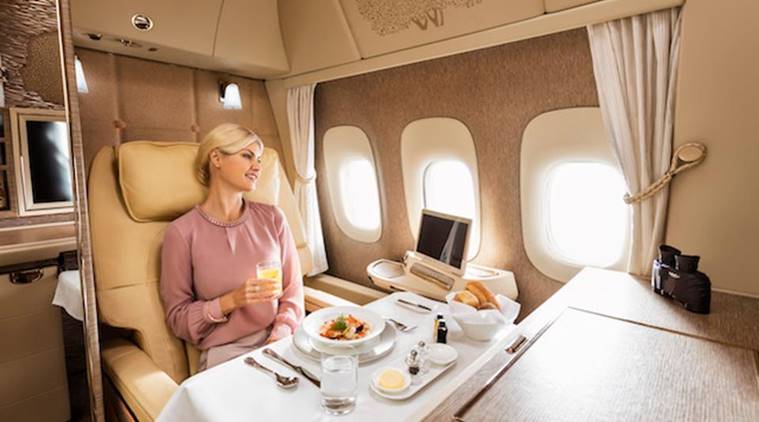
The aviation world is buzzing with a rumor that feels straight out of a frequent-flyer fever dream. The Israeli Ministry of Transportation has reportedly approached Dubai-based mega-carrier Emirates with a jaw-dropping proposal: launch nonstop flights from Tel Aviv (TLV) to New York (JFK) and Bangkok (BKK). If this plan takes off, it would dramatically reshape transatlantic travel and offer a massive win for passengers tired of soaring ticket prices. However, getting those iconic Emirates jets onto the TLV–JFK route requires clearing some unprecedented legal, political, and regulatory hurdles.
Why is Israel Making This Move?
To put it simply: the current travel landscape between Israel and the United States is squeezed. Following the geopolitical turmoil that began in late 2023, U.S. legacy carriers like Delta, United, and American Airlines suspended their lucrative routes to Tel Aviv. While some tentative returns are on the horizon, American Airlines has pushed back its resumption until 2027.
This has left Israel's flag carrier, El Al, alongside Arkia, with a functional monopoly on nonstop flights to the U.S. With high demand and limited supply, airfares have skyrocketed. By courting Emirates, the Israeli government hopes to inject heavy competition into its marquee route, driving down ticket prices and restoring consumer confidence.
The "Seventh Freedom" Twist
Emirates is already famous for its successful Fifth Freedom flights—routes where an airline flies from its home country to a second country, and then continues to a third country, with the right to sell tickets on every individual leg. (Think of Emirates’ popular JFK–Milan–Dubai or Newark–Athens–Dubai routes).
But Israel's pitch goes a step further into uncharted territory. According to reports from Israel's N12 and Simple Flying, the government is offering Seventh Freedom rights.
What does that mean? Emirates wouldn't just be stopping over on the way from Dubai. Instead, they would essentially establish a foreign base of operations in Tel Aviv, permanently stationing aircraft and crews there to fly standalone routes directly to New York and Bangkok without the plane ever needing to touch down in Dubai.
The Massive Hurdles in the Way
While the idea of flying an Emirates A380 or Boeing 777 directly from Ben Gurion to New York sounds incredible, it won't happen overnight. Several major roadblocks stand in the way:
Regulatory Obstacles: Operating Seventh Freedom flights would require Israel to rewrite its own protectionist aviation laws. Furthermore, the deal would require strict U.S. regulatory approval, which is far from guaranteed.
Fierce Domestic Opposition: You can expect vehement pushback from El Al and Arkia, who will fiercely protect their market share on these highly profitable routes. U.S. carriers would likely lobby heavily against it as well.
Operational & Diplomatic Strategy: Emirates historically funnels its entire global operation through its massive mega-hub in Dubai. Basing crews and planes completely separate from their home hub deviates heavily from their core business model. Furthermore, the move relies entirely on the delicate diplomatic framework established by the Abraham Accords.
A Simpler Path Forward?
Some aviation insiders, like those at Live and Let's Fly, suggest a more realistic compromise. Instead of a standalone Seventh Freedom operation, Emirates could simply resume its suspended Dubai–Tel Aviv route and extend it onward to New York as a traditional Fifth Freedom flight.
This path of least resistance wouldn't require rewriting international aviation treaties, yet it would still bring the unmatched premium service of Emirates—and much-needed seat capacity—to the transatlantic market.The Bottom Line
For now, this remains a highly ambitious pitch from the Israeli government rather than an imminent route announcement from Emirates. But the mere fact that these discussions are happening highlights just how much the global aviation map is shifting.
If it succeeds, it will be a historic milestone for regional normalization and a massive victory for travelers looking for more luxury, options, and affordability across the Atlantic.
Showing posts with label Emirates. Show all posts
Monday, June 8, 2026
Wednesday, October 29, 2025
The Largest Passenger Plane Can Hold 850 Seats - Here's Which Airlines Use It
Airbus is one of the most familiar names in aerospace design and manufacturing, with more than 12,000 aircraft, both commercial and freight, in service worldwide. The company was established in 1969, but it can trace its roots back to a 1967 agreement between France, Germany, and England that coordinated efforts to advance the field of aviation. The first Airbus model, the A300B1, took flight in 1972. Thirty-five years later, in 2007, the largest passenger aircraft in the world, the Airbus A380, entered service — and several airlines still use it today.
The A380 is the only commercial airplane with a full-length double-deck design. This allows carriers to devote one deck to premium seats and one deck to economy seats and still accommodate more than 400 economy passengers. When it's configured for only economy passengers, this massive jet can hold 853 people. One of its closest competitors, the Boeing 747-8, can't come close, with most configurations holding about 460 passengers.
It's not only unique to fly on, the A380 is also hard to miss in the sky above you. Its distinctive shape and 262-foot wingspan, along with its four massive engines, make it a favorite for plane spotters.
A380s in the air today
Airbus ceased production of the A380 in 2021, but it's still used for long-haul flights all over the world. The airlines that operate the A380 are British Airways, Emirates, Lufthansa, Qantas, Etihad, Asiana, Singapore Airlines, Korean Air, All Nippon Airways, and Qatar Airways. Though it has a maximum capacity of more than 850 seats, many airlines have it configured for fewer. The three-class layout with about 500 seats is popular.
Since 2007, the A380 has logged more than 800,000 flights, carrying more than 300 million passengers all over the world. Emirates has the largest fleet of A380s of any airline, which is not surprising when you consider the aircraft's range of about 8,000 nautical miles. Its flights between Dubai and London's Heathrow airport are the busiest routes consistently flying A380s.
While some airlines reportedly had big plans for the A380 when they first took flight, envisioning the ultimate luxury, casinos, and even gyms, those visions never came to fruition. In 2020, Business Insider reported that some analysts see the A380 as Airbus's biggest mistake, designed for a non-existent market. While there are still thousands of A380s in the air, commercial aviation is gravitating toward smaller, more fuel-efficient planes that can still fly long distances with fewer passengers. The Airbus A350-1000, which Qantas selected to replace its fleet of A380s, seats up to 400 passengers and has a range of 9,000 nautical miles.
https://www.slashgear.com/author/carolineanschutz/
The A380 is the only commercial airplane with a full-length double-deck design. This allows carriers to devote one deck to premium seats and one deck to economy seats and still accommodate more than 400 economy passengers. When it's configured for only economy passengers, this massive jet can hold 853 people. One of its closest competitors, the Boeing 747-8, can't come close, with most configurations holding about 460 passengers.
It's not only unique to fly on, the A380 is also hard to miss in the sky above you. Its distinctive shape and 262-foot wingspan, along with its four massive engines, make it a favorite for plane spotters.
A380s in the air today
Airbus ceased production of the A380 in 2021, but it's still used for long-haul flights all over the world. The airlines that operate the A380 are British Airways, Emirates, Lufthansa, Qantas, Etihad, Asiana, Singapore Airlines, Korean Air, All Nippon Airways, and Qatar Airways. Though it has a maximum capacity of more than 850 seats, many airlines have it configured for fewer. The three-class layout with about 500 seats is popular.
Since 2007, the A380 has logged more than 800,000 flights, carrying more than 300 million passengers all over the world. Emirates has the largest fleet of A380s of any airline, which is not surprising when you consider the aircraft's range of about 8,000 nautical miles. Its flights between Dubai and London's Heathrow airport are the busiest routes consistently flying A380s.
While some airlines reportedly had big plans for the A380 when they first took flight, envisioning the ultimate luxury, casinos, and even gyms, those visions never came to fruition. In 2020, Business Insider reported that some analysts see the A380 as Airbus's biggest mistake, designed for a non-existent market. While there are still thousands of A380s in the air, commercial aviation is gravitating toward smaller, more fuel-efficient planes that can still fly long distances with fewer passengers. The Airbus A350-1000, which Qantas selected to replace its fleet of A380s, seats up to 400 passengers and has a range of 9,000 nautical miles.
https://www.slashgear.com/author/carolineanschutz/
Sunday, February 2, 2025
Emirates Set To Become The World’s First Autism Certified Airline™
Emirates has launched an inspiring journey to officially become the world’s first Autism Certified Airline™, inviting customers with autism and sensory sensitivities to experience Emirates’ seamless services and personalised hospitality, making travel more accessible for all. The inaugural designation is set to be formally awarded by the International Board of Credentialing and Continuing Education Standards (IBCCES) in the coming months, when more than 30,000 Emirates cabin crew and ground staff will have completed the initial training. Emirates also plans to roll out new standards and services that will improve the on ground and inflight travel experience for both customers on the autism spectrum and their families and companions, to be announced later in the year.
Accessible Travel for all
For many members of the global autism community, international air travel is a highly challenging experience, or something to be avoided completely, due to the high level of sensory stimuli that can be involved. A survey on AutismTravel.com revealed that 78% of families are hesitant to travel or visit new locations, and that 94% of respondents would take more vacations if they had access to places where staff are autism-trained and certified. As part of Emirates’ mission to make travel more inclusive and accessible for all, this significant step also supports Dubai’s ambition to become the most accessible destination in the world.
What is the Autism Certified Airline™ designation (ACA)?
Driven by its commitment to creating a welcoming travel experience for all customers including individuals with autism and those with sensory sensitivities, Emirates worked collaboratively with IBCCES, a leading organization in autism and neurodiversity training and certification, to conduct an onsite review and comprehensive audit.
As part of a vast research endeavour, IBCCES surveyed more than 14,000 people with a variety of disabilities, including people with autism, those with sensory sensitivities and their families and caregivers. The survey data was collated alongside numerous interviews, an International Air Transport Association (IATA) industry survey, and feedback from 1,200 industry professionals - helping develop the most beneficial standards for both passengers and airline staff. In addition to the feedback collated, IBCCES experts also conducted several Emirates flight audits on both long and short haul routes.
The collation of detailed data ensured input from key stakeholders including the lived experiences of people with autism, global thought leaders, industry professionals and healthcare experts - combined to create new industry standards that accommodate passengers with autism and sensory sensitivities during air travel. Using a data-driven approach, Emirates and IBCCES partnered to create a new blueprint for serving passengers with accessibility requirements, encompassing the entire journey – from ground services to in-flight services, and Emirates will lead the way in bringing these new standards into practice in aviation for the first time. The thorough certification process includes ensuring at least 80% of customer-facing staff complete the dedicated training, alongside a commitment to ongoing training and improvements.
Emirates’ autism and sensory-awareness training for more than 30,000 staff
As part of the designation, Emirates’ ground staff and cabin crew will undertake a new, focused training on autism and sensory awareness to equip them with the understanding and skills to address needs of travellers with autism and sensory sensitivities, along with their families. The training educates Emirates' teams on the spectrum of autism, misconceptions and challenges faced, the myriad ways to assist customers dependent on their individual needs, and potential stimulus and triggers that staff should be aware of. The new training builds on the foundations established by the Emirates ‘Introduction to Autism and Hidden Disabilities’ training, which was completed by 23,000 staff in 2023.
Emirates’ new standards and services for customers with autism
Throughout 2025 and beyond, Emirates will be introducing new standards and services for customers with autism and sensory conditions that will ensure more enjoyable and accessible travel. One such service is the introduction of ‘sensory guides’ – digital aids developed as part of the audit conducted by IBCCES in collaboration with Emirates that empower travellers to make informed decisions about the various environments encountered, and plan what suits their needs and preferences. The guides were created by conducting comprehensive facilities audits across Dubai locations and the inflight experience, measuring sensory inputs in public areas such as sound levels, lighting, and potential sights and smells. Another development expected in 2025 will be the introduction of neurodiverse sensory products, for customers on Emirates flights - sensory fidget toys or aids that can encourage focus, help to reduce self stimulatory behaviour and de-stress.
Working together for Accessible Travel: Emirates, Dubai Airports and Dubai Tourism
In April 2024, Emirates achieved a Certified Autism Center™ Designation for all four of its Dubai Check In facilities including its dedicated hub in Terminal 3 at Dubai International Airport (DXB). In December 2023, Dubai Airport was celebrated as the first international airport to receive the Certified Autism Centre™ Designation. Continuing to drive the accessible travel agenda forward, Emirates’ new training programme, as well as new standards and protocols to be implemented in stages in 2025 and beyond, will enable neurodiverse customers to fly more comfortably. These achievements align with the Department of Economy and Tourism's (DET) vision of Dubai becoming the first Certified Autism Destination™ (CAD) in the Eastern Hemisphere. By working closely together - Emirates, the Department of Economy and Tourism, Dubai Airports, the General Directorate of Residency and Foreign Affairs, Dubai Police and Dubai Customs, are making significant inroads in inclusive and accessible travel.
About IBCCES
Delivering The Global Standard For Training and Certification in The Field of Cognitive Disorders – IBCCES provides a series of certifications that empower professionals to be leaders in their field and improve the outcomes for the individuals they serve. These programs are recognized around the world as the leading benchmark for training and certification in the areas of autism and other cognitive disorders. IBCCES partners with cities, destinations, and organizations on initiatives like the Certified Autism Destination™ (CAD) program, ensuring autistic and sensory-sensitive visitors feel welcomed and safe. Becoming a CAD means tourism, hospitality, and entertainment organizations complete autism and sensory sensitivity training and certification developed and delivered by IBCCES. IBCCES also created AutismTravel.com, a free online resource for families that lists certified destinations and connects families to other resources and each other.
Accessible Travel for all
For many members of the global autism community, international air travel is a highly challenging experience, or something to be avoided completely, due to the high level of sensory stimuli that can be involved. A survey on AutismTravel.com revealed that 78% of families are hesitant to travel or visit new locations, and that 94% of respondents would take more vacations if they had access to places where staff are autism-trained and certified. As part of Emirates’ mission to make travel more inclusive and accessible for all, this significant step also supports Dubai’s ambition to become the most accessible destination in the world.
What is the Autism Certified Airline™ designation (ACA)?
Driven by its commitment to creating a welcoming travel experience for all customers including individuals with autism and those with sensory sensitivities, Emirates worked collaboratively with IBCCES, a leading organization in autism and neurodiversity training and certification, to conduct an onsite review and comprehensive audit.
As part of a vast research endeavour, IBCCES surveyed more than 14,000 people with a variety of disabilities, including people with autism, those with sensory sensitivities and their families and caregivers. The survey data was collated alongside numerous interviews, an International Air Transport Association (IATA) industry survey, and feedback from 1,200 industry professionals - helping develop the most beneficial standards for both passengers and airline staff. In addition to the feedback collated, IBCCES experts also conducted several Emirates flight audits on both long and short haul routes.
The collation of detailed data ensured input from key stakeholders including the lived experiences of people with autism, global thought leaders, industry professionals and healthcare experts - combined to create new industry standards that accommodate passengers with autism and sensory sensitivities during air travel. Using a data-driven approach, Emirates and IBCCES partnered to create a new blueprint for serving passengers with accessibility requirements, encompassing the entire journey – from ground services to in-flight services, and Emirates will lead the way in bringing these new standards into practice in aviation for the first time. The thorough certification process includes ensuring at least 80% of customer-facing staff complete the dedicated training, alongside a commitment to ongoing training and improvements.
Emirates’ autism and sensory-awareness training for more than 30,000 staff
As part of the designation, Emirates’ ground staff and cabin crew will undertake a new, focused training on autism and sensory awareness to equip them with the understanding and skills to address needs of travellers with autism and sensory sensitivities, along with their families. The training educates Emirates' teams on the spectrum of autism, misconceptions and challenges faced, the myriad ways to assist customers dependent on their individual needs, and potential stimulus and triggers that staff should be aware of. The new training builds on the foundations established by the Emirates ‘Introduction to Autism and Hidden Disabilities’ training, which was completed by 23,000 staff in 2023.
Emirates’ new standards and services for customers with autism
Throughout 2025 and beyond, Emirates will be introducing new standards and services for customers with autism and sensory conditions that will ensure more enjoyable and accessible travel. One such service is the introduction of ‘sensory guides’ – digital aids developed as part of the audit conducted by IBCCES in collaboration with Emirates that empower travellers to make informed decisions about the various environments encountered, and plan what suits their needs and preferences. The guides were created by conducting comprehensive facilities audits across Dubai locations and the inflight experience, measuring sensory inputs in public areas such as sound levels, lighting, and potential sights and smells. Another development expected in 2025 will be the introduction of neurodiverse sensory products, for customers on Emirates flights - sensory fidget toys or aids that can encourage focus, help to reduce self stimulatory behaviour and de-stress.
Working together for Accessible Travel: Emirates, Dubai Airports and Dubai Tourism
In April 2024, Emirates achieved a Certified Autism Center™ Designation for all four of its Dubai Check In facilities including its dedicated hub in Terminal 3 at Dubai International Airport (DXB). In December 2023, Dubai Airport was celebrated as the first international airport to receive the Certified Autism Centre™ Designation. Continuing to drive the accessible travel agenda forward, Emirates’ new training programme, as well as new standards and protocols to be implemented in stages in 2025 and beyond, will enable neurodiverse customers to fly more comfortably. These achievements align with the Department of Economy and Tourism's (DET) vision of Dubai becoming the first Certified Autism Destination™ (CAD) in the Eastern Hemisphere. By working closely together - Emirates, the Department of Economy and Tourism, Dubai Airports, the General Directorate of Residency and Foreign Affairs, Dubai Police and Dubai Customs, are making significant inroads in inclusive and accessible travel.
About IBCCES
Delivering The Global Standard For Training and Certification in The Field of Cognitive Disorders – IBCCES provides a series of certifications that empower professionals to be leaders in their field and improve the outcomes for the individuals they serve. These programs are recognized around the world as the leading benchmark for training and certification in the areas of autism and other cognitive disorders. IBCCES partners with cities, destinations, and organizations on initiatives like the Certified Autism Destination™ (CAD) program, ensuring autistic and sensory-sensitive visitors feel welcomed and safe. Becoming a CAD means tourism, hospitality, and entertainment organizations complete autism and sensory sensitivity training and certification developed and delivered by IBCCES. IBCCES also created AutismTravel.com, a free online resource for families that lists certified destinations and connects families to other resources and each other.
Sunday, November 26, 2023
Emirates Is Spending Billions To Refurbish Its Fleet And Instead Of Discarding The Leather From Its Plush First And Business Class Seats The Airline Is Recycling Them Into Sneakers, Backpacks And Belts. Each A380 Alone Sheds 250 Kgs Of Fine Leather.
Emirates has launched an ambitious $2 billion refurbishment program for its massive fleet of Airbus A380 aircraft, with the aim of extending their lifespan into the early 2040s. Unlike any other international carrier, Emirates had made the gigantic double-decker aircraft the central element of its entire fleet with the hopes of fueling the next stage of the company’s expansion. However, the rising fuel costs and the arrival of more efficient aircraft brought a premature end to Airbus A380’s story. The final nail in the coffin came in 2019 when Airbus announced that it was pulling the plug on the A380 because of poor sales. Since then, most airline companies across the world operating the superjumbo have either phased out the aircraft or have massively trimmed the size of their fleet. Emirates, which still operates more than 100 A380s, wants to give a new lease of life to its fleet of superjumbos with the massive refurbishment program, dubbed the Phoenix Project.
The refurbishment work has already begun at a dedicated hangar near Dubai’s airport, where two A380s can be retrofitted simultaneously. The entire interior of the aircraft is being revamped and modified with new features, including upgraded berths and stairwells. The quintessential gold trimmings and wood paneling are all being swapped with lighter tones, fresh carpeting, and mood lighting to give the aircraft a more contemporary appearance. Emirates is also adding depictions of local nature motifs to the interior. The only thing that is not being pulled out is the popular business-class bar meant for passengers to solarize mid-flight. It is believed that half of the $2 billion investment is dedicated to cabin refreshments.
The Phoenix Project is a massive undertaking, involving a thorough refurbishment of more than 100 A380s. Obviously, the program will produce a lot of waste. However, the Dubai-based airline has come up with a genius way of upcycling the waste produced by refurbishment. Emirates claims the retrofitting of one aircraft alone produces more than 600 pounds of discarded seat leather and more than 1200 pounds of other fabric.
The company says the substantial recyclable materials produced from the refurbishment process will be innovatively repurposed into a limited-edition collection of fashion items, including shoes, belts, and backpacks. These products will be made using seat leather, fabric, seat belts, and even pilot seat covers. This move will not only help Emirates make money by selling the limited edition products but also highlight its commitment to sustainability.
by Sayan Chakravarty
The refurbishment work has already begun at a dedicated hangar near Dubai’s airport, where two A380s can be retrofitted simultaneously. The entire interior of the aircraft is being revamped and modified with new features, including upgraded berths and stairwells. The quintessential gold trimmings and wood paneling are all being swapped with lighter tones, fresh carpeting, and mood lighting to give the aircraft a more contemporary appearance. Emirates is also adding depictions of local nature motifs to the interior. The only thing that is not being pulled out is the popular business-class bar meant for passengers to solarize mid-flight. It is believed that half of the $2 billion investment is dedicated to cabin refreshments.
The Phoenix Project is a massive undertaking, involving a thorough refurbishment of more than 100 A380s. Obviously, the program will produce a lot of waste. However, the Dubai-based airline has come up with a genius way of upcycling the waste produced by refurbishment. Emirates claims the retrofitting of one aircraft alone produces more than 600 pounds of discarded seat leather and more than 1200 pounds of other fabric.
The company says the substantial recyclable materials produced from the refurbishment process will be innovatively repurposed into a limited-edition collection of fashion items, including shoes, belts, and backpacks. These products will be made using seat leather, fabric, seat belts, and even pilot seat covers. This move will not only help Emirates make money by selling the limited edition products but also highlight its commitment to sustainability.
by Sayan Chakravarty
Sunday, July 15, 2018
Chateau Margaux For Seat 2A: Emirates Rewrites Rules For Airlines
The carrier goes all in on luxury, betting high profit margins from first-class tickets will relieve pressure to chase masses of discount travelers
DUBAI—In a world buzzing with budget carriers, Emirates Airline is flying in the opposite direction.
Other full-service airlines have tried in recent years to match the prices and passenger growth of discount carriers, which now fly almost everywhere. Emirates is doubling down on a very different strategy.
It has revved up the glitz by pouring billions of dollars into its fleet of planes, in-flight entertainment, wine lists and seats in order to hold on to a relatively small but fiercely loyal group of the world’s biggest-spending travelers.

A wine-tasting class for Emirates cabin crew this month. PHOTO: CELIA PETERSON FOR THE WALL STREET JOURNAL (2)

In November, Emirates rolled out private suites on its newest Boeing 777 jets—three of the 40-square-foot single-seat cabins fit across the width of the airliner. It has upgraded its fleet of chauffeured cars that whisk upmarket fliers to and from the airport, replacing Volvos with BMWs equipped with Wi-Fi hot spots. It spent $6.7 million building a lavish lounge at Boston’s Logan airport, part of a global makeover that included upgrades for lounges in Singapore and Bangkok.
Last year, Emirates spent $56 million on its collection of fine French wines alone. It has splashed out $780 million on the stuff since 2006 and owns its own wine cellars in France. On a recent flight, cabin crew poured a $566 bottle of 1998 Chateau Margaux for its first-class passengers. On some routes, the airline regularly offers the exclusive Hennessy Paradis Imperial cognac, which retails for more than $1,000 a bottle. Emirates surprised its first- and business-class passengers on a Dubai-Paris flight in April with an onboard wine-tasting master class led by a top vintner.
“I want it to feel like you are walking into a Ritz-Carlton,” says longtime President Tim Clark, who helped start the Dubai-owned carrier more than 30 years ago.
The airline is betting that the high profit margins of its luxury tickets will allow it to avoid chasing masses of travelers riding in discounted coach seats. The idea threatens to overturn one of the tenets of how to thrive as a large network carrier.
Profit Engine
Emirates' profit has turned higher after a sharp drop during the oil-price bust. Its margins have historically beaten the industry.

Profits
Profit margin
billion United Arab Emirates dirham
8
%
10
6
5
4
0
2
Industry average
Emirates
–5
0
’09
2008
’10
’11
’12
’17
’16
’15
2008
’09
’10
’11
’12
’13
’14
’17
’16
’15
’14
’13
Note: 1 billion dirham = $272.2 million at the current exchange rate
Sources: the company; International Air Transport Association (industry average)
For most of the rest of the industry, the strategy has, until recently, seemed too expensive and too risky. Carriers have always pushed higher-margin first-class and business seats. Analysts say those seats can make up about half of a big airline’s revenue and most of its profit.
But they have also relied on filling the rest of their planes with lower-paying economy passengers to squeeze revenue out of every flight. Big carriers add capacity when times are good, trying to fill planes and capture market share. But the excess supply naturally depresses prices, eroding profit margins.
Emirates’ focus on its top-paying customers—who aren’t as inclined to make purchases based on price—insulates it somewhat from the industry’s boom-and-bust cycle. It has a higher proportion of business and first-class seats than its peers, and it puts less emphasis on filling every seat in the plane.
Emirates’ load factor, a measure of seats sold per plane, is roughly 78%, compared with the industry average of more than 80%.
The amenities keep P.N.C. Menon, the founder and chairman of Dubai-based property developer Sobha Group, coming back. “I don’t fly with anybody else unless Emirates doesn’t operate there,” he says. He always books first class. Emirates consistently scores among top carriers in rankings by Skytrax, a London-based consultancy that factors in customer feedback.

Emirates is investing in revving up the luxury areas of its fleets. PHOTO: JASPER JUINEN/BLOOMBERG NEWS
Ticket prices are highly variable, but Emirates’ can be notably higher. On Emirates, a round trip between Dubai and London for mid-July travel was recently priced at around $10,400 in first class and $4,600 in business. A round-trip “upper class” ticket on Virgin Atlantic, with a seat that converts to a flat bed, between the cities was selling for around $3,400.
Between 2010 and 2015, Emirates’ profit margin averaged 5.5%, more than double the 2.3% average margin for the industry as a whole, according to data from the International Air Transport Association.
But Emirates has an extra sensitivity to oil prices. Lower fuel costs usually help carriers, but since so many of Emirates’ customers are in the business, a drop can hurt ticket sales.
In 2016, when oil prices were at lows, the margin slipped to 1.5%, recovering to 3% by 2017. Airlines globally averaged a 4.7% margin over the 2016-17 period.
The airline, part of Emirates Group, reported revenue of $25.2 billion for the latest fiscal year ended March 31, and profit of $762 million. It is 100%-owned by the government of Dubai, one of seven semiautonomous states that make up the United Arab Emirates. Its shares don’t trade on any exchange, so disclosure has always been limited, and analysts don’t follow it closely.
That has raised skepticism from competitors. American and European airlines accuse Emirates and other Mideast carriers of benefiting from unfair, hidden subsidies from their oil-rich government owners. Emirates and the others deny that.
Stretching Out
Emirates is one of the world's biggest buyers of jets as it adds routes and passengers, but it at times has a lower load factor, a measure of seats sold per plane.

Load factor
Number of aircraft
90% of seats sold
300
Number of destinations
85
250
Industry average
157
IN 2017-18
80
200
75
150
Emirates
70
100
Number of passengers
65
50
59 million
IN 2017-18
60
0
’12
’14
2008
’10
’16
’05
2000
’95
’15
1990
’10
Note: For fiscal years ending March 31, except for load factor
Sources: the company (aircraft, passengers, destinations); International Air Transport Association (load factor)
Despite suspicions that Emirates’ strategy alone isn’t creating all its profits, some airlines are now taking a page from its playbook. Deutsche Lufthansa AG , one of Emirates’ chief rivals in Europe, is rolling out an upgraded business class when it takes delivery of a fleet of new Boeing jets in two years. The seats will convert into 7-foot beds, which can be controlled by a passenger’s smartphone. The airline offers a cigar bar in its Frankfurt first-class lounge. It arranges rental Porsche 911s for passengers looking to kill time between flights.
“We want to offer as much premium as possible,” says Stefan Kreuzpaintner, head of Lufthansa sales for Europe, the Middle East and Africa. U.S. carriers, including Delta Air Lines Inc. and United Continental Holdings Inc., are also spiffing up their premium classes. Delta last year introduced a new business class seat, with shoulder-high privacy doors and “memory” foam cushions that retain the contours of a passenger’s body.
“Early on, some of what Emirates offered was seen as gimmicky,” says airline consultant John Strickland. “People no longer scoff,” he says.

Reviewing products for passengers at headquarters in Dubai. PHOTO: CELIA PETERSON FOR THE WALL STREET JOURNAL (2)

In some ways the superluxe strategy has been around since the start of long-haul commercial aviation—for years, a mode of transportation only the rich could afford. In the 1940s, Pan Am’s fleet of long-range Flying Clippers offered filet mignon on white tablecloths. A few decades later, the Concorde came to embody the new, global jet set. A handful of Asian carriers, like Cathay Pacific andSingapore Airlines , marketed themselves as more exclusive, pricier, options for long-haul travel.
Emirates, which started in 1985 as a shuttle service between Dubai and Pakistan, turbocharged that model, taking advantage of the geography of its hub in Dubai, situated between Asia and the West. It spawned copy cats of its own—Abu Dhabi’s Etihad Airways and Qatar Airways.
Dubai is opening in phases a sprawling new airport that will require a fast resumption of growth at the airline to justify the cost, already $30 billion in the initial stages. Dubai’s current airport—itself a luxurious destination full of high-end lounges and services—hosts 90 million passenger a year. The new airport’s capacity is expected to eventually reach 200 million.
Low oil prices in recent years frightened off some of Emirates’ most lucrative travelers—international oil and gas executives and big spenders in the Middle East. A short-lived ban on travel to America from several Mideast countries and temporary gadget restrictions hit traffic. U.S.-bound passengers fell by 35%.
In the darkest days of the oil-price rout, when profits and margins sank, Mr. Clark cut costs—but only behind the scenes, and in the back of the plane, where economy passengers sit, not in the premium cabin. Mr. Clark brought some parts production, such as seat-number plates, in house. Emirates started serving its own, cheaper bread rolls. In economy, it stopped handing out hot towels and served less-expensive cuts of meat.

Tim Clark, president of Emirates Airline, sits in a first-class suite. PHOTO: CHRISTIAN CHARISIUS/DPA/ZUMA PRESS
Emirates also experimented with tactics some other airlines had adopted from budget carriers. It started selling discounted fares in its economy cabin, charging extra for a seat assignment or checked luggage. Last year, it began to team up with budget airline Flydubai, also owned by the Dubai government, to cooperate on some routes.
But Emirates refused to skimp on business and first-class customers. “The amount of money you would save by going from Champagne to orange juice in business class is infinitesimally small,” Mr. Clark says. “The effect on the brand is devastating.”
Now, the oil price is back up to around $75 a barrel—from a low of around $25 two years ago—and lucrative flights are being reinstated. For its flight to Houston, a key route for high-paying energy executives, Emirates has resumed using giant Airbus A380s. Emirates has been, by far, the biggest buyer of the superjumbo jet—the world’s biggest commercial aircraft—in part because of all the room it provides for business and first-class space.
The Dubai-Houston flights are now configured with 14 first-class seats, 76 business class seats and about 400 coach seats. That’s up from eight first-class and 42 business class seats and around 400 coach seats on the Boeing 777 used in recent years.

An Emirates business-class cabin in an Airbus A380. PHOTO: CHRISTIAN CHARISIUS/PICTURE ALLIANCE/GETTY IMAGES
Two years ago, Mr. Clark hired Christoph Mueller, who previously helped turn around two troubled airlines, Ireland’s Aer Lingus and Malaysia Airlines, to push Emirates’ luxury offerings beyond just comfortable seats and expensive wine lists. Mr. Mueller has a goal to turn Emirates into a high-end lifestyle companyfor the world’s wealthiest passengers.
He aims to make Emirates’ high-end passengers’ journeys as seamless as possible—from pickup at home to drop-off at the hotel. Passengers drinking a certain white wine in an Emirates lounge should be welcomed with a glass of the same once on board, Mr. Mueller says. A passenger watching a movie on their tablet on the way to the airport should be able to arrive aboard and find it spooled up and ready to continue on the plane.

A lobster dish for first-class passengers. PHOTO: IMAGO/ZUMA PRESS
Emirates plans to reconfigure its onboard kitchens to offer by year-end meal service to business-class passengers on demand, rather than at set times. Mr. Mueller wants to personalize menus, so you don’t have to eat the same thing everyone else is having.
Outside of its planes, the airline is also pushing into concierge services, such as booking hard-to-get restaurant reservations and offering all-in-one holiday packages at Dubai’s glitzy resorts.
Corrections & Amplifications
Emirates’ load factor is roughly 78%. An earlier version of this article and an accompanying graphic incorrectly stated it was 67%. (July 12, 2018)
By Robert Wall and
Nicolas Parasie
Appeared in the July 13, 2018, print edition as 'Chateau Margaux for Seat 2A: Emirates Rewrites Airline Rules.'
Subscribe to:
Posts (Atom)