Showing posts with label #Beatles. Show all posts

Monday, September 12, 2016

‘The Beatles Have Got A Lot To Answer For In Liverpool’


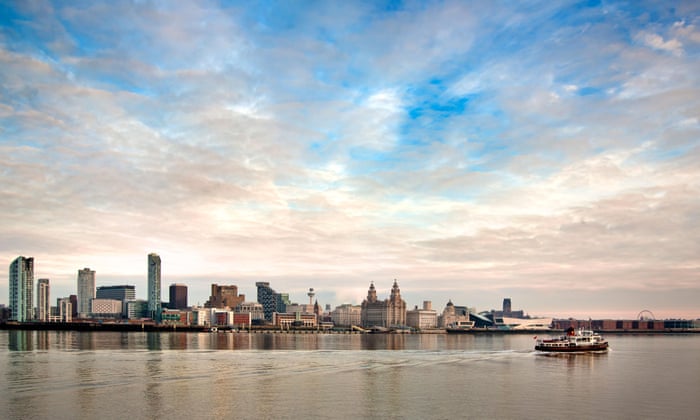
Ferry good … the Liverpool waterfront, including Pier Head. Photograph: Alamy

Roger Appleton, the director of a new documentary about Liverpool’s music scene – and not just the Fab Four – is inspired by the romantic and beautiful place he sees as ‘the least English of English cities’
Liverpool’s music scene is like the tide of the Mersey. It rolls in and brings fantastic songs and bands and then, for a little while, there’s a lull as it goes out. There’s almost a rhythm to its success.
I think many of the songs written here are inspired by the light and the river. Listen to a band like Echo and the Bunnymen and there’s often a lilting, lyrical feel to their tunes; compare it with a Manchester band of a similar period, like New Order, and their music is mechanistic, almost industrial.

Roger Appleton, director of Get Back.
Pinterest
 Roger Appleton, director of Get Back

To me Liverpool is the least English of English cities, and it’s one of the reasons I love living here. The population in the 1840s was relatively small (around 250,000) but from 1840-50 almost 1.3 million Irish people passed through here. Many moved on to the US or inland but the fact there were so many meant that by the 1860s you could walk around sections of the city and think you were in Ireland.


The best way to see the sights is to be a flâneur. I love this idea of strolling around taking in the buildings and atmosphere of a place. My partner has lived here all her life and I’ve been here for more than 30 years and we still get enormous pleasure from walking around. It can be the Victorian grandeur of the business district around Dale Street and Castle Street or the splendour of the Georgian Quarter around Hope Street, the street that runs between the city’s two cathedrals.
But if you want a proper sight to tick off the list, it has to be the Walker Art Gallery. I think it’s the best collection of paintings outside London. There are fantastic works from the early Renaissance period and because of the gallery’s association with the John Moores Painting Prize, there are great pieces by David Hockney, Peter Doig and Lucian Freud.

The Walker Art Gallery, home to the best collection outside London.
Pinterest
 The Walker Art Gallery, home to the best collection outside London. Photograph: Olaf Protze/Getty Images

St George’s Hall is one of the most magnificent buildings in Britain – though one of my friends once referred to it as “our village hall”. It’s a Grade-II listed neo-classical hall that was built in the early 1800s for musical events, as well as being a civil and crown court.
Last year, a set of terraced streets in Liverpool won the Turner Prize. Just across the road from Ringo Starr’s childhood home on Madryn Street are four streets of fantastic Victorian houses. They had been allowed to deteriorate during the 1980s and 90s and the council wanted to knock them down but local residents fought to save them. The residents worked on a renovation programme with an art and architecture collective called Assemble, from London, and last year Granby Four Streets won the UK’s most prestigious art prize.
The Beatles have a lot to answer for. That’s the opening line of my documentary. The Beatles’ story has been told so many times and I thought it would be more interesting to highlight some of the other fantastic music made in Liverpool before, during and after the Beatles. It’s important not to overlook how good some of this stuff was. I wanted to put the Beatles in the context of all of the music that came out of Merseyside.

An art installation of suitcases on Hope Street, in Liverpool’s Georgian Quarter.
Pinterest
 An art installation of suitcases on Hope Street, in Liverpool’s Georgian Quarter. Photograph: Alamy

For years after the Beatles’ peak, bands in Liverpool were almost afraid to write songs. Pete Wylie from Wah! said: “John Lennon cast a shadow over me.” It wasn’t until the early 70s that more bands started to write their own stuff – Deaf School in particular. Eventually, the floodgates opened and that led to the scene that developed around Eric’s Club on Mathew Street, with Echo and the Bunnymen, OMD, Teardrop Explodes and, ultimately, Frankie Goes to Hollywood.
The Music Room has been a great addition to the city’s music venues. It’s an intimate space, opened last year with a capacity of 160-250, and is built on to the back of the Philharmonic Hall. It sees jazz and folk bands, world music, some blues, and while they’re not often the sort of performers who’d sell out a 1,000-seater venue, they are at the top in terms of talent.
The quality and diversity of bands at the Caledonia is extraordinary. I don’t know how this pub-venue manages it but there’s great live music, for free, five nights a week. There’ll be jazz, including the Blind Monk Trio, a fantastic Irish band called Saltcutters play regularly, the pub hosts Cajun sessions and you might also catch the Loose Moose String Band with their 1930s swing tunes.

Live music at the Cavern Club
Pinterest
 Live music at the Cavern Club. Photograph: Christopher Furlong/Getty Images

Tony Benn told me a great story about coming to give a talk at the Philharmonic Hall. He said that he caught the train to Lime Street station and not knowing how to get to the hall asked people at a bus stop for directions. He said that not only did a man walk him to the hall but that by the time he arrived he’d also learned something about Rosa Luxemburg that he didn’t know.
Stand with your back to Princes Park gates and look down Princes Avenue – that’s my favourite view of this city. Princes Avenue is an extremely grand Victorian boulevard with a wide, green, central reservation, which is full of trees. It is lined with the most beautiful Victorian houses; you can almost imagine nannies in the 1890s wheeling their prams up and down that central reservation.
• Get Back, the Story of the City that Rocked the World, is out now on DVD


Thursday, December 10, 2015

Indian Retreat Where Beatles Learned To Meditate Opened To Public

The Beatles and their wives visited Rishikesh in India with the Maharishi Mahesh Yogi, in March 1968.
The Beatles and their wives visited Rishikesh in India with the Maharishi Mahesh Yogi, in March 1968. Photograph: Hulton Archive/Getty Images
Ashram where Fab Four spent time in 1960s became derelict after band fell out with guru – now it has been reopened with walking trails and gardens
The north Indian retreat where the Beatles learned transcendental meditation before falling out of love with its controversial guru, Maharishi Mahesh Yogi, has reopened to foreign visitors after decades of dereliction.
In 1968, the Fab Four wrote most of the White Album while staying at the ashramlocated in the Rajaji national park, besides the river Ganges. Since the Maharishi left in the 1970s it has been overtaken by forest, but on Tuesday, 35 years to the day since the assassination of John Lennon, it reopened with new walking trails and gardens.
“We want to conserve the place and retain its original charm,” DVS Khati, chief wildlife warden of the state of Uttarakhand, said: “We plan to have a yoga centre here as well soon. We hope the ashram in its new avatar will give a major boost to tourism in the region.”
The Beatles had one of their most concentrated spells of songwriting at the ashram and their visit overlapped with The Beach Boys. But their relationship with the Maharishi, remembered by Paul McCartney as “a giggly little guy”, soured.
Mute
Loaded: 0%
Progress: 0%
Pinterest
 The Beatles join Maharishi in Rishikesh, India, in 1968
Ringo Starr left after about 10 days, according to some accounts, complaining about the food. McCartney left a month later and John Lennon and George Harrison quit amid questions about whether the Maharishi might have groped female attendees, including Mia and Prudence Farrow.
Lennon later wrote a song about the Maharishi which ran: “Sexy Sadie what have you done/ You made a fool of everyone.” He also wrote one about Prudence Farrow - Dear Prudence, while McCartney wrote Back in the USSR during their time in Rishikesh.
“We have cleaned up the place and lined the pathways with flowers,” senior forestry official Rajendra Nautiyal told the BBC. “We are making some gardens and putting some benches for visitors. We are introducing a nature trail and bird walk. We also plan to set up a cafeteria and a souvenir shop at some point. We want to retain the place’s rustic look.”
Indian tourists are being charged 150 rupees (£1.50) entry while foreigners will pay 700 rupees.
For a period, Lennon at least was a convert to the Maharishi’s teachings. While in Rishikesh he wrote back to one British fan, a Mr Bulla, who had asked for money to fund a trip to the ashram: “All you need is initiative or if you don’t have this, I suggest you try transcendental meditation through which all things are possible. With love, John Lennon Jai guru dev.”
Over the years, visitors to Rishikesh, a small city in the Himalayan foothills boasting several meditation and yoga centres and whitewater rafting, have painted murals of the Beatles on the derelict ashram buildings, which are being retained. Fans could sneak in by climbing over the perimeter walls and the meditation hall decorated with colourful graffiti has been the main attraction.
George Harrison and John Lennon sit on rocks by a river in Rishikesh while studying transcendental meditation.
Pinterest
 George Harrison and John Lennon sit on rocks by a river in Rishikesh while studying transcendental meditation. Photograph: AP
The Beatles travelled there in February 1968 with a large entourage including Jane Asher and Cynthia Lennon. They had met the Maharishi at a seminar in a London hotel. Starr recently recalled the first time he met him as “one of those mind-altering moments of your life”.
“The man was so full of joy and happiness and it just blew my mind. It was just so far out I thought ‘I want some of that’.”
One of the Beach Boys, Mike Love, said last year: “We spent a lot of time together in India, at the Maharishi’s place in Rishikesh in 1968. That was pretty unusual for any group of any stature, let alone two of the top groups of the 60s, being in one place at one time for reasons other than music. It was a very special time. I think George Harrison and I had a lot in common in the sense that we both appreciated the philosophy that Maharishi was speaking from.”
McCartney later said: “We made a mistake. We thought there was more to him than there was. He’s human. We thought at first that he wasn’t.”
“There is no guru,” Lennon reportedly later concluded. “You have to believe in yourself. You’ve got to get down to your own god in your own temple. It’s all down to you, mate.”


Saturday, October 3, 2015

A Fab Four Fan's Guide To Liverpool & The Beatles

The Beatles were four young lads from Liverpool who revolutionized pop music and changed the world. Fans can explore their roots on a visit to the city, discovering the houses, parks and streets that inspired the band. Here, we take you through the must-see sights, from John Lennon’s bedroom and Penny Lane to museums and tribute bands.
The Beatles in the mid-1960s. Image by Michael Ochs Archives / Getty ImagesThe Beatles in the mid-1960s. Image by Michael Ochs Archives / Getty Images

Lennon and McCartney’s childhood homes

The National Trust, the caretaker of palaces and royal estates across the UK, also owns two seemingly nondescript houses in the suburbs of south Liverpool where John and Paul grew up. And if you only have time for one Beatles experience in Liverpool, make it the trust’s tour of the two.
Mendips, John Lennon's childhood home. Image by Lauren Wellicome / Lonely PlanetMendips, John Lennon's childhood home. Image by Lauren Wellicome / Lonely Planet
Yoko Ono bought Mendips, the elegant 1930s house at 251 Menlove Ave where John Lennon grew up, in 2002 and donated it to the trust. Stepping inside means entering a time capsule, painstakingly recreated from accounts of lodgers who used to live with the family. You’re transported back to John’s childhood with his Aunt Mimi and Uncle George. The tour guides passionately detail his tumultuous family and school life, after walking you through the back garden door, which is the only way Aunt Mimi allowed scruffy Paul McCartney in.
Don’t miss climbing up the creaking stairs to John’s cramped bedroom where he wrote his first songs or singing at the top of your lungs in the closed off front porch, where Mimi would relegate the boys to practice.
Paul McCartney’s childhood home is not far away, but is a world apart from Mendips. 20 Forthlin Rd is an austere brick-fronted house that was one of hundreds the local council built after World War II. John and Paul would often end up in the cosy living room when they skipped school to write and rehearse some of their earliest songs.
Paul McCartney grew up at 20 Forthlin Rd. Image by Lauren Wellicome / Lonely PlanetPaul McCartney grew up at 20 Forthlin Rd. Image by Lauren Wellicome / Lonely Planet
Taking the 2½-hour National Trust tour is the only way to see inside the two Beatles’ homes, and you must be picked up and dropped off at Jurys Inn at Albert Dock or at Speke Hall.

Beatles Story museum

Spread across two sites near the River Mersey, the Beatles Story indulges visitors with a full-on history lesson. John Lennon’s sister Julia narrates the audio guide as you wander through a full-size recreation of the Cavern Club and the Abbey Road studio where the Beatles’ first singles were recorded. The bounty of Beatles memorabilia includes John’s famous round spectacles and George’s first guitar.
Above the Beatles Story’s Pier Head location, grab a quick drink and relax on the sunny roof terrace at Matou (matou.co.uk), overlooking the river.

Pub crawl Mathew St and catch a band at the Cavern Club

Mathew St, the Cavern Quarter's spine. Image by Lauren Wellicome / Lonely PlanetMathew St, the Cavern Quarter's spine. Image by Lauren Wellicome / Lonely Planet
Mathew St, one of the most famous streets in pop music, is the spine of the Cavern Quarter, a small district filled with shops, bars and pubs that really gets going after dark. A statue of John Lennon casually leans against a wall outside the reconstructed Cavern Club. The Beatles played the original venue nearly 300 times, but that wasn’t enough to save it from demolition in the 1970s to make way for a railway ventilation shaft that was ultimately never built. In addition to a range of local talent, the still dark and intimate Cavern Club hosts a Beatles tribute band that dons their mop-tops and rocks out every Saturday night.
For a quieter drink, stop off at Bar Four, the lounge at the Hard Days Night Hotel just off Mathew St, to sup some Beatles-themed cocktails, such as Daq in the USSR and Honey Can’t Buy Me Love.

Find Ringo Starr in Welsh Streets

Liverpool almost lost a piece of Beatles history forever when the local council decided to demolish and redevelop an area called Welsh Streets, 2 miles southeast of Albert Dock. After public protest, Ringo’s childhood home at 9 Madryn St was spared, but walking through these eerily quiet streets still feels post-apocalyptic. Almost all of the houses are abandoned and covered over with daunting metal grates. Beatles fans and the graffiti they leave behind are the only signs of life.
On the outside, Ringo’s house looks similar to Paul’s, but today it’s worth only a measly £525. The whole derelict Welsh Streets area sits in stark contrast to the more genteel neighbourhoods you’re escorted through with the National Trust.

Penny Lane and George Harrison

All these years later, ‘the shelter in the middle of the roundabout’ on Penny Lane is still there, and you can catch a bus here from the city centre 3.5 miles away, just as the Beatles did when Penny Lane was a major terminus. Snap a picture of the famous street sign before walking to George Harrison’s childhood home a mile away. You can wind your way down the narrow side streets, barely big enough for two cars, to see where George lived until age 6. This homely, bright red ‘two-up two-down’ terraced house at 12 Arnold Grove is still a private residence.

Eleanor Rigby via Strawberry Field

Strawberry Fields. Image by Francisco Antunes / CC BY 2.0Strawberry Field. Image by Francisco Antunes / CC BY 2.0
Make a quick stop at Strawberry Field, an old Salvation Army children’s home about 6 miles southeast of central Liverpool, to see the bright red, graffiti-covered gates. It’s surreal to imagine a young John Lennon playing in the woods behind these gates, as we’re just around the corner from Aunt Mimi’s house at Mendips. Although Strawberry Field is currently inaccessible beyond the gate, there are plans to develop the site as a museum.
Continue on Menlove Ave and stroll by Mendips or remember the Quarrymen, the band that evolved into the Beatles, on Quarry St, heading for St Peter’s Church. The most important meeting in pop music happened in these pristinely kept church grounds, when John first met Paul at a school fete. But the churchyard has even more Beatles connections: a woman named Eleanor Rigby is buried here, as well as John’s uncle George, who he lived with at Mendips.

Getting around

To tackle all these sights, set aside a couple of days. John and Paul’s childhood homes and the Beatles Story are the most obvious attractions and could be done in a day. The Beatles grew up outside the city centre: if you don't have a car, hire a bike from Liverpool’s CityBike scheme (citybikeliverpool.co.uk) or use local bus 76, which runs from Albert Dock past Penny Lane, Mendips and St Peter’s Church.

By   


Read more: http://www.lonelyplanet.com/england/northwest-england/liverpool/travel-tips-and-articles/a-fab-four-fans-guide-to-liverpool-the-beatles#ixzz3nXjKQ4gy