Showing posts with label #HongKong. Show all posts

Sunday, December 2, 2018

Travelore Tips: Recommended Things To Do In Hong Kong

3.Aqua-Luna
In a city that is only 1,000 square kilometres, how much can there realistically be to do? Most visitors to Hong Kong scour the city from the Peak, shop till their hearts drop and eat well, but after your stomachs are full and your wallets are empty, what’s left?, blogs Chinmoy Lad. Here are three alternative itineraries you can enjoy on your next trip to Hong Kong:
Take a harbour cruise
The coastline and surrounding waters of Hong Kong is one of the busiest harbours in the world, and therefore one of the city’s greatest assets. It is no surprise that boat trips are popular, particularly in summer with a group of friends or to celebrate special occasions.
Aqua Luna offers high-end catered harbour cruises to celebrate such special occasions. The pictured Aqua Luna, with its bright red sails, is distinguishable from a distance. Modelled after an old Chinese junk boat, the handcrafted boat was was built specifically for the Aqua Restaurant Group, employing only traditional shipbuilding methods.
For a more cost-efficient option, there’s always the Star Ferry, an iconic institution that still traverses from Hong Kong Island to Kowloon. While the ride is much shorter now than it used to be thanks to heavy reclamation and the resulting inevitable narrowing of the harbour, it is still one of the city’s most incredible attractions, used as much as a mode of transport as a tourist hotspot.
For more incredible sights and sounds that make up Hong Kong, from the commonly visited sites to the more obscure, check out the official Hong Kong Tourism Board Facebook fan page, Discover Hong Kong.
hong kong mountains beachGo hiking
Despite its relatively small physical size, Hong Kong’s unique topography provides ample opportunities for nature lovers to explore the wilderness. Approximately only 30% of the land area is actually developed, and a large part of the remainder is specifically reserved as protected country parks and geo parks. The range of topography varies from open grasslands and dense woodlands that encase reservoirs, mountain peak ranges (including the “nine dragons” of Kowloon – a transliteral definition of Kowloon) that rise nearly 1,000 metres from sea level, to sparse, untouched white-sandy beaches that culminate in crystal clear waters that make you feel as if you’ve entered paradise.
As such, hiking (and camping, although not quite as rustic as you imagine it) is a popular activity among enthusiasts, hosting some of the most scenic vistas you would never expect from a trip to one of the world’s most dense cities. The trails range from simple walks upon paved roads, such as the family-friendly walk up Mount Butler/Mount Parker or up to The Peak, to scenic but easy walks along dirt roads such as Dragon’s Back that ends in Shek O, to difficult yet worthy and lengthy expeditions such as sections along the MacLehose Trail in northeastern Sai Kung.
Explore the colonial past
The British Empire governed Hong Kong for over 150 years, so it’s no surprise they left a lasting legacy in this small colony, the crown in the jewel of the Empire at its peak. Arguably, the quintessential British experience is to enjoy afternoon tea at The Peninsula. Afternoon tea is now as much a Hong Kong institution as it is British, with every eatery from small restaurants and cake cafes to cha-chaan-tengs (local restaurants) respectively serving their own twist of the classic.
Alternatively, explore the past in further detail with visits to museums, or key destinations where Victorian-era buildings and neoclassical-inspired structures have stood still, albeit currently used in an entirely more commercial form than previously intended, including the pictured Fringe Club, built in 1892. While many of the city’s glorious buildings were decimated to make room for ‘urban development’ in the past, the recent trend is towards conservation, and more heritage buildings are now appropriately repurposed and their interiors redesigned, while maintaining most of their previous facade.

Source: www.airguideonline.com 

Monday, October 1, 2018

Hong Kong To Mainland China By Train Is Now Often The Fastest Way

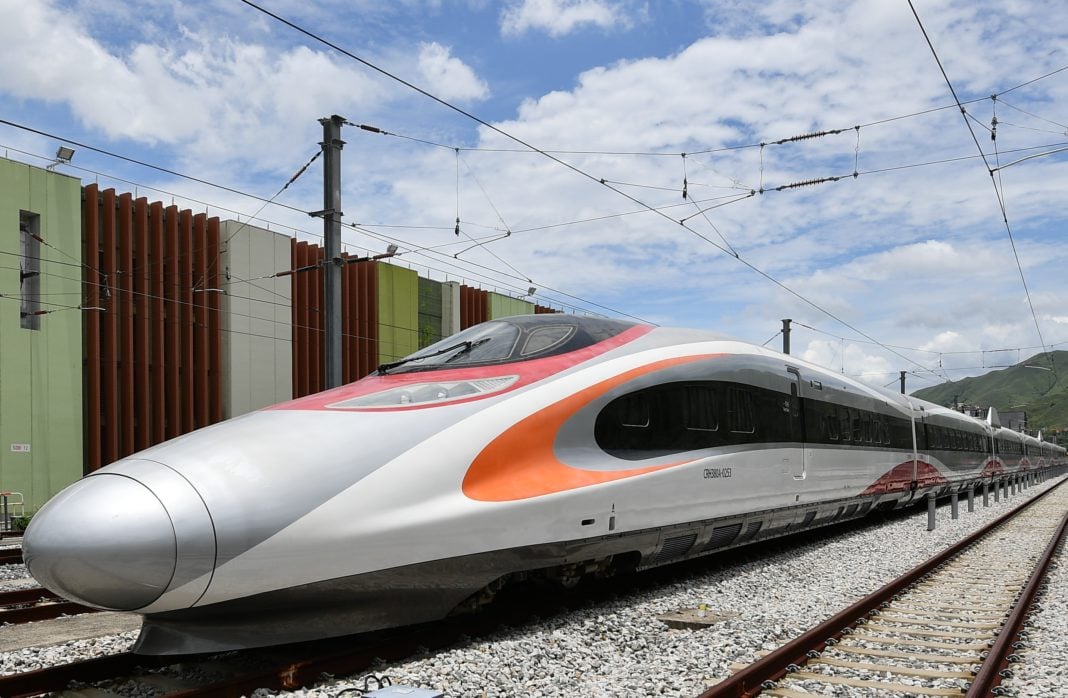
The Guangzhou-Shenzhen-Hong Kong, the first Hig Speed Rail Service in Hong Kong Rail was launched today (23 September 2018), bringing visitors from around the world the chance to travel quickly and conveniently between Hong Kong and cities across Mainland China. In particular, the new rail link puts Hong Kong in easy reach of nine neighbouring cities in Guangdong Province and heralds a major boost to tourism in the Greater Bay Area.
The 26-km rail link connects Hong Kong for the first time to Mainland China’s vast high-speed rail network, the world’s most extensive. Travellers will be able to ride from Hong Kong to 44 destinations in Mainland China destinations without changing trains, making the city an ideal starting point for multi-destination journeys through China. With frequent direct high-speed trains linking Hong Kong to Shenzhen and Guangzhou in as little as 48 minutes, travelling within the Greater Bay Area will be faster and more convenient than ever before
The Hong Kong section of the High Speed Rail network runs from West Kowloon Station, one of the world’s largest underground high-speed railway stations and a new must-see landmark for visitors to the city. The station’s design has already garnered a number of international design awards including one at the World Architecture Festival Awards, known as the “Oscars of architecture”. Visitors can enjoy views of iconic Victoria Harbour by walking along the Sky Corridor on the station’s rooftop. A three-hectare green area outside the station, meanwhile, provides a peaceful oasis in the heart of the city for residents and tourists alike.
Outside the station, there is a wealth of entertainment and attractions for visitors who want to enjoy shopping, dining, or a taste of traditional Hong Kong. The tourism hub of Tsim Sha Tsui with its world-renowned restaurants and shopping malls is a short walk away. The station is also connected by public transport to fascinating neighbourhoods including Sham Shui Po in Kowloon where visitors can experience authentic Hong Kong life, or Old Town Central on Hong Kong Island where visitors can enjoy history, arts, food, and culture in one of the city’s oldest and most idiosyncratic districts.
Directly outside the station is Hong Kong’s new arts and cultural hub, the West Kowloon Cultural District. It is directly outside the station, which will soon offer visitors the opportunity to enjoy a sumptuous array of exhibitions, performances, and cultural events as soon as they step off the High Speed Rail network.
There has never been a better time to get on the train and discover Hong Kong and cities across Mainland China. Tickets for the High Speed Rail network are available online, from ticket agents, and through a tele-ticketing hotline.

Tuesday, January 9, 2018

Two Free Bags On United Airlines For All Passengers In The Year Of The Dog On All Routes From North America To China And Hong Kong


It’s the year of the dog. Facing stiff competition United Airlines will eliminate charges for customers’ second checked bag on all routes from North America to China and Hong Kong.
Currently, customers traveling from China/Hong Kong to the United States already receive two free checked bags. Fees for oversized and overweight bags will continue to apply.
“We are responding to valuable feedback from customers who are seeking added benefits when they travel to China and Hong Kong, particularly for leisure purposes,” said Marcel Fuchs, United’s Vice President, Atlantic and Pacific Sales. “By allowing a second checked bag at no additional fee, we aim to make the overall experience of traveling to China and Hong Kong easier for our customers.”

By

Wednesday, November 16, 2016

Rosewood Hong Kong To Open In 2018

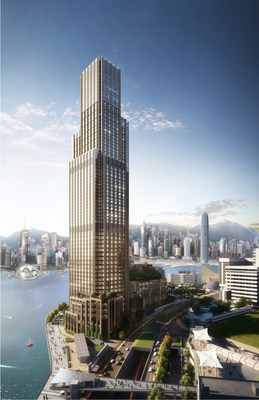
Rosewood Hong Kong


Rosewood Hotels & Resorts® will open the ultra-luxury brand’s first Hong Kong property in 2018 in a prime Victoria Harbour waterfront location at the former New World Centre on Salisbury Road in Tsim Sha Tsui.  Rosewood Hong Kong will occupy 27 floors of a multi-use tower owned by New World Development Company Limited, whose distinct form and glowing crown is destined to become an instantly recognizable landmark on the famous skyline. 

“As one of the world’s great cities, with iconic character and landscape, Hong Kong is a superlative location to open a Rosewood hotel and exquisitely express the brand’s A Sense of Place philosophy,” says Sonia Cheng, chief executive officer of Rosewood Hotel Group.  “We aim for this hotel to capture Hong Kong’s grace and dynamism, culture and modernity, while debuting Rosewood’s engaging, intuitive and refined service here in our home city.”
The design of Rosewood Hong Kong is the story of the gracious lifestyle within an elegant estate, and this impression will be cast immediately upon arrival and extend throughout the open public spaces, private guestrooms and event venues.  Mr. Tony Chi and his New York-based studio, tonychi, will not merely focus on aesthetics but upon every fine detail to create memorable experiences for guests and visitors.  Mr. Chi’s approach to expressing the Rosewood brand’s A Sense of Place® concept was lauded at Rosewood London when it opened in 2013.
Acclaimed New York-based Kohn Pedersen Fox Associates will blend classic design elements with references to the vibrantly contemporary surroundings in the architecture of the 398-room hotel. 
Rosewood Hong Kong will offer eight dining options; recreational facilities will include a fitness center, swimming pool and Rosewood’s holistic wellness concept; and the Manor Club executive lounge will provide an array of exclusive privileges for its guests.  The Pavilion will introduce to Hong Kong Rosewood’s signature, high-end residential-style meeting and event spaces. 
Rosewood Residences — 199 luxury accommodations for longer stays located on the top 19 floors of the tower, some with outdoor terraces and all with bird’s eye views — will offer a dedicated lounge, indoor swimming pool and fitness center along with special services and amenities for residents.  
Rosewood Hong Kong will join a regional network of distinctive Rosewood properties in Asia, including Rosewood Beijing, and upcoming in Phnom Penh, Phuket, Guangzhou, Luang Prabang, Sanya, Bali, Jakarta, Hainan, Bangkok and Siem Reap. 

Monday, November 7, 2016

Hong Kong Protesters Clash With Police As China Plans Political Intervention


Officers use pepper spray on protesters angry that Beijing will issue an interpretation of the semiautonomous city’s Basic Law

Police stopped demonstrators as they protested on Sunday against what they called Beijing's interference in local politics and the rule of law, a day before China's parliament was expected to announce its interpretation of Hong Kong’s Basic Law in light of two pro-independence lawmakers' oath-taking controversy.

fullscreen
Demonstrators throng the streets in Hong Kong. REUTERS
Police stopped demonstrators as they protested on Sunday against what they called Beijing's interference in local politics and the rule of law, a day before China's parliament was expected to announce its interpretation of Hong Kong’s Basic ...
Police stand guard during a standoff with demonstrators in Hong Kong on Sunday. AGENCE FRANCE-PRESSE/GETTY IMAGES
A protester holds a banner near the China Liaison Office in Hong Kong. EUROPEAN PRESSPHOTO AGENCY
Thouands of people march through the streets of Hong Kong. EUROPEAN PRESSPHOTO AGENCY
Police pepper-spray protesters denouncing what they call Beijing's interference in Hong Kong politics and the rule of law.REUTERS
Yau Wai-ching, right, of the Youngspirations organization, stands in front of riot police amid protests in Hong Kong on Sunday. AGENCE FRANCE-PRESSE/GETTY IMAGES
Protesters sit in a road as police in riot gear stand guard during the demonstrations. AGENCE FRANCE-PRESSE/GETTY IMAGES
Demonstrators throng the streets in Hong Kong. REUTERS
Police stopped demonstrators as they protested on Sunday against what they called Beijing's interference in local politics and the rule of law, a day before China's parliament was expected to announce its interpretation of Hong Kong’s Basic Law in light of two pro-independence lawmakers' oath-taking controversy. REUTERS
Police used pepper spray on protesters in Hong Kong on Sunday evening as thousands rallied against Beijing’s plans to intervene in a political standoff over two local lawmakers who insulted China in the city’s legislature.
The conflict was the latest in a deepening rift between Beijing and many in Hong Kong over how much autonomy the city should have. Hong Kong is allowed to govern itself under a miniconstitution—the Basic Law—and has an independent judiciary. But on Saturday, China’s top legislative body said it is prepared to override Hong Kong’s legal authority over how to handle the local lawmakers’ actions, which Beijing denounced as a threat to national security.
The Standing Committee of China’s National People’s Congress said Saturday it would issue its own interpretation of the Basic Law as Beijing “cannot afford to sit idle” when faced with challenges to its authority over Hong Kong, according to the government-run Xinhua News Agency.
On Sunday, thousands marched in Hong Kong to protest China’s looming intervention. In scenes reminiscent of the city’s pro-democracy protests of 2014, video taken by local press showed police spraying the crowd and protesters protecting themselves with umbrellas. (Latest news: China Says Two Elected Hong Kong Lawmakers Can’t Retake Oaths)

Hong Kong Police Force Senior Superintendent Lewis Tse confirmed officers used pepper spray during a “chaotic” confrontation with protesters late Sunday. He said two men—aged 39 years and 57 years—were arrested.
Hundreds of protesters gathered near Western Street, in the city’s Sai Ying Pun district as the march against China’s reinterpretation of the Basic Law turned into a standoff with the police. People held umbrellas aloft and wore face masks to protect themselves from the pepper spray.
“We were trying to occupy Connaught Road...but there were too many police and there were some conflicts between us,” said Hayley Lee, 27, an airline cabin-crew member. “They used pepper spray. We tried to step back and fight again, but they kept on spraying.”
In the crowd, familiar faces from the 2014 pro-democracy protests, known as the Umbrella Movement, were present.
“The police was using very brutal violence to depress us,” said Nathan Law Kwun-chung, the 23-year-old newly elected “localist” who has advocated for greater autonomy from China. “We were very angry because we think that for such an important issue, we at least have our right to protest,” he said of police attempts to move the crowd near China’s official Liaison Office on Connaught Road.
As the night wore on, rows of police held their lines, while others looked on from the steps of the Western Police Station. Officers stood with shields, warning protesters to stay calm.
Protesters continued to mill around, disorganized, and many were unsure about whether they would stay out for the whole night. Still, they agreed they wanted to take a stand against Beijing’s decision expected to be made Monday.
“We don’t know what’s the next move,” said Hang Tsoi, 25, who is also a cabin-crew member. “We are just trying to occupy.”
Around 1:00 a.m., Joshua Wong, a member of Demosisto—one of the political parties that participated in the evening protest—said several groups had announced the demonstration was over in order to avoid a “major sacrifice” amid the “unfavorable situation.”
The group called on the protesters to leave the scene.
0:00 / 0:00
Despite a big protest in Hong Kong on Sunday night against Beijing’s intervention, China’s top legislative body on Monday barred two newly-elected lawmakers from taking office over anti-China protests they made while being sworn in last month. Photo: Reuters
Hong Kong started legal proceedings Thursday over whether its legislature should allow two politicians who advocate for greater Hong Kong autonomy to take office, after the pair staged an anti-China protest at their swearing-in ceremony last month.
Beijing’s interpretation of the relevant provision in Hong Kong’s Basic Law would supersede any local court ruling. Hong Kong lawyers have voiced concern that such an intervention would undermine the city’s semiautonomous status.
The NPC Standing Committee, which added deliberations over the Basic Law to its agenda during a regular meeting this past week, said its intervention was “timely and necessary” to prevent a nascent Hong Kong independence movement from damaging the city’s “stability,” Xinhua reported.
The two politicians, democratically elected to Hong Kong’s Legislative Council in September, “have hit the bottom line of the ‘one country, two systems’ principle and posed a grave threat to national sovereignty and security,” the Standing Committee said, according to Xinhua.
In October, Yau Wai-ching and Sixtus Leung attempted to swear in as Legislative Council members while modifying their oath of office to pledge to defend a “Hong Kong nation,” displaying a banner stating “Hong Kong is not China,” and using a derogatory term for China.
The council barred their oaths, while their subsequent attempts to retake their oaths were rebuffed by the council president pending a local court ruling on whether the two had disqualified themselves from office.
Protesters used umbrellas to block pepper spray outside the Chinese central government's liaison office in Hong Kong on Sunday. ENLARGE
Protesters used umbrellas to block pepper spray outside the Chinese central government's liaison office in Hong Kong on Sunday. PHOTO: ASSOCIATED PRESS
The legal proceedings center on article 104 of the Basic Law, which states that legislators must swear allegiance to the “Hong Kong Special Administrative Region of the People’s Republic of China.”
The Standing Committee discussed a draft interpretation of that article on Saturday, the details of which weren’t disclosed in Xinhua’s report. The committee is expected to vote on the interpretation before its meeting concludes Monday.
Earlier Sunday, protesters began gathering in central Hong Kong to march in the streets, carrying banners and shouting slogans.
“We are here to oppose the Chinese government’s so-called re-explanation of the law,” said Sunny Chan, 38 years old, who works in the investment field.
Some protesters see it as a move by Beijing to undermine the rules established when Hong Kong was handed over to China by the U.K. in 1997.
“I want them to keep the agreement of the basic law, give us universal suffrage and keep the ‘One Country, Two Systems’ as it was listed,” said Chris Fan, who works for an IT firm.
Still, others held modest expectations for what the march would achieve.
“I don’t think marching will do any good,” said Ives Cheng, 25, who is unemployed. “It’s just an act to demonstrate our anger.”
Sixtus Leung and Yau Wai-ching during a protest march in Hong Kong on Sunday.ENLARGE
Sixtus Leung and Yau Wai-ching during a protest march in Hong Kong on Sunday. PHOTO: EUROPEAN PRESSPHOTO AGENCY
Beijing’s ruling would be only the fifth time since Hong Kong’s handover in 1997 that China has interpreted the Basic Law. On previous occasions, Beijing has issued rulings—upon request from the city’s government—over the right of abode in Hong Kong and how many years the city’s top official should serve after his predecessor resigned midterm.
This time, however, Hong Kong authorities hadn’t asked China to issue an interpretation, local government lawyers and legislators said.
Beijing’s move to rule in the matter would “deal a severe blow to the independence of the judiciary and the power of final adjudication of the Hong Kong court,” the Hong Kong Bar Association said in a statement on Wednesday.
Write to Ese Erheriene at ese.erheriene@wsj.com, Chester Yung at chester.yung@wsj.com and Chun Han Wong at chunhan.wong@wsj.com