Showing posts with label #China. Show all posts

Wednesday, May 22, 2019

Shangri-La Will Open Second Hotel In Suzhou In June 2019


Suzhou, China Shangri-La Group today announced Shangri-La Hotel, Suzhou Yuanqu will open June 1, 2019, enhancing the city’s luxury accommodations and service offerings. A draw for both leisure and business travelers, Suzhou is famous for its classical Chinese gardens and silk production and is easily accessible by high speed train from Shanghai.

Shangri-La Hotel, Suzhou Yuanqu will have 303 guestrooms and suites and 16 serviced apartments. Starting from 48 square meters, the guest rooms are some of the largest in the city and will offer expansive views of Jinji Lake and the city skyline through floor-to-ceiling windows. Designed in a soothing palette of silver, beige and blue, the guest rooms reflect the many lakes and canals found within the city. An innovative sliding wall separates the bathroom from the living and sleeping area enabling a guest to create an open floor plan or segment the space for privacy. Guestrooms are adorned with art inspired by Suzhou’s famous gardens created with a modern approach to traditional Chinese landscape paintings, while brocade fabrics pay homage to the important role that silk production has played in the city’s history. The hotel’s concierge level Horizon Club Lounge on level 31 will offer exclusive amenities and services.

Currently accepting reservations, Shangri-La Hotel, Suzhou Yuanqu is offering a special breakfast buffet price of CNY1 (about USD0.15) for stays booked under the flexible rate from June 1 to October 31, 2019. Golden Circle members can earn double GC Award Points for each room booking.

Travelers will be able to choose between two distinctive restaurants at the hotel. Shang Gardenwill serve regional Chinese cuisine, while the all-day dining restaurant CafĂ© Hong will feature live theater kitchens serving global fare. For those seeking an elegant escape to relax and socialize from day to evening, the Sip Lounge will offer an extensive selection of tea, wine, cocktails and live entertainment.

Guests can relax and rejuvenate in the Health Club on Level 7 with a 24-hour gym, 25-meter indoor temperature-controlled swimming pool, Jacuzzi, sauna, and steam bath. The Spa at Shangri-La will offer a selection of wellness therapies based upon the healing traditions of Asia.

The addition of Shangri-La Hotel, Suzhou Yuanqu will boost the city’s total event space with two pillar-less ballrooms at 1,000 square meters (about 10,763 square feet) and 384 square meters (and 4,133 square feet). Seven multi-function spaces and a boardroom will complement the ballrooms and all venues will be equipped with advanced lighting, audio and video systems.

Jinji LakeLocated in the new central business district of the vibrant Suzhou Industrial Park (SIP), Shangri-La Hotel, Suzhou Yuanqu is part of GCL Plaza, an integrated commercial complex that comprises an international office tower, a high-end residence and a four-story retail space. The hotel is within walking distance of the Jinji Lake, the largest city lake park in China, as well as Suzhou International Expo Centre and Suzhou Culture and Arts Centre.  The hotel is also within walking distance from the subway, making it an easy connection hub to major local attractions.

The hotel is a 10 minute drive from the SIP railway station and the Beijing-Shanghai/Nanjing-Shanghai expressway, the major thoroughfare which leads to Shanghai Pudong International Airport, Shanghai Hongqiao International Airport and Sunan Shuofang International Airport. Travelers can also reach Suzhou from Shanghai via bullet train within 30 to 40 minutes on almost 200 trains daily.

Shangri-La Hotel, Suzhou Yuanqu is the second hotel in Suzhou, China for the luxury Asian hospitality group. The first Suzhou hotel, Shangri-La Hotel, Suzhou, was opened in 2007 and is also located in the city’s core business district.

For reservations and enquiries, email reservations.sljs@shangri-la.com or call (86 512) 6263 9999.


SuzhouFamed for its classical Chinese gardens, traditional canal water towns, and silk production, Suzhou has welcomed visitors from throughout China and abroad over the course of its 2,500 year history. While the city’s gardens were built from the 10th to 19th century, the art of the Chinese garden reached its zenith in Suzhou in the Ming and Qing dynasties, when the country’s elite created elegant homes and gardens as retreats and the city became a cultural center. Four of Suzhou’s numerous traditional Chinese gardens are UNESCO World Heritage Sites. The city’s historical heritage can also be found in the canals and half-moon bridges of the Tong Li and Zhujiajiao water villages. Since the Song Dynasty, Suzhou has also been an important center for China's silk industry, and its silk weavers and embroiderers are considered amongst the best in China and once supplied silk to the country’s imperial family and important dignitaries. 

About Shangri-La Group
Shangri-La Group is one of the world’s premier developers, owners and operators of hotel and investment properties which comprises office buildings, commercial real estate and serviced apartments/residences. The Group’s other principal activities include hotel management services as well as property development for sale. It currently owns and/or manages over 100 hotels globally in more than 75 destinations under the Shangri-La, Kerry, Hotel Jen and Traders brands. Prominently positioned in Asia, the Group has a substantial pipeline of upcoming hotel and mixed-use development projects in Australia, Bahrain, Mainland China, Cambodia, Indonesia and Saudi Arabia.

Tuesday, November 20, 2018

Luxury Hotel Built In Former Pit Mine To Open In China


SHANGHAI (AP) — A luxury hotel opening outside Shanghai is offering guests with deep pockets the chance of a very deep sleep.
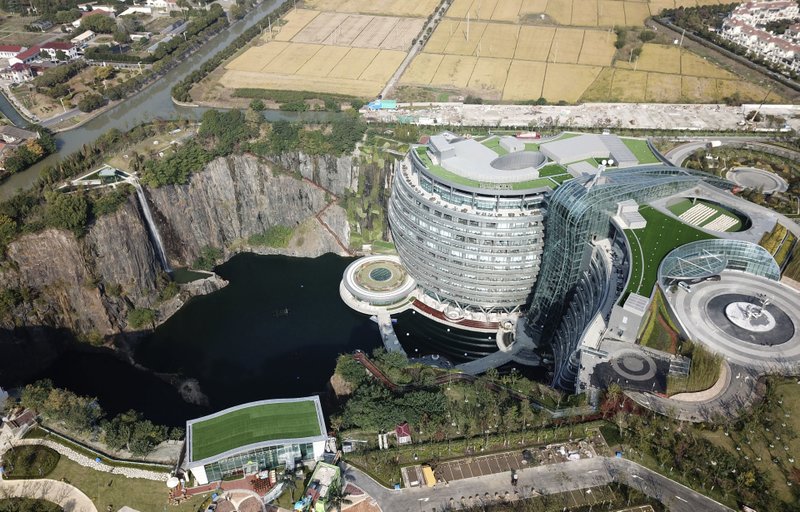
The 18-story Intercontinental Shanghai Wonderland Hotel has been built into the side of a huge hole in the ground left by a former pit mine. Sixteen of its floors are below ground level, looking out onto the rest of the former quarry. Two floors are underwater.

“I designed many different types of buildings in U.K., in Europe, in Dubai, and so on but this one was totally different and became almost life work, so that’s why I’m saying it’s probably the most important building that I have designed,” said chief architect Martin Jochman, who is known for the sail-shaped Burj Al-Arab skyscraper in Dubai.
The project began in 2006 and construction got underway in 2013. The team faced delays and a host of technical challenges, including meeting strict earthquake regulations and maintaining water levels.
UNESCO representative Michael Croft described the 336-room hotel as a model for sustainable development.
“It’s a model that has been inspired by a vision of a better future, and a present that looks to its past for answers,” he said at a news conference introducing the hotel Thursday.
The hotel, which is in Songjiang near Shanghai Hongqiao International Airport, opens Tuesday. Rooms are priced from 3,666 to 6,000 yuan ($530 to $860).
“We could have abandoned this quarry,” said Xu Shitan, vice chairman of Hong Kong property developer Shimao Group, which developed the hotel. “But we didn’t. We turned it into a treasure.”
1 of 2
This Nov. 13, 2018, aerial photo and released on Thursday, Nov. 16, 2018 by Xinhua News Agency, shows the Intercontinental Shanghai Wonderland Hotel in Songjiang district of Shanghai, east China. The 18-story hotel has been built into the side of a huge hole in the ground left b

Monday, October 1, 2018

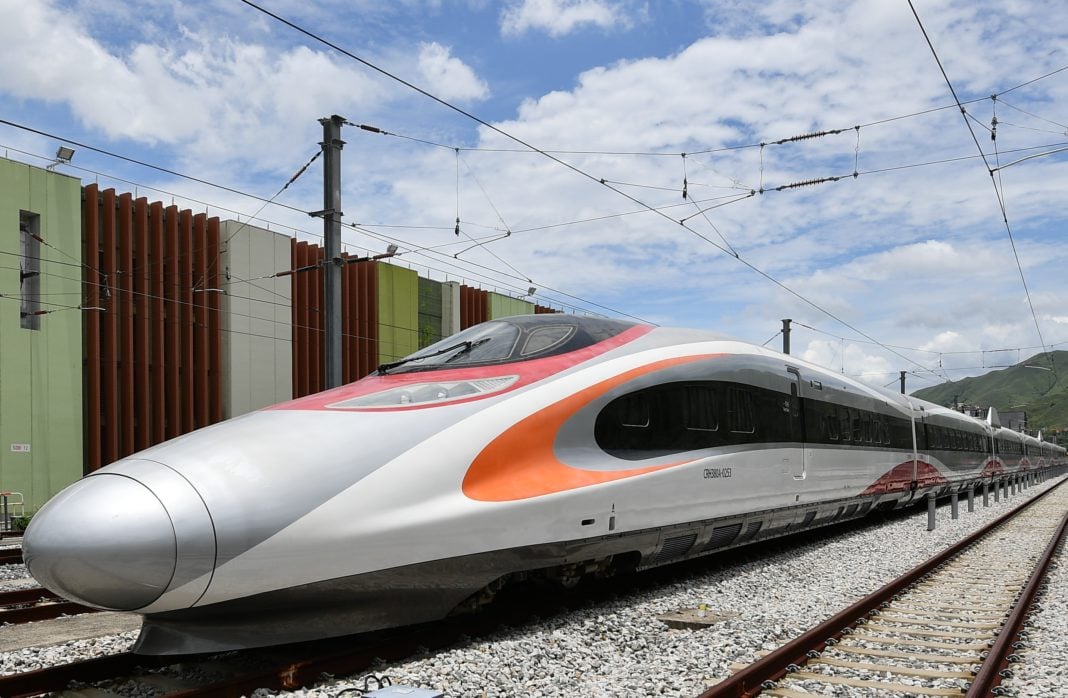
Hong Kong To Mainland China By Train Is Now Often The Fastest Way

The Guangzhou-Shenzhen-Hong Kong, the first Hig Speed Rail Service in Hong Kong Rail was launched today (23 September 2018), bringing visitors from around the world the chance to travel quickly and conveniently between Hong Kong and cities across Mainland China. In particular, the new rail link puts Hong Kong in easy reach of nine neighbouring cities in Guangdong Province and heralds a major boost to tourism in the Greater Bay Area.
The 26-km rail link connects Hong Kong for the first time to Mainland China’s vast high-speed rail network, the world’s most extensive. Travellers will be able to ride from Hong Kong to 44 destinations in Mainland China destinations without changing trains, making the city an ideal starting point for multi-destination journeys through China. With frequent direct high-speed trains linking Hong Kong to Shenzhen and Guangzhou in as little as 48 minutes, travelling within the Greater Bay Area will be faster and more convenient than ever before
The Hong Kong section of the High Speed Rail network runs from West Kowloon Station, one of the world’s largest underground high-speed railway stations and a new must-see landmark for visitors to the city. The station’s design has already garnered a number of international design awards including one at the World Architecture Festival Awards, known as the “Oscars of architecture”. Visitors can enjoy views of iconic Victoria Harbour by walking along the Sky Corridor on the station’s rooftop. A three-hectare green area outside the station, meanwhile, provides a peaceful oasis in the heart of the city for residents and tourists alike.
Outside the station, there is a wealth of entertainment and attractions for visitors who want to enjoy shopping, dining, or a taste of traditional Hong Kong. The tourism hub of Tsim Sha Tsui with its world-renowned restaurants and shopping malls is a short walk away. The station is also connected by public transport to fascinating neighbourhoods including Sham Shui Po in Kowloon where visitors can experience authentic Hong Kong life, or Old Town Central on Hong Kong Island where visitors can enjoy history, arts, food, and culture in one of the city’s oldest and most idiosyncratic districts.
Directly outside the station is Hong Kong’s new arts and cultural hub, the West Kowloon Cultural District. It is directly outside the station, which will soon offer visitors the opportunity to enjoy a sumptuous array of exhibitions, performances, and cultural events as soon as they step off the High Speed Rail network.
There has never been a better time to get on the train and discover Hong Kong and cities across Mainland China. Tickets for the High Speed Rail network are available online, from ticket agents, and through a tele-ticketing hotline.

Tuesday, January 9, 2018

Two Free Bags On United Airlines For All Passengers In The Year Of The Dog On All Routes From North America To China And Hong Kong


It’s the year of the dog. Facing stiff competition United Airlines will eliminate charges for customers’ second checked bag on all routes from North America to China and Hong Kong.
Currently, customers traveling from China/Hong Kong to the United States already receive two free checked bags. Fees for oversized and overweight bags will continue to apply.
“We are responding to valuable feedback from customers who are seeking added benefits when they travel to China and Hong Kong, particularly for leisure purposes,” said Marcel Fuchs, United’s Vice President, Atlantic and Pacific Sales. “By allowing a second checked bag at no additional fee, we aim to make the overall experience of traveling to China and Hong Kong easier for our customers.”

By

Sunday, December 31, 2017

10 Countries with the Strictest Rules & Regulations for Tourists and Locals

In the United States, it’s easy to take for granted a certain amount of freedom. We can travel freely from state to state, and — by and large — each of us is in control of our own destiny (socioeconomic or intellectual limitations notwithstanding). That’s not the case for several places throughout the world. And while that information may not be particularly revelatory, the extent to which some countries go to crack down on perceived bad behavior for both residents and visitors is pretty amazing. From Singapore to Iran, here are the world’s strictest countries.

10. Cuba

Visitors to Cuba are usually treated very well. In fact, most tourists get easy access to amenities we take for granted (like the internet). For those people who live in the communist nation, however, things are different. Incoming and outgoing news is strictly controlled, for example, and those who are critical of the government are jailed. With the ease on travel restrictions, it’s hoped that the country will gravitate to a more liberal position, but at the moment, living there isn’t exactly a treat.


Cuba
wendyperrin.com

9. China

Another communist nation with a real jones for controlling the flow of information, China runs a very tight ship for its citizens. Like Cuba, most tourists are allowed a little bit of leeway, but it’s a tough row to hoe if you live there. The biggest hardship is the government’s harsh control over the flow of information into and out of the country. Hollywood films aren’t even regularly allowed in China unless they pass a rigorous screening process — even then there’s a strict limit on the foreign films that can be shown in the country.

China
insiderjourneys.com.au

8. Eritrea

The concept of religious freedom is nonexistent in Eritrea, an African country located in the region of the Horn of Africa. Though the country represents a mix of both Christianity and Islam, sects like Jehovah’s Witnesses and Seventh Day Adventists are actively forbidden from worshipping openly. The regime also eagerly controls the media and censors most information from the outside world.

Eritrea
madote.com

7. Syria

Most Americans would get completely shut down if they tried to enter Syria legally. Of course, that’s because the government has bigger fish to fry. These days, you could probably enter Syria illegally with little to no trouble, because the country is in the midst of a years long effort to oust entrenched jerk (and Syrian President) Bashar al-Assad. As a result of the combat, those people struggling to live a normal life in Syria must endure a statewide communication blackout that’s essentially stopped the influx of information.

Syria
nytimes.com

6. Iran

Iran is still ruled by Sharia Law, a religious tradition that’s especially tough on women. Along with the obligatory prohibitions on speaking out against the government, Sharia Law enforces a whole lot of social crimes with some pretty brutal punishments. Those found guilty of adultery are publicly stoned (women get buried up to their neck first). Men and women’s hair styles are strictly enforced. Women must cover their heads in public, and must adhere to strict dress codes. Most “Western” music and movies are strictly prohibited, as are social media outlets like Facebook and YouTube. For those people trying to gain access to the country, it’s best just to give it up now.

Iran
journal-neo.org

5. Russia

The current American President may have no problem buddying up to the folks who run Russia, but the country still has a reputation for old school oppression. Vladimir Putin has overseen a crackdown on the LGBT community that’s positively draconic. He’s also ransacked the offices of supposed detractors. What’s more, Putin’s political opponents have a weird way of getting shot in the street or disappearing. It’s nuts. If you’re an American hoping to visit Russia, you could experience some issues. Not only do most people need to be explicitly invited, but there’s also an obligatory form that asks entrants to fill out their personal information along the lines of where you went to high school, the last three places you’ve worked, your parents names, etc.

Russia
journal-neo.org

4. Saudi Arabia

In spite of the fact that the United States counts Saudi Arabia as one of its allies in the Middle East, the country’s inner workings are as different as night and day. Its social rules — even for visitors — are strict. Women aren’t allowed to drive, or spend time with a man to whom they are not related. Anyone daring to speak out against the government or its policies faces excoriation and potential job loss. While business travel into the country is increasingly relaxed, it’s still extremely difficult to get into the country on a tourist visa.

Saudi Arabia
maybank-ke.com

3. Equatorial Guinea

The dictator in Equatorial Guinea only approves state-run programming. There’s one newspaper. Citizens are actively discouraged from reading. Of course, thats not a big deal for most Americans, because most people actively petitioning for entry into Africa’s only Spanish speaking country have their visas denied immediately. In fact, to even visit Guinea, you have to go to Lisbon in Portugal, because there’s not an embassy in the US or the United Kingdom.

Guinea
bbc.com

2. North Korea

The North Koreans make no attempt to hide their suspicion of visitors. Provided you’re not from South Korea or the United States, you can visit, but you’ll be followed by a constant chaperone, called a “minder” whose sole purpose is to make sure tourists don’t break the rules. Locals, meanwhile, are diligently policed to ensure that they’re not doing crazy things like loitering in a park. In North Korea, citizens have to have an express purpose for being on the street and walking around. “I felt like it,” doesn’t work as an excuse in Pyongyang.

North Korea
cnn.com

1. Singapore

Singapore may have an international reputation for prosperity and safety, but that success comes at a cost. The city is extremely strict for both travelers and residents. Want to behave badly? You better have lots of money or thick skin, because Singaporean authorities will issue fines or corporal punishment for anything from smoking in public to wearing the wrong clothes when you’re traveling. People can’t even spit in public.

Singapore
fourseasons.com

Source: https://www.destinationtips.com

Friday, September 22, 2017

Beijing-Shanghai High-Speed Railway Is Once Again World’s Fastest Train


The new bullet train operating between Shanghai and Beijing has broken the speed record for a passenger service by traveling at 350 kilometers per hour (kph).
The Beijing-Shanghai high-speed railway once again became the world’s fastest train after it being limited to 300 kph six years age, reports China Daily.
The train called Fuxing, or rejuvenation in Chinese, offers features such as power outlets, USB ports, and free WiFi.
“These trains are so popular that the tickets for today’s services sold out a week ago,” Huang Xin, an official with China Railway Corporation (CR), said Thursday.
The railway connecting the Chinese capital in the north with the major business hub in the south sees about 100 million passengers a year.
The new train completes the 1,200-kilometer journey in just under four-and-a-half hours. The previous generation of trains did it in six hours.
“The Beijing-Shanghai high-speed railway was built to the world’s highest standards, and the Fuxing trains were designed to run at a maximum speed of 350 kph. Operating the Fuxing on this route at a speed of 350 kph is without question in terms of safety, reliability, and comfort,” said Lu Dongfu, CR general manager.
China has sold its high-speed trains to Indonesia, Russia, Iran, and India, according to the daily.
Developers claim the Fuxing trains can be used in extreme climates, making them more competitive on the global market.

Wednesday, November 16, 2016

Rosewood Hong Kong To Open In 2018

Rosewood Hong Kong


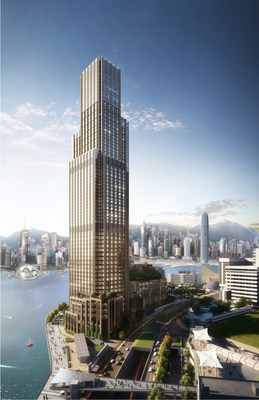
Rosewood Hotels & Resorts® will open the ultra-luxury brand’s first Hong Kong property in 2018 in a prime Victoria Harbour waterfront location at the former New World Centre on Salisbury Road in Tsim Sha Tsui.  Rosewood Hong Kong will occupy 27 floors of a multi-use tower owned by New World Development Company Limited, whose distinct form and glowing crown is destined to become an instantly recognizable landmark on the famous skyline. 

“As one of the world’s great cities, with iconic character and landscape, Hong Kong is a superlative location to open a Rosewood hotel and exquisitely express the brand’s A Sense of Place philosophy,” says Sonia Cheng, chief executive officer of Rosewood Hotel Group.  “We aim for this hotel to capture Hong Kong’s grace and dynamism, culture and modernity, while debuting Rosewood’s engaging, intuitive and refined service here in our home city.”
The design of Rosewood Hong Kong is the story of the gracious lifestyle within an elegant estate, and this impression will be cast immediately upon arrival and extend throughout the open public spaces, private guestrooms and event venues.  Mr. Tony Chi and his New York-based studio, tonychi, will not merely focus on aesthetics but upon every fine detail to create memorable experiences for guests and visitors.  Mr. Chi’s approach to expressing the Rosewood brand’s A Sense of Place® concept was lauded at Rosewood London when it opened in 2013.
Acclaimed New York-based Kohn Pedersen Fox Associates will blend classic design elements with references to the vibrantly contemporary surroundings in the architecture of the 398-room hotel. 
Rosewood Hong Kong will offer eight dining options; recreational facilities will include a fitness center, swimming pool and Rosewood’s holistic wellness concept; and the Manor Club executive lounge will provide an array of exclusive privileges for its guests.  The Pavilion will introduce to Hong Kong Rosewood’s signature, high-end residential-style meeting and event spaces. 
Rosewood Residences — 199 luxury accommodations for longer stays located on the top 19 floors of the tower, some with outdoor terraces and all with bird’s eye views — will offer a dedicated lounge, indoor swimming pool and fitness center along with special services and amenities for residents.  
Rosewood Hong Kong will join a regional network of distinctive Rosewood properties in Asia, including Rosewood Beijing, and upcoming in Phnom Penh, Phuket, Guangzhou, Luang Prabang, Sanya, Bali, Jakarta, Hainan, Bangkok and Siem Reap. 

Monday, November 7, 2016

Hong Kong Protesters Clash With Police As China Plans Political Intervention


Officers use pepper spray on protesters angry that Beijing will issue an interpretation of the semiautonomous city’s Basic Law

Police stopped demonstrators as they protested on Sunday against what they called Beijing's interference in local politics and the rule of law, a day before China's parliament was expected to announce its interpretation of Hong Kong’s Basic Law in light of two pro-independence lawmakers' oath-taking controversy.

fullscreen
Demonstrators throng the streets in Hong Kong. REUTERS
Police stopped demonstrators as they protested on Sunday against what they called Beijing's interference in local politics and the rule of law, a day before China's parliament was expected to announce its interpretation of Hong Kong’s Basic ...
Police stand guard during a standoff with demonstrators in Hong Kong on Sunday. AGENCE FRANCE-PRESSE/GETTY IMAGES
A protester holds a banner near the China Liaison Office in Hong Kong. EUROPEAN PRESSPHOTO AGENCY
Thouands of people march through the streets of Hong Kong. EUROPEAN PRESSPHOTO AGENCY
Police pepper-spray protesters denouncing what they call Beijing's interference in Hong Kong politics and the rule of law.REUTERS
Yau Wai-ching, right, of the Youngspirations organization, stands in front of riot police amid protests in Hong Kong on Sunday. AGENCE FRANCE-PRESSE/GETTY IMAGES
Protesters sit in a road as police in riot gear stand guard during the demonstrations. AGENCE FRANCE-PRESSE/GETTY IMAGES
Demonstrators throng the streets in Hong Kong. REUTERS
Police stopped demonstrators as they protested on Sunday against what they called Beijing's interference in local politics and the rule of law, a day before China's parliament was expected to announce its interpretation of Hong Kong’s Basic Law in light of two pro-independence lawmakers' oath-taking controversy. REUTERS
Police used pepper spray on protesters in Hong Kong on Sunday evening as thousands rallied against Beijing’s plans to intervene in a political standoff over two local lawmakers who insulted China in the city’s legislature.
The conflict was the latest in a deepening rift between Beijing and many in Hong Kong over how much autonomy the city should have. Hong Kong is allowed to govern itself under a miniconstitution—the Basic Law—and has an independent judiciary. But on Saturday, China’s top legislative body said it is prepared to override Hong Kong’s legal authority over how to handle the local lawmakers’ actions, which Beijing denounced as a threat to national security.
The Standing Committee of China’s National People’s Congress said Saturday it would issue its own interpretation of the Basic Law as Beijing “cannot afford to sit idle” when faced with challenges to its authority over Hong Kong, according to the government-run Xinhua News Agency.
On Sunday, thousands marched in Hong Kong to protest China’s looming intervention. In scenes reminiscent of the city’s pro-democracy protests of 2014, video taken by local press showed police spraying the crowd and protesters protecting themselves with umbrellas. (Latest news: China Says Two Elected Hong Kong Lawmakers Can’t Retake Oaths)

Hong Kong Police Force Senior Superintendent Lewis Tse confirmed officers used pepper spray during a “chaotic” confrontation with protesters late Sunday. He said two men—aged 39 years and 57 years—were arrested.
Hundreds of protesters gathered near Western Street, in the city’s Sai Ying Pun district as the march against China’s reinterpretation of the Basic Law turned into a standoff with the police. People held umbrellas aloft and wore face masks to protect themselves from the pepper spray.
“We were trying to occupy Connaught Road...but there were too many police and there were some conflicts between us,” said Hayley Lee, 27, an airline cabin-crew member. “They used pepper spray. We tried to step back and fight again, but they kept on spraying.”
In the crowd, familiar faces from the 2014 pro-democracy protests, known as the Umbrella Movement, were present.
“The police was using very brutal violence to depress us,” said Nathan Law Kwun-chung, the 23-year-old newly elected “localist” who has advocated for greater autonomy from China. “We were very angry because we think that for such an important issue, we at least have our right to protest,” he said of police attempts to move the crowd near China’s official Liaison Office on Connaught Road.
As the night wore on, rows of police held their lines, while others looked on from the steps of the Western Police Station. Officers stood with shields, warning protesters to stay calm.
Protesters continued to mill around, disorganized, and many were unsure about whether they would stay out for the whole night. Still, they agreed they wanted to take a stand against Beijing’s decision expected to be made Monday.
“We don’t know what’s the next move,” said Hang Tsoi, 25, who is also a cabin-crew member. “We are just trying to occupy.”
Around 1:00 a.m., Joshua Wong, a member of Demosisto—one of the political parties that participated in the evening protest—said several groups had announced the demonstration was over in order to avoid a “major sacrifice” amid the “unfavorable situation.”
The group called on the protesters to leave the scene.
0:00 / 0:00
Despite a big protest in Hong Kong on Sunday night against Beijing’s intervention, China’s top legislative body on Monday barred two newly-elected lawmakers from taking office over anti-China protests they made while being sworn in last month. Photo: Reuters
Hong Kong started legal proceedings Thursday over whether its legislature should allow two politicians who advocate for greater Hong Kong autonomy to take office, after the pair staged an anti-China protest at their swearing-in ceremony last month.
Beijing’s interpretation of the relevant provision in Hong Kong’s Basic Law would supersede any local court ruling. Hong Kong lawyers have voiced concern that such an intervention would undermine the city’s semiautonomous status.
The NPC Standing Committee, which added deliberations over the Basic Law to its agenda during a regular meeting this past week, said its intervention was “timely and necessary” to prevent a nascent Hong Kong independence movement from damaging the city’s “stability,” Xinhua reported.
The two politicians, democratically elected to Hong Kong’s Legislative Council in September, “have hit the bottom line of the ‘one country, two systems’ principle and posed a grave threat to national sovereignty and security,” the Standing Committee said, according to Xinhua.
In October, Yau Wai-ching and Sixtus Leung attempted to swear in as Legislative Council members while modifying their oath of office to pledge to defend a “Hong Kong nation,” displaying a banner stating “Hong Kong is not China,” and using a derogatory term for China.
The council barred their oaths, while their subsequent attempts to retake their oaths were rebuffed by the council president pending a local court ruling on whether the two had disqualified themselves from office.
Protesters used umbrellas to block pepper spray outside the Chinese central government's liaison office in Hong Kong on Sunday. ENLARGE
Protesters used umbrellas to block pepper spray outside the Chinese central government's liaison office in Hong Kong on Sunday. PHOTO: ASSOCIATED PRESS
The legal proceedings center on article 104 of the Basic Law, which states that legislators must swear allegiance to the “Hong Kong Special Administrative Region of the People’s Republic of China.”
The Standing Committee discussed a draft interpretation of that article on Saturday, the details of which weren’t disclosed in Xinhua’s report. The committee is expected to vote on the interpretation before its meeting concludes Monday.
Earlier Sunday, protesters began gathering in central Hong Kong to march in the streets, carrying banners and shouting slogans.
“We are here to oppose the Chinese government’s so-called re-explanation of the law,” said Sunny Chan, 38 years old, who works in the investment field.
Some protesters see it as a move by Beijing to undermine the rules established when Hong Kong was handed over to China by the U.K. in 1997.
“I want them to keep the agreement of the basic law, give us universal suffrage and keep the ‘One Country, Two Systems’ as it was listed,” said Chris Fan, who works for an IT firm.
Still, others held modest expectations for what the march would achieve.
“I don’t think marching will do any good,” said Ives Cheng, 25, who is unemployed. “It’s just an act to demonstrate our anger.”
Sixtus Leung and Yau Wai-ching during a protest march in Hong Kong on Sunday.ENLARGE
Sixtus Leung and Yau Wai-ching during a protest march in Hong Kong on Sunday. PHOTO: EUROPEAN PRESSPHOTO AGENCY
Beijing’s ruling would be only the fifth time since Hong Kong’s handover in 1997 that China has interpreted the Basic Law. On previous occasions, Beijing has issued rulings—upon request from the city’s government—over the right of abode in Hong Kong and how many years the city’s top official should serve after his predecessor resigned midterm.
This time, however, Hong Kong authorities hadn’t asked China to issue an interpretation, local government lawyers and legislators said.
Beijing’s move to rule in the matter would “deal a severe blow to the independence of the judiciary and the power of final adjudication of the Hong Kong court,” the Hong Kong Bar Association said in a statement on Wednesday.
Write to Ese Erheriene at ese.erheriene@wsj.com, Chester Yung at chester.yung@wsj.com and Chun Han Wong at chunhan.wong@wsj.com