Back in November 2016, one travel writer travelled to L.A. in what she believed to be Premium Economy. It was more spacious than Economy, the food was delicious and passengers were treated like royals.
Turns, out it wasn’t actually United Airlines Premium Economy, but Economy Plus.
This travel writer learned that the airline didn’t have a Premium product, but thought Economy Plus was a quality alternative because it offered many of the same treats and features.
How could Premium Economy be better than the existing Economy Plus?
She wondered how the airline could possibly top the quality Economy Plus experience should it decide to one day launch a Premium Economy cabin.
Today, she wonders no longer.
United Airlines revealed in a message to employees this week that it is planning to roll out an “international premium economy” sometime this year.
In the vague update, the airline told staff that the new product will be called “United Premium Plus” and will give passengers “more space, comfort, and amenities”.
Among the features that will separate Premium Economy from Economy are upgraded dining, which will be served on china, free alcohol, a Saks Fifth Avenue blanket and pillow, and more.
It’s believed that the first United Airlines Premium Economy cabin will be installed in the airline’s 787-10 aircraft, Travel Market Report reported.
Late last year, American Airlines announced that it would be rolling out a dedicated premium economy product
on its wide-body planes, starting with the 787-900 Dreamliner later
this year. The airline’s premium economy is expected to feature wider
seats with leg rests, improved meal service and amenity kits on
long-haul flights. Frequent flyers were immediately concerned
that this could mean the end of upgrades to business from coach, but
that’s unlikely to happen until premium economy is available fleet-wide,
if at all.
Well, now another US-based airline is following suit: Delta’s new CEO
Ed Bastian shared the news that the airline plans to add a premium
economy cabin of its own, beginning with the Airbus A350 — the first of
which is expected to be delivered in mid-2017:
Unfortunately we don’t have any details beyond that at this point, so
there are many more questions than answers, but it is clear that
Delta’s Airbus A350 will offer a three-cabin configuration, with Delta One business, premium economy and coach. We don’t know if that’ll mean Delta’s upgrade certificates
will only move you up to premium economy on that plane, but that’s
unlikely to be the case until the new cabin is available on all (or
most) of the airline’s long-haul fleet. American’s premium economy offering isn’t tremendously innovative.
As for what the new seats will look like? We haven’t the faintest
idea, but we can probably expect something fairly similar to what
American Airlines plans to introduce, giving passengers a “domestic
first class” experience (with wider seats and more legroom) on long
international flights.
Delta already has a “premium economy” fare class and earning structure listed on its chart —
for now, that only applies to flights operated by Air France, Virgin
Atlantic and Virgin Australia, but Delta could choose to use the W fare
class (which is just now rolling out for Comfort+) for its new product, too. So, IT-wise, the infrastructure is more or less already in place. What do you think of Delta’s plan to offer premium economy?
H/T: @AirlineFlyer
TPG reader Chris sent me a message on Facebook to ask about airline seating: “Which has more room in economy: the Airbus A380 or the Boeing 777-300ER?”
As airlines have worked to improve profit margins over the years, the
average space allotted to each seat has steadily declined. New and more
compact designs (like reconfigurable bench seating and rear-facing seats) are helping carriers maximize capacity at the expense of comfort, leaving passengers (and their elected representatives) to scrap for every inch.
It helps to know what to expect before you fly, so you can select a
seat that suits your needs (or at least prepare yourself for a tight
ride). To that end, it’s good to be familiar with the idiosyncracies
of different aircraft. However, seat configurations vary not only from
one model to another, but also on the same model operated by different
airlines.
For example, consider the Boeing 777-300ER (also known as the 77W). American Airlines operates the 77W with 220 seats in economy in a 3-4-3 configuration, giving each seat 17 inches of width and 31 inches of pitch. Meanwhile, Cathay Pacific operates two different versions
of the 77W, both of which use a more spacious 3-3-3 configuration in
economy, offering 18.5 inches of width and 32 inches of pitch.
The story is the same aboard the A380. Lufthansa operates two versions of the A380-800, with economy seats that offer 18.2 inches of width and 31 inches of pitch.
On the other hand, Korean Air’s configuration has seats that are
slightly narrower at 18 inches wide, but offer substantially more
legroom with a pitch of 33-34 inches. That extra space can make a big
difference on a long-haul flight. Korean Air offers more legroom in economy than Lufthansa aboard the A380.
If you’re looking for help choosing a seat, check out SeatGuru.
This site offers detailed layouts of just about every aircraft operated
by major airlines, including seat information like pitch, width and
amenities. SeatGuru also identifies potential problems like limited
recline or storage space, and offers reports from other flyers that can
give you some additional insight. It’s free to use, but note that the
information provided isn’t 100% accurate, especially on newer aircraft;
you might want to cross-check with the airline if you have a lot riding on your seat selection.
Of course, the best laid plans often go awry, so it also helps to
have a strategy for dealing with unexpected circumstances like a broken seat or a last-minute equipment change. As airlines continue to pack more and more passengers into economy cabins, knowing where to sit (and where not to sit) on a given aircraft can make your flight experience much more enjoyable.
For more on your best options in economy and premium economy, check out these posts:
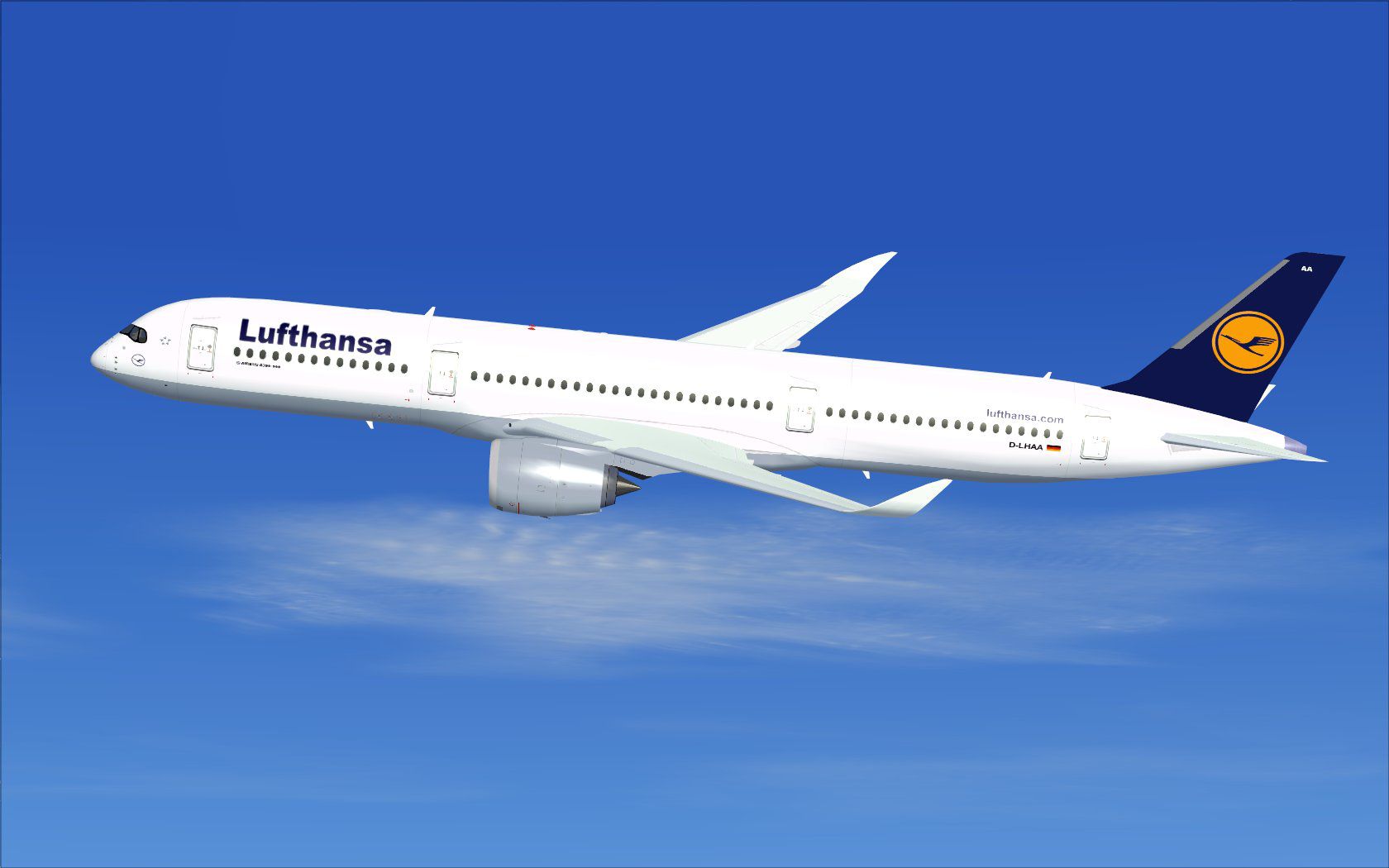
Beginning January 2017, Lufthansa will offer a new travel experience to its passengers traveling to and from Munich. The air carrier will station its first ten Airbus A350-900 aircraft at Munich and initial destinations are likely to be Delhi and Boston. The aircraft will provide seating for 293 passengers: 48 in Business, 21 in Premium Economy and 224 in Economy.
The A350-900 will provide Lufthansa passengers with a comfortable traveling experience. With its wider cabin, passengers have more room and a generous sense of space. A self-service section in Business Class provides more passenger comfort, plus new seats in Economy and larger monitors. Due to a special lighting concept, passengers will arrive at their destination feeling more rested. “We want our customers on board to feel comfortable and to arrive relaxed even after long flights. This is why we have improved passenger comfort even more in the A350-900”, said Thomas Winkelmann, CEO Lufthansa Hub Munich.
For the first time, Lufthansa will offer its customers a new service on the A350-900. Passengers in Business Class will be able to serve themselves refreshments between meals. In a specially designed self-service area, passengers can enjoy a variety of snacks. A refrigerator is also provided with cold drinks.
Passengers in Economy Class will be seated in ergonomically designed seats in a new color pattern. In the future, there will also be more room to stow personal items.
In all classes, passengers will benefit from the latest FlyNet technology and improved internet usage above the clouds. The larger screens provide the most advanced user interface.
Thanks to the special design of the A350-900, the cabin pressure during the flight is quite pleasant, leading to an even more relaxing time onboard. This is in comparison to an altitude of 1,800 meters, versus 2,400 meters of altitude with similar aircraft. The effect is also enhanced by an innovative lighting concept with a total of 12 light scenarios. These can be deployed in such a way that passengers can adapt their biorhythm better to local time at their destination.
The A350-900 is the world’s most modern and environmentally friendly long-haul aircraft. It consumes 25 percent less fuel and produces up to 50 percent less noise than similar aircraft types.
Hawaiian Airlines announces Premium Cabin redesign of its Airbus A330 fleet with lie-flat seating
HONOLULU, Hawaii - Hawaiian Airlines announced plans to introduce new luxury design elements and enhanced service options in its A330 premium cabins, including the addition of 180-degree lie-flat seats. The airline has developed its new seats in partnership with Optimares, an Italian manufacturer focused on traveler-centric design.
"We have designed an experience that will usher in a new era in premium service to Hawai'i, one that resulted from a thorough review of guest feedback and intensive research to develop a best-in-class product for our long haul aircraft," said Mark Dunkerley, President and CEO of Hawaiian Airlines. "Together with our partners at Optimares and PaulWylde, we have created a truly bespoke design that delivers world-class comfort and style, while staying true to our island roots. Whether traveling for business, with family or on a romantic retreat, the new premium cabin evokes an engaging bold, contemporary sense of Hawai'i, complemented by the warm aloha spirit of our cabin crew. We're creating an environment of tranquility and comfort in the air."
The 180-degree seats will use an innovative seat platform to fold into 76-inch beds, maximizing living space for travelers while providing options for both privacy and a shared flight experience. They will also feature an advanced in-flight entertainment experience powered by the next generation of large-format tablets and equipped with a telescoping tablet arm that adjusts to optimize viewing angle and comfort.
Hawaiian worked with West Coast-based brand and design consultancy PaulWylde to translate the airline's signature design language, rooted in the natural colors and forms of the island landscape, into the cabin experience. The cabin design will incorporate flowing curves evocative of the winds and ocean, while marrying organic textures, pops of bright saturated color, and luxury materials like leather from Poltrona Frau.
Hawaiian, PaulWylde and Optimares collaborated intensively to ensure the seat and cabins are uniquely tailored to the needs of the Hawaii traveler. The seats will be installed in a 2-2-2 configuration ideally suited for couples and families traveling to the beautiful Hawaiian Islands.
The first newly outfitted aircraft is expected to enter Hawaiian's long-haul network in the second quarter of 2016. The airline will begin installing lie-flat seats in the remaining 22 A330 aircraft in September of 2016 through 2017.
As part of the cabin redesign, Hawaiian also announced it will add 28 additional Extra Comfort seats on each A330 aircraft in response to growing demand for its popular premium economy service. The Extra Comfort option features 36 inches of seat pitch; priority boarding at the gate; complimentary on-demand in-seat entertainment; and a personal power outlet.
Be one of the first to fly Singapore Airlines's brand-new Premium Economy with this airfare sale from the west coast to Asia.
Singapore Airlines, ranked as the world's best airline in our Readers' Choice Awards, is offering an excellent deal to celebrate the launch of its Premium Economy Class. The new seats, completely custom-made for Singapore Airlines and which feel more like business class than economy, will begin on flights from the U.S. this upcoming January. To jumpstart your 2016 travels in comfort, the airline is offering special fares from Los Angeles (LAX) to Tokyo (NRT) for $1,586, from San Francisco (SFO) to Seoul for $1,538, and from both U.S. destinations to Singapore and select cities in Southeast Asia from $1,694. These all-in fares include all taxes, fees, and surcharges, and represent a discount of nearly half off regular Premium Economy fares.
Passengers in the brand new class will enjoy full leather seats with widths of 18.5 to 19.5 inches (depending on the plane), legroom of 38 inches, an 8-inch recline, and both a footrest and adjustable calf rest. The in-flight entertainment has a 13.3-inch full HD monitor loaded with thousands of on-demand selections, enjoyed with noise-canceling headphones. Other goodies include an in-seat power outlet, two USB ports per seat, a thick fleece blanket and larger-than-in-economy pillow, enhanced in-flight meals with more menu options, French champagne and cocktail choices, priority check-in and boarding, extra personal storage space, full mileage earning, and a smaller cabin with a quiet environment.
Book by November 15 on Singapore Airlines' website. The deal is valid for travel from San Francisco to Seoul from January 6, 2016 to May 31, 2016, and for travel from Los Angeles to Tokyo from February 1, 2015 to May 31, 2015.
Better food and better room in the space between business class and coach; champagne is available, but not the fancy stuff
Premium economy has matured and is a solid fixture for travelers around the world except the U.S. airlines, which simply have extra legroom rows. WSJ Middle Seat Columnist Scott McCartney joins Lunch Break. Photo: Michal Czerwonka for The Wall Street Journal
It’s time to think of premium economy as a regular class of airline service alongside coach, first and business.
Premium economy seats come with better meals and more seat width, legroom, recline and perks at a far cheaper fare than business class. The idea has taken hold everywhere but the U.S., where American, Delta and United have been focused on updating coach with slim seats and boosting business class to international standards.
Internationally, two of the last big holdouts, Singapore Airlines and Lufthansa, are now adding it for long-haul flights, citing customer demand.
ENLARGE
Along with better leg room in Lufthansa’s premium economy, the airline has installed a six-inch center console to give seats a greater feeling of width.PHOTO: LUFTHANSA
Singapore will launch premium economy on Dec. 1 with flights to Los Angeles; New York and San Francisco will follow. In addition to more space, Singapore has created new food service for premium economy—gourmet dishes such as braised short ribs, lamb biryani or dim sum from a Los Angeles restaurant—and engineered them to fit into economy trays rather than served on plates like first-class and business-class meals.
Lufthansa will complete installation of premium economy in all its long-haul airplanes in October. Since Lufthansa’s premium economy launch earlier this year, bookings have run 10% higher than the airline expected, according to Annette Mann, Lufthansa’s director of customer experience. About half of premium economy passengers are people paying their own way and half are corporate travelers.
“It’s designed for people who say economy is not comfortable enough but they, or their company, are not willing to pay for business class,” Ms. Mann says.
Typical premium economy has flight attendants and bathrooms reserved for that cabin. Seats usually have bigger entertainment screens than economy, plus 6 inches more legroom, 4 to 5 inches more recline and often an extra inch or two of seat width. Perks such as early boarding and more generous baggage allowances come with the higher fares. In a sign of how cramped regular coach seats have become, fliers have shown themselves willing to pay $600 to $900 round trip for these add-ons.
Lufthansa and Singapore had been reluctant to install premium economy for many years. They worried coach passengers wouldn’t pay up and business-class customers would trade down. But Singapore and Lufthansa say they heard more from frequent fliers, travel agents and corporations that don’t pay for business class who wanted something better than coach and were willing to pay 50% more.
Now 15 of the 20 largest airlines that offer long international flights have installed premium economy cabins. Many smaller airlines offer premium economy as well. And several airlines have said that premium economy is their most-profitable cabin per square inch of airplane floor space.
ENLARGE
Lufthansa’s premium economy seats will have some elements of business class, though meals will be more similar to those in economy seats.PHOTO: LUFTHANSA
“It seems now that it’s an accepted product category instead of just an ancillary add-on,” says Chris Rossi, senior vice president at Virgin Atlantic Airways, which was one of the first airlines to launch premium economy back in 1992. Recently Virgin added a new water fountain, snack and lounge area to the premium economy cabins on its Boeing 787 Dreamliners called the Wander Wall.
American, Delta and United, the biggest U.S. carriers, count among the last major airlines resisting this trend. They offer extra legroom seats in their coach cabins for a smaller add-on fee, but not a separate class of service with its own fares, seats and enhancements. (The other two top 20 airlines offering nothing between coach and business class are Persian Gulf carriers.)
U.S. airlines say they are content to offer extra legroom, which travelers increasingly pay for, and don’t have immediate plans for full premium economy offerings. United says it is constantly evaluating whether to add elements beyond extra legroom. American says sales of it extra legroom seats, which cost $112 to $177 each way on long international flights, are “doing well.” Delta recently said revenue from extra-legroom seats was up 30% in the second quarter compared with a year earlier.
“We’re aware of the competitive international landscape and we’re exploring options, but no decisions have been made,” Delta spokesman Anthony Black says.
ENLARGE
Virgin Atlantic has what it calls a Wander Wall, a snack/lounge area in its premium economy cabin on Boeing 787 Dreamliners.PHOTO: VIRGIN ATLANTIC
But other airlines have found fliers want more than just extra legroom. In Singapore’s case, the new premium economy cabin will have some elements of business class, such as free-flowing champagne. (It’s Ernest Rapeneau, about $25 a bottle, instead of the $50 Taittinger offered in business class.)
Instead of just puffing up economy meals with extra cheese and crackers, Singapore decided to create a new class of meal. At the airline’s Los Angeles in-flight caterer, Hacor Inc., much work went into refining recipes for taste and appearance and engineering them to fit in 5-inch-by-2.5-inch casserole dishes on economy trays.
Here, executive chef Christophe Cosnierworked through many tastings with airline officials to tailor recipes for the rigors of air travel, where food gets cooked, shipped and reheated before being served in a desert-dry environment. Even more important to Singapore was appearance—dishes must have visual flair.
“They will taste better if they look good,” says Mr. Cosnier, a Frenchman.
Mr. Cosnier borrowed some favorites from business class, such as braised short ribs, which are seasoned overnight, seared and braised for more than four hours. Lamb biryani, a new entree for Singapore, added more comfort food to the premium economy menu. The tasty rice dish is seasoned with cardamom, cinnamon, cashews and shallots.
Spicy foods work well because the arid cabin deadens taste buds, Mr. Cosnier says. He uses tricks such as covering dim sum and rice with a wet cabbage leaf to keep them moist during reheating. (Flight attendants remove the leaf before serving.)
ENLARGE
Brian Huang of Hacor examines new premium economy meals to be served on Singapore Airlines.PHOTO:MICHAL CZERWONKA FOR THE WALL STREET JOURNAL
Singapore says it is taking 66 economy seats out of its A380s to install 36 premium economy seats. Premium economy will cost 40% to 70% more than coach, says Alastair Hay-Campbell, vice president of Singapore’s southwest division.
So the premium economy cabin has to stand out with a lot more than just extra legroom. The airline decided to offer its popular Book the Cook service, where passengers preorder meals from a broad menu for each cabin, to premium economy as well as business and first.
“We want to encourage people to trade up,” he says.
British Airways recently began letting its premium economy passengers, as well as business and first, preorder meals on certain flights. British Airways also has been refreshing premium economy cabins on some of its older planes with new entertainment systems and better seat cushions.
Lufthansa says its research showed customers were willing to trade up at a fixed price of $600 to $700 more than coach, rather than a percentage of the fare. Its focus groups also found that seat width was just as important as legroom, so the airline’s premium economy seats have a six-inch center console between them. “Customers said it has to be wide enough so I don’t touch the person next to me,” Ms. Mann says.
Lufthansa’s premium economy has some elements of business class: a welcome drink at boarding, an amenity kit and bottled water at the seat. For meals, though, premium economy passengers get the same two choices as in coach. But they get a bit more food, like an extra chocolate, plus a better salad and nicer bread. And they get a bigger baggage allowance.
One driver of recent sales: global Wi-Fi and in-seat power. That means more travelers want space to open laptops and work, which can be difficult, if not impossible, in a coach row of 31 or 32 inches.
“It’s a comfortable work area now,” says Mr. Rossi, Virgin Atlantic’s head in North America.