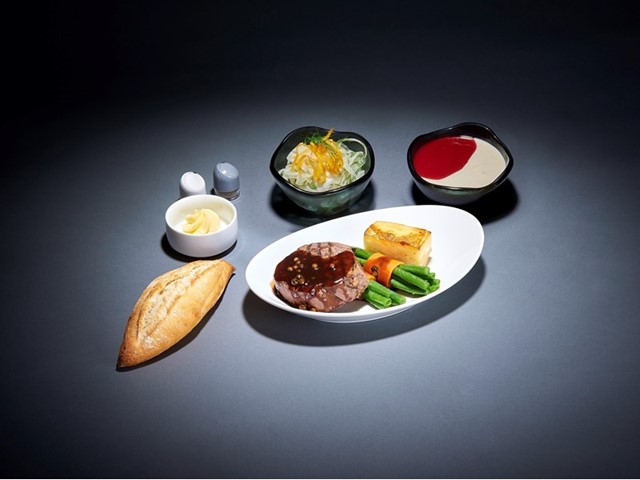
Survey provides travelers with the best in-flight food choices,
including health ratings to make healthier choices 35,000 feet in the air
Delta and Virgin America Receive Top Rating
Knowing what are the ”best” and “worst” choices is a valuable tool for any traveler, so Dr. Charles Platkin, the director of the Hunter College NYC Food Policy Center and editor of DietDetective.com., once again studied the best “Calorie Bargains” and "Calorie Rip-offs" at 35,000 feet.
Hunter College NYC Food Policy Center and DietDetective.com have released the 2017-18 Airline Food Study, rating foods for twelve (12) airlines. The study assigned a “Health Score” (5 stars = highest rated, 0 star = lowest rated) based on criteria including healthy nutrients and calorie levels of meals, snack boxes and individual snacks, level of transparency (display of nutrient information & ingredients), improvement and maintenance of healthy offerings, menu innovation and cooperation in providing nutritional information. The survey includes health ratings, average calories per airline, comments, best bets, food offerings, costs, and nutrition information (e.g., calories, and exercise equivalents). See the full study at http://www.dietdetective.com/ airline-food-investigation/
“This year Delta and Virgin America share the top spot as the airlines with the ‘healthiest’ food choices in the sky. with Air Canada and JetBlue tied for second,” says Charles Platkin, PhD, JD, MPH, the executive director of the Hunter College NYC Food Policy Center and editor of DietDetective.com.
The average number of calories per menu choice was 360 in 2012; in 2013 it was 388; in 2014 it was 397; in 2015 it was 400; in 2016 it was 392; and this year it's 405 calories, a 13 calorie increase over last year. However, calories are not everything; the survey also looks at the nutrients in the foods when they are provided (they are requested each year), as well as innovations moving towards healthy, tasty, inexpensive, sustainable foods.
Here are the major airline food headlines:
Delta is the clear leader among the major carriers and is tied with Virgin America this year as the healthiest airline.
Alaska Air purchased Virgin America, and the goal is to maintain the status-quo when it comes to food in all categories until next year.
American and Delta have once again started offering complimentary meals in economy class on domestic flights, something we haven't seen in more than 15 years.
Airlines are eliminating those oversized packages of snack foods and offering individual smaller packages or eliminating individual snacks altogether.
Some airlines are going back to serving individual complimentary snacks, but they’re not very healthy. How about an apple or an orange, or maybe a Clementine or a Halo (mandarin orange).
The "Shame on You" award goes to Hawaiian, United Airlines and American. Hawiian just does not respond while United’s food and beverage department seems put-out by the process, and it shows in their responses to queries. American Airlines is not much better, with a media rep who also seems annoyed by the process.
Note to all airlines: It is not difficult to get nutritional information for all foods. Every airline uses detailed recipes; all they have to do is put the ingredients into a free online food calculator (such as supertracker.usda.gov), and in a few minutes they could have complete nutritional information.
Read the press release from the FDA commissioner: “One important step is ensuring consumers have access to reliable and actionable information about the foods they eat so that they can make more informed choices about their diets and health for themselves and their families.” Menu labeling is coming in May 2018.
Below are the surveyed airlines' "Health Scores" (Health Score: 5 stars = highest rating, 0 stars = lowest). For full survey results including full listings of the snack/on-board food offerings, comments, ratings, cost, calories, exercise equivalents, and tips go to http://www.DietDetective.com
Summary of Health Ratings (5 Stars is highest): Delta 4 stars, Virgin America 4 stars, Air Canada 3.75 stars, JetBlue 3.75 stars, Alaska Air 3.5 stars, United Airlines 2.75 stars, American 2.5 stars, Frontier Air 2.25 stars, Southwest Airlines 2 stars, Allegiant Air 1.75 stars, Spirit Airlines 1.75 stars, Hawaiian Airlines 1 star
Cooperation in Providing Nutritional Information: Excellent
Health Score: 4 stars
Average Calories Overall (Meals, Snack Boxes and Individual Snacks) = 480
Average Snack Box Calories = 560
Average Meal Calories = 559
Average Individual Snack Calories = 164
Comments: Delta is doing an incredible job focusing on improving its food, transparency and communication. It is the clear leader among the big carriers . While calories are surely not everything, it’s always nice to see a decrease; the overall calories are down from 527 to 480. Meals are down from 628 to 559. Delta has also eliminated many of its individual paid snacks; however, the free offerings (other than the almonds), while relatively low in calories, are still not the great choices. Delta continues its commitment to improving its food in terms of health and consciousness. Its menu continues to focus on “transparency into ingredient and allergen information for customers,” and its focus on transparency includes providing a key on the menu for snack items that are Non-GMO, Vegan, Gluten-Free, Kosher, and Lacto-Ovo Vegetarian. Also, the Tapas box is the U.S. airline industry’s only non-GMO snack box. Delta continues to work with Luvo, which has a very strong commitment to healthy eating. All the calorie information for the Luvo items are listed on Delta’s menu (and online); I’m just not sure why the airline doesn’t put all nutritional information for all its food on the website and pocket cards. Why not list ingredients, as well as fats, proteins, carbohydrates and sugar.
Best Bets: For a snack, the almonds are the best choice--even over the Kind bar or the lower-calorie pretzels. The vegan, GMO-free Tapas Snack Box is a good healthy choice if you share or make it a meal (it’s too high in calories as a snack). Within the box the best bests are the Super Seed Crackers, Snapea Crisps, dark chocolate, almonds, hummus, and quinoa with pepper dip. You can pass on the rest.
For morning travel, choose the continental breakfast (fruit and yogurt) at 345 calories, but save the Kind bar for a snack later in the day. For Lunch/Dinner, choose the Sesame Noodle Salad or the Greek Meze Plate. You can skip the caramel-filled chocolate to save calories.
Cooperation in Providing Nutritional Information: Excellent
Health Score: 4 stars
Average Calories Overall (Meals, Snack Boxes and Individual Snacks) = 340
Average Snack Box Calories = 358
Average Meal Calories = 406
Average Individual Snack Calories = 276
Comments: The airline has been purchased Alaska Air, and eventually the Virgin name will disappear. The good news is that Alaska Air is committed to adopting the healthy food options (and transparency) of Virgin America. Additionally, Alaska will more than likely reduce the sizes of the individual snacks. Virgin is still the only airline that provides nutritional information (not just calories) for all items. We applaud that transparency and hope Alaska continues to do so. There are not many menu changes (obviously because of the transition). The individual snacks are still unhealthy. There are nine snack options,which should include healthier options.
Best Bets: Avoid the individual snacks if you can. Even the nuts, which are the best choice, are high in calories if you consume the entire package. Always choose a real meal if you can. Even if it's slightly higher in calories; it will keep you full longer.
For breakfast, try the Udi's Granola with Yogurt and Fruit, which is a bit high in sugar but overall low in calories at 330. The best snack box is the Protein Meal with hummus, nuts and tuna; the others are a bit high in calories and are not really worth it. For kids, skip the Jet Set Kid Pack if you can, and go for the half peanut butter and jam sandwich. In general, almost all the meals (as long as they’re eaten as meals and not snacks) are good choices. The Quinoa Wrap at 420 calories is high in protein for a vegetarian meal, which will help keep you full longer. The Protein Plate is also a good choice, as is the Farro Salad with roasted chicken – powerful from a health perspective. Again, these are meals that will fill you up and help you avoid the junk. The good news is that none of the food goes overboard in terms of calories, so you really can't go too far wrong.
Cooperation in Providing Nutritional Information: Very Helpful
Health Score: 3.75 Stars
Average Calories Overall (Meals and Individual Snacks) = 320
Average Meal Calories = 377
Average Individual Snack Calories = 267
Comments: The airline keeps nutrients high and calorie counts low for meals. Also, it’s nice that they offer meals but no snack boxes. People tend to eat the entire snack box, which is typically high in calories and low on nutrients. The airline has ended its relationship with the food company, Luvo, and replaced them with a company called Freshii. The individual snacks are not great and still need work because there are very few healthy choices. Also, Air Canada should be transparent, putting nutritional information and ingredients on the menu. Why not?
Best Bets: For breakfast, the Greek yogurt is still a good option – and will probably fill you up. The Avocado Smash Box with fresh guacamole, hard-boiled egg, green apple slices, and multigrain muesli bread sounds amazing and also offers 23g of filling protein to keep you energized. Honestly, that is the kind of food every airline should be offering. Skip the egg sandwich. The Chicken Soup is a low-calorie choice for a snack that will fill you up, but be wary of the 950mg of sodium if you have high blood pressure. The Celery & Carrots with Ranch Dip (if you use no more than half the dip) is an OK choice. While the hummus and the guacamole options sound healthy, the pretzels and Tostitos offer little nutritional value, and you’d be better off having a meal if meals are available.
If meals are available, the newly added Pangoa Bowl and the Fiesta Wrap are high-nutrient, low-calorie choices. The California Roll is another light offering that’s low in fat and calories. It would also make a great snack! The Thai Chicken Wrap is also a high protein, lower calorie option, but very high in sodium.
Cooperation in Providing Nutritional Information: Somewhat Helpful
Health Score: 3.75 stars
Average Calories Over All (Meals, Snack Boxes and Individual Snacks) = 337
Average Snack Box Calories = 357
Average Meal Calories = 483
Average Individual Snack Calories = 142
Comments: The individual snacks are still low in calories as well as nutritional value. The airline continues to post nutritional information for its snack boxes and meals on its website. They don’t post nutritional information for the individual snacks, but it is on the packaging. In terms of free snacks, which JetBlue is famous for, how about offering something healthy--there is NOT a single healthy choice in the group. However, the airline is clearly thinking about this on the snack box level--just look at the new AmpUp box with olives, hummus, Mary’s Gone Crackers (they’re great crackers) and a That’s It fruit bar--those are the types of snacks JetBlue should be offering for free. It would change the face of the airline. JetBlue should note that people are very serious about what they eat and are extremely conscious of choosing healthier, organic, non-GMO, nutritious foods. Finally, the airline should offer actual meals on more flights.
Best Bets: Still not too much in the way of healthy individual snacks. So keep in mind, the individual snacks are free, and the JetBlue team is generally friendly and will not say no to requests for extra portions. As for the Eat Up boxes, the Pick Me Up box is lowest in calories but not necessarily the most nutritious. The AmpUp box features hummus, Mary’s Gone Crackers and almonds, and while it’s high in calories, it’s loaded with good nutrition (e.g. fiber and protein). Have it as a meal though, not as a snack, and skip the chocolate crispy squares to reduce low-nutrient calories. If you’re on a flight that offers the Eat Up Café, the Yogurt and Granola (you might want to limit the honey), the Kale & Quinoa Salad and the Spicy Soba & Korean-Style Chicken (unless you’re sodium sensitive) are all good choices. Skip the Grilled Chicken and Brie Sandwich, which is very high in calories and low on nutrition.
Cooperation in Providing Nutritional Information: Extremely Helpful
Health Score: 3.5 stars
Average Calories Overall (Meals and Snack Boxes and Individual snacks) = 479.6
Average Snack Box Calories = 479
Average Meal Calories = 516.5
Average Individual Snack Calories = 315
Comments: The good news is that Alaska Airlines has purchased Virgin America (named the healthiest airline over the last few years), and has vowed to take on some of VA’s healthy approach to food. That said, Alaska has always been committed to food, just not the healthiest. The airline’s spokesperson was incredibly helpful and pointed out that the they will increase transparency on the combined airline and add many of VA’s healthy food choices
Best Bets: Among the snack boxes, the Mediterranean Tapas hasn't changed much from last year and is still the healthiest choice. It has olives, hummus, almonds, dried fruit and even a dark chocolate bar. But keep in mind that 510 calories is a bit high for a "snack" (or even a meal), so it would be best if you either shared the box or had it as a meal replacement. For kids, the snack box may be tempting, but it's always better for children (and adults) to eat a real meal. FYI, the beef jerky is low in calories but very high in sodium. As far as breakfast goes, you can pick the Ham & Sweet Potato Frittata but skip the corn muffin. The breakfast offerings are a bit heavy and rich (as are all the meals). If you opt for the fruit and cheese plate, skip the crackers and half the cheese. There aren’t too many dinner choices, but the Roast Turkey with Veggie Hash is a high-protein, low-calorie choice, although also high in sodium .
Cooperation in Providing Nutritional Information: Somewhat Helpful
Health Score: 2.75 stars
Average Calories Overall (Meals, Snack Boxes and Individual Snacks) = 416
Average Meal Calories = 484
Average Snack Box Calories = 492
Average Individual Snack Calories = 311
Comments: United, the 4th largest airline in the U.S., needs to change the way it thinks about its food offerings. They have very little food transparency on the website, meaning that nutritional information is not available, and the ingredients are listed but you have to dig a bit to find them (and take a peek here--they’re not very “clean”). The individual snack choices are generally not healthy, the snack boxes could be much more food/healthy thoughtful, and the meals are average to OK. Also, the food and beverage group as well as the media reps for the airline seem bothered and put off by our inquiries.
Best Bets: Among the individual snacks, the hummus is the best choice, and it would be a good idea to avoid the other choices. Get the Tapas snack box, which is high in calories but has many healthy foods, including almonds, olives, hummus and bruschetta; just toss out the cheese spread. You should also share it unless you’re eating it as a meal. Skip the Classic and Select snack boxes. For breakfast, the Chobani Greek Yogurt and Fresh Fruit is OK, but it has a lot of sugar and a not-very-clean ingredients list (i.e., granola). For Lunch/Dinner, the Mezze Sampler is your best bet and should keep you full. Another choice would be the. Mediterranean Chicken Wrap, although it has a bit too much cheese.
Cooperation in Providing Nutritional Information: Below Average
Health Score: 2.5 stars
Average Calories Overall (Meals, Snack Boxes and Individual Snacks) = 446
Average Meal Calories = 495
Average Snack Box Calories = 526
Average Individual Snack Calories = 192
Comments: In addition to its complimentary snacks, American began providing complimentary main cabin meals as of March 2017. Nothing very healthy, and I find the following comment not surprising considering that Delta is it’s competition: “Providing complimentary meals in the Main Cabin is yet another step we’re taking to enhance our service in this competitive market.”
The airline is still not publishing any food or nutritional information on its website--absolutely nothing. This is a strange move leading to even less food transparency and providing travelers with no ability at all to plan their meal. The only good news is that the airline has discontinued all it's unhealthy for-sale individual snacks. Fresh and Light Meals are a step in a better direction, but for a major US airline, American is very far behind when it comes to food. The airline’s leadership needs to get in touch and start offering healthier, cleaner foods.
Best Bets: The hummus box is the best bet among snacks for purchase. If you opt to purchase a lunch, on flights of three hours or more the Chicken Arugula Wrap seems to be the best option--go light on the dressing. The Turkey and Chutney Sandwich is also an OK choice. If you opt to purchase breakfast, the Egg and Turkey Bacon Sandwich is OK as long as you go light on the honey mustard dressing. If you're on a flight with complimentary breakfast, pick the Snack Box with yogurt and granola, which is just acceptable healthwise, and steer clear of the fruit and cheese plate. For complimentary lunch/dinner there really are no great options; the Fruit and Cheese Plate is the lowest in calories but not well rounded enough for a meal. The Vegetarian Wrap might be OK if you skip the brownie.
Cooperation in Providing Nutritional Information: Very Helpful
Health Score: 2.25 stars
Average Calories Overall (Individual Snacks and Snack Boxes) = 372
Average Individual Snack Calories = 386
Average Snack Box Calories = 300
Comments: Frontier’s communications team had historically been uncooperative. This year the information was shared promptly, but very little has changed on the airline’s menu.
Best Bet: As with last year, the trail mix could be the healthiest option, but travelers would be best off bringing their own food.
Cooperation in Providing Nutritional Information: Very Helpful
Health Score: 2 stars
Average Calories = 125
Comments: Not much variety and not much in terms of nutritional value. However, they are always helpful, and that’s nice. I just wish they would add some healthy snacks or at least test a few. This is one of the larger carriers in the US, so it would be great for Southwest to set an example and show that healthy food can sell if it is tasty and curated with consciousness.
Best Bet: The peanuts are the best, even though the pretzels are lower in calories.
Cooperation in Providing Nutritional Information: Very Helpful
Health Score: 1.75 stars
Average Calories Overall (Snack Boxes and Individual Snacks) = 402
Average Individual Snack Calories = 474
Average Snack Box Calories = 307
Comments: The media department’s response was excellent this year and helped to clarify some of last year’s estimates, but a few more healthy food items would be welcome on the menu. I bet they would sell.
Best Bets: Among individual snacks, the nuts might work if you share them with at least one other person. The hummus snack pack is a good choice, but the snack boxes are not great in terms of health (and not just calorie-wise). Avoid the Deli Snack Pack, and the Wingz Kids Snack Pack is not a healthy choice.
Cooperation in Providing Nutritional Information: Helpful
Health Score: 1.75 stars
Average Calories Overall (Individual Snacks and Snack Boxes) = 316
Average Individual Snack Calories =342.5
Average Snack Box Calories = 316
Comments: The airline’s previous media spokesperson had been unresponsive but is no longer with the airline. Good news. Spirit, which is all about the bottomline, should see some grander opportunity in selling healthy food (e.g., better margins, increased revenue, improved customer satisfaction, etc…). Also, the airline is not keeping up with the major
carriers, who have learned that large size snacks are not the best option for travellers.
Best Bet: The hummus and pita chips are one of just a few changes Spirit has made to its menu, and at 330 calories are probably the best choice for a satisfying snack. The cup of noodle soup at 290 calories may also feel like a real meal, but it is very high in sodium, so it is not the best bet for anyone who is sodium-sensitive or has high blood pressure. The cheese tray at 130 calories is a much better choice than the Cafe Snack Box.
Cooperation in Providing Nutritional Information: Terrible / Unresponsive
Health Score: 1 star
Average Calories Overall (Meals, Snack Boxes and Individual Snacks) = 568
Average Meal Calories = 971
Average Individual Snack Calories = 460
Average Snack Box Calories = 342
Comments: The airline does not respond to requests for food information. All the nutritional information was estimated by Diet Detective nutritionists. Hawaiian Airlines’ food is high in calories and the menu doesn't offer much choice either in terms of health or in the way of food system consciousness (caring about sustainability, organic growing, no GMOs, etc…). This could be a real disappointment if you are on a long flight and have not planned in advance. Plus, when free food is put down in front of you, you have a tendency to eat it. All of it. That could be a lot of unhealthy food.
Best Bets: Among the snacks, choose the Hummus & Pita Chips. It’s really the best choice, and better than any of the individual snacks, which are very high in calories. You might think the Salted Macadamia Nuts would be a good choice, and they do have healthy properties, but only if you split them with 5 other people or have them over the course of a few weeks. The two oatmeal options are lower in calories but likely high in sugar, while the beef and cheese sticks (the lowest calorie individual snack option) are high in saturated fat and sodium.
Also, keep in mind, you will probably get a very high calorie, unhealthy free meal on your flight, so go light on those snacks. Don’t be fooled by the Gluten Free Box; while many of the individual items are OK healthwise (such as the hummus and roasted chickpea snacks), it’s still high in calories and out-of-touch with current food trends.
For the complimentary meals, try to go light on the breads, treats and dressings. Your best bet calorie-wise, if it's available, is the Penne Pasta Bolognese Sauce and green salad, but skip the shortbread cookie. In the end, it would be best to eat before you board the plane; otherwise you might wind up feeling lethargic and cranky after one of these calorie-heavy meals. Just say no, and bring your own food.