Showing posts with label Travelore Tips. Show all posts

Sunday, September 20, 2026

Experiencing The Oberammergau Passion Play: A Once-In-A-Decade Journey In 2030

Every ten years, the small Bavarian village of Oberammergau in Southern Germany transforms to host a world-renowned tradition: the Oberammergau Passion Play. The upcoming 43rd season is scheduled to run from May 18 through October 6, 2030, featuring approximately 102 performances.

A History Rooted in Survival

The origins of this extraordinary event date back to 1634. As the bubonic plague devastated Europe, the villagers of Oberammergau made a solemn vow: if they were spared from the disease, they would perform the story of Christ’s Passion every decade. The tradition has endured for nearly 400 years.

The Performance and the Local Cast Rule

The play is a five-hour musical drama detailing the final days of Jesus Christ, beginning with His entry into Jerusalem and ending with the Resurrection. The production takes place in the covered Passionstheater, an impressive open-air venue that seats over 4,000 spectators.

One of the most fascinating aspects of the Passion Play is its strict local cast rule. Every actor, musician, and participant on the stage must be a true local—meaning they were either born in Oberammergau or have lived in the village for at least 20 years.

How to Experience the 2030 Season

While 2030 may seem distant, the travel industry is already preparing for the massive influx of international visitors. Viking Cruises has just opened bookings for their specialized 2030 itineraries. Their featured 12-day voyage, Oberammergau, the Passion Play, sails along the Danube from Budapest and concludes with a two-night hotel stay in Munich, offering preferred seating for the performance. They also offer alternative routes, including Oberammergau, Innsbruck & the Rhine and Oberammergau with Salzburg.

Because this event only occurs once a decade, securing your preferred departure and performance dates early is highly recommended.

Friday, September 11, 2026

Travelore Tips: How To Avoid Problems With The New TSA Scanners

If you have flown recently, you may have noticed new, high-tech machines at the security checkpoint. The TSA has been busy upgrading airport security with state-of-the-art Computed Tomography (CT) scanners. While these new machines are designed to enhance security and eventually speed up the screening process, they do have a learning curve. Here are our top tips to help you breeze through the new TSA scanners without a hitch.

1. Beware of the "Bulge": Measure Your Packed Bag

The new CT scanners feature a tunnel opening that measures 24.5 by 16.5 inches, which is slightly smaller than the older X-ray units. Because of this, bags that push the absolute limits of carry-on sizes—especially when overstuffed—might get stuck.

  • Measure it fully packed: Ensure your bag fits standard dimensions even when the expansion zipper is fully utilized.
  • Watch the hardware: Bulky protruding wheels, thick handles, and overstuffed exterior pockets are the main culprits that catch on the scanner.
  • What happens if it doesn't fit: Officers will have to screen it by hand or divert you to a different lane, adding major delays to your trip.

2. Everything Goes In A Bin

If you are accustomed to dropping your suitcase right on the conveyor belt, you need to adjust your routine. With the new automated tray systems, every single item must be placed inside a bin for screening.

  • Suitcases included: Your carry-on luggage, jacket, and personal items must all sit completely inside the bins.
  • Don't force it: TSA agents advise passengers not to shove the bins through the scanner, as this can skew the images and force them to restart the screening process.

3. Leave Your Laptops and Liquids Packed

The biggest perk of the new CT scanners is the 3D imaging capability, which allows agents to view your bag from multiple angles. Because of this advanced technology, you no longer need to remove items from your bag, even if you are in a standard, non-PreCheck lane.

  • Keep electronics packed: Laptops and tablets can remain safely inside your luggage.
  • Keep liquids packed: You do not need to take out your toiletries. However, the standard 3-1-1 rule still applies, meaning liquids must be 3.4 ounces or less.

4. Photographers: Protect Your Unprocessed Film

If you travel with analog cameras, pay close attention: the new CT scanners are incredibly powerful and will destroy unprocessed film in a single pass, leaving distinctive banding patterns.

  • Always request a hand inspection: It is your right under TSA policy to ask for your film to be inspected by hand.
  • Pack it smartly: Remove film from cardboard boxes and store the loose rolls in a clear, quart-sized plastic bag so officers can inspect it quickly.
  • Never check your film: Checked luggage scanners are even stronger and will completely ruin unprocessed film.

5. Rethink Your Airport Outfit

Alongside new baggage scanners, upgraded full-body passenger scanners are extremely sensitive and can flag common clothing items.

  • Avoid rigid materials: Heavy belts, rigid waistbands, and large statement jewelry are notorious for triggering extra pat-downs.
  • Mind your footwear: Certain shoes and chunky soles can also slow you down at the checkpoint.

Wednesday, September 9, 2026

New Era of Luxury On St. Thomas: The Botany Opens With 20 Villas Across 300 Acres

St. Thomas has long been celebrated for its lively harbors, duty-free shopping, and easy accessibility from the U.S. mainland. But at the island’s far western tip, far removed from cruise ports and busy resort corridors, a radically different kind of luxury hideaway is preparing to welcome travelers.

Luxury Resort Debut • U.S. Virgin Islands

THE BOTANY AT BOTANY BAY

Ultra-Low-Density Secluded Retreat • St. Thomas, USVI

20
Private Villas
Plunge Pools & Terraces
300
Preserved Acres
Unspoiled Nature
20m
From STT Airport
Far-West Tip Cove
🏖️ Sandy Bay Beach
Direct access to secluded cove & Mermaid’s Chair.
☀️ Solar-Powered
Eco-focused design with rainwater systems.
🏊 Dual Infinity Pools
Sequence & Legacy pools overlooking the sea.
💡 Travelore Tip: Rates start at ~$1,200/night. Book well in advance due to the 20-villa limit.

Set to debut this winter, The Botany brings a secluded, eco-conscious retreat to the gated Preserve at Botany Bay. Featuring just 20 private villas spread across 300 pristine acres, the resort pairs ultra-low-density living with direct access to quiet coves, native volcanic stone architecture, and the secluded sands of Sandy Bay Beach.


"Less, On Purpose": A New Approach to Island Hospitality

Operated by Practice Hospitality and joining the prestigious L.V.X. Collection from Preferred Hotels & Resorts, The Botany is built on a design philosophy of restraint. Rather than maximizing room counts, the development leaves the majority of its 300 acres entirely untouched.

Positioned near Mermaid’s Chair—the famous narrow sandbar where the Atlantic Ocean meets the Caribbean Sea—guests will experience a side of St. Thomas that feels entirely wild and untamed, despite being just 20 minutes from Cyril E. King Airport.


What to Expect at The Botany

Designed around the contours of the coastline, every detail of the property emphasizes privacy, sustainability, and seamless indoor-outdoor connection:

  • Sustainably Designed Villas: Built using local blue volcanic stone, pearl and deep-green tiling, vaulted ceilings, and floor-to-ceiling glass. Layouts range from single Villa Kings with oceanfront terraces to multi-bedroom Villa Residences featuring private plunge pools and outdoor showers.
  • Dual Ocean-View Pools: An open-air reception pavilion sits between two main swimming pools: the curved Sequence Pool overlooking Mermaid’s Chair, and the Legacy Pool nestled closer to the beach.
  • Local Dining & Wellness: The signature restaurant, Ginger Thomas (named for the U.S. Virgin Islands’ national flower), serves elevated local flavors alongside a casual coffee shop and beach-picnic service. The property also features a full-service spa, fitness center, and yoga pavilion.
  • Off-Grid Sustainability Focus: The resort runs largely on solar power (with grazing goats managing vegetation around the panels!), utilizes comprehensive rainwater collection systems, and incorporates reclaimed materials throughout.

Travelore Tip: Because The Botany operates with only 20 villas and offers dedicated pre-arrival concierge teams to tailor dining and excursions, advance reservations for winter and spring travel dates will be essential. Keep an eye out for initial opening rates, expected to start around $1,200 per night.

Tuesday, September 8, 2026

A First Look Inside Hong Kong’s Breathtaking New Kyra Lounge

Airport lounges can often feel like crowded waiting rooms, but every so often, a space redefines the pre-flight experience. Tucked away from the hustle and bustle of one of the world’s busiest transit hubs, the newly acclaimed Kyra Lounge at Hong Kong International Airport (HKG) is hitting pause on travel stress.

Widely regarded as one of the most beautiful Priority Pass lounges in the Asia-Pacific region, Kyra Lounge blends sustainable design, multi-sensory relaxation, and a taste of local culture. Whether you are navigating a long layover or starting your journey early, here is a look inside this serene oasis.


Design and Atmosphere: A Multi-Sensory Escape

Kyra Lounge draws its design inspiration from the natural world and the daily cycles of the sun. The color palette—transitioning from warm sunrise beiges to deep sunset greens—creates an immediate sense of calm. The architecture features a striking sculptural wave ceiling that evokes the movement of the ocean, paired with dynamic lighting designed to replicate sunlight breaking through clouds.

One of the lounge’s standout architectural achievements is its commitment to sustainability. The stunning central bar was crafted from reclaimed typhoon-damaged wood, while solar fins are integrated to naturally regulate the temperature. Floor-to-ceiling windows flood the space with natural light and offer panoramic, unobstructed views of the tarmac and the surrounding mountains.

Amenities and Dining

Kyra Lounge understands that every traveler has different needs before a flight, offering specialized zones to dine, work, or completely unplug.

  • Food & Beverage: A global-meets-local menu provides complimentary fresh, seasonal dishes. You can grab a quick bite at the cold buffet or settle in with a crafted beverage from the standout bar.
  • Work & Productivity: Fast, reliable Wi-Fi, quiet work pods, private workstations with computers, and enclosed booths for taking calls ensure you can stay connected without interruptions.
  • Relaxation: For the ultimate unwinding experience, the lounge features a tranquil relaxation zone equipped with massage chairs tucked into quiet corners, modern shower suites to freshen up, and a central fireplace area that invites you to sit back and recharge.

How to Access Kyra Lounge

Located in Terminal 1, Level 6 (Departures), near Gate 23, the lounge is conveniently situated just past security and passport control. It operates daily from 5:30 AM to 11:30 PM.

As a shared-use lounge, it is incredibly accessible for travelers across different airlines and cabin classes:

  • Lounge Memberships: Complimentary access is available for members of Priority Pass and LoungeKey (subject to your specific credit card or membership terms). You can enter up to three hours before your scheduled flight.
  • Day Passes: If you do not have a lounge membership, day passes can be purchased via The Club for $80, which can be booked up to a year in advance.

Hong Kong is a city of beautiful contradictions—where soaring glass skyscrapers meet ancient traditions. The Kyra Lounge perfectly captures this essence, offering a sophisticated, modern retreat rooted in natural tranquility.

Tuesday, September 1, 2026

Beyond The Lounge: Priority Pass Introduces Super-Luxe ‘Private’ Tier

For frequent flyers, a standard airport lounge membership offers a welcome escape from crowded gate areas with complimentary snacks, Wi-Fi, and a quiet corner to work. But as airport lounges become increasingly crowded, airport experience giant Priority Pass is raising the bar to a whole new level.

Collinson, the operator behind Priority Pass, has officially unveiled its most exclusive offering yet: Priority Pass Private. Designed for high-net-worth travelers, executives, and luxury seekers, this new super-luxe tier promises an ultra-VIP journey that bypasses the main terminal entirely.


What is Priority Pass Private?

While traditional Priority Pass memberships grant access to business class and contract lounges inside airport terminals, Priority Pass Private opens the doors to luxurious, standalone private tarmac terminals and elite airport VIP suites around the world.

Instead of walking through busy departure halls, members experience an end-to-end concierge process that feels closer to flying on a private jet than taking a commercial flight.


Key Features & Perks of the 'Private' Tier

Priority Pass Private is engineered to deliver complete privacy, speed, and bespoke hospitality. Key highlights of the tier include:

  • Private Tarmac Transfers: Chauffeur service directly between your private suite and the aircraft steps in a luxury vehicle (such as a BMW or Mercedes-Benz), bypassing public gates completely.
  • Dedicated Security & Immigration: On-site, private TSA/Border Control screening inside the VIP suite, eliminating public queues and wait times.
  • Fully Private Suites: Access to standalone private suites equipped with custom dining, premium champagne bars, private shower facilities, and dedicated personal butler service.
  • Seamless Luggage Handling: Porters handle your checked luggage from the moment you arrive at the terminal directly to the aircraft hold.

How to Get Access

Unsurprisingly, Priority Pass Private won't be available via standard credit card perks or simple online sign-ups. Access is expected to be **by invitation only** or offered through elite wealth-management partnerships, ultra-premium private banking credit cards, and corporate aviation clients.


Travelore Tip: Keep an eye on your top-tier invite-only credit cards and premium wealth management perks. As traditional lounge access becomes ubiquitous, luxury travel providers are shifting toward these private terminal experiences to deliver true exclusivity.

Tuesday, August 25, 2026

Philadelphia International Airport Launches One-Stop Online Accessibility Hub

Philadelphia International Airport Launches One-Stop Online Accessibility Hub

Navigating a bustling airport can pose unique challenges for travelers with physical, sensory, or hidden disabilities. In a major step toward creating a more inclusive travel experience, Philadelphia International Airport (PHL) has officially launched a comprehensive, centralized online accessibility portal designed to streamline pre-trip planning for all passengers.

The new digital resource gathers all of PHL’s accessibility programs, request forms, terminal maps, and passenger assistance services into a single, user-friendly hub on the airport's official website.

Philadelphia International Airport Signage

Philadelphia International Airport introduces a new digital hub dedicated to passenger accessibility services.


Key Features of PHL's Online Accessibility Hub

Rather than forcing travelers to navigate disparate airline and airport pages, the new portal consolidates essential accessibility tools and information into dedicated categories:

  • Wheelchair & Mobility Assistance: Direct links and contacts for arranging wheelchair escorts, ramp assistance, and mobility equipment handling through participating airlines.
  • Sensory & Quiet Rooms: Locations, hours, and visual guides for PHL’s Quiet Rooms and sensory-friendly spaces, tailored for neurodivergent travelers and those on the autism spectrum.
  • Hidden Disabilities Sunflower Program: Detailed instructions on how travelers can request Sunflower lanyards at PHL to discreetly signal to airport staff that they may need extra time or assistance.
  • Service Animal Relief Areas (SARAs): Interactive terminal maps highlighting post-security and landside pet and service animal relief stations across Terminals A through F.
  • TSA Cares Integration: Direct access to request dedicated TSA Cares screening assistance at security checkpoints prior to arrival.

PHL ACCESSIBILITY HUB AT A GLANCE

  • Official Gateway: Philadelphia International Airport (PHL) Website
  • Target Audience: Travelers with physical, visual, auditory, sensory, or hidden disabilities
  • Key Programs: Hidden Disabilities Sunflower Lanyards, TSA Cares, Sensory Rooms
  • Planning Recommendation: Submit specific airline/TSA assistance requests at least 72 hours prior to flight

Empowering Travelers Through Pre-Trip Planning

Uncertainty is often one of the biggest hurdles for passengers requiring special assistance. By providing clear step-by-step guidance, downloadable visual guides, and direct request forms, PHL aims to eliminate guesswork long before passengers arrive at the terminal curb.

Travelore Pro-Tip: Always request wheelchair assistance or specialized accommodations directly through your airline ticket reservation first, then use PHL’s online portal to coordinate TSA Cares assistance at least 72 hours before your scheduled departure.

A Broader Push for Inclusive Aviation

The launch of the digital portal aligns with a broader trend across major U.S. airports to modernize infrastructure and improve equity in air travel. From upgraded adult changing tables to expanded sensory amenities, PHL’s new digital tool reinforces its commitment to delivering a seamless journey for every passenger who passes through Philadelphia.

Monday, August 24, 2026

Southwest Airlines Boosts PHL With New Baltimore And Las Vegas Service

Travelers flying out of Philadelphia International Airport (PHL) have major route expansions to look forward to. Southwest Airlines has announced plans to launch new direct service from Philadelphia (PHL) to both Baltimore/Washington International Thurgood Marshall Airport (BWI) and Harry Reid International Airport in Las Vegas (LAS), scheduled to begin in 2027.

This strategic network expansion brings increased competition to the Mid-Atlantic corridor, stronger East Coast hub connectivity, and expanded nonstop options for Philadelphia-area flyers heading to the West Coast.


Key Route Highlights

Whether you're looking for a quick regional hop or a direct flight to the Entertainment Capital of the World, these two new additions cover both short-haul and long-haul travel needs:

  • Philadelphia (PHL) • Baltimore (BWI): A rapid Mid-Atlantic commuter link designed for seamless connections across Southwest's extensive East Coast network and easy access to the Washington D.C./Baltimore metro area.
  • Philadelphia (PHL) • Las Vegas (LAS): Nonstop service connecting Philly travelers straight to Nevada's famous strip, while opening up convenient onward West Coast and Hawaii connections via Las Vegas.

Why This Expanded PHL Footprint Matters

Southwest's presence at PHL continues to evolve, giving local travelers more flexibility when booking domestic trips:

  • More Fare Competition: Expanded Southwest service on major routes often creates competitive downward pressure on airfares across competing carriers at PHL.
  • BWI Network Access: As one of Southwest's major mega-hubs, connecting through BWI allows Philly flyers to access dozens of additional destinations with short layovers.
  • Southwest Perks Included: Passengers on these new routes will enjoy two free checked bags (weight and size limits apply), no change or cancellation fees, and free inflight messaging.

Travelore Tip: Keep an eye on Southwest's schedule extension announcements as 2027 approaches. Booking new routes right when the schedule opens is often the best way to score inaugural fare deals and grab low-tier Rapid Rewards® award seat redemptions!

Wednesday, August 5, 2026

Travelore News: American Airlines Unveils 12 New Destinations

Travelers looking to expand their bucket lists have plenty of reasons to celebrate: American Airlines is launching service to 12 brand-new destinations, significantly boosting its domestic and international route map.

Whether you are seeking sun-soaked beaches, vibrant cultural capitals, or convenient new domestic gateways, this major network expansion brings more choice, seamless oneworld alliance connectivity, and upgraded seasonal schedules to flyers across the globe.


The New Gateways at a Glance

The 12 new destinations span key leisure hot spots and strategic regional hubs designed to feed American's primary hubs in Dallas/Fort Worth (DFW), Miami (MIA), Charlotte (CLT), and Philadelphia (PHL).

  • Expanded Caribbean & Latin America Access: Added nonstops to stunning coastal escapes like Tulum, Mexico (TQO) and Ocho Rios, Jamaica (OCJ), strengthening American's position as the leading U.S. carrier to the region.
  • Transatlantic Seasonal Gems: New long-haul direct connections timed perfectly for summer European vacations, including service to Nice, France (NCE), Naples, Italy (NAP), and Copenhagen, Denmark (CPH).
  • Enhanced Domestic Regional Links: Connecting under-served U.S. cities directly to global hubs with daily regional and mainline flights to places like Columbia, Missouri (COU).

Why This Route Expansion Matters

For frequent flyers and casual vacationers alike, adding 12 new destinations creates broader benefits across the entire travel journey:

  • More Direct Connections: Bypassing double-layovers means shorter total travel times and smoother itineraries.
  • Better Award Availability: New routes mean fresh seats opened for AAdvantage® mileage redemptions and upgrade space.
  • Seamless Alliance Reach: As a oneworld partner, American's new destinations allow travelers to book single-ticket journeys connecting with partner airlines worldwide.

Travelore Tip: When an airline announces brand-new routes, introductory fares and award seat availability are often at their highest during the first few weeks of booking. Keep an eye out for initial fare sales if you plan to visit these new spots early!

Sunday, August 2, 2026

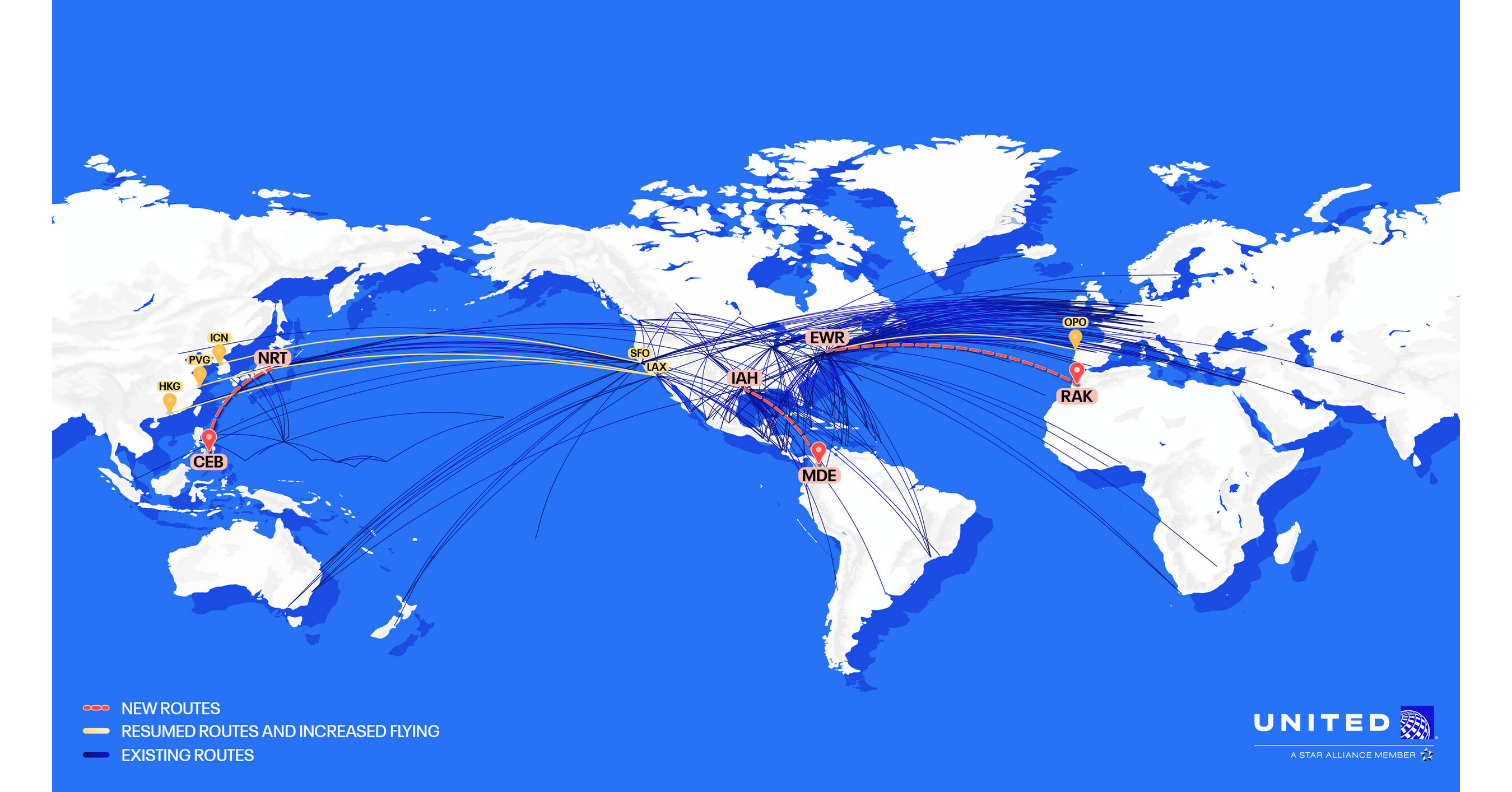
United Airlines Expands Nonstop Flight Routes Across The Caribbean

United Airlines Expands Nonstop Flight Routes Across the Caribbean

Escaping to the tropics is about to get significantly easier for sun-seekers across the United States. United Airlines is launching a fresh wave of nonstop flights to premier island hot spots, boosting direct connections between major U.S. hubs and high-demand Caribbean destinations.

The network expansion brings new routes, added seasonal frequencies, and expanded hub gateways to island classics like Turks & Caicos, Dominica, and the vibrant coastal shores of Cartagena along the Colombian Caribbean.

United Airlines Caribbean Route Expansion

United Airlines is expanding nonstop connections from major hubs directly to Caribbean island hotspots.


New & Expanded Nonstop Routes at a Glance

United's latest timetable updates unlock direct service for several regions that previously required layovers in Florida or Georgia:

  • Denver (DEN) to Turks & Caicos (PLS): Launching new Saturday nonstop service connecting Colorado and western U.S. travelers directly to Grace Bay's iconic white-sand beaches. This marks the westernmost nonstop connection between the U.S. and Turks & Caicos.
  • Houston (IAH) & Washington Dulles (IAD) to Cartagena (CTG): Adding nonstops four times weekly to the historic Colombian Caribbean gateway, giving travelers seamless access to the old walled city and the nearby Rosario Islands.
  • Newark (EWR) to Dominica (DOM): Doubling down on pristine eco-tourism destinations with expanded nonstop service to the "Nature Island" of the Caribbean.

UNITED CARIBBEAN EXPANSION HIGHLIGHTS

  • Key Target Gateways: Turks & Caicos, Cartagena, Dominica
  • Primary Origin Hubs: Denver (DEN), Houston (IAH), Washington Dulles (IAD), Newark (EWR)
  • Primary Aircraft: Boeing 737 MAX 8 & 737 MAX 9 featuring modern seating and Bluetooth IFE
  • Booking Availability: Fares currently open on the United website & app

Elevated Onboard Comfort & Connectivity

The majority of these new regional routes will be operated using United's modern Boeing 737 MAX aircraft lineup. Onboard, passengers can expect elevated cabin features designed for leisure comfort:

  • Seatback entertainment screens with Bluetooth audio connectivity at every seat.
  • Spacious overhead bins designed to easily fit standard carry-on suitcases.
  • High-speed Wi-Fi and power outlets to stay connected throughout the flight.
  • United First® recliners and United Economy Plus® extra-legroom seating options.
Travelore Pro-Tip: When booking Saturday leisure flights to Turks & Caicos or Dominica, look for one-stop connecting routes through Denver or Newark if you're originating on the West Coast to avoid overnight red-eyes.

The Takeaway for Island Travelers

With direct options expanding far beyond traditional East Coast hubs, planning a tropical getaway is becoming faster and more convenient than ever. Whether you want an eco-adventure in Dominica or a beach retreat in Turks & Caicos, United's expanded timetable offers more ways to reach the water with fewer stops.

Wednesday, July 29, 2026

JetBlue Unveils 'BlueFirst': Airline's New Domestic First Class Experience

JetBlue Unveils 'BlueFirst': Airline's New Domestic First Class Experience

In one of its biggest strategic shifts in years, JetBlue Airways has officially announced BlueFirst—a brand-new domestic first-class product coming to aircraft that do not feature its flagship, lie-flat Mint suites.

Long famous for offering a single economy cabin with extra legroom and complimentary Wi-Fi, JetBlue is officially stepping into traditional domestic first class to compete head-to-head with legacy carriers like Delta, United, and American.

JetBlue Aircraft on Tarmac

JetBlue will begin retrofitting non-Mint aircraft with the new BlueFirst recliner cabin later this year.


What to Expect from BlueFirst

Designed specifically for domestic and short-haul regional routes across JetBlue's fleet (including Airbus A220s, A320s, and A321s without Mint), the BlueFirst cabin will deliver a conventional premium recliner experience:

  • Premium Recliner Seats: Featuring Collins Aerospace MiQ recliner seats in a spacious 2x2 configuration with extra legroom and no middle seats.
  • Upgraded In-Flight Service: Enhanced dining and beverage offerings, elevated onboard amenities, and free high-speed Fly-Fi.
  • Priority Perks: Dedicated priority check-in, expedited security lanes, priority boarding, and priority baggage handling.
  • Mint Remains Intact: JetBlue's award-winning Mint business class—complete with lie-flat suites—will continue serving transcontinental and long-haul international routes.

BLUEFIRST AT A GLANCE

  • Cabin Type: Domestic First Class (Recliner Seating)
  • Fleet Coverage: Airbus A220, A320, and A321 aircraft without Mint
  • Rollout Timeline: Gradual retrofits beginning late 2026
  • Fare Options: Base, Standard, and Flex fare tiers

A Major Revamp to JetBlue's Fare System

Hand-in-hand with the BlueFirst launch, JetBlue is restructuring its ticket fare buckets across all cabin experiences:

Instead of choosing between Blue Basic, Blue, and Blue Extra, travelers will now select an experience cabin (Main, EvenMore, BlueFirst, or Mint) and then pick a flexibility tier:

  • Base (Unbundled/Basic): The lowest fare, which does not include advance seat selection and incurs change/cancel fees. Interestingly, JetBlue is expanding "Base" fares even into EvenMore and BlueFirst cabins!
  • Standard: Includes free seat selection, no change/cancel fees (returns a travel credit upon cancellation), and full TrueBlue point earnings.
  • Flex: Includes all Standard perks plus full refunds back to the original form of payment.
Travelore Pro-Tip: Pay close attention when booking BlueFirst! If you select a "Base" BlueFirst fare to save money, you won't be able to pick your specific seat in advance and will earn fewer TrueBlue points per dollar.

The Takeaway for Frequent Flyers

By launching BlueFirst, JetBlue bridges a major gap in its product lineup. Business travelers and leisure flyers who want a traditional first-class seat on regional or medium-haul domestic routes will no longer have to look elsewhere—giving JetBlue a much stronger competitive edge.

Friday, July 24, 2026

Travelore Fact Check: Do You Really Need To Wrap Your Passport In Aluminum Foil?

If you've spent any time on travel TikTok or cybersecurity forums recently, you've likely seen the viral DIY hack: wrapping your U.S. passport in aluminum foil to shield its radio-frequency identification (RFID) chip from digital pickpockets and data skimmers.

Viral Travel Myth • Fact Check

PASSPORT ALUMINUM FOIL WRAP

Is the viral RFID shielding hack necessary or risky?

The Viral Claim
Wrap Foil Around Passport
Blocks remote skimmers from stealing chip data
The Reality
Built-In Shielding Exists
Covers block RFID when booklet is closed
🔒 Anti-Skim Cover
Metallic lining built into U.S. e-Passports.
🔑 Encrypted Data
Chip requires physical photo page scan to unlock.
⚠️ Risk of Damage
Foil residue or tearing can invalidate booklet.
💡 Travelore Tip: Use an approved RFID sleeve or hidden money belt instead of DIY foil.

The idea sounds straightforward—aluminum acts as a makeshift Faraday cage to block unauthorized radio signals from accessing your personal data. But is your electronic passport (e-Passport) actually vulnerable to high-tech theft, and is kitchen foil a good idea? Here is the truth behind the viral trend.


How the "Foil Shield" Theory Works

Modern U.S. e-Passports contain a small, passive RFID chip embedded in the document. This chip stores biometric details, including your full name, birth date, passport number, and a digital version of your photo page.

Proponents of the aluminum trick point out that a conductive metallic barrier—like kitchen foil—interrupts radio waves, reducing the risk of a stranger reading the chip from a few inches away with a clandestine RFID scanner. While the physics behind metal blocking RF signals is real, the trick is largely unnecessary for passport security—and can actually do more harm than good.


Why You Don't Need Foil (Built-In Security)

The U.S. Department of State and travel security experts emphasize that modern passports are already built with heavy-duty physical and digital protections:

  • Built-In Faraday Covers: U.S. e-Passports feature metallic anti-skimming material built directly inside the covers. When your passport booklet is fully closed, radio signals cannot enter or leave.
  • Cryptographic Encryption: Even if someone held a high-powered reader against your passport while it was open, the data on the chip is locked behind Basic Access Control (BAC). An unauthorized scanner cannot read the chip without first physically scanning the optical text printed on the photo page.
  • No Live Tracking: The RFID chip is a short-range passive tag, not a location beacon. It does not broadcast live GPS coordinates like an Apple AirTag or smartphone.

The Real Danger: Document Mutilation

While wrapping your passport in foil might feel like a clever low-tech defense, officials warn that it can actually ruin your travel plans.

Applying foil, tape, or tight makeshift wrappers can easily scratch, crease, or warp the passport's delicate security features or rigid plastic data page. U.S. Customs and Border Protection (CBP) enforces strict rules regarding document condition; physical tearing, delamination, or chemical/foil residue can cause border officers to deem your passport damaged and invalid for travel.


Travelore Tip: What to Do Instead

Rather than improvising with kitchen supplies, follow these simple, reliable practices to keep your passport safe on the road:

1. Use a Dedicated RFID-Blocking Sleeve: If you want peace of mind while your passport is open or in use, purchase a durable, commercial RFID-blocking travel sleeve or neck wallet that won't leave adhesive or scratch the data page.

2. Focus on Physical Security: The risk of physical theft far outweighs the risk of digital skimming. Keep your passport stored in a flat, hidden money belt or inside a zipped interior jacket pocket.

3. Keep It Dry and Clean: Protect your document from spills, bends, and heavy wear by using a basic passport cover—just remove the outer cover quickly when passing through official immigration gates.

Monday, July 6, 2026

Travelore Tips For Attending The 96th Major League Baseball All-Star Game In Philadelphia


Baseball fans, the Midsummer Classic is officially back in the City of Brotherly Love! For the first time since Citizens Bank Park opened in 2004, Philadelphia is hosting the 96th Major League Baseball All-Star Game on Tuesday, July 14, 2026. What makes this year even more spectacular is that the game perfectly coincides with America's Semiquincentennial (250th birthday) celebrations, making Philly the absolute epicenter of the summer.


If you're gearing up to watch the biggest names from the National and American Leagues clash at "The Bank," you need a solid game plan. From navigating the transit system to knowing exactly where the best fan zones are, here are your essential Travelore tips for attending the 2026 MLB All-Star Game.


📅 All-Star Week: Beyond The Big Game


While the All-Star Game itself is the crown jewel, MLB turns the host city into a multi-day baseball festival. You don't want to fly all the way to Philadelphia just for Tuesday night! Here are the key events you need on your radar:


  • Capital One All-Star Village: Running from July 11 to July 14 at the Pennsylvania Convention Center, this massive indoor baseball-themed park features interactive games, batting cages, and meet-and-greets with Phillies legends like Ryan Howard, Jimmy Rollins, and John Kruk.
  • The MLB Draft: Also hosted at the Convention Center, this is a fantastic opportunity to see the future of the sport get drafted live.
  • All-Star Sunday Double Header: Taking place at Citizens Bank Park, this includes the famous SiriusXM All-Star Futures Game and the celebrity softball game.
  • The All-Star Red Carpet Show: On the morning of game day (July 14), players and their families will strut down a stars-and-stripes-themed red carpet at Independence Mall. It is completely free and open to the public, blending America's history with its favorite pastime.


🚇 Getting To Citizens Bank Park (Without The Stress)


Citizens Bank Park is located in the South Philadelphia Sports Complex. While there is massive parking availability, traffic during All-Star week will be historically chaotic. Here is the local secret: Take SEPTA.


The Broad Street Line (BSL) subway is incredibly efficient for game days. Simply hop on a southbound train from Center City and take it all the way to the final stop: NRG Station. From there, it is a breezy, pedestrian-friendly walk to the stadium gates. SEPTA usually runs express "Sports Express" trains on game days that skip most local stops, getting you from downtown to the stadium in under 15 minutes.


🍔 What to Eat at "The Bank"


Citizens Bank Park consistently ranks as one of the best food stadiums in Major League Baseball. You cannot leave the game without trying these local staples:


  • Chickie's & Pete's Crabfries: An absolute mandatory Philly sports experience. These crinkle-cut fries are heavily seasoned with Old Bay-style spices and served with cups of melted white cheese sauce.
  • Campo's or Tony Luke's Cheesesteaks: Skip the long lines at tourist traps downtown; you can get an authentic, top-tier Philly cheesesteak right in Ashburn Alley inside the stadium.
  • Federal Donuts: Grab a hot, freshly fried donut and some crispy fried chicken if you want a sweet and savory combo.


🛎️ Where to Stay & Sightsee


Because the All-Star Village and the Red Carpet Show are located downtown, you should absolutely book your hotel in Center City or Old City rather than near the stadium. The Sports Complex area is relatively isolated and lacks the walkable dining and historic charm of downtown Philly.


Since the game coincides with the nation's 250th anniversary, make sure you carve out time to explore Independence National Historical Park. Seeing the Liberty Bell and Independence Hall is a must, and they are located right next to where the players will be walking the red carpet on Tuesday morning!


With an incredible roster of players (including some hometown Phillies favorites starting this year!) and the backdrop of a historic national celebration, the 96th Midsummer Classic is shaping up to be an unforgettable event. Pack your jerseys, load your SEPTA card, and get ready to play ball!

Monday, May 4, 2026

Travelore Tips: 10 Must-Know Rules for Visiting Italy This Summer

Planning a trip to the "Bel Paese"? Italy remains one of the world's top travel destinations, but the rules for visiting have evolved significantly over the last year. To avoid hefty fines and ensure a smooth journey, here are the 10 must-know rules for your Italian adventure this summer.

1. The New "ETIAS" Authorization

Starting in late 2026, travelers from visa-exempt countries (like the U.S., Canada, and the UK) will need to apply for ETIAS authorization before boarding.

Cost: Approximately €7 for adults (free for minors).

Validity: It lasts for 3 years and is linked to your passport.

Note: While it's an automated system that usually takes minutes, it’s best to apply at least a few weeks before your flight.

2. Venice’s "Entry Tax" is Mandatory

If you’re visiting Venice as a day-tripper on peak days, you must pay the Access Contribution fee.

Price: €5 if booked in advance; it rises to €10 if you book last-minute (within 4 days of arrival).

Exemptions: If you are staying overnight in a hotel within the Venice municipality, you are exempt but still need to register for a QR code to show authorities.

3. Respect the "Church Dress Code"

This is one of the most strictly enforced rules in Italy. To enter any church, basilica, or the Vatican Museums, you must have:

Shoulders covered: No tank tops or spaghetti straps.

Knees covered: No short shorts or mini-skirts.

Pro Tip: Carry a lightweight scarf in your bag to wrap around your shoulders or waist in a pinch.

4. Validate Your Train Tickets

Buying a ticket isn't enough. For regional trains (RV and R), you must validate your physical ticket at the green/yellow machines on the platform before boarding.

Fines: Plain-clothes inspectors can issue fines of €50 or more on the spot.

Digital Tickets: If you bought your ticket via the Trenitalia app, make sure to "check in" digitally before the train departs.

5. The "No-Sitting" Rule at Monuments

Rome has become very protective of its historic landmarks.

Trevi Fountain: As of January 2026, a €2 entry fee is required to access the area directly around the fountain.

Spanish Steps: Sitting, eating, or drinking on the steps is strictly prohibited and can result in a fine.

6. Cappuccino After 11 AM? Think Again.

While not a legal "rule," it is a sacred cultural one. Italians view milk as a digestive aid, so a cappuccino is for breakfast only.

The Etiquette: If you order a cappuccino after a heavy pasta dinner, expect a raised eyebrow. If you need caffeine, order a simple un caffè (espresso) or a caffè macchiato.

7. Say "No Grazie" to Street Vendors

Around the Colosseum and Milan’s Duomo, you’ll encounter "friendly" vendors offering "free" friendship bracelets or flowers.

The Scam: Once the item is on your wrist or in your hand, they will demand payment aggressively. A firm "No, grazie" while continuing to walk is the best way to handle this.

8. Plastic Bags & Drinking Water

Italy is pushing for sustainability.

Nasoni: Instead of buying plastic water bottles, use Rome’s historic drinking fountains (Nasoni). The water is cold, free, and delicious.

Grocery Bags: You will be charged about €0.10–€0.20 for a biodegradable bag at supermarkets, so bring a reusable tote.

9. Cash is Still King (Sometimes)

While 85% of businesses in major cities like Rome accept contactless payments, you still need small change for:

Public Bathrooms: Usually €1–€1.50.

10. The "Coperto" (Cover Charge)

When you sit down at a restaurant, you’ll see a charge of €2–€4 per person called the coperto.

What it covers: This is a standard fee for the bread, linens, and service. It is not a tip, though it is common to leave a few extra euros if the service was exceptional.

Small Cafés: Many small shops still "require" cash for purchases under €10, even if the law says otherwise

Wednesday, April 29, 2026

Travelore Tips: Why The State Department Is Warning Americans Abroad To "Do Not Use Online Renewal"

If you’re currently traveling overseas and noticed your passport is nearing its expiration date, your first instinct might be to hop online and renew it. Stop right there. The U.S. State Department has issued a fresh, urgent warning as of April 10, 2026: using the Online Passport Renewal (OPR) system while you are physically outside of the United States will lead to the immediate cancellation of your current passport—leaving you stranded without a valid travel document.

The "Instant Invalidation" Risk

The online renewal system was designed for convenience, but it comes with a high-stakes security feature: automatic cancellation.

The moment you click "submit" on your online application, the State Department's systems mark your current passport as invalid. This is intended to prevent fraud, ensuring that two valid passports for the same person aren't in circulation at the same time.

The Catch: If you are in the U.S., this isn't an issue—you just wait at home for your new one.

The Disaster: If you are abroad, you now hold a "dead" document. You cannot board a flight, cross a border, or even check into many hotels that require a valid passport for ID.

Official Requirement: To use Online Passport Renewal, you must be physically located in a U.S. state or territory at the time of submission. The system uses geolocation and IP tracking to verify this.

Why the System Rejects Overseas Applicants

Beyond the risk of being stranded, the online system is technically restricted to domestic users for several critical reasons:

Shipping Restrictions: The system does not accept foreign home addresses or APO/FPO/DPO (military/diplomatic) addresses for shipping.

Legal Jurisdictions: Passports issued through the online portal are printed and shipped within the U.S. Embassies have their own specific procedures for handling international mail and secure delivery.

Emergency Needs: Embassies and consulates are equipped to issue emergency temporary passports on-site if you have urgent travel—something the online system cannot do.

What to Do If You Need a Renewal Abroad

If you are an American traveler overseas and your passport is expiring or lacks the required "six months of validity," do not go to the online portal. Instead:

Visit the Nearest Embassy: Go to the official website of the U.S. Embassy or Consulate in your current country.

Schedule an Appointment: Most overseas renewals are still handled via paper applications (Form DS-82 or DS-11) submitted in person or via local registered mail.

Check Processing Times: Routine overseas processing typically takes 4–6 weeks. If you have travel within 14 days, you must request an emergency appointment.

A Note on Scams

The State Department also warned of a rise in look-alike websites. These sites often charge high "convenience fees" and may steal your sensitive data. Always ensure you are on a .gov website before entering your Social Security number or payment details.

The Takeaway for 2026 Travelers

The golden rule for 2026: Check your passport before you leave the U.S. If it has less than nine months of validity, renew it by mail or online while you are still on U.S. soil. Once you cross the border, your only safe path for renewal is through the local embassy.

Thursday, February 5, 2026

Travelore Tips: What You Should Never Order On A Plane–According To Flight Attendants

You'll think twice the next time you look at the menu onboard...

Airplane food and drinks have improved over the years, but there are still a few in-flight orders that even seasoned travelers think twice about. After spending a heavy travel month bouncing between early-morning departures and long-haul flights, I decided to ask the people who know airline cabins best: flight attendants.

Rather than focusing on any one airline, I asked a simple question during multiple flights: what are the items passengers are better off skipping in the air? Their answers were candid, consistent, and surprisingly practical. While none of these suggestions are meant to alarm travelers, they do shed light on how flying changes everything from hygiene to how your body processes food and alcohol.

Here’s what flight attendants recommend avoiding—and why.

Don’t use ice in your drinks

Several flight attendants noted that ice can be a gray area onboard. While aircraft are cleaned regularly, the tools used to scoop ice aren’t always washed between flights in the same way galley equipment is. That doesn’t mean every airline operates the same way, but if cleanliness is top of mind for you, ordering beverages without ice is an easy workaround. Bottled drinks or canned seltzers poured directly into a cup avoid the issue altogether.

Diet Coke with extra foam

This one surprised me, but it came up more than once. Diet Coke, in particular, tends to foam excessively at altitude. Cabin pressure causes carbonation to behave differently, and Diet Coke is notorious for producing long-lasting foam when poured onboard. That’s why it often takes flight attendants longer to serve — and why some quietly dread the order. If you’re craving soda, other options tend to be quicker and less messy.

Say no to double alcoholic drinks

Alcohol affects the body differently at cruising altitude. Lower oxygen levels can intensify its effects, meaning a drink or two may hit harder than expected. Flight attendants also pointed out that getting overly buzzed in a confined cabin isn’t enjoyable for the person drinking — or the people seated nearby. Long flights can make it easy to feel both intoxicated and dehydrated before you even land.

Save Bloody Marys for land

While tomato juice is famously popular on planes, flight attendants warned that drinks with high sodium content can contribute to bloating and swelling, especially on longer flights. Sitting for extended periods already causes fluid retention, and salty cocktails may make that discomfort worse. For travelers prone to puffy ankles or post-flight fatigue, it might be worth saving celebratory drinks for after landing.

Avoid fish entrées

In-flight meals are reheated rather than freshly cooked, and fish doesn’t always fare well in that process. Several flight attendants said fish dishes are among the least forgiving when it comes to texture and smell. Since meals are typically heated using steam or convection methods, proteins that rely on precise cooking temperatures can easily dry out or become unpleasant.

What to order instead

If you want to keep things simple, flight attendants generally recommend sealed beverages, lighter meals, and options that don’t rely heavily on reheating. Sparkling water without ice, packaged snacks, and straightforward meals tend to be the safest bets. These choices minimize surprises and help you feel better when you arrive.

Flying already puts stress on your body in subtle ways. Making a few small, informed choices about what you order onboard can go a long way toward a more comfortable trip, and fewer regrets at 35,000 feet.

https://creators.yahoo.com/brands/jimmyrox/

Thursday, January 1, 2026

Travelore Tips: Unwritten Rules You Should Know Before Visiting Italy

Falling in love with Italy's historic cities, troves of impressive artwork, and delicious food is not hard to do. It's a country that easily charms all who visit. But as beautiful as Italy is, it is also a place that, at least from an outsider's perspective, seems to have a lot of arbitrary rules, especially when it comes to food and communicating with locals.

Italians are very proud of their culture and cuisine, and respect is of utmost importance regarding both. At home, no one would bat an eye if you requested extra protein with your pasta or decided to treat yourself to a late evening cappuccino before a long drive home, but these will earn you the infamous side-eye on a trip to Italy. Tourists sometimes forget how essential it is to learn the culture not only so they can have a pleasant journey but also so they can come away with a deeper understanding and appreciation for the place they're visiting.

That said, it's hard to learn these rules unless you already know a local or an expert guide because many of them are unspoken — almost as if they're inherently learned only by those who live there. But it's not impossible to become an expert yourself if you're just visiting. If it's your first time in Italy, it can feel like a lot to remember, but give it a few days, and you'll find that the Italian way of doing things is actually the perfect way to ease into "la dolce vita."

A proper greeting is expected

When you enter any shop or restaurant in Italy, you must greet the cashier or host with a friendly hello with eye contact. This is also true in France, where you will typically get a very rude reception if you don't respond with a simple "bonjour" — one of the top phrases tourists should know when visiting France. In both countries, it's considered basic politeness in any one-on-one interaction. Learn a few basic phrases and keep them at the ready whenever you're about to greet someone.

Most people generally use "buongiorno" from the mornings until the late afternoons as the main greeting. Once you get to very late afternoon and evening time, you can switch to using "buona sera," or good evening. "Buona notte," or good night, is more something you say when you are leaving, so it can be a bit awkward if you use it to say hello. If you're so jet lagged, you're not sure what time of day it is or have forgotten the words, you can also say "salve" as a generic and very polite greeting. "Ciao" means both hello and goodbye, but it's typically only used as a greeting if you are already familiar with the person you're speaking to. And if you're leaving somewhere while it's still daytime and want to wish someone to have a good morning or good day, you can say "buona mattinata" or "buona giornata," respectively. Both are kind of like saying, "Have a good morning/day!"

Dress tidily

Americans have a reputation for being a bit informal when it comes to getting dressed to run errands like grocery shopping or stopping at the bank. In Italy, you'll very rarely find someone out and about in their sweatpants, unless they just came from the gym, and you will never see any Italian walking around the street in pajama pants.

In general, you'll notice that most people in Italy are almost always put-together, especially the older generations. This doesn't necessarily mean that you have to wear designer clothes to fit in, only that you should wear clothes that are clean, unwrinkled, and well-fitting, even if you are just going out to pick something up from the grocery store.

There are no fashion police in Italy to enforce a dress code, although most churches will ask you to cover up — especially if you're wearing shorts or a sleeveless top — if they deem you are bearing too much skin or if you have underwear showing, but it's a good way to blend in and prove the American stereotype wrong.

Meals are for enjoying

When you sit down for a meal at a restaurant, the last thing Italians will do is rush you. Dining out in Italy is a full experience that should be savored and enjoyed very slowly. When you finish your first course, the waiters will not rush to bring out the next dish, and instead will let you take your time before clearing the table. Once you place your order, actually, this is probably the only time you will see your waiter. Unlike the U.S., where servers are constantly checking in on you to see if you need a refill or extra dip, Italian waiters might only check in once every hour, if at all, depending on how busy the restaurant is that night.

This also means they won't rush you to pay the bill. In fact, dropping a check on a table without the guests asking for it first is considered extremely rude. If it has to be done because the restaurant is closing or someone is changing shifts, it's usually done with a big apology. When you're ready to pay, ask for the check by saying "il conto, per favore," and if you can't get the waiter's attention but need to get going, you can generally walk up to the bar and pay.

Big, savory breakfasts aren't really a thing

When you have a big day of sightseeing to do — a common thing in Italy since the country has tons of historic landmarks to see and art museums to visit — you might want to start the day with a big breakfast: eggs, toast, and lots of coffee. If your hotel has breakfast included and caters to a lot of Americans, you might even be able to do this. But if you're going out for breakfast on your own, a savory, gut-stuffing start to the day can be a tall order in Italy.

Italians don't eat very much in the morning, and what they do eat is usually quite sweet. In Sicily, you can even find people eating a brioche bun and granita (a type of shaved ice) for breakfast. The most typical thing to eat for breakfast is a small pastry with a small cup of coffee, a meal that is often enjoyed quickly and on the go. Most Italians plan on having a big lunch later, so this is usually enough to hold them over until the afternoon, but if you're a tourist embarking on a busy day of back-to-back sightseeing, it's probably a good idea to have a backup plan in case you can't find somewhere to eat.

For a quick coffee, stand at the bar

Every European country has a unique café culture, but in Italy, drinking coffee is basically a national pastime. In fact, a "bar" in Italy, more often than not, refers to a coffee bar, which is also a place where you can find over-the-counter pastries and alcohol. However, coffee is the main attraction. This is where the culture of espresso — a word that comes from the Italian word for "to press out" or "express" — began. When people are on their way to work in the morning, they'll stop at the bar for a coffee and will drink it while standing up, a tradition which can be very fun to try when you're in Italy.

Cappuccino is a breakfast-only drink

Cappuccinos are delicious, but this common coffee order is only for the mornings and should never be placed in the afternoon. The drink is made with equal parts espresso, steamed milk, and milk foam and is often sprinkled with cinnamon powder for an extra sweet kick. It's not the typical order for an Italian on the go, but a drink to be savored, enjoyed, and never ordered past lunch. As the tour company Walks of Italy puts it on its blog, "It's just not done (some say it's because the milk and foam makes it a replacement for a meal, and all that dairy upsets the digestion)."

Thinking about digestion is a surprisingly large part of Italian culture, and milk is often the villain in this narrative. Many Italian traditions are linked to digestion, such as the aperitivo (drinking and snacking before dinner), digestivo (drinking after dinner), and the passeggiata (walking after eating). If you still want a cappuccino or milky drink after lunch, it's not impossible to find someone to serve it to you in Italy. However, if you plan to eat a lot of pizza and pasta, it may be worth adapting some of these Italian digestion norms.

Chicken and pasta don't go together

You probably could have guessed about pineapples on pizza, but there are a lot of common dishes considered Italian in the U.S. that you won't find anywhere in Italy. Chicken alfredo is definitely one of them. It's hard to understand when there are so many other tasty pastas that use meat, such as ragù alla bolognese (beef) or carbonara (pork cheek, also known as guanciale), so why is chicken so offensive when paired with sauce-covered noodles?

If you ask an Italian, their response is generally going to be one of repulsion, and they might tell you something like "it's simply not done!" or insist that it is against tradition. There's really no clear answer, but one poster on the r/Cooking subreddit may have explained it best: "Most Italians believe that good pasta doesn't need much help. The idea of a pasta dish with big chunks of meat in it (chicken or otherwise) is not really done over there. The pasta is the star of the show. Meat appears most often in ground or stewed form, either as part of a ragu or as a filling for ravioli and the like. I think chicken can be and is used for some of these applications, but cubes of white meat chicken don't bring much to any party."

Don't eat seafood with cheese or red wine

Italians are also very particular about seafood, but the unofficial, unspoken "ban" on cheese and red wine while eating a delicate piece of fish may be more understandable. Most of the 20 regions of Italy — except for landlocked Umbria, Lombardy, Piedmont, Valle d'Aosta, and Trentino Alto Adige — touches the sea, which means seafood has a near-constant presence in Italian cuisine. Of course, because this is Italy, there are unofficial rules and these ones have also infiltrated the culinary world in general. You might have had the idea to sprinkle some parmesan on clam linguine before, but even cheesemongers will tell you that this isn't the best idea.

As writer and cheesemonger Nora Singley explains for The Kitchn, "The rich, salty flavors of cheese can too easily overwhelm the flavors of fish, forcing a contrast not only in intensity of flavor, but also a sacrifice of the integrity of both ingredients. Grated cheese over a fish pasta is considered either extraneous, excessive, or demeaning." The same principle can be applied to red wine, which can overpower seafood if it's too full-bodied, so white wine is more customary. Plus, if you've never tried it before, the aftertaste of red wine with fish can be quite unpleasant, and the restaurant probably wouldn't want you to leave with a bad impression. If you do want to indulge in some good cheese without seafood, skip the big cities and head to the underrated foodie town of Parma.

Good olive oil is not for cooking or dipping with vinegar

If you're a fan of "liquid gold," aka olive oil, you can have a grand time in Italy sampling high-quality oils cultivated from olive farms all over the country, some of which have thousands of years of olive-producing tradition. You may also have the opportunity to buy fine bottles directly from the makers or from specialty shops. While it's true that olive oil is a staple of Italian cooking, you don't want to use the best oil in a hot pan, especially if it's extra virgin olive oil.

If you buy a very good bottle of olive oil as a souvenir in Italy, you should reserve it for drizzling and dipping, so as not to cook out the flavor. And while you're free to do whatever you like in your own home — i.e., mixing oil and vinegar for a tasty dipping sauce — you won't see any Italians taking part in this bread dipping habit. As the Pasta Evangelists blog explains, "Many Italians find the idea of bread, olive oil, and balsamic vinegar before a meal doubly offensive—not only are you filling up on bread before the main event, but you're also ruining your taste buds with the acidic vinegar."

Dinner is late, but that's why you have aperitivo

Italians typically eat dinner on the later side, usually between 8 and 9 p.m. That can seem like a long time to wait if you've worked up an appetite, but if you're hungry, all you need to do is go for an aperitivo. This tradition is part of the daily ritual, and it couldn't be simpler to partake in. Simply find a bar, preferably a terrace if the weather is nice, and order yourself a drink. It could be a cocktail, wine, or local beer, but the important thing is that you also order snacks (sometimes, but not always, these are complimentary).
 
The idea of aperitivo is not to eat too much. This would spoil your appetite for dinner, so snacks are light and small, such as olives, potato chips, or even some bruschetta, which is bread topped with tomato and basil. Some bars are known for their aperitivo, such as Caffè Santa Zita in the Tuscan city of Lucca, which serves upscale snacks that foodies will adore.

Expect a cover charge when eating out

When you dine out in Italy, you should expect to find a "coperto," a cover charge, tacked onto your bill whenever you've sat down and had table service. This is the standard charge, and it typically will cost you 1 to 5 euros per person, depending on the level of the restaurant. The general idea is that this cost covers the cost of plates, glasses, and clean table cloths, and any "free" bread you might get served alongside your meal. However, it's not exactly a tip because it goes to the restaurant, not the server.

Tipping is not expected in general, since the cost of service is usually factored into the cost of food. It is appreciated, though if you are compelled to recognize exceptional service, and generally 10% is considered appropriate in that case. Just make sure you check your bill first to see if an extra service charge, aka "servizio," has been added on. This is a common practice, especially in busy tourist areas, so if you see that written on the check (in addition to "coperto"), don't feel bad about not tipping extra.

Water in restaurants isn't free

We can thank the Romans for the plentiful amount of clean drinking water available from public fountains. These systems date back to the ancient empire that built a continent-wide system of aqueducts to provide water to citizens, and people still take advantage of them. These fountains are safe to use and are great for filling up your water bottle or washing your face on a hot day. 

With free water available in the streets, you may be surprised to learn that the water you order at a restaurant is not free. When you ask for water, the waiter will ask you if you want still or sparkling, and no matter your answer, they will serve you bottled water that will appear on your bill later. Complimentary tap water is generally not served, although you can try asking. Ice is also not a common thing, so if you want it for your water or soft drink, you will also have to ask for it, but thankfully, it is usually served free of charge.

https://www.islands.com/author/jamieditaranto/