In a historical twist, the home of Albania’s late communist dictator Enver Hoxha is hosting international artists fascinated by the long-ruling leader’s library, the country’s history of isolation and its unique traditions.
The metamorphosis of Villa 31 — where the Hoxha family lived for decades until his regime was toppled in 1990, five years after his death — encapsulates Albania’s radical transformation from one of the world’s most hermetic countries into the modern society it is today.
The sprawling, 4,000 square meter (43,000 square foot) house with more than 100 rooms, built in the 1970s in the capital of Tirana, was a heavily guarded place of power where Hoxha both ruled and feared his own people. Albania’s ruler was known for his paranoid behavior and saw enemies everywhere.
Now surrounded by high-rises, trendy bars, posh restaurants and pulsating nightclubs, the villa itself has undergone a transformation, complete with a fresh coat of paint — though the ostentatious downstairs hall with marble floors is still there.
Gone are the heavy curtains that blocked sunlight. Long silent walls will from now on echo with poetry readings, experimental theater, film screenings and contemporary art exhibits. The rooms offer workshops and shared areas for 23 artists from 15 countries.
The villa’s rebirth stems from a pledge by Albanian Prime Minister Edi Rama to visiting French President Emmanuel Macron in October 2023 to turn it into an artists’ center — “something that would make Enver Hoxha roll in his grave.”
Closed off to the public until now, the villa has welcomed artists, residing there since late January, and hopes to soon see tourists too.
“This is what I believe is the power of art, to deal with a past and a painful past, like the one that this villa symbolizes,” said Nita Deda, manager of Art Explora, a French-based foundation that spearheaded the building’s transformation.
Inside the studios that replaced once labyrinthine apartments, visiting artists have the freedom to “express everything, from fury to anger, to betrayal, to ambivalence, to the absurd ... exactly his (Hoxha’s) worst nightmare,” said Ukrainian artist Stanislava Pinchuk.
Pinchuk, 37, says she is happy to come to Albania, the “last puzzle piece” of former communist countries, though she finds it difficult to sleep at the villa.
She is baffled by Hoxha’s library, which holds books by his communist idols — Karl Marx, Friedrich Engels, Joseph Stalin and Vladimir Lenin — to books about the French Revolution and students’ protests in the former Czechoslovakia and Hungary in the 1950s and 1960s. There are also books on sex, which ordinary Albanians were banned from reading at the time.
The library was a testament to “an ideology refusing to die,” Pinchuk said.
Reading “Kanun,” a book on Albanian customs, Italian artist Genny Petrotta, 34, marveled at the practice of sworn virgins — a centuries-old tradition in which women declared themselves to be men so they could enjoy the same rights within the society that men enjoyed, though they did not considering themselves transgender.
“It’s a story about power,” Petrotta said, adding that she was “impressed by the analytical way” the book described the phenomenon.
The villa’s underground tunnels, built as shelters in case of an attack, also fascinated the visiting artists. Their exhibit will open in April, and Albanians, no longer fearful of the late dictator, will be able to view the art.
Under Hoxha’s repressive regime, some 100,000 Albanians were imprisoned, sent to internment camps or executed during the 46 years of his repressive regime.
Albania today has seen its economy and society develop rapidly, and 10 million tourists visited the country last year.
Some, however, disagree with Villa 31’s transformation, and say it should have stayed untouched, a history lesson for the tourists and generations born long after Hoxha’s regime collapsed.
Xhevdet Lani, a taxi driver and an older resident of Tirana, said the villa is “historic evidence of what the dictatorship once was.”
“It would have been better if it had remained for generations so that our children and grandchildren could learn from it,” he said.
By LLAZAR SEMINI
Showing posts with label Albania. Show all posts
Tuesday, February 18, 2025
Sunday, September 29, 2024
Travelore News: A New Country Is About To Be Created And It’s Going To Be The World’s Smallest
Ever heard of the ‘Sovereign State of the Bektashi Order’?
The Bektashi Order has been headquartered in Albania since the 1930s (Picture: Getty)
You most likely haven’t, at least not yet. But if all goes to plan, it will soon become the world’s smallest microstate — a Muslim version of the Vatican City (but just a quarter of its size).
Albanian Prime Minister Edi Rama plans to transform Tirana’s Sufi Bektashi Muslims into a sovereign state to promote ‘moderation, tolerance and peaceful co-existence’.
The 10-hectare patch of land in Albania’s capital will have its own passport, borders, and administration governing religious issues, without Tirana’s involvement.
Albania is roughly 50% Muslim, but just 10% of that population are part of the Bektashi Order. Bektashi Muslims are the fourth largest religious community in Albania, after Sunni Muslims, Catholics and Orthodox Christians.
Reflecting the Order’s tolerant Islamic practices, the microstate would permit alcohol and allow everyone to wear what they want.
Speaking at the United Nations, Rama noted that his tiny Balkan nation of 2.8million sheltered Jewish refugees from the Nazis during World War II and gave asylum to Afghans after the Taliban took power in 2021.
The Vatican-like city state would be in Tirana (Picture: Wikimedia)
What is the Bektashi Order?
The Bektashi Order is a mystic Muslim order founded in the Ottoman Empire (modern day Turkey) in the 13th century. It’s an offshoot of Sufism, a branch of Islam that focuses on spirituality and direct connection with God.
Bektashis are regarded as tolerant, accepting of other religions and philosophies.
The Bektashi Order has been headquartered in Albania since the 1930s after it was banned in Turkey. Estimates vary, but today there are said to be between 7 and 20 million Bektashis around the world.
Haji Edmond Brahimaj Mondi is the leader of the Bektashi Muslims (Picture: Godong)
Albania’s Prime Minister Edi Rama said the goal of the new microstate was to promote the ethos of religious tolerance Albania prides itself on.
The country is proud of its link to Mother Teresa, whose family was of Albanian descent.
The Order praised the plan, saying: ‘Such a historic step aims at recognizing the Beltashi Order as a sovereign, self-governing state, committed to supporting its century-old culture of moderation and spiritual involvement.
‘The new state will aim at nothing but the spiritual leadership.’
How would the proposed microstate work?
If the plans for a Bektashi microstate go ahead, it’s likely that it will be ruled theocratically, similar to the system in the Vatican — the headquarters of the Roman Catholic Church.
The Vatican is headed up by the Pope, who leads both state and government.
In Albania, the Bektashi microstate would likely be led by the leader of the Bektashis, Haji Edmond Brahimaj Mondi, known as Baba Mondi.
Citizenship of the state will be limited to members of the clergy and people working in the administration, Barron’s reports.
Edi Rama announced the plans this month (Picture: AP)
Baba Mondi said of the proposed microstate: ‘For our followers, this isn’t about political power or land acquisition; it’s about solidifying the Bektashi Order’s mission of spiritual moderation and protecting our religious practices.
‘Albania has historically been a beacon of religious coexistence, and this step is a testament to the forward-thinking nature of the Albanian government under visionary leadership of Prime Minister Edi Rama, who recognized the importance of granting us the space to continue promoting peace.
‘For our community worldwide, it is a moment of pride and renewal, strengthening our identity and presence on the global stage.’
https://metro.co.uk/author/sarah-hooper/
You most likely haven’t, at least not yet. But if all goes to plan, it will soon become the world’s smallest microstate — a Muslim version of the Vatican City (but just a quarter of its size).
Albanian Prime Minister Edi Rama plans to transform Tirana’s Sufi Bektashi Muslims into a sovereign state to promote ‘moderation, tolerance and peaceful co-existence’.
The 10-hectare patch of land in Albania’s capital will have its own passport, borders, and administration governing religious issues, without Tirana’s involvement.
Albania is roughly 50% Muslim, but just 10% of that population are part of the Bektashi Order. Bektashi Muslims are the fourth largest religious community in Albania, after Sunni Muslims, Catholics and Orthodox Christians.
Reflecting the Order’s tolerant Islamic practices, the microstate would permit alcohol and allow everyone to wear what they want.
Speaking at the United Nations, Rama noted that his tiny Balkan nation of 2.8million sheltered Jewish refugees from the Nazis during World War II and gave asylum to Afghans after the Taliban took power in 2021.
The Vatican-like city state would be in Tirana (Picture: Wikimedia)
What is the Bektashi Order?
The Bektashi Order is a mystic Muslim order founded in the Ottoman Empire (modern day Turkey) in the 13th century. It’s an offshoot of Sufism, a branch of Islam that focuses on spirituality and direct connection with God.
Bektashis are regarded as tolerant, accepting of other religions and philosophies.
The Bektashi Order has been headquartered in Albania since the 1930s after it was banned in Turkey. Estimates vary, but today there are said to be between 7 and 20 million Bektashis around the world.
Haji Edmond Brahimaj Mondi is the leader of the Bektashi Muslims (Picture: Godong)
Albania’s Prime Minister Edi Rama said the goal of the new microstate was to promote the ethos of religious tolerance Albania prides itself on.
The country is proud of its link to Mother Teresa, whose family was of Albanian descent.
The Order praised the plan, saying: ‘Such a historic step aims at recognizing the Beltashi Order as a sovereign, self-governing state, committed to supporting its century-old culture of moderation and spiritual involvement.
‘The new state will aim at nothing but the spiritual leadership.’
How would the proposed microstate work?
If the plans for a Bektashi microstate go ahead, it’s likely that it will be ruled theocratically, similar to the system in the Vatican — the headquarters of the Roman Catholic Church.
The Vatican is headed up by the Pope, who leads both state and government.
In Albania, the Bektashi microstate would likely be led by the leader of the Bektashis, Haji Edmond Brahimaj Mondi, known as Baba Mondi.
Citizenship of the state will be limited to members of the clergy and people working in the administration, Barron’s reports.
Edi Rama announced the plans this month (Picture: AP)
Baba Mondi said of the proposed microstate: ‘For our followers, this isn’t about political power or land acquisition; it’s about solidifying the Bektashi Order’s mission of spiritual moderation and protecting our religious practices.
‘Albania has historically been a beacon of religious coexistence, and this step is a testament to the forward-thinking nature of the Albanian government under visionary leadership of Prime Minister Edi Rama, who recognized the importance of granting us the space to continue promoting peace.
‘For our community worldwide, it is a moment of pride and renewal, strengthening our identity and presence on the global stage.’
https://metro.co.uk/author/sarah-hooper/
Monday, July 18, 2016
48 hours In Tirana
Lively Tirana wears its history with pride. It would be easy to mistake Albania’s colourful capital for any modern city in Western Europe – with stilettoed professionals crossing its wide main boulevard to meet for macchiatos in chic cafes. But then you come across an Ottoman-era stone bridge, an Italian villa, and a concrete apartment block with fresh pastel paint... and you realise there’s more here than meets the eye.
With 45 years of isolationist communist rule in the rearview mirror,Tirana has undergone a magnificent transformation in recent years and is on the rise as an offbeat destination for travellers. Many pass through the city on their way to Albania’s towering mountains and pristine beaches, but don’t count Tirana out – there’s plenty to discover over two days in this charming town.
Day 1
Morning
Begin your day with a bird’s-eye view of the city as you sip an espresso from the rooftop restaurant of the newly revamped Xheko Imperial Hotel (xheko-imperial.com). Properly caffeinated, you’re ready to start your exploration in nearby Mother Teresa Square, which hosts a modest statue of the famed ethnic Albanian missionary.
Heading north from the square – renovated for the 2014 visit of Pope Francis – continue your stroll down the impressive Bulevardi Dëshmorët e Kombit to the National Art Gallery. You can’t miss the striking Cloud pavilion out front, which was designed by Japanese architect Sou Fujimoto and doubles as a piece of art and a venue for cultural events. If history is more your thing, follow the boulevard to theNational History Museum, immediately recognisable by the powerful mosaic mural to Albanian pride adorning its facade. You can also pick up the 10am daily free walking tour (tiranafreetour.com) of the city on the museum steps.
Afternoon
With much still to see, refuel with a flaky spinach pie (lakror në saç me spinaq) at nearby Oda. Designed in the style of the 18th-century meeting room for which it’s named, the restaurant – while slightly touristy – is a perfect introduction to Albanian cuisine. If you opted for museums in the morning, spend the afternoon on a self-guided tour of the city’s sights, many of which have posted signs with QR codes.
On your way back toward Skanderbeg Square, stop at the 19th-centuryClock Tower, which was renovated and unveiled as a symbol of Tirana’s march forward by Mayor Erion Veliaj upon taking office in 2015. Climb to the top for the best view over the minaret of neighbouring Et’hem Bey Mosque to the statue of Albanian national hero Skanderbeg and the futuristic Resurrection of Christ Orthodox Cathedral in the distance to the left.
Afterwards, take a walk through the centuries from the ByzantineFortress of Justinian to the 19th-century Tanner’s Bridge, and thePyramid, formerly a museum to longtime communist dictator Enver Hoxha. To get a sneak peak into life under Hoxha, pop into quirky ‘cafe-museum’ Komiteti (facebook.com/Komiteti-Kafe-Muzeum) for a coffee (or one of 25 varieties of raki, the local fruit-based liquor) along your journey.
Evening
After a full day of sightseeing, reward yourself with an Aperol Spritz in the hip garden of Tirana mainstay Pepper Lounge (facebook.com/PepperLoungeTR). Just around the corner, you can feast on handmade truffle rigatoni at Salt (facebook.com/salt.tirana), a worthy newcomer that’s upping the ante for the city’s well-established Italian dining options. Complete the Italian hat trick by stopping into Cioccolatitaliani (facebook.com/cioccolatitaliani.tirana) for some truly innovative gelato creations.
Fortified, spend the rest of the evening indulging in Tirana’s ever-evolving art scene. Non-profit Tirana Ekspres and the newer Tulla Center (facebook.com/tullacenter; open from September to June) each host a rotating series of exhibitions, concerts and other cultural events that offer insight into modern Tirana.
Day 2
Morning
Believe it or not, Tirana is home to the Balkans’ best bagels. Pick up one for breakfast from the aptly named New York Tirana Bagels (newyorktiranabagels.com), a cafe and social enterprise whose profits go towards supporting people in need. From there, take a 20-minute taxi ride (900 lek, or around 6 euros) to one of Albania’s most fascinating attractions: BUNK’ART (bunkart.al).
This museum and art exhibition, which opened in 2014, is part of a wave of recent efforts by the Albanian government to lift the curtain on its Cold War past (along with former secret police headquarters, the House of Leaves, due to open as a museum by the end of 2016). Dedicate a couple of hours to exploring the 40 rooms of this eerie five-storey bunker, built in the 1970s for Albania’s political and military elite as part of a massive project to construct up to 700,000 bunkers across the country.
Afternoon
Upon leaving BUNK’ART, turn right and make the 10-minute walk uphill to catch the Dajti Express. Opened in 2005, the Austrian-built cable car provides a breathtaking 15-minute journey to the top of Mt Dajti, with views along the way of scenic forests, farmland, and – yes – bunkers. The 33-sq-km national park offers outdoor activities to suit all interests: from hiking to target shooting, horseback riding and mountain biking.
For a pre-hike lunch, you can walk or take the available shuttles to any of the local restaurants that specialise in roast lamb on a spit. Panorama (panoramadajt.al) and Gurra e Perrise (facebook.com/pages/Gurra-e-Perise-Dajt) are local favourites. If your time is limited, Ballkoni Dajtit (ballkonidajtit.com) at the top of the cable car offers an impressive selection of wine, as well as international and Albanian fare – all with panoramic views of Tirana.
Evening
Europe travel guide
$29.99
There simply is no way to tour Europe and not be awestruck by its scenic beauty, epic history and dazzling artistic and culinary diversity.
VISIT SHOP
Your last night in Tirana should take you to the trendy Blloku neighborhood, once restricted to only high-level communist party members and now home to the city’s best nightlife. Spend the evening hopping between Tirana’s many famed bars: get a full aperitivo spread at wine bar Bufe (facebook.com/BUFE), peruse the retro decor and hipster crowd at Radio, and pop into Colonial Cafe (facebook.com/pages/Colonial-Cafe) or Nouvelle Vague for some of the city’s most creative cocktails.
Make sure to grab a bite along the way at Otium (facebook.com/Otium-Restaurant), where the menu changes daily to highlight the freshest local ingredients available. When Blloku starts to wind down around midnight, during the summer months you can make your way over toFolie, where the party rages until the wee hours of the morning.
Thursday, June 16, 2016
Gorgeous Montenegro: The Best Of The Coast
![]() |
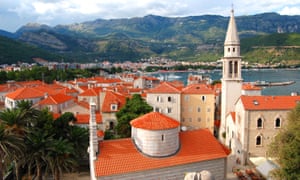
| Drink it in … the old town at Budva. Photograph: Alamy |
Montenegro’s beauty has not gone unnoticed by the yacht set, but new flights from Gatwick and Manchester have opened up the quieter stretches of its stunning coastline
With its new, multi-million pound marina – Porto Montenegro in Tivat – and a host of five-star hotel openings, Montenegro has become a magnet for wealthy Russian holidaymakers and Europe’s yachting fraternity. But beyond this affluent scene, the coast remains quirky and friendly, with pantiled villages clinging to the steep shoreline, uncrowded beaches and smoky konoba restaurants where you can spend the afternoon with a €5 bottle ofvranac.
And with easyJet flights from Gatwick to Tivat starting 16 June (flights from Manchester launched earlier this year), it’s easy to visit the Montenegro seaside and avoid the bling.
Bay of Kotor

East of Herceg Novi, this long, forested bay is lined with a mix of old Greek and Turkish settlements, and small, concrete hotels that time forgot. The eight-room Palace Hotel in Zelinka (doubles from €42, +382 31 678 102) has more character than most, and there’s a pebbly beach just 50 metres away. In Baosici, a good place to visit is the house of Pierre Loti (the French sailor whose memoirs inspired Madama Butterfly). He lived for a while on the shore here, and wrote another romantic short story. The house is a ruin but has tranquil views. Aurora Hotel on the quayside in Herceg Novi is owned by Serbian film director Emir Kusturica, and is full of his wife’s art work (doubles from €61 B&B). There’s a lively cafe-bar and small cinema downstairs. For food, Konoba Feral (Vasa Ćukovića 4), below the castle in Herceg Novi, has some good Montenegrin wines from the Savina Monastery and serves excellent (and affordable) grilled calamari, black risotto and swordfish. Restoran Olimpija in Kumbor is a lovely family affair. Diners can hear mama in the kitchen while her sons are out front, and the local seafood and fish soup (€5) are excellent.
Kotor

This showpiece of Venetian Montenegro, with its mountainous city walls and pantiled roofs, is in danger of being swamped by tour groups but for the moment the shopkeepers are still keen to chat. Hotel Marija (doubles from €120) was opened in 1995 by Voljin Radanovic. These days his 17-bedroom mansion feels a touch over-modernised and the street outside can get noisy, but it is right in the centre. Cats are the unofficial symbol of Kotor and feline fans can check out theCat Museum and the Cats of Kotor Shop, both full of locally made moggyphernalia. When it comes to food, avoid the tourist traps and head toBastion, a decent old restaurant that does good-value fish dishes in the quieter North Gate end of the city.
Budva

Budva was President Tito’s Benidorm, a long arc of beach framed by 1960s high-rise hotels. It’s creeping upmarket these days, but the old Venetian city at the end of the beach (restored after an earthquake in 1979) has some quiet streets and cafe-strewn piazzas. The Hotel Astoria (doubles from €110) is a modern boutique hotel built into the old sea wall, with an attractive roof terrace. The best sights include the citadel and the four churches (two Orthodox and two Catholic) that stand shoulder to shoulder in the square below. Mogren beach is one of Montenegro’s best – it’s only 1km from the old town, down a narrow path that keeps the crowds away. For somewhere different to eat and drink the Budva Beer & Bike Club hosts local rock bands.
Bar/Stari Bar

Four kilometres inland from the new port of Bar stands Stari Bar, a ruined Byzantine fortress-city that was conquered first by the Venetians and then the Ottomans, then abandoned after an explosion at the beginning of the 20th century. Locals refer to it as “our Pompeii”. Once you’ve wandered the steep streets of the old city and visited its 17th-century Turkish hammam, seek out one of the world’s oldest olive trees: it’s called Stara Maslina, it’s said to be over 2,000 years old, and it grows just below the city. Kaldrma is a justifiably popular restaurant. It’s scruffy, with an outside seating area of unstable furniture and tatty cushions, but the owner serves gorgeous japrak (stuffed vine leaves made to his mother’s own recipe). There are no hotels in Stari Bar itself, but The Princess(doubles from €86), down by the archaeological museum in New Bar, is comfortable. Ask for a room with a sea-view balcony and you’ll soon forget the slightly corporate ambience.
Ulcinj

This pretty, 90% Albanian city in Montenegro has a delightful old town centre, full of fountains. Check out Bregut mosque and the adjacent food market, with its distinctly Ottoman flavour. On a rocky outcrop of Ulcinj’s old town stands the nine-room Hotel Kalaja (doubles from €30, + 382 85 421 435), owned by the Bushati family. It has great sea views and is only 200 metres from Malla Plaza (a small beach). For food, Bazar (Hafiz Ali Ulqinaku, + 382 30 421 639) is a balconeyed restaurant overlooking the city’s main drag, and run by three brothers, who catch the fish every morning – the sea bass is excellent. Wine lovers should take a taxi up to Vinarija Milović, in the hills north-east of the old city, which is Montenegro’s southernmost wine producer – fill your suitcase with its Vranac Status Barrique.
• Flights from Gatwick to Dubrovnik, on the Croatian coast north of Montenegro, were provided by British Airways, from £124 return. Car hire from Dubrovnik starts at £8 per day from Rhino, plus a €4 surcharge for each day spent outside Croatia, up to a maximum of €12
By Adrian Mourby
By Adrian Mourby
Subscribe to:
Posts (Atom)