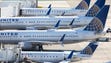
The Transportation Department will propose that airlines be required to refund fees on checked baggage if the bags aren’t delivered to passengers quickly enough.
The proposal, if made final after a lengthy regulation-writing process, would also require prompt refunds for fees on extras such as internet access if the airline fails to provide the service during the flight.
A department official said the agency will issue the proposal in the next several days, and it could take effect by next summer.
The proposal will require refunds if airlines fail to deliver a bag within 12 hours of the passenger’s U.S. flight touching down or within 25 hours after an international flight.
Current regulations require refunds only if bags are lost, although airlines must compensate passengers for “reasonable” incidental expenses incurred while their bags are delayed. The government does not know how often airlines keep fees even when bags are significantly delayed.
The bag-fee proposal is the first of several airline-consumer regulations coming from the Biden administration, according to a senior Transportation Department official, who spoke on condition of anonymity to discuss a proposal that hasn’t been made public.
Last year, more than 100,000 consumers complained to the government about airline service. Refunds were the biggest gripe, although most claimed airlines refused to give refunds to consumers who canceled trips because of the pandemic. The Transportation Department is seeking a $25.5 million fine against Air Canada, but has not taken action against other carriers over refunds for canceled flights.
In 2019, the last full year before the pandemic, passengers paid U.S. airlines $5.76 billion in fees on checked bags, according to the Transportation Department. That dropped to $2.84 billion last year, when travel slumped because of the pandemic. The figures do not include fees for carry-on bags.
For many years, customers could check one or two bags on almost any airline without paying a fee. That began to change during a travel slump caused by the financial crisis of 2008. Now, most U.S. airlines other than Southwest charge even for a single bag, although fees are usually waived for customers who buy high-fare tickets or carry the airline’s credit card.
American Airlines generated $2 billion from checked-bag fees over the past two years, followed by Delta Air Lines and United Airlines, each around $1.5 billion. Because of their smaller size, discount airlines including Spirit and Frontier reap less money but get a higher percentage of revenue from the fees.
Showing posts with label Compensation for lost luggage. Show all posts
Friday, July 2, 2021
Thursday, April 27, 2017
United Airlines Is Making These 10 Customer-Service Policy Changes
United Airlines on Thursday revealed its "Review and Action Report" recapping the April 9 incident aboard United Express Flight 3411. The report, which was promised by United CEO Oscar Munoz in the days following the incident, includes both a review of what led up to the incident and recommendations "to prevent a terrible event like this from happening again."
Included in the report are 10 new or updated customer service policies meant to prevent episodes like the one that occurred on Flight 3411. Here are those changes, in United's words, as spelled out in the company's Flight 3411 "Review and Action Report."
1. United will limit use of law enforcement to safety and security issues only.
United will not ask law enforcement officers to remove customers from flights unless it is a matter of safety and security. United implemented this policy on April 12.
2. United will not require customers seated on the plane to give up their seat involuntarily unless safety or security is at risk.
United implemented this policy on April 27.
3. United will increase customer compensation incentives for voluntary denied boarding up to $10,000.
United policy will be revised to increase the compensation levels up to $10,000 per customers willing to volunteer to take a later flight. This will go into effect on April 28.
4. United will establish a customer solutions team to provide agents with creative solutions
United will create a team to proactively identify and provide gate agents with creative solutions such as using nearby airports, other airlines or ground transportation to get customers and crews to their final destinations. United expects the team to be operational by June. Examples include:
- Suggest flights to close-by airports and then provide transportation to the customer's preferred destination.
- If a customer's travel includes a connecting flight, provide options that would eliminate the connection and still get the customer to the destination.
- Offer ground transportation where practical.
5. United will ensure crews are booked onto a flight at least 60 minutes prior to departure
Unless there are open seats, all crew members traveling for work on our aircraft must be booked at least 60 minutes before departure. This policy was implemented on April 14.
TODAY IN THE SKY: United: Too early to say if bookings hurt by passenger-dragging incident

A United Airlines Boeing 787-8 taxies for departure at Denver International Airport in July 2013. Jeremy Dwyer-Lindgren, special for USA TODAY
42 Photos
The fleet and hubs of United Airlines
6. United will provide employees with additional annual training.
United will provide annual training for frontline employees to enhance their skills on an ongoing basis that will equip them to handle the most difficult of situations. This training will begin in August.
7. United will create an automated system for soliciting volunteers to change travel plans.
Later this year, United will introduce a new automated check-in process, both at the airport and via United app, that will gauge a customer's interest in giving up his or her seat on overbooked flights in exchange for compensation. If selected, that customer will receive the requested compensation and be booked on a later United flight.
8. United will reduce the amount of overbooking.
United has evaluated its overbooking policy. As a result, adjustments have been made to reduce overbookings on flights that historically have experienced lower volunteer rates, particularly flights on smaller aircraft and the last flight of the day to a particular destination.
9. United will empower employees to resolve customer service issues in the moment.
Rolling out later this year, United will launch a new "in the moment" app for our employees to handle customer issues. This will enable flight attendants (by July) and gate agents (later this year) to compensate customers proactively (with mileage, credit for future flights or other forms of compensation) when a disservice occurs.
10. United will eliminate the red tape on permanently lost bags.
United will adopt a new no-questions-asked policy on permanently lost bags. In these instances, United will pay a customer $1,500 for the value of the bag and its contents. For claims or reimbursement over $1,500, additional documentation may be required. This process is expected to be in place in June.
Sunday, February 7, 2016
Travelore Tips: Where Does My Lost Luggage Go And How Do I Get It Back
It seems our bags aren’t slipping through a Narnia-esque portal or going on their own timeshare vacation...Chelsea Stuart has the real scoop on what happens when your luggage doesn't make its way back.
Why it Happens
We’ve all been there – waiting at the baggage claim, growing more anxious with each passing bag that isn’t ours. While most of the time we’re reunited with our belongings, what exactly prevents the chosen few from rounding that carousel?
According to a recent DOT report, most luggage snafus in 2015 were the result of conflicting airline schedules, and not mishandling by airline workers. In fact, 99.68percent of bags made it to their destinations on time, and the ones that didn't were primarily the result of delayed connection times.
To get an idea of scale here, in its Air Travel Consumer Report (released in January 2016), the DOT revealed that about 51 million people flew on US airline carriers in November 2015. Out of those 51 million, 131,041 people filed mishandled baggage reports. So for every 1000 passengers, only 2 or 3 had to deal with a missing bag.
OK, But Where's My Stuff?
This is simple.
"It's the transfer of baggage from one flight to another, or from one carrier to another that represents the majority of delayed luggage, around 49% last year," says Melanie Hinton, Managing Director of Airline Industry PR and Communications at Airlines for America.
Let's say you're on a connecting flight from NYC to Cabo, Mexico, making a pit stop in Dallas. While you're buckling into that god-awful middle seat, chances are that your suitcase has yet to be unloaded from your previous flight. It's likely chilling on the other airplane, waiting to be dropped off in a holding room before hopping on the last leg to Mexico – and sometimes it just doesn't make it on.
The airline has a couple of options for getting your luggage back to you, says Hinton: This might involve sending the bag on the next direct flight on the same carrier to that destination, sending the bag through a connecting city if no further direct service will operate on that day, or sending the bag on another carrier that flies to your locations. Obviously, the first one is most desirable.
So what if you're flying direct and your bag is MIA? More than likely, it's because of missing or damaged tags. You know that long sticker they slap on the handle of your bag when you check in? That sucker holds all of the routing info necessary to sort it after going through TSA. If it goes missing prior to reaching the distribution point, then your bag is sitting pretty in the holding area until you file a report that helps identify it from the other 100 nondescript, black suitcases. This is where personal luggage tags come in handy, or in a pinch, fill out the paper ones provided by the airlines.
What to Do in the Meantime
If you're one of the unlucky, immediately file a missing baggage claim with an airline agent. He'll ask for relevant flight info and a detailed description of your item, which will be put into their computer system (save for some tiny lo-tech airports who still fill out forms by hand).
You're entitled to a refund on baggage fees you paid, and the DOT insists airlines pony up for any necessities you purchase while waiting for your bag to reappear (When I flew from NYC to Kuching, Malaysia, with a layover in Changi, Singapore, my stuff didn't make it. I signed a missing bag form and was given roughly $50 USD to hold me over during the two days it took them to track down my bag). Caveat: Airlines defer in the amount they give you and when they give it to you. Delta, for example, promises $50 for every day your bag is missing, but doesn't pay until it's found. We recommend you hold onto those receipts and your original flight ticket. If your bag is declared truly lost, the airline must compensate you for its contents, up to a maximum of $3,300. If you file a claim overseas, the Montreal Convention regulations apply; these stipulate that airlines provide up to $1,750 in compensation.
So, What if I Never Get it Back? Where is it?
Let me preface this with the fact that it's highly, highly unlikely you'll never get your bag back. But, if it does miraculously escape airport confines, it could be in Alabama.
That's right, your things could be gracing the shelves of the Unclaimed Baggage Centerin Scottsboro, AL. The monolithic thrift store/island of misfit baggage takes in orphaned bags and sorts everything out before determining if it'll be sold, donated or trashed. The center has sold wedding dresses, ski boots, taxidermy, and suits of armor – all at a 30 to 50 percent discount.
The business also has a pretty admirable donation program. Every year, Reclaimed for Good donates millions of dollars of clothing, electronics, books, and eyeglasses to charities around the world.
Do Your Part to Prevent Problems
A little can go a long way in terms of pre-flight preparation. Hinton encourages all travelers to 1. Make sure your luggage is labeled (inside and out, people!), 2. Take a picture of your bag - no matter how many ribbons you put on it, there's bound to be a doppelgänger, and 3. Always, always, always keep your valuables on you or in your carry on.
If you're a frequent traveler, you might even consider investing in a high techBluesmart bag. The luggage uses GPS and 3G technology (compatible with iOS and Android) to track your bag anywhere in the world. Extra perk: Bluesmart can power any device with a USB port, and it has enough juice to charge the average phone about six times.
Good Things Are on the Horizon
Airlines have long heard our impassioned (ok, sometimes melodramatic) cries and are starting to implement smart technology in an effort to modernize their tracking methods. Forthcoming baggage enhancements will provide more transparent data, often in real time, on the exact location of checked bags. Advanced luggage tags are also looking to drive the number of mishandled bags down, by incorporating technology such as RFID chips and tracking capability into a functional, scannable tag.
Source: www.jetsetter.com
Thursday, May 22, 2014
Travelore Tips: Spend $25 To Stop Worrying About Flight Delays Or Cancellations With A Flight Protection Plan Called AirCare
Few travelers would want to relive last winter’s record level of flight cancellations and delays—by all accounts, it was a nightmare season for frequent fliers. But if future seasons are as turbulent, there’ll be at least another form of protection: A new type of travel insurance launching today is designed to ensure that put-upon fliers can get relief without having to depend on an airline to deliver it.
The flight protection plan, called AirCare, is a novel take on conventional travel insurance policies, which typically are designed to cover individuals who might have to cancel big ticket trips, like tour packages or cruises, for medical or other emergencies. But AirCare’s protection is designed exclusively for airline-related snafus. For a fee of only $25 per trip (payable up to an hour before departure), the traveler qualifies for an immediate payment for an array of flight horrors, starting with $50 for a delay of more than two hours. The payment rises in proportion to the inconvenience: For a missed connection caused by a flight delay, you get $500; ditto for luggage that’s delayed for more than 12 hours. For fliers stuck on the tarmac for more than two hours (one hour less than the federally mandated trigger for penalties on the airlines), you get $1,000. While some airlines do offer partial refunds or vouchers for some of these circumstances, the AirCare protections are in addition to whatever the airline eventually ponies up—assuming they do at all.
The plan is offered by Berkshire Hathaway Travel Protection, part of a larger insurance company under billionaire Warren Buffett’s vast umbrella of investments. The travel insurer is headed by John Noel, who founded Travel Guard and is a well-known figure in the field. In an interview, Noel described the new venture as a “real game-changer,” saying that the goal is to keep it “simple and inexpensive,” offering protection for situations that rarely get covered. "We're starting a whole new industry," he notes. Although the program currently extends only to domestic travel, plans are afoot to offer protection for international flights; a more extensive suite of services are also available for an extra fee. You can also download a mobile app (for iOS and Android devices) for easy access when you’re inevitably stuck at the airport.
Follow us on Twitter: @TraveloreReport
Contributed by Barbara Peterson, www.cntraveler.com
Subscribe to:
Posts (Atom)