Showing posts with label Ecuador. Show all posts

Wednesday, September 21, 2022

Quito, A Top Destination For Chocolate Lovers

Ecuador has established itself as the producer of 63% of the world’s “fine aroma” cocoa, a raw material required by the North American and European industries for the production of the highest quality chocolates. Ecuadorian cocoa is highly prestigious in the international market, thanks to a variety of flavors with hints of blackberry, citrus, nuts, caramel, honey, jasmine flowers and violets, among others.

Quito’s abundance of natural resources and geographical conditions make it the country’s hub for cocoa and chocolate production. Countless chocolate factories are scattered throughout the Capital, manufacturing renowned products and rendering chocolate production a part of the city’s tourism development.

Activities for chocolate enthusiasts in Quito

To learn about the history of cocoa and its impact on Quito’s art and culture, the Capital of the of the Middle of the World offers a theatrical tour called “Entre pulperías y bulerías, comer chocolate es una herejía” [Between pulperías and flamenco clubs, eating chocolate is heresy]. The tour visits the artisan chocolate company Chez-Tiff, where the history of and most peculiar facts about the chocolate making process are revealed. It also includes a visit to the República del Cacao chocolate shop, which offers Ecuadorian chocolate and coffee-based products such as its famous chocolate bread that undergoes a 10-hour fermentation process.

Another famous tourist attraction is the Galería Ecuador Gourmet, where visitors can discover the unique flavors, textures and aromas of Ecuadorian chocolate through gourmet experiences such as tastings and workshops.

Meanwhile, Pacari, a three-time International Chocolate Awards winner, invites tourists to become expert chocolatiers themselves with activities like preparing delicious organic truffles, sugar-free and vegan, while learning about the history of Ecuadorian cocoa.

Another option is Yumbos Chocolate, an artisan chocolate shop located in the Historic Centre, where you can taste the best Ecuadorian cocoa with a panoramic view of the San Francisco square and church.

Source: https://visitquito.ec/

Friday, July 22, 2022

Quito, World Capital Of Birdwatching

Home to avian species of all colors and sizes, Quito is one of the most diverse cities on the planet when it comes to birds. The variety of its urban ecosystem allows you to appreciate everything from soaring condors to tiny colorful hummingbirds.

Birdwatching has been a popular visitor pastime in Quito for more than 30 years, making the Ecuadorian capital South America’s gateway for "bird seekers." With more than 1,660 avian species, Ecuador boasts the highest density of bird types in the world. The forests, mountains, moors and other natural ecosystems that are present in Quito invite visitors to discover the magic of birds in an environment of exuberant nature.

Quito is home to more than 542 species, including 64 that are endemic to the region, including the black-breasted puffleg (Eriocnemis nigrivestis), the brown wood-rail (Aramides wolfi) and the banded ground-cuckoo (Neomorphus radiolosus). The emblematic Andean condor (Vultur gryphus) is a stand-out. With a wingspan of up to 3 meters (10 feet) and median weight of 12 kilograms (26.5 lbs.), it is the largest flying bird in the world and can be seen gliding in rural areas of Quito such as the Antisana. Another species present in this area is the Andean cock-of-the-rock (Rupicola peruvianus), a bird noted for its unique courtship dance.

The northwest of Quito is the perfect micro-destination for birdwatching. Located within the Chocó Andino biosphere reserve, declared protected by UNESCO in 2018, it allows you to admire hummingbirds, parrots, toucans and quetzals. To the southeast of Quito are the Cayambe-Coca and Antisana National Parks, essential places for those seeking ecotourism and adventure tourism destinations where ideal trekking routes can be mapped out for the purpose of birdwatching. For urban birdwatching, the city’s botanical garden, which features a great variety of migratory species, stands out, as does Guangüiltagua Metropolitan Park, home of the crimson-mantled woodpecker (Colaptes rivolii brevirostris).

Quito Tourism is participating in this year’s Global Bird Fair to promote the richness and biodiversity that the “Capital of the Center of the World” offers birdwatchers, or birders. Taking place at the Rutland Showground in Oakham, United Kingdom, the event affords Quito the opportunity to present its birdwatching offer, which has made it one of the most important destinations in the world in the development of this activity, in a global forum.

More information at visitquito.ec

Monday, November 11, 2019

5 Special Places To Spend Your Christmas Vacation


Natural phenomenons, perfect weather and local Christmas traditions make Sri Lanka, Mauritius, Svalbard, Christmas and Galápagos islands worth visiting

According to a survey by the American Psychological Association, 38 percent of people say their stress level increases during the winter holidays. A lack of time or money, the pressures of gift-giving, and family gatherings are among the top stressors.

To avoid these stressors, more and more people choose to escape the holiday hustle by travelling to an unusual destination. Smart Lemur, an authentic travel website, lists some of the best destinations for this year’s winter getaway.

  1. Sri Lanka, South Asia


December in Sri Lanka, an island country surrounded by the Indian Ocean, is the most pleasant time – sunny and not overcrowded with tourists. The average daily temperature for this month is 27°C.

Visitors spending Christmas here enjoy the best tea and cinnamon in the world, exchange presents on the sandy beaches, drink from coconuts and watch wild elephants. Seeing these giants from close up in their natural habitat is one of the unique attractions in Sri Lanka.

Those eager to have more traditional holiday activities, are welcome to visit the capital Colombo, offering festive markets, special dinners, live music events and dance performances.

  1. Mauritius, Indian Ocean


Mauritius, also called the pearl of the Indian Ocean, is a tiny island full of lavish nature, ranging from crystal-clear waters and coloured layers of sand to tropical forests and lively underwater world.

During December, air temperature is likely to reach 29°C, and travellers get to enjoy up to nine daily hours of sunshine. Lovely fuss, preparations, and Christmas songs in such weather allow visitors to experience celebrating Christmas in shorts and flip-flops.

Winter season is the time of abundant tropical fruits and splendid flame trees blooming in bright red fiery flowers. Fresh mangoes, pineapples, litchis (Lychee), Longan (Dragon Eye Fruit) and watermelons grow all around the island.

The most prominent attraction in Mauritius is swimming alongside dolphins.

  1. Svalbard, Norway
Svalbard is one of the northernmost settlements in the world, luring travellers who dream of Arctic Christmas.
From mid-November to late January, this Norwegian archipelago in the Arctic Ocean enters into a mystical dark season known as Polar Night. During this period, the sun is hidden from the horizon and everything is pitch-dark around the clock.
Furthermore, winter is the time to hunt the Northern Lights. Svalbard is the only permanently inhabited place on Earth where visitors can experience dayside Northern Lights.

  1. Christmas Island, Australia


Christmas Island is in the Indian Ocean, 1,550 km northwest from the Australian mainland.
Apart from its obvious affiliation to Christmas after being named so on December 25th in 1643, the island is rich in spectacular nature.
It is the only place on Earth to witness one of the most incredible natural processes – an annual red crab migration. Bright-coloured crabs from all over the island start marching towards the ocean, all at the same time. And it usually occurs in December.
Furthermore, with 40 seabirds per capita, Christmas Island is a regional leader in this metric. Nature lovers can meet endemic species, such as the Christmas Island frigatebird and the elegant white-tailed tropicbird.
Despite the natural wonders and sandy beaches, the destination is still under the radar, receiving just 2000 visitors a year.
  1. Galápagos Islands, Ecuador
The Galápagos Islands is a volcanic archipelago, famous for its diverse wildlife and jaw-dropping scenery.
December is a warm and dry season with air temperature reaching 27°C. Visitors get a chance to see rare animals like marine iguanas, sea turtles, flamingos, Masked Boobies and White-cheeked Pintails, which tend to stay away during other months.
Ecuador’s rich Christmas traditions make tourists feel part of a big family. The locals sing carols and celebrate with delicious meals like roasted turkey.

Tuesday, October 29, 2019

10 Most Romantic Places To Live Overseas

Image result for mike cobb live and invest overseas


By Kathleen Peddicord

We here at Live and Invest Overseas are wild romantics. Here, therefore, are the 10 most romantic places to live or retire overseas. Visit one of these beautiful, historic, charming, colorful spots, and your heart will sing, your imagination soar…

Paris, France
It's no contest. Be you a holiday-goer or a retiree, if you’re looking for a romantic destination and you enjoy the distractions of city life, Paris should be at the top of your list.

Trying to make a case for why Paris is romantic seems silly—like trying to explain why an ocean view from your bedroom window might be a nice thing to have. Picnics in the Luxembourg Gardens, long walks along the banks of the Seine, and afternoons lost among the cobblestones of the Latin Quarter… these are among the most romantic pastimes this world of ours has to offer.
In addition, the retiree in Paris has access to the world’s best museums, galleries, cafes, restaurants, shopping, food, wine, parks, and gardens. Life doesn't get better than life in Paris.

Mendoza, Argentina
Mendoza is wine country, and where vines grow, the living generally qualifies as romantic. Argentines enjoy great food, good vino, and interesting conversation, and here, in the interior of this country, these things are the priorities of life. 

A friend, Michael, who retired to the Mendoza region of Argentina recently, gushes in his reports of his new life. “My garden is bursting at the seams,” he writes, “though I don’t look after it. My gardener does. Honestly, it’s a feast for the eyes, and the luscious grapes that hang from the vines around me are going to produce wine with my name on it.”

This region is a great choice for the active retiree who isn’t ready to sit back rocking on his front porch. There’s skiing, hiking, climbing, bird-watching, white-water rafting, kayaking, kite-surfing, and great golfing. Come evening, you could tango the night away (talk about romantic) at one of Mendoza’s many entertainment venues or relax at the spas of Pismanta. 

Medellin, Colombia
The European undertones in Medellin are strong, from the way the women dress to the way people greet you in passing on the street. This is South America, not Central America, and the differences between the two regions can be striking. 

Medellin is a green city, with trees, plants, and small gardens everywhere. It’s architecturally consistent and pleasing. Most every building is constructed of red brick and topped with red clay roof tiles. The overall effect is delightful.

Medellin is a literary and an artistic center with an annual poetry festival, an international jazz festival, an international tango festival, an annual book fair, and, back in 1971, Colombia’s answer to Woodstock, the Festival de Ancon.

Medellin has been named “world’s most innovative city” and is finally beginning to shed its bad-boy image from Escobar days and to become appreciated for the romantic locale that it is. With its good wines, great coffee, outdoor cafes, and open-air music venues, Medellin is an easy place to get swept away.

Istria, Croatia
The cobalt blue of the Adriatic Sea off Istria’s coast is almost otherworldly. This is a sailor’s paradise, and all up and down this coast you see flotillas of white yachts offshore from ancient towns hidden behind thick walls. This is a fairy-tale land of fortresses and bell towers that so attracted and impressed the Romans that they invested in some of their best building here, including a large and largely intact coliseum at Pula where lions and Christians once entertained.
Later, this region was ruled by the Venetians, who also left an architectural legacy. In Istria, both nature and man have worked together over many centuries to create something very special, almost magical. In fact, the ancient Romans named it Tierra Magica.

The hinterland is a beguiling patchwork of meadows, vineyards, and olive groves, plus carefully tended gardens where trees hang heavy with ripening cherries, figs, and walnuts. This fertile land also grows wild asparagus and truffles, for which it is becoming famous. High in the hills, behind more medieval walls, are yet more toy-town settlements of fountains, chestnut trees, and frescoed churches. 
Frankly, I defy you not to fall in love with Istria.

Abruzzo, Italy 
It’s hard to think of a lovelier corner of Italy. The beaches are golden, and the sea rolls out like a giant bolt of turquoise silk. Eagles swoop down from craggy eyries, wild peonies and gentians color the alpine meadows. 

Stitching together seascapes with lush mountain valleys, this region is one of Italy's secret treasures, and you'll love it. No over-crowding, no heavy industry. Hiding away down its curvy roads are castles, vineyards, and villages made of stone and memory. Life in the Abruzzo hasn't changed that much over the years, and it's like wandering into a gentler, kinder yesterday. 
Old ladies in pinafores bring their chairs outside and sit in gossipy groups, stringing onions into plaits. Instead of playing computer games, young boys are outside playing soccer. Families shop at open-air markets, not hypermarkets—and, if they don't produce their own wine, they buy it from local vineyards.

Lake Atitlan, Guatemala
The caldera created by a massive volcanic explosion, one of the strongest explosions in earth's history, formed the basin for what is today arguably the most picturesque lake in the world: Lake Atitlán in Guatemala. Aldous Huxley famously described this lake as, “really, too much of a good thing.” It’s beautiful by day, stunning at sunrise and sunset, and offers a near-perfect, refreshing climate.
A community has developed on the shores of this lovely lake, providing an irresistible opportunity for the retiree looking for peace, quiet, and abundant outdoors adventures on his doorstep. 

Christchurch, New Zealand
New Zealand is one of the world’s premier outdoor playgrounds, being clean and green, with top-notch skiing, hiking, surfing, and fishing. The country is sometimes called the Ireland of the South; the landscapes are similar, as are the people. New Zealand’s climate, though, is better.
Thanks to its showcase botanic gardens, public parks, and nature reserves to community vegetable plots, school planting projects, and well-kept private grounds, Christchurch deserves its moniker “City Within A Garden.” 

All the green space provides a lovely backdrop for the city’s many festivals and public entertainment offerings and tempts residents to get out and about, enjoying all that this one-of-a-kind minor metropolis has to offer.

Cuenca, Ecuador
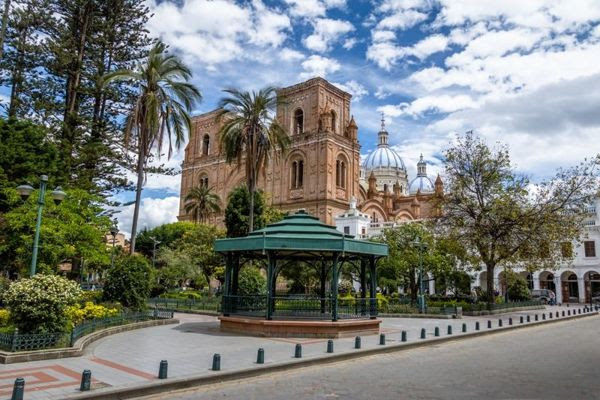
Cuenca is a UNESCO World Heritage Site and a former Inca capital that retains its Andean-indigenous influence. With its wealth of colonial homes with interior courtyards, thick adobe walls, and iron-railed terraces looking down on to the street, punctuated regularly by plazas and squares, this is a city made for walking. Folks come from all over the world to enjoy these 250 square blocks of history, to study in Cuenca’s world-class language schools, and to experience a rare glimpse of unadulterated life in an Andean colonial city.

Cuenca’s Spanish colonial environment is one of the most genuine in Latin America. Locals wear traditional dress, and colorful indigenous markets dot the city. Afterhours in Cuenca, you’ve got music, theater, dance clubs, shows, and a professional symphony orchestra that is free to all. Perhaps best is the never-ending stream of local festivals, each with its fireworks, parades, food, and drink, every one a chance to join thousands of people on the streets having a great time. 

Antigua, Guatemala
Horse-drawn carriages wait by the plaza, and shoeshine vendors circulate with their little black wooden boxes. Mayan ladies bearing jade necklaces and fabric shawls of vivid colors wander through the park. The benches around the central fountain are fully occupied by young couples in love. The fountain continually splashes water from the breasts of the four young women carved in stone, with four smaller outlying fountains adding to the delightful picture.

This is downtown Antigua. Originally, the square was barren and treeless, the official site of hangings, floggings, and other punishments meted out by the Spanish conquerors and their church brethren for whatever transgression was deemed worthy of the lash. Today the park is tree-filled and alive with the singing of birds and the clip-clop of the horses making their way around the cobblestoned streets.
There are moments in this city of pastel stucco exteriors, clay-tiled roofs, and cobblestones, when the light is just right, that are reminiscent of Santorini. Purple and red bougainvillea branches overhang walls on every street. Markets overflow with bright Mayan weavings.

Antigua has a small-town feel, where everyone knows everyone else and exchanges a “buenos dias” in passing. The pace of life is slow. Take a deep breath and savor the day.

Cayo, Belize
Fields and pastures, trees and jungle, rivers and livestock. Here and there a small house of concrete block or timber, in the distance the outline of the Maya Mountains. This is the region of Belize known as Cayo. You reach Cayo via one of this country’s three highways, the one headed west.
The land in Cayo is fertile. Farmers grow corn and sugarcane, watermelons and citrus. You see Mennonites driving horse-drawn carts and children walking home from school. Everyone going about his or her business, not much bothered by government shutdowns or the mounting deficit. 
Here, in this land of escape, where life is simple, those things don’t seem to matter or even to register. Life here revolves around the land and values independence above all else.
To be truly independent in today’s world, you need to be energy-independent. That’s a big part of what Cayo offers—a chance to take yourself off the grid. This doesn’t have to mean living a backward or burdened existence. 

Thanks to 21st-century technology, the self-sufficient life, including in Cayo, can also be comfortable, even fully appointed. This is a place for like-minded folks to be “independent together,” with some of Mother Nature’s finest work as the backdrop.

Author Kathleen Peddicord is Editor and Publisher of Live and Invest Overseas. She has covered the international beat for more than 30 years and is one of the world’s foremost authorities on overseas living and retirement. She has traveled to more than 75 countries, invested in real estate in 21, established businesses in 7, renovated historic properties in 6, and raised her children in 4. More info at liveandinvestoverseas.com.

Saturday, January 19, 2019

Top 10 Best Places To Live Overseas In 2019

LIOS logo.png                                                                                                 

Author, Retirement and Real Estate Expert Kathleen Peddicord says, ‘These are simply the best places to be, regardless of your age or any other circumstances’


Paris, France – Live and Invest Overseas, the leading overseas investment, real estate and retirement resource for more than 400,000 people around the world, announced its 10 best places in the world for you to live better, reinvent your life and have a grand adventure in 2019.
“We aren’t identifying the world’s top retirement havens. At least, these are not only the world’s top retirement havens right now,” said Kathleen Peddicord, author and publisher of Live and Invest Overseas. “These are simply the best places to be, regardless of your age or any other circumstances.”
#1: Algarve, Portugal

Cost Of Living: B
Health Care: A+
Entertainment: A-
Recreation: A+
English Spoken: A-
Expat Community: A+
Infrastructure: B+
Access To North America: B+
Environmental Factors: A-
Crime: A+
Affordability Of Real Estate: B
Real Estate Ownership Restrictions: A+
Residency: A
Taxes: B

Portugal’s Algarve region is a unique bit of European geography at the southwestern corner of the Continent, at the longitude of Great Britain and the latitude of Delaware. It is protected from winter by the movement of the ocean in the Gulf Stream and, as a result, has the best climate in Europe, with 3,300 hours of sunshine every year, more than any other country in this part of the world.

The Algarve is beautiful, affordable, welcoming, friendly, and safe. It boasts some of the world’s best beaches and best golf courses plus a long and interesting history. It was from this coast that Prince Henry the Navigator, an architect of the Age of Exploration, bid his men to "sail on, sail on." Those orders compelled brave adventurers around the Cape of Good Hope to China and India and then across the Atlantic.

The infrastructure in the Algarve is top-notch; this is not the developing world. The health care is world-class and a fraction the cost of care in North America. In fact, health care is free for residents, and establishing residency is easy and cheap for anyone of any age.

The monarchs of Portugal and England married each other from the 14th century on, creating the oldest alliance in Europe. As a result, English is widely spoken in the Algarve, so you would not have to learn a new language if you didn’t want to.

Resident in Portugal, your retirement income is not taxed, and various other income can be tax-free, too.

#2: Cascais, Portugal

Cost Of Living: D+
Health Care: A+
Entertainment: A
Recreation: A+
English Spoken: A-
Expat Community: A+
Infrastructure: A+
Access To North America: B+
Environmental Factors: B
Crime: A-
Affordability Of Real Estate: C+
Real Estate Ownership Restrictions: A+
Residency: A
Taxes: B

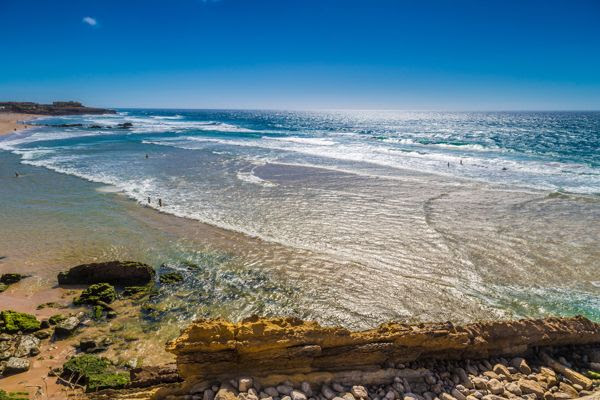
Portugal takes first and second place on the list of best places to retire overseas in 2019. Cascais, on this country’s coast just a 40-minute train ride from Lisbon city center, is the best of both city and beach living, a seaside town that’s not too big and not too small with a strong sense of community. This is a well-heeled, high-end destination, one of the world’s most affordable places to embrace a luxury-standard lifestyle on the ocean.

Cascais is spectacularly beautiful with a rugged coastline, white sandy beaches, stone buildings, cobblestone sidewalks, museums, and parks. The people are friendly, welcoming, and helpful. You’ll be instantly at home.

Life in Cascais is best lived without a car. You can walk to markets, shops, cafés, and restaurants and, for recreation, venture out to explore nearby seaside cliffs, forts, and lighthouses.

Summer in Cascais is all about being outside and enjoying the beaches. This time of year you’d share the city with a vibrant crowd of tourists from around the world. The winter months are quieter, a good time to get to know your Portuguese neighbors.

The cost of living in Cascais is significantly greater than in the Algarve but a bargain given the standard of living on offer.

While you could get by here without learning to speak Portuguese, English is less widely spoken in Cascais than in the Algarve region.

#3: Mazatlán, Mexico

Cost Of Living: A-
Health Care: B+
Entertainment: A
Recreation: A+
English Spoken: B+
Expat Community: A+
Infrastructure: A+
Access To North America: A+
Environmental Factors: C
Crime: A
Affordability Of Real Estate: B+
Real Estate Ownership Restrictions: B
Residency: A-
Taxes: B

Over the past four decades, Americans have voted Mexico the world’s number one place to live or retire overseas in the way that really counts—they’ve packed up and moved there. This country is home to more American expats and retirees than any other, at least 1 million and as many as 2 million.

Mexico’s primary attraction is its accessibility. It’s easier for an American to get to Mexico than to any country other than Canada. Why go south of the Rio Grande rather than to the Great White North? The weather!

Among this country’s many attractive lifestyle options, Mazatlán stands out. Real city, beautiful beaches, and walkable colonial center... popular expat choice and authentic Mexican resort town that manages to feel homey… Mazatlán has it all.

Located about midway along Mexico’s Pacific coast, Mazatlán has been out of favor among tourists and expats for decades but is making a comeback. The renaissance has been focused on the city’s historic center, which has undergone an impressive face-lift and now rivals Mazatlán’s 20 miles of beach for attracting attention.

From December through March, daytime temperatures in Mazatlán hover in the high 70s, lows are in the low 60s, and there’s little to no rain. Between July and October, on the other hand, temperatures are regularly 90 degrees and warmer, and humidity levels are higher. This makes Mazatlán an ideal choice for snowbirding.

Moving to Mazatlán can be as hassle-free as an international move gets. Nothing’s as easy as loading up a truck and driving south. Your moving budget could be gas and tolls.

#4: Cuenca, Ecuador

Cost Of Living: A+
Health Care: A-
Entertainment: A
Recreation: B+
English Spoken: B+
Expat Community: A+
Infrastructure: B
Access To North America: C-
Environmental Factors: A-
Crime: B-
Affordability Of Real Estate: A
Real Estate Ownership Restrictions: A+
Residency: A+
Taxes: B-

Cuenca is a beautiful city with cobblestone streets and a well-preserved historic center that, though Ecuador is the developing world, enjoys reliable electricity, modern internet service, and drinkable water throughout.

This is a walkable city, meaning you don’t have to invest in the expense of a car. The mild climate means no heating or air conditioning costs, another budget savings. Health care is first-rate and so inexpensive that it can make more sense to pay for care out of pocket rather than insuring against it. All things considered, Cuenca is one of the world’s most affordable places to retire well. A couple could live here comfortably on a budget of US$1,000 per month or less.

Further, Ecuador uses the U.S. dollar as its currency, meaning no exchange rate risk.

Cuenca is home to one of the world’s biggest expat retiree communities. You'd have plenty of support to help you with your transition.

The real estate market in Cuenca boomed between 2006 and 2014, when property owners enjoyed double-digit appreciation year after year. Ecuador's infrastructure was improving dramatically during this time, oil prices were high, crime was down, and things in this country were good. Ecuadorians living abroad returned home to Ecuador by the thousands, many settling in Cuenca.

Then property markets across Ecuador, including in Cuenca, retreated. From 2014 to 2016, values dropped by 50% and more. The market is now beginning to return. Meantime, if you’re interested in owning your own home in Cuenca, this is the time to shop for a bargain.

#5: Valletta, Malta

Cost Of Living: B
Health Care: A+
Entertainment: A
Recreation: A
English Spoken: A+
Expat Community: A+
Infrastructure: A-
Access To North America: C
Environmental Factors: C-
Crime: A
Affordability Of Real Estate: C-
Real Estate Ownership Restrictions: A-
Residency: A+
Taxes: A

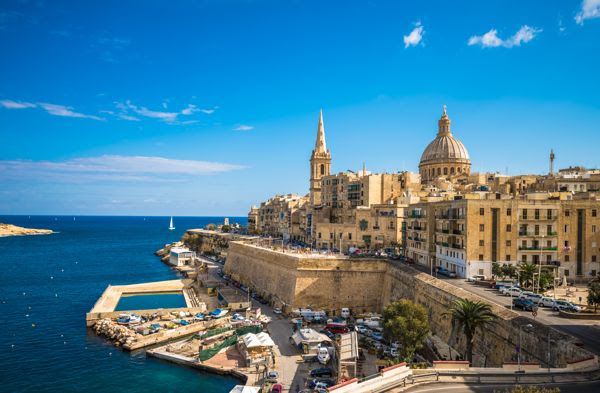
The 3-island, 122-square-mile nation of Malta, with a population of just over 400,000 people, is a first-world jewel in the middle of the Mediterranean Sea. An EU member where English is almost universally spoken by the multilingual population, Malta is a safe, stable haven boasting an excellent overall standard of living and top-notch health care. The Maltese people are warm and welcoming with a culture all their own, and all Europe is a quick plane hop away.

Malta’s rugged coastline boasts dramatic cliffs alternating with tiny coves dotted with ancient forts and quaint fishing harbors. Inland, stone walls separate fields of olives, wheat, and potatoes. Wine production is also popular, and, in season, vines hang heavy with grapes all across the island.

From its weather and food to its history and culture, Malta is not only the best of Mediterranean Europe but also one of your most affordable options for embracing this lifestyle.

The country has been working hard to raise its profile internationally, and Malta’s capital, Valletta, was named 2018’s European Capital of Culture.

Malta does not offer a retiree visa, but its Global Residence Program for non-EU citizens amounts to one of the best residency opportunities in Europe. You can qualify simply by renting a place to live for as little as 800 euros per month.

#6: Occitanie, France

Cost Of Living: B+
Health Care: A+
Entertainment: B+
Recreation: A+
English Spoken: C
Expat Community: A+
Infrastructure: A
Access To North America: C+
Environmental Factors: A+
Crime: A+
Affordability Of Real Estate: B-
Real Estate Ownership Restrictions: A+
Residency: B
Taxes: C

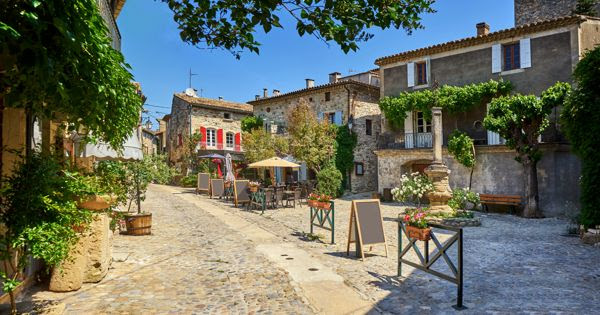
The south of France is not very big, but it is in two parts. Provence is very known and very expensive. Alongside it is the other south of France, Occitanie, not known and not expensive. In Occitanie (formerly Languedoc) is little Saint-Chinian, a quintessential French country village where everyday life is like something out of Disney's "Beauty and the Beast."

This town is notable for two things in particular. First, its property prices, which are half those of Provence and the Côte d'Azur.

The second reason for the growing popularity of Saint-Chinian is its wine. For decades, the Occitanie produced vast quantities of quaffablevin de table but nothing notable. Over the last dozen years, growers have specialized and built on the AOC (appellation d'origine contrôlée) status created in 1982 and are now producing world-ranking red wines from the original Carignan, Cinsaut, and Grenache grapes, with the addition of Syrah and Mourvèdre varieties.

Indeed, wine is the village economy. Saint-Chinian is home to 1,900 inhabitants and 200 winemakers.

Sitting on a hillside in Saint-Chinian, enjoying the idyllic French country scene, you could think you are in the middle of nowhere. However, Spain is near enough that you could pop over for dinner, and Paris can be just three hours away by TGV.

Thanks to the excellent train and bus service, you could live in Saint-Chinian without a car. If you find you do need a lift somewhere, ask a neighbor. The people of Saint-Chinian are disarmingly friendly and always ready to help out. The French are often thought of as rude and aloof. In Saint-Chinian, the reality is nothing to do with the stereotype.

#7: San Ignacio, Belize

Cost Of Living: B
Health Care: D
Entertainment: D-
Recreation: B+
English Spoken: A+
Expat Community: A-
Infrastructure: C-
Access To North America: A-
Environmental Factors: A
Crime: B+
Affordability Of Real Estate: A-
Real Estate Ownership Restrictions: A+
Residency: A
Taxes: A+

Cayo is inland, in the Belizean rain forest. This is a land of mountains and Mayan ruins, rivers, and waterfalls, Belize's frontier. The wide-open spaces of Cayo appeal to the adventuresome and the independent. Living here, you'd enjoy elbow room, far-reaching vistas, and a clean slate. You could start over and rebuild your life entirely.

You'd have a higher level of support than you might expect. The region today known as Cayo once supported a population of Maya greater than the entire current population of Belize. History has come full circle; the Cayo District is again the heart and soul of Belize, home to the nation’s capital, the location of one of the newest U.S. embassies in the world, and the fastest-growing region in the country.

Cayo is one of the top choices worldwide for getting back to basics. The good news is that going off the grid today does not have to be as challenging nor the lifestyle as rugged as it was even 10 years ago. Today, amidst Cayo's virgin rain forest, you can live self-sufficiently in style and good company.

Driving along the Western Highway from Belize City to Cayo, the view from your window is of fields and pastures, trees and jungle, rivers and livestock. Here and there a small house of concrete block or timber, in the distance the outline of the Maya Mountains. The land in Cayo is fertile. Farmers grow corn and sugarcane, watermelons and citrus.

San Ignacio is Cayo’s biggest town and home to a large and growing community of foreign retirees and expats. You could settle in among them easily, as everyone speaks English and Belize residency is easy to establish.

#8: Annecy, France

Cost Of Living: C
Health Care: A+
Entertainment: A
Recreation: A-
English Spoken: B+
Expat Community: C
Infrastructure: A
Access To North America: B+
Environmental Factors: A+
Crime: B+
Affordability Of Real Estate: C
Real Estate Ownership Restrictions: A+
Residency: B
Taxes: C

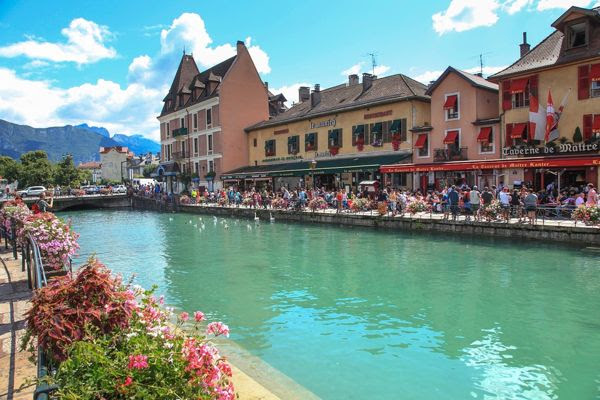
Only a few cities in the world can hope to meet the expectations of a nature lover, a museum aficionado, a foodie, an adrenaline junky, and a fashionista. Annecy offers a lifestyle that satisfies all these agendas.

Historically, Annecy has been known for its skiing (this is the Pearl of the French Alps) and its lake, one of the cleanest in the world. Cradled as it is between its crystal blue lake and the surrounding Alpine summits, the city is naturally protected from large-scale development and has managed to retain its traditional village appeal.

Annecy is an open-air museum. Dating back to the Gallo-Roman Empire, the city was the capital of Savoy, the longest-surviving royal house in Europe. Boasting today the twin titles “City of Art and History” and “City in Bloom,” Annecy serves up more than its share of castles, museums, pastel-colored townhomes, and other historical sites alongside modern theaters, cinemas, and festivals. The streets become a giant circus in July for the annual art festival known as Les Noctibules, and every August the much-anticipated Fête du Lac features the biggest fireworks show in Europe.

If France is the country of cheese, Savoy is its heart. Annecy residents lunch on tartiflette (a melted potato and bacon pie smothered in Reblochon cheese) and dine regularly on la fondue raclette.

This part of France is home to many notable restaurants, including several with Michelin stars. World-famous Savoyard chef Marc Veyrat was born in Annecy and takes inspiration from its lake fish for signature dishes.

#9: Città Sant’Angelo, Italy

Cost Of Living: B+
Health Care: A+
Entertainment: A
Recreation: A+
English Spoken: D
Expat Community: D
Infrastructure: A
Access To North America: B+
Environmental Factors: A
Crime: A+
Affordability Of Real Estate: B
Real Estate Ownership Restrictions: A+
Residency: C
Taxes: C

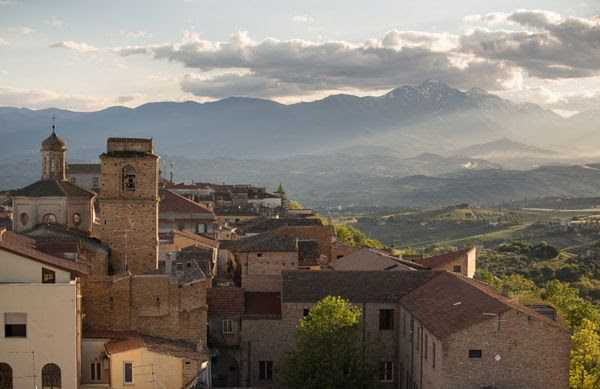
Abruzzo, historically one of the poorest regions in the country, had fallen off the national map until just a few decades ago. Since the 1950s, however, Abruzzo has seen steady economic growth. In the 1990s, its growth surpassed that of any other region in Italy and its per capita GDP expanded to become the highest in the country. The construction of new highways made it more easily accessible from Rome, opening up the region domestically and attracting state and private investment the likes of which Abruzzo had never seen before.

Today, the per capita GDP well outpaces that of the rest of southern Italy (and is a healthy 84% of the national average). Today, this is the richest region in this part of Italy. Yet it remains absolutely affordable, one of Europe’s greatest bargains. Abruzzo has everything Tuscany offers and more, at a fraction the cost.

New development is taking place across the region, and small towns are working hard to attract investment to save their historically significant but nearly deserted streets. Nowhere is this truer than in Città Sant'Angelo, perhaps the most appealing spot in this welcoming region. This would be an ideal place to embrace the best of traditional Italian life.

The downside could be language. Living in Città Sant'Angelo, you’d need to learn to speak Italian.

#10: George Town, Malaysia

Cost Of Living: A
Health Care: A+
Entertainment: A-
Recreation: A+
English Spoken: A
Expat Community: A-
Infrastructure: A-
Access To North America: D
Environmental Factors: C-
Crime: C+
Affordability Of Real Estate: B-
Real Estate Ownership Restrictions: C
Residency: B-
Taxes: A+

Penang isn’t just another lost-in-time outpost of the former British Empire. Combining all that’s appealing about island and city living, the “Pearl of the Orient” is one of Southeast Asia’s most livable destinations. Low costs are a big part of the appeal. In addition, health care is excellent, foreigners are welcome, and the country is safe and stable.

The population is a melting pot of Malay, Straits Chinese, Chinese, Burmese, Arab, Thai, Indonesian, and Indian. Thanks to its colonial past, English is the language that holds the ethnic stew together.

Life here is both traditional and 21st century, exotic and comfortable. Beyond the high-rise apartments of modern George Town is one of the best-preserved old cities in Asia. Hidden along the winding streets of this UNESCO World Cultural Heritage Site are old shophouses, guildhalls, and clan houses.

Then there’s the great outdoors. Almost on the city’s doorstep are stylish seaside settlements with palm-fringed sandy beaches and a backdrop of lush rain forest.

This city is recognized as an Asian culinary capital. Delicious specialties like Char Kway Teow, noodles with shrimp, chili paste, and cockles, are less than US$2 per portion.

Malaysia is one of the world’s most tax-friendly jurisdictions. As a resident of this country, you are taxed only on income derived from within the country, meaning that even income you remit to Malaysia is not taxed as long as it was earned elsewhere.
-Kathleen Peddicord

About Live and Invest Overseas
Based in Paris, France and Panama City, Panama, LIOS is the leading resource for people who want to live, retire and invest overseas. Headed by Kathleen Peddicord and Lief Simon – who collectively have more than 40 years’ experience visiting, living and investing in foreign countries – LIOS and its free e-letter service, the Overseas Opportunity Letter have more than 400,000 regular readers. More info available at www.liveandinvestoverseas.com.