The Portuguese Government has announced that Portugal will welcome all vaccinated travelers from the United States on June 15, according to Visit Alentejo. And, direct flights are resuming on TAP Portugal, United, Azores Airlines and Delta from US gateway cities, too.
American visitors will just need to produce a negative COVID test performed at least 72 hours before arrival. Clear COVID-19 restrictions are still in place around Portugal.
As to where Americans will want to go in Portugal, the Alentejo looks to be the perfect post-COVID destination. It is set in the south of Portugal, between the River Tejo and the Algarve mountains. To the east it borders Spain and to the west - the Atlantic Ocean. It is a vast rural region, lightly populated, making up about a third of Portugal. The beauty of the landscape and the quality of its cycling, hiking, wines and historic traditions, combined with the wonders of its food and music, make it the type of place Americans will seek out.
For the latest information on travel requirements please visit www.visitportugal.com and https://www.visitalentejo.pt/en.
Showing posts with label Algarve. Show all posts
Wednesday, June 16, 2021
Portugal Opens To American Travelers With Negative COVID Tests As Of June 15th
Saturday, January 19, 2019
Top 10 Best Places To Live Overseas In 2019
Author, Retirement and Real Estate Expert Kathleen Peddicord says, ‘These are simply the best places to be, regardless of your age or any other circumstances’
Paris, France – Live and Invest Overseas, the leading overseas investment, real estate and retirement resource for more than 400,000 people around the world, announced its 10 best places in the world for you to live better, reinvent your life and have a grand adventure in 2019.
“We aren’t identifying the world’s top retirement havens. At least, these are not only the world’s top retirement havens right now,” said Kathleen Peddicord, author and publisher of Live and Invest Overseas. “These are simply the best places to be, regardless of your age or any other circumstances.”
#1: Algarve, Portugal

Cost Of Living: B
Health Care: A+
Entertainment: A-
Recreation: A+
English Spoken: A-
Expat Community: A+
Infrastructure: B+
Access To North America: B+
Environmental Factors: A-
Crime: A+
Affordability Of Real Estate: B
Real Estate Ownership Restrictions: A+
Residency: A
Taxes: B
Portugal’s Algarve region is a unique bit of European geography at the southwestern corner of the Continent, at the longitude of Great Britain and the latitude of Delaware. It is protected from winter by the movement of the ocean in the Gulf Stream and, as a result, has the best climate in Europe, with 3,300 hours of sunshine every year, more than any other country in this part of the world.
The Algarve is beautiful, affordable, welcoming, friendly, and safe. It boasts some of the world’s best beaches and best golf courses plus a long and interesting history. It was from this coast that Prince Henry the Navigator, an architect of the Age of Exploration, bid his men to "sail on, sail on." Those orders compelled brave adventurers around the Cape of Good Hope to China and India and then across the Atlantic.
The infrastructure in the Algarve is top-notch; this is not the developing world. The health care is world-class and a fraction the cost of care in North America. In fact, health care is free for residents, and establishing residency is easy and cheap for anyone of any age.
The monarchs of Portugal and England married each other from the 14th century on, creating the oldest alliance in Europe. As a result, English is widely spoken in the Algarve, so you would not have to learn a new language if you didn’t want to.
Resident in Portugal, your retirement income is not taxed, and various other income can be tax-free, too.
#2: Cascais, Portugal

Cost Of Living: D+
Health Care: A+
Entertainment: A
Recreation: A+
English Spoken: A-
Expat Community: A+
Infrastructure: A+
Access To North America: B+
Environmental Factors: B
Crime: A-
Affordability Of Real Estate: C+
Real Estate Ownership Restrictions: A+
Residency: A
Taxes: B
Portugal takes first and second place on the list of best places to retire overseas in 2019. Cascais, on this country’s coast just a 40-minute train ride from Lisbon city center, is the best of both city and beach living, a seaside town that’s not too big and not too small with a strong sense of community. This is a well-heeled, high-end destination, one of the world’s most affordable places to embrace a luxury-standard lifestyle on the ocean.
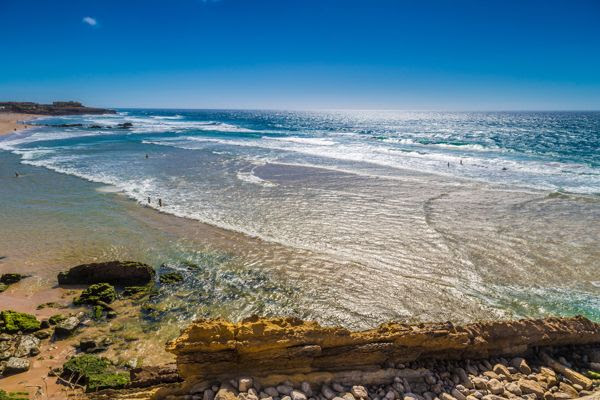
Cascais is spectacularly beautiful with a rugged coastline, white sandy beaches, stone buildings, cobblestone sidewalks, museums, and parks. The people are friendly, welcoming, and helpful. You’ll be instantly at home.
Life in Cascais is best lived without a car. You can walk to markets, shops, cafés, and restaurants and, for recreation, venture out to explore nearby seaside cliffs, forts, and lighthouses.
Summer in Cascais is all about being outside and enjoying the beaches. This time of year you’d share the city with a vibrant crowd of tourists from around the world. The winter months are quieter, a good time to get to know your Portuguese neighbors.
The cost of living in Cascais is significantly greater than in the Algarve but a bargain given the standard of living on offer.
While you could get by here without learning to speak Portuguese, English is less widely spoken in Cascais than in the Algarve region.
#3: Mazatlán, Mexico

Cost Of Living: A-
Health Care: B+
Entertainment: A
Recreation: A+
English Spoken: B+
Expat Community: A+
Infrastructure: A+
Access To North America: A+
Environmental Factors: C
Crime: A
Affordability Of Real Estate: B+
Real Estate Ownership Restrictions: B
Residency: A-
Taxes: B
Over the past four decades, Americans have voted Mexico the world’s number one place to live or retire overseas in the way that really counts—they’ve packed up and moved there. This country is home to more American expats and retirees than any other, at least 1 million and as many as 2 million.
Mexico’s primary attraction is its accessibility. It’s easier for an American to get to Mexico than to any country other than Canada. Why go south of the Rio Grande rather than to the Great White North? The weather!
Among this country’s many attractive lifestyle options, Mazatlán stands out. Real city, beautiful beaches, and walkable colonial center... popular expat choice and authentic Mexican resort town that manages to feel homey… Mazatlán has it all.
Located about midway along Mexico’s Pacific coast, Mazatlán has been out of favor among tourists and expats for decades but is making a comeback. The renaissance has been focused on the city’s historic center, which has undergone an impressive face-lift and now rivals Mazatlán’s 20 miles of beach for attracting attention.
From December through March, daytime temperatures in Mazatlán hover in the high 70s, lows are in the low 60s, and there’s little to no rain. Between July and October, on the other hand, temperatures are regularly 90 degrees and warmer, and humidity levels are higher. This makes Mazatlán an ideal choice for snowbirding.
Moving to Mazatlán can be as hassle-free as an international move gets. Nothing’s as easy as loading up a truck and driving south. Your moving budget could be gas and tolls.
#4: Cuenca, Ecuador

Cost Of Living: A+
Health Care: A-
Entertainment: A
Recreation: B+
English Spoken: B+
Expat Community: A+
Infrastructure: B
Access To North America: C-
Environmental Factors: A-
Crime: B-
Affordability Of Real Estate: A
Real Estate Ownership Restrictions: A+
Residency: A+
Taxes: B-
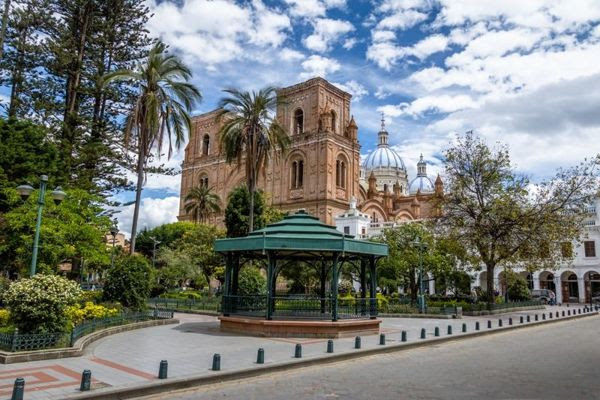
Cuenca is a beautiful city with cobblestone streets and a well-preserved historic center that, though Ecuador is the developing world, enjoys reliable electricity, modern internet service, and drinkable water throughout.
This is a walkable city, meaning you don’t have to invest in the expense of a car. The mild climate means no heating or air conditioning costs, another budget savings. Health care is first-rate and so inexpensive that it can make more sense to pay for care out of pocket rather than insuring against it. All things considered, Cuenca is one of the world’s most affordable places to retire well. A couple could live here comfortably on a budget of US$1,000 per month or less.
Further, Ecuador uses the U.S. dollar as its currency, meaning no exchange rate risk.
Cuenca is home to one of the world’s biggest expat retiree communities. You'd have plenty of support to help you with your transition.
The real estate market in Cuenca boomed between 2006 and 2014, when property owners enjoyed double-digit appreciation year after year. Ecuador's infrastructure was improving dramatically during this time, oil prices were high, crime was down, and things in this country were good. Ecuadorians living abroad returned home to Ecuador by the thousands, many settling in Cuenca.
Then property markets across Ecuador, including in Cuenca, retreated. From 2014 to 2016, values dropped by 50% and more. The market is now beginning to return. Meantime, if you’re interested in owning your own home in Cuenca, this is the time to shop for a bargain.
#5: Valletta, Malta

Cost Of Living: B
Health Care: A+
Entertainment: A
Recreation: A
English Spoken: A+
Expat Community: A+
Infrastructure: A-
Access To North America: C
Environmental Factors: C-
Crime: A
Affordability Of Real Estate: C-
Real Estate Ownership Restrictions: A-
Residency: A+
Taxes: A
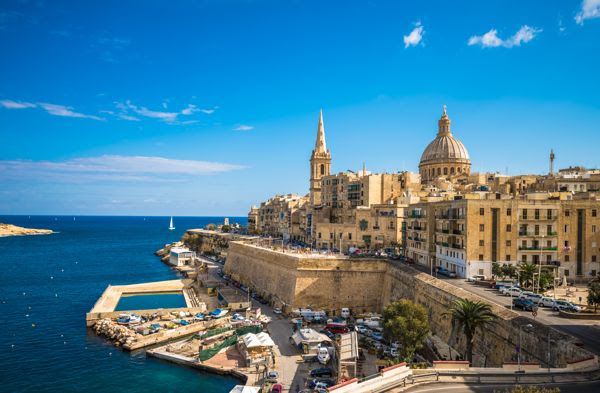
The 3-island, 122-square-mile nation of Malta, with a population of just over 400,000 people, is a first-world jewel in the middle of the Mediterranean Sea. An EU member where English is almost universally spoken by the multilingual population, Malta is a safe, stable haven boasting an excellent overall standard of living and top-notch health care. The Maltese people are warm and welcoming with a culture all their own, and all Europe is a quick plane hop away.
Malta’s rugged coastline boasts dramatic cliffs alternating with tiny coves dotted with ancient forts and quaint fishing harbors. Inland, stone walls separate fields of olives, wheat, and potatoes. Wine production is also popular, and, in season, vines hang heavy with grapes all across the island.
From its weather and food to its history and culture, Malta is not only the best of Mediterranean Europe but also one of your most affordable options for embracing this lifestyle.
The country has been working hard to raise its profile internationally, and Malta’s capital, Valletta, was named 2018’s European Capital of Culture.
Malta does not offer a retiree visa, but its Global Residence Program for non-EU citizens amounts to one of the best residency opportunities in Europe. You can qualify simply by renting a place to live for as little as 800 euros per month.
#6: Occitanie, France

Cost Of Living: B+
Health Care: A+
Entertainment: B+
Recreation: A+
English Spoken: C
Expat Community: A+
Infrastructure: A
Access To North America: C+
Environmental Factors: A+
Crime: A+
Affordability Of Real Estate: B-
Real Estate Ownership Restrictions: A+
Residency: B
Taxes: C
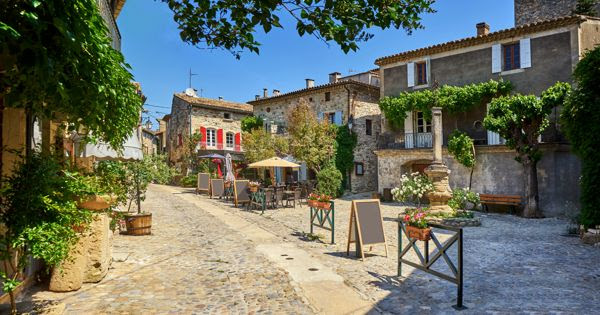
The south of France is not very big, but it is in two parts. Provence is very known and very expensive. Alongside it is the other south of France, Occitanie, not known and not expensive. In Occitanie (formerly Languedoc) is little Saint-Chinian, a quintessential French country village where everyday life is like something out of Disney's "Beauty and the Beast."
This town is notable for two things in particular. First, its property prices, which are half those of Provence and the Côte d'Azur.
The second reason for the growing popularity of Saint-Chinian is its wine. For decades, the Occitanie produced vast quantities of quaffablevin de table but nothing notable. Over the last dozen years, growers have specialized and built on the AOC (appellation d'origine contrôlée) status created in 1982 and are now producing world-ranking red wines from the original Carignan, Cinsaut, and Grenache grapes, with the addition of Syrah and Mourvèdre varieties.
Indeed, wine is the village economy. Saint-Chinian is home to 1,900 inhabitants and 200 winemakers.
Sitting on a hillside in Saint-Chinian, enjoying the idyllic French country scene, you could think you are in the middle of nowhere. However, Spain is near enough that you could pop over for dinner, and Paris can be just three hours away by TGV.
Thanks to the excellent train and bus service, you could live in Saint-Chinian without a car. If you find you do need a lift somewhere, ask a neighbor. The people of Saint-Chinian are disarmingly friendly and always ready to help out. The French are often thought of as rude and aloof. In Saint-Chinian, the reality is nothing to do with the stereotype.
#7: San Ignacio, Belize

Cost Of Living: B
Health Care: D
Entertainment: D-
Recreation: B+
English Spoken: A+
Expat Community: A-
Infrastructure: C-
Access To North America: A-
Environmental Factors: A
Crime: B+
Affordability Of Real Estate: A-
Real Estate Ownership Restrictions: A+
Residency: A
Taxes: A+
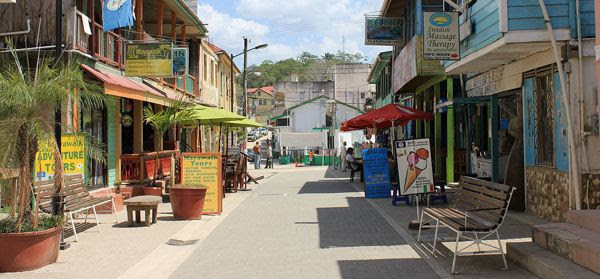
Cayo is inland, in the Belizean rain forest. This is a land of mountains and Mayan ruins, rivers, and waterfalls, Belize's frontier. The wide-open spaces of Cayo appeal to the adventuresome and the independent. Living here, you'd enjoy elbow room, far-reaching vistas, and a clean slate. You could start over and rebuild your life entirely.
You'd have a higher level of support than you might expect. The region today known as Cayo once supported a population of Maya greater than the entire current population of Belize. History has come full circle; the Cayo District is again the heart and soul of Belize, home to the nation’s capital, the location of one of the newest U.S. embassies in the world, and the fastest-growing region in the country.
Cayo is one of the top choices worldwide for getting back to basics. The good news is that going off the grid today does not have to be as challenging nor the lifestyle as rugged as it was even 10 years ago. Today, amidst Cayo's virgin rain forest, you can live self-sufficiently in style and good company.
Driving along the Western Highway from Belize City to Cayo, the view from your window is of fields and pastures, trees and jungle, rivers and livestock. Here and there a small house of concrete block or timber, in the distance the outline of the Maya Mountains. The land in Cayo is fertile. Farmers grow corn and sugarcane, watermelons and citrus.
San Ignacio is Cayo’s biggest town and home to a large and growing community of foreign retirees and expats. You could settle in among them easily, as everyone speaks English and Belize residency is easy to establish.
#8: Annecy, France

Cost Of Living: C
Health Care: A+
Entertainment: A
Recreation: A-
English Spoken: B+
Expat Community: C
Infrastructure: A
Access To North America: B+
Environmental Factors: A+
Crime: B+
Affordability Of Real Estate: C
Real Estate Ownership Restrictions: A+
Residency: B
Taxes: C
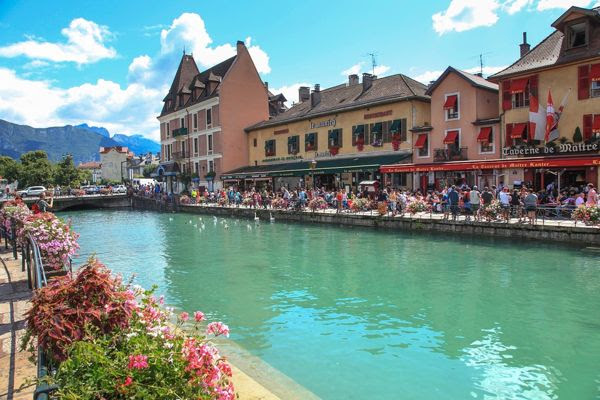
Only a few cities in the world can hope to meet the expectations of a nature lover, a museum aficionado, a foodie, an adrenaline junky, and a fashionista. Annecy offers a lifestyle that satisfies all these agendas.
Historically, Annecy has been known for its skiing (this is the Pearl of the French Alps) and its lake, one of the cleanest in the world. Cradled as it is between its crystal blue lake and the surrounding Alpine summits, the city is naturally protected from large-scale development and has managed to retain its traditional village appeal.
Annecy is an open-air museum. Dating back to the Gallo-Roman Empire, the city was the capital of Savoy, the longest-surviving royal house in Europe. Boasting today the twin titles “City of Art and History” and “City in Bloom,” Annecy serves up more than its share of castles, museums, pastel-colored townhomes, and other historical sites alongside modern theaters, cinemas, and festivals. The streets become a giant circus in July for the annual art festival known as Les Noctibules, and every August the much-anticipated Fête du Lac features the biggest fireworks show in Europe.
If France is the country of cheese, Savoy is its heart. Annecy residents lunch on tartiflette (a melted potato and bacon pie smothered in Reblochon cheese) and dine regularly on la fondue raclette.
This part of France is home to many notable restaurants, including several with Michelin stars. World-famous Savoyard chef Marc Veyrat was born in Annecy and takes inspiration from its lake fish for signature dishes.
#9: Città Sant’Angelo, Italy

Cost Of Living: B+
Health Care: A+
Entertainment: A
Recreation: A+
English Spoken: D
Expat Community: D
Infrastructure: A
Access To North America: B+
Environmental Factors: A
Crime: A+
Affordability Of Real Estate: B
Real Estate Ownership Restrictions: A+
Residency: C
Taxes: C
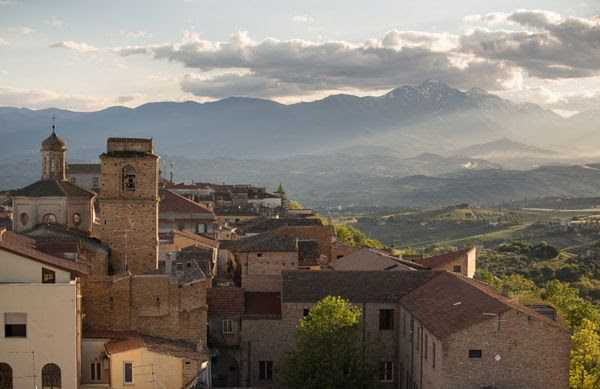
Abruzzo, historically one of the poorest regions in the country, had fallen off the national map until just a few decades ago. Since the 1950s, however, Abruzzo has seen steady economic growth. In the 1990s, its growth surpassed that of any other region in Italy and its per capita GDP expanded to become the highest in the country. The construction of new highways made it more easily accessible from Rome, opening up the region domestically and attracting state and private investment the likes of which Abruzzo had never seen before.
Today, the per capita GDP well outpaces that of the rest of southern Italy (and is a healthy 84% of the national average). Today, this is the richest region in this part of Italy. Yet it remains absolutely affordable, one of Europe’s greatest bargains. Abruzzo has everything Tuscany offers and more, at a fraction the cost.
New development is taking place across the region, and small towns are working hard to attract investment to save their historically significant but nearly deserted streets. Nowhere is this truer than in Città Sant'Angelo, perhaps the most appealing spot in this welcoming region. This would be an ideal place to embrace the best of traditional Italian life.
The downside could be language. Living in Città Sant'Angelo, you’d need to learn to speak Italian.
#10: George Town, Malaysia

Cost Of Living: A
Health Care: A+
Entertainment: A-
Recreation: A+
English Spoken: A
Expat Community: A-
Infrastructure: A-
Access To North America: D
Environmental Factors: C-
Crime: C+
Affordability Of Real Estate: B-
Real Estate Ownership Restrictions: C
Residency: B-
Taxes: A+
Penang isn’t just another lost-in-time outpost of the former British Empire. Combining all that’s appealing about island and city living, the “Pearl of the Orient” is one of Southeast Asia’s most livable destinations. Low costs are a big part of the appeal. In addition, health care is excellent, foreigners are welcome, and the country is safe and stable.
The population is a melting pot of Malay, Straits Chinese, Chinese, Burmese, Arab, Thai, Indonesian, and Indian. Thanks to its colonial past, English is the language that holds the ethnic stew together.
Life here is both traditional and 21st century, exotic and comfortable. Beyond the high-rise apartments of modern George Town is one of the best-preserved old cities in Asia. Hidden along the winding streets of this UNESCO World Cultural Heritage Site are old shophouses, guildhalls, and clan houses.
Then there’s the great outdoors. Almost on the city’s doorstep are stylish seaside settlements with palm-fringed sandy beaches and a backdrop of lush rain forest.
This city is recognized as an Asian culinary capital. Delicious specialties like Char Kway Teow, noodles with shrimp, chili paste, and cockles, are less than US$2 per portion.
Malaysia is one of the world’s most tax-friendly jurisdictions. As a resident of this country, you are taxed only on income derived from within the country, meaning that even income you remit to Malaysia is not taxed as long as it was earned elsewhere.
-Kathleen Peddicord
About Live and Invest Overseas
Based in Paris, France and Panama City, Panama, LIOS is the leading resource for people who want to live, retire and invest overseas. Headed by Kathleen Peddicord and Lief Simon – who collectively have more than 40 years’ experience visiting, living and investing in foreign countries – LIOS and its free e-letter service, the Overseas Opportunity Letter have more than 400,000 regular readers. More info available at www.liveandinvestoverseas.com.
Labels:
Algarve,
Belize,
Best Places to Live Overseas in 2019,
Cascais,
Cuenca,
Ecuador,
France,
Italy,
Malaysia,
Malta,
Mazatlán,
Mexico,
Occitanie,
Portugal,
San Ignacio,
Valletta,
Visit Mexico
Wednesday, January 6, 2016
Here Are The 12 Best Places To Retire In 2016
The secret to taking control of your retirement in 2016 and making this phase of life a grand adventure, even if your retirement nest egg is modest, is expanding your horizons. Take your retirement global and you can maximize your quality-of-life return for every dollar spent.
Where should you go?
Here are your 12 best options for where to retire overseas this New Year:
#12 City Beaches, Panama
One of Panama's greatest assets is its beachfront. This is a little country with two long coasts and several clusters of outlying islands, meaning lots of different beaches, Pacific and Caribbean, touristy and undiscovered, developed and emerging, accessible and remote.
Among them all, the most convenient and comfortable is the stretch of Pacific coastline known as the “City Beaches,” thanks to their proximity to capital Panama City.
This strip of Pacific beach communities stretches from Chame to Playa Blanca. These are the beaches you can most easily escape to on a regular basis, and many Panama City residents do, driving out on Friday afternoons and returning Sunday evenings (making for mega-traffic headaches on the Pan American Highway and crossing the Bridge of the Americas during those times).
The most developed, established, and fully appointed beach community along this stretch is Coronado, about two hours from Panama City. This fast-growing coastal region offers a high quality beach lifestyle with all amenities and services you could want. Coronado town has developed into a busy commercial center that makes for a turn-key retirement choice, and, indeed, this is the direction this former weekend retreat is evolving into a full-fledged retirement community with an established population of full-time foreign residents supported by a developed infrastructure, including good medical facilities.
Coronado is an affordable place to live but not as cheap as other top beach choices in this country. The trade-off is access. The more affordable choices are also more distant from Panama City.
One of the biggest advantages of the City Beaches area is that it’s in Panama. Panama has held the position of world’s best country for retirement for more than a dozen years. Panama uses the U.S. dollar for its currency, meaning retirees with retirement incomes in U.S. dollars have no currency-exchange risk or worry. Medical care, particularly in Panama City is international-standard and affordable. And the country offers a gold-standard retiree residency visa program.
Coronado, only about an hour outside Panama City, offers the most turn-key and most expat-ready ocean-front lifestyle available in Panama. Foreign retirees living in Coronado have already paved the way, making it easy for other retirees to follow and retired here. And it's not necessary to learn to speak Spanish.
#11 Granada, Nicaragua
A Spanish-colonial city can be a great choice for retirement, and Granada, Nicaragua, is perhaps the queen among all Spanish-colonial city options. At the heart of this city, radiating from the central square, is a great variety of classic and charming Spanish-colonial homes with high ceilings, painted tiles, and private center courtyards. The best part is that you can own one for as little as $40,000.
Founded in 1524, Granada claims to be the first European city founded in mainland America, so it's a truly old colonial city rather than a semi-modern lookalike. It's named after the ancient city of Granada, Spain, and shares some of that city's Moorish architectural influence.
Granada sits at the north end of Lake Nicaragua, with beaches near town and a group of small private islands just offshore, and just south of Lake Apoyo, Nicaragua's largest volcanic crater lake. The international airport at Managua is a little less than an hour to the north, and the Pacific Ocean lies a little more than an hour to the west.
It's obvious as soon as you arrive: Granada is one of most carefully restored and preserved colonial cities in the Americas. It sees a good number of international travelers and has a sizeable expat community. These two things combine to account for the city's wealth of upscale hotels, fine restaurants, and well-kept buildings, making living here comfortable and interesting. Granada enjoys many services and amenities that a city of 120,000 would not ordinarily have.
Founded in 1524, Granada claims to be the first European city founded in mainland America, so it's a truly old colonial city rather than a semi-modern lookalike. It's named after the ancient city of Granada, Spain, and shares some of that city's Moorish architectural influence.
Granada sits at the north end of Lake Nicaragua, with beaches near town and a group of small private islands just offshore, and just south of Lake Apoyo, Nicaragua's largest volcanic crater lake. The international airport at Managua is a little less than an hour to the north, and the Pacific Ocean lies a little more than an hour to the west.
It's obvious as soon as you arrive: Granada is one of most carefully restored and preserved colonial cities in the Americas. It sees a good number of international travelers and has a sizeable expat community. These two things combine to account for the city's wealth of upscale hotels, fine restaurants, and well-kept buildings, making living here comfortable and interesting. Granada enjoys many services and amenities that a city of 120,000 would not ordinarily have.
Granada is completely walkable. Everything you need is close at hand via attractive, level streets. The city enjoys good connections to the United States from the nearby airport in Managua; Miami is but two hours away.
Perhaps best of all, Granada still feels authentically Nicaraguan. You see old oxcarts lumbering through the streets, restaurants serve local delicacies, and street vendors offer pottery handmade according to traditions that date back centuries and have been passed down generation to generation. The city is a unique blend of native Nicaraguan city life and expat amenities.
Finally, Granada qualifies as one of the world’s most affordable retirement havens. A retired couple could live here comfortably on a budget of as little as $1,200 per month. And Nicaragua offers the world’s most affordable retiree residency visa program; you qualify with as little as $600 per month of retirement income.
#10 Puerto Vallarta, Mexico
Mexico is a big country with two long coasts, mountain towns and colonial cities, plus Mayan ruins, jungle, rain forest, rivers, and lakes. It's also the most accessible "overseas" haven from the United States. You could drive back and forth if you wanted.
For all these reasons, Mexico is home to the biggest established populations of American expats in the world, making it a great choice if you seek adventure with the comforts of home. Mexico is no longer a super-cheap option, but it is our top pick for enjoying a luxury coastal lifestyle on a budget, in Puerto Vallarta. Puerto Vallarta is more expensive than other places where you might consider living or retiring overseas, but in Puerto Vallarta that's not the point. This isn't developing-world living. This stretch of Mexico's Pacific coastline has already been developed to a high level.
Life here can be not only comfortable but easy and fully appointed, with world-class golf courses, marinas, restaurants, and shopping. This is a lifestyle that is available only on a limited basis worldwide, a lifestyle that is truly (not metaphorically) comparable to the best you could enjoy in southern California if you could afford it. Here you can afford it even on an average budget.
Until the 1950s, Puerto Vallarta was a small fishing village, modestly popular among Mexicans as a beach resort. In 1963, "The Night of the Iguana" was filmed just south of Puerto Vallarta. The film's star, Richard Burton, was involved with Elizabeth Taylor at the time. She followed him on location... and the paparazzi followed her. Suddenly Puerto Vallarta was all over the news—and on the map, as far as Americans were concerned—and it's remained there since.
At about this time, the Mexican government began to invest heavily in infrastructure making Puerto Vallarta more accessible and attractive as a destination. Luxury hotels began to spring up, and Americans began to flock here. It is also one of Mexico's most cosmopolitan beach resorts. Fully half the population works in the tourism business, so English is widely understood, a boon for those of us who speak little or no Spanish. A whole range of services has sprung up to cater to English-speakers, including everything from gourmet shops and restaurants to clothes design and medical care.
As a result, Puerto Vallarta today is home to more than 40,000 expats and foreign retirees. This is one of the biggest and most welcoming expat communities of expats anywhere in the world.
You probably won’t be able to live well here on Social Security income alone; however, if your retirement budget is a bit bigger and you dream of retirement on the Pacific Ocean, Puerto Vallarta deserves your attention.
#9 Chiang Mai, Thailand
Thailand has some of the best beaches in the world, lush mountains and jungles, a laid-back, welcoming culture, and a foreigner-friendly infrastructure. Thailand also has one of the world's lowest costs of living. For these reasons, tens of thousands of foreigners have settled in this country, including in Chiang Mai.
Chiang Mai offers not only a super low cost of living, as does Thailand in general, but also great weather, less typical in this country. The high-quality health care and health-related services are also big pluses for foreign retirees, as are the city’s modern infrastructure and abundance of Western amenities.
Chiang Mai is a place where it can be possible for foreign retirees to find work if they're interested in supplementing their retirement nest eggs or simply looking to become involved in their new community; many Westerners are employed in Chiang Mai in language schools, universities, medical facilities, and tourist-related industries.
It used to be possible to stay indefinitely in Thailand with a tourist visa, making visa runs to a neighboring country every month or so. However, the relevant laws were changed a few years ago. Now a foreigner who wants to live in Thailand long-term needs a visa. No problem, as Thailand now offers several attractive residency visa options.
#8 Cuenca, Ecuador
If you're looking for to retire overseas on a budget and live better for less, Cuenca, Ecuador, can be hard to beat. This is a beautiful colonial city in a fascinating and diverse country. The historic center measures roughly 12 by 20 blocks, big enough to be interesting but contained enough to be manageable without having to invest in owning a car.
Many of the Spanish-colonial structures that line the streets of central Cuenca are given over today to cafes, restaurants, bars, and bookshops, operating alongside the traditional butchers, tailors, repair shops, and bakeries. At the heart of the city is the town square, anchored by the original cathedral at one end (dating to 1557) and the “new” cathedral at the other (dating to the 1800s).
Perhaps the biggest appeal of Cuenca is its cost of living, which is among the lowest in the Americas. Real estate prices, too, are rock bottom, if you’re interested in owning a home of your own in retirement. The health care is high quality, honest, and, like everything else here, inexpensive. The climate is temperate 12 months a year, and the city’s large and growing expat community is one of the most diverse and well-blended in the world.
Cuenca offers the retiree the interesting and engaging colonial-city lifestyle it has long offered. However, for 2016 it does not rank among our top 5 picks. A soaring U.S. dollar makes other more fully appointed lifestyle options more affordable than they’ve been in many years and more affordable than Cuenca is today. In addition, the infrastructure of Ecuador in general cannot compare or compete with that in Portugal, Colombia, France, or Italy, all of which do make our top 5 for 2016.
#7 Las Terrenas, Dominican Republic
The final landing place in the New World for Christopher Columbus and his crew in 1493, today the Dominican Republic is a white-sand haven that is surrounded by warm turquoise waters and enjoys year-round sunshine. This affordable island paradise boasts not just beaches—both remote and resort—but also virgin jungle and mountain hideaways (often with ocean views).
The Dominican Republic is the Caribbean but more, a melting pot with an eclectic population and a diverse history informed by Afro-Antillean, European, North American, and Latin cultures. This not-so-little island is one of the most affordable spots in the whole of the Caribbean, a place where you could embrace a white-sand retirement even if your retirement nest egg is nothing more than a monthly Social Security check. If you can swing a travel budget, island-hopping around the Caribbean could be your new retirement hobby from this convenient base.
The Dominican Republic makes establishing residency easy, and the country embraces—even rewards through incentives—foreign investors. Residents are eligible for local home financing, can import household goods and a car tax-free, and can qualify for citizenship (and thus a second passport). As a fun bonus, residents pay for higher education in pesos, while nonresidents pay in dollars. If you're looking to take a class or two in retirement, the cost would be trifling.
In addition, residents can and do work here. Some expats own and operate gyms, hotels, boating and surfing schools, restaurants, boutiques. Others capitalize on skills from previous lives and careers, skills that are often much needed and valued locally (pool building, architecture, mechanics, etc.). Others offer consulting services for overseas clients or run websites with overseas client-bases. These enterprises often fully fund the expat's local lifestyle.
Las Terrenas, once a hamlet and still largely unknown among North Americans, was discovered in the 1970s by Europeans looking for an affordable Caribbean getaway. Today, Las Terrenas is a vibrant international community with residents from all over the globe, including French, German, Polish, Swiss, Italian, Dutch, and British expats. The eclectic population means you can find exotic food imports from Europe in the supermarkets, freshly made Swiss cheese and German sausage at the local shops, excellent international restaurants, and an active and mixed group of folks to welcome you to their well-established community.
Despite its thriving foreign population, costs in Las Terrenas have remained local. A couple could live well here on just $1,200 a month,
The Las Terrenas property market bubbled through 2008 then crashed, and prices remain down. You could buy a loft-style apartment, ready to move into, for less than $100,000, a townhouse in a gated community for less than $200,000, or a private villa for as little as $250,000.
The Dominican Republic is the Caribbean but more, a melting pot with an eclectic population and a diverse history informed by Afro-Antillean, European, North American, and Latin cultures. This not-so-little island is one of the most affordable spots in the whole of the Caribbean, a place where you could embrace a white-sand retirement even if your retirement nest egg is nothing more than a monthly Social Security check. If you can swing a travel budget, island-hopping around the Caribbean could be your new retirement hobby from this convenient base.
The Dominican Republic makes establishing residency easy, and the country embraces—even rewards through incentives—foreign investors. Residents are eligible for local home financing, can import household goods and a car tax-free, and can qualify for citizenship (and thus a second passport). As a fun bonus, residents pay for higher education in pesos, while nonresidents pay in dollars. If you're looking to take a class or two in retirement, the cost would be trifling.
In addition, residents can and do work here. Some expats own and operate gyms, hotels, boating and surfing schools, restaurants, boutiques. Others capitalize on skills from previous lives and careers, skills that are often much needed and valued locally (pool building, architecture, mechanics, etc.). Others offer consulting services for overseas clients or run websites with overseas client-bases. These enterprises often fully fund the expat's local lifestyle.
Las Terrenas, once a hamlet and still largely unknown among North Americans, was discovered in the 1970s by Europeans looking for an affordable Caribbean getaway. Today, Las Terrenas is a vibrant international community with residents from all over the globe, including French, German, Polish, Swiss, Italian, Dutch, and British expats. The eclectic population means you can find exotic food imports from Europe in the supermarkets, freshly made Swiss cheese and German sausage at the local shops, excellent international restaurants, and an active and mixed group of folks to welcome you to their well-established community.
Despite its thriving foreign population, costs in Las Terrenas have remained local. A couple could live well here on just $1,200 a month,
The Las Terrenas property market bubbled through 2008 then crashed, and prices remain down. You could buy a loft-style apartment, ready to move into, for less than $100,000, a townhouse in a gated community for less than $200,000, or a private villa for as little as $250,000.
#6 George Town, Malaysia
Penang in general and George Town in particular have a great deal to offer the would-be expat and foreign retiree. The natural surroundings are beautiful, and you have many options for how to spend your time. In addition, Malaysian immigration laws are welcoming, including for retirees. For these reasons, thousands of foreigners, both working and retired, have settled in the area, creating a network of support for others who'd like to follow in their footsteps.
Historic George Town, the capital of the state of Penang, got its start in the 18th century, when the British established a colonial outpost to control trade in the Straits of Malacca and exploit a thriving opium market. Commerce prospered and, by the 19th century, George Town had developed a busy financial district, an active seaport, and scores of wholesale shops. Immigrants flooded the town hoping to improve their fortunes.
The city has grown a great deal in the 200 years since, but it has not lost its colonial flavor. Wandering around the historic downtown, it's easy to imagine yourself living in another era and, as well, another place. Here, you're in old China. Around the corner, you could be in India. Another neighborhood is reminiscent of an old Malay village. Impressive British-colonial buildings serve the same functions as they did more than a century ago; they are banks, churches, and residential mansions. Many of the dilapidated Chinese shophouses have been scrubbed, painted, and renovated into attractive hotels, community centers, cafes, galleries, and private homes.
The city is home to at least a dozen museums. Venues for indulging in high culture include the Penang Philharmonic, ProArt Chinese Orchestra, Performing Arts Center, and the Actors Studio at Straits Quay. Free concerts are offered in various locations across Penang Island during the summer months. Jungle parks reveal secluded beaches and indigenous wildlife. Amusement parks provide family fun. Expat clubs meet regularly to serve the large and growing foreign community. And everywhere are eateries serving delicious and inexpensive gourmet fare. When the sun goes down, cooking smells permeate the air and tables fill with enthusiastic diners from around the globe. Unless you're eating in an upscale restaurant, you can eat very well for about $3 per person.
Indeed, the low cost of everything is a big part of George Town’s appeal. In some Asian cities, it’s easy for a foreigner to feel something akin to a walking wallet. Not in Malaysia. Foreigners pay the same prices as the locals.
Historic George Town, the capital of the state of Penang, got its start in the 18th century, when the British established a colonial outpost to control trade in the Straits of Malacca and exploit a thriving opium market. Commerce prospered and, by the 19th century, George Town had developed a busy financial district, an active seaport, and scores of wholesale shops. Immigrants flooded the town hoping to improve their fortunes.
The city has grown a great deal in the 200 years since, but it has not lost its colonial flavor. Wandering around the historic downtown, it's easy to imagine yourself living in another era and, as well, another place. Here, you're in old China. Around the corner, you could be in India. Another neighborhood is reminiscent of an old Malay village. Impressive British-colonial buildings serve the same functions as they did more than a century ago; they are banks, churches, and residential mansions. Many of the dilapidated Chinese shophouses have been scrubbed, painted, and renovated into attractive hotels, community centers, cafes, galleries, and private homes.
The city is home to at least a dozen museums. Venues for indulging in high culture include the Penang Philharmonic, ProArt Chinese Orchestra, Performing Arts Center, and the Actors Studio at Straits Quay. Free concerts are offered in various locations across Penang Island during the summer months. Jungle parks reveal secluded beaches and indigenous wildlife. Amusement parks provide family fun. Expat clubs meet regularly to serve the large and growing foreign community. And everywhere are eateries serving delicious and inexpensive gourmet fare. When the sun goes down, cooking smells permeate the air and tables fill with enthusiastic diners from around the globe. Unless you're eating in an upscale restaurant, you can eat very well for about $3 per person.
Indeed, the low cost of everything is a big part of George Town’s appeal. In some Asian cities, it’s easy for a foreigner to feel something akin to a walking wallet. Not in Malaysia. Foreigners pay the same prices as the locals.
In addition, health care is first-rate, public transportation is modern and efficient, and the tap water is safe to drink. Beautiful beaches are just a short drive or flight away, cool mountain retreats can be reached in less than an hour, and the thriving city-state of Singapore is easily accessible in a few hours by car, train, or bus, or an hour by plane.
#5 Abruzzo, Italy
It’s hard to think of a lovelier corner of Italy than the Abruzzo. The beaches are golden, and the sea rolls out like a giant bolt of turquoise silk. There are mountains, too, meaning that, living here, you’d have both skiing and beach-combing on your doorstep, depending on the season.
This region is one of Italy's secret treasures. No over-crowding, no heavy industry, only castles, vineyards, and villages made of stone. Life in the Abruzzo hasn't changed much over the years, and exploring here is like wandering into a gentler, kinder yesterday, a time with little or no crime and neighbors who watch out for one another.
Old ladies in pinafores bring their chairs outside and sit in gossipy groups, stringing onions into plaits. Instead of playing computer games, young boys are outside playing soccer. Families shop at open-air markets, not hypermarkets, and if they don’t produce their own wine, they buy it from local vineyards.
Relatively unknown to foreign visitors, the sparsely populated Abruzzo is where central Italy merges into the languid realms of the deep south. Even though many parts of the area are only an hour’s drive from Rome, it clings onto its secret feel.
The main town in the region, Pescara, has one of the best city beaches in Europe and not far away is some of the best skiing outside of the Alps. In spring, it’s possible to combine a morning on the Apennine ski slopes with an afternoon at the beach.
Food is important in the Abruzzo, as it is everywhere in Italy. In most trattorie, everything is home-cooked and just like nonna (grandmother) used to make. In fact, sometimes, nonna still makes it. On the coast, dishes feature fish; inland, the cuisine becomes heartier, based on roast kid, baby lamb, and wild boar.
This delightful and culturally rich region of Italy is also one of Europe’s best bargains. A couple could retire here on as little as $2,000 per month or less, including rent.
#4 Pau, France
No border marks the entry to the Basque region, but you’ll know when you’ve entered this part of France. The most obvious change is the architecture. Every house is painted white with accents of Basque red. You buy the paint at any Home Depot-type store; the can will be labeled “Basque Red.” In this part of the world, there’s just one red. This collective approach to home decor has the effect of making everything appear pristine and cared for. The Basque people also have their own language, music, dance, sport, cuisine (one of the best in France), myths, flag, and even alphabet typeface.
France’s Basque region is made up of seven provinces that sit astride the French-Spanish Atlantic border. The geography is intense, bringing to mind a young child’s drawing of the countryside where every type of geographic feature is squeezed onto one sheet of paper. Small steep valleys, rolling hills, towering mountains, meandering rivers, a wild coastline, forests and woodland, all crammed into about 31,000 square feet and all gloriously green and lush.
The water in many parts of the bay is shallow, giving rise to spectacular surf. This coastline, specifically Biarritz, was the birthplace of French surfing in the late 1950s.
France is recognized by the World Health Organization as having the world’s best healthcare.
The retiree who has dreamt of France but who can’t afford Paris should consider Pau. A couple could retire here on as little as $2,000 per month.
#3 Medellin, Colombia
Twenty years ago if you told suggested that drug- and crime-ridden Medellín would be cleaned up and considered one of the world’s best places to retire just two decades later, no one would have believed you. But that is the case.
Medellín is not only no longer unsafe or unsavory, but it is establishing a name for itself as one of the world's most progressive cities. In 2012, The Wall Street Journal made it official by naming Medellín the Most Innovative City in the world for that year.
What makes Medellín so innovative? It is a combination of unique public transit infrastructure, well-used and much-loved public spaces, and the accessibility of technology and Internet throughout the city. In addition, Medellín is a city of parks and flowers, pretty, tidy, and architecturally pleasing. Most every building is constructed of red brick and topped with red clay roof tiles. The overall effect is delightful.
Medellín is not only no longer unsafe or unsavory, but it is establishing a name for itself as one of the world's most progressive cities. In 2012, The Wall Street Journal made it official by naming Medellín the Most Innovative City in the world for that year.
What makes Medellín so innovative? It is a combination of unique public transit infrastructure, well-used and much-loved public spaces, and the accessibility of technology and Internet throughout the city. In addition, Medellín is a city of parks and flowers, pretty, tidy, and architecturally pleasing. Most every building is constructed of red brick and topped with red clay roof tiles. The overall effect is delightful.
Medellín is both an industrial, economic, and financial center for this country and a literary and artistic one. Newspapers, radio networks, publishing houses, an annual poetry festival, an international jazz festival, an international tango festival, an annual book fair, and, back in 1971, Colombia's answer to Woodstock, the Festival de Ancon, all have chosen Medellin as their base.
Thanks to its mountain setting, Medellín is one of a handful of cities around the world that bill themselves as lands of eternal springtime. This means no heating or air condition required and, therefore, controlled utility costs. Furthermore, the medical care in Medellín is excellent, with 5 of the 35 best hospitals in Latin America located here.
The European undertones in Medellín are strong, from the way the women dress to the way people greet you in passing on the street. This is South America, not Central America, and the differences between the two regions can be striking.
Thanks to the current exchange rate between the Colombian peso and the U.S. dollar, all of this is available to the U.S. retiree at a dramatically discounted cost. At the current exchange rate, Medellín is a more affordable place to live and to purchase property than Cuenca, Ecuador, for example, long recognized as one of the world’s most affordable retirement havens. It’s possible today to enjoy a luxury-level retirement in Medellín on even a modest retirement budget. Medellín stands alongside Portugal’s Algarve in offering one of the world’s most appealing and also most affordable retirement options.
#2 Cayo, Belize
Belize is one of the quirkiest countries in the world. Geographically, Belize is in Central America, yet its strongest ties are to the English-speaking Caribbean. Belize is Caribbean, Central American... and, thanks to its history as a former colony, British. Belize City's roadways are built around a system of roundabouts, but shops alongside them sell rice, beans and tortillas still ground by hand.
Everyone you meet speaks English (it's the country's official language), but this belies the stories of their origins. The 350,000 people populating Belize today are descendants of migrants from Britain, yes, but also, more so, the surrounding Central American countries. You've got Mexicans, Guatemalans, Hondurans and Nicaraguans mixed with current-day generations of the Maya who originally inhabited this land, the pirates who came later, the Mennonite farmers who began arriving on the scene in the 16th century, the British who ruled until 1981, and each other.
Belize is a nation of independent thinkers and doers, a country where you make your own way and where, while you're doing it, no one, including the Belize government, is making any attempt to thwart your efforts. This is a poor country. The government doesn't have enough money to get up to any real trouble.
Arriving in Belize, especially in its interior Cayo District, it doesn't take long for any other reality you've brought with you to fade. In this frontier land of rivers and rain forest, your mind and your body are occupied with challenge and discovery from sunup until you fall exhausted into your bed each evening.
Belize is a sunny country that's easily accessible from the United States and where the folks all speak English. It's also one of the easiest places in the world to establish foreign residency, as well as a banking and a tax haven. You could live and run a business here tax-free.
On the other hand, this is a small country where the infrastructure is most kindly described as "developing." The cost of living can be affordable, even low, but not if you want to live a more "developed world" lifestyle that would mean buying lots of things not available or produced locally. Anything imported comes at an inflated price.
#1 Algarve, Portugal
For the third year running, Algarve, Portugal, is our pick for the world’s best place to retire, thanks to its low cost of living, low cost of real estate, great weather, established expat community, user-friendly and low-cost retiree residency program, and endless options for how to meaningfully fill your days and evenings.
In addition, you can get by speaking only English (thanks to the region’s strong historic and cultural links with England), and I’d say that the stunningly beautiful Algarve coast is one of the safest places on earth right now.
The Algarve is home to more than 100,000 resident foreign retirees, all here embracing the best of Europe, from medieval towns and fishing villages to open-air markets and local wine. This is a land of cobblestoned streets and whitewashed houses with lace-patterned chimneys, surrounded everywhere by fig, olive, almond, and carob trees.
Thinking more practically, the Algarve also offers great weather, with 3,300 hours of sunshine per year, meaning more sunny days than almost anywhere else in Europe, and some of Europe’s best-kept sandy beaches. The Algarve’s 100 miles of Atlantic coastline is punctuated by jagged rock formations, lagoons, and extensive sandy beaches, many awarded coveted Blue Flags from the European Blue Flag Association. In addition, the region boasts 42 golf courses in less than 100 miles and is generally recognized as a top golfing destination in continental Europe and the world.
Health care is international-standard in this part of the world, and medical tourism is a growing industry.
The cost of living in Portugal is among the lowest in Western Europe, on average 30% lower than in any other country on the Continent. The affordable cost of living and of real estate is compounded right now by a weak euro, meaning a retired couple could live here comfortably on a budget of as little as $1,500 per month. With a budget of $2,000 per month or more, you could enjoy a fully appointed lifestyle in the heart of Old Europe.
Author Kathleen Peddicord is editor and publisher of Live and Invest Overseas. She has covered the international beat for nearly 30 years and is considered the world’s foremost authority on overseas living and retirement. More info at www.LiveAndInvestOverseas.com.
Labels:
#GoDomRep,
Abruzzo,
Algarve,
Belize,
Best Places To Retire In 2016,
Colombia,
Dominican Republic,
Ecuador,
France,
Italy,
Malaysia,
Medellin,
Nicaragua,
Panama,
Portugal,
Puerto Vallarta,
Thailand
Subscribe to:
Posts (Atom)