
Showing posts with label Malta. Show all posts

Saturday, January 19, 2019

Top 10 Best Places To Live Overseas In 2019

LIOS logo.png                                                                                                 

Author, Retirement and Real Estate Expert Kathleen Peddicord says, ‘These are simply the best places to be, regardless of your age or any other circumstances’


Paris, France – Live and Invest Overseas, the leading overseas investment, real estate and retirement resource for more than 400,000 people around the world, announced its 10 best places in the world for you to live better, reinvent your life and have a grand adventure in 2019.
“We aren’t identifying the world’s top retirement havens. At least, these are not only the world’s top retirement havens right now,” said Kathleen Peddicord, author and publisher of Live and Invest Overseas. “These are simply the best places to be, regardless of your age or any other circumstances.”
#1: Algarve, Portugal

Cost Of Living: B
Health Care: A+
Entertainment: A-
Recreation: A+
English Spoken: A-
Expat Community: A+
Infrastructure: B+
Access To North America: B+
Environmental Factors: A-
Crime: A+
Affordability Of Real Estate: B
Real Estate Ownership Restrictions: A+
Residency: A
Taxes: B

Portugal’s Algarve region is a unique bit of European geography at the southwestern corner of the Continent, at the longitude of Great Britain and the latitude of Delaware. It is protected from winter by the movement of the ocean in the Gulf Stream and, as a result, has the best climate in Europe, with 3,300 hours of sunshine every year, more than any other country in this part of the world.

The Algarve is beautiful, affordable, welcoming, friendly, and safe. It boasts some of the world’s best beaches and best golf courses plus a long and interesting history. It was from this coast that Prince Henry the Navigator, an architect of the Age of Exploration, bid his men to "sail on, sail on." Those orders compelled brave adventurers around the Cape of Good Hope to China and India and then across the Atlantic.

The infrastructure in the Algarve is top-notch; this is not the developing world. The health care is world-class and a fraction the cost of care in North America. In fact, health care is free for residents, and establishing residency is easy and cheap for anyone of any age.

The monarchs of Portugal and England married each other from the 14th century on, creating the oldest alliance in Europe. As a result, English is widely spoken in the Algarve, so you would not have to learn a new language if you didn’t want to.

Resident in Portugal, your retirement income is not taxed, and various other income can be tax-free, too.

#2: Cascais, Portugal
Cost Of Living: D+
Health Care: A+
Entertainment: A
Recreation: A+
English Spoken: A-
Expat Community: A+
Infrastructure: A+
Access To North America: B+
Environmental Factors: B
Crime: A-
Affordability Of Real Estate: C+
Real Estate Ownership Restrictions: A+
Residency: A
Taxes: B

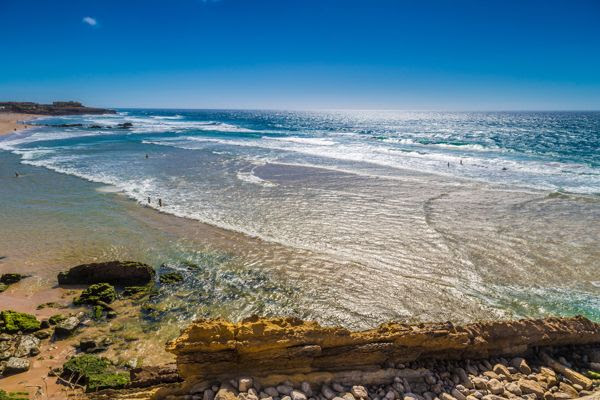
Portugal takes first and second place on the list of best places to retire overseas in 2019. Cascais, on this country’s coast just a 40-minute train ride from Lisbon city center, is the best of both city and beach living, a seaside town that’s not too big and not too small with a strong sense of community. This is a well-heeled, high-end destination, one of the world’s most affordable places to embrace a luxury-standard lifestyle on the ocean.

Cascais is spectacularly beautiful with a rugged coastline, white sandy beaches, stone buildings, cobblestone sidewalks, museums, and parks. The people are friendly, welcoming, and helpful. You’ll be instantly at home.

Life in Cascais is best lived without a car. You can walk to markets, shops, cafés, and restaurants and, for recreation, venture out to explore nearby seaside cliffs, forts, and lighthouses.

Summer in Cascais is all about being outside and enjoying the beaches. This time of year you’d share the city with a vibrant crowd of tourists from around the world. The winter months are quieter, a good time to get to know your Portuguese neighbors.

The cost of living in Cascais is significantly greater than in the Algarve but a bargain given the standard of living on offer.

While you could get by here without learning to speak Portuguese, English is less widely spoken in Cascais than in the Algarve region.

#3: Mazatlán, Mexico

Cost Of Living: A-
Health Care: B+
Entertainment: A
Recreation: A+
English Spoken: B+
Expat Community: A+
Infrastructure: A+
Access To North America: A+
Environmental Factors: C
Crime: A
Affordability Of Real Estate: B+
Real Estate Ownership Restrictions: B
Residency: A-
Taxes: B

Over the past four decades, Americans have voted Mexico the world’s number one place to live or retire overseas in the way that really counts—they’ve packed up and moved there. This country is home to more American expats and retirees than any other, at least 1 million and as many as 2 million.

Mexico’s primary attraction is its accessibility. It’s easier for an American to get to Mexico than to any country other than Canada. Why go south of the Rio Grande rather than to the Great White North? The weather!

Among this country’s many attractive lifestyle options, Mazatlán stands out. Real city, beautiful beaches, and walkable colonial center... popular expat choice and authentic Mexican resort town that manages to feel homey… Mazatlán has it all.

Located about midway along Mexico’s Pacific coast, Mazatlán has been out of favor among tourists and expats for decades but is making a comeback. The renaissance has been focused on the city’s historic center, which has undergone an impressive face-lift and now rivals Mazatlán’s 20 miles of beach for attracting attention.

From December through March, daytime temperatures in Mazatlán hover in the high 70s, lows are in the low 60s, and there’s little to no rain. Between July and October, on the other hand, temperatures are regularly 90 degrees and warmer, and humidity levels are higher. This makes Mazatlán an ideal choice for snowbirding.

Moving to Mazatlán can be as hassle-free as an international move gets. Nothing’s as easy as loading up a truck and driving south. Your moving budget could be gas and tolls.

#4: Cuenca, Ecuador
Cost Of Living: A+
Health Care: A-
Entertainment: A
Recreation: B+
English Spoken: B+
Expat Community: A+
Infrastructure: B
Access To North America: C-
Environmental Factors: A-
Crime: B-
Affordability Of Real Estate: A
Real Estate Ownership Restrictions: A+
Residency: A+
Taxes: B-

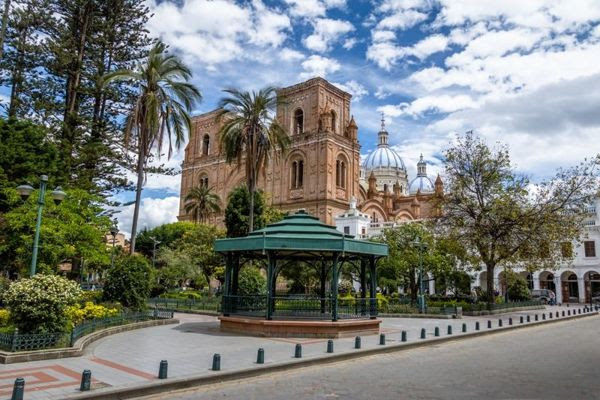
Cuenca is a beautiful city with cobblestone streets and a well-preserved historic center that, though Ecuador is the developing world, enjoys reliable electricity, modern internet service, and drinkable water throughout.

This is a walkable city, meaning you don’t have to invest in the expense of a car. The mild climate means no heating or air conditioning costs, another budget savings. Health care is first-rate and so inexpensive that it can make more sense to pay for care out of pocket rather than insuring against it. All things considered, Cuenca is one of the world’s most affordable places to retire well. A couple could live here comfortably on a budget of US$1,000 per month or less.

Further, Ecuador uses the U.S. dollar as its currency, meaning no exchange rate risk.

Cuenca is home to one of the world’s biggest expat retiree communities. You'd have plenty of support to help you with your transition.

The real estate market in Cuenca boomed between 2006 and 2014, when property owners enjoyed double-digit appreciation year after year. Ecuador's infrastructure was improving dramatically during this time, oil prices were high, crime was down, and things in this country were good. Ecuadorians living abroad returned home to Ecuador by the thousands, many settling in Cuenca.

Then property markets across Ecuador, including in Cuenca, retreated. From 2014 to 2016, values dropped by 50% and more. The market is now beginning to return. Meantime, if you’re interested in owning your own home in Cuenca, this is the time to shop for a bargain.

#5: Valletta, Malta
Cost Of Living: B
Health Care: A+
Entertainment: A
Recreation: A
English Spoken: A+
Expat Community: A+
Infrastructure: A-
Access To North America: C
Environmental Factors: C-
Crime: A
Affordability Of Real Estate: C-
Real Estate Ownership Restrictions: A-
Residency: A+
Taxes: A

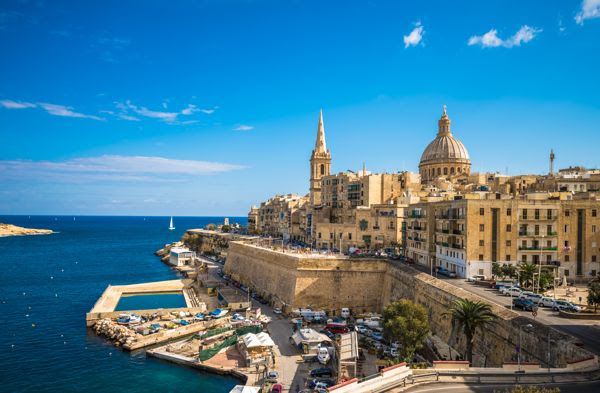
The 3-island, 122-square-mile nation of Malta, with a population of just over 400,000 people, is a first-world jewel in the middle of the Mediterranean Sea. An EU member where English is almost universally spoken by the multilingual population, Malta is a safe, stable haven boasting an excellent overall standard of living and top-notch health care. The Maltese people are warm and welcoming with a culture all their own, and all Europe is a quick plane hop away.

Malta’s rugged coastline boasts dramatic cliffs alternating with tiny coves dotted with ancient forts and quaint fishing harbors. Inland, stone walls separate fields of olives, wheat, and potatoes. Wine production is also popular, and, in season, vines hang heavy with grapes all across the island.

From its weather and food to its history and culture, Malta is not only the best of Mediterranean Europe but also one of your most affordable options for embracing this lifestyle.

The country has been working hard to raise its profile internationally, and Malta’s capital, Valletta, was named 2018’s European Capital of Culture.

Malta does not offer a retiree visa, but its Global Residence Program for non-EU citizens amounts to one of the best residency opportunities in Europe. You can qualify simply by renting a place to live for as little as 800 euros per month.

#6: Occitanie, France
Cost Of Living: B+
Health Care: A+
Entertainment: B+
Recreation: A+
English Spoken: C
Expat Community: A+
Infrastructure: A
Access To North America: C+
Environmental Factors: A+
Crime: A+
Affordability Of Real Estate: B-
Real Estate Ownership Restrictions: A+
Residency: B
Taxes: C

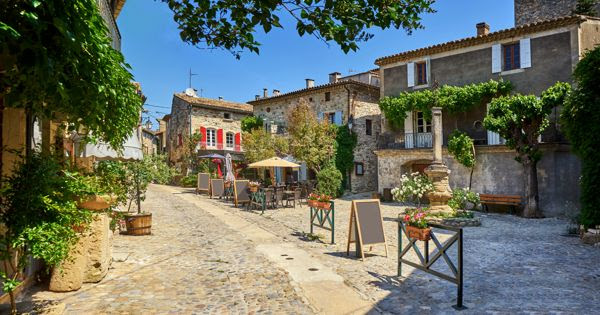
The south of France is not very big, but it is in two parts. Provence is very known and very expensive. Alongside it is the other south of France, Occitanie, not known and not expensive. In Occitanie (formerly Languedoc) is little Saint-Chinian, a quintessential French country village where everyday life is like something out of Disney's "Beauty and the Beast."

This town is notable for two things in particular. First, its property prices, which are half those of Provence and the Côte d'Azur.

The second reason for the growing popularity of Saint-Chinian is its wine. For decades, the Occitanie produced vast quantities of quaffablevin de table but nothing notable. Over the last dozen years, growers have specialized and built on the AOC (appellation d'origine contrôlée) status created in 1982 and are now producing world-ranking red wines from the original Carignan, Cinsaut, and Grenache grapes, with the addition of Syrah and Mourvèdre varieties.

Indeed, wine is the village economy. Saint-Chinian is home to 1,900 inhabitants and 200 winemakers.

Sitting on a hillside in Saint-Chinian, enjoying the idyllic French country scene, you could think you are in the middle of nowhere. However, Spain is near enough that you could pop over for dinner, and Paris can be just three hours away by TGV.

Thanks to the excellent train and bus service, you could live in Saint-Chinian without a car. If you find you do need a lift somewhere, ask a neighbor. The people of Saint-Chinian are disarmingly friendly and always ready to help out. The French are often thought of as rude and aloof. In Saint-Chinian, the reality is nothing to do with the stereotype.

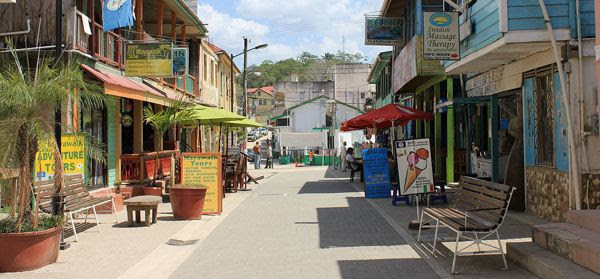
#7: San Ignacio, Belize
Cost Of Living: B
Health Care: D
Entertainment: D-
Recreation: B+
English Spoken: A+
Expat Community: A-
Infrastructure: C-
Access To North America: A-
Environmental Factors: A
Crime: B+
Affordability Of Real Estate: A-
Real Estate Ownership Restrictions: A+
Residency: A
Taxes: A+

Cayo is inland, in the Belizean rain forest. This is a land of mountains and Mayan ruins, rivers, and waterfalls, Belize's frontier. The wide-open spaces of Cayo appeal to the adventuresome and the independent. Living here, you'd enjoy elbow room, far-reaching vistas, and a clean slate. You could start over and rebuild your life entirely.

You'd have a higher level of support than you might expect. The region today known as Cayo once supported a population of Maya greater than the entire current population of Belize. History has come full circle; the Cayo District is again the heart and soul of Belize, home to the nation’s capital, the location of one of the newest U.S. embassies in the world, and the fastest-growing region in the country.

Cayo is one of the top choices worldwide for getting back to basics. The good news is that going off the grid today does not have to be as challenging nor the lifestyle as rugged as it was even 10 years ago. Today, amidst Cayo's virgin rain forest, you can live self-sufficiently in style and good company.

Driving along the Western Highway from Belize City to Cayo, the view from your window is of fields and pastures, trees and jungle, rivers and livestock. Here and there a small house of concrete block or timber, in the distance the outline of the Maya Mountains. The land in Cayo is fertile. Farmers grow corn and sugarcane, watermelons and citrus.

San Ignacio is Cayo’s biggest town and home to a large and growing community of foreign retirees and expats. You could settle in among them easily, as everyone speaks English and Belize residency is easy to establish.

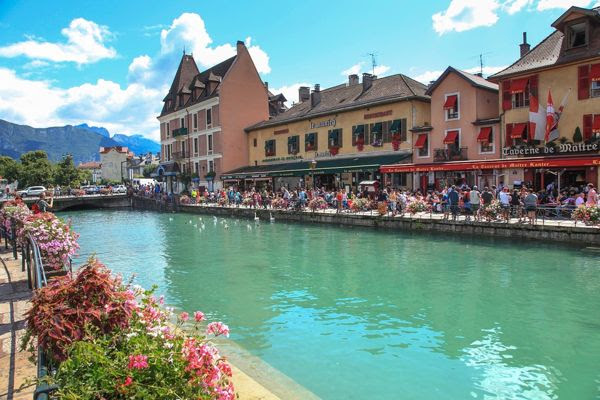
#8: Annecy, France
Cost Of Living: C
Health Care: A+
Entertainment: A
Recreation: A-
English Spoken: B+
Expat Community: C
Infrastructure: A
Access To North America: B+
Environmental Factors: A+
Crime: B+
Affordability Of Real Estate: C
Real Estate Ownership Restrictions: A+
Residency: B
Taxes: C

Only a few cities in the world can hope to meet the expectations of a nature lover, a museum aficionado, a foodie, an adrenaline junky, and a fashionista. Annecy offers a lifestyle that satisfies all these agendas.

Historically, Annecy has been known for its skiing (this is the Pearl of the French Alps) and its lake, one of the cleanest in the world. Cradled as it is between its crystal blue lake and the surrounding Alpine summits, the city is naturally protected from large-scale development and has managed to retain its traditional village appeal.

Annecy is an open-air museum. Dating back to the Gallo-Roman Empire, the city was the capital of Savoy, the longest-surviving royal house in Europe. Boasting today the twin titles “City of Art and History” and “City in Bloom,” Annecy serves up more than its share of castles, museums, pastel-colored townhomes, and other historical sites alongside modern theaters, cinemas, and festivals. The streets become a giant circus in July for the annual art festival known as Les Noctibules, and every August the much-anticipated Fête du Lac features the biggest fireworks show in Europe.

If France is the country of cheese, Savoy is its heart. Annecy residents lunch on tartiflette (a melted potato and bacon pie smothered in Reblochon cheese) and dine regularly on la fondue raclette.

This part of France is home to many notable restaurants, including several with Michelin stars. World-famous Savoyard chef Marc Veyrat was born in Annecy and takes inspiration from its lake fish for signature dishes.

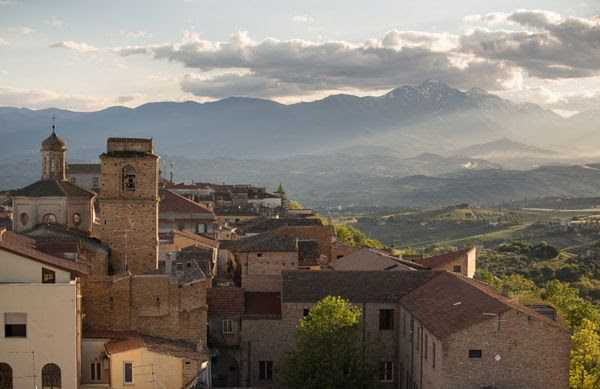
#9: Città Sant’Angelo, Italy
Cost Of Living: B+
Health Care: A+
Entertainment: A
Recreation: A+
English Spoken: D
Expat Community: D
Infrastructure: A
Access To North America: B+
Environmental Factors: A
Crime: A+
Affordability Of Real Estate: B
Real Estate Ownership Restrictions: A+
Residency: C
Taxes: C

Abruzzo, historically one of the poorest regions in the country, had fallen off the national map until just a few decades ago. Since the 1950s, however, Abruzzo has seen steady economic growth. In the 1990s, its growth surpassed that of any other region in Italy and its per capita GDP expanded to become the highest in the country. The construction of new highways made it more easily accessible from Rome, opening up the region domestically and attracting state and private investment the likes of which Abruzzo had never seen before.

Today, the per capita GDP well outpaces that of the rest of southern Italy (and is a healthy 84% of the national average). Today, this is the richest region in this part of Italy. Yet it remains absolutely affordable, one of Europe’s greatest bargains. Abruzzo has everything Tuscany offers and more, at a fraction the cost.

New development is taking place across the region, and small towns are working hard to attract investment to save their historically significant but nearly deserted streets. Nowhere is this truer than in Città Sant'Angelo, perhaps the most appealing spot in this welcoming region. This would be an ideal place to embrace the best of traditional Italian life.

The downside could be language. Living in Città Sant'Angelo, you’d need to learn to speak Italian.

#10: George Town, Malaysia

Cost Of Living: A
Health Care: A+
Entertainment: A-
Recreation: A+
English Spoken: A
Expat Community: A-
Infrastructure: A-
Access To North America: D
Environmental Factors: C-
Crime: C+
Affordability Of Real Estate: B-
Real Estate Ownership Restrictions: C
Residency: B-
Taxes: A+

Penang isn’t just another lost-in-time outpost of the former British Empire. Combining all that’s appealing about island and city living, the “Pearl of the Orient” is one of Southeast Asia’s most livable destinations. Low costs are a big part of the appeal. In addition, health care is excellent, foreigners are welcome, and the country is safe and stable.

The population is a melting pot of Malay, Straits Chinese, Chinese, Burmese, Arab, Thai, Indonesian, and Indian. Thanks to its colonial past, English is the language that holds the ethnic stew together.

Life here is both traditional and 21st century, exotic and comfortable. Beyond the high-rise apartments of modern George Town is one of the best-preserved old cities in Asia. Hidden along the winding streets of this UNESCO World Cultural Heritage Site are old shophouses, guildhalls, and clan houses.

Then there’s the great outdoors. Almost on the city’s doorstep are stylish seaside settlements with palm-fringed sandy beaches and a backdrop of lush rain forest.

This city is recognized as an Asian culinary capital. Delicious specialties like Char Kway Teow, noodles with shrimp, chili paste, and cockles, are less than US$2 per portion.

Malaysia is one of the world’s most tax-friendly jurisdictions. As a resident of this country, you are taxed only on income derived from within the country, meaning that even income you remit to Malaysia is not taxed as long as it was earned elsewhere.
-Kathleen Peddicord

About Live and Invest Overseas
Based in Paris, France and Panama City, Panama, LIOS is the leading resource for people who want to live, retire and invest overseas. Headed by Kathleen Peddicord and Lief Simon – who collectively have more than 40 years’ experience visiting, living and investing in foreign countries – LIOS and its free e-letter service, the Overseas Opportunity Letter have more than 400,000 regular readers. More info available at www.liveandinvestoverseas.com.  

Sunday, January 24, 2016

Carnivals 101: A Guide To Some Of The Greatest Shows On Earth

Swept away in a sea of feather headdresses as sequins ping from overtight costumes, few travellers stop to wonder why carnivals exist. These riots of pre-Lenten revelry demand to be experienced rather than understood. Their common element is a gleeful up-ending of social norms, making them among the world’s most memorable travel experiences.
Many began as pagan gatherings that welcomed spring; under Christian influence, they morphed into a last hurrah before Lent, the six weeks of abstinence and reflection before Easter. For many of the most colourful customs, the original meaning has been lost in time – but logic should never get in the way of a good party. Here are some unforgettable locations to embrace carnival spirit.
A samba school parading in Rio's Sambadromo A samba school parading in Rio's Sambadromo © T photography / Shutterstock

Rio de Janeiro, Brazil: the record-breaking ‘greatest show on Earth’

During each day of Rio’s carnival, the biggest on Earth, more than two million people samba through the streets. Many visitors simply hurl themselves into epic street parties that flow around the Brazilian capital. But the most dazzling events are the phenomenally choreographed Samba Parade and the nightly balls (all ticketed), part of a vast programme of events. The revelry is overseen by ‘King Momo’, a personification of wit and mischief who incites the crowds to dance to the rhythms of batucada, Brazil’s hypnotic samba style. Don’t forget to catch your breath with a few caipirinhas.
Make it happen: carnival fever grips Rio for five days leading up to Ash Wednesday. Rio Carnival Services (rio-carnival.net) help arrange tickets, hotels and costumes.
This year: 5-10 February 2016
A Mardi Gras parade on Bourbon Street in New Orleans' French QuarterA Mardi Gras parade on Bourbon Street in New Orleans' French Quarter © Chuck Wagner / Shutterstock

New Orleans, USA: bead-throwing bacchanalia in the French Quarter

Bourbon Street, in the charismatic French Quarter, anchors some of the most risque fun in the Big Easy’s notorious carnival. Expect costume competitions honouring bold feats in leatherwear, and revellers swapping strings of beads for an eyeful of bare skin (not mandatory, we hasten to add). You won’t (always) need to cover the kids’ eyes: the parade ‘krewes’ Uptown tend to lead colourful, family-friendly fun. Get an energy boost from ‘king cake’, a psychedelic cinnamon-dusted confection; if your slice contains a plastic baby, the next cake is on you.
Make it happen: weeks of January parades reach a climax on Mardi Gras (‘Fat Tuesday’, the day before Ash Wednesday). Plan with a little help from mardigrasneworleans.com.
This year: 9 February 2016
A procession of masked revellers making their way down a canal in Venice A procession of masked revellers making their way down a canal in Venice © Sorin Vidis / Shutterstock

Venice, Italy: masked decadence and ballroom elegance

No carnival subverts the everyday quite like Italy’s canal city. Venice’s iconic carnevale masks have a long history: for centuries they afforded citizens a guise under which to anonymously indulge their vices. Grab a mask and sashay over to headline events like the Doge’s Ball and the Grand Masquerade Ball (extravagant enough to warrant the steep ticket prices). Otherworldly highlights include the Volo dell’Angelo (Angel’s Flight), in which a beauty contest winner soars by zipwire, and costume contests, all taking place in St Mark’s Square. Energise with somefrittelle di carnevale, fried pastry balls, just don’t get crumbs on that lavish ball gown.
Make it happen: carnival season tends to run from two Saturdays before Ash Wednesday, culminating on Fat (Shrove) Tuesday. See more on carnevale.venezia.it.
This year: 23 January to 9 February 2016
Masqueraders taking part in Trinidad & Tobago's carnival in Port of SpainMasqueraders taking part in Trinidad & Tobago's carnival in Port of Spain © John de la Bastide / Shutterstock

Trinidad & Tobago: calypso and carousing on a Caribbean isle

Carnival on the island duo Trinidad & Tobago has a subversive history. Festivities originated with slaves creating a parody of white settlers’ masked balls, mocking colonial authority. After slavery’s abolishment in 1834, carnivals grew ever more lively: today you can expect limbo competitions and a cast of carnival characters including verbose Pierrot Grenade, beret-wearing Sailor Mas, bats, dragons, clowns galore and ‘jab jab’, the Devil himself. Listen out for thrilling lyrical improvisation of T&T’s extempo calypso style, with the best competing to be ‘Extempo Monarch’.
Make it happen: parades strut around the island in the two days before Ash Wednesday; learn more on ncctt.org.
This year: 8-9 February 2016
Revellers in the traditional Gilles costume at the Carnaval de BincheRevellers in the traditional Gilles costume at the Carnaval de Binche © Weskerbe / Shutterstock

Binche, Belgium: surreal costumes and citrus-throwing

Identical, pin-eyed figures flood the streets of Binche during carnival. It’s not as nightmarish as it sounds: this Belgian town has one of Europe’s most unmistakeable carnival figureheads, the ‘Gille’. His ginger facial hair, green glasses and straw-padded suits have murky origins, but the costume is revered, protected and off limits unless you’re a local. Festivities reach fever pitch on Shrove Tuesday’s morning procession: twigs are brandished to ward off evil, oranges thrown (catch them for luck), and torches held aloft. By nightfall, masked participants with ostrich feathers head to Binche’s Grand Place for a big bonfire.
Make it happen: the weird and wonderful display takes place over three days before Ash Wednesday; find more info on carnavaldebinche.be.
This year: 7-9 February 2016
Carnival goers burn dolls to celebrate the arrival of spring as part of Maslenitsa in Russia Carnival goers burn dolls to celebrate the arrival of spring as part of Maslenitsa in Russia © Oleg Proskurin / Shutterstock

Russia: usher in spring with pyrotechnics and pancakes

Numerous European countries enjoy a pancake blowout on Fat Tuesday. But no culture fries up a storm quite like the Russians, whose ‘butter week’ before Lent involves bumper quantities of bliny. Maslenitsa has its origin in a Slavic pagan festival of the sun; circular pancakes are thought to be a nod to this. Sledding and snowball fights pass time between bliny binges, while an effigy of ‘Lady Maslenitsa’ is paraded through the streets and eventually set aflame. Moscow’s Red Square is a focal point for live music, dance and plenty of pancakes. Forgiveness and family ties are core themes, so you’ll see locals happily strolling in the snow or ice skating in Gorky Park.
Make it happen: a week of gaiety precedes the effigy-burning, which takes place eight weeks before Pascha (Orthodox Easter Sunday).
This year: 6-12 March 2016
Locals wearing masks and sheepskins to honour Kurent, an ancient god of hedonism, as part of Ptuj's carnivalLocals wearing masks and sheepskins to honour Kurent, an ancient god of hedonism, as part of Ptuj's carnival © Ivan Smuk / Shutterstock

Ptuj, Slovenia: pagan revival of the hairiest kind

Pagan elements are also strong in northeast Slovenia. Locals wear masks and sheepskin – a nod to Kurent, an ancient hedonism god – forming the hairiest procession around. This shaggy troop treads the streets of Ptuj, ringing cowbells to scare away spirits and wagging long leather tongues. More than 100,000 people turn out to watch the bell-ringing, hair-tossing display. Meanwhile children dive out of the way of a demonic figure who wields a net for seizing young souls.
Make it happen: Kurentovanje is a week-long event ending with Shrove Tuesday. Learn more on kurentovanje.net.
This year: 2-9 February 2016
Revellers head for Carrer del Pecat (‘Sin Street’) in Sitges, the location of one of the many distinctive carnivals of CataloniaRevellers head for Carrer del Pecat (‘Sin Street’) in Sitges, the location of one of the many distinctive carnivals of Catalonia © Oscar Garriga Estrada / Shutterstock

Sitges, Catalonia: decadent disguises in Spain’s ‘Sin Street’

Catalan carnaval traditions are among Europe’s most distinctive. In Solsona, a history of animal-dangling has left locals nicknamed ‘donkey-killers’. Vilanova i la Geltrú celebrates with bone-chilling costumes and meringue fights. But free-spirited Sitges, adored across Europe for its beaches and gay clubs, draws the merriest crowds. Don’t miss Noche de las Mantillas, an excuse to dress up in traditional Spanish costume (drag encouraged), the Rua de la Disbauxa (‘Debauchery Parade’, as messy as it sounds), and the symbolic burial of a sardine. Keep the party going in clubs along Carrer del Pecat (‘Sin Street’).
Make it happen: a week of parties leads up to Ash Wednesday; learn more on carnavaldesitges.com.
This year: 4-10 February 2016
Revellers at Goa's carnivalGoa’s carnival mixes Christian and Hindu elements into a colourful whole © Murgermari / Shutterstock

Goa: Portuguese flair transplanted to the Indian coast

Even after the crumbling of the Portuguese Empire, European flavours remain strong in its former outposts. The Portuguese brought Christianity to Goa in 1510, and their culture continues to tint carnival celebrations here. Under colonial rule, slave labourers and their masters swapped roles. These days Goa’s carnival is a mash-up of feathered costumes, fire-breathers and acrobats, with some of the Hindu pantheon thrown in; find the best parades in state capital Panaji. Indian and Portuguese cuisines feature heavily, with street food stalls and cookery competitions; just follow the robust scent of feijoada, mingling on the breeze with Goan seafood curry.
Make it happen: this four-day fiesta ends on Shrove Tuesday but the timing of carnival festivities can vary; check ahead. It’s an open-air knees-up with no tickets required.
This year: 6-9 & 14-17 February 2016
A carnival procession in Valletta, Malta's tiny capitalA carnival procession in Valletta, Malta's tiny capital © Arseniy Krasnevsky / Shutterstock

Malta: choose between darkness and light in the Mediterranean

Contrasting festivities unfold on Malta and Gozo. In the tiny Maltese capital Valletta, floats coast through the narrow streets and revellers keep energy levels high with copious sugary treats like prinjolata, a sponge cake slathered in cream and candied fruit. A ferry ride away on Gozo, a spookier mood takes hold: the town of Nadur plays host to a more spontaneous carnival in which gory or dark folklore costumes are essential, from black-clad witches to hooded gnomes, mermen and skeletons.
Make it happen: festivities occur in the five days before Shrove Tuesday; get details fromwww.visitmalta.com/en/carnival.
This year: 5-9 February 2016

Tuesday, May 26, 2015

10 of The Best Theme Parks … That You’ve Probably Never Heard Of

Popeye village, Malta.

Popeye village, Malta. Will the spinach be served with olive oil? Photograph: Alamy


Popeye Village, Anchor Bay, Malta

The 1980 film Popeye may have been a notorious flop but its has a legacy in the charming family attraction of Popeye Village, the self-consciously ramshackle collection of wooden buildings set on a beautiful bay constructed as a film set for the Robin Williams movie. Visitors can explore the colourful village, meet the characters and mosey into a range of attractions including a Popeye comic museum. There are also regular boat trips, puppet shows and a cinema, where you can, ahem, watch the Popeye film. It is what it is.
 Admission free. Check website for opening hours, popeyemalta.com

Efteling, Kaatsheuvel, Netherlands

Netherlands Kaatsheuvel Amusement park
Pinterest
 Photograph: Alamy
Popular in the Netherlands but rarely visited by foreigners (94% of its visitors are Dutch), Efteling is a huge fantasy theme park with a large number of fairytale rides and attractions. It opened in 1952 and is among the oldest theme parks in the world – pre-dating Disneyland in the US by three years. Rumour has it that Efteling inspired Walt Disney to build his own, and Disneyland Paris consulted Efteling for tips on how to better appeal to a European audience. Among its flagship rides is the grand double-track wooden rollercoaster Joris de Draak, or Joris the Dragon, in which two trains race each other around the track. Sculptures of magical creatures are dotted throughout the park, including Brothers Grimm creation, Lang Nek (long neck), the unofficial mascot of the park.
 From €34, kids under 3 free. Open July-Aug 10am-8pm, Sept-June 10am-6pm,efteling.com

Vulcania, Saint-Ours, Auvergne, France

Vulcania, Saint-Ours, Auvergne, France
Pinterest
 Photograph: Alamy
France does amusement parks with an educational slant extremely well. WhilePuy du Fou in the Vendée wows visitors with historical battle re-enactments, Vulcania makes volcanoes fun and worth learning about. As well as a museum (borrrr-ing! … just kidding, it’s full of ambitious interactive exhibits that help explain how volcanoes work), the park has rollercoasters, including the Dragon Ride that accelerates to g-force +2. The park was designed by Pritzker prize-winning architect Hans Hollein and its centrepiece is a 28-metre-high cone covered in lava stone on the outside, and a firey gold-coloured interior.
 Adults €24, kids 6-16 €17. Opening times vary, check website for details,vulcania.com

Grūtas Park, Druskininkai, Lithuania

Revolutionary fighter sculpture in Grutas Park.
Pinterest
 Revolutionary fighter sculpture in Grūtas Park. Photograph: Daniel Alexander/Design Pics/Corbis
You know those retro Jurassic Park-type attractions, where you walk through a forest featuring giant dinosaur sculptures? Well Grūtas is like that, but instead of meeting diplodoci and T-Rexs you’ll find dinosaurs of the Soviet period: monuments of Lenin, Marx and Stalin scatter the park. Unofficially known as Stalin’s World, the park was established to preserve the history of the Lithuanian Soviet Socialist Republic era. Alongside the sculpture garden’s collection of 86 statues there are darker touches, such as guard towers and fragments of concentration camps (though they never went ahead with the idea of transporting visitors to the park on Gulag-style trains). There’s also a kids’ playground, Luna Park, based on Soviet times and a small zoo – presumably with animals the Russian’s didn’t send into space.
 Adults £4.35, kids 6-16 £2.20. Open winter 9am-5pm, summer 9am-10pm,grutoparkas.lt

Siam Park, Tenerife, Canary Islands

Siam Park, Water Kingdom Theme Park, Costa Adeje, Tenerife
Pinterest
 Photograph: Alamy
For a taste of Thailand (in Tenerife) look no further than Siam Park. The huge water park, built in 2008, features adrenaline-pumping rides, such as the Mekong Rapids, the Dragon and Tower of Power, the latter of which has a near-vertical 28-metre drop. Those who don’t want to risk losing their swimwear can opt for the park’s more relaxing options: drift along the Mai Thai river (not filled with the cocktail, unfortunately) or sunbathe on Siam beach.
 Adults €34, kids 3-11 €23. Open May-Oct 10am-6pm, Nov-Apr 10am-5pm,siampark.net

Leolandia, Capriate San Gervasio, Lombardy, Italy

Leolandia
Pinterest
 Photograph: Alamy
If you’ve been traipsing round Milan and the kids are starting to get riled, Leolandia – an hour’s drive away – is the ideal place to let them unwind. The children’s theme park has been upgraded in the last two years: Peppa Pig world was added earlier this year, while Cowboy Town has been renewed. Alongside various rides and a petting zoo, the park has a range of shows, featuring fairies, pirates and parrots. On a side note, those looking for a particularly obscure, hair-raising Italian theme-park experience, should check in to Ai Pioppi playground in Treviso: a kinetic theme park built in the back garden of a restaurant and free to anyone who buys a meal.
 Adults €13.50, concessions €12.50. Open daily 10am-6pm, leolandia.it

Bakken, Klampenborg, Denmark

The balloons in Bakken amusement park
Pinterest
 Photograph: Alamy
Did you know that Bakken is the world’s oldest amusement park? No, neither did we. Just 10 minutes north of Copenhagen (which also boasts the 19th-centuryTivoli amusement park in the city centre), Bakken is a charming, historic attraction that was founded in 1583. It is frequented by classical white-faced clown Pjerrot, but rarely attracts visitors from outside of Denmark. And while it may not be able to compete with the high-octane thrills of modern theme parks, Bakken still has impressive rides: the grand wooden Rutschebanen coaster, built in 1932, is considered a classic. The tasteful and nostalgic park is surrounded by greenery and makes for a easygoing (and corporate-free) family day out.
 Adults £24, kids £17. Open 26 March-30 August, check website for daily opening hours, bakken.dk

Tripsdrill, Germany

Treehouses  at Tripsdrill, Germany
Pinterest
 Photograph: Tobias Kleinschimdt/Corbis
Opened in 1929, Tripsdrill is Germany’s oldest theme park and, impressively, has remained in the hands of the Fischer family since it opened. The large park has a modern-built wooden rollercoaster, Mammut, which is a 860 metres long, as well log flumes and rapids rides. The wildlife park is another draw; around 130 species inhabit it, with wild horses, Arctic wolves and bears, along with regular falconry displays.
 Adults and children over 12 €28.50, kids 4-11 €24.50, under 4s free. Theme park and wildlife park open 28 Mar-8 Nov 9am-6pm; during winter season (Nov-Mar) wildlife park open 9am-5pm on weekends, tripsdrill.de

Area 47, Ötztal, Tirol, Austria

Area 47, Austria
Pinterest
Area 47 is a huge outdoor adventure park on the riverside in the Ötztal valley and full of the kind of activities that make people go “woah … dude!” It offers visitors an impressive range of opportunities to hurl themselves about the place: a 30 metre-high “mega swing”; a rope course suspended below a bridge, which is also fitted with a climbing wall; a water park and a diving tower; water-ski jumping slope and spectacular slides. You can also go blobbing (look it up) and the park runs rafting, canyoning and caving trips and has an off-road biking course. GoPro population: high.
 Admission and opening times vary depending on activity, check website for more details; a six-day park action package, including teepee accommodation, costs from €396, area47.at

High Chaparral, Värnamo, Sweden

High Chaparral, Sweden
Founded by Big Bengt (a name that will amuse those from the UK more than elsewhere), High Chaparral is a wild west theme park in the form of a frontier town – complete with steam train running through it. The highlight, however, has to be the epic shows that are like watching a live western film, complete with shootouts, explosions and people throwing each other off wooden porches. There are six different shows to watch, including one about the legendary swordsman Zorro and city patron Lucky Luke, who has to keep the bandits behind bars.
 Day pass from £16.50. Open 10am-6pm 30 May-25 June, 26 June-16 Aug, 21-23 and 28-30 Aug, highchaparral.se
Contributed by Will Caldwell, www.theguardian.com