Sept 11 (Reuters) - Queen Elizabeth's coffin arrived in Edinburgh on Sunday after a six-hour journey from her summer home in the Scottish Highlands, past tens of thousands of mourners lining the route, many in sombre silence, some applauding and others in tears.
Shortly after 10 a.m. (0900 GMT), a hearse carrying Elizabeth's oak coffin emerged from the gates of Balmoral Castle, where she died on Thursday aged 96, at the start of a slow drive to the Scottish capital.
The coffin was draped in the Royal Standard of Scotland with a wreath on top made of flowers taken from the Balmoral estate including sweet peas, one of Elizabeth's favourites.
Crowds, fifteen deep in places, massed in the centre of Edinburgh to greet the cortege, which included the queen's daughter, Princess Anne, as it made it way to the Palace of Holyroodhouse where it was met by a military guard of honour.
Soldiers from the Royal Regiment of Scotland then carried the coffin to the throne room of the palace where it will remain overnight.
"There was no way I could miss this. I would regret it for the rest of my life," said Eilidh Mackintosh, 62, who left her home at 6 a.m. to be sure of a good view on Edinburgh's famous Royal Mile where large crowds were gathering.
"She never let us down and I didn’t want to let her down either. Now she has gone there is a big hole in the heart of the nation."
The journey from Balmoral was the first of a series of events leading up to the state funeral at Westminster Abbey in London on Sept. 19.
In an emotional tribute to his mother on Friday, the new monarch, King Charles, said she had begun a "last great journey" to join Prince Philip, her husband of 73 years who died last year.
Her death has drawn tears, sadness and warm tributes, not just from the queen's own close family and many in Britain, but also from around the globe - reflecting her presence on the world stage for seven decades.
Wherever the cortege went as it wound its way through picturesque countryside, villages, small towns and cities, people lined the road or stopped their cars to get out and watch. At one point, it passed a guard of honour formed by dozens of tractors lined up in adjacent fields by farmers.
Many watched silently in bright sunshine. Some threw flowers into the road. For others, the emotion of the moment moved them to tears.
"It's just very, very sad. I’m happy I was here to say our goodbyes," said Elizabeth Alexander, 69, who was born on the day the queen was crowned in 1953.
Many thousands are continuing to gather at other royal palaces across Britain, and large piles of flowers are massing as people visit to pay their respects.
Charles became king immediately after his mother's death and was officially proclaimed the new monarch at a ceremony on Saturday, full of pageantry and centuries-old traditions.
Similar proclamations are following across the United Kingdom and the other 14 realms of which Charles is now head of state, including Australia, Canada, Jamaica, New Zealand and Papua New Guinea.
Canada's Prime Minister Justin Trudeau said parliament would be recalled on Thursday to allow members to pay tribute.
The queen came to the throne following the death of her father King George VI on Feb. 6, 1952, when she was just 25. Her coronation took place a year later.
While Elizabeth's death was not totally unexpected given her age and deteriorating health, there was still a sense of shock at the news.
"We all thought she was invincible," her grandson Prince William, now the heir to the throne, told a well-wisher on Saturday as he met crowds at Windsor castle.
FUNERAL
The day of Elizabeth's funeral will be a public holiday in Britain, officials have announced. U.S. President Joe Biden said he would be there, although full details of the event and the attendees have not yet been released.
Before that, her coffin will be flown to London and there will be a sombre procession when it is later moved from Buckingham Palace to Westminster Hall where it will lie in state for four days.
"It goes without saying that we can expect large numbers of people," a spokesperson for Prime Minister Liz Truss told reporters.
Truss, whose appointment as prime minister on Tuesday was the queen's last public act, will join King Charles as both the new head of state and prime minister tour the four nations of the United Kingdom in the next few days.
Charles, 73, is now the 41st monarch in a line that traces its origins to the Norman King William the Conqueror who captured the English throne in 1066.
Elizabeth's death has capped a difficult couple of years for the royal family.
The most high-profile issue has involved her grandson Prince Harry and his wife Meghan, who stepped down from royal life in 2020 to move to California from where they both have heavily criticised the institution.
That has left them alienated from the rest of the family, with Harry and his older brother William said to be barely on speaking terms. But the death of their grandmother has seen differences put aside, as they appeared together with their wives outside Windsor Castle to meet the crowds on Saturday.
A royal source described it as an important show of unity at an incredibly difficult time for the family.
Reporting by Michael Holden, William James and William Schomberg in London, Russell Cheyne in Balmoral, Lewis MacDonald and Marco Trujillo in Ballater, and Andrew MacAskill in Edinburgh; Editing by Kate Holton, Mark Potter, Frances Kerry and Andrew Heavens
Showing posts with label Edinburgh. Show all posts
Sunday, September 11, 2022
Saturday, September 5, 2015
Rosewood Edinburgh To Open 2018
Rosewood Hotels & Resorts® has been appointed by Duddingston House Properties (DHP) and Urbanist Hotels to manage Rosewood Edinburgh which will open in 2018 as Rosewood’s fourth property in Europe. The hotel will be housed in the former Royal High School, a historic, landmark building on Calton Hill in the center of the Scottish capital. Declared a World Heritage Site by UNESCO, Edinburgh is renowned as a city of culture, heritage and history.
Rosewood Edinburgh will offer 147 guestrooms and suites with many enjoying panoramic views across the city of Edinburgh. Amenities will include three restaurants and bars, a Sense® spa, state-of-the-art fitness center and indoor swimming pool. In addition, event spaces and meeting rooms will include a 3,200-square-foot ballroom.
The former Royal High School was designed by architect Thomas Hamilton and completed in 1829. The neoclassical, listed building is widely considered to be one of the best examples of Greek revival architecture and has lain vacant for almost 50 years. Award-winning Scottish architect, Gareth Hoskins, will restore the building to create a world-class hotel. Hoskins was also responsible for the redevelopment of the National Museum of Scotland, which is also located in Edinburgh, and will also be designing the extension for the National Galleries of Scotland.
“Rosewood Edinburgh is a prime example of Rosewood’s philosophy of A Sense of Place,” says Radha Arora, president, Rosewood Hotels & Resorts. “The former Royal High School is an Edinburgh landmark and we will be drawing on our experience with historic properties such as The Carlyle, Rosewood Castiglion del Bosco and Hôtel de Crillon to ensure the heritage and history of this building is preserved and celebrated.”
“Attracting a brand of Rosewood’s stature is a major coup for Edinburgh and Scotland,” says David Orr, co-founder and chairman of the Urbanist Group. “Rosewood is a truly world-class hotel operator due to the distinctive nature of the company’s properties, a commitment to excellence and a proactive approach to environmental sustainability. By bringing Rosewood to Edinburgh we will be able to showcase the very best of Scottish creativity, talent and bounty from land and sea.”
Friday, September 4, 2015
All Aboard Scotland’s New Borders Railway

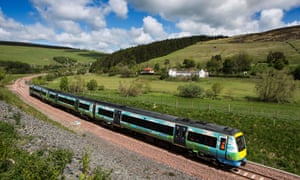
New train a comin’ … the new Borders Railway follows the old Waverley Line, running from Edinburgh to the new station of Tweedbank. Photograph: Peter Devlin
If you didn’t win a Willy Wonka-esque Golden Ticket in the recent competition, you won’t be aboard the first departure of the Borders Railway train on Saturday. Normal (paying) customers can travel on the longest new domestic line constructed in a century – from Sunday.
To celebrate the opening, three VIP trains will run on Saturday, between stations decked out with bunting, bands and marquees … A fair bit of fanfare, with the Queen officially opening the line on 9 September. The lucky passengers will be those who found a golden ticket inside special chocolate bars created by local chocolatier Cocoa Black.
The route follows the old Waverley Line, which once linked Edinburgh to Carlisle through the Scottish Borders, but was decommissioned in 1969 as a result of the 1963 Beeching Report. Now, for the first time in almost 50 years, rail passengers can explore this bucolic corner of southern Scotland by train on 30 miles of new track running from Edinburgh Waverley to a new station, Tweedbank, just outside Melrose. And there’s already talk about extending the line south to Hawick – famous for cashmere and tweed – and maybe as far as Carlisle. All the hype is aimed at making tourists rethink their plan of galloping north to the Highlands in search of the “real” Scotland.

From 10 September, and on Wednesdays, Thursdays and Sundays for the next six weeks, special steam trains will puff Hogwarts Express-style along the route. Tickets for these trips are already sold out, but fans can join a waiting list and get updates on the next journeys planned.
Alternatively, anyone will be able to climb aboard one of the slightly shabby ScotRail carriages – the project may have cost £350m but that didn’t stretch to new rolling stock – to ride the line that roughly follows the tortuous and notoriously slow A7. The journey takes just under an hour and stops at Newcraighall and Brunstane, and at new stations at Shawfair, Eskbank, Newtongrange, Gorebridge, Stow and Galashiels. More buses have been laid on from these stations to meet the expected extra demand, including a new Sunday service between Galashiels and the pretty little hamlet of St Boswells, and a new service between Galashiels and Jedburgh (with its abbey, Georgian jail and Mary Queen of Scots house).

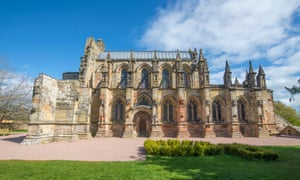
Some attractions have really got behind the new line, offering a shuttle service from certain stations. Rosslyn Chapel – of Da Vinci Code fame – has pledged to meet each train and ferry visitors to the chapel from Eskbank station in a minibus.
The Borders landscape may be gently undulating, but its history is every bit as dramatic as that of the north. The border between England and Scotland has seen its share of bloody battles, and there are more impregnable-looking castles than you can toss a caber at – as well as Georgian gems that wouldn’t look out of place in a Jane Austen dramatisation. Architect Robert Adam completed honey-huedMellerstain House, and his father William designed grand Floors Castle.
The line brings 1,500 miles of walking trails within reach, from long-distance hikes such as the Southern Upland Way to shorter rambles and also cycling routes, including the 250-mile Borderloop. The area is also known for the spectacular ruins of four great 12th-century abbeys – Dryburgh, Melrose, Jedburgh and Kelso – now also linked by cycling and walking routes. The Borders Abbeys Way is a picture-postcard 64-mile walking route running through dappled woodland, along the banks of the salmon-rich Tweed and across gently rolling farmland, punctuated by the crumbling ecclesiastical ruins.
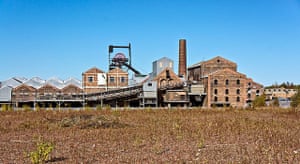
The historical highlights aren’t all so ancient, however. Newtongrange station, now just 20 minutes from Edinburgh, is connected by a walkway to the National Mining Museum. This is on the site of the 1890 Lady Victoria Colliery, with an impressive 500-metre shaft and a winding tower powered by Scotland’s largest steam engine.

From Gorebridge you’re handy for 14th-century Crichton Castle, while Stow is the hopping-off point for 16th-century Thirlestane Castle and is on the National Cycle Network. Speaking of cycling, the Tour of Britain will arrive in the Borders a few days after the railway opens, finishing stage three on 8 September in Kelso, with its huge cobbled square and abundance of fishing tackle shops.
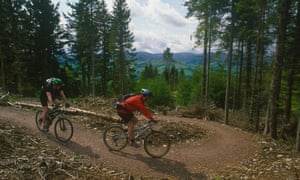
The region is also a mountain-biking hot spot. From Galashiels it’s a half-hour bus ride to Innerleithen for some of Scotland’s best mountain biking, at the Glentress Forest centre, with trails for all grades. Galashiels is also close to Traquair House, one of the oldest stately homes in Scotland. Dating from 1107, it is charmingly ramshackle and has its own brewery.

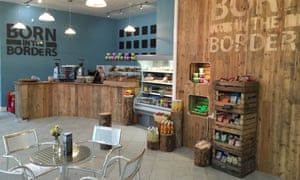
The cafe at the new Galashiels station is a second outpost for Born in the Borders, a visitor centre, restaurant, shop and microbrewery in Lanton Mill, outside Jedburgh, that showcases the best local produce and crafts – with beers including Foxy Blonde, Holy Cow and Flower of Scotland, plus Wild Harvest, which is flavoured with foraged ingredients.
Melrose itself is the prettiest of the little Borders towns, with chic shops, cosy cafes and delis to mooch around. Its abbey ruins are rose-tinged – and Robert the Bruce’s heart is buried there.
The Buccleuch Arms in St Boswells won Scottish Inn of the Year 2015: it has antler chandeliers and signature steaks, from feather to thick rib. Round the corner, bookshop-cafe-deli the Main Street Trading Company is great for a rummage.

Walking distance from Tweedbank station is Abbotsford House, the home of Sir Walter Scott. It was Scott, ironically, who kickstarted tourism to the Highlands, changing the perception of a wild and dangerously unruly land to the romantic image of majestic mountains, tumbling burns, icy lochs and brooding castles.
The grand baronial mansion Scott designed has an armour-lined entrance hall, a library with 9,000 rare volumes, and an exhibition centre with a moving documentary. The novelist died here in 1832 and is buried in the most hauntingly beautiful of Borders abbeys, Dryburgh, among gnarled yews and cedars of Lebanon said to have been planted by Crusaders. It’s a fitting end to a trip on the revamped Waverley Line – named, of course, after Scott’s famous series of novels.
• Borders Railway day returns from Edinburgh cost from £3.70 (to Shawfair) to £11.20 (to Tweedbank). For steam train updates and tickets, visit Steam Dreams – first-class returns from Waverley to Tweedbank £75, standard-class £40, under-16s £20, family ticket £100 – the return leg is diesel-hauled. More information from scotrail.co.uk and bordersrailway.co.uk
By Lucy Gillmore, www.theguardian.com
Monday, May 4, 2015
Scotland 's Most Popular Tourist Attraction Draws 55 Million Visitors
National Museum of Scotland, Edinburgh
Scotland’s top tourist destinations attracted an extra 1.7 million visitors in 2014, boosting visitor figures to more than 55 million for the year, according to a new study.
The survey of 687 sites across the country found the most popular destinations were free admission attractions, which welcomed more than twice as many visitors as those with entry fees.
The rise in the number of tourists, which equates to a 3.3 percent increase on 2013’s figures, comes as Scotland hosted major international events such as the Commonwealth Games and the Ryder Cup.
The National Museum of Scotland in Edinburgh was once again the top attraction of the year, with more than 1,639,509 visitors. The National Gallery in Edinburgh, Lomond Shores and Kelvingrove Art Gallery in Glasgow also proved to be popular.
The research, carried out by Glasgow Caledonian University (GCU), found Historic Scotland’s Edinburgh Castle was the most popular paid attraction, with 1,480,676 visitors in 2014, up 4.3 percent compared to 2013. Top paid attractions also included Edinburgh Zoo, Edinburgh Bus Tours, Stirling Castle and Glasgow’s Science Centre.
Professor John Lennon, Director of the Moffat Centre for Travel and Tourism Business Development at GCU, said: “2014 proved to be a winning year with visitor attractions enjoying the profile Scotland gained internationally as a result of key events such as the Commonwealth Games, the Ryder Cup, and Homecoming 2014.
“Many operators also saw positive impacts from the anniversaries associated with the First World War, which served to heighten Scotland’s profile and destination awareness, nationally and internationally.”
Other success stories include Glasgow’s Riverside Museum, which saw visitor numbers rise by 41.8 percent between 2013 and 2014 to 1,049,834, and the Helix in Falkirk, which, in its first year, welcomed an estimated 800,000 visitors, resulting in a knock-on effect in the local area and an increase of 26.4 percent of visitors to the Falkirk Wheel.
Susan Gray, communications manager at Scotland’s top tourist destination, said: “We are delighted that the National Museum of Scotland remains the most popular visitor attraction in Scotland.
“We are currently creating ten exciting new galleries of decorative art, fashion, design, and science and technology and look forward to welcoming even more visitors when these open in summer 2016.”
Alasdair Smart, manager of Lowland Canals Waterway, said: “It’s been an exciting year on Scotland’s canals and we’re immensely proud that the Falkirk Wheel has enjoyed its busiest 12 months since it first started turning back in 2002. 2014 saw more than half a million people pay a visit to the world’s only rotating boat lift and we've now had more visitors than the entire population of Scotland.
“Even more than a decade since its opening, the chance to see this iconic feat of engineering in action is still drawing huge numbers of visitors, boosting the economy of the area, and helping put Falkirk on tourists’ ‘to-see’ lists the world over. The Falkirk Wheel is the jewel in the crown of Scotland’s canal network and now, with The Helix and The Kelpies nearby, the area has even more to offer.”
Stephen Duncan, director for tourism at Historic Scotland, which runs Edinburgh and Stirling castles, said: “Edinburgh Castle continues to enthrall visitors from both home and abroad, and we are delighted that it continues to be the most visited paid-for attraction in Scotland.
“Across our estate of over 70 paid-for attractions, we are continuing to invest in our visitor experience.”
Wednesday, December 31, 2014
VisitScotland: "Room for improvement" when making gay tourists feel welcome
EDINBURGH, Scotland - Same sex marriage law could bring a boost to tourism in Scotland but new research has found there is "room for improvement" when making gay holidaymakers feel welcome.
Research by tourism body VisitScotland found 84 percent lesbian, gay, bisexual, transgender and intersex (LGBTI) people planning to wed in another country would choose Scotland as their top destination.
However two thirds of the 930 respondents to the online survey sent to individuals on the Equality Network's mailing list, Twitter and Facebook pages said there could be improvements on making people feel welcome while on holiday in Scotland.
The research showed 60 percent of respondents had taken a holiday or short break in Scotland in the last year.
With the first same sex weddings due to take place from December 31, the national tourism organisation said it believes that the new legislation could see Scotland become a destination of choice for couples looking to get married, boosting tourism and presenting a new opportunity for the industry.
Sunday, December 28, 2014
Scottish Cuisine: Much More Than Haggis And Oats!
Connoisseurs Scotland Member Hotels Offer Innovative Dining Experiences and Upscale Cuisine
As VisitScotland, the national tourism office for the country, prepares to celebrate the “Year of Food and Drink” in 2015, Scottish cuisine is hitting new heights. Gone is the notion that dining in Scotland equals bland—and potentially unappetizing—meals of haggis, oats and puddings of questionable origins. Instead, chefs across the country—including those at several of Connoisseurs Scotland’s family of luxury properties—are gaining notoriety for using the bounty of the country’s produce, seafood and meats to create innovative, complex and –most importantly –delicious food that’s elevating the very idea of Scottish cuisine.
The recent “locavore” food trend—cooking and eating food that is locally sourced rather than flown
great distances to a grocer—isn’t just booming in the United States. At theTorridon Hotel, located in the Scottish Highlands, head chef David Barnett creates sophisticated dishes from almost exclusively local produce and meats. In fact, Barnett cites Scotland’s natural produce as one of his greatest inspirations, and it shows … his seasonal menus, updated daily, are always filled with the best ingredients from this verdant area. “There’s something special about personally knowing the producers, gardeners, hunters, farmers, and fishermen that supply the ingredients to my kitchen door,” says Chef Barnett. “Knowing how much passion and effort they put into what they do helps me translate my passion onto the plate for our guests.” The restaurant’s kitchen garden offers a superb crop of apples, blackberries, raspberries, potatoes and carrots most of the year as well as a wide selection of herbs. Much of the meat used in Barnett’s kitchen comes from Torridon Farm, located on the estate, which raises Highland cattle and Tamworth pigs.
A highly interactive dining experience is on the menu at One Square in the Sheraton Grand Hotel & Spa in downtown Edinburgh. “Dining at the Pass” puts guests in the heart of One Square’s busy kitchen
and offers an exclusive opportunity to watch the chefs apply the finishing touches to the dishes just before they are served. This special table, which accommodates up to four guests, is set adjacent to the “Pass”—the main point of communication between front of house and the kitchen, manned by Executive Chef Craig Hart—so dinner takes place behind the scenes, rather than in the main restaurant. Diners have the opportunity to interact with the chefs as they work, learn insider foodie tips, ask questions about the dishes and enjoy the buzz of a vibrant kitchen. Five- and seven-course chef’s menus are available at the Pass, giving diners a taste of authentic Scottish dishes like marinated highland venison with pickled baby vegetables and warm chocolate pudding with marinated cherries, clotted cream ice cream and chocolate “soil.” The full a la carte menu is also available at the Pass.
Dining at Chez Roux at the Cromlix, a luxury hotel in Perthshire owned by tennis superstar Andy Murray, is a grand culinary experience that is not necessarily confined to the dining room. Guests can
also opt to dine in the intimate study, which seats up to 10; the elegant snooker room, which can accommodate 20; and the lovely garden room for parties up to 28. The restaurant, overseen by the legendary French chef Albert Roux and run by award-winning executive head chef Darin Campbell, is housed in a glass-walled conservatory overlooking the grounds, offering diners a ringside view of the chefs at work in the extensive open kitchen. With a focus on local and seasonal ingredients, the menu at Chez Roux offers an interesting interplay between traditional Scottish and decidedly international flavors. The Latin inspiration seen in the treacle cured Loch Duart salmon with compressed melon and tequila and the Asian flair of the hot Gressingham duck pancake with pickled carrots, broad beans and spiced orange dressing allow guests to enjoy the best of global and local flavors.
Connoisseurs Scotland's collection of 28 luxury accommodations includes city-center properties; country house hotels; exclusive-use properties; the ultimate luxury train, The Royal Scotsman; and the only cruise ship in the world with a Royal Warrant from HM The Queen, The Hebridean Princess. Six of the members boast Michelin-starred restaurants, including the only two-starred restaurant in Scotland, which is found at Gleneagles.
Information on Connoisseurs Scotland, its member resorts, partners and special offers can be found at www.luxuryscotland.co.uk. In addition travelers can download the Luxury Scotland app, which provides news and offers from members, onto their iPhones or Droids.
Friday, September 26, 2014
5 Free Things To See And Do In Edinburgh
Contributed by Paul Kelbie, AP
This undated photo provided by Visit Scotland shows Arthur's Seat, a dormant volcano which sits 251 meters (825 feet) above sea level, offering a unique vantage point. As the highest point in the 640-acre (260-hectare) Royal Park adjacent to Holyrood Palace, it also offers a chance to explore the remains of a 2,000-year-old hill fort. (AP Photo/Visit Scotland)
Scotland has made headlines lately with voters rejecting independence and choosing instead to remain part of the United Kingdom. Visitors will naturally be curious about the centuries of history that led to Scotland's distinct culture. And a visit to the country's capital, Edinburgh, with its historic 16th century tenements and grandiose 19th century town houses, is a tale of two cities in one.
More than 600 years of history seep from every pore of Edinburgh's volcanic foundations. Tales of genius and enlightenment are mingled with those of body-snatchers, witches and revolutionaries.
The Old Town, dominated by the imposing medieval battlements of Edinburgh Castle, runs downhill along the Royal Mile stretching from the castle to the Queen's official Scottish residence of Holyrood Palace.
Exploring the narrow lanes and footpaths between some of the world's tallest 16th- and 17th-century merchants' houses feels like a return to the days of Daniel Defoe, the 18th-century author of Robinson Crusoe and English spy, or the 19th-century murderers Burke and Hare.
In contrast, the neoclassical New Town area built between 1767 and 1890 is a masterpiece of city planning, a UNESCO World Heritage Site and a monument to the Age of Enlightenment which put Edinburgh at the heart of intellectual and scientific accomplishments
MUSEUMS
Edinburgh is full of free museums within a short walk of each other, including the National Museum of Scotland and its vast array of artifacts from across the world.
Nearby the Edinburgh Writers Museum celebrates the lives of famous Scots writers such as Robert Burns, Sir Walter Scott and Robert Louis Stevenson while the Museum of Childhood, Museum of Edinburgh and The People's Story provide an informative and entertaining history of the city and its people.
For those with a slightly more macabre interest, the Police Information Center and its museum of crime contains a business-card holder made from skin of infamous body-snatcher William Burke.
ART GALLERIES
In addition to numerous museums, Edinburgh is also home to several free art galleries, including the Scottish National Gallery in the middle of the city; the National Portrait Gallery and the Scottish Gallery of Modern Art.
Old Masters sit alongside the work of some of the world's leading Impressionists and Post-Impressionists in addition to temporary exhibitions, which create a smorgasbord of culture for art lovers.
GO FOR A WALK
Edinburgh is ideal to explore independently but for those who prefer a guide there are a couple of operators, such as Sandeman's Free Walking Tour and Edinburgh Free Walking Tours, which take visitors along the Royal Mile.
Typical routes take in the views of Edinburgh Castle and St. Giles Cathedral, which has over 200 memorials to notable Scots, and the historic Grassmarket and Cowgate areas.
No walk would be complete without a visit to Greyfriars Kirkyard and the statue of Greyfriar's Bobby at the corner of Candlemaker's Row, celebrating one of Edinburgh's most famous tales about the tiny 19th-century skye terrier who spent 14 years guarding the grave of his owner.
ARTHUR'S SEAT
For the more energetic, Arthur's Seat, a dormant volcano which sits 251 meters (825 feet) above sea level, offers a unique vantage point. No other city in the world has an extinct volcano in its limits and as the highest point in the 640-acre (260-hectare) Royal Park adjacent to Holyrood Palace, it also offers a chance to explore the remains of a 2,000-year-old hill fort.
SCOTTISH PARLIAMENT
At the foot of the Royal Mile, in the shadow of Arthur's Seat, is the award-winning building of the Scottish Parliament. Designed by Catalonian architect Enric Miralles, it has been hailed as both a modern architectural marvel and an over-priced blot on the landscape. You can make up your own mind with a free guided tour and access to a permanent exhibition about the Parliament or even sit in on the debates and watch democracy in action.
Tuesday, September 2, 2014
Romance Is in the Air in Scotland: Connoisseurs Scotland Member Hotels Set the Mood for Memorable Romantic Getaways
The perfect romantic getaway varies greatly depending on the couple taking it, but these trips almost always include a stunning location, a few key indulgences, a bit of adventure, and a healthy dose of rest and relaxation. Scotland, a country famed for its wild, natural beauty, growing culinary scene and laid-back pace, offers all these elements and more to couples looking for a uniquely romantic getaway. When it comes to romantic accommodations,Connoisseurs Scotland member properties are as varied as the guests they attract; properties range from remote to city-centric, modern to historic, and over-the-top to cute and cozy for a match made in heaven.
The magical and wildly romantic Isle of Skye sets a dramatic backdrop for an amorous escape, and the luxurious seaside Kinloch Lodge provides the ideal getaway. Nestled at the foot of Kinloch Hill on the
tranquil shoreline of the sea-loch Na Dal, the quaint lodge makes it easy for couples to escape the hustle and bustle of everyday modern life and unwind, relax and recharge with its “Romantic Escape” package. The package includes two nights’ accommodations in a cozy guest room; three meals at the lodge’s acclaimed restaurant, including a special five-course dinner designed by chef Marcello Tully; a spa treatment each or a whisky tasting at Talisker distillery; and a relaxed, couple’s photo shoot in and around the stunning lochside gardens. Additional goodies include a bowl of decadent, Belgian-chocolate-dipped strawberries and champagne and oysters delivered to the room.
Culture and style define the city of Glasgow, and One Devonshire Gardens at Hotel du Vin is set in one of its most stylish and romantic locations—a tree-lined terrace on the vibrant West End. This charming historic property occupies five townhouses built in 1886 and retains all its original features, including rich,
oak-panelled walls, open fireplaces, sweeping staircases and gorgeous stained glass windows. The house also boasts its own secret terraced garden…the ultimate in romance. Food lovers will be drawn to the hotel’s fine-dining restaurant, which serves up dishes that rely heavily on fresh, seasonal, locally sourced and organic produce. Before or after dinner, guests can visit the wine cellar with an incredible selection of 600 bins, and the whisky snug featuring over 300 whiskies. One Devonshire Garden’s Aristocratique Package has romance written all over it, featuring early check-in and late check-out, a three-course dinner, breakfast in bed and of course, champagne.
Couples looking to be pampered while on vacation will want to visit Stobo Castle, Scotland’s only destination health spa and hotel. Here luxury accommodations meet the latest in spa technology. Nested deep in the picturesque Scottish countryside, Stobo Castle offers the ultimate In romantic indulgence with
its opulent Cashmere Suite, which features walls dressed in rich, claret-colored cashmere, a handcrafted limestone tub (weighing in at over a ton!), and a well-appointed lounge decked out in more cashmere and original Scottish art. The room also comes with a celebratory bottle of Bollinger champagne and chocolates. Though leaving this room may prove difficult, couples who venture to the spa will find unique treatments such as a massage and chromo energetic hydro-bath ritual or an exotic milk bath paired with an anti-aging facial to help them feel relaxed and rejuvenated. Stobo’s Pure Spa Break includes two night’s accommodations (including the Cashmere Suite) and two spa treatments as well as meals, guided walks and activities.
Connoisseurs Scotland's collection of 28 luxury accommodations includes city-center properties; country house hotels; exclusive-use properties; the ultimate luxury train, The Royal Scotsman; and the only cruise ship in the world with a Royal Warrant from HM The Queen, The Hebridean Princess. Seven of the members boast Michelin-starred restaurants, including the only two-starred restaurant in Scotland, which is found at Gleneagles.
Information on Connoisseurs Scotland, its member resorts, partners and special offers can be found at www.luxuryscotland.co.uk. In addition travelers can download the Luxury Scotland app, which provides news and offers from members, onto their iPhones or Androids.
Subscribe to:
Posts (Atom)