Wednesday, May 15, 2019

New Museum Opens At Statue Of Liberty

Image result for New museum opening at Statue of Liberty

By DEEPTI HAJELA
NEW YORK (AP) — A new museum opening at the Statue of Liberty is giving visitors another opportunity to explore its history and the impact the iconic structure has had on the world.
The 26,000-square-foot (2,415-square-meter) museum on Liberty Island is the new home for the statue’s original torch and other artifacts which had previously been in a smaller museum space inside the statue’s pedestal, which is accessible only to the fraction of the more than 4 million annual visitors who manage to get limited-availability statue entry tickets.
“We looked at this small museum and thought, wouldn’t it be wonderful to ... move it out to a place where more people could experience it,” said John Piltzecker, National Park Service superintendent of the Statue of Liberty National Monument and Ellis Island.
The new space, located somewhat away from the entrance to the statue, is open to anyone who comes to Liberty Island, with admission included in the price of the ferry ticket. From the outside, the glass walls and copper-colored roof appear to be rising out of the earth, with a giant staircase rising to a rooftop terrace at the center.
The entire structure is meant to connect to Lady Liberty, using the same granite that’s part of the statue pedestal and including copper as a nod to the material the statue is made of, said Cameron Ringness, the project designer at FXCollaborative, which created the museum’s overall design.
A new museum opening at the Statue of Liberty is giving visitors another opportunity to explore its history and the impact the iconic structure has had on the world. (May 13)
Tap to unmute
“It’s really trying to belong to the site and the landscape and not feel like this building that just got placed here out of nowhere,” Ringness said. “We wanted to enhance the feeling that it’s really special to be in proximity to the statue.”
Inside, there are three main gallery spaces, starting with a theater where visitors walk through as they watch a film that goes into how the idea for the statue came about, the efforts that went into its making in France and its arrival in the New York harbor, as well as talking about what liberty meant then and what it means in the current day.
The film uses unusual footage taken by drones, including an interior shot rising up through the inside of the statue.
Another gallery goes into the building of the statue, with exhibits meant to show what it would have been like in Frederic-Auguste Bartholdi’s studio, and the models and molds used to make it, as well as a replica of the statue’s foot. Another section shows how iconic the statue has become, not only in American culture but around the world, with items like a menorah where each candle holder is a small Lady Liberty, as well as comic book covers, decorative plates, and dolls.
In the final section, visitors are encouraged to take digital self-portraits and add their thoughts on what liberty means to them, as they look at the original torch and a replica of the statue’s face.
Including that last part was vital, said Edwin Schlossberg, president and principal designer at ESI Design, which created the exhibition spaces.
“This statue was built to congratulate the United States for fighting the Civil War to free the slaves,” he said. “It is based on this idea that liberty was a critical thing that we all had to struggle for, so that idea had to continue as a core value in this experience.”
In conjunction with the museum’s opening, the Statue of Liberty-Ellis Island Foundation, which spearheaded the effort to raise the $100 million in private-sector funds for the project, also developed an app with Apple to bring aspects of the museum to people who cannot visit in person.
Users will be able to explore the museum’s life-size replica of the statue’s foot, for instance. With augmented-reality technology, which superimposes animation over a real-life setting, users will be able to walk around and see the virtual replica from different perspectives. Other features include a look at the city skyline through the decades from the Statue of Liberty’s eyes, as well as how the statue itself looked before its copper exterior turned green.
The app is available only on Apple mobile devices, not Android. Some features, including an audio tour, will be available only on location.
The foundation is also launching a three-part podcast exploring the statue’s history and symbolism. The podcast won’t be limited to Apple’s podcast distribution channels.
___
Associated Press writer Nick Jesdanun also contributed to this report.

Monday, May 13, 2019

Star Trek: Exploring New Worlds at Henry Ford Museum of American Innovation May 11 – September 2, 2019

Image result for Star Trek: Exploring New Worlds at Henry Ford Museum of American Innovation


Through collaboration with MoPOP and CBS Consumer Products, this limited engagement exhibition offers more than 100 rare artifacts and props from the original television series and its spinoffs and explores its enduring impact on our culture – from arts and technology to fashion and literature
DEARBORN, Mich.- Starting May 11 through September 2, 2019, visitors to Henry Ford Museum of American Innovation can "boldly go where no one has gone before…" when Star Trek: Exploring New Worlds opens. Through collaboration with MoPOP and CBS Consumer Products, this limited engagement exhibition offers more than 100 rare artifacts and props from the original television series and its spinoffs and explores its enduring impact on our culture – from arts and technology to fashion and literature.
More than 50 years after its television debut, Star Trek's themes of optimism, equality, heroism and examination of the human condition continue to inspire people worldwide to imagine, explore and create. The immersive exhibition showcases how the pop culture powerhouse grew from a low-budget sci-fi series to prosper as an iconic franchise, building stories around controversial issues including war, racism and politics.
Star Trek: Exploring New Worlds includes props and artifacts from all six Star Trek television series and many of the films, including a tricorder, communicator and phaser from the original series, a Borg cube, a Klingon disrupter pistol, tribbles and more. Visitors will also see original set pieces including the navigation console and rare costumes including Spock's tunic worn by Leonard Nimoy, Lt. Uhura's dress, Khan's open-chest tunic, Captain Picard's costume, a Borg costume, the alien Gorn and more.
Visitors will also get the chance to beam up inside the Transporter simulator and recreate the memorable scene from Star Trek II: The Wrath of Khan inside the KHAAAAN! video booth. Other highlights include the U.S.S. Enterprise and Deep Space 9 space station filming models, original scripts, concept art, storyboards and production drawings.
To celebrate the opening of the new exhibit Henry Ford Museum of American Innovation will host Star Trek: Exploring New Worlds Party on May 16, 2019. Tickets are $25 for non-members and $21.50 for members and include signature drinks, costumed characters, music, prizes and more. The event begins at 5 p.m. Members also get the chance to preview the exhibition before it opens to the public on May 10 from 9:30 a.m. – 5 p.m.
Admission to Star Trek: Exploring New Worlds is free for members. Non-member ticket prices include admission to the museum and are $24 for adults (12-61), $18 for youth (5-11), $22 for seniors (62+) and children 4 and under are free. To purchase tickets, visit thehenryford.org
About The Henry Ford 
Located in Dearborn, Michigan, The Henry Ford, a globally-recognized destination, fosters inspiration and learning from hands-on encounters with artifacts that represent the most comprehensive collection anywhere focusing on innovation, ingenuity and resourcefulness in America. Its unique venues include Henry Ford Museum of American Innovation, Greenfield Village, Ford Rouge Factory Tour, Benson Ford Research Center and Henry Ford Academy, a public charter high school. Together with its online presence at thehenryford.org, its national television programs, The Henry Ford's Innovation Nation and Did I Mention Invention? and other resources, The Henry Ford helps individuals of all kinds to unlock their potential and help shape a better future. The Henry Ford advanced its role as a catalyst for change in education with the acquisition of The STEMIE Coalition, a growing affiliation of organizations dedicated to fostering innovation, invention and entrepreneurship in students, K-12. The Henry Ford hosts the National Invention Convention and makes innovation learning curriculum accessible to educators and students worldwide.
About the Museum of Pop Culture (MoPOP) 
MoPOP is a leading-edge nonprofit museum in Seattle, with a mission to make creative expression a lifechanging force by offering experiences that inspire and connect our communities. MoPOP reaches multigenerational audiences through our collections, exhibitions, community engagements, and educational programs, bringing understanding, interpretation, and scholarship to the pop culture of our time. For more information, visit http://www.MoPOP.org.
About CBS Consumer Products 
CBS Consumer Products manages worldwide licensing and merchandising for a diverse slate of television brands and series from CBS, CBS Television Studios and CBS Television Distribution, as well as from the company's extensive library of titles, Showtime and CBS Films. Additionally, the group oversees online sales of programming merchandise. For more information, visit http://www.cbsconsumerproducts.com.


SOURCE Henry Ford Museum of American Innovation

Sunday, May 12, 2019

Airline Quality: Who Ranks Number One? –The Latest


Image result for Airline Quality: Who Ranks Number One? –The Latest

By Peter Greenberg

The latest results are in on airline quality. For the 29th year, researchers at Wichita State University and Embry-Riddle Aeronautical University studied data collected by the U.S. Department of Transportation that looked at on-time arrivals, mishandled baggage, bumping passengers and consumer complaints.
And the winner is Delta Air Lines, followed by JetBlue, Southwest and Alaska Airlines. Frontier came in last, and second to last place was American Airlines. But the really good news is that overall, airlines bumped fewer passengers last year.
Why?
The airlines are paying more passengers to give up their seats before they board flights. And the airlines also have mishandled fewer bags. What’s one reason for that? It’s basic math.
The airlines are actually carrying fewer bags because so many more passengers don’t want to pay the airlines to check them in.

Wednesday, May 8, 2019

Civil War and Reconstruction: The Battle for Freedom and Equality, Now Open At The National Constitution Center In Philadelphia

 Civil War and Reconstruction: The Battle for Freedom and Equality explores constitutional debates at the heart of the Second Founding, as well as the formation, passage, and impact of the Reconstruction Amendments 

 On May 9, 2019, the National Constitution Center’s new permanent exhibit—the first in America devoted to exploring the constitutional debates from the Civil War and Reconstruction— opened to the public. The exhibit features key figures central to the era— from Abraham Lincoln and Frederick Douglass to John Bingham and Harriet Tubman—and will allow visitors of all ages to learn how the equality promised in the Declaration of Independence was finally inscribed in the Constitution by the 13th, 14th, and 15th Amendments, collectively known as the Reconstruction Amendments.

 The 3,000-square-foot exhibit, entitled Civil War and Reconstruction: The Battle for Freedom and Equality, features over 100 artifacts, including original copies of the 13th, 14th, and 15th Amendments, Dred Scott’s signed petition for freedom, a pike purchased by John Brown for an armed raid to free enslaved people, a fragment of the flag that Abraham Lincoln raised at Independence Hall in 1861, and a ballot box marked “colored” from Virginia’s first statewide election that allowed black men to vote in 1867. The exhibit will also feature artifacts from the Civil War Museum of Philadelphia—one of the most significant Civil War collections in the country—housed at and on loan from the Gettysburg Foundation and The Union League of Philadelphia. A detailed list of confirmed artifacts is featured below, with more being added in the months ahead.

 “The post-Civil War amendments that emerged during Reconstruction represent the most important changes to the Constitution since the adoption of the Bill of Rights,” said Jeffrey Rosen, president and CEO of the National Constitution Center. “The National Constitution Center is thrilled to open the first permanent gallery in America that will tell the story of how the freedom and equality promised in the Declaration of Independence was thwarted in the original Constitution, resurrected by Lincoln at Gettysburg, and, after the bloodiest war in American history, finally enshrined in the 13th, 14th, and 15th Amendments to the Constitution.”

 The exhibit also brings together artifacts, images, and interactive elements to tell the stories of African-American officeholders who held local and national elective office during the period following the Civil War, including Hiram Rhodes Revels, Robert Smalls, and P.B.S. Pinchback. Along with other multimedia elements, the exhibit will use interactive technology to encourage visitors to explore the creation and drafting of each of the three Reconstruction Amendments. This new experience will be incorporated into the Center’s online Interactive Constitution platform, which has received more than 20 million views since its launch and will ensure key content in the exhibit is accessible to classrooms across America.

For a limited production run beginning on June 19 —the holiday that commemorates the emancipation of enslaved African Americans throughout the Confederate States of America—visitors can also experience FOURTEEN, a moving theatrical performance that sheds new light on the Reconstruction era and the ratification of the 14th Amendment. Through dramatic interpretation of original texts, such as Frederick Douglass’s open letter to his former master, the 30-minute performance will bring to life the leaders, influential figures, and everyday Americans who were central to the era. This production is created in collaboration and consultation with nationally recognized, award-winning artists and scholars, and has been supported by The Pew Center for Arts & Heritage. FOURTEEN: A Theatrical Performance will be performed in the Center’s Bank of America Theater select weeks throughout 2019 and 2020.

 Civil War and Reconstruction is a permanent addition to the National Constitution Center’s main exhibit experience, which includes three signature attractions: The Story of We the People, the museum’s interactive main exhibit, which illuminates America’s constitutional history; Signers’ Hall, which allows visitors to walk among life-size bronze statues of the Founding Fathers; and Freedom Rising, a multimedia theatrical production that highlights the American quest for freedom. Located on the ground floor, this new permanent gallery will be adjacent to the American Treasures gallery, which features the five rarest original drafts of the Constitution. Together, these two exhibits will ensure that the most significant original documents from America’s founding and from the Reconstruction era— which some have called the Second Founding—can educate and inspire visitors in perpetuity.

To assist in the development of this exhibit, the National Constitution Center convened America’s leading scholars to serve as an advisory board, including Randy Barnett, Carmack Waterhouse Professor of Legal Theory at Georgetown University Law Center; Laura Edwards, Peabody Family Professor of History at Duke University; Garrett Epps, professor of law at the University of Baltimore; Eric Foner, DeWitt Clinton Professor of History at Columbia University; Thavolia Glymph, professor of history and African-American studies at Duke University; Jamal Greene, the Dwight Professor of Law at Columbia Law School; Allen Guelzo, Henry R. Luce III Professor of the Civil War Era at Gettysburg College; Kurt Lash, E. Claiborne Robins Distinguished Chair in Law at University of Richmond School of Law; Earl Maltz, distinguished professor of law at Rutgers University School of Law; Kate Masur, associate professor of history at Northwestern University; Darrell Miller, Melvin G. Shimm Professor of Law at Duke University School of Law; Janai Nelson, associate director-counsel of the NAACP Legal Defense and Educational Fund, Inc.; Matthew Pinsker, professor of history and Brian Pohanka Chair in American Civil War History at Dickinson College; Rick Valelly, Claude C. Smith ‘14 Professor of Political Science at Swarthmore College; and Kimberly West-Faulcon, professor of law and James P. Bradley Chair in Constitutional Law at Loyola Law School.

Artifacts in Civil War and Reconstruction are generously lent to the National Constitution Center thanks to a path-breaking partnership between the Center, the Civil War Museum of Philadelphia, and the Gettysburg Foundation. The Civil War Museum formally transferred ownership of its three dimensional artifacts to the Gettysburg Foundation in 2016 on the condition that a selection be permanently displayed in Philadelphia at the National Constitution Center. The Museum’s two dimensional collection of archives and books is housed at The Heritage Center of The Union League of Philadelphia under a stewardship agreement with the Abraham Lincoln Foundation where researchers and others can access it.

To learn more and plan your visit: https://constitutioncenter.org/


Monday, May 6, 2019

Royal Caribbean Opens $250 Million Private Island In The Bahamas, Perfect Day At CocoCay


Royal Caribbean Redefines Thrill and Chill with Tallest Waterslide in North America, Caribbean’s Largest Freshwater Pool, Highest Vantage Point in The Bahamas and More

MIAMI– Unlike any private island the world has ever seen, Royal Caribbean International’s highly anticipated Perfect Day at CocoCay – the first in the cruise line’s new Perfect Day Island Collection of next-level private destinations around the world – is now open. The $250 million transformation of the line’s private island in The Bahamas debuts a combination of first-of-their-kind thrills and one-of-a-kind ways to chill that forever changes what is possible in a vacation destination. From plunging down the tallest waterslide in North America and traveling up to 450 feet in the air in the Up, Up and Away helium balloon, to conquering the Caribbean’s largest wave pool, thrill seekers can find plenty of ways to put their courage to the test. For those looking to relax, Perfect Day features the Caribbean’s largest freshwater pool, Oasis Lagoon; and pristine, white sand beaches with crystal-clear tropical water, so guests of all ages can create their perfect beach day – no matter what that may look like.
“Royal Caribbean is the proven leader when it comes to pushing the envelope in cruise ship design and the experiences offered at sea,” said Michael Bayley, President and CEO, Royal Caribbean International. “With Perfect Day at CocoCay, we are so proud to bring our 50-year legacy of innovation ashore to transform an incredible island that now completely revolutionizes private destinations in the vacation industry. It is exciting to see what we have dreamed up finally come to life; our guests truly are in for an experience unlike any other.”
Following a grand opening celebration over the weekend, the new Perfect Day at CocoCay is now offering endless discoveries and shareable moments that make for the perfect combination of experiences. Perfect Day at CocoCay is exclusive to guests of Royal Caribbean. From ports in Florida and the Northeast, vacationers can visit the private island destination by sailing on 11 of the global cruise line’s innovative and adventure-packed ships, featuring a series of firsts, such as surfing, skydiving, ice skating and the tallest slide at sea.
Daredevils Wanted at Thrill WaterparkAt the heart of Perfect Day at CocoCay is Thrill Waterpark, daring the most adrenaline-seeking guests to conquer two brag-worthy towers with 13 waterslides – as well as the Caribbean’s largest wave pool and the Adventure Pool with a family friendly obstacle course. Key features include:
  • Daredevil’s Tower – Guests can push their limits on seven exhilarating single-rider waterslides of various heights, including the 135-foot-tall Daredevil’s Peak– the tallest waterslide in North America. Additional highlights are the twin Dueling Demon drop slides, launching riders from a vertical position; the Manta Raycers, where friends can race down twin open flume slides; the high-speed, fully vertical Screeching Serpent; and the coiling Green Mamba, a massive aqua tube slide.
  • Splash Summit – Adventurous families will share the thrill with six multi-rider slides, including The Slingshot, a zero-gravity slide for four; The Twister, a winding tube slide for two on a tandem raft; and the four-lane Splash Speedway racing slides.
  • Wave Pool – Vacationers can ride the tide at the largest wave pool in the Caribbean, where a timer on the back wall counts down to the start of big waves.
  • Adventure Pool – This interactive obstacle course on water features floating lily pads, a rock-climbing wall and two swing ropes for guests to bounce, climb and swing to their heart’s content.
Above and Beyond with Up, Up and Away        
On Up, Up and Away, everyone scores a view unlike any other from a colorful helium balloon securely tethered to the ground by cable. The signature attraction floats up to 450 feet above Perfect Day at CocoCay, allowing guests to take in the island from the highest vantage point in The Bahamas and capture the ultimate selfie with the private island and the pristine blue waters of The Bahamas as their backdrop.
Playing it Cool at Oasis Lagoon Guests can explore the coves of Oasis Lagoon, the largest freshwater pool in the Caribbean – whether looking to spend time with family, share a few cocktails with friends or simply sit back under the tropical sun. Sunbathers can make their way through three distinct coves, each with a vibe of their own, and swim to the beat of the underwater sound system. Families with small children can splash through water features and jump right into the excitement at the kid-friendly beach entry. On the south side of Oasis Lagoon, pool-goers can sip a frosty Coco Loco at the expansive swim-up bar, catch some sunrays on one of three swim-up islands with in-water loungers, or treat themselves to total relaxation in a private cabana, complete with its own cabana attendant.
Dining Harborside        
At Captain Jack’s, the island hangout and meet-up spot, guests can grab a drink at the rowboat bar, settle into a rope swing seat or snack on the house specialty – chicken wings and fries dipped in signature sauces like mango-habanero and Caribbean jerk. Live jams and harborside views put vacationers in an island state of mind in no time. For more delicious eats, vacationers can also head to Skipper’s Grill for complimentary lunchtime favorites like salads, sandwiches, tacos, burgers, fresh fruit and desserts.
Small Hands on Deck at Captain Jill’s Galleon and Splashaway Bay        
Perfect Day at CocoCay features an array of exciting features for kids of all ages. From three dry slides and 16 water cannons, to rope features and a splash pad, Captain Jill’s Galleon is an interactive play structure loaded with swashbuckling thrills.
Splashaway Bay, the coolest aqua park at sea, is breaking out beyond the deck and coming ashore as the largest one yet. Kids can enjoy bigger adventures than ever before with more fountains, sprinklers and geysers – plus two massive drench buckets and five waterslides, including three racers. Located along the harbor between Captain Jack’s and Skipper’s Grill, this complimentary attraction offers plenty of seating and tables for families.
High-Flying Hangout at the Zip Line     
Leave cares on the ground and soar on the 1,600-foot-long zip-line course that crisscrosses the island, beginning near the arrivals plaza and ending across the harbor.
An Out-of-Office Oasis at Chill Island   
Miles away from ordinary with pristine, crystal-clear tropical waters and white powder-like sand is Chill Island, the island escape travelers dream about. Chill Grill, the largest dining venue on the island, serves up beachside dining at shaded picnic tables on the sand. Guests can also find beach day favorites here, including snorkeling, jet-skiing excursions as well as plentiful cabanas and daybeds for relaxation under the shade. Add in beach bars with roaming bartenders, and guests will truly wish they lived here.
It’s Game on at South Beach Vacationers can fuel their competitive fire on the action-packed South Beach with volleyball, beachside basketball, soccer and paddle boarding. After working up an appetite, grab a bite at the Snack Shack or wade out to the floating bar to cool off with a drink. If relaxation is the game plan, beachfront cabanas are perfect for lounging in the shade.
Elevating the Perfect Beach Day Among the final experiences to be completed, Coco Beach Club is set to open in December. Here, travelers will experience an upscale take on the island’s authentic Caribbean vibes.
  • Overwater Cabanas – The first overwater cabanas in The Bahamas will offer discerning guests a new level of laidback luxury. Each with its own slide into the ocean, overwater hammock, shower and dedicated attendant, the exclusive cabanas will have everything vacationers would want for a day of complete indulgence.
  • Infinity Pool – Spanning an expansive 2,600-plus feet, this beachfront infinity pool is at the center of Zen with in-water loungers.
  • Club and Deck Area – Beachside cabanas and daybeds will provide a private slice of paradise. Elsewhere, guests can enjoy an exclusive dining venue that serves up freshly made Mediterranean fare with a side of ocean views.
For a full list of sailings visiting Perfect Day at CocoCay, visit www.royalcaribbean.com/cococay-cruises. Stay tuned for additional Perfect Day Island Collection destinations in Asia, Australia and Caribbean to be announced at a later date.
Royal Caribbean International has been delivering innovation at sea for more than 50 years. Each successive class of ships is an architectural marvel featuring the latest technology and guest experiences for today’s adventurous traveler. The cruise line continues to revolutionize vacations with itineraries to more than 270 destinations in 73 countries on six continents, including Royal Caribbean’s highly anticipated private island in The Bahamas, Perfect Day at CocoCay, the first in the Perfect Day Island Collection. Royal Caribbean has also been voted “Best Cruise Line Overall” for 16 consecutive years in the Travel Weekly Readers’ Choice Awards.
For additional information or to make reservations, vacationers can call their travel advisor; visit RoyalCaribbean.com; or call (800) ROYAL-CARIBBEAN.

Sunday, May 5, 2019

Surprise! The World's Oldest Mummies Are Not In Egypt

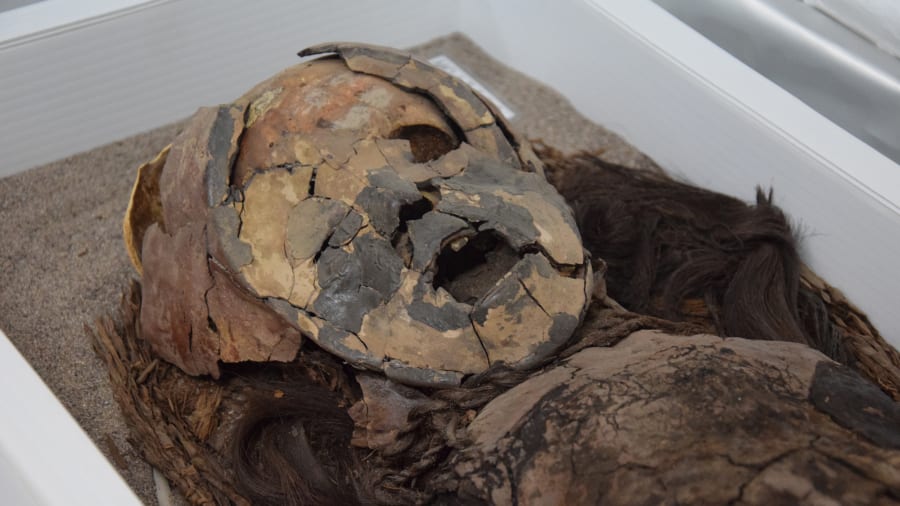
06 Chinchorro mummies
A ritualistic burial. Many Chinchorro mummies were laid to rest with clay masks and wigs -- a complex burial act for the hunter-gatherers who created them.

Mark Johanson, CNN
Arica, Chile (CNN) — The first humans known to have mummified their dead did so in a rather improbable spot: the driest place on Earth.
The Chinchorro people settled in coastal bays of the Atacama Desert, in what is present-day Chile, around 7,000 BC and developed a technique for mummification around 5,000 BC.
That's roughly 2,000 years before the ancient Egyptians. Yet, while the Egyptians were a complex civilization mummifying elite pharaohs, the Chinchorro were pre-ceramic hunter-gatherers with a more egalitarian approach to honoring the dead.
Although little-known even inside Chile, the country hopes a UNESCO application for World Heritage Site status (the archeological sites are already on UNESCO's Tentative List) may finally get these mummies the attention they deserve.

'Sacred collection'

To understand their improbable tale -- and why so few people know about them -- I catch a 2.5-hour flight from Santiago to Chile's northernmost city of Arica. From there, I hop in a colectivo (shared taxi) for a 9-mile (15km) ride into the Azapa Valley, a sinewy strip of green within the greater Atacama, to visit the San Miguel de Azapa Archaeological Museum in the small village of San Miguel de Azapa.
This unassuming institution, which has two small detached wings, holds the mummified remains of some 300 Chinchorro people, though it only displays about 10% of its collection for public view. That's because, at the moment, there is neither the money nor the space to showcase the mummies in a way that won't irrevocably damage them.
"It's a very sacred collection because the majority of the items are related to the ceremony of death," explains curator and conservationist Mariela Santos, as we peer over the mummified remains of a young woman whose face is hidden behind an evocative clay mask.


Black and red mummies

Mummification began with babies and fetuses (perhaps due to high fetal mortality in the arsenic-rich desert) before progressing to adults. There were five distinct styles over a span of about 4,000 years, though Santos says the most prevalent are the black and red mummies.
Making the black mummies involved taking the dead person's body completely apart, treating it and then reassembling it, skin and all. The red ones were created by making small incisions to remove internal organs and then drying the body cavity.
Both were typically stuffed with sticks and reeds (to fill out the forms), adorned with wigs, and masked with clay over the faces -- the former painted in manganese and the latter in ochre.
Why, I wonder, don't the Chinchorro mummies carry the same cache as their Egyptian brethren? Santos reckons it may be because Chileans themselves haven't given much value to the treasures along their northernmost frontier.
That may soon change.

Hoping for World Heritage Site protection

Chile's proposal for World Heritage Site status for the Chinchorro sites is expected to be in UNESCO's hands by as early as 2020. In the run-up to that date, the local government has beefed up its efforts to both promote archeological tourism and empower local fishing communities to become custodians of the Chinchorro burial sites within their midst.
A newly-developed circuit will offer tourists a tangible way of retracing the Chinchorro's steps from the museum in San Miguel de Azapa to the archeological sites in nearby Arica and Caleta Camerones, which lies 70 miles (113 kilometers) to the south.
Meanwhile, the archeological museum in San Miguel de Azapa should open a large Chinchorro wing in 2020 capable of holding another 35% of the collection. The hope is that, if Chileans finally appreciate the global importance of this mummy-making culture, maybe the rest of the world will, too.

Bernardo Arriaza, a physical anthropologist (scientists concerned with the evolution and biological diversity of humans) who's studied the Chinchorro mummies for more than three decades, is one of the key players documenting the global importance of the proposed world heritage site.
"What we're trying to show is that we not only have the oldest evidence of intentional mummification, but it was done by pre-ceramic hunter-gatherer people in a pristine environment that remains today," he says when we meet up at his office at Arica's Universidad de Tarapaca.
"These were the earliest settlers of the Atacama region, so I like to think of them as the pioneers of the desert," he continues. "They may not have been technologically advanced, but all of their complexity went into the preparation of the dead."

Discovered near the beach

It was a German archeologist, Max Uhle, who first discovered the mummies a century ago near the beach in Arica that was to bestow them their name: Chinchorro.
After chatting with Arriaza, I head two miles away to Playa Chinchorro, a wide expanse of brown-sugar sands stretching from downtown Arica to the mouth of the Lluta River.
I follow its bustling boardwalk back to the heart of town, where I find Arica's palm-lined central plaza. It's helmed by a candy cane-colored cathedral designed by Gustave Eiffel before he rose to prominence with his iconic Parisian tower.
Looming above the Eiffel Cathedral is El Morro, a 455-foot (139 meters) flat-topped hill. The most complex Chinchorro mummies were found on its slopes. Thirty-two of them have been preserved in situ (replete with funerary bundles, skins and other artifacts) at the small Museo de Sitio Colón 10.
The modern city of Arica lies on top of a vast cemetery of the Chinchorro people. However, the oldest forms of Chinchorro mummification are found 70 miles to the south in Caleta Camarones, a beach that's barely changed in the 7,000 years since these ancient fishermen began preparing their dead.

I overnight at Arica's Hotel Apacheta -- a modernist L-shaped property overlooking the Pacific -- before driving off towards Caleta Camarones the following morning.
The Pan-American Highway links Arica with Caleta Camarones via a stark, water-starved landscape. The only signs of human existence along the way are six newly built Chinchorro statues designed by local artists Paola Pimentel and Johnny Vásquez.
Since much of this region's link to the Chinchorro culture lies buried underneath the desert, these roadside sculptures offer both a tangible reminder of the past and a glimpse of what the future may hold if Chinchorro tourism becomes a reality.

Arid climate

Caleta Camarones is the second site in the UNESCO proposal. Arriaza envisions it as a place to trace the living legacy of the Chinchorro through to the modern-day fishermen who work here.
To that end, I meet with Jorge Ardiles, president of the local fishermen's union, for a trip out into the bay in search of abalones and urchins. Back on solid land, we douse our catch in lime juice and eat it raw, much like the Chinchorro did.
The leather-faced sexagenarian then walks me over to Camarones 14, the site where the oldest mummies, dating back to around 5,000 BCE, were excavated in 1978.
The reason mummies have survived here over the years, he says, is because of the extremely arid climate. Add in high salinity levels near the coast, and you get what have, for the past seven millennia, been the perfect conditions for preserving mummies. That is, until climate change threw a wrench into the equation.

A rare (though increasingly common) rainstorm in February unearthed a fresh layer of Chinchorro artifacts that I spot as Ardiles and I walk along a hillside above the bay. There are literally bones and vegetable fibers poking out of the brown earth over an area the size of a football field.
The local fishermen cover the exposed artifacts with dirt to deter grave robbers. They say it's the best thing they can do.
After all, there's no room for these mummies in any Chilean museum, they're not yet part of a World Heritage site, and most people don't even know that they're the oldest mummies ever found.


Thursday, May 2, 2019

Signs That A Wildlife Sanctuary May Not Be Legitimate

Image result for Signs That a Wildlife Sanctuary May Not Be Legitimate

By Peter Greenberg

If you’re a well-intentioned animal lover, you might jump at the chance to visit an animal sanctuary on your next trip.
However, some of these animal rescue centers may be more focused on cashing in on your visit than providing a safe environment for its animals.
What are some signs that a wildlife sanctuary may not be legitimate? If the sanctuary offers you direct contact with the animals or if you’re allowed to ride, hug, or take selfies with the animals, these might be possible signs of trouble at a conservation center. Also, pay attention if there’s a large number of baby animals.
Legitimate rescue centers do not permit captive breeding so that resources go instead to rehabilitating the rescue animals. And if you’re still wondering if an animal rescue center is legitimate, check out the Global Federation of Animal Sanctuaries, and see if it is accredited.