Showing posts with label #Africa. Show all posts

Wednesday, March 28, 2018

Prince Harry And Megan Markle Choose Namibia For The Royal Honeymoon

Prince Harry and Megan Markle Choose Namibia for the Royal Honeymoon
With news of Prince Harry and Megan Markle’s honeymoon destination of choice, Namibia is marking the arrival with three new lodges – Sossus Under Canvas, Shipwreck Lodge, and Hoanib Valley Camp – each bringing a very different offering to the tourism scene in the Namib Desert, the Skeleton Coast and Kaokoland.
Timbuktu Travel, the revolutionary safari company that aims to make Africa more accessible to all by empowering the traveler to design their own trip online, is delighted to see this expansion in new lodges because ‘it reflects the demand from 2018’s travelers for exciting, adventurous, transformative travel,’ CEO, Johnny Prince comments. ‘These new arrivals in Namibia will offer something new and exciting for families, daredevils and avid campers, as well as wildlife enthusiasts so we at Timbuktu are really excited about the year ahead for travelers to this wonderful , dramatic, country.’
NEW: April 2018: Sossus Under Canvas, Namib Desert, Namibia – FOR AVID CAMPERS
Sossus Under Canvas is an exciting semi-permanent tented camp in the Neuhof Nature Reserve of the Greater Sossusvlei-Namib area. The camp will open between April and November, bookable on an exclusive basis only, promising one of the most private, unique experiences in Namibia.
With eight Meru tents set within a naturally formed granite amphitheatre, each with an open-air bathroom and comfortable accommodation, this is about a real wilderness experience. Sossus Under Canvas will be one of the most environmentally sensitive camps in the country, operating on solar power, with buildings constructed entirely from recycled or natural materials – roofs built from old oil drums, canvas walls and recycled metals. Guests will enjoy multi-day walks, nights sleeping under the stars on magical fly camping expeditions, hot-air ballooning, fixed wing scenic flights, game drives and desert pool experiences.
Timbuktu Travel will offer stays at Sossus Under Canvas from £215 per person per night based on two sharing.www.timbuktutravel.com/lodge/sossus-under-canvasBest time to visit is between April – May and August – October.
NEW: June 2018: Skeleton Coast Shipwreck Lodge, Namibia – FOR FAMILIES & DAREDEVILS
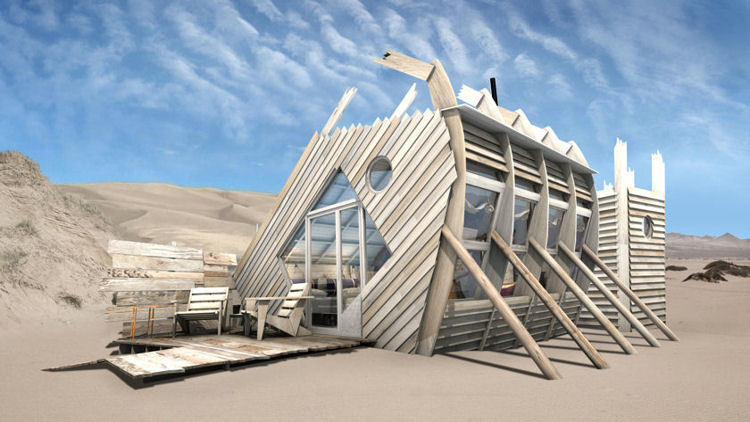
Shipwreck Lodge will offer a completely unique place to stay amid the sweeping dunes of Namibia's Skeleton Coast – a strange and beautiful slice of African wilderness. Shipwreck Lodge is the very first lodge to be built in the Skeleton Coast Central Concession Area, creating a gateway for desert adventures and brilliant alternative safaris. All 10 chalets are designed to look like shipwrecks in the dunes at the mouth of Hoarusib River. Two spacious, connected family rooms make it a great choice for those traveling with children.
The coast provides wonderfully varied wildlife from seal and flamingo colonies, to hyena, desert-adapted lion and elephant. However, this is also a place of adventure…take a 4x4 to see the Suiderkus and Karimona shipwrecks and the remains of the Westies diamond mine; explore the Clay Castles – extraordinary structures carved by Hoarusib River in full flow, slide down the golden dunes, or visit the Mowe Bay seal colony.
Timbuktu Travel will offer stays at Skeleton Coast Shipwreck Lodge from £530 per person per night based on two sharing.https://www.timbuktutravel.com/lodge/skeleton-coast-shipwreck-lodge. Best time to travel from March - November
NEW: June 2018: Hoanib Valley Camp, Namibia – FOR WILDLIFE ENTHUSIASTS
Northern Namibia’s newest retreat, Hoanib Valley Camp, is a stylish six-bedroom tented camp in the Hoanib River valley, in Namibia's arid Kaokoland. With a brilliant location for exploring this starkly beautiful landscape, the camp will focus on the desert-adapted wildlife that makes its home here. The camp will be operated in joint partnership with the local communities and the Giraffe Conservation Foundation.  As well as learning about the endangered giraffe, guests will see desert-adapted elephant and rhino and have the chance to visit nearby Himba and Herero communities, allowing for interaction with these remarkable desert people.
Inside the camp, colours, textures and patterns are inspired by the surrounding ochre dunes, the geometric patterns loved by the Himba people and, of course, the giraffe that inspired the project. Outside, guests will find a fire pit and views that stretch all the way to the horizon. Guests can also spend days traversing the rocky mountains and network of dry riverbeds on a game drive, investigating flora and fauna on a bush walk; or learning about the area's culture. Game drives to Skeleton Coast NP can be organized, as can a visit into the field with the Giraffe Conservation Foundation.
Timbuktu Travel will offer stays at Hoanib Desert Camp from £535 per person per night based on two sharing. To book:www.timbuktutravel.com/lodge/hoanib-valley-campBest time to travel from March - November
For all enquiries contact hello@timbuktutravel.com / +44 (0)207 193 1326 / www.timbuktutravel.com
Source: www.luxurytravelmagazine.com 

Saturday, January 27, 2018

Traveling To Cape Town? Take A Shower Before You Leave And Don’t Flush When It’s Yellow


Tourists traveling to Cape Town these days may have to select between experiencing one of the most beautiful towns in the world or taking a shower.
Forget pools, sauna, steam rooms, and please don’t take a bath. The day Cape Town, South Africa will run out of water is imminent.
The measures follow almost three years of water shortages, Cape Town’s rainfall dams are sitting at 27 percent full.
In a statement on the situation, South African Tourism said: “South African Tourism would like to thank the many tourists and tourism businesses that have heeded the call to reduce their water usage over the festive season – while urging them to not lose steam.”
South African Tourism CEO Sisa Ntshona added: “We are pleased that we have not received any reports of any tourism attractions and services interrupted by the water shortage and we appeal to tourists, and tourism businesses to continue being good responsible tourism citizens and continue being water-wise, even as the peak holiday season in South Africa winds down.”
A BBC reporter puts it the way it is:
My wife does not use the shower anymore. Instead, she boils about 1.5 liters of water and mixes it with about a liter of tap water to have her daily wash while the rest of us catch the slow running water in a bucket for re-use in the toilet cistern.
As for flushing, which in the past would have used around six liters at a time, we have adopted the popular slogan: “If it’s yellow let it mellow and if it’s brown flush it down.”

Friday, September 1, 2017

Don’t Take Plastic Bags To Kenya Or Face 4 Years In Prison


By
 -
Four years in jail for having a plastic bag. This is the maximum penalty in Kenya. FInes are $19.000 to $38.000 – and penalties are the world’s harshest.
Tourists are warned: Don’t import or carry plastic bags.
Kenya is adjusting to life without plastic bags after a strict ban on the carriers went into effect this week. Traders in Nairobi swapped out the cheap lightweight plastic bags for cartons, paper bags, and envelopes, while grocery stores sold reusable fiber bags and cardboard boxes.
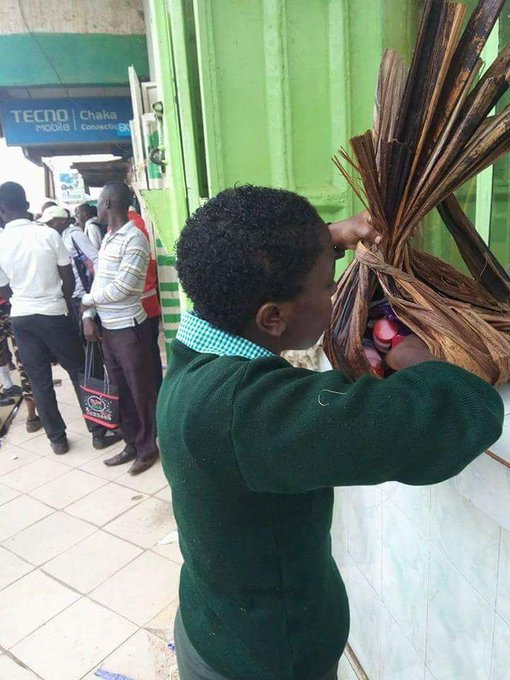
Elsewhere, restaurants in Nairobi are packaging food deliveries in spare shoe boxes and other containers. Photos of a school girl in eastern Kenya who improvised a bag made out of dried banana leaves circulated social media. Others tied string around their vegetables for easier transport. Residents have been asked to drop off their plastic bags at local grocery stores.
View image on Twitter


Saturday, February 25, 2017

Visa To Egypt For Tourists Has Increased More Than Double


Image result for Visa to Egypt


The Pyramids, the Temples of Luxor or the beaches of Sharm-El-Sheikh just got $35.00 more expensive, but still remain one of the biggest bargain in global travel and tourism.
Egypt is increasing fees for entry visas from $25 to $60 for incoming tourists starting 1 March, an airport official told Ahram Online on Friday.
The foreign ministry informed airport security officials about the fee increase earlier this week.
Egypt last pushed up the fee for its visa in April 2014, when it was increased from $15 to $25.
Several tour operators have said that the decision would cause problems for tourists who booked trips based on the old rate.
Some in the tourism sector say the decision should have been announced several months beforehand, expressing fears that the move might affect the country’s efforts to revive tourism, a pillar of the economy and a key source of foreign currency
Egypt has struggled to attract tourists pushed away by the political turmoil that followed the 2011 uprising.
The country’s revenues from tourism dropped to $3.4 billion in 2016, a 44.3 percent drop from the previous year, the Central Bank of Egypt said in January. The figure is a far cry from the $11 billion in revenues generated by the sector in 2010, when 14.7 million tourists visited the country.

Wednesday, January 4, 2017

Travelore News: South Africa Changes Travel Entry Requirements

Image result for South Africa changes travel entry requirements


The South African government just made it a bit easier to gather those documents needed when a minor is traveling to its country.
The South African Department of Home Affairs recently announced changes to South African entry requirement for minors born in the country who have a current South African passport.
According to Tim Clyde-Smith, South African Airway’s Country Manager for Australasia, people under 18 who are South African citizens and hold a valid passport will no longer require birth certificates which contain parental details to enter the country.
“This new arrangement, effective immediately, applies only to minors who have SA citizenship travelling from other countries (including Australia and New Zealand) to South Africa and who will not need the additional paperwork required until now,” Tim said.
“Those travelling and travel agents and partners should note that all other current arrangements for minors travelling remain in place and must be complied with in accordance with South African laws. If in doubt they should contact the South African High Commission in Canberra on 61 2 6272 7300 for further information,” Tim said.

Thursday, March 3, 2016

Curio – A Collection By Hilton Makes Its African Debut In Nigeria


- Nigeria is set to welcome The Legend Hotel in 2016, joining more than 76 Hilton Worldwide branded hotels now trading or under development across the continent -


Hilton Worldwide (NYSE:HLT) has reached an agreement with Quits Hospitality Ltd to open its first property under the Curio – A Collection by Hilton brand in Africa.  The Legend Hotel is expected to open in mid-2016 and will be located at Lagos Murtala Muhammed International Airport, Nigeria.

The Legend Hotel, which will be located within the airport boundaries, will feature 54 guest rooms, including eight suites.  Travellers will benefit from the hotel’s unrivalled proximity to the international airport terminal, as well as exclusive facilities for private jet and corporate jet passengers of ExecuJet – which will allow passengers same-building access to the arrivals and departures services of this private aviation company.

Launched in June 2014, the Curio collection is a global set of remarkable upscale and luxury hotels hand-picked for their unique character and personality; each one a part of the city they call home. By partnering with Hilton, these one-of-a-kind hotels benefit from the proven track record and quality synonymous with Hilton without redefining the individualistic spirit of the hotel.  Global destinations available to travellers now include more than 80 properties open or in various stages of development, including Germany, the U.S., Jamaica and Argentina.

“Curio is a great opportunity for investors looking to benefit from the performance advantage and smart innovations of Hilton, whilst retaining the individual character and identity of their hotel,” said, Patrick Fitzgibbon, senior vice president of development Europe, Middle East & Africa for Hilton Worldwide. “Our growth strategy across the continent continues at a fast pace, with more than fifty percent of our development pipeline currently under construction – opening up new destinations for travellers to Africa.”  

A new build property, The Legend Hotel will offer guests stylish interiors, and reflect the unique personality of Nigeria’s capital city, with the centre of Lagos located approximately 22 kilometres from the property.  Guests will be able to enjoy three upscale dining options, including VIP dining facilities and two bars. There will also be more than 158 square metres of events space, split across three meeting rooms.

Dianna Vaughan, global head, Curio – A Collection by Hilton, said, “Building on the success of bringing Curio to Europe, and with hotels soon to open in the Middle East, I am delighted that we are establishing a presence in Africa in 2016. I’m proud that this unique project in Nigeria will be the first of many in destinations across the continent as investors continue to respond positively to Curio.”

Sam Iwuajoku, director of Quits Hospitality and owner of the hotel, commented, “We are thrilled to be working with Hilton to open Africa’s first Curio hotel – enabling us to put our own unique stamp on the hotel, whilst benefiting from Hilton’s management expertise and global distribution. We look forward to unveiling the hotel, and welcoming guests in this exciting new airport project.”

As part of the Hilton Worldwide portfolio, Curio – A Collection by Hilton hotels participate in Hilton HHonors®, the 50 million member, award-winning guest loyalty program which is open to all guests and free to join. Hilton HHonors members always get the lowest price with Hilton’s Best Price Guarantee, along with HHonors Points, free Wi-Fi, access to digital check-in and Digital Key, and no hidden fees, only when they book directly through Hilton.

The Legend is located at Murtala Muhammed Airport Road, at Lagos Murtala Muhammed International Airport, Nigeria.  More information about Curio may be found at curio.com.  Media may access high-resolution images and more information by visiting news.curio.com.


About Curio – A Collection by Hilton
Curio – A Collection by Hilton™ (curio.com) is a global set of remarkable upscale and luxury hotels hand-picked for their unique character and personality; each one a part of the city they call home. Curio guests are passionate, independent-minded travelers seeking local and authentic experiences who value the added peace-of-mind that comes with the Hilton name and award-winning Hilton HHonors program. Curio joins a portfolio of world-class brands from Hilton Worldwide, a leading global hospitality company. Come discover the latest stories at news.curio.com, connect with us on FacebookInstagram and Twitter or inquire about development opportunities at hiltonworldwide.com/development.

Sunday, January 31, 2016

The Most And Least Loved Safari Tourists

Over 400 African safari operators participated in the largest survey of its kind to reveal the most and least loved safari tourists. The results are in and Americans are the clear winner.
 
SafariBookings.com, the largest online marketplace for African safari tours conducted this extensive survey. In similar surveys for other destinations, Americans are often one of the least favored tourists. But not in Africa. They love Americans. No less than 85% of the surveyed operators rated Americans as pleasant to very pleasant. They indicated Americans are friendly, have great humor, and tip generously.

Italians are the least favored safari tourists
Although operators appreciate clients from all nationalities, Italians were the least loved. More than 18% of operators found Italians to be annoying, or very annoying. They indicated Italians are ruder, seldom on time, and often completely ignore the guide's instructions. On the bright side, the survey also shows Italians are easy to please.

Brazilians are notorious latecomers and the Dutch are least likely to tip
The survey also included other stereotypes. Brazilians love life… and are the 2nd worst latecomers, after Italians. A stunning 45% of operators indicated Dutch to be the worst tippers. Of all other nationalities, only the French came close to them in the “poor tipping” department.

British are hard to please, Germans most punctual
Overall, British tourists did very well. Operators hold them in high regard. They said British are polite, on time, and pay attention to the guide's instructions. The only point of criticism was, according to 55% of operators, the British are most hard to please.  Germans are considered to be most punctual. Over 61% of operators indicated Germans are always on time. Regarding punctuality, British and Germans scored significantly better than other nationalities.

Native English speakers are more friendly and more fun
Surprising was that nationalities who have English as their native language scored much better than non-English nationalities. We were unable to explain exactly why, but we suspect that having English as the native language makes it easier to communicate with the tour guide.

Differences between operators in East and Southern Africa
Operators in East Africa are especially fond of American tourists. In Southern Africa, operators are more charmed by British and Canadian tourists. In South Africa they like their national tourists least, although they do think South Africans have a good laugh and are fun to be with.

Source: https://www.safaribookings.com/blog/328/ 

Saturday, December 26, 2015

African Safari Alternatives That Don't Cost A Fortune

The Big Five (buffalo, lion, leopard, elephant and rhinoceros) sometimes elude safari goers in more ways than one. Rates for a five-night luxury safari - including guided wildlife drives, sunset cocktails, and tents with more puffy pillows than London's Ritz Hotel - can cost anywhere between US$5000 and US$12,000.
But contrary to what many believe, you don't have to remortgage your house to tackle an African safari; there are cheaper alternatives to the luxury packages, especially for the more adventurous traveller.

Go it alone

An assortment of animals congregate around a shrinking waterhole in Namibia. Image by Peter ten Broecke / E+ / Getty Images.
An assortment of animals congregate around a shrinking waterhole in Namibia. Image by Peter ten Broecke / E+ / Getty Images
Farside Africa (farsideafrica.com) specialises in tailor-made trips for clients on different budgets. Director Vicky Stirling says heading out on your own is the cheapest way to do a safari.
In South Africa, it's possible to access some parks, such as Kruger National Park, in a standard 2WD hire car thanks to well-maintained networks of roads plus a decent, if modest, array of accommodation. Real penny-pinchers can take their own food, too.
While you may save your pennies, there are pitfalls to going solo - the state of the roads, for one. While South Africa and Namibia have decent roads, road conditions in Botswana and Zambia are generally poor. This rules out regular cars, so you need to be able to handle a 4WD. In Zambia, a fully equipped 4WD with pop-up roof tent costs around $250 per day.
Another downside of going independently is not having a guide. Experienced guides spot everything from miniature chameleons to leopard prints (mere 'blobs' to the average person). Stirling says: 'Without a guide, you are always going to miss things, so self-drive trips tend to suit people who've been on safari before and have guide books and [a better awareness of] animals and birds.'
There’s also the safety aspect to consider. Predicting how wild animals behave and the 'rules' of driving are crucial; blocking an elephant from its path, for example, will make it agitated and extremely aggressive. A good compromise is to arrange wildlife drives through public campsites (obviously, private lodges are off limits - these offer drives exclusively to guests).
White thinos grazing in iSimangaliso Wetland Park, South Africa. Image by Ann & Steve Toon / Robert Harding World Imagery / Getty Images.
White rhinos grazing in iSimangaliso Wetland Park, South Africa. Image by Ann & Steve Toon / Robert Harding World Imagery / Getty Images
The upsides of going alone? You can go at your own speed, there's no one else sharing the vehicle, and you are free to do what you want, whether it be searching for buffalo or sitting by a waterhole watching animals coming to drink.
For the easiest self-drives, Namibia's parks are recommended. The flat roads mean you can see which animals are around, and the lack of forest means fewer surprises popping out from behind bushes. Stirling recommends Etosha National Park in particular: 'There, you can drive in and sit by a waterhole. People love that because they can do it in their own time, and are not rushed by others in the vehicle.'
Namibia also has a good range of lodges in national parks. 'Etosha National Park's two lodges at the main gate have both cheap and expensive rooms - a good mix of accommodation. Plus you can do as much driving as you like. And at camp there's a massive waterhole so you can watch the animals come in at night,' says Stirling.
For more experienced travellers who want 'deeper and darker Africa', Stirling recommends the desertscapes of Moremi Reserve in Botswana for great value campsites. These are good, well-equipped camping spaces, with ablution blocks and firewood. (The same goes for South African campsites.)

Go in low season

Young elephants getting to grips with each other in Botswana. Image by Claire Gribbin / CC BY 2.0.
Young elephants getting to grips with each other in Botswana. Image by Claire Gribbin / CC BY 2.0
Carefully consider when to go - this is especially important for those eager to find cheaper deals. During the low (wet) season - from mid-November to the end of March - lodges, such as those in Botswana, cut rates by half. 'The ideal time is the beginning of the low season. It's a lovely time to go. The grass hasn't had time to grow up so it's still easy to spot animals, there's a smattering of fresh shoots coming up, and some animals drop their young around this time. Plus it never rains much more than thunder bursts,' says Stirling.
It also means lower air fares, fewer crowds and no 'car parks', where over 40 vehicles crowd around a lion or a herd of impala, a frequent criticism of Kruger National Park during the school holidays.

Stay outside a reserve

For those who don't need the glamping (luxury camping) or lodge experience and who are good self planners, base yourself outside a wildlife reserve and enter the reserve - or different reserves - each day.
St Lucia, in the South African region of KwaZulu Natal is an excellent base for its varied accommodation and the diverse parks nearby, according to Kian Barker, director of Shakabarker Tours (shakabarker.co.za) and B&B owner. 'Travellers have access to a nice bouquet of parks with different eco-systems - from Hluhluwe-iMfolozi National Park to iSimangaliso Wetland Park.' (iSimangaliso, formerly known as the Greater St Lucia Wetland Park, is a Unesco World Heritage Site, comprising 328,000 hectares and stretching for 200 kilometres along South Africa's north-eastern coast.)
'One day, you can be watching an elephant herd in Hluhluwe-iMfolozi and the next spotting a whale along iSimangaliso's coastline and hippos in the lusher wetland grasslands,' says Barker.

Volunteer

A hippo playing in a waterhole in South Africa's Kruger National Park. Image by Derek Keats / CC BY 2.0.
A hippo playing in a waterhole in South Africa's Kruger National Park. Image by Derek Keats / CC BY 2.0
For those who don't need their sheets turned back or sundowners by a waterhole, volunteer options are an excellent alternative to experience wildlife in situ and you get an experiential bang for your buck.
African Impact (africanimpact.com) offers 65 short-term volunteering projects in 10 destinations around Africa. Projects generally run between two and four weeks (though volunteers can stay for up to 12 weeks), and start at around US$1200 for a two-week placement. The organisation's animal welfare projects range from elephant conservation (Namibia) and lion rehabilitation projects (Zambia) to community based projects (Kenya).
According to Greg Bows, African Impact's Managing Director, 'the core of what we do is to create amazingly fun experiences on projects that actually need volunteer assistance.' The company's Thanda Wildlife Photography and Conservation Education project, for instance, allows keen photographers to get close to animals and the environment (the photos depict anything from the animals to snares and litter, and are used by NGOs in their promotional or report materials).
Guests bunk down in chalet accommodation that is, in Bows' words, 'fairly simple and clean but comfortable', but it's possible to upgrade to a lodge for an extra fee.
The advantages of volunteering extend way beyond the rates - they also offer a more holistic view of conservation, its issues and complexities. 'On a general safari, travellers may spend a lot of money to see the Big Five, whereas volunteers leave a lot more educated. They are more aware of an endangered status and of the community side of conservation and how fits in with wildlife, and what can be done to help these things. On a short-term holiday safari you don't gain this. You might hear rhinos are endangered, but not why or how you might help them,' says Bowes.
While African Impact's volunteer projects lack the tableclothed-breakfast-in-the-bush experience, its sister company runs a high-end tented camp, Encounter Mara (encountermara.com), in Kenya's Masai Mara (US$625 per person per night in high season). Some of these high-end safari guests become converts. 'We actually get people who've stayed at the luxury camp who come back to volunteer,' says Bowes.


Read more: http://www.lonelyplanet.com/africa/travel-tips-and-articles/african-safari-alternatives-that-dont-cost-a-fortune#ixzz3vRnGVIZ4