Showing posts with label #FoodAndDrink. Show all posts

Monday, August 29, 2016

Bay Of Pigging Out – Town-Hopping In Croatia’s Kvarner Gulf


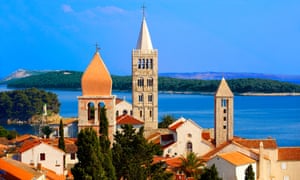
View from St John Church tower over the medieval roof tops of Rab.
Bells and whistles … view from St John Church tower over Rab’s main town. Photograph: Alamy

Touring four towns on three islands, Kevin Rushby enjoys fennel liqueur, sheep’s cheese and seafood, while teenage Maddy prefers a papal cake sugar hit 

Opposite a vast painting of the Last Supper in 13th-century Saint Francis of Assisi monastery in Cres town is a small alcove. Smiley father Zdrak, whose benign presence is like a tonic, leads us there. And in the alcove is another kind of tonic. No, not the half-empty orange Fanta bottle, but a glass urn of greenish liqueur from which the father pours with some glee. “It’s calledkoromac,” he says, “We make it using fennel from our garden.”
It is delicious. We repeat the tasting. My daughter Maddy (13) turns down the koromac and gazes longingly at the Fanta, but it is not offered. It is 9am and Maddy, my partner Sophie and I are just beginning our exploration of the island cities of the Kvarner gulf, the broad bay of Adriatic sea that snuggles up under Croatia’s Istrian chin.
Cres Town is an easygoing place, little frequented by tourists and pleasant to stroll around, even in August. (The pronunciation of the island’s name is subtle and sibilant and not at all like cress, stress or tress, but somewhere between the three. A glass of koromac is probably required for precision.) We buy olive oil from the co-operative and admire the work of Mate Solis, a local artist and character now in his 80s who still finds inspiration in Cres’s pretty boat-filled harbour.
Early morning in Krk town with the day’s first bread delivery.
Pinterest
 Early morning in Krk town with the day’s first bread delivery. Photograph: Kevin Rushby
Next day we take a short ferry ride to Krk, which is a big change after the depopulated harshness of Cres. Krk is verdant and well-inhabited: its main town, also Krk, is busier than Cres but with similar cool stone lanes. A walk through its crowded streets can be slow, but why hurry? There are so many strange highlights: the temple of Venus that is now a beachwear shop, the restaurant (Konoba Maritim) that serves us tangy sheep’s cheese with octopus and squid (Maddy looks wistfully at other diners’ spaghetti), and a little doorway in the city wall that leads to one of the world’s most astonishing cafes: Volsonis.
Volsonis cafe in Krk town, built in Roman walls.
Pinterest
 Volsonis cafe in Krk town, built in Roman walls. Photograph: Kevin Rushby
The building was bought in 1999 by Maria Elena and Goran Stanic, who set about converting it to a cafe, but discovered a Roman wall, and then a tomb under the floor. In some countries that might have ended any hopes of a cafe, but in Krk things are different: they simply integrated a cafe, nightclub and gallery into the structure of an ancient building. The result is startling and original – and they do good coffee.
We take a day trip to Vrbnik, in Krk’s wine region. This handsome hilltop seaside town sees no need to lure tourists: there are few hotels or cafes, and lots of ungentrified winding lanes, including one, Klancic, that is so narrow we have to squeeze through sideways. There is also a luminously brilliant family-run restaurant: Nada. They love their local wines here – all based on the indigenous žlahtina grape. We eat a grand seafood dinner and remember not to attempt the Klancic on our way back to the car.
Octopus,squid and cheese at Maritim restaurant, Krk town.
Pinterest
 Octopus, squid and cheese at Maritim restaurant, Krk town.
Our fourth town is Rab, on the island of the same name and about an hour away by ferry. These inter-island ferries, operated by Jadrolinija, are fast becoming real pleasures on this trip. You queue on the road outside the port and race the other drivers to the ticket office. On board it’s like being on a mini-cruise: lovely views and a decent cafe. If the breeze is right, you can smell the different islands: I swear I can detect Cres’s sage, Krk’s pine and, coming up on the bow, Rab’s lavender. Maddy is unconvinced, claiming that it is chocolate and chips.
Vrbnik, Krk island.
Pinterest
 Vrbnik, Krk island. Photograph: Alamy
Someone on the ferry tells us Rab “fancies itself”. That’s immediately obvious in the super yachts moored by the old town and the chi-chi boutiques that line the main street. But this is a subtle and complex town. An enquiry at the tourist office for “something unusual” leads us to the headquarters of the medieval order of crossbowmen, a surreal mix of weaponry, heraldry and archive photos of Rab in the 1930s. That was when Rebecca West came, writing in her 1941 travel masterpiece Black Lamb and Grey Falcon of stricken people with the faces of “crucified Christs”. The island is, thankfully, a lot more prosperous now.
Maddy is asleep on the hallowed bench of the crossbowmen. She has the face of a crucified teenager in dire need of sugar. But first we must visit the four bell towers of Rab, a sequence that has all the rhythm and resonance of a peal. We climb two before we relent and help our wilting daughter towards the dangling carrot that has kept her feet moving since breakfast: Rab cake.
Rab town. Three of the belltowers
Pinterest
 Another view of three of Rab Town’s belltowers.
When Pope Alexander III came to the island in 1177, the sisters of St Anthony concocted a cake to celebrate: a filling of eggs, almonds, sugar, citrus zest and cherry liqueur baked in a spiral-shaped pastry case. At Rabska Torta on the edge of town they show you how – with great deliberation. Maddy is twitching like an addict awaiting her fix, but finally the cake is done. We retire to the garden half-expecting a refusal followed by demands for Kit Kat, but no: rabska torta is a hit.
Selection of cakes at Rabska Torta.
Pinterest
 Selection of cakes at Rabska Torta. Photograph: Kevin Rushby
She eats more than Pope Alexander, then, sweating, asks about a swim. Simple: there’s a wild forested peninsula next to town, dotted with coves. We stumble to the harbour and hire a boat for the afternoon.
 Accommodation on Rab was provided by Prestige Holidays (01425 480400,prestigeholidays.co.uk), which has a week’s B&B in Hotel Padova from about £469pp, including flights and transfers. For further information, visit croatia.hr

Discovering Croatia: fruits of the sea

Croatia is a seafood lovers’ paradise. Ivana Gamulin from the renowned Villa Spiza restaurant in Split gives her take on the country’s best fish. “The most important thing is seasonality. Sardines are best in May, calamari in summer.Brudet is the classic dish: a stew of garlic, onion, white wine, tomatoes and fish. If I find kosmej or grancigula crabs, I use them, too. A very traditional recipe is fažol na brudet, a bean and fish dish. Wash it down with white wine (bogdanuša or parčgrape) or a light red (plavac mali).”
Next week: Kornati islands


Sunday, July 24, 2016

BRIO Tuscan Grille, Another Recommended Option For Travelers Seeking High Quality Food And Service

One of the common issues for travelers in America is seeing how many options there are in restaurant chains, not knowing which ones actually serve quality fresh prepared dining options, have good service and offer the best value. We've been disappointed that some of the better known chains serve pre-prepared, boil-in-bag, food. We were recently introduced to BRIO Tuscan Grille restaurants and visited their location at the Promenade at Sagemore in Marlton, New Jersey. Marlton is in Southern New Jersey, around a half hour from Center City Philadelphia.

One of the true tests for a restaurant, especially for a chain, is accommodating diners with food allergies. BRIO has gluten free options and was able to alter entrees for my dining companion who has a dairy allergy.


We recommend this beautifully presented appetizer of Beef Carpaccio with field greens, capers, mustard aioli, and parmesan.

Their Pesce Picatta entree is prepared with wild caught cod, toasted almonds, lemon capers, roasted garlic sauce, fresh angel hair pasta, and roasted vegetables.


The recommended wine for our meal was a Sketchbook Pinot Noir, light and fruity.


Recommended for dessert is their Flour-less Chocolate Torte with Marcona almonds and olive oil gelato.


For more information about BRIO Tuscan Grille and to find the most convenient location near your home and for your travels please visit: www.brioitalian.com


Wednesday, December 16, 2015

Weekend In Valencia: A Complete Itinerary

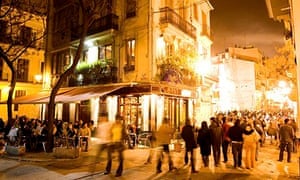
Carmen calle de caballeros
La Calle de Caballeros in Carmen. Photograph: Kevin Foy/Alamy
There's plenty to sate all appetites in Valencia – it's brimming with culture, has great bars and restaurants and beautiful stretches of beach to soak up the almost year-round rays
Valencia might just be the perfect weekend destination: historic centre; a unique arts and science complex; sandy beach; lots of green space; fantastic food; and a great climate. Spain's third city was established by the Romans, occupied by Muslims, and won for Aragon in 1238, when its influence grew until it was one of the most important Mediterranean cities of the 15th century. These days, it attracts nearly 2 million international visitors per year (about 80,000 from the UK). Many come for the extraordinary Las Fallas in March, a wild five-day fiesta in honour of San José, when hundreds of giant puppets are paraded and set on fire. But it is a party town all-year round – and if you miss Las Fallas, you can always visit the Museo Fallero to see the ninots(figurines) that have survived the flames.

FRIDAY

9.30pm

Head out to bar-hop and eat tapas in the Ciutat Vella (old town). Calle de Caballeros is thronged with bars and restaurants, as are the streets and squares north, into Barrio del Carmen, and south, into the Centro Histórico. The city's La Tassa district is particularly well-served by tapas restaurants. One, La Taberna de Marisa (latabernademarisa.com), 1, is known for its morcilla de Burgos – rounds of rice-heavy black pudding, crispy without, soft within – but its salted anchovies and croquetas are equally delicious. Try agua de Valencia at one of the bars on Plaza del Negrito: it is a more lethal version of buck's fizz (cava, orange juice, sugar and spirits), invented in the 1920s and still widely drunk. Restaurants stay open until at least midnight at the weekends and most bars until about 2am, but if you want to stay out later, try Radio City (radiocityvalencia.es), 2, a club with flamenco nights and other events.

SATURDAY

10am

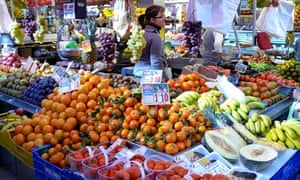
Valencia market, Spain
 Valencia's brilliant Mercado Central, one of the best and biggest food markets in Europe Gavin McOwan
Spend the morning exploring the old town, where all the sights are within walking distance. Valencia has three main squares: Plaza de la Virgen, Plaza de la Reina and Plaza del Ayuntamiento. Start the day with a coffee at one of the outdoor tables in the atmospheric Plaza de la Virgen.
From here, head to the vast 13th-century cathedral (catedraldevalencia.es), 3, a hotchpotch of Roman, gothic, baroque and renaissance architecture on the site of the old mosque. Inside, have a look at San Vincente's withered left arm, a relic that has terrified generations of Valencian schoolchildren; the "Holy Grail", a chalice dating to at least Christ's time; two Goya paintings, one of which depicts a fantastically horrifying exorcism; and the windows – they are made from fine alabaster, because Valencia's light is too dazzling for glass. Climb the 207 steps of the Miguelete tower for the best views of the city.
Next go to La Lonja de la Seda (whc.unesco.org), 4, a gothic chamber of commerce built to impress visiting merchants in the 16th century and to symbolise the city's wealth and power. It is now a world heritage site and beautiful in its own right, but also fascinating as a secular building designed with the splendour usually reserved for religion.

Midday

On the other side of the Plaza del Mercado is the biggest fresh-produce market in Europe, built in the modernismo style (the Spanish variant of art nouveau).Mercado Central (mercadocentralvalencia.es), 5, is still the place where most Valencians buy their groceries and is a great, light-filled place to wander around and haggle for ham. Stop at La Huertana, a little stand-up cafe inside the market, for the archetypical Valencian snack: horchata and fartons. Similar to churros con chocolate, this is a milky drink and a pastry, but the Valencian version is served cold. Horchata, made from tiger nuts, is creamy, slightly grainy and incredibly sweet. Fartons are light, finger-shaped buns, thickly dusted with sugar. Dangerously moreish.
While you're in the old town, squeeze in a quick visit to the National Ceramics Museum (mnceramica.mcu.es), 6, housed in a rococo palace said to be Valencia's Versailles in (extreme) miniature. At the very least, take a look at its brilliantly over-the-top facade: the doorway is flanked by two muscular figures, with a statue of the virgin – who can be seen all over the city – above. Decorative ceramic tiles are also ubiquitous – to buy ceramic souvenirs, try Artesania Yuste(Plaça Miracle del Mocadoret), 7.

2pm 

Take a tram to the beach for lunch. Restaurants and bars line the seafront, but the quality is variable so get off the tram a couple of stops early (Grau is closest) and head to the old fishermen's quarter. Calle José Benlliure (and surrounding streets) is full of bars and tapas restaurants, including Casa Montana(emilianobodega.com), 8, one of the oldest restaurants in Valencia. You can eat in the busy front bar, lined with wine barrels, or in the more spacious back room, but the best table is squeezed into a space between the two. You have to duck under the bar to get to it, next to the kitchen and the jamón-carving station. Don't miss the fat boquerónes fritas (fried anchovies), meaty brown broad beans stewed with chorizo, roasted piquillo peppers stuffed with béchamel and tuna, and, of course, the translucent slivers of jamón ibérico.

4.30pm

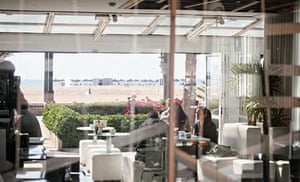
Destino 56
 Destino 56 PR
Follow a long lunch with a siesta on the beach (Las Arenas or Las Malvarrosa), a 10-minute walk away. Valencia has three kilometres of long, sandy beaches and more than 300 sunny days a year – it can be warm enough to swim and sunbathe into November. Have an early-evening pick-me-up at a bar on Paseo Neptuno, the palm tree-lined beach promenade. Valencians have embraced "gin tonic":Destino 56 (destino56.es), 9, for example, has 15 craft gins and three premium tonics – measures are huge and served in a proper balloon glass with lots of ice.

9pm

Choose between upmarket or hip Valencia. L'Eixample is a wealthy district just south of the centre, with wide boulevards and grand art nouveau buildings. Its boutiques and delis include Espacio 1880(turron1880.com), 10, which specialises in all kinds of turrón, and
Torreblanca (torreblanca.net), 11, which made Prince Felipe's wedding cake. Mercado Colón(mercadocolon.es), 12, a gorgeous example of modernismo, is now full of cafes and bars, though it still has a gourmet food market downstairs.
For dinner, the city has four Michelin-starred restaurants. One of them, Vertical(restaurantevertical.com), 13, is on the ninth floor of a hotel east of L'Eixample, with incredible night-time views of the City of Arts and Sciences. (The entrance is quite confusing – go to Hotel Confortel Aqua 4 and take the lift.) There is no choice, only a daily changing, multi-course set menu. Dishes might include a ruffled egg yolk, beef with foie gras, and deconstructed fudge cake.
Alternatively, head further south to Ruzafa, which has overtaken Carmen as the city's hippest area. It is a working-class, ethnically diverse quarter that is being colonised by young creatives – Valencia's version of Brixton in London. It is full of vintage clothes shops (eg Kauf Vintage), bike shops, and homeware stores such asGnomo (gnomo.eu), 14, which sells work by contemporary Valencian artist Paula Bonet and displays a mural by Vinz, Ruzafa's answer to Banksy. Espacio 40(c/Puerto Rico), 15, is an art gallery/wine shop run by a Valencian woman and her Chilean husband. The covered market (c/Padre Perera), 16, gives a taste of pre-gentrified Ruzafa – its one bar caters to older locals. Younger drinkers head for three "bookshop bars" – Cosecha RojaSlaughterhouse and Ubik Cafe17 – a Parisian theatre bar (Café Tocado), or "The Corner", a crossroads with a bar on each corner. Restaurants range from traditional tapas and bocadillos (El Rus) to oysters (De Claire), South American restaurants, and fusion (El Rodamón). It's a small district, so wander around and you won't go far wrong.

SUNDAY

10am

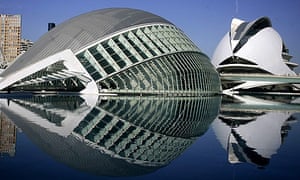
View of the Palace of Arts and Sciences and The Hemispheric in Valencia
 The iconic City of Arts and Sciences. Photograph: Jose Jordan/AFP/Getty Images Jose Jordan/AFP
Most cities have riverbanks to stroll along; Valencia has a whole river. The Jardín del Túria is a unique, 9km-long swathe of greenery through the city. When the river Túria flooded – again – in 1957, it was diverted south. The former riverbed is now a landscaped parkland walk with trees, sculptures and water features, crisscrossed by 18 bridges – some designed by Valencian architect Santiago Calatrava. The gardens connect the Bioparc in the west and the City of Arts and Sciences (CAC) in the east. The zoo (bioparcvalencia.es), 18, is a modern, immersive animal park that recreates natural habitats, but in a weekend you'll probably only have time for CAC (cac.es), 19. You can walk there along the gardens in about 45 minutes. The futuristic complex was mainly designed by Calatrava and includes an opera house, science museum and planetarium. Oceanogràfic is best: more than 45,000 specimens swimming around Europe's biggest aquarium. Look out for the spooky sandfish, awe-inspiring white whales and schools of leaping dolphins.

2pm

Stroll back towards town and stop for lunch at Les Graelles (grupo-jbl.com),20, a traditional restaurant with arched stone ceilings, dark-wood furniture and crisp white tablecloths. Paella was invented in Valencia and this is the place to try an authentic version – which, surprisingly, doesn't contain seafood and is only eaten at lunchtime. Saffron-flavoured rice is served with hunks of rabbit and chicken and a handful of snails, plus some vegetables – perhaps green and broad beans and artichokes. Everyone around the table digs in to the communal pan with their own wooden serving spoon, and washes it down with rioja. (Locals often head to L'Albufera, a nature reserve about 30km along the coast, for their Sunday paella lunch.)

3.30pm

From here, it's a short walk to the Museo de Bellas Artes(museobellasartesvalencia.gva.es), 21, Spain's second-biggest art collection, housed in a beautiful 17th-century convent. It has paintings by Spanish greats such as Velázquez (including a masterful self-portrait), El Greco and Goya, plus Valencian artists Pinazo, Benlliure and Sorolla. If admiring modern works of art is more to your taste, IVAM (Instituto Valenciano de Arte Moderno, ivam.es), 22, was the first contemporary art gallery in Spain – you'll need to catch the Metro or take a cab, though, as the museum's back in El Carmen.

LOCALS TIPS

Paula Sancho Torregrosa, web editor

By the Flowers bridge23, there is a statue of King Jaime I, where children can learn something of our history in a show about him until 24 November (eltorneodelrey.com). Gulliver Park24, also in the river gardens, is a great play area. Canguro Verde (facebook.com/canguroverde25, is a coffee shop in Ruzafa where kids are welcome.

Alejandro García Llinares, restaurant manager, 

El Mercado de la Tapinería, a concept market
 El Mercado de la Tapinería PR
Semana Santa Marinera, maritime holy week, in El Cabanyal, the fishermen's area is an interesting experience. And El Mercado de la Tapinería(mercadodetapineria.com), 26, is a concept market in a downtown square. El Jardín de Monforte27, is a quiet and relaxing garden in the centre.

Carla Carrión Palanca, blogger

Few tourists go to Calle Alta and Calle Baja but these two streets in El Carmen (or El Carmé in Valencian), 28, are popular with locals for their charming bars and shops. Jazz lovers might like to try the Jimmy Glass Bar (Calle Baja 28,jimmyglassjazz.net). Or, if a bar crawl is what you're after, look no further than Calle Alta's drinking dens.

Where to stay

Accommodation was provided by Hotel Caro (doubles from €137, +34 963 059 000, carohotel.com), 29, a former palace, 200m from the cathedral, which opened in 2012 after seven years of refurbishment. It is one of the oldest buildings in Valencia, with astonishing Roman, Arabic and gothic remains on display alongside sleek, modern furnishings: lots of glossy black and moody lighting. You can eat breakfast – a spread of meats and cheese, bread and fruit, plus unlimited cava – next to the old city walls, or sink into a sunken bath under an ancient beamed ceiling. There are 26 rooms – the three in the attic are especially romantic.

Way to go

Getting there EasyJet (easyjet.com) flies from Gatwick to Valencia; Ryanair (ryanair.com) flies from Stansted, Manchester, Liverpool, Bristol and East Midlands
Getting around Valencia has an easy-to-use metro and bus system. Metro lines 3 and 5 take you from the airport to the city centre in about 20 minutes. The Valencia tourist card gives you unlimited travel on public transport, plus discounts at shops, restaurants and museums (€13.50 for 24 hours, €18.00 for 48 hours or €22.50 for 72 hours,valenciatouristcard.com). Valencia is very flat, so cycling is a good way to explore: BEbike has five rental outlets around the city (€2 for 1 hour, €8 for 4 hours, €10 for 24 hours, bebike.es)
For further information on Valencia, go to visitvalencia.com
 This article was amended on 19 November 2013. We originally said that Valencia was "won back for Spain in 1238". This has been changed to "won for Aragon".