Showing posts with label Spain holidays. Show all posts

Monday, January 25, 2016

10 Of The Best Ways To Enjoy Barcelona … On A Budget

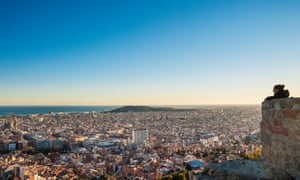
View of Barcelona from El Turó de la Rovira, a civil war gun emplacement on a hill near Park Güell.
View of Barcelona from El Turó de la Rovira, a civil war gun emplacement on a hill near Park Güell. Photograph: Dosfotos /Design Pics/Getty Images/Axiom RM


Savour the Catalan capital by avoiding the pricey and the touristy in favour of favourite local hangouts, from outdoor cinema to great beaches and vermut bars


Take in the view

Barcelona street life is irresistible, but sometimes you want to rise above the crowds. A ride in the cable car across the harbour is great but expensive (single ticket €11). You’ll get an even better view from the cocktail bar at the top of the waterfront W hotel. You do not even need to have a (pricey) drink, but the people-watching makes it worth it. I think the best view in Barcelona is also probably its least well known. El Turó de la Rovira (free) is a civil war gun emplacement on a hill near Park Güell and once you’ve recovered from the climb you can look out across the city to the sea, up the coast towards France and back to the Pyrenees. The rooftop tour of the beautiful church of Santa Maria del Marcosts €8 but gives you a fascinating insight into its construction and a unique view across the rooftops of the tightly packed streets of the Born district.

Vermuts musicals
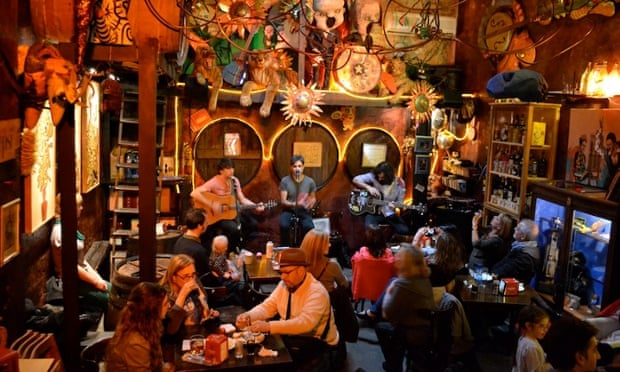
Gran Bodega Saltó, ‘the grandaddy of vermuts musicals’
 Gran Bodega Saltó, ‘the grandaddy of vermuts musicals’
Catalan vermut, a fortified wine spiced with herbs, is vermouth’s down-and-dirty cousin. It fell out of fashion 50 years ago but is now making a remarkable comeback and vermuterías are some of the city’s trendiest drinking spots (even the Adrià brothers of El Bullí fame have opened one: Bodega 1900). Vermut was traditionally drunk after mass and before a late Sunday lunch but it took the revival to add that extra ingredient for a supremely relaxed weekend afternoon - free live music, and so vermuts musicals were invented. You’ll find them all over town on Sundays – and often Saturdays – but the district of Poble Sec, a 10-minute walk from the Ramblas, with its mix of old-fashioned drinking holes and fashionable hangouts should see you right.
Gran Bodega Saltó is the grandaddy of vermuts musicals. The crowd watching the acoustic performers often spills out from its kitsch interior on to the street. Free, but a donation of a bottle of olive oil for a charity helping the poor locally is requested – there’s a supermarket nearby. Try also vermut and DJs at Olivia Vermutería and Bar Rufián. Poble Sec’s raucous festival runs from 18-26 July if you need another excuse to visit the barrio.

The street art scene
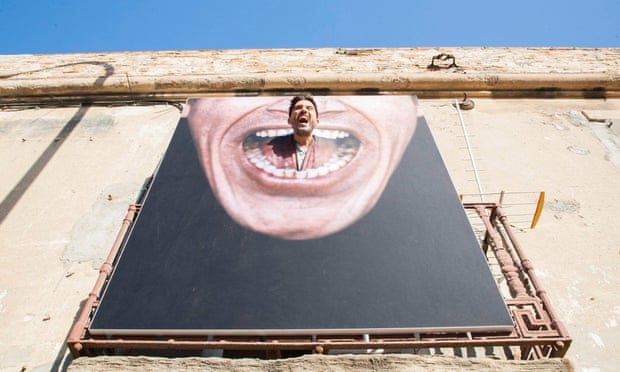
Ús Barcelona event
Pinterest
 At the Ús Barcelona event a whole street is transformed by artists over a weekend in May
The still-gritty Raval district, just off the Ramblas, is the colourful hub of the city’s urban culture. Any available surface is fair game for anything from stickers to stencils and flyers to murals. You’ll find plenty of examples just by wandering the streets or join a tour such as the highly-rated Barcelona Street Style Tour (free, donation requested). Sunday is a good day to explore because shop shutters, the canvas for many an enthusiastic artist, are down. The former industrial barrio of Poblenou, just beyond Port Olímpic, is another hotspot. Its innumerable warehouses are fast being turned into fashionable lofts but there are still lots of unloved buildings to go at. For the last couple of years it’s been the setting for Ús Barcelona (see a video of the 2015 event at vimeo.com), where a whole street, including parked cars, is transformed by artists over a weekend in May. Food vans, DJs and bands add to the fun.

Stylish stays
the newly opened Teatro hostel
Pinterest
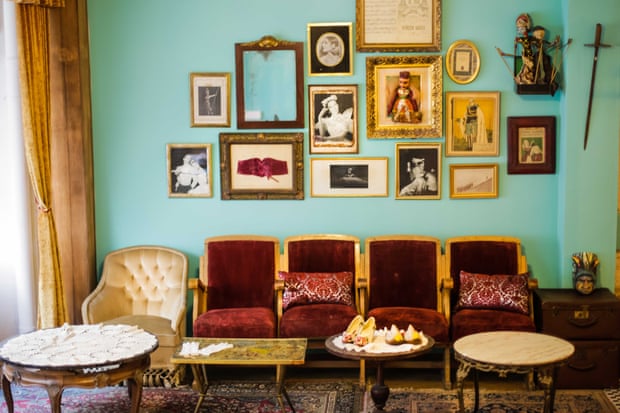
 the newly opened Teatro hostel
New five-star hotels pop up in Barcelona with alarming regularity. But there are still plenty of great choices even if you’re not Pippa Middleton. The Praktik chain of hotels is fab. Simple, affordable rooms in wonderful locations, with a bit of glamour thrown in. Its latest, Praktik Vinoteca (doubles from €79, room-only), has a reception hall lined with thousands of bottles of wine, all for sale. Free tastings are held on the pretty terrace and bodega tours are organised. It’s in the Eixample area, minutes from the posh shops on Passeig de Gràcia and some of Gaudí’s most famous buildings. Newly opened Teatro hostel in Poble-sec (dorm beds from €13) is good fun. It’s stuffed full of theatrical props and fabrics, the dorms are comfortable and the highly-experienced owner really knows how to look after travellers.

Films alfresco
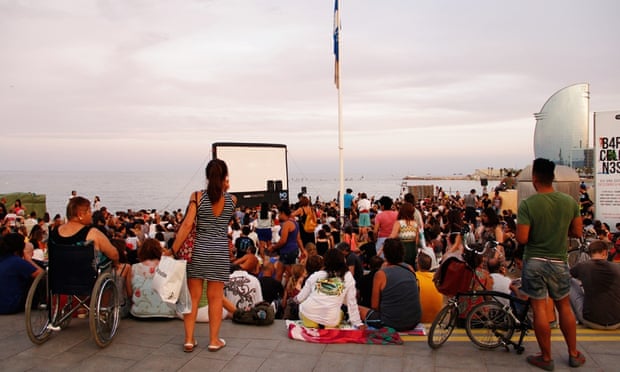
Cinema Lliure a la Platja runs on the beach in summer, and is free
Pinterest
 Cinema Lliure a la Platja runs on the beach in summer, and is free
Open-air cinema is a summer tradition in the city. The screenings on Montjuïc hill(until 7 August, tickets from €6), in the shadow of the castle, are now in their 13th year. The programme is always a crowd-pleaser and this year includes The Big Lebowski, Reservoir Dogs and Moulin Rouge (all subtitled into Spanish). But you don’t have to schlep all the way up the hill to get your film fix this year.Cinema Lliure a la Platja is on the beach, runs until 16 August and is free. Its programme is more eclectic but looks fascinating. Foreign films are subtitled into Spanish; Spanish films have English subtitles. If you don’t want sand in your popcorn, then films from Mecal – the International Festival of Short Films and Animation of Barcelona – will be screened outdoors all summer at Poble Espanyol(€6.50) and on the rooftop of the Hotel Silken Diagonal (free).

Designer chic and cheap
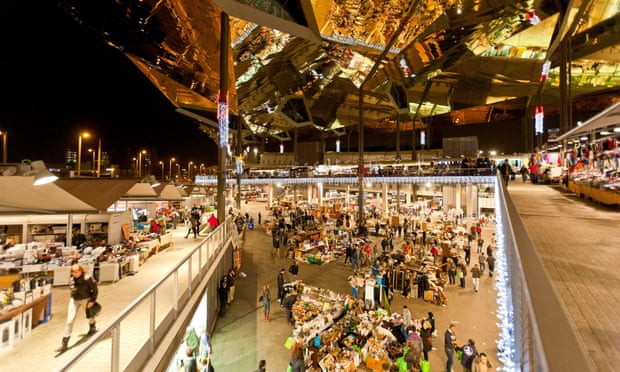
Encants flea market.
Pinterest
 Encants market is in a fabulous, new semi-enclosed building. Photograph: Alamy
The stunning new Museu del Disseny (€5) puts on one site several museums that had been spread across the city. A whole floor is devoted to its fashion collection, giving you an idea of what the Kardashians of the 18th and 19th centuries would have been wearing. You’ll also find floors of examples of textiles, decorative arts, product design and graphic art. The city council is pouring investment into this part of town, Glòries. One of Barcelona’s most interesting, eclectic and downright bizarre markets, Encants (Monday, Wednesday, Friday, Saturday 9am-8pm), is in a fabulous, new semi-enclosed building. Browse stalls selling everything from antique mirrors and obscure garden tools to boxes of vinyl records and fake-fur jackets under a spectacular giant copper-coloured reflective roof. There’s a tempting set of food stands on the top floor where you can sit and wonder what to do with that stuffed bear you’ve just bought.

Green spaces
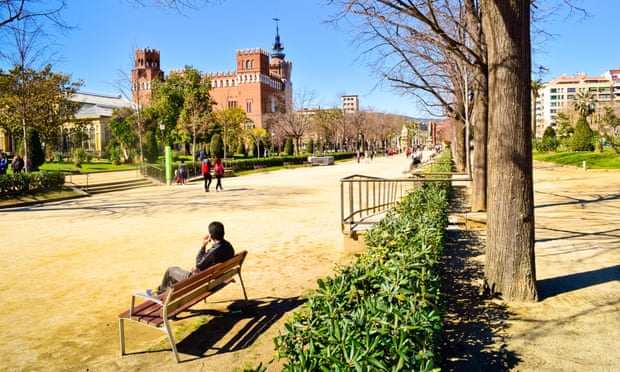
Ciutadella Park.
Pinterest
 Ciutadella park. Photograph: Alamy
Barcelona’s not a city of big parks: blame the medieval walls that kept people crammed together, and then developers in the 19th century who screwed with the open areas planned for the new town, the Eixample. So grab a bit of space when you can. Ciutadella park, just beyond the Born district, has plenty of grass, shade, spectacular fountains and some prime examples of modernisme buildings. A little known green, yellow, orange, pink and red gem is the Parc de Cervantesrose garden (free) in Pedralbes, which has nearly 250 varieties and lots of quiet corners for lounging. Parc de Laberint (free), once the estate of an aristo, is the city’s oldest garden, with waterfalls, streams, canals and ponds. But the clue to its big appeal lies in its name: a beautiful maze of two-metre-high hedges. Can you find “love”, a statue of Cupid, at its heart?

Royale with queso
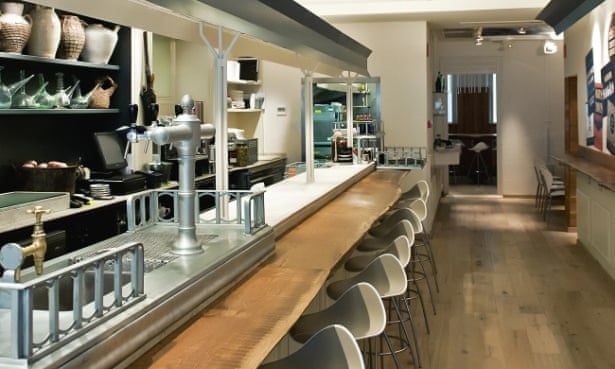
Sagàs
 Sagàs
Food trends sweep through Barcelona faster than a pickpocket down the Ramblas. And often they’re just as welcome. Burgers are big, very big but not in a “supersize me” sort of way. I like Sagàs on the edge of the Born. It has a more seriously foodie place (Els Casals) towards the Pyrenees but here it’s kept simple and delicious, using the meat produced there. A burger’s about €8 but worth every penny. Bacoa is a small chain dedicated to all things griddled and stuck between pieces of bread. Kiosko (Avenida del Marquès de l’Argentera) in the Born is my favourite – expect to pay about €6. Timesburg (burger around €6) in Poblenou is as trendy as its postcode but worth the trek. For more good-value food, that’s a bit more traditional, read my recent guide to menús del día (set lunches).

Beach life
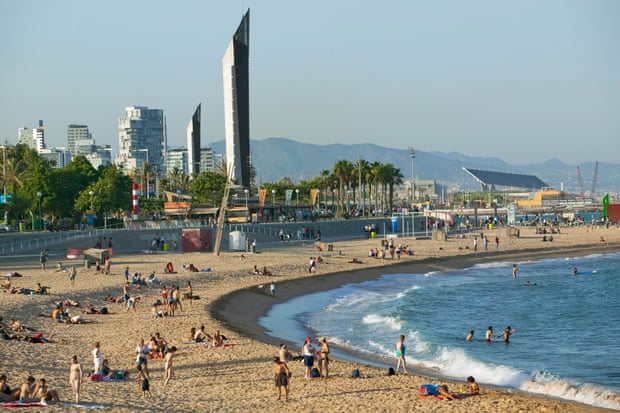
Nova Icària beach.
Pinterest
 Nova Icària beach. Photograph: Marco Cristofori/Alamy
Famously, the Barcelonins only discovered the beach after the 1992 Olympics, but long days on the platja are now an essential part of summer. It pays to choose your bit of beach with care. As with most of Catalan life there’s a strict, unspoken system – try jumping the queue at the chicken and rabbit stand in the market to test this. So, each stretch of sand has its own character: the beach in the shadow of the W hotel has an unofficial nudist area; Barceloneta is always noisy and crowded, with the young (taking selfies) and the old (playing dominoes); Mar Bella is popular with gays and lesbians, and has an official nudist part; families like the slightly less busy Nova Icària. There’s a massive choice of beach bars and restaurants all along here, too.

Travel like a local
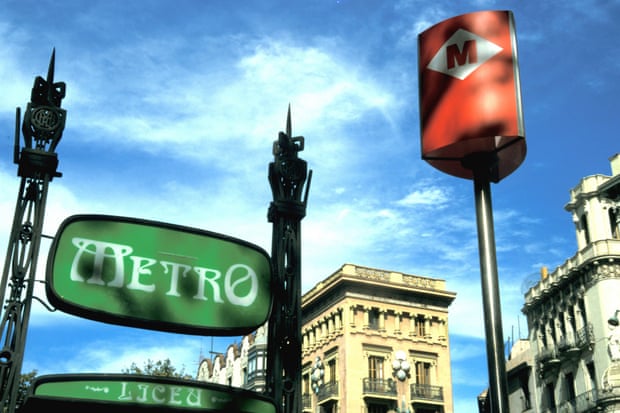
Barcelona metro.
Pinterest
 Barcelona metro. Photograph: Juergen Stumpe/Getty Images/LOOK
Tourists can’t use the city’s community bike scheme (cycle hire firms threw a wobbly at the threat to their profits) and haring around on a Segway scaring grannies and small dogs won’t win you any friends. Thankfully Barcelona’s public transport system puts many a city to shame. A single ticket costs €2.15 but only aguiri (foreigner) does that. A T10 ticket costs €9.95 and gets you 10 journeys on the metro, bus, tram and local train within zone 1 (pretty much anywhere 99% of tourists would venture). Do the math! It can be shared by different people, lasts up to a year and can be picked up at metro stations. It is also available at the airport train station making the journey into town (stops at Sants and Passeig de Gràcia stations) an absolute steal (a single ticket is €4.10). The T10 can be used on more than one type of transport and all count as a single journey as long as your journey is less than 75 minutes. So you can hop across town by tube, bus and tram for less than a euro.

Wednesday, December 16, 2015

Weekend In Valencia: A Complete Itinerary

Carmen calle de caballeros
La Calle de Caballeros in Carmen. Photograph: Kevin Foy/Alamy
There's plenty to sate all appetites in Valencia – it's brimming with culture, has great bars and restaurants and beautiful stretches of beach to soak up the almost year-round rays
Valencia might just be the perfect weekend destination: historic centre; a unique arts and science complex; sandy beach; lots of green space; fantastic food; and a great climate. Spain's third city was established by the Romans, occupied by Muslims, and won for Aragon in 1238, when its influence grew until it was one of the most important Mediterranean cities of the 15th century. These days, it attracts nearly 2 million international visitors per year (about 80,000 from the UK). Many come for the extraordinary Las Fallas in March, a wild five-day fiesta in honour of San José, when hundreds of giant puppets are paraded and set on fire. But it is a party town all-year round – and if you miss Las Fallas, you can always visit the Museo Fallero to see the ninots(figurines) that have survived the flames.

FRIDAY

9.30pm

Head out to bar-hop and eat tapas in the Ciutat Vella (old town). Calle de Caballeros is thronged with bars and restaurants, as are the streets and squares north, into Barrio del Carmen, and south, into the Centro Histórico. The city's La Tassa district is particularly well-served by tapas restaurants. One, La Taberna de Marisa (latabernademarisa.com), 1, is known for its morcilla de Burgos – rounds of rice-heavy black pudding, crispy without, soft within – but its salted anchovies and croquetas are equally delicious. Try agua de Valencia at one of the bars on Plaza del Negrito: it is a more lethal version of buck's fizz (cava, orange juice, sugar and spirits), invented in the 1920s and still widely drunk. Restaurants stay open until at least midnight at the weekends and most bars until about 2am, but if you want to stay out later, try Radio City (radiocityvalencia.es), 2, a club with flamenco nights and other events.

SATURDAY

10am

Valencia market, Spain
 Valencia's brilliant Mercado Central, one of the best and biggest food markets in Europe Gavin McOwan
Spend the morning exploring the old town, where all the sights are within walking distance. Valencia has three main squares: Plaza de la Virgen, Plaza de la Reina and Plaza del Ayuntamiento. Start the day with a coffee at one of the outdoor tables in the atmospheric Plaza de la Virgen.
From here, head to the vast 13th-century cathedral (catedraldevalencia.es), 3, a hotchpotch of Roman, gothic, baroque and renaissance architecture on the site of the old mosque. Inside, have a look at San Vincente's withered left arm, a relic that has terrified generations of Valencian schoolchildren; the "Holy Grail", a chalice dating to at least Christ's time; two Goya paintings, one of which depicts a fantastically horrifying exorcism; and the windows – they are made from fine alabaster, because Valencia's light is too dazzling for glass. Climb the 207 steps of the Miguelete tower for the best views of the city.
Next go to La Lonja de la Seda (whc.unesco.org), 4, a gothic chamber of commerce built to impress visiting merchants in the 16th century and to symbolise the city's wealth and power. It is now a world heritage site and beautiful in its own right, but also fascinating as a secular building designed with the splendour usually reserved for religion.

Midday

On the other side of the Plaza del Mercado is the biggest fresh-produce market in Europe, built in the modernismo style (the Spanish variant of art nouveau).Mercado Central (mercadocentralvalencia.es), 5, is still the place where most Valencians buy their groceries and is a great, light-filled place to wander around and haggle for ham. Stop at La Huertana, a little stand-up cafe inside the market, for the archetypical Valencian snack: horchata and fartons. Similar to churros con chocolate, this is a milky drink and a pastry, but the Valencian version is served cold. Horchata, made from tiger nuts, is creamy, slightly grainy and incredibly sweet. Fartons are light, finger-shaped buns, thickly dusted with sugar. Dangerously moreish.
While you're in the old town, squeeze in a quick visit to the National Ceramics Museum (mnceramica.mcu.es), 6, housed in a rococo palace said to be Valencia's Versailles in (extreme) miniature. At the very least, take a look at its brilliantly over-the-top facade: the doorway is flanked by two muscular figures, with a statue of the virgin – who can be seen all over the city – above. Decorative ceramic tiles are also ubiquitous – to buy ceramic souvenirs, try Artesania Yuste(Plaça Miracle del Mocadoret), 7.

2pm 

Take a tram to the beach for lunch. Restaurants and bars line the seafront, but the quality is variable so get off the tram a couple of stops early (Grau is closest) and head to the old fishermen's quarter. Calle José Benlliure (and surrounding streets) is full of bars and tapas restaurants, including Casa Montana(emilianobodega.com), 8, one of the oldest restaurants in Valencia. You can eat in the busy front bar, lined with wine barrels, or in the more spacious back room, but the best table is squeezed into a space between the two. You have to duck under the bar to get to it, next to the kitchen and the jamón-carving station. Don't miss the fat boquerónes fritas (fried anchovies), meaty brown broad beans stewed with chorizo, roasted piquillo peppers stuffed with béchamel and tuna, and, of course, the translucent slivers of jamón ibérico.

4.30pm

Destino 56
 Destino 56 PR
Follow a long lunch with a siesta on the beach (Las Arenas or Las Malvarrosa), a 10-minute walk away. Valencia has three kilometres of long, sandy beaches and more than 300 sunny days a year – it can be warm enough to swim and sunbathe into November. Have an early-evening pick-me-up at a bar on Paseo Neptuno, the palm tree-lined beach promenade. Valencians have embraced "gin tonic":Destino 56 (destino56.es), 9, for example, has 15 craft gins and three premium tonics – measures are huge and served in a proper balloon glass with lots of ice.

9pm

Choose between upmarket or hip Valencia. L'Eixample is a wealthy district just south of the centre, with wide boulevards and grand art nouveau buildings. Its boutiques and delis include Espacio 1880(turron1880.com), 10, which specialises in all kinds of turrón, and
Torreblanca (torreblanca.net), 11, which made Prince Felipe's wedding cake. Mercado Colón(mercadocolon.es), 12, a gorgeous example of modernismo, is now full of cafes and bars, though it still has a gourmet food market downstairs.
For dinner, the city has four Michelin-starred restaurants. One of them, Vertical(restaurantevertical.com), 13, is on the ninth floor of a hotel east of L'Eixample, with incredible night-time views of the City of Arts and Sciences. (The entrance is quite confusing – go to Hotel Confortel Aqua 4 and take the lift.) There is no choice, only a daily changing, multi-course set menu. Dishes might include a ruffled egg yolk, beef with foie gras, and deconstructed fudge cake.
Alternatively, head further south to Ruzafa, which has overtaken Carmen as the city's hippest area. It is a working-class, ethnically diverse quarter that is being colonised by young creatives – Valencia's version of Brixton in London. It is full of vintage clothes shops (eg Kauf Vintage), bike shops, and homeware stores such asGnomo (gnomo.eu), 14, which sells work by contemporary Valencian artist Paula Bonet and displays a mural by Vinz, Ruzafa's answer to Banksy. Espacio 40(c/Puerto Rico), 15, is an art gallery/wine shop run by a Valencian woman and her Chilean husband. The covered market (c/Padre Perera), 16, gives a taste of pre-gentrified Ruzafa – its one bar caters to older locals. Younger drinkers head for three "bookshop bars" – Cosecha RojaSlaughterhouse and Ubik Cafe17 – a Parisian theatre bar (Café Tocado), or "The Corner", a crossroads with a bar on each corner. Restaurants range from traditional tapas and bocadillos (El Rus) to oysters (De Claire), South American restaurants, and fusion (El Rodamón). It's a small district, so wander around and you won't go far wrong.

SUNDAY

10am

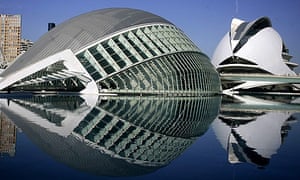
View of the Palace of Arts and Sciences and The Hemispheric in Valencia
 The iconic City of Arts and Sciences. Photograph: Jose Jordan/AFP/Getty Images Jose Jordan/AFP
Most cities have riverbanks to stroll along; Valencia has a whole river. The Jardín del Túria is a unique, 9km-long swathe of greenery through the city. When the river Túria flooded – again – in 1957, it was diverted south. The former riverbed is now a landscaped parkland walk with trees, sculptures and water features, crisscrossed by 18 bridges – some designed by Valencian architect Santiago Calatrava. The gardens connect the Bioparc in the west and the City of Arts and Sciences (CAC) in the east. The zoo (bioparcvalencia.es), 18, is a modern, immersive animal park that recreates natural habitats, but in a weekend you'll probably only have time for CAC (cac.es), 19. You can walk there along the gardens in about 45 minutes. The futuristic complex was mainly designed by Calatrava and includes an opera house, science museum and planetarium. Oceanogràfic is best: more than 45,000 specimens swimming around Europe's biggest aquarium. Look out for the spooky sandfish, awe-inspiring white whales and schools of leaping dolphins.

2pm

Stroll back towards town and stop for lunch at Les Graelles (grupo-jbl.com),20, a traditional restaurant with arched stone ceilings, dark-wood furniture and crisp white tablecloths. Paella was invented in Valencia and this is the place to try an authentic version – which, surprisingly, doesn't contain seafood and is only eaten at lunchtime. Saffron-flavoured rice is served with hunks of rabbit and chicken and a handful of snails, plus some vegetables – perhaps green and broad beans and artichokes. Everyone around the table digs in to the communal pan with their own wooden serving spoon, and washes it down with rioja. (Locals often head to L'Albufera, a nature reserve about 30km along the coast, for their Sunday paella lunch.)

3.30pm

From here, it's a short walk to the Museo de Bellas Artes(museobellasartesvalencia.gva.es), 21, Spain's second-biggest art collection, housed in a beautiful 17th-century convent. It has paintings by Spanish greats such as Velázquez (including a masterful self-portrait), El Greco and Goya, plus Valencian artists Pinazo, Benlliure and Sorolla. If admiring modern works of art is more to your taste, IVAM (Instituto Valenciano de Arte Moderno, ivam.es), 22, was the first contemporary art gallery in Spain – you'll need to catch the Metro or take a cab, though, as the museum's back in El Carmen.

LOCALS TIPS

Paula Sancho Torregrosa, web editor

By the Flowers bridge23, there is a statue of King Jaime I, where children can learn something of our history in a show about him until 24 November (eltorneodelrey.com). Gulliver Park24, also in the river gardens, is a great play area. Canguro Verde (facebook.com/canguroverde25, is a coffee shop in Ruzafa where kids are welcome.

Alejandro García Llinares, restaurant manager, 

El Mercado de la Tapinería, a concept market
 El Mercado de la Tapinería PR
Semana Santa Marinera, maritime holy week, in El Cabanyal, the fishermen's area is an interesting experience. And El Mercado de la Tapinería(mercadodetapineria.com), 26, is a concept market in a downtown square. El Jardín de Monforte27, is a quiet and relaxing garden in the centre.

Carla Carrión Palanca, blogger

Few tourists go to Calle Alta and Calle Baja but these two streets in El Carmen (or El Carmé in Valencian), 28, are popular with locals for their charming bars and shops. Jazz lovers might like to try the Jimmy Glass Bar (Calle Baja 28,jimmyglassjazz.net). Or, if a bar crawl is what you're after, look no further than Calle Alta's drinking dens.

Where to stay

Accommodation was provided by Hotel Caro (doubles from €137, +34 963 059 000, carohotel.com), 29, a former palace, 200m from the cathedral, which opened in 2012 after seven years of refurbishment. It is one of the oldest buildings in Valencia, with astonishing Roman, Arabic and gothic remains on display alongside sleek, modern furnishings: lots of glossy black and moody lighting. You can eat breakfast – a spread of meats and cheese, bread and fruit, plus unlimited cava – next to the old city walls, or sink into a sunken bath under an ancient beamed ceiling. There are 26 rooms – the three in the attic are especially romantic.

Way to go

Getting there EasyJet (easyjet.com) flies from Gatwick to Valencia; Ryanair (ryanair.com) flies from Stansted, Manchester, Liverpool, Bristol and East Midlands
Getting around Valencia has an easy-to-use metro and bus system. Metro lines 3 and 5 take you from the airport to the city centre in about 20 minutes. The Valencia tourist card gives you unlimited travel on public transport, plus discounts at shops, restaurants and museums (€13.50 for 24 hours, €18.00 for 48 hours or €22.50 for 72 hours,valenciatouristcard.com). Valencia is very flat, so cycling is a good way to explore: BEbike has five rental outlets around the city (€2 for 1 hour, €8 for 4 hours, €10 for 24 hours, bebike.es)
For further information on Valencia, go to visitvalencia.com
 This article was amended on 19 November 2013. We originally said that Valencia was "won back for Spain in 1238". This has been changed to "won for Aragon".