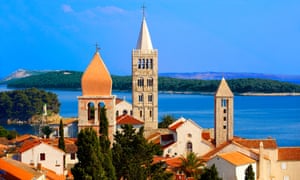
Bells and whistles … view from St John Church tower over Rab’s main town. Photograph: Alamy
Touring four towns on three islands, Kevin Rushby enjoys fennel liqueur, sheep’s cheese and seafood, while teenage Maddy prefers a papal cake sugar hit
Opposite a vast painting of the Last Supper in 13th-century Saint Francis of Assisi monastery in Cres town is a small alcove. Smiley father Zdrak, whose benign presence is like a tonic, leads us there. And in the alcove is another kind of tonic. No, not the half-empty orange Fanta bottle, but a glass urn of greenish liqueur from which the father pours with some glee. “It’s calledkoromac,” he says, “We make it using fennel from our garden.”
It is delicious. We repeat the tasting. My daughter Maddy (13) turns down the koromac and gazes longingly at the Fanta, but it is not offered. It is 9am and Maddy, my partner Sophie and I are just beginning our exploration of the island cities of the Kvarner gulf, the broad bay of Adriatic sea that snuggles up under Croatia’s Istrian chin.
Cres Town is an easygoing place, little frequented by tourists and pleasant to stroll around, even in August. (The pronunciation of the island’s name is subtle and sibilant and not at all like cress, stress or tress, but somewhere between the three. A glass of koromac is probably required for precision.) We buy olive oil from the co-operative and admire the work of Mate Solis, a local artist and character now in his 80s who still finds inspiration in Cres’s pretty boat-filled harbour.
Early morning in Krk town with the day’s first bread delivery. Photograph: Kevin Rushby
Next day we take a short ferry ride to Krk, which is a big change after the depopulated harshness of Cres. Krk is verdant and well-inhabited: its main town, also Krk, is busier than Cres but with similar cool stone lanes. A walk through its crowded streets can be slow, but why hurry? There are so many strange highlights: the temple of Venus that is now a beachwear shop, the restaurant (Konoba Maritim) that serves us tangy sheep’s cheese with octopus and squid (Maddy looks wistfully at other diners’ spaghetti), and a little doorway in the city wall that leads to one of the world’s most astonishing cafes: Volsonis.
Volsonis cafe in Krk town, built in Roman walls. Photograph: Kevin Rushby
The building was bought in 1999 by Maria Elena and Goran Stanic, who set about converting it to a cafe, but discovered a Roman wall, and then a tomb under the floor. In some countries that might have ended any hopes of a cafe, but in Krk things are different: they simply integrated a cafe, nightclub and gallery into the structure of an ancient building. The result is startling and original – and they do good coffee.
We take a day trip to Vrbnik, in Krk’s wine region. This handsome hilltop seaside town sees no need to lure tourists: there are few hotels or cafes, and lots of ungentrified winding lanes, including one, Klancic, that is so narrow we have to squeeze through sideways. There is also a luminously brilliant family-run restaurant: Nada. They love their local wines here – all based on the indigenous žlahtina grape. We eat a grand seafood dinner and remember not to attempt the Klancic on our way back to the car.
Octopus, squid and cheese at Maritim restaurant, Krk town.
Our fourth town is Rab, on the island of the same name and about an hour away by ferry. These inter-island ferries, operated by Jadrolinija, are fast becoming real pleasures on this trip. You queue on the road outside the port and race the other drivers to the ticket office. On board it’s like being on a mini-cruise: lovely views and a decent cafe. If the breeze is right, you can smell the different islands: I swear I can detect Cres’s sage, Krk’s pine and, coming up on the bow, Rab’s lavender. Maddy is unconvinced, claiming that it is chocolate and chips.
Someone on the ferry tells us Rab “fancies itself”. That’s immediately obvious in the super yachts moored by the old town and the chi-chi boutiques that line the main street. But this is a subtle and complex town. An enquiry at the tourist office for “something unusual” leads us to the headquarters of the medieval order of crossbowmen, a surreal mix of weaponry, heraldry and archive photos of Rab in the 1930s. That was when Rebecca West came, writing in her 1941 travel masterpiece Black Lamb and Grey Falcon of stricken people with the faces of “crucified Christs”. The island is, thankfully, a lot more prosperous now.
Maddy is asleep on the hallowed bench of the crossbowmen. She has the face of a crucified teenager in dire need of sugar. But first we must visit the four bell towers of Rab, a sequence that has all the rhythm and resonance of a peal. We climb two before we relent and help our wilting daughter towards the dangling carrot that has kept her feet moving since breakfast: Rab cake.
When Pope Alexander III came to the island in 1177, the sisters of St Anthony concocted a cake to celebrate: a filling of eggs, almonds, sugar, citrus zest and cherry liqueur baked in a spiral-shaped pastry case. At Rabska Torta on the edge of town they show you how – with great deliberation. Maddy is twitching like an addict awaiting her fix, but finally the cake is done. We retire to the garden half-expecting a refusal followed by demands for Kit Kat, but no: rabska torta is a hit.
Selection of cakes at Rabska Torta. Photograph: Kevin Rushby
She eats more than Pope Alexander, then, sweating, asks about a swim. Simple: there’s a wild forested peninsula next to town, dotted with coves. We stumble to the harbour and hire a boat for the afternoon. • Accommodation on Rab was provided by Prestige Holidays (01425 480400,prestigeholidays.co.uk), which has a week’s B&B in Hotel Padova from about £469pp, including flights and transfers. For further information, visit croatia.hr
Discovering Croatia: fruits of the sea
Croatia is a seafood lovers’ paradise. Ivana Gamulin from the renowned Villa Spiza restaurant in Split gives her take on the country’s best fish. “The most important thing is seasonality. Sardines are best in May, calamari in summer.Brudet is the classic dish: a stew of garlic, onion, white wine, tomatoes and fish. If I find kosmej or grancigula crabs, I use them, too. A very traditional recipe is fažol na brudet, a bean and fish dish. Wash it down with white wine (bogdanuša or parčgrape) or a light red (plavac mali).”
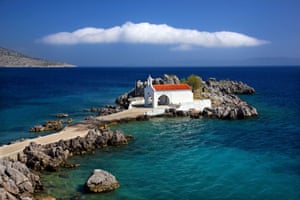
The church of Agios Isidoros on an islet close to Langada, Chios. Photograph: Hercules Milas/Alamy
This disparate group of islands stretches from the Greek mainland across the Aegean to the coast of Turkey. Many remain off the beaten track to foreign visitors but reward them with deserted beaches and excellent seafood tavernas
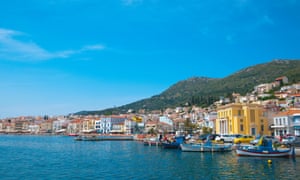
Some islands fall easily into groups, others are left hanging and are gathered into more arbitrary designations. The latter is true of the north-east Aegean, which includes a hodgepodge of islands stretching from lush Samos in the south – just off the coast of Turkey – up to Thassos, 400km to the north and closer to Bulgaria than it is to Athens.
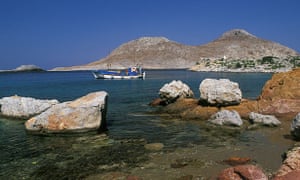
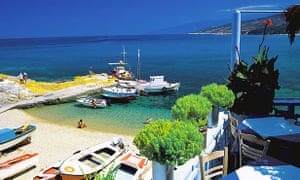
In between are an isolated stretch of islands, often far apart from each other and not well connected. Perhaps because of this, and the difficulty of labelling them easily together, these islands are often overlooked. For those prepared to travel a bit further afield, this is a bonus as, apart from midsummer, they tend to be uncrowded and unspoilt.
Samos is the nearest thing this group gets to “well-known destination”, but it is still more easily reached from Turkey than most of the rest of Greece. It does have its resorts but is big and diverse enough to still reward visitors. It is probably the most instantly attractive of the group.
Heading west, little Fourni is getting increasing recognition as an “unspoilt” gem, and still deserves the reputation. Larger Ikaria is a different kettle of fish and, while not immediately pretty, is worth exploring: the locals have an independent and proud streak that sets them apart.
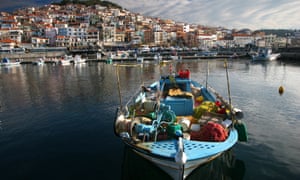
Chios and Lesbos also hug the Turkish coast. The former has a long and often tragic history but hides many beautiful places away from its couple of beach resorts. Lesbos is one of the biggest of all the Greek islands, and a long visit and exploration will reveal why it is still beloved by artists, historians and modernSapphos.
In the north is a scattering of volcanic islands that remain off-the-beaten track. Limnos has become trendy, especially among mainland Greeks, but remains beautiful and authentic. Samothrace is one of the most dramatic of the Greek islands and is home to a stunning and world-class ancient site. And if you want to see how Greeks party, Thassos is your place.
All prices are for one week’s accommodation for two in August, and include breakfast unless otherwise stated. Prices outside of this month can be considerably cheaper. Greek taverna prices are remarkably similar and, if anything, have gone down in the last few years. You can usually expect to eat well for €15-€20 per head. If places are cheaper or more expensive than this, it is stated in the text.
Samos
Armonia Bay Hotel
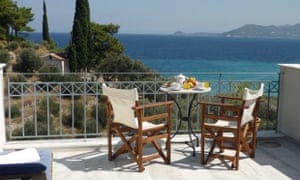
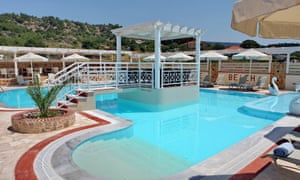
Where to stay Armonia Bay This is exactly what you hope for from a Greek island hotel. The simple rooms are large and tastefully done, and most have balconies with great views down to the beach, which is a five-minute stroll away – although there’s a pool if you can’t manage that. The hospitality is relaxed and friendly. •£560, +30 22730 92279, armoniabay.com; family-friendly
Where to eat Pnaka For the best food you should head up to the hillside villages above. This meze place has a great terrace in the village of the same name, and serves a great mixture of small dishes and salads to mix and match. Do as the Greeks do and order a little at a time and keep going for as long as you can. •+30 22730 93297
One to muse on … Vathy’s Archaelogical Museum makes a pleasant break from the summer heat. Photograph: Peter Forsberg/Alamy
Don’t miss Most museums on the islands are only for the real enthusiast. The one in Vathy (the Archaeological Museum), the capital of Samos, is an exception, and has one of Greece’s largest statues as its prize exhibit. The old upper town of Vathy is also worth a stroll. •+30 2273 027469
Fourni
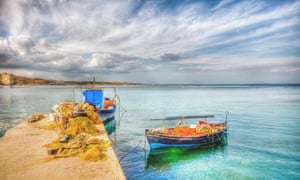
A fishing boat at Thymena Island, Fourni. Photograph: Alamy
Where to stay ArchipelagosAs the ferry pulls into isolated Fourni you will be greeted by plenty of locals willing to offer you rooms, some of which are very nice indeed. If you want a bit more certainty in your life, book this port-side hotel that has all the views and facilities you would expect. •£470, +30 69734 94967, archipelagoshotel.gr
Where to eat Nikos For a little island, Fourni has a surprisingly large permanent population (which gives it a more dynamic atmosphere than some). The key to this is its large fishing fleet, which means the island’s seafood tavernas are first class. There are a couple of prominent ones by the port, and Nikos is perhaps the best choice. Lobster pasta is an island speciality. •+30 22750 51207
Don’t miss A short boat ride from Fourni is the even smaller island of Thymena. The population of barely 100 lives mainly in the little port. A short hike takes you over to an isolated beach and taverna – bliss.
Ikaria
Restaurant overlooking fisherman’s bay, Ikaria. Photograph: Alamy
Where to stay The Ikarian Winery Eccentric Ikaria takes a little getting to know, and there is no better place to do that than at this agri-tourism-themed vineyard near the island’s north coast. It has a cluster of traditionally-decorated cottages and is still producing its own wines –offering the opportunity to get involved with production, as well as sample the product. •£490, +30 22750 31151, ikarianwine.gr; family-friendly
Artemis Studios These simple studios are all about location, with superb sunset views down to one of the prettiest coves in Greece. It comes at a bargain price as well. • £195, +30 22750 71485, artemis-studio-ikaria.blogspot.gr; family-friendly
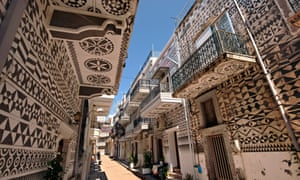
Don’t miss Chios made its fortune from the harvesting of mastic, a tree resin once chewed in the harems of Ottoman Istanbul. The product is just a curiosity now, but the villages that were based around the industry still make worthwhile visit. The houses of striking Pyrgi are decorated with whitewash patterns on top of the black, volcanic rock underneath.
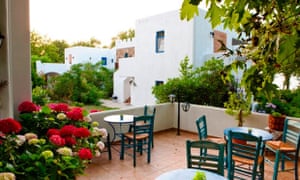
Where to stay Aphrodite Lesbos, with its artistic associations has plenty of boutique getaways; the Aphrodite, on a long stretch of isolated beach, is something a bit more old-school: a classic seaside Greek hotel, down to the two-ring electric hobs in the studios. Don’t expect sophistication, but enjoy the friendly welcome from the Hahathakis family and the relaxed atmosphere. • £280, +30 22520 61288, aphroditehotel.gr; family-friendly
Where to eat Akrotiri At the west end of Vatera beach is the little port of Ayios Fokas, where this seafood taverna is by the sparse ruins of a temple to Dionysus. This is the real deal with freshly caught fish washed down with plentiful local wine. Try the lakerda, a dish of raw, pickled tuna. •+30 22520 61465
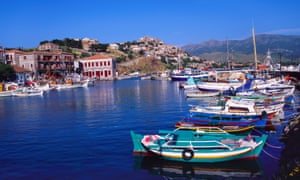
Molyvos Harbour Photograph: Robert Harding/Getty Images
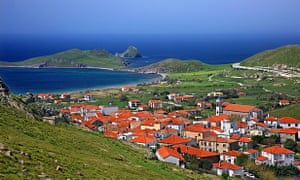
Molyvos is the prettiest village of Lesbos, even with many of its shops now given over to the tourist trade. It is topped by an impressive Byzantine castle that has superb views.
Limnos
Photograph: Alamy
Where to stay Ethaleia This is a lovely little hotel with a warm heart. Dina, one of the couple who have put their souls into this establishment, is a local, and her love of the land and its culture shines through. The 10 rooms are often booked up by return visitors, and given the views and hospitality you can see why. • £400, +30 69443 55755, ethaleia.gr
Surf Club Keros
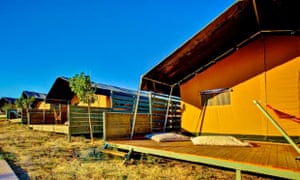
Glamping arrives in Greece! The Surf Club provides luxury safari tents right by the beautiful beach of Keros Bay. The tents have air-con, comfy beds and even a TV and coffee machine, so you’re really not slumming it. •£465, +30 69441 56679, surfclubkeros.com; family-friendly
Where to eat Mamas Kitchen (as above) You are rather in the middle of nature at the Surf Club, but don’t be alarmed as Mamas Kitchen will provide all your needs, from a fresh breakfast to a chill-out area, and then Greek taverna classics in the evening.
Surf Club Keros Photograph: Pantelis Ladas/Panteliz Photography
Mantella This is a traditional taverna in the little village of Sardes, the highest of Limnos. Apparently named after Nelson Mandela, everything else about this place is very Greek: hearty portions of local food are served with a smile. •+30 22540 61349
Don’t miss What else to do at the Surf Club Keros but try the waves? Lessons and equipment are available in surfing, kite-surfing and windsurfing for adults and children. The surrounding nature area is also well worth an explore, or just a gentle stroll. One of the best things to do on Limnos is to explore its villages and dramatic landscapes. The latter can be seen by visiting the cave chapel of Panagía Kakaviótissa. It’s a stiff, if short, climb, but the views are well worth it.
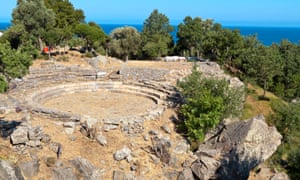
Ancient hellenistic theatre at the Sanctuary of Great Gods, Samothrace. Photograph: Alamy
Where to stay Archondissa Set in its own, lovely, gardens, and right by the beach on the edge of the village of Therma, these apartments are spacious and well furnished. Terraces offer views either to the crystal clear sea or up to Mount Fengari, the highest in the Aegean (you can climb it from here, but it’s a good six hours each way). •£280, +30 25510 98098, archondissa.gr; family-friendly
Where to eat Perivoli T’Ouranou This nearby taverna sells all the standards to a good quality, with the added bonus of having regular, and sometimes spontaneous, live music performances. •+30 25510 98313
Archondissa apartment
Don’t miss Samothrace is a visually stunning island and there is nowhere better to appreciate this than the Sanctuary of the Great Gods. This cult was worshipped here for over 1,000 years, and the site still evokes awe in the visitor.
Thassos
Where to stay Thassos Inn Thassos can be on the lively side, so it can be nice to get away from it all. This hotel dominates the quiet and attractive hilltop village of Panayia. It’s bright yellow buildings are set round a terrace of plane trees and a carp-filled pools, while inside the simple rooms have terraces with great views. • £320, +30 25930 61612, thassosinn.gr
Where to eat Ilias If you can find them, meze tavernas are often the best places to eat in Greece, giving you the opportunity to try lots of different dishes. This one is just above the small village of Avlaki, serves 40 different dishes, and does an interesting sideline in Moroccan tagines. •+30 22750 71009, ilias.com.gr
Nas If anything this taverna’s terrace has even better views, and the hearty meals carry on the theme of value for money. Also, you can’t help but be tempted to follow the river canyon below to the sheltered cove itself, which is surrounded by wind and wave sculpted rock. It’s a beautiful place, but be careful not to swim too far out as the currents can be deceptively strong. •+30 22750 71486
Don’t miss The Ikarians like to do things differently. The four villages of Raches are linked by a well-mapped hiking trail, something that is becoming more common in Greece. They also run on “Ikarian time”. The villagers sleep for much of the day, then open up their shops and tavernas for most of the night.
Where to stay Perleas Estate In the interior of this popular island is this superbly-restored old mansion set in four acres of land now given over to organic fruit, olives and vegetables. Attention to detail is the key here, with the gorgeous rooms mixing traditional styles with a nod to the Genoan history of the estate. • £585, +30 22710 32217, perleas.gr
Where to eat Fabrika In an old olive press in the market town of Volissos, this taverna specialises in grilled meat (done properly over charcoal). For the carnivore this is heaven (in particular try kokoretsi if it’s on the day’s menu – just don’t ask what it is first) but don’t worry if that’s not your thing as there are plenty of other dishes. . •+30 22740 22045
Where to eat
Drosia Also in Panayia, this is another reliable standard taverna, specialising in grilled meat, but also offering good sardines and mussels. •+30 25930 61340
Don’t miss Thassos is a destination for Greeks (especially those from Thessaloniki) who are looking for entertainment. The island is overpopulated with bouzouki bars, and it’s worth giving them a go, even if only for one night. Ideally go with Greek friends and don’t expect to be home before dawn and without a fair amount of whisky inside you.
Getting to the north-east Aegean
The larger, southern islands of the chain can be reached by ferry from Athens, and plane from Athens and other places in Greece. In summer, charter flights run from abroad. Limnos can be reached from Thessaloniki by ferry. The two northern islands of Thassos and Samothrace are a more difficult prospect. Ferries run from the northern mainland ports of Kavala and Alexandropouli respectively.