Showing posts with label Portugal holidays. Show all posts

Saturday, May 21, 2016

Ports Of Call: A Wine Tour Of The Douro Region

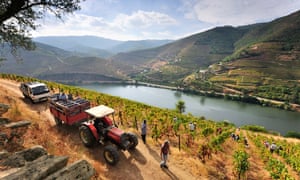
Harvest at an Alto Douro vineyard, Portugal.
Porto-geezers ... harvest time at an Alto Douro vineyard, Portugal. Photograph: Mauricio Abreu/Getty Images


Portugal’s Douro region is famous for its port, but also produces fine, good-value reds and top nosh. Perfect, then, for thirsty foodies like our writer

The Douro river is wild and tamed, fertile, rich and dust poor. She is the heart, soul and life force of the region she gives her name to. For 900km, from central Spain to Atlantic Porto, she pushes and runs, fat, green, inexorable. The Douro region is about the size of Suffolk but, unlike East Anglia, has barely a metre of flat ground. Instead, dizzying mountain slopes are creased and folded and combed with the millions of vines that make those juicy Douro table wines and its celebrated ports.

Visitors have been welcomed here for centuries but it’s taken until just now for the Dourense region to cotton on to eno-tourism, that happy marriage between travel and tippling. Though frequented mostly by cashmere-and-smart-slacks travellers, the Douro is also a fine destination for the thirsty but thrifty.
Getting to the region can be fun. There are hotel boats from Porto, but these seem mostly to be witless, Duplo-like affairs into which you’re tightly packaged and drably excursioned. It’s better by far to take the train to Pocinho. This is one of the world’s great train rides and, once away from Porto’s concrete suburbs, offers twisting, sighing, soaring riverine views for much of its three-hour route.
The bus network form here on is sketchy; to get the most out of your visit, you’ll need a car from Pocinho. But be warned: these roads are for confident drivers only. They are intestinally curly. Climbs are crazily steep. Cliffs must be tightly hugged and other vehicles may well be kissed. Safety barriers seem anathema. Most roads are breathe-in thin. Heroic cyclists with Hoy-like thighs might enjoy the suffering these roads provide.
Millions of hot, tough hours of manual work have gone into terracing and training these great hills of schist into vineyards. Neat terraces corrugate every horizon, rows and stairs intricate as cornrows, maps with living contours. The visual effect is mesmerising even before the first drinking – sorry, tasting – session of Douro wines. And, like the river beneath you, these sessions sail along smoothly to begin with. Until you get into those seductive ports.
There are three parts to this wine region. Baixo Corgo is westernmost and mostly produces ports to be drunk young. Its main town is Peso da Régua, commonly known as Régua.
Aerial view of vineyard terraces and the Douro river in the Alto Douro region
Pinterest
 Aerial view of vineyard terraces and the Douro river in the Alto Douro region. Photograph: Alex Robinson/Getty Images
The posh section of the Douro is Cima Corgo, whose classyquintas are run by a manicured handful of intermarried wine dynasties, often with British and Dutch names and/or branches on their French-polished family trees. Even here, though, visitors who stray one vineyard away from the main routes will boggle most locals simply by being foreign. Cobbly, sleepy Pinhão with its gorgeous blue-tiled station, is at Cima’s centre. Then, closest to the Spanish border, is Douro Superior, the largest area, which is mostly national park. It also has the fewest people: the only town of any size is Vila Nova de Foz Côa, home to 3,300 people.
The Douro is perfect for a long weekend, especially when tacked on to a stay in Porto. But beware: the wiggly roads mean distances that look tiddly on the map can take hours to negotiate. Talking of tiddly, in Baixo Corgo I aim straight for Régua and the wine hotel at Quinta do Vallado (doubles from €100 including cycle hire), with its 13 cool and light rooms and (hurray!) all-day wine tastings and bibulous visits to their renowned winery. Régua isn’t immediately beautiful but has a light and bustling riverfront vibe and the Douro Museum on Rua Marquês de Pombal, where €7.50 buys me entrance and a schooner of port. The museum also provides intensive wine tastings for the unwary and unwise visitor.
Now needing a sugar hit, outside the train station I spot two aproned ladies with wicker baskets selling paper-twistedrebuçadas, the Douro version of barley sugar. These fuel my two-minute dignified stagger down Avenida José Vasques Osório to Castas e Pratos (+351 254 323 290). It’s a young-ish and stylish food and drinks hangout in an upcycled railway shed. As everywhere in the region, its wine list is exciting and affordable (three courses from €30).
Castas e Pratos in Peso da Régua
Pinterest
 Castas e Pratos in Peso da Régua
But I’m feeling more dishevelled than chic, so lunch instead at the down-home A Velha Tendinha (around €15 a head, Largo 25 de Abril, +351 254 318 160). It’s a wonderful almost-riverfront grill joint, and my octopus grelhado is a charry tangle of spectacular tentacles. The rest of the day is spent traversing the sheer breadth of wine styles produced by the Douro’s sheer slopes.
Cima Corgo is the most-visited part of the region. Across the river from Pinhão, isQuinta do Seixo, where the huge Sandeman winery does the region’s slickest tours (from €6pp) at its grand quinta. Luís Sottomayor is Sandeman’s head winemaker – fiftyish, wiry and tanned. After an in-depth “tasting” session, he points me back to Pinhão to experience Qualifer (45 Rua António Manuel Saraiva,on Facebook). This is a tiny fumeiro (smokery) where butcher Fernando – part black-clad ninja, part conjuror, part psychologist, part naturopath – retails a magical selection of fresh and smoked meats, plus his own-baked bread, local cheeses and his daughter’s jams. From these, I assemble the picnic hamper of champions and head for the Chapel of São Salvador do Mundo (off EN222-3), near São João da Pesqueira, a miradouro (viewpoint) that makes the heart soar like the Bonelli’s eagles wheeling below. Luis’s other miradouro tip is a stunner as well. São Leonardo de Galafura, high above Régua, also has an in-season cafe that serves excellent and sustaining snacks and lunches.
Pinhão railway station, with its traditional blue-tiled walls.
Pinterest
 Pinhão railway station, with its traditional blue-tiled walls. Photograph: Alamy
Five of the leading new-wave Douro winemakers have banded together as theDouro Boys. One of these is the eccentric, inspired Dirk Niepoort , whose family have been winemakers since 1842. Dirk’s wines – both table and fortified – are always intriguing and enlightening. Wine has been made at his Quinta de Nápoles at Santo Adrião since the 15th century. Today, you taste in a secret subterranean cellar (book ahead on +351 254 855 436, no charge). Over a tasting where I completely forget to spit, Dirk explains how the Douro’s schist rock forces the vine’s roots to thrust deep to establish themselves, creating more flavour intensity in the tens of local “field” varieties that go into his blends. My favourite grape issousão, which pretty much sums up my situation by lunch. This is taken at local posh restaurant DOC (222 Estrada Nacional, +351 254 858 123), built like a gin palace over the river at Folgosa. Note to self: port at lunch, all at sea all afternoon.
Posh nosh at DOC restaurant, the Douro
Pinterest
 Posh nosh at DOC restaurant
On 25-26 June this year, the Douro Boys will hold their annual Feira do Douro, this year at Niepoort, where €10 buys you entrance (and a free Riedel glass) plus tastings (natch) and a farmers’ market.
Dinner is at Dirk’s “secret” tip: 16-seat Papas Zaide (1 Largo de Praça, +351 254 731 899), snoozing in the pretty hill village of Provesende. Here you eat olives dipped in honey (weird, but great), sheep’s cheese and great knuckles of melting meat, tinkling the goat bell on your table for cook Graça to bring – yes! – more wine. In the square below is the never-modernised 1940s Fatima bakery, where craft baker Antonio José bakes only 180 impeccable sourdough loaves a day. Like me, they’re gone by lunchtime. In the same square is the bonkers Café Arado (no phone, opening hours erratic), a winery, bar, craft shop and farm-implement museum.
The Douro Boys.
Pinterest
 The Douro Boys
Also in Provesende is the charming, simple, self-catering Quinta da Costa(doubles from €65, +351 917 985 956). Alternatively, at river level, there’s the grand Quinta do Crasto (one-night stays only, from €140 a night, +351 934 920 024), with four rooms above the winery. One eats, drinks and swims in elegant aristo splendour here.
There are loads of river excursions offered in both Régua and Pinhão. Most are in the now-motorised vessels that once carried port “pipes” (barrels) down to Porto for maturing. To feel less of a tourist, book a trip on Pipadouro (from €35, +351 939 196 262) which runs two beautifully restored 1950s wooden launches from the pier at Pinhão. The larger was an admiral’s boat, now bookable for a cosseted night’s stay aboard. Drinks flow on board until I no longer know my port from my starboard.
Sampling wine at the annual Feira do Douro.
Pinterest
 Sampling wine at the annual Feira do Douro
Back in Pinhão, Quinta de Bonfim (+351 254 730 370) has just started offering guided tours, tastings and charming, bowered vineyard lunches. Here, Joe Alvares Ribeiro – chiselled jaw, clean chinos, ineffable charm – gently insists that I swing up to the two-street town of Favaios, where moscatel wines are made. The lovely, small Museum of Bread and Wine is on Rua Direita, where the €1.50 entry also scores a tumbler of sweet moscatel that smooths out any wrinkles remaining in my morning. About 800 metres out of town, at Alto da Portela, an anonymous, ugly modern house with a car park on the right is Padaria Queirós (+351 259 949 514), where Fernanda and her two cousins bake good bread and a stupendousbolo de carne, which is what every meat pie wants to be when it grows up. They’re hot out of the oven around noon.
And so to wilder, empty Douro Superior. Unlike Cima, Superior has little traffic, though its roads are hardly less tortuous. I drive up to the dog-and-donkey village of Parambos near Carrazeda de Ansíäes, where svelte, sprite-like Puri at Doces da Puri (30 Beco de Jaime) produces extraordinary jams, cookies and pastes in her 300-year-old, low-beamed kitchen. The fruit comes from her heavenly organic garden next door and her tomato-and-port preserve deserves a DOC status of its own. Puri’s generosity and energy are matchless. After a glass of something lovely, she directs me to Taberna da Helena (Avenida Aquilino Ribeira – below the church in Carrazeda) for a sit-down with a platter of chops and a mountain of chips in company with local cattle farmers.
Niepoort’s Quinta de Nápoles with view over the vineyard.
Pinterest
 Niepoort’s Quinta de Nápoles
Forty minutes from here, I pause in the sturdy medieval hill town of Torre de Moncorvo, where my rewards include a bag of warm sugar-crunched almonds from a shop opposite the church. Near Vila Nova de Foz Côa, Museu do Côasweetly interprets the area’s thousand examples of Paleolithic rock art. A bookable, guided three-hour dusk/night tour of the art in the valley below is a snip at €17.
Outside Foz, a small and unlikely turning takes me down (and, worryingly, further down) a steep, twisty, schisty track. My trust is rewarded when it delivers me toCasa do Rio (from €190 a night B&B/wine-hotel) where dynamic Douro Boy João Ribeiro of Quinta do Vallado has built a bridge over a dip in his vineyard, and on it a wooden hotel of six pale, sexy rooms. Here I join what feels like the Douro’s most chic house party: Danish rosewood, hanging Cocoon fires, an orchestra of crickets, no neighbours for miles, an infinity pool amid the vines, and the Douro below – peaceful and long, strong and unique.

Kevin’s top tips

• Best for picnics The miradouro at São Leonardo da Galafura, above Régua
• Hidden gem Casa do Rio wine hotel near Foz de Côa
• Best tasting Niepoort wines and ports at Quinta do Napolés
• Trains run from Porto to Pocinho (€13 each way each way, cp.pt); the really pretty bit starts at Régua. Flights were provided by easyJet, which flies to Porto from Bristol, Gatwick, Luton and Manchester from around £52 return. Car hire was provided by Holiday Autos

Saturday, November 14, 2015

The Azores Holiday Guide: What To See Plus The Best Bars, Restaurants And Places To Stay

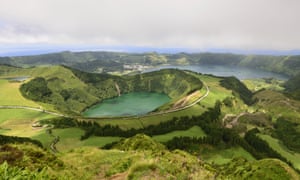
The volcanic, yet green, landscape of the Azores on show at Sete Cidades, São Miguel.
The volcanic, yet green, landscape of the Azores on show at Sete Cidades, São Miguel. Photograph: Getty Images/Moment Open
This volcanic archipelago in the mid-Atlantic feels like a world unto itself. But two new direct low-cost air routes from the UK are about to bring the enchanted islands within easier reach
Here, somewhere between Lisbon and New York, the weather is mild but decidedly unstable. Atlantic fronts barrel in, clouds tussle, shafts of sunbeams and great fat silvery pools of light chase over swelling seas to fields of infinite greens. For the Azores you pack a cagoule and sunglasses, your swimming gear and walking shoes, for you’re never more than a few minutes from a dramatic basalt seashore or an alluring grassy pathway.
This family of nine Portuguese sea-splattered volcanic farming islands is now easier than ever to visit, with the introduction next week of the first low-cost flights – from both easyJet and Ryanair – that will enhance the year-round and inter-island offerings of state-run SATA. Both will fly into São Miguel, the chief Azorean island. There are three island groups, extending over 370 miles, so to get around you need to either hop on a turboprop or plough through the waves onferries.
 The main islands of the Azores
Time slows down here: the locals count it in hundreds of thousands of years, in terms of the volcanoes that together have formed the Azores. Being at the junction of the Eurasian, North American and African tectonic plates, the Azores are a geological hotspot: when seen from its highest point, each island is a Clanger-land of chimneys and craters where you could believe entire civilisations of sprites and elves live among the fat, dappled cows.
The islands’ beauty is rare, and timeless; the volcanoes bring to mind the Miocene epoch, but in human terms there is a sense of 1950s-era innocence. The continuing restless volcanic activity seems to fill you with radiant energy and the salty, clean winds treat you to the world’s best free facials. There’s whale watching, swimming with dolphins, and diving with manta rays to be had, plus canyoning and kayaking. You can walk inside volcanoes, and around them, and drive along empty roads fringed with millions of azaleas and hydrangeas.
Each island is unique – and independent-minded. There are no resorts, but plenty of honesty bars. The locals’ first thought is to trust you, then to welcome you. I visited three of the main islands; my final Azorean thought was that I was mad to leave without seeing them all.

São Miguel

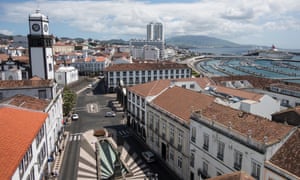
The harbour at São Miguel's capital Ponta Delgada.
Pinterest
 The harbour at São Miguel’s capital Ponta Delgada. Photograph: Alamy
Flying in, my sense is that the island floats along on a fast, froth-topped sea. Intensively rippled and peaked as it is, São Miguel’s surface seems constantly in motion, too. With almost 50,000 inhabitants and a thriving university, its handsome capital, Ponta Delgada, also feels like it’s on the move. It offers great eating and meandering – and I manage a great deal of both.
Advertisement
Where to eat
Money-wise, the Azores are a great deal: petiscos (Portuguese tapas) run at about €1 a pop, as does a glass of beer or wine. (Azorean white wine is nicely drinkable, but the red’s filthy.)
I loved buzzy A Tasca (around €16pp including wine, Rua do Aljube 16) whose hilariously hefty smoked black pudding petisco comes with chargrilled local pineapple. And get to Mané Cigano (lunch only, Rua Eng José Cordeiro 1/3) early: this salty, no-frills joint serves mounds of spanking fried mackerel at €5.50 for as many as you can handle, and cracking grilled octopus, too. Like its Portuguese mother, Azorean cuisine revolves around gargantuan portions of sturdy, often meaty meals, so it was a treat to discover Rotas Ilha Verde (around €20pp including wine, it’s tiny – reservations essential, Rua Pedro Homen 49) where excellent, exclusively vegetarian, food is served. The place is quietly groovy, verging on the hippy, and well worth the visit for Caterina’s sublime caramelised garlic and chestnut risotto and her rich-but-light chocolate cake.
Ten minutes’ drive out of town, Quinta dos Sabores (around €22pp for the tasting menu plus wine, Alminhas de Rabo de Peixe 10) is Inês and Paulo’s semi-secret, classy restaurant attached to their organic smallholding.
Where to drink and enjoy live music (and soak in hot springs)
Ponta Delgada’s bar and music scene is great fun, too. Arco 8 (around €14pp for petiscos and drinks, Avenida Abel Ferin Coutinho) is an art gallery, performance space and cafe, and serves killer mojitos, while Colégio 27 (€27pp plus wine, including music, Rua Carvalho Araujo 27) specialises in live jazz. Both are venues for this weekend’s Tremor indie music festival. Yes, I’m surprised, too, having thought the Azores were all about your blue-rinse cruise passenger: there’s a virile, vibrant creative culture on every island, with hundreds of festivals from jazz to clowns. There’s a feeling of deep, old-fashioned spirituality on each island too, with frequent religious festivals.
Bright, confident 24-year-old Jorge runs Holistika, which offers an intriguing mix of tours that meld, say, swimming with dolphins with mindfulness and yoga (full day from €60pp). He takes me to Sete Cidades, a spectacular caldera three miles across, complete with breeze-ruffled, human-free, jade-hued lake. In Jorge’s lively company, Sete Cidades becomes a sacred space, a place of wonder. São Miguel’s many calderas may look like they’ve come straight out of Lord of the Rings, but the last significant eruption was in 1957, when the Capelinhos volcano, on the western coast of Faial island, blew its top. On the green drive from Sete Cidades, we pass a romério of men in rough shawls and bright scarves bearing metal-tipped staffs and chanting prayers whilst pilgrimaging around the island’s many churches.
Romério pilgrims visit one of the island’s churches.
Pinterest
 Romério pilgrims visit one of the island’s churches. Photograph: Kevin Gould
Geothermal energy powers much of the island, and provides numerous hot springs. We spend at least one lifetime floating our aches away in the hot lake atTerra Nostra Botanic Gardens (adults €6, children €2.50) in pretty Furnas. At Furnas Lake, the kitchen trick is to slow-cook cozido in the underground hot springs. They serve this Portuguese pot au feu at Tony’s (around €20pp plus wine, Largo da Igreja), where portions are big enough to floor a hungry hobbit.
The Termas Ferraria spa (full day from €34) on São Miguel’s jagged northern tip is efficient, but better is Ferraria’s (free) rock pool, where you’re gently braised by hot spring water while grabbing gamely on to ropes as the Atlantic pounds wildly over your head.Caldeira Velha (signposted from Lagao do Fogo, entry €6) offers a tamer dip, but in green jungly beauty so lush as to remind me of Hawaii. The time-worn mobile bar outside will sell you a tot of Azorean rice pudding liqueur. Jorge also introduces me to the tea factory at Chá Gorreana (Gorreana de Cima, free) with its vintage machinery, and to secret waterfalls, lonely surf beaches and cool sundowners at Caloura Bar-Esplanada (Rua da Caloura 20, Agua de Pau, meals from €14). After a couple of days here I feel whole and fresh. If you visit nowhere else in the Azores, seek out São Miguel.
Where to stay
In Ponta Delgada, Hotel Talisman (doubles from €65) has a rooftop pool; ¾ Hostel(dorm beds €15, rooms from €35) is amazing value. A few minutes out of town, and close to a lovely beach, Solar Gloria do Carmo (doubles from €70) is atmospheric and welcoming; nearby is Quinta da Grotinha (doubles from €50), a charming turismo rural. At Caloura, Quinta do Mar (from €80) is a quietly classy boutique B&B. And it’s worth splashing out at Terra Nostra Garden Hotel at Furnas (doubles from €95) for the chance to slink out after dark for a private splash about in the bath-warm, camelia-bowered lake.

Santa Maria

An international crowd at Santa Maria's Mare de Agosto festival last year.
 An international crowd at Santa Maria’s Mare de Agosto festival last year. Photograph: Alamy
The 15-minute flight from Ponta Delgaa to Santa Maria reveals the island as a tablecloth-sized tumble of five farming parishes: there are twice as many cows as people in the Azores, a fact borne out on Santa Maria, which has 10,000 cows and 5,500 people. My guide, Laurinda, walks me to the top of the island’s highest point, Pico Alto (590 metres), from where it feels as though you can reach out and hug both sides of the island. We spend a dreamy day coasting along country lanes, slowing for many a lingering Olá! with smiley ladies in flowery housecoats and for herds of cows on their way for milking.
From 20-22 August, the island hosts Mare de Agosto, Portugal’s oldest music festival. There is also a folk festival, from 11-12 July, and a blues festival, from 16-18 July.
On each of the islands there are specialist operators offering coasteering (adventure swimming and climbing), canyoning (leaping crazily down waterfalls, mostly) and kayaking trips and jeep safaris. Santa Maria’s Bootlá (activities from around €45pp per day) is run by two women who double as the island’s air traffic controllers.
Where to eat
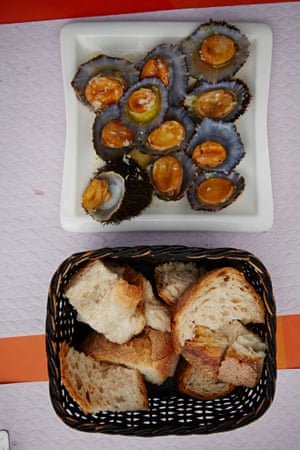
<em>Lapas</em> (grilled limpets) served up in a Santa Maria eaterie.
Pinterest
Lapas (grilled limpets) served up in a Santa Maria eaterie. Photograph: Kevin Gould
There’s a diaspora of at least a million Azoreans, mostly in North America. At the one-street village of Prazeres da Maia, we meet Aida Grota, who has returned after 40 years in suburban Boston to revive her late father’s cafe, O Grota. There is much to love: fresh fish, simply grilled or simmered into thick soup; a warm, bubbly welcome; Aida’s own natural wine from her vineyard, terraced into the cliff above; reviving ocean spray; and a natural swimming pool hewn from the cocoa-coloured basalt.
Later, we feed inelegantly on lapas (dollar-sized grilled limpets) swimming in garlic butter at lively Garrouchada(meals around €14pp plus wine, Rua Dr Luis Bettencourt), in Vila do Porto, Santa Maria’s three-road “capital”. Mascote Caffe (petiscos from €1, Rua Téofilo Braga 23) has a vintage vibe and serves goldfish bowl-sized G+Ts for a pittance. The family also runs a fine bottle shop next door, should you still be thirsty.
Where to stay
Accommodation on Santa Maria is limited. Laurinda runsCasa do Norte (from £30 a night) – a cute, romantic cottage to kick back in – and manages a handful of other turismos rurales. There are also five youth hostels on the archipelago (dorm beds from €12.50, single rooms from €23.50, doubles from €33, pousadasjuvacores.com): the one on Santa Maria has an infinity pool and a DJ bar.

Terceira

Founded in the 15th century, Terceira’s main town, Angra do Heroísmo, has twice (albeit briefly) served as Portugal’s capital. Its location as the first anchorage for galleons billowing back from the new world laden with gold, silver and spices made the city prosperous; its merchants and priests built themselves the splendid palaces and elegant streets that make Angra today a Unesco world heritage centre. Gosh, it’s gorgeous here, from the patterned calçada pavements to the colourfully painted houses.
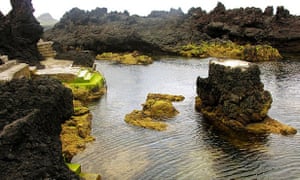
Natural swimming pools carved into the rock at Biscoitos on Terceira island, Azores.
 Natural swimming pools carved into the rock at Biscoitos on Terceira island. Photograph: Alamy
The town centre botanic garden is where students from the tiny uni and gossiping men in leather-front cardigans take their ease. There’s a grid of pretty shopping streets where almost every second address offers something tasty to eat or drink; the sea glimmers and above, Monte Brazil – the remnants of a volcano – is an essay in green. Angra wears its history with grace and quiet panache, and in today’s contrast-rich Atlantic light, feels like a poem, shot in Technicolor.
Where to eat
There are treacly, spice-filled Dona Amélia tartlets to be scoffed (through a mist of icing sugar) at O Forno (Rua São João 67), and groceries to be bought for the pleasure of it in Basilio Simões’ atmospheric old emporium on Rua Direita. I hang briefly with cool, young Angra cafe society at A Minha Casa(Rua Direita 80) then, as the inevitable weather front comes in, swing down the rainbowed road to the fishing village of São Mateus, whereRestaurant Beira Mar on the dockside (lunch around €18 plus wine) provides cheery platters of just-landed parrot fish, rapidly chargrilled.
Even for those of us with gargantuan appetites, the Alcantara beef stew at Os Moinhos in São Sebastiao (€20 including wine, Rua Arrabalde 4) may have been a bite too far. I walk it off inside the cathedral-like hollow volcano at Algar de Carvao.
There are 73 impérios on the island. These century-old, community-run chapels are brightly, beautifully, lovingly painted and chime nicely with my mood on the winding drive to Biscoitos, where natural swimming pools offer summer bathing amid rock formations that look like frozen fire. Biscoito’s villagers plant their grapevines in tiny lava rock enclosures to protect them from the salty breezes. And though the ocean seethes and pounds all around, I feel cosseted and terrifically cheered by Terceira.
Where to stay
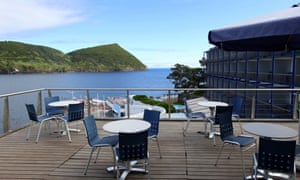
Hotel do Caracol, Terceira
Pinterest
 Hotel do Caracol, Terceira
Accommodation is very limited. Quinta do Martelo (doubles from €85) is a fab turismo rural; Hotel do Caracol (doubles from around €70) is a 20-minute stroll from Angra, and offers wide sea views. Mário Rego (+351 966 302 853) is a lovely guide and specialises in Terceira’s rich ornithology and geology.

The nine main islands at a glance

Central groupTerceira Culturally rich, with pocket-sized Unesco-listed capital Angra do Heroísmo.
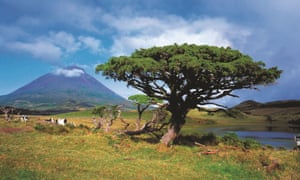
Pico Dominated by its 2,350-metre Fuji-like volcano which gives the island its name. Home to the excellent Azores Fringe Festival in June – an Azorean Edinburgh.
Faial Legendary destination for sailors coming east on the Atlantic winds. Hang out with them at Peter Café Sport.
São Jorge Isolated farms hunker under massive basalt cliffs on this island famous for its cow’s cheeses and tuna conserves.
Graciosa All-but-abandoned natural beauty. Come for the daily summer Holy Ghost processions and the peace.
The 2,350-metre Mount Pico.
Pinterest
 The 2,350-metre Mount Pico. Photograph: Sunvil
Western groupCorvo Other-worldy, covering less than seven square miles and home to only 400 souls.
Flores A forgotten hydrangea-filled paradise. Local handicrafts include flower arrangements made from fish scales.
Southern groupSão Miguel The largest island, with landscapes that channel your inner Gandalf.
Santa Maria The warmest, southernmost island, for simple rural pleasures and fab music festivals.
Getting around Air SATA (sata.pt) connects all nine islands
Sea Transmacor operates ferries all year round between Faial, Pico and São Jorge, trips from €13. Atlântic Online runs daily services between all the islands from May-September

Way to go

The trip was provided by Sunvil Discovery (020-8758 4722). A week in the Azores costs from £640pp, including direct scheduled flights from Gatwick withSATA International, transfers and seven nights’ B&B on São Miguel (other islands can be added to the itinerary). For more information see visitazores.com.
By , www.theguardian.com