ANKARA, Turkey (AP) — Turkish Foreign Minister Mevlut Cavusoglu has sent a letter to the United Nations formally requesting that his country be referred to as “Türkiye,” the state-run news agency reported. The move is seen as part of a push by Ankara to rebrand the country and dissociate its name from the bird, turkey, and some negative connotations that are associated with it.
Anadolu Agency said Stephane Dujarric, spokesman to U.N. Secretary General Antonio Guterres, confirmed receipt of the letter late on Wednesday. The agency quoted Dujarric as saying that the name change had become effective “from the moment” the letter was received.
President Recep Tayyip Erdogan’s government has been pressing for the internationally recognized name Turkey to be changed to “Türkiye” (tur-key-YAY) as it is spelled and pronounced in Turkish. The country called itself “Türkiye” in 1923 after its declaration of independence.
In December, Erdogan ordered the use of “Türkiye” to better represent Turkish culture and values, including demanding that “Made in Türkiye” be used instead of “Made in Turkey” on exported products. Turkish ministries began using “Türkiye” in official documents.
Earlier this year, the government also released a promotional video as part of its attempts to change its name in English. The video shows tourists from across the world saying “Hello Türkiye” at famous destinations.
The Turkish presidency’s Directorate of Communications said it launched the campaign “to promote more effectively the use of ‘Türkiye’ as the country’s national and international name on international platforms.”
It was not clear whether the name, with a letter that doesn’t exist in the English alphabet, will catch on widely abroad. In 2016, the Czech Republic officially registered its short-form name, Czechia, and while some international institutions use it, many still refer to the country by its longer name.
Turkey’s English-language state broadcaster TRT World has switched to using “Türkiye” although the word “Turkey” slips in by journalists still trying to get used to the change.
TRT World explained the decision in an article earlier this year, saying Googling “Turkey” brings up a “a muddled set of images, articles, and dictionary definitions that conflate the country with Meleagris – otherwise known as the turkey, a large bird native to North America – which is famous for being served on Christmas menus or Thanksgiving dinners.”
The network continued: “Flip through the Cambridge Dictionary and “turkey” is defined as “something that fails badly” or “a stupid or silly person.”
TRT World argued that Turks prefer their country to be called “Türkiye”, in “keeping with the country’s aims of determining how others should identify it.”
Showing posts with label Turkey. Show all posts
Thursday, June 2, 2022
Tuesday, March 29, 2022
Countries Brace For Hit To Tourism From Russia-Ukraine War
BELEK, Turkey (AP) — After losing two years to the COVID-19 pandemic, shopkeepers in the heart of the Turkish Riviera had hoped for a strong tourism season this year to help keep their businesses afloat. But Russia’s war in Ukraine is fast dampening their spirits.
“We’re trying to earn our bread through tourism, but it looks like the war has finished off this (tourism) season, too,” Devrim Akcay said outside his clothing shop in the resort town of Belek, along the Mediterranean coast’s Antalya province.
Nowhere is the threat of just one ripple effect of the war — lost tourism — felt more strongly than in Antalya, a region dotted with shimmering beaches and archeological sites where visitors from Russia and Ukraine, along with Germany, make up the top contributors to tourism revenue.
Countries from Turkey to Thailand, Egypt and Cuba are bracing for the loss of Russian and Ukrainian visitors just as their travel sectors were looking to rebound from the pandemic. With many tourist-dependent economies also struggling with surging inflation and other woes, hotel workers, guides and others who serve visitors from the two warring nations expect more pain.
The turquoise waters and white sand beaches of the Cuban resort of Varadero, which until recently received a significant number of tourists — mainly Russians — are now almost empty.
Russians accounted for almost a third of Cuba’s visitors last year — more than 146,000 — and some saw them as the way to get some oxygen to an industry ailing from the pandemic and tighter sanctions imposed by former U.S. President Donald Trump.
“Now, we also have to get by without the Russian tourism,” said José Luis Perelló Cabrera, a Cuban economist and tourism expert.
The Association of Tour Operators of Russia estimated that between 6,000 and 8,000 Russian tourists were on the island when the war in Ukraine broke out. Several flights left from Varadero in early March to bring them home.
“Losing that market is a strong blow to Cuba,” said Natasha Strelkova, Russian-Cuban tour operator and guide on the island.
Across the Atlantic, Russians and Ukrainians can represent up to 35% of Egypt’s tourists annually, said Hisham el-Demiry, former head of the government-run Tourism Development Authority.
He worries the economic crisis brought on by the war could mean fewer guests overall.
“It’s a huge impact, a domino effect. ... The war has changed people’s priorities, and tourism, which is a very sensitive industry, will be the first victim,” he said.
Rania Ali, a reception manager at a four-star hotel in Hurghada, said they “were over 75% occupied early before the war, now we are just 35%.”
Russians were just among the top 10 groups of visitors to Thailand until late last year, when the country began to reopen to international tourists. Russia restarted charter flights relatively early and in winter, when Thailand’s balmy temperatures make it a highly desirable destination, helping its people become the top visitors among the modest numbers that Thailand started welcoming back.
The November-to-March season when Russians usually visit is drawing to an end, and the plunge in the ruble’s value makes travel to Thailand and anywhere else far more costly now, said Chattan Kunjira Na Ayudhya, deputy governor for International Marketing for the Tourism Authority of Thailand.
“This probably will lead Russian tourists to shift to destinations that offer them all-inclusive packages with better prices,” he said.
In Turkey, officials had hoped that with pandemic restrictions easing, tourism could replicate or exceed the numbers from 2019, when some 52 million visitors — including about 7 million Russians and 1.6 million Ukrainians — brought $34 billion in revenue. The overall number of visitors dropped to 15 million in 2020 but recovered to around 29 million last year.
President Recep Tayyip Erdogan had strategized that opening up the economy and delivering big growth this year could help him get reelected next year, experts say. It’s a tall order for a country with a currency crisis and inflation exceeding 54%, making it difficult for consumers to purchase even basic goods.
“For that to happen, Turkey needs to have its robust tourism and trade ties with Russia unhindered,” said Soner Cagaptay, a Turkey analyst at the Washington Institute for Near East Policy.
The expectation before the war was “maybe 10, 15 million Russians would be visiting Turkey this summer that will be spending 10 billion dollars, a shot in the arm for Turkey’s ailing economy,” Cagaptay said.
Now, business groups say they’re seeing erosion in trade both ways, including a fall in demand for Turkish produce because Russian buyers are struggling to make payments. That’s despite Turkey not joining in sanctions against Moscow.
Agricultural grower and exporter Nevzat Akcan worries he may not be able to ship the red bell peppers he grows in greenhouses in the district of Aksu solely for Russian and Ukrainian markets.
“May God protect us if we join the sanctions against Russia. This would be a disaster for Turkish agriculture. We would be ruined and finished,” Akcan said. “I don’t even want to think about it.”
NATO-member Turkey, which has cultivated close ties with both Russia and Ukraine, is trying to balance those relations and has positioned itself as a neutral party trying to mediate. Turkey has criticized Russia’s military actions in Ukraine as “unacceptable” but also said it would not give up on either side.
The Antalya region is haunted by the memory of 2016, when Russia inflicted a serious blow to Turkey’s economy by barring the import of some agricultural produce and stopping charter flights there after the Turkish military shot down a Russian fighter plane in 2015.
Agriculture has already started to suffer from the effects of the war, said Davut Cetin, head of the Antalya Chamber of Commerce and Industry.
“The Ukrainian market has been shut down. No fresh fruit or vegetable is leaving for Ukraine now,” Cetin said.
Saturday, March 19, 2022
Turkey Builds The World's Longest Suspension Bridge Linking Europe And Asia
ANKARA, Turkey (AP) — The president of Turkey, South Korea’s prime minister and other officials inaugurated a massive suspension bridge Friday over the Dardanelles Strait that connects the European and Asian shores of the key waterway.
With a a 2,023-meter (6,637 feet) span between its towers, the “1915 Canakkale Bridge” becomes the world’s longest suspension bridge, Turkish President Recep Tayyip Erdogan said.
It connects the town of Gelibolu, located in the European side of Turkey’s northwestern province of Canakkale, with the town of Lapseki on the Asian side. The bridge allows travelers to cross the Dardanelles — which connects the Aegean Sea with the Sea of Marmara — in just six minutes compared to the previous 1 1/2 hours by ferry, the president said.
“Turkey has overtaken Japan, which has the longest bridge in the world in terms of the midspan, and has taken the first place,” Erdogan said during the inauguration ceremony.
The inauguration was timed to coincide with the 107th anniversary of Turkey’s World War I naval victory over a joint British and French fleet attacking the Dardanelles. The failure of the naval campaign led to the ill-fated 1915 landings on the Gallipoli peninsula by the allies led by Britain and France along with troops from Australia and New Zealand.
“The 1915 Canakkale Bridge will leave this history of collision and conflict behind and will be a bridge between East and West, starting a new era of peace and prosperity,” South Korean Prime Minister Kim Boo-kyum said during the ceremony, in reference to the Canakkale region’s historic battlefields.
The bridge, which was build by a consortium of Turkish and South Korean companies, will also strengthen the bonds between Turkey and South Korea, Kim said.
The “1915 Canakkale Bridge” cost 2.5 billion euros ($2.7 billion) to build but Turkey will save 415 million euros ($458 million) per year from a reduction of fuel consumption and carbon emissions, Erdogan said. He announced the bridge’s toll will be 200 Turkish lira ($13.60).
The bridge’s architecture is awash with symbolism. It’s central span of 2,023 meters (6,637 feet) is in recognition of the year 2023, when Turkey celebrates the centenary of the founding of the Turkish Republic following the collapse of the Ottoman Empire, Erdogan said. The height of the bridge’s towers is 318 meters (1,043 feet) — a nod to March 18 (or 3/18) when Turkey commemorates soldiers killed during the Gallipoli sea and land battles.
The World War I Gallipoli campaign aimed to secure a naval route from the Mediterranean Sea to Istanbul through the Dardanelles, and take the Ottoman Empire out of the war. The April 25, 1915 Gallipoli landings marked the start of a fierce battle that lasted for eight months. Around 44,000 Allied troops and 86,000 Ottoman soldiers died in the fighting.
Saturday, October 17, 2015
10 Of The Best Ancient Ruins … That You’ve Probably Never Heard Of
![]() |
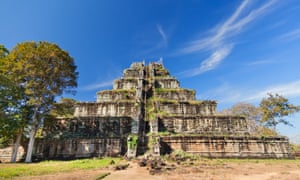
| Ancient Khmer pyramid in Koh Kher, Cambodia. Photograph: Alamy |
Done Pompeii, Ephesus and Angkor and still thirsting after archeological marvels? The founder of Timeless Travels magazine recommends 10 less well-known sites that can usually be savoured without the crowds
Koh Ker, Cambodia
Lost to forest and abandoned for over a thousand years, you’ll find this little-visited site in northern Cambodia. It’s less than two hours’ ride from its more famous cousin, Angkor Wat, and well worth a visit to see more than two dozen temples emerging from the jungle. A highlight is a seven-tiered pyramid, 40 metres high, which is thought to have been the state temple of Jayavarman IV and is often compared to Mayan temples. The site was the capital of the whole Khmer empire from 928-944AD.
• A new road means day trips to Koh Ker are possible from Siem Reap, but there are also now a few basic guesthouses and an ecolodge for those who want to stay longer
Choquequirao, Peru

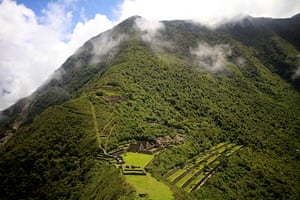
Little sister to the better-known Machu Picchu, Choquequirao is one of the most-rewarding travel destinations in the Americas. Only a few hundred people visit during the dry season (May to October), compared with thousands each day at Machu Picchu. At 3,000m, the site sits on a cloud-forest ridge, 61 miles west of Cusco in the remote Vilcabamba range. The city was built by Topa Yupanqui, son of the man who built Machu Picchu, Pachacuti, some time in the 15th century. It’s a two-day trek to Choquequirao from the town of Cachora (though a cable car link is planned), and exploring it and the outlying sites of Capullyoc, Hurincancha and Casa de Cascada with a guide will take several days.
• Buses run from Cusco to Ramal, close to Cachora, where guides and pack mules can easily be hired
Ani, Turkey
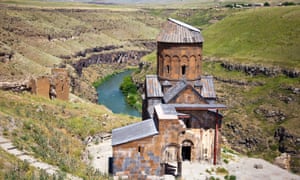
There are some wonderful treasures in the far east of Turkey and one of them is the site of Ani. Capital of the Armenian Bagratid dynasty until the 11th century, and situated on key trade routes, it flourished for over 400 years and at its peak was larger than any contemporary European city, with a population of over 100,000. It was destroyed by an earthquake in 1319, and today its ruins are spread over a wide area, with the remains of spectacular churches, a Zoroastrian fire temple, palaces and city walls. Take a picnic and spend a day exploring the site.
• Ani can be reached by taxi or hire car from the town of Kars, 46km away and served by internal flights from Ankara or Istanbul
Conimbriga, Portugal

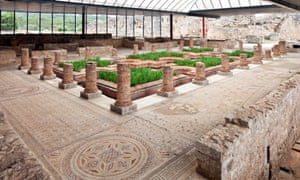
This is one of the largest Roman settlements in Portugal – roughly halfway between Lisbon and Porto, near the village of Condeixa-a-Nova. It was a prosperous town in Roman times and, while not the largest Roman city in Portugal, it is the best preserved. Although only a small section of the site has been excavated, there are baths, luxurious houses, an amphitheatre, a forum, shops, gardens with working fountains and city walls to explore, with many wonderful mosaics still in situ. In its centre is one of the largest houses discovered in the western Roman empire, the Casa de Cantaber, which is built around ornamental pools in superb colonnaded gardens and has its own bath complex and heating system. There is also a good museum, cafe and picnic site. Pick up a guidebook from the museum and have a few euro coins in your pocket to make the fountains work.
• Easyjet and Ryanair fly to Porto and Lisbon from about £50 return
Han Yangling, China

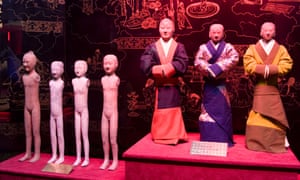
A smaller version of the Xi’an terracotta warriors, this often-overlooked site is the the tomb of E mperor Jing Di , who died in 141BC, and his Empress Wang. The site, 20km north of Xi’an, is well laid-out, with glass panels over the burial pits so you can see everything in situ, and there is also an excellent museum. The warrior figures here have individual faces; their arms were made of wood and they wore clothes. Sadly, both have disintegrated now, though examples can be seen in the museum. The pits are filled with figurines of courtiers and animals, and you can see the fossilised remains of wooden chariots.
• Han Yangling is easily reached by taxi, from Xi’an international airport (25 minutes)
Pella, Jordan

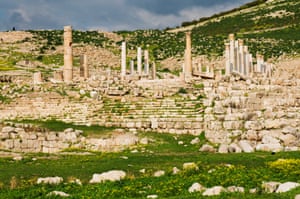
Frequently bypassed for the larger sites of Jerash and Umm Qais , Pella, in the north Jordan valley, is a multi-period site, occupied since neolithic times. It has some stunning Roman/Byzantine remains, and recent excavations have unearthed a Canaanite temple dating from 1700BC and early-bronze-age city walls dating from 3200BC. Take the time to climb to the top of Tell Husn, the southern mound overlooking the dig house, and you will be rewarded with a fantastic view across the excavations and the Jordan valley.
• The site is 45 minutes by road from the city of Irbid (two hours from Amman). Buses run from Irbid to the present-day village of Tabaqat Fahl
Vatican Necropolis, Italy

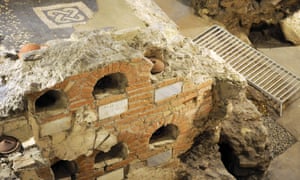
Beneath the Vatican City lie the ancient streets of Rome and an ancient burial ground, the Vatican necropolis – originally a cemetery on the southern slope of Vatican Hill. Saint Peter is said to be buried here, after he was martyred in the nearby Circus of Nero. Emperor Constantine I built a basilica above the apostle’s grave in the fourth century AD, and excavations in the 1940s did find a number of mausoleums. To walk at ancient street levels through the necropolis is an exciting experience for those who love to step back in time.
• Visits must be booked with the Vatican Excavations Office. Tours, in groups of about 12, last 90 minutes
Takht-e Soleyman, Iran

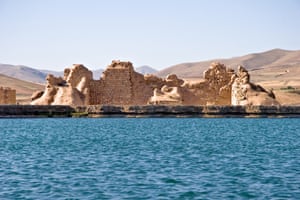
Takht-e Soleyman, meaning Throne of Solomon, is a breathtaking site built around a mineral-rich crater lake 30km north of Takab in Iran’s West Azerbaijan province. The earliest remains date from the Sasanian period, from 224 to 651AD. Set in a vast, empty landscape 2,000 metres above sea level, the site includes the remains of a Zoroastrian fire temple complex and a 13th-century Mongol palace. It is surrounded by an oval wall with 34 towers and two gates. The lake is 60 metres deep and so filled with minerals that it contains no life and is undrinkable. Don’t miss the small museum, housed in an Ilkhanid (a 13th-century building), with fine examples of tile, ceramics and stucco decoration.
• The site is about two hours by taxi from the city of Zanjan, which is served by buses and trains from Tehran
Fatehpur Sikri, India

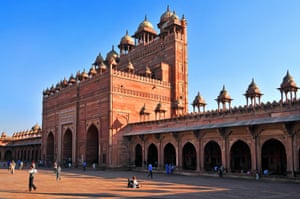
This surprisingly intact walled and fortified Mughal city is 40km west of Agra and the Taj Mahal in Uttar Pradesh. Built by Emperor Akbar in 1571, it was the Mughal capital for 14 years before being abandoned for lack of water. A stunning royal complex of pavilions and palaces include a harem, a mosque, private quarters, gardens, ornamental pools, courtyards and intricate carvings. It is the best-preserved collection of Mughal architecture in India. Don’t miss the Rumi Sultana palace, the smallest but most-elegant structure in the complex, and the secret stone safes in the corner of the Treasury, which also houses a museum opened just last year.
• The complex is an easy day trip from Agra: take a bus or train to Fatehpur station, 1km from the site
Pula, Croatia

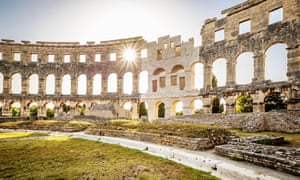
The amphitheatre of Pula is the only Roman amphitheatre to have four side towers and all three levels preserved. Built between in 27BC and 68AD, it is one of the six largest surviving Roman arenas in the world, and the best-preserved ancient monument in Croatia. Overlooking the harbour in the north-east of the town, it seated 20,000 spectators. In summer there are weekly re-enactments of gladiator fights, and it is also used for plays, concerts and the September Outlook festival. Look out for the slabs that used to secure the fabric canopies that sheltered spectators from the sun.
• Ryanair flies to Pula from Stansted from £117 return
by Fiona Richards
Labels:
#AdventureTravel,
#Archaeology,
#Architecture,
Adventure travel,
Archaeology,
Architecture,
Cambodia,
China,
Croatia,
Cultural trips,
Heritage,
India,
Iran,
Jordan,
Peru,
Portugal,
Top 10s,
Turkey,
Vatican City
Subscribe to:
Posts (Atom)