Peru’s Machu Picchu, an Inca-era stone citadel nestled in its southeastern jungle, reopened on Wednesday after being closed nearly a month ago amid antigovernment protests, the culture ministry announced.
The decision was made between agreements between authorities, social groups and the local tourism industry to guarantee the security of the famed tourist attraction and transport services.
Protests calling for the resignation of President Dina Boluarte and members of Peru’s Congress have shaken the region, including Cuzco, for more than two months. The demonstrations caused a blockade of the train tracks leading to the stone citadel.
The protests have led to 60 deaths: 48 are civilians who died in clashes with the security forces; 11 civilians killed in traffic accidents related to road blockades; and one policeman who died inside a patrol car when it was set on fire, according to data from the Ombudsman’s Office.
The closure of Machu Picchu, on Jan. 21, forced the government to airlift more than 400 tourists from Machu Picchu to the city of Cusco by helicopter.
Machu Picchu was built by the Incas in the 15th century as a religious sanctuary high in Andes Mountains.
Showing posts with label Peru. Show all posts
Wednesday, February 15, 2023
Sunday, January 22, 2023
Peru Closes Machu Picchu As Anti-Government Protests Grow
Peru indefinitely shut the famed ancient ruins of Machu Picchu on Saturday in the latest sign that anti-government protests that began last month are increasingly engulfing the South American country.
The Culture Ministry said it had closed the country’s most famous tourist attraction as well as the Inca Trail leading up to the site “to protect the safety of tourists and the population in general.”
There were 417 visitors stuck at Machu Picchu and unable to get out, more than 300 of them foreigners, Tourism Minister Luis Fernando Helguero said at a news conference.
The closure of the Incan citadel that dates to the 15th century and is often referred to as one of the new seven wonders of the world comes as protesters have descended on Lima, many of them traveling to the capital from remote Andean regions, to demand the resignation of President Dina Boluarte.
Also Saturday, police raided Peru’s most important public university in Lima to evict protesters who were being housed at the campus while participating in big demonstrations. More than 100 people were detained, Interior Minister Vicente Romero said.
Until recently, the protests had been concentrated in the country’s south. They began last month after then-President Pedro Castillo, Peru’s first leader with a rural Andean background, was impeached and imprisoned for trying to dissolve Congress.
Demonstrators are demanding the resignation of Boluarte, the former vice president sworn into office Dec. 7 to replace Castillo. They also want Congress dissolved and new elections held. Castillo is currently detained on charges of rebellion.
More than 55 people have died in the ensuing unrest, most recently on Friday night when a protester was killed and at least nine others injured in clashes with police in Puno. A total of 21 protesters and one police officer have died in the southern region.
On Saturday morning, police used a small tank to burst into the National University of San Marcos in the morning.
Javier Cutipa, 39, who traveled by bus from Puno, had been sleeping on the floor there since Thursday but left for breakfast right before the police arrived. He described the police action as “practically an assault,” with helicopters, tear gas and small tanks.
“This outrages us. The only thing the government is doing with these detentions is worsen tensions,” Cutipa said. He added that “when the population finds out about this they’re going to react in a more radical fashion.”
Hundreds of protesters congregated outside the law enforcement offices where the detainees were being held Saturday evening chanting “Freedom” and “We’re students, not terrorists.” More congregated at other points of downtown Lima.
The Inter-American Commission on Human Rights expressed “concern over the police incursion, eviction and massive detentions” at the university and urged the state to “guarantee the integrity and due process of all people.”
The university issued a news release saying the police raid took place after protesters “assaulted” security personnel.
Cusco, where Machu Picchu is located, has been the site of some of the most intense clashes, leading to significant loss of tourism revenue. The Cusco airport was briefly shut down this week after protesters tired to storm it.
Train service to Machu Picchu has been closed since Thursday due to damage to the tracks.
Some stranded tourists have chosen to leave by walking to Piscacucho, the nearest village, Helguero said, “but that involves a walk of six, seven hours or more and only a few people are able to do it.”
Tourists who had already bought tickets for Machu Picchu from Saturday until one month after whenever the protests end will be able to obtain a full refund, the Culture Ministry said.
By DANIEL POLITI
The Culture Ministry said it had closed the country’s most famous tourist attraction as well as the Inca Trail leading up to the site “to protect the safety of tourists and the population in general.”
There were 417 visitors stuck at Machu Picchu and unable to get out, more than 300 of them foreigners, Tourism Minister Luis Fernando Helguero said at a news conference.
The closure of the Incan citadel that dates to the 15th century and is often referred to as one of the new seven wonders of the world comes as protesters have descended on Lima, many of them traveling to the capital from remote Andean regions, to demand the resignation of President Dina Boluarte.
Also Saturday, police raided Peru’s most important public university in Lima to evict protesters who were being housed at the campus while participating in big demonstrations. More than 100 people were detained, Interior Minister Vicente Romero said.
Until recently, the protests had been concentrated in the country’s south. They began last month after then-President Pedro Castillo, Peru’s first leader with a rural Andean background, was impeached and imprisoned for trying to dissolve Congress.
Demonstrators are demanding the resignation of Boluarte, the former vice president sworn into office Dec. 7 to replace Castillo. They also want Congress dissolved and new elections held. Castillo is currently detained on charges of rebellion.
More than 55 people have died in the ensuing unrest, most recently on Friday night when a protester was killed and at least nine others injured in clashes with police in Puno. A total of 21 protesters and one police officer have died in the southern region.
On Saturday morning, police used a small tank to burst into the National University of San Marcos in the morning.
Javier Cutipa, 39, who traveled by bus from Puno, had been sleeping on the floor there since Thursday but left for breakfast right before the police arrived. He described the police action as “practically an assault,” with helicopters, tear gas and small tanks.
“This outrages us. The only thing the government is doing with these detentions is worsen tensions,” Cutipa said. He added that “when the population finds out about this they’re going to react in a more radical fashion.”
Hundreds of protesters congregated outside the law enforcement offices where the detainees were being held Saturday evening chanting “Freedom” and “We’re students, not terrorists.” More congregated at other points of downtown Lima.
The Inter-American Commission on Human Rights expressed “concern over the police incursion, eviction and massive detentions” at the university and urged the state to “guarantee the integrity and due process of all people.”
The university issued a news release saying the police raid took place after protesters “assaulted” security personnel.
Cusco, where Machu Picchu is located, has been the site of some of the most intense clashes, leading to significant loss of tourism revenue. The Cusco airport was briefly shut down this week after protesters tired to storm it.
Train service to Machu Picchu has been closed since Thursday due to damage to the tracks.
Some stranded tourists have chosen to leave by walking to Piscacucho, the nearest village, Helguero said, “but that involves a walk of six, seven hours or more and only a few people are able to do it.”
Tourists who had already bought tickets for Machu Picchu from Saturday until one month after whenever the protests end will be able to obtain a full refund, the Culture Ministry said.
By DANIEL POLITI
Saturday, April 2, 2022
Machu Picchu Has Been Called The Wrong Name For Over 100 Years. Historians Reveal Its True Name
(CNN) — Some mistakes are hard to shake.
For over 100 years, one of the most famous archaeological sites in the world, Machu Picchu, has been known by the wrong name, according to a report published in Ñawpa Pacha: Journal of the Institute of Andean Studies.
The Incas who built the ancient city likely called it Huayna Picchu, the report said.
Huayna translates to "new or young," while Picchu means "mountain peak" in the Indigenous Quechua language, said Emily Dean, professor of anthropology at Southern Utah University in Cedar City. She was not involved in the report. Machu means "old," so we've been calling it old mountain peak, she added.
The Incan settlement was believed to have been built around 1420 as an estate for royal Incas living in Cuzco, the capital of the Incan empire, according to report author Brian Bauer, professor of anthropology at the University of Illinois at Chicago.
When the Spaniards later conquered the Incas, Huayna Picchu was abandoned, the report said. It was hidden for centuries deep in the Andes mountains until American explorer Hiram Bingham rediscovered it in 1911.
In his field notes, Bingham decided to call the ancient city Machu Picchu, based on information provided to him by his guide Melchor Arteaga, a farmer who lived in the area, Bauer said.
During Bauer's research into Machu Picchu, he found evidence that its original name had been something else. Report author Donato Amado Gonzales -- a historian at the Ministry of Culture in Peru -- independently discovered the same pattern, so they decided to team up and unearth the real name together.
The researchers began by looking at Bingham's notes, where he stated he was uncertain of the name of the ruins when he first visited them. From there, Bauer and Amado Gonzales reviewed maps and atlases printed before and after Bingham's visit.
One of the most stunning documents was a report from 1588 stating the Indigenous people of the Vilcabamba region were considering returning to Huayna Picchu, Bauer said.
The name error isn't surprising, Dean said, because many non-Peruvian archaeologists did not put much effort into researching the names of places and didn't fully understand Quechua. "More broadly, this finding challenges the popular narrative that Hiram Bingham discovered Machu Picchu," she said. Locals knew about the site long before Bingham arrived.
A name change is unlikely
Despite the discovery of the area's original name, it's likely to remain Machu Picchu, Bauer said.
"We would not suggest that the name be changed since Machu Picchu is known worldwide," he added.
Machu Picchu is also published in thousands of books, articles, advertisements and legal documents, Dean said.
The Peruvian people and their government have embraced the new name, so while it's an interesting addition to the history of the site, it won't change the modern name, she noted.
For over 100 years, one of the most famous archaeological sites in the world, Machu Picchu, has been known by the wrong name, according to a report published in Ñawpa Pacha: Journal of the Institute of Andean Studies.
The Incas who built the ancient city likely called it Huayna Picchu, the report said.
Huayna translates to "new or young," while Picchu means "mountain peak" in the Indigenous Quechua language, said Emily Dean, professor of anthropology at Southern Utah University in Cedar City. She was not involved in the report. Machu means "old," so we've been calling it old mountain peak, she added.
The Incan settlement was believed to have been built around 1420 as an estate for royal Incas living in Cuzco, the capital of the Incan empire, according to report author Brian Bauer, professor of anthropology at the University of Illinois at Chicago.
When the Spaniards later conquered the Incas, Huayna Picchu was abandoned, the report said. It was hidden for centuries deep in the Andes mountains until American explorer Hiram Bingham rediscovered it in 1911.
In his field notes, Bingham decided to call the ancient city Machu Picchu, based on information provided to him by his guide Melchor Arteaga, a farmer who lived in the area, Bauer said.
During Bauer's research into Machu Picchu, he found evidence that its original name had been something else. Report author Donato Amado Gonzales -- a historian at the Ministry of Culture in Peru -- independently discovered the same pattern, so they decided to team up and unearth the real name together.
The researchers began by looking at Bingham's notes, where he stated he was uncertain of the name of the ruins when he first visited them. From there, Bauer and Amado Gonzales reviewed maps and atlases printed before and after Bingham's visit.
One of the most stunning documents was a report from 1588 stating the Indigenous people of the Vilcabamba region were considering returning to Huayna Picchu, Bauer said.
The name error isn't surprising, Dean said, because many non-Peruvian archaeologists did not put much effort into researching the names of places and didn't fully understand Quechua. "More broadly, this finding challenges the popular narrative that Hiram Bingham discovered Machu Picchu," she said. Locals knew about the site long before Bingham arrived.
A name change is unlikely
Despite the discovery of the area's original name, it's likely to remain Machu Picchu, Bauer said.
"We would not suggest that the name be changed since Machu Picchu is known worldwide," he added.
Machu Picchu is also published in thousands of books, articles, advertisements and legal documents, Dean said.
The Peruvian people and their government have embraced the new name, so while it's an interesting addition to the history of the site, it won't change the modern name, she noted.
Monday, November 2, 2020
Peru’s Machu Picchu Has Reopened After Pandemic Closure
MACHU PICCHU, Peru (AP) — Except workers repairing roads and signs, Peru’s majestic Incan citadel of Machu Picchu is eerily empty ahead of its reopening Sunday after seven months of closure due to the coronavirus pandemic.
The long closure of Peru’s No. 1 tourist draw, which has hammered the local economy, marks the second time it has been shut down since it opened its doors to tourism in 1948. The first time was in 2010 when torrential and prolonged rains forced it to close.
The stone complex built in the 15th century will receive 675 visitors a day starting November 1, the director of Machu Picchu archaeological park, José Bastante, told The Associated Press during an exclusive visit to the near-empty ruin ahead of its reopening.
“We have a limited 30% admission capacity in compliance with biosafety measures and protocols,” Bastante said while supervising final preparations to open the UNESCO World Heritage Site.
The site is accustomed to receiving 3,000 tourists a day, though it recently passed regulations limiting visitors to 2,244 visitors a day to protect the ruins. Still a large number given experts belief that in the 15th century a maximum of 410 people lived in the citadel on the limits of the Andes mountains and the Amazon.
Before entering, visitors will have their temperatures taken and will be required to wear masks and stand at least 2 meters apart. Groups, including a guide, cannot be larger than eight people, and children under 12 will not be allowed. To avoid crowding, visitors will travel on four circuits.
Tour operators are offering packages costing $250 to visit Machu Picchu, which before the pandemic would have cost at least $750.
Peru’s tourism revenues have been frozen since it decreed a general lockdown March 16 to stop the spread of the novel coronavirus. So far, 34,197 people have died from COVID-19 in the country.
Machu Picchu is Peru’s tourism jewel and in 2018 drew 1.5 million visitors. The citadel was built in the 15th century as a religious sanctuary for the Incas at an altitude of 2,490 meters (8,170 feet).
Sunday, May 22, 2016
Olympic Games Spark Interest In Amazon Cruises
| Iberostar Amazon Cruise. |
Olympics announce soccer matches to be held in Manaus, increasing tourism to the Amazon Region. Rainforest Cruises introduces Olympic Amazon cruise departures during the Olympics in Brazil, offering a two-for-one, accommodation and tours.
Rainforest Cruises introduces Olympic Amazon cruises departing from Manaus, the city to host three Olympic soccer matches. These Brazil cruises depart between the opening and closing ceremonies of the games in August 2016 and range from 2-10 days in length, offering an all-inclusive service on board.
Jeremy Clubb, owner of Rainforest Cruises, is excited to offer the opportunity to experience both, the thrill of the Olympics and the majesty of the Amazon rainforest.
"Similar to the World Cup, where we experienced a 130% increase in bookings, we forecast another spike in demand for Amazon Cruises during the Olympics. We noticed groups of friends and families would charter vessels as accommodation and to explore the Amazon - essentially a two for one."- Jeremy Clubb
Manaus is the capital and largest city of the state of Amazonas, in Brazil. It is situated at the confluence of the rivers Negro and Solimões, known as the Meeting of the Waters, making it the ideal starting point for an Amazon River Cruise. The city's spectacular Arena da Amazônia holds a capacity of 41,000 spectators. It was originally constructed for FIFA's World Cup in 2014.
On-board activities include expert talks from naturalists, nightly entertainment with a local flavour and dining on delicious Brazilian cuisine.
Some of the expeditions include are trips along the River Negro to a feeding spot of Pink River Dolphins; a visit to the Anavilhanas Archipelago, home to some of most beautiful and wild waterfalls in the whole region and Piranha fishing.
On-land adventures include guided jungle walks for wildlife spotting, traditional village visits and the chance to meet locals whose lives revolve around the Amazon River and rainforest.
Types of vessels vary from traditional wooden boats and classical schooners, to modern boats with swimming pools on board. Many cruises are family-friendly and ideal for group chartering.
Details:
- Prices range from $539 per person, 2-Day to $2,389 per person, 10-Day.
- Cruises include all accommodation, meals/beverages and bilingual naturalist guides.
- Cruises include daily jungle excursions and activities.
- Manaus Olympic soccer matches to be held in Arena da Amazônia on August 4, 7 and 9.
About Rainforest Cruises: Rainforest Cruises is a travel company specialising in Amazon river cruises and tours, providing the finest collection of cruises, at unbeatable prices in Peru, Brazil, Ecuador, Bolivia, the Galapagos Islands and Panama. As South American travel experts, Rainforest Cruises has been featured in Fodor's Best Cruises for 2015, as well as many other top news sources: USA Today, NY Times, Travel & Leisure, Bloomberg, among others.
Contact Us for more information.
Labels:
#BrazilOlympicGames,
#Cruise,
#SouthAmerica,
#Travel,
Amazon Cruises,
Bolivia,
Brazil,
Brazil cruises,
Cruise,
Ecuador,
Galapagos Islands,
Manaus,
Panama,
Peru,
Rainforest Cruises,
South America,
Travel
Friday, February 19, 2016
Sailing South: Patagonia By Sea
A maze of fjords with wild, wind-worn isles, abundant marine life and glaciers that tumble into the Pacific, the singular landscape of Chilean Patagonia is often best admired from the deck of a boat. From the humble ferry to luxury cruises, plenty of options for all budgets ply this spectacular coastline.
The Ruta Bimodal
South of Puerto Montt, the South American continent crumbles into numerous islands scattered from the Andean peaks that fortress the mainland. Roads are no longer a constant. Instead, travel requires routing a course of dirt roads and ferries. The Ruta Bimodal, operated by Naviera Austral (taustral.cl), marks three obligatory ferry crossings between Puerto Montt and Chaitén.
On a sunny summer day, it’s hard to beat the beauty of the Ruta Bimodal, which cruises a narrow corridor between islands and verdant peaks along the coast. Black dolphins cavort in the ship’s wake and passengers swap stories on the deck. The extraordinary Parque Pumalínis the crown jewel on this route, with trails to waterfalls, Valdivian rainforest and the smoking crater of Volcan Chaitén. For a hands-on aquatic adventure, explore coastal Pumalín via a sea kayaking tour (kokayak.cl) through the fjords, stopping in at isolated natural hot springs and sea lion colonies.
At the end of this string of ferries , the coastal village of Chaitén is reached via an hour-long drive through Pumalín. With yawning, rugged appeal, Chaitén is the northern hub of the Carretera Austral, the 1240km dead-end route through scenic and sparsely populatedPatagonia. Ferries also arrive here direct from Puerto Montt via a longer ocean route and the island of Chiloé.
One ferry ticket serves the entire Ruta Bimodal and there are two daily departures in summer. Those traveling by car should reserve well in advance. For those traveling on the cheap, it’s also possible to take this route by bus from Puerto Montt. Pack snacks and a lunch and dress to enjoy potentially blustery weather.
The Navimag experience
The most famous sea voyage in Chile, and perhaps all of South America, is the 3-day Navimag (navimag.com) ferry trip between Puerto Montt and Puerto Natales. For travelers it’s practically a rite of passage, with iconic Andean seascapes and plenty of time to gaze out on the glassy expanse of nature uninterrupted.
The best reason to complete the voyage in a southbound direction is to meet other international travelers on their way to Torres del Paine National Park. After three days of chats, card games and an occasional shared seasickness, strangers can become friends. Later trail reunions are not uncommon and add a curious intimacy to a multi-day trek in a sprawling wilderness.
The boat stops in Puerto Edén on the way, a unique village of homes on stilts on Isla Wellington, an island inhabited by the seafaring Alcaluf indigenous group. This voyage is exceedingly popular, so reserve your berth well in advance.
Navimag also runs a shorter overnight trip between Puerto Montt and Puerto Chacabuco, located near Coyhaique, a route where you are more likely to rub shoulders with the locals.
San Rafael Glacier
A sculpted tower of beguiling blue, San Rafael Glacier is the world’s closest tidewater glacier to the equator. A powerful expanse jutting off the northern ice field, it is unfortunately receding fast. At some estimates, this 760-square-kilometer glacier could disappear as soon as 2030. Meanwhile, it’s worth the pilgrimage to gaze upon this great rippled face that dips into the sea.
Cruise ship Skorpios II (skorpios.cl) sails from Puerto Montt on a six-day round-trip that includes a stop at private hot springs and a visit to the island of Chiloé. The entire third day is spent at the glacier, with Zodiac boats bringing passengers amongst the icebergs, a safe distance from the calving ice. On return, the ship crosses the Gulf of Corcovado, a key feeding ground for blue whales, the largest animals on earth.
A more adventuresome option visits the San Rafael Glacier via Valle Exploradores, a recently-minted 77km gravel offshoot from the Carretera Austral. For the time being, guide services that provide boat access are required. Several outfitters offer the trip from nearby Puerto Río Tranquilo, with an overnight option in yurts. For bonus views, hike the solitary glacier lookout trail with nothing between you and the gawping majesty of Chile’s northern ice field. For those driving the route, a four-wheel drive vehicle is a must.
Tierra del Fuego and beyond
Intrepid travelers with their sights set on Cape Horn are often disappointed to learn that while many ships make the crossing, few actually stop. Luxury cruiser Australis (australis.com) is one of them. Their three-to four-night cruises between Ushuaia and Punta Arenasroam the Magellanic Strait south to Cape Horn, visiting glaciers, remote coastline and austral forests. These expedition-style trips offer a good dose of comfort off the beaten path. Zodiac boat excursions and walks balance out leisure time when guests are sipping cocoa in the stateroom. For those who don’t have Argentina in their itinerary, passengers have the option of starting and ending the trip in Punta Arenas.
With a heavy dose of explorer’s gumption, small groups can also navigate the remotest parts of the region by sailboat. Puerto Williams-based SIM Expeditions (simltd.com) is an experienced outfitter offering two-week voyages to Cape Horn and the Darwin Range.
Peru travel guide
$25.99
Peru startles with its variety - parched coastal desert, jagged Andean peaks, lush Amazon rainforest. Its rich culture runs the gamut from sophisticated Lima to traditional weaving villages and mist-shrouded ancient ruins.
VISIT SHOP
Most travelers assume that Ushuaia is the end of the world, only to find out that it stares southward toward the tiny Chilean burg of Puerto Williams on the wild Isla Navarino. Transbordadora Austral Broom (tabsa.cl) runs weekly ferry service to this fascinating destination from Punta Arenas. The ferry offers both bunk berths and reclining seats. Only bunks can be reserved ahead, as the cheaper seats are reserved for locals.
Do the 36-hour trip southbound and you’re rewarded with a daylight passage through an alley of stunning glaciers in the Strait of Magellan. From Puerto Williams, the route is the same but the glaciers are passed at night. Be on the lookout for whales between December and April.
By CAROLYN MCCARTHY
Lonely Planet Writer
Friday, October 30, 2015
Cusco Beyond Machu Picchu
| PHOTO: Lobby of the Palacio del Inka in Cusco, Peru. (Courtesy Libertador Hotels, Resorts & Spas) |
Cusco is well known as the jumping-off point for tours to Machu Picchu, but the city itself, and its surrounding areas, have a lot more to offer travelers than just this one iconic site. Cusco is a UNESCO World Heritage Site. It was the capital of the Tawantinsuyu Inca Empire and was developed as a complex urban center. When the Spanish invaded in the 16th century, the Inca city was preserved and baroque-style temples, monasteries and manor houses were built on top of the existing city.
Therefore, Cusco and its surrounding areas are definitely worthy of further exploration. Here are several diverse offerings for those looking to spend more time in the area.
Trekking
The Sacred Valley is a mecca for those looking to get their hike on. The options are varied from high-intensity exploration to casual, shorter walks. A unique offering is trekking with llamas, which can be arranged by Tambo del Inka and Palacio del Inka hotels through the Llama Pack Project. One of the walks begins in the gorge of Pumahuanca and lasts for approximately four hours. Another option explores the area known as Quebrada de Loros, in Urquillo. This trek is three hours long and promises views of Sawasiray and of the Urubamba Valley.
Gastronomy
The city of Cusco offers a wide range of gastronomic experiences. There is always a new restaurant or bar opening, offering a fresh take on modern and traditional cuisines. One of the most popular dining experiences is at Marcelo Batata. Chicha gives visitors the chance to experience the cuisine of one of the country’s most celebrated chefs, Gaston Acurio. Incanto offers a variety of fusion dishes with a menu that has something for the adventurous as well as the more traditional diner. Cicciolina is another of the city’s most well known establishments in the chic San Blas neighborhood, using hand-selected local ingredients, and Papacho’s and Uchu are other well known restaurants.
Organic Experiences
Continuing the culinary theme in Cusco is the farm-to-table trend which really caught on in Cusco and the Sacred Valley. Tambo del Inka Luxury Collection Resort & Spa offers a culinary experience with fruits and vegetables from its own garden. The hotel, which is also one of the few LEED-certified properties in the area and operates its own train station to Machu Picchu, works on achieving sustainable practices. One of these practices is in its kitchen. The garden at Tambo del Inka grows high-quality seasonal vegetables, and offers guests a cooking station along with tables that seat up to eight people for guests who would like to harvest their own vegetables, cook and eat there, surrounded by nature.
Fair Trade Purchases
The farm-to-table trend is not the only movement that brings out Cusco’s local traditions. There is also an interest in making authentic purchases and promoting fair trade. For visitors who are looking for quality gifts at affordable prices in Cusco, shopping at Palacio del Inka is another way to give back to the community. When you buy there, you help Mantay, a shelter home for teenage mothers who have no one to protect them and help them raise their babies.
Girls living in Mantay facilities are encouraged to finish high school and learn some skills that allow them to support themselves. One of the skills they can learn is leatherworking, and the store features high-quality leather items made by these women, including wallets, briefcases, purses, key ring and more in the store.
For more information, visit www.libertador.com.pe.
By JANEEN CHRISTOFF, www.travelpulse.com
Saturday, October 17, 2015
10 Of The Best Ancient Ruins … That You’ve Probably Never Heard Of
![]() |
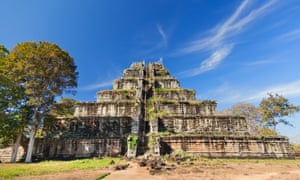
| Ancient Khmer pyramid in Koh Kher, Cambodia. Photograph: Alamy |
Done Pompeii, Ephesus and Angkor and still thirsting after archeological marvels? The founder of Timeless Travels magazine recommends 10 less well-known sites that can usually be savoured without the crowds
Koh Ker, Cambodia
Lost to forest and abandoned for over a thousand years, you’ll find this little-visited site in northern Cambodia. It’s less than two hours’ ride from its more famous cousin, Angkor Wat, and well worth a visit to see more than two dozen temples emerging from the jungle. A highlight is a seven-tiered pyramid, 40 metres high, which is thought to have been the state temple of Jayavarman IV and is often compared to Mayan temples. The site was the capital of the whole Khmer empire from 928-944AD.
• A new road means day trips to Koh Ker are possible from Siem Reap, but there are also now a few basic guesthouses and an ecolodge for those who want to stay longer
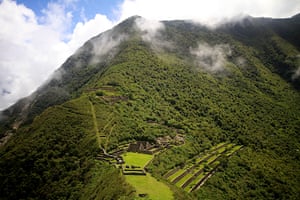
Choquequirao, Peru

Little sister to the better-known Machu Picchu, Choquequirao is one of the most-rewarding travel destinations in the Americas. Only a few hundred people visit during the dry season (May to October), compared with thousands each day at Machu Picchu. At 3,000m, the site sits on a cloud-forest ridge, 61 miles west of Cusco in the remote Vilcabamba range. The city was built by Topa Yupanqui, son of the man who built Machu Picchu, Pachacuti, some time in the 15th century. It’s a two-day trek to Choquequirao from the town of Cachora (though a cable car link is planned), and exploring it and the outlying sites of Capullyoc, Hurincancha and Casa de Cascada with a guide will take several days.
• Buses run from Cusco to Ramal, close to Cachora, where guides and pack mules can easily be hired
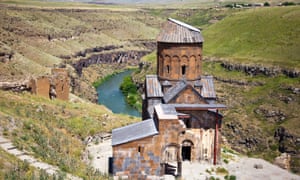
Ani, Turkey
There are some wonderful treasures in the far east of Turkey and one of them is the site of Ani. Capital of the Armenian Bagratid dynasty until the 11th century, and situated on key trade routes, it flourished for over 400 years and at its peak was larger than any contemporary European city, with a population of over 100,000. It was destroyed by an earthquake in 1319, and today its ruins are spread over a wide area, with the remains of spectacular churches, a Zoroastrian fire temple, palaces and city walls. Take a picnic and spend a day exploring the site.
• Ani can be reached by taxi or hire car from the town of Kars, 46km away and served by internal flights from Ankara or Istanbul
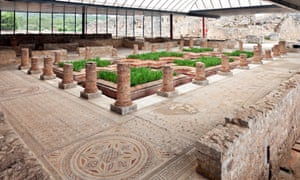
Conimbriga, Portugal

This is one of the largest Roman settlements in Portugal – roughly halfway between Lisbon and Porto, near the village of Condeixa-a-Nova. It was a prosperous town in Roman times and, while not the largest Roman city in Portugal, it is the best preserved. Although only a small section of the site has been excavated, there are baths, luxurious houses, an amphitheatre, a forum, shops, gardens with working fountains and city walls to explore, with many wonderful mosaics still in situ. In its centre is one of the largest houses discovered in the western Roman empire, the Casa de Cantaber, which is built around ornamental pools in superb colonnaded gardens and has its own bath complex and heating system. There is also a good museum, cafe and picnic site. Pick up a guidebook from the museum and have a few euro coins in your pocket to make the fountains work.
• Easyjet and Ryanair fly to Porto and Lisbon from about £50 return
Han Yangling, China

A smaller version of the Xi’an terracotta warriors, this often-overlooked site is the the tomb of E mperor Jing Di , who died in 141BC, and his Empress Wang. The site, 20km north of Xi’an, is well laid-out, with glass panels over the burial pits so you can see everything in situ, and there is also an excellent museum. The warrior figures here have individual faces; their arms were made of wood and they wore clothes. Sadly, both have disintegrated now, though examples can be seen in the museum. The pits are filled with figurines of courtiers and animals, and you can see the fossilised remains of wooden chariots.
• Han Yangling is easily reached by taxi, from Xi’an international airport (25 minutes)
Pella, Jordan

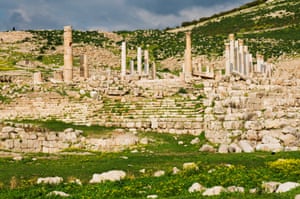
Frequently bypassed for the larger sites of Jerash and Umm Qais , Pella, in the north Jordan valley, is a multi-period site, occupied since neolithic times. It has some stunning Roman/Byzantine remains, and recent excavations have unearthed a Canaanite temple dating from 1700BC and early-bronze-age city walls dating from 3200BC. Take the time to climb to the top of Tell Husn, the southern mound overlooking the dig house, and you will be rewarded with a fantastic view across the excavations and the Jordan valley.
• The site is 45 minutes by road from the city of Irbid (two hours from Amman). Buses run from Irbid to the present-day village of Tabaqat Fahl
Vatican Necropolis, Italy

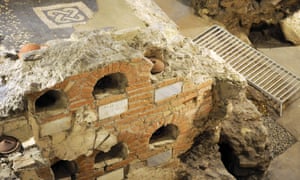
Beneath the Vatican City lie the ancient streets of Rome and an ancient burial ground, the Vatican necropolis – originally a cemetery on the southern slope of Vatican Hill. Saint Peter is said to be buried here, after he was martyred in the nearby Circus of Nero. Emperor Constantine I built a basilica above the apostle’s grave in the fourth century AD, and excavations in the 1940s did find a number of mausoleums. To walk at ancient street levels through the necropolis is an exciting experience for those who love to step back in time.
• Visits must be booked with the Vatican Excavations Office. Tours, in groups of about 12, last 90 minutes
Takht-e Soleyman, Iran

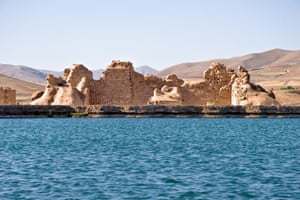
Takht-e Soleyman, meaning Throne of Solomon, is a breathtaking site built around a mineral-rich crater lake 30km north of Takab in Iran’s West Azerbaijan province. The earliest remains date from the Sasanian period, from 224 to 651AD. Set in a vast, empty landscape 2,000 metres above sea level, the site includes the remains of a Zoroastrian fire temple complex and a 13th-century Mongol palace. It is surrounded by an oval wall with 34 towers and two gates. The lake is 60 metres deep and so filled with minerals that it contains no life and is undrinkable. Don’t miss the small museum, housed in an Ilkhanid (a 13th-century building), with fine examples of tile, ceramics and stucco decoration.
• The site is about two hours by taxi from the city of Zanjan, which is served by buses and trains from Tehran
Fatehpur Sikri, India

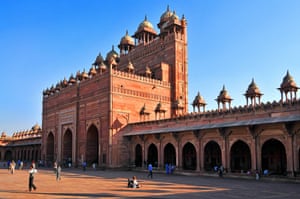
This surprisingly intact walled and fortified Mughal city is 40km west of Agra and the Taj Mahal in Uttar Pradesh. Built by Emperor Akbar in 1571, it was the Mughal capital for 14 years before being abandoned for lack of water. A stunning royal complex of pavilions and palaces include a harem, a mosque, private quarters, gardens, ornamental pools, courtyards and intricate carvings. It is the best-preserved collection of Mughal architecture in India. Don’t miss the Rumi Sultana palace, the smallest but most-elegant structure in the complex, and the secret stone safes in the corner of the Treasury, which also houses a museum opened just last year.
• The complex is an easy day trip from Agra: take a bus or train to Fatehpur station, 1km from the site
Pula, Croatia

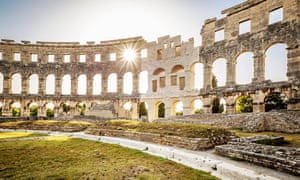
The amphitheatre of Pula is the only Roman amphitheatre to have four side towers and all three levels preserved. Built between in 27BC and 68AD, it is one of the six largest surviving Roman arenas in the world, and the best-preserved ancient monument in Croatia. Overlooking the harbour in the north-east of the town, it seated 20,000 spectators. In summer there are weekly re-enactments of gladiator fights, and it is also used for plays, concerts and the September Outlook festival. Look out for the slabs that used to secure the fabric canopies that sheltered spectators from the sun.
• Ryanair flies to Pula from Stansted from £117 return
by Fiona Richards
Labels:
#AdventureTravel,
#Archaeology,
#Architecture,
Adventure travel,
Archaeology,
Architecture,
Cambodia,
China,
Croatia,
Cultural trips,
Heritage,
India,
Iran,
Jordan,
Peru,
Portugal,
Top 10s,
Turkey,
Vatican City
Subscribe to:
Posts (Atom)