Showing posts with label #Catalonia. Show all posts

Monday, January 25, 2016

10 Of The Best Ways To Enjoy Barcelona … On A Budget

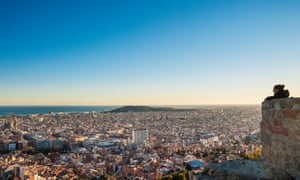
View of Barcelona from El Turó de la Rovira, a civil war gun emplacement on a hill near Park Güell.
View of Barcelona from El Turó de la Rovira, a civil war gun emplacement on a hill near Park Güell. Photograph: Dosfotos /Design Pics/Getty Images/Axiom RM


Savour the Catalan capital by avoiding the pricey and the touristy in favour of favourite local hangouts, from outdoor cinema to great beaches and vermut bars


Take in the view

Barcelona street life is irresistible, but sometimes you want to rise above the crowds. A ride in the cable car across the harbour is great but expensive (single ticket €11). You’ll get an even better view from the cocktail bar at the top of the waterfront W hotel. You do not even need to have a (pricey) drink, but the people-watching makes it worth it. I think the best view in Barcelona is also probably its least well known. El Turó de la Rovira (free) is a civil war gun emplacement on a hill near Park Güell and once you’ve recovered from the climb you can look out across the city to the sea, up the coast towards France and back to the Pyrenees. The rooftop tour of the beautiful church of Santa Maria del Marcosts €8 but gives you a fascinating insight into its construction and a unique view across the rooftops of the tightly packed streets of the Born district.

Vermuts musicals
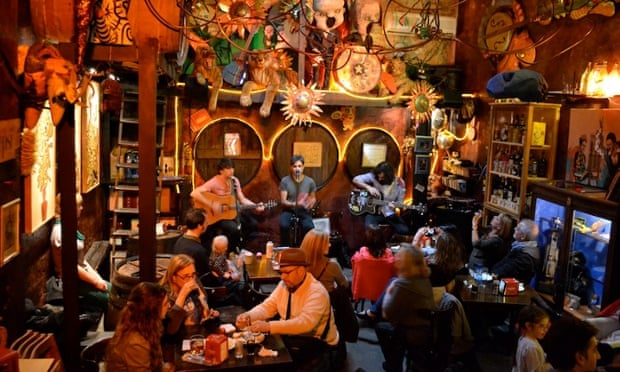
Gran Bodega Saltó, ‘the grandaddy of vermuts musicals’
 Gran Bodega Saltó, ‘the grandaddy of vermuts musicals’
Catalan vermut, a fortified wine spiced with herbs, is vermouth’s down-and-dirty cousin. It fell out of fashion 50 years ago but is now making a remarkable comeback and vermuterías are some of the city’s trendiest drinking spots (even the Adrià brothers of El Bullí fame have opened one: Bodega 1900). Vermut was traditionally drunk after mass and before a late Sunday lunch but it took the revival to add that extra ingredient for a supremely relaxed weekend afternoon - free live music, and so vermuts musicals were invented. You’ll find them all over town on Sundays – and often Saturdays – but the district of Poble Sec, a 10-minute walk from the Ramblas, with its mix of old-fashioned drinking holes and fashionable hangouts should see you right.
Gran Bodega Saltó is the grandaddy of vermuts musicals. The crowd watching the acoustic performers often spills out from its kitsch interior on to the street. Free, but a donation of a bottle of olive oil for a charity helping the poor locally is requested – there’s a supermarket nearby. Try also vermut and DJs at Olivia Vermutería and Bar Rufián. Poble Sec’s raucous festival runs from 18-26 July if you need another excuse to visit the barrio.

The street art scene
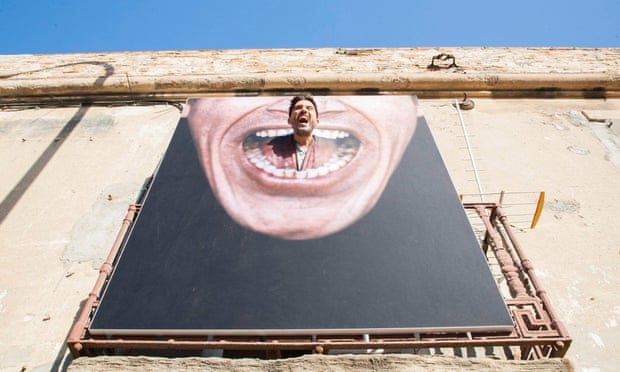
Ús Barcelona event
Pinterest
 At the Ús Barcelona event a whole street is transformed by artists over a weekend in May
The still-gritty Raval district, just off the Ramblas, is the colourful hub of the city’s urban culture. Any available surface is fair game for anything from stickers to stencils and flyers to murals. You’ll find plenty of examples just by wandering the streets or join a tour such as the highly-rated Barcelona Street Style Tour (free, donation requested). Sunday is a good day to explore because shop shutters, the canvas for many an enthusiastic artist, are down. The former industrial barrio of Poblenou, just beyond Port Olímpic, is another hotspot. Its innumerable warehouses are fast being turned into fashionable lofts but there are still lots of unloved buildings to go at. For the last couple of years it’s been the setting for Ús Barcelona (see a video of the 2015 event at vimeo.com), where a whole street, including parked cars, is transformed by artists over a weekend in May. Food vans, DJs and bands add to the fun.

Stylish stays
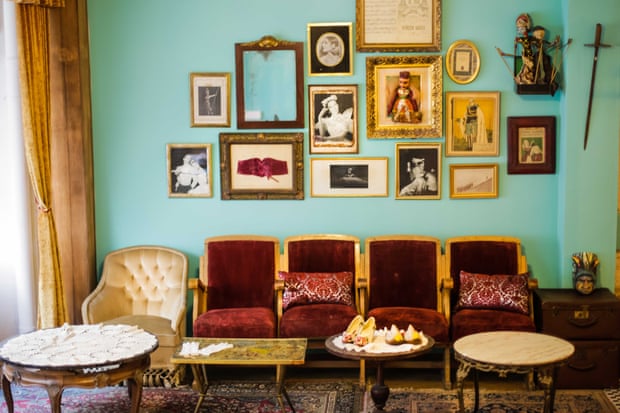
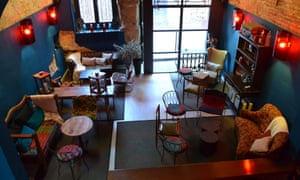
the newly opened Teatro hostel
Pinterest
 the newly opened Teatro hostel
New five-star hotels pop up in Barcelona with alarming regularity. But there are still plenty of great choices even if you’re not Pippa Middleton. The Praktik chain of hotels is fab. Simple, affordable rooms in wonderful locations, with a bit of glamour thrown in. Its latest, Praktik Vinoteca (doubles from €79, room-only), has a reception hall lined with thousands of bottles of wine, all for sale. Free tastings are held on the pretty terrace and bodega tours are organised. It’s in the Eixample area, minutes from the posh shops on Passeig de Gràcia and some of Gaudí’s most famous buildings. Newly opened Teatro hostel in Poble-sec (dorm beds from €13) is good fun. It’s stuffed full of theatrical props and fabrics, the dorms are comfortable and the highly-experienced owner really knows how to look after travellers.

Films alfresco
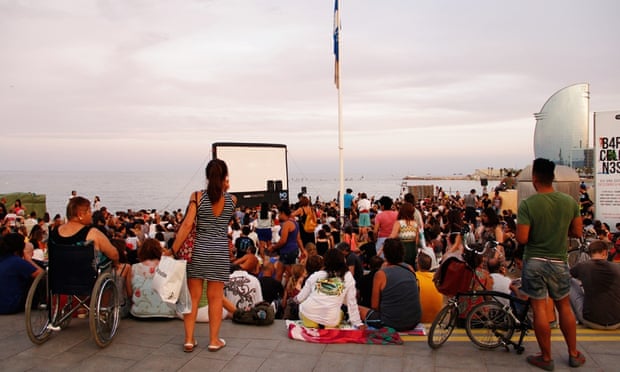
Cinema Lliure a la Platja runs on the beach in summer, and is free
Pinterest
 Cinema Lliure a la Platja runs on the beach in summer, and is free
Open-air cinema is a summer tradition in the city. The screenings on Montjuïc hill(until 7 August, tickets from €6), in the shadow of the castle, are now in their 13th year. The programme is always a crowd-pleaser and this year includes The Big Lebowski, Reservoir Dogs and Moulin Rouge (all subtitled into Spanish). But you don’t have to schlep all the way up the hill to get your film fix this year.Cinema Lliure a la Platja is on the beach, runs until 16 August and is free. Its programme is more eclectic but looks fascinating. Foreign films are subtitled into Spanish; Spanish films have English subtitles. If you don’t want sand in your popcorn, then films from Mecal – the International Festival of Short Films and Animation of Barcelona – will be screened outdoors all summer at Poble Espanyol(€6.50) and on the rooftop of the Hotel Silken Diagonal (free).

Designer chic and cheap
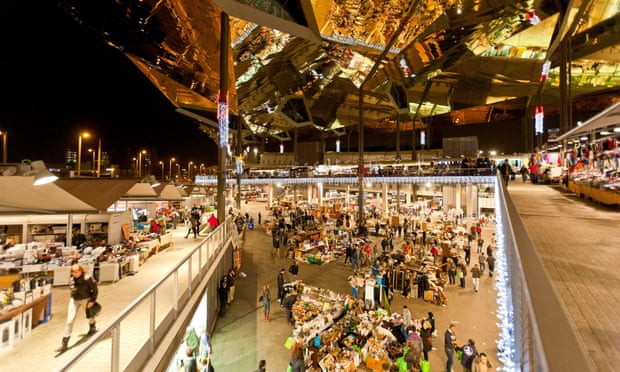
Encants flea market.
Pinterest
 Encants market is in a fabulous, new semi-enclosed building. Photograph: Alamy
The stunning new Museu del Disseny (€5) puts on one site several museums that had been spread across the city. A whole floor is devoted to its fashion collection, giving you an idea of what the Kardashians of the 18th and 19th centuries would have been wearing. You’ll also find floors of examples of textiles, decorative arts, product design and graphic art. The city council is pouring investment into this part of town, Glòries. One of Barcelona’s most interesting, eclectic and downright bizarre markets, Encants (Monday, Wednesday, Friday, Saturday 9am-8pm), is in a fabulous, new semi-enclosed building. Browse stalls selling everything from antique mirrors and obscure garden tools to boxes of vinyl records and fake-fur jackets under a spectacular giant copper-coloured reflective roof. There’s a tempting set of food stands on the top floor where you can sit and wonder what to do with that stuffed bear you’ve just bought.

Green spaces
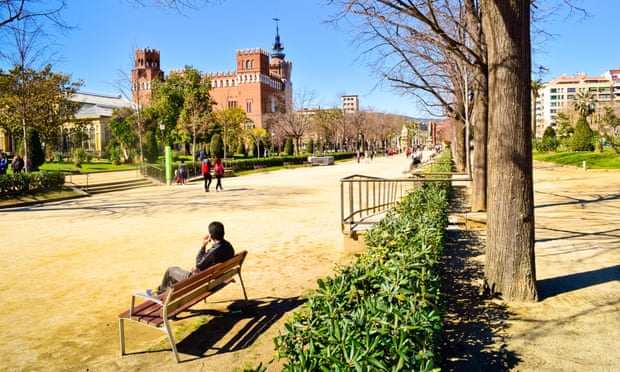
Ciutadella Park.
Pinterest
 Ciutadella park. Photograph: Alamy
Barcelona’s not a city of big parks: blame the medieval walls that kept people crammed together, and then developers in the 19th century who screwed with the open areas planned for the new town, the Eixample. So grab a bit of space when you can. Ciutadella park, just beyond the Born district, has plenty of grass, shade, spectacular fountains and some prime examples of modernisme buildings. A little known green, yellow, orange, pink and red gem is the Parc de Cervantesrose garden (free) in Pedralbes, which has nearly 250 varieties and lots of quiet corners for lounging. Parc de Laberint (free), once the estate of an aristo, is the city’s oldest garden, with waterfalls, streams, canals and ponds. But the clue to its big appeal lies in its name: a beautiful maze of two-metre-high hedges. Can you find “love”, a statue of Cupid, at its heart?

Royale with queso
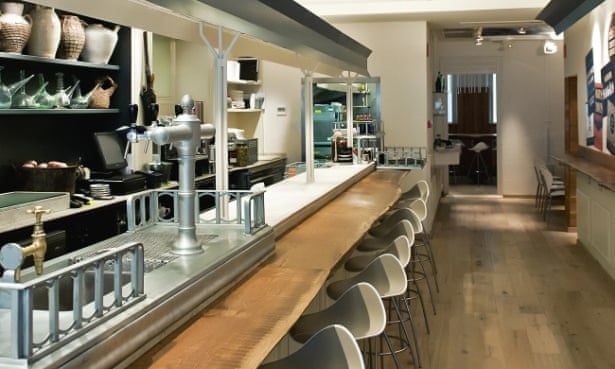
Sagàs
 Sagàs
Food trends sweep through Barcelona faster than a pickpocket down the Ramblas. And often they’re just as welcome. Burgers are big, very big but not in a “supersize me” sort of way. I like Sagàs on the edge of the Born. It has a more seriously foodie place (Els Casals) towards the Pyrenees but here it’s kept simple and delicious, using the meat produced there. A burger’s about €8 but worth every penny. Bacoa is a small chain dedicated to all things griddled and stuck between pieces of bread. Kiosko (Avenida del Marquès de l’Argentera) in the Born is my favourite – expect to pay about €6. Timesburg (burger around €6) in Poblenou is as trendy as its postcode but worth the trek. For more good-value food, that’s a bit more traditional, read my recent guide to menús del día (set lunches).

Beach life
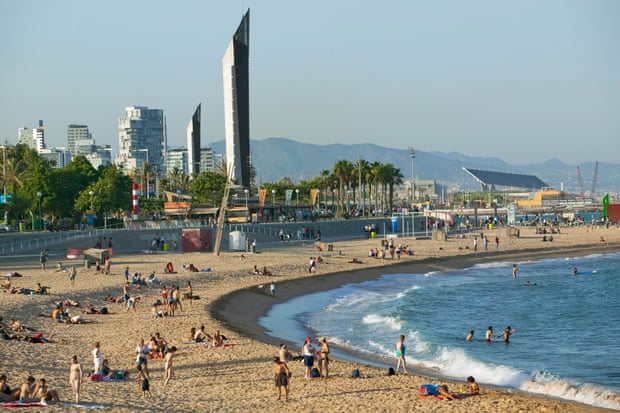
Nova Icària beach.
Pinterest
 Nova Icària beach. Photograph: Marco Cristofori/Alamy
Famously, the Barcelonins only discovered the beach after the 1992 Olympics, but long days on the platja are now an essential part of summer. It pays to choose your bit of beach with care. As with most of Catalan life there’s a strict, unspoken system – try jumping the queue at the chicken and rabbit stand in the market to test this. So, each stretch of sand has its own character: the beach in the shadow of the W hotel has an unofficial nudist area; Barceloneta is always noisy and crowded, with the young (taking selfies) and the old (playing dominoes); Mar Bella is popular with gays and lesbians, and has an official nudist part; families like the slightly less busy Nova Icària. There’s a massive choice of beach bars and restaurants all along here, too.

Travel like a local
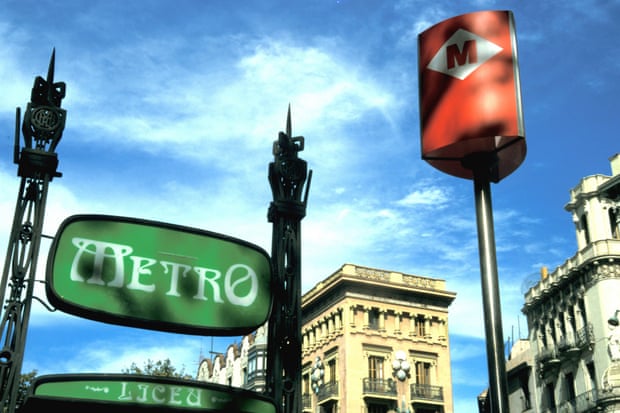
Barcelona metro.
Pinterest
 Barcelona metro. Photograph: Juergen Stumpe/Getty Images/LOOK
Tourists can’t use the city’s community bike scheme (cycle hire firms threw a wobbly at the threat to their profits) and haring around on a Segway scaring grannies and small dogs won’t win you any friends. Thankfully Barcelona’s public transport system puts many a city to shame. A single ticket costs €2.15 but only aguiri (foreigner) does that. A T10 ticket costs €9.95 and gets you 10 journeys on the metro, bus, tram and local train within zone 1 (pretty much anywhere 99% of tourists would venture). Do the math! It can be shared by different people, lasts up to a year and can be picked up at metro stations. It is also available at the airport train station making the journey into town (stops at Sants and Passeig de Gràcia stations) an absolute steal (a single ticket is €4.10). The T10 can be used on more than one type of transport and all count as a single journey as long as your journey is less than 75 minutes. So you can hop across town by tube, bus and tram for less than a euro.

Saturday, September 26, 2015

Catalonia Holiday Guide: What To See And Do, Plus The Best Hotels And Restaurants


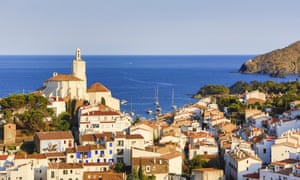
Cadaqués city on Catalonia’s Costa Brava coast.
Cadaqués city on Catalonia’s Costa Brava coast. Photograph: Calle Montes/Getty Images


There’s much more to Catalonia than busy Barcelona; we pick top sights and activities – and, of course, great tapas

Sunday could be a momentous day for Catalonia – and for once it will have nothing to do with the left foot of Barcelona striker Lionel Messi. The ever-restless Catalans are going to the polls in regional elections that pro-secessionists have billed as a vote on independence from Spain.


Its 7½ million people are famously proud – arrogant is how people from elsewhere in Spain often describe them – but they have much to be proud of. Barcelona hogs the limelight, of course, but outside the capital the sheer variety of alluring places to visit – from mountains to coast, lively cities to dozing villages, is staggering.


Four provinces make up Catalonia: Barcelona, Lleida, Tarragona and Girona. I’m going to miss out Barcelona province because the city itself – plus the Montserrat, Sitges and Penedès – already gets more than its fair share of attention, and there’s so much more to be discovered beyond.
Many Catalans don’t think of themselves as Spanish – and they don’t let you forget it. Get a sense of what makes them different by reading Robert Hughes’s Barcelona. It is an entertaining study of the whole land’s history, culture and people.

LLEIDA PROVINCE


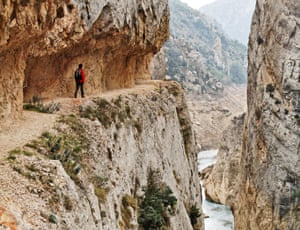
Footpath cut into cliffs above the pectacular Mont-rebei gorge.
Pinterest
 Footpath cut into cliffs above the pectacular Mont-rebei gorge. Photograph: Alamy

What to see and do

Even Lleida city’s mum probably wouldn’t say it is the most charming place, but it is home to one of Spain’s standout buildings, La Seu Vella. This 13th-century hilltop cathedral with its majestic tower dominates the skyline and has a vast, breathtakingly beautiful cloister. An hour’s drive to the north-east, the little town of Solsona has a wonderful tangle of medieval streets and the air of a place that knows its luck’s in. The hills around here (seeturismesolsones.com) and south towards the lovely old town of Cervera make for great walking. The tower ofVallferosa on the GR170 is particularly worth seeking out. Even the tiniest village in these parts has its own castle; a prime example is Montfalcó Murallat. Fans ofmodernisme can get their fix near Solsona, at the extraordinary cemetery of Sant Esteve in Olius, with its Gaudíesque parabolic arches.
Further west is the spectacular Mont-rebei gorge, with a narrow footpath cut into the face of a cliff hundreds of metres above the Noguera Ribagorçana river. There’s no handrail, and it’s terrifying – and unmissable.
Heading north into the Pyrenees brings an array of marvellous places. My favourite is absurdly pretty Vall de Boí, where the villages often boast 12th-century Romanesque churches. Many of their frescoes have been moved to Barcelona’s Museu Nacional, but an ambitious scheme to recreate their effect has just been completed at the church of Sant Climent in Taüll. I sat in darkness, and in awe, as its original frescoes were digitally projected, brushstroke by brushstroke, on to the walls. At the northern end of the valley is Parc Nacional d’Aigüestortes, with forests, lakes and peaks crying out to be hiked.

Where to eat


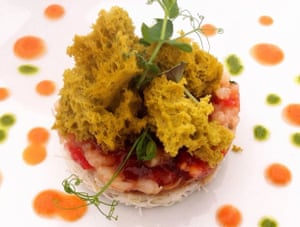
Organic food at L'Antic Forn, Cervera
 Organic food at L’Antic Forn, Cervera

In Lleida, Zeke (tapas from €4, Avenida Prat de la Riba 42, no reservations) has some of the most innovative tapas outside Barcelona and is a rare find in a very conservative city. In Solsona, La Gatera (Plaça Sant Pere 3, +34 973 48 15 07) is a real locals’ favourite, with tasty meals for a few euros. Or go trad with snails and pig’s trotters at Restaurant Mare de la Font (around €20pp, Carretera de Bassella, +34 973 483967) in a pretty woodland setting just outside town. In Cervera, the eco-friendly L’Antic Forn restaurant (Plaça Major 18, +34 973 533152) has a very good menú del diá (set lunch) for €13. The hearty mountain fare on the menu atLa Cabana in Boí village (set meal €17, Carretera de Taüll, +34 973 696213) hits the spot after a trek or a hard day’s church-hopping.

Where to sleep


Hotel La Freixera
 Hotel La Freixera

No offence to Lleida city, but it’s probably not worth an overnight stop. In Solsona, Hotel La Freixera (doubles from €99 B&B), in a 14th-century building, is lovely; a little less lovely, but great value and almost as central, is Hotel Solsona Centre (doubles from €53 room-only). In Senterada, charming Casa Leonardo(doubles from €74 B&B, dinner €15pp) is the perfect base for heading south to the Mont-rebei gorge or north into the Pyrenees.

TARRAGONA PROVINCE


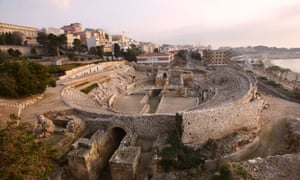
Tarragona's Roman Amphitheatre, built in the second century AD.
Pinterest
 Tarragona’s Roman Amphitheatre, built in the second century AD. Photograph: Manuel Cohen/Getty Images

What to see and do

Another good thing about Lleida is the road out of town. The drive south follows the Ebro river, Spain’s second-longest, through marvellous scenery to the endless rice fields of the Ebro delta. Day-tripper Barcelonians squeeze into a few beachside spots at weekends and eat bad paella made out of good local ingredients. A better bet is to rent a bicycle (around €10 a day from Hostal Cling 43 in Deltebre, see below) and explore the dusty tracks of the Parc Natural del Delta de l’Ebre, spotting herons, marsh harriers and flamingoes. Pack a sandwich from Hostal El Faro (see below).
Penedès, west of Barcelona, may be Catalonia’s biggest wine-growing area, but Tarragona’s wineries concentrate on quality. El Priorat is a 50km sliver of land north-west of the city, and produces some of the world’s best red wines. Its capital, Falset, is an attractive little town with a modernista winery designed by Cèsar Martinell, who worked with Antoni Gaudí on the Sagrada Familia. Many wine estates offer visits: try Costers del Siurana (+34 977 839276) in the village of Gratallops.
Tarragona was a major Roman city when Barcelona was a provincial backwater but there has been a dramatic change in the cities’ fortunes since, something not even Ryanair flights to nearby Reus could reverse. That means, though, that Tarragona’s magnificent ruins, which include an amphitheatre and a well-preserved Roman circus, don’t get the number of visitors they deserve. Add a delightful old town and a tremendous cathedral and Barcelona’s thronging Ramblas looks, well, less fun.
Tarragona is fascinating, but it doesn’t do barbecued giant spring onions. For that, a 20km a detour north to Valls is essential. But only if it’s late January, when this mildly interesting town is consumed by a passion for the calçotHundreds of thousands are wolfed down during its annual festival (festadelacalsotada.com).

Where to eat


Degvsta restaurant, Tarragona
Pinterest
 Degvsta restaurant, Tarragona

Mas de Prades (set menu €18, +34 977 059084) is a farmhouse on the edge of Deltebre – away from the day-trip madness – that serves local specialities such as eel. Hostal El Faro (Avinguda de les Goles de l’Ebre 357, +34 977 480229) in the centre of Deltebre does delicious sandwiches for a few euros to fuel a bike ride.Degvsta (set menu €16.50, Carrer dels Cavallers 6, +34 977 252428) in a splendid modernisme townhouse in Tarragona does a modern take on Catalan classics such as duck confit. There’s a genuine passion for locally sourced ingredients at El Celler de l’Àspic (three course dinner around €30, Carrer de Miquel Barceló 31, +34 977 831246) in Falset.

Where to sleep


Hotel Cal Llop, in Gratallops
 Hotel Cal Llop in Gratallops

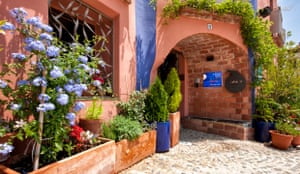
Masia Tinet (doubles from €60 B&B) is a pretty former farmhouse with garden, but sits on a rather nondescript road at the edge of Deltebre. My pick would be new, friendly Hostal Cling 43 (doubles from €50 B&B) which is in the centre of town and can arrange bike and kayak hire. Boutiquey Cal Llop (doubles from €90 B&B) is a superbly renovated medieval mansion in Gratallops. The owners can arrange winery visits and its bar stocks the superstar local wines. In Tarragona, hotel Plaça de la Font (doubles from €55 room-only) is on a square in the old town and its terrace is a fine place for an evening drink.

GIRONA PROVINCE


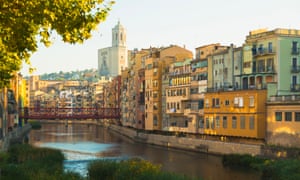
Girona cathedral and the Eiffel Bridge over the Onyar river.
Pinterest
 Girona cathedral and the Eiffel Bridge over the Onyar river. Photograph: Michal Krakowiak/Getty Images

What to see and do

Who needs Barcelona? The northern city of Girona has history, a fascinating old quarter, interesting food, and no marauding gangs of stags and hens. Its cathedralsits high over the city and is worth the climb for its spectacular 22-metre-wide single nave – only St Peter’s in Rome is wider. The tiny streets and vaulted passageways of the Barri Vell, opening into little squares with bars, are ideal for an aimless stroll and there are plenty of museums for a cultural fix. In the 13th century, the city was home to one of the largest Jewish communities in Spain and this history is explored at the Museu d’Història dels Jueus (€4). The atmosphericBanys Àrabs (€2) is the best-preserved Moorish bath complex in Catalonia.
Girona province has by far the finest coastline in Catalonia, the Costa Brava, stretching for more than 100 miles to the French border. There are so many wonderful places – the ports of Sant Feliu de Guíxols and Palamós, Roman ruins at Empúries, stunning coves near Cap de Begur – that it’s hard to pick one, but my favourite is the town of Cadaqués. It’s surrounded by high cliffs and its little whitewashed houses cluster around the port.

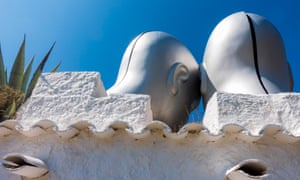
Sculptures in Salvador Dali's garden at Portlligat.
Pinterest
 Sculptures in Salvador Dali’s garden at Portlligat. Photograph: Corbis

There are fabulous walks along the coast from here to the tiny village of Portlligat.Salvador Dalí had a house here (€11, book in advance, salvador-dali.org) and was inspired/driven slightly loco by the pure light and fantastic rock formations. Footpaths carry on north-east to dramatic and undeveloped Cap de Creus, or the coast can be explore from the water on a half-day guided trip with Kayaking Costa Brava (€45pp).

Besalù bridge.
Pinterest
 Besalù bridge. Photograph: Alamy

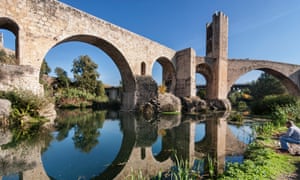
Catalonia, a land of volcanoes, who would have guessed? North-west of Girona lies La Garrotxa, a parc natural dotted with around 30 dormant cones. The area around the medieval village of Santa Pau (its white beans, fesols, are famous for no apparent reason) makes for scenic walks, including into the crater of Volcà de Santa Margarida, the largest in La Garrotxa, with a picture-perfect chapel at the bottom. There are loads more walking routes around Sant Feliu de Pallerolsfurther south. If that all sounds too strenuous, hot-air balloon rides (€140pp,en.turismegarrotxa.com) over the craters are popular. The walled town of Besalú,with its 11th-century dog-legged fortified bridge, makes a good base for exploring the area.

Where to eat


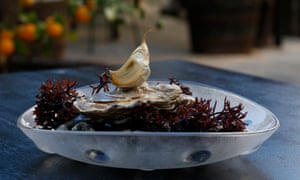
Oysters with garlic at Compartir, Cadaques
Pinterest
 Oysters with garlic at Compartir, Cadaques

El Bullí may be closed and El Celler de Can Roca (currently top of the World’s 50 Best Restaurants list) is booked solid/too expensive, but anyone visiting these parts who is interested in food benefits from their massive influence. In Girona,Nu (Carrer de Abeuradors 4, +34 972 225230) has an innovative €54 tasting menu with an Asian twist that is worth the blowout.
El Bullí alumni (they are everywhere) run Compartir in Cadaqués (meal around €50pp, Riera Sant Vicenç, +34 972 258482) and they deserve all their plaudits, but I also like the healthy, simple food at Can Tito (set menu €15, Carrer Vigilant 8, +34 972 259070) just off the waterfront. There are only a handful of tables atAmb els 5 sentits in Besalú (€11.40 for five courses, Carrer Abat Zafont 8, +34 633 633390) and there’s no choice. You just sit down and eat delicious food.

Where to sleep


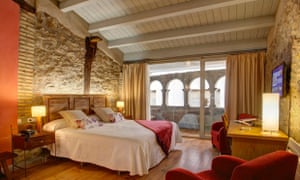
bedroom at bells oficis, Girona
Pinterest
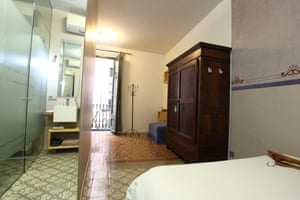
 A bedroom at Bells Oficis, Girona

Bells Oficis (doubles from €40/€85 B&B with shared/private bathroom) is a characterful B&B in Girona just a few minutes’ walk from the main sights. Hotel Port Lligat (doubles from €70 room-only) is remarkably good value bearing in mind its prime spot just metres from the beach. You may never manage to drag yourself away from the view from your room’s balcony. In Besalú, Hotel 3 Arcs(doubles from €70 B&B, hotel3arcs.com) is right in the centre of town in a beautifully renovated building.  There are several budget airlines that fly from the UK to Barcelona, Girona and Reus airports

By , www.theguardian.com