Showing posts with label Catalonia. Show all posts

Monday, January 25, 2016

10 Of The Best Ways To Enjoy Barcelona … On A Budget

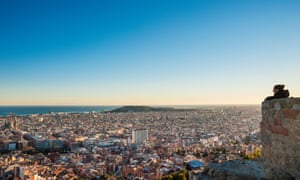
View of Barcelona from El Turó de la Rovira, a civil war gun emplacement on a hill near Park Güell.
View of Barcelona from El Turó de la Rovira, a civil war gun emplacement on a hill near Park Güell. Photograph: Dosfotos /Design Pics/Getty Images/Axiom RM


Savour the Catalan capital by avoiding the pricey and the touristy in favour of favourite local hangouts, from outdoor cinema to great beaches and vermut bars


Take in the view

Barcelona street life is irresistible, but sometimes you want to rise above the crowds. A ride in the cable car across the harbour is great but expensive (single ticket €11). You’ll get an even better view from the cocktail bar at the top of the waterfront W hotel. You do not even need to have a (pricey) drink, but the people-watching makes it worth it. I think the best view in Barcelona is also probably its least well known. El Turó de la Rovira (free) is a civil war gun emplacement on a hill near Park Güell and once you’ve recovered from the climb you can look out across the city to the sea, up the coast towards France and back to the Pyrenees. The rooftop tour of the beautiful church of Santa Maria del Marcosts €8 but gives you a fascinating insight into its construction and a unique view across the rooftops of the tightly packed streets of the Born district.

Vermuts musicals
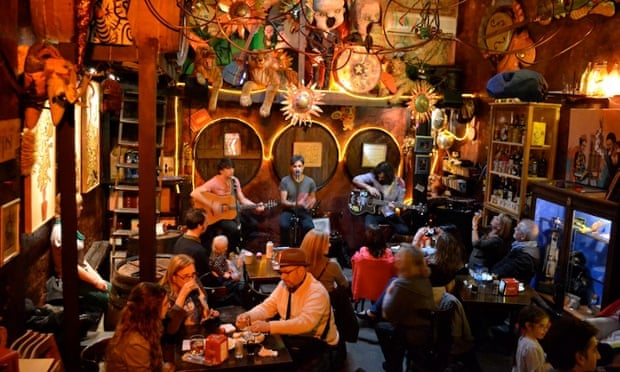
Gran Bodega Saltó, ‘the grandaddy of vermuts musicals’
 Gran Bodega Saltó, ‘the grandaddy of vermuts musicals’
Catalan vermut, a fortified wine spiced with herbs, is vermouth’s down-and-dirty cousin. It fell out of fashion 50 years ago but is now making a remarkable comeback and vermuterías are some of the city’s trendiest drinking spots (even the Adrià brothers of El Bullí fame have opened one: Bodega 1900). Vermut was traditionally drunk after mass and before a late Sunday lunch but it took the revival to add that extra ingredient for a supremely relaxed weekend afternoon - free live music, and so vermuts musicals were invented. You’ll find them all over town on Sundays – and often Saturdays – but the district of Poble Sec, a 10-minute walk from the Ramblas, with its mix of old-fashioned drinking holes and fashionable hangouts should see you right.
Gran Bodega Saltó is the grandaddy of vermuts musicals. The crowd watching the acoustic performers often spills out from its kitsch interior on to the street. Free, but a donation of a bottle of olive oil for a charity helping the poor locally is requested – there’s a supermarket nearby. Try also vermut and DJs at Olivia Vermutería and Bar Rufián. Poble Sec’s raucous festival runs from 18-26 July if you need another excuse to visit the barrio.

The street art scene
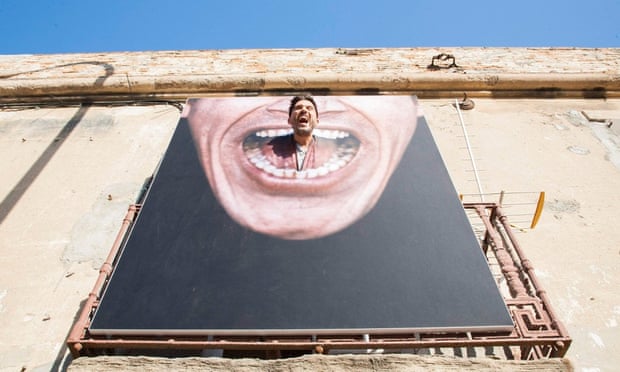
Ús Barcelona event
Pinterest
 At the Ús Barcelona event a whole street is transformed by artists over a weekend in May
The still-gritty Raval district, just off the Ramblas, is the colourful hub of the city’s urban culture. Any available surface is fair game for anything from stickers to stencils and flyers to murals. You’ll find plenty of examples just by wandering the streets or join a tour such as the highly-rated Barcelona Street Style Tour (free, donation requested). Sunday is a good day to explore because shop shutters, the canvas for many an enthusiastic artist, are down. The former industrial barrio of Poblenou, just beyond Port Olímpic, is another hotspot. Its innumerable warehouses are fast being turned into fashionable lofts but there are still lots of unloved buildings to go at. For the last couple of years it’s been the setting for Ús Barcelona (see a video of the 2015 event at vimeo.com), where a whole street, including parked cars, is transformed by artists over a weekend in May. Food vans, DJs and bands add to the fun.

Stylish stays
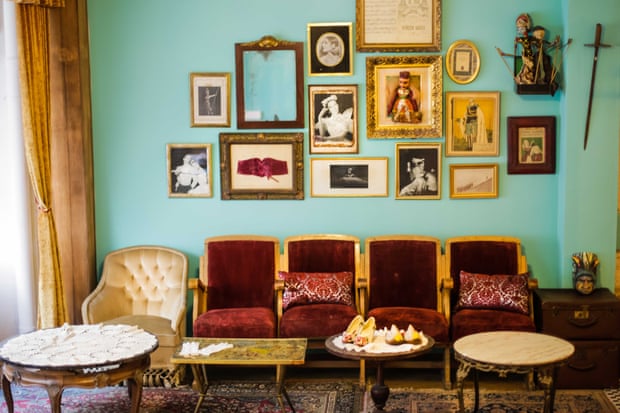
the newly opened Teatro hostel
Pinterest
 the newly opened Teatro hostel
New five-star hotels pop up in Barcelona with alarming regularity. But there are still plenty of great choices even if you’re not Pippa Middleton. The Praktik chain of hotels is fab. Simple, affordable rooms in wonderful locations, with a bit of glamour thrown in. Its latest, Praktik Vinoteca (doubles from €79, room-only), has a reception hall lined with thousands of bottles of wine, all for sale. Free tastings are held on the pretty terrace and bodega tours are organised. It’s in the Eixample area, minutes from the posh shops on Passeig de Gràcia and some of Gaudí’s most famous buildings. Newly opened Teatro hostel in Poble-sec (dorm beds from €13) is good fun. It’s stuffed full of theatrical props and fabrics, the dorms are comfortable and the highly-experienced owner really knows how to look after travellers.

Films alfresco
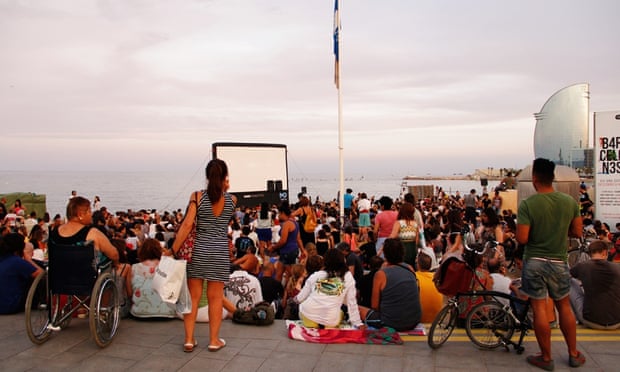
Cinema Lliure a la Platja runs on the beach in summer, and is free
Pinterest
 Cinema Lliure a la Platja runs on the beach in summer, and is free
Open-air cinema is a summer tradition in the city. The screenings on Montjuïc hill(until 7 August, tickets from €6), in the shadow of the castle, are now in their 13th year. The programme is always a crowd-pleaser and this year includes The Big Lebowski, Reservoir Dogs and Moulin Rouge (all subtitled into Spanish). But you don’t have to schlep all the way up the hill to get your film fix this year.Cinema Lliure a la Platja is on the beach, runs until 16 August and is free. Its programme is more eclectic but looks fascinating. Foreign films are subtitled into Spanish; Spanish films have English subtitles. If you don’t want sand in your popcorn, then films from Mecal – the International Festival of Short Films and Animation of Barcelona – will be screened outdoors all summer at Poble Espanyol(€6.50) and on the rooftop of the Hotel Silken Diagonal (free).

Designer chic and cheap
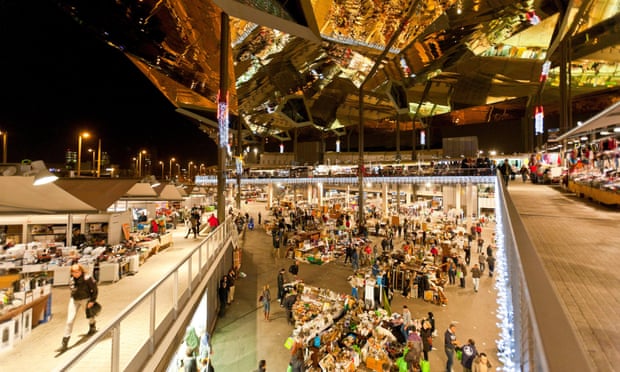
Encants flea market.
Pinterest
 Encants market is in a fabulous, new semi-enclosed building. Photograph: Alamy
The stunning new Museu del Disseny (€5) puts on one site several museums that had been spread across the city. A whole floor is devoted to its fashion collection, giving you an idea of what the Kardashians of the 18th and 19th centuries would have been wearing. You’ll also find floors of examples of textiles, decorative arts, product design and graphic art. The city council is pouring investment into this part of town, Glòries. One of Barcelona’s most interesting, eclectic and downright bizarre markets, Encants (Monday, Wednesday, Friday, Saturday 9am-8pm), is in a fabulous, new semi-enclosed building. Browse stalls selling everything from antique mirrors and obscure garden tools to boxes of vinyl records and fake-fur jackets under a spectacular giant copper-coloured reflective roof. There’s a tempting set of food stands on the top floor where you can sit and wonder what to do with that stuffed bear you’ve just bought.

Green spaces
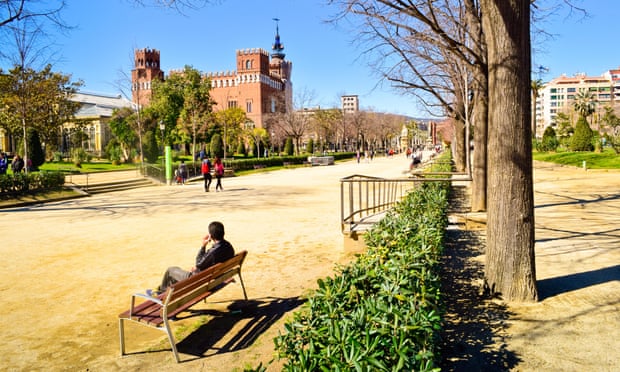
Ciutadella Park.
Pinterest
 Ciutadella park. Photograph: Alamy
Barcelona’s not a city of big parks: blame the medieval walls that kept people crammed together, and then developers in the 19th century who screwed with the open areas planned for the new town, the Eixample. So grab a bit of space when you can. Ciutadella park, just beyond the Born district, has plenty of grass, shade, spectacular fountains and some prime examples of modernisme buildings. A little known green, yellow, orange, pink and red gem is the Parc de Cervantesrose garden (free) in Pedralbes, which has nearly 250 varieties and lots of quiet corners for lounging. Parc de Laberint (free), once the estate of an aristo, is the city’s oldest garden, with waterfalls, streams, canals and ponds. But the clue to its big appeal lies in its name: a beautiful maze of two-metre-high hedges. Can you find “love”, a statue of Cupid, at its heart?

Royale with queso
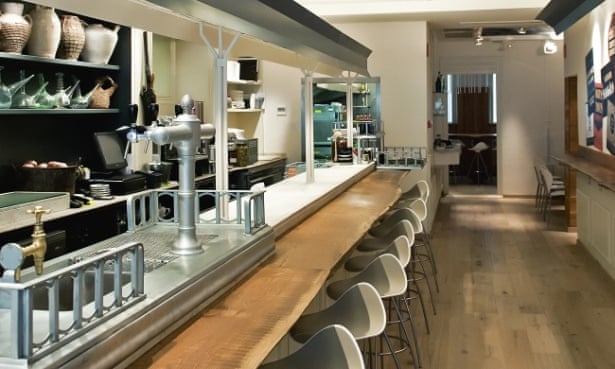
Sagàs
 Sagàs
Food trends sweep through Barcelona faster than a pickpocket down the Ramblas. And often they’re just as welcome. Burgers are big, very big but not in a “supersize me” sort of way. I like Sagàs on the edge of the Born. It has a more seriously foodie place (Els Casals) towards the Pyrenees but here it’s kept simple and delicious, using the meat produced there. A burger’s about €8 but worth every penny. Bacoa is a small chain dedicated to all things griddled and stuck between pieces of bread. Kiosko (Avenida del Marquès de l’Argentera) in the Born is my favourite – expect to pay about €6. Timesburg (burger around €6) in Poblenou is as trendy as its postcode but worth the trek. For more good-value food, that’s a bit more traditional, read my recent guide to menús del día (set lunches).

Beach life
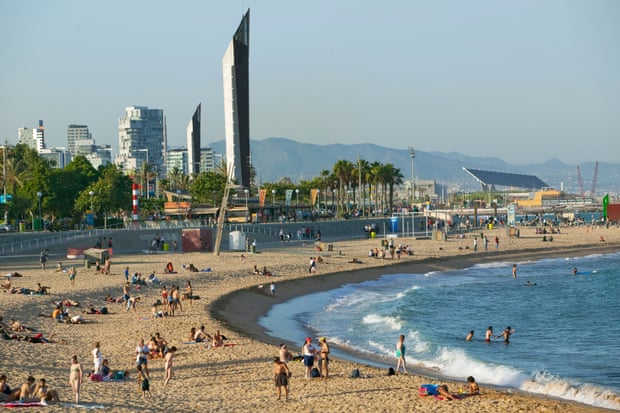
Nova Icària beach.
Pinterest
 Nova Icària beach. Photograph: Marco Cristofori/Alamy
Famously, the Barcelonins only discovered the beach after the 1992 Olympics, but long days on the platja are now an essential part of summer. It pays to choose your bit of beach with care. As with most of Catalan life there’s a strict, unspoken system – try jumping the queue at the chicken and rabbit stand in the market to test this. So, each stretch of sand has its own character: the beach in the shadow of the W hotel has an unofficial nudist area; Barceloneta is always noisy and crowded, with the young (taking selfies) and the old (playing dominoes); Mar Bella is popular with gays and lesbians, and has an official nudist part; families like the slightly less busy Nova Icària. There’s a massive choice of beach bars and restaurants all along here, too.

Travel like a local
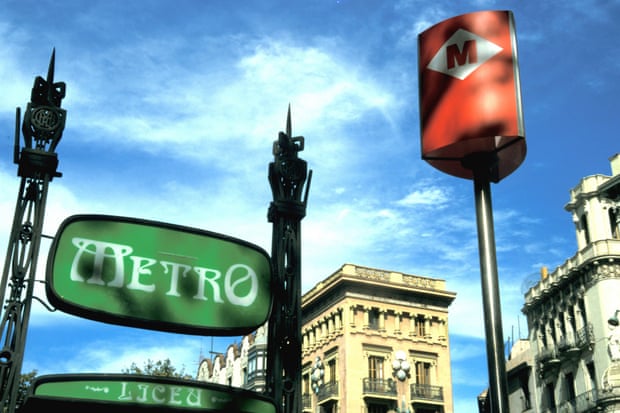
Barcelona metro.
Pinterest
 Barcelona metro. Photograph: Juergen Stumpe/Getty Images/LOOK
Tourists can’t use the city’s community bike scheme (cycle hire firms threw a wobbly at the threat to their profits) and haring around on a Segway scaring grannies and small dogs won’t win you any friends. Thankfully Barcelona’s public transport system puts many a city to shame. A single ticket costs €2.15 but only aguiri (foreigner) does that. A T10 ticket costs €9.95 and gets you 10 journeys on the metro, bus, tram and local train within zone 1 (pretty much anywhere 99% of tourists would venture). Do the math! It can be shared by different people, lasts up to a year and can be picked up at metro stations. It is also available at the airport train station making the journey into town (stops at Sants and Passeig de Gràcia stations) an absolute steal (a single ticket is €4.10). The T10 can be used on more than one type of transport and all count as a single journey as long as your journey is less than 75 minutes. So you can hop across town by tube, bus and tram for less than a euro.

Sunday, January 24, 2016

Carnivals 101: A Guide To Some Of The Greatest Shows On Earth

Swept away in a sea of feather headdresses as sequins ping from overtight costumes, few travellers stop to wonder why carnivals exist. These riots of pre-Lenten revelry demand to be experienced rather than understood. Their common element is a gleeful up-ending of social norms, making them among the world’s most memorable travel experiences.
Many began as pagan gatherings that welcomed spring; under Christian influence, they morphed into a last hurrah before Lent, the six weeks of abstinence and reflection before Easter. For many of the most colourful customs, the original meaning has been lost in time – but logic should never get in the way of a good party. Here are some unforgettable locations to embrace carnival spirit.
A samba school parading in Rio's Sambadromo A samba school parading in Rio's Sambadromo © T photography / Shutterstock

Rio de Janeiro, Brazil: the record-breaking ‘greatest show on Earth’

During each day of Rio’s carnival, the biggest on Earth, more than two million people samba through the streets. Many visitors simply hurl themselves into epic street parties that flow around the Brazilian capital. But the most dazzling events are the phenomenally choreographed Samba Parade and the nightly balls (all ticketed), part of a vast programme of events. The revelry is overseen by ‘King Momo’, a personification of wit and mischief who incites the crowds to dance to the rhythms of batucada, Brazil’s hypnotic samba style. Don’t forget to catch your breath with a few caipirinhas.
Make it happen: carnival fever grips Rio for five days leading up to Ash Wednesday. Rio Carnival Services (rio-carnival.net) help arrange tickets, hotels and costumes.
This year: 5-10 February 2016
A Mardi Gras parade on Bourbon Street in New Orleans' French QuarterA Mardi Gras parade on Bourbon Street in New Orleans' French Quarter © Chuck Wagner / Shutterstock

New Orleans, USA: bead-throwing bacchanalia in the French Quarter

Bourbon Street, in the charismatic French Quarter, anchors some of the most risque fun in the Big Easy’s notorious carnival. Expect costume competitions honouring bold feats in leatherwear, and revellers swapping strings of beads for an eyeful of bare skin (not mandatory, we hasten to add). You won’t (always) need to cover the kids’ eyes: the parade ‘krewes’ Uptown tend to lead colourful, family-friendly fun. Get an energy boost from ‘king cake’, a psychedelic cinnamon-dusted confection; if your slice contains a plastic baby, the next cake is on you.
Make it happen: weeks of January parades reach a climax on Mardi Gras (‘Fat Tuesday’, the day before Ash Wednesday). Plan with a little help from mardigrasneworleans.com.
This year: 9 February 2016
A procession of masked revellers making their way down a canal in Venice A procession of masked revellers making their way down a canal in Venice © Sorin Vidis / Shutterstock

Venice, Italy: masked decadence and ballroom elegance

No carnival subverts the everyday quite like Italy’s canal city. Venice’s iconic carnevale masks have a long history: for centuries they afforded citizens a guise under which to anonymously indulge their vices. Grab a mask and sashay over to headline events like the Doge’s Ball and the Grand Masquerade Ball (extravagant enough to warrant the steep ticket prices). Otherworldly highlights include the Volo dell’Angelo (Angel’s Flight), in which a beauty contest winner soars by zipwire, and costume contests, all taking place in St Mark’s Square. Energise with somefrittelle di carnevale, fried pastry balls, just don’t get crumbs on that lavish ball gown.
Make it happen: carnival season tends to run from two Saturdays before Ash Wednesday, culminating on Fat (Shrove) Tuesday. See more on carnevale.venezia.it.
This year: 23 January to 9 February 2016
Masqueraders taking part in Trinidad & Tobago's carnival in Port of SpainMasqueraders taking part in Trinidad & Tobago's carnival in Port of Spain © John de la Bastide / Shutterstock

Trinidad & Tobago: calypso and carousing on a Caribbean isle

Carnival on the island duo Trinidad & Tobago has a subversive history. Festivities originated with slaves creating a parody of white settlers’ masked balls, mocking colonial authority. After slavery’s abolishment in 1834, carnivals grew ever more lively: today you can expect limbo competitions and a cast of carnival characters including verbose Pierrot Grenade, beret-wearing Sailor Mas, bats, dragons, clowns galore and ‘jab jab’, the Devil himself. Listen out for thrilling lyrical improvisation of T&T’s extempo calypso style, with the best competing to be ‘Extempo Monarch’.
Make it happen: parades strut around the island in the two days before Ash Wednesday; learn more on ncctt.org.
This year: 8-9 February 2016
Revellers in the traditional Gilles costume at the Carnaval de BincheRevellers in the traditional Gilles costume at the Carnaval de Binche © Weskerbe / Shutterstock

Binche, Belgium: surreal costumes and citrus-throwing

Identical, pin-eyed figures flood the streets of Binche during carnival. It’s not as nightmarish as it sounds: this Belgian town has one of Europe’s most unmistakeable carnival figureheads, the ‘Gille’. His ginger facial hair, green glasses and straw-padded suits have murky origins, but the costume is revered, protected and off limits unless you’re a local. Festivities reach fever pitch on Shrove Tuesday’s morning procession: twigs are brandished to ward off evil, oranges thrown (catch them for luck), and torches held aloft. By nightfall, masked participants with ostrich feathers head to Binche’s Grand Place for a big bonfire.
Make it happen: the weird and wonderful display takes place over three days before Ash Wednesday; find more info on carnavaldebinche.be.
This year: 7-9 February 2016
Carnival goers burn dolls to celebrate the arrival of spring as part of Maslenitsa in Russia Carnival goers burn dolls to celebrate the arrival of spring as part of Maslenitsa in Russia © Oleg Proskurin / Shutterstock

Russia: usher in spring with pyrotechnics and pancakes

Numerous European countries enjoy a pancake blowout on Fat Tuesday. But no culture fries up a storm quite like the Russians, whose ‘butter week’ before Lent involves bumper quantities of bliny. Maslenitsa has its origin in a Slavic pagan festival of the sun; circular pancakes are thought to be a nod to this. Sledding and snowball fights pass time between bliny binges, while an effigy of ‘Lady Maslenitsa’ is paraded through the streets and eventually set aflame. Moscow’s Red Square is a focal point for live music, dance and plenty of pancakes. Forgiveness and family ties are core themes, so you’ll see locals happily strolling in the snow or ice skating in Gorky Park.
Make it happen: a week of gaiety precedes the effigy-burning, which takes place eight weeks before Pascha (Orthodox Easter Sunday).
This year: 6-12 March 2016
Locals wearing masks and sheepskins to honour Kurent, an ancient god of hedonism, as part of Ptuj's carnivalLocals wearing masks and sheepskins to honour Kurent, an ancient god of hedonism, as part of Ptuj's carnival © Ivan Smuk / Shutterstock

Ptuj, Slovenia: pagan revival of the hairiest kind

Pagan elements are also strong in northeast Slovenia. Locals wear masks and sheepskin – a nod to Kurent, an ancient hedonism god – forming the hairiest procession around. This shaggy troop treads the streets of Ptuj, ringing cowbells to scare away spirits and wagging long leather tongues. More than 100,000 people turn out to watch the bell-ringing, hair-tossing display. Meanwhile children dive out of the way of a demonic figure who wields a net for seizing young souls.
Make it happen: Kurentovanje is a week-long event ending with Shrove Tuesday. Learn more on kurentovanje.net.
This year: 2-9 February 2016
Revellers head for Carrer del Pecat (‘Sin Street’) in Sitges, the location of one of the many distinctive carnivals of CataloniaRevellers head for Carrer del Pecat (‘Sin Street’) in Sitges, the location of one of the many distinctive carnivals of Catalonia © Oscar Garriga Estrada / Shutterstock

Sitges, Catalonia: decadent disguises in Spain’s ‘Sin Street’

Catalan carnaval traditions are among Europe’s most distinctive. In Solsona, a history of animal-dangling has left locals nicknamed ‘donkey-killers’. Vilanova i la Geltrú celebrates with bone-chilling costumes and meringue fights. But free-spirited Sitges, adored across Europe for its beaches and gay clubs, draws the merriest crowds. Don’t miss Noche de las Mantillas, an excuse to dress up in traditional Spanish costume (drag encouraged), the Rua de la Disbauxa (‘Debauchery Parade’, as messy as it sounds), and the symbolic burial of a sardine. Keep the party going in clubs along Carrer del Pecat (‘Sin Street’).
Make it happen: a week of parties leads up to Ash Wednesday; learn more on carnavaldesitges.com.
This year: 4-10 February 2016
Revellers at Goa's carnivalGoa’s carnival mixes Christian and Hindu elements into a colourful whole © Murgermari / Shutterstock

Goa: Portuguese flair transplanted to the Indian coast

Even after the crumbling of the Portuguese Empire, European flavours remain strong in its former outposts. The Portuguese brought Christianity to Goa in 1510, and their culture continues to tint carnival celebrations here. Under colonial rule, slave labourers and their masters swapped roles. These days Goa’s carnival is a mash-up of feathered costumes, fire-breathers and acrobats, with some of the Hindu pantheon thrown in; find the best parades in state capital Panaji. Indian and Portuguese cuisines feature heavily, with street food stalls and cookery competitions; just follow the robust scent of feijoada, mingling on the breeze with Goan seafood curry.
Make it happen: this four-day fiesta ends on Shrove Tuesday but the timing of carnival festivities can vary; check ahead. It’s an open-air knees-up with no tickets required.
This year: 6-9 & 14-17 February 2016
A carnival procession in Valletta, Malta's tiny capitalA carnival procession in Valletta, Malta's tiny capital © Arseniy Krasnevsky / Shutterstock

Malta: choose between darkness and light in the Mediterranean

Contrasting festivities unfold on Malta and Gozo. In the tiny Maltese capital Valletta, floats coast through the narrow streets and revellers keep energy levels high with copious sugary treats like prinjolata, a sponge cake slathered in cream and candied fruit. A ferry ride away on Gozo, a spookier mood takes hold: the town of Nadur plays host to a more spontaneous carnival in which gory or dark folklore costumes are essential, from black-clad witches to hooded gnomes, mermen and skeletons.
Make it happen: festivities occur in the five days before Shrove Tuesday; get details fromwww.visitmalta.com/en/carnival.
This year: 5-9 February 2016