Showing posts with label Burma. Show all posts

Sunday, October 25, 2015

Five 'Bucket List' Destinations You Should Know More About

Whether it is the notion that Brits only drink tea or that all Argentineans dance tango, cultural stereotypes can overshadow a country’s true nuances.
For a more authentic take on the world, we turned to question-and-answer site Quora.com to ask locals: “What do you think every foreigner should know about your country?”Whether to correct assumptions or share a bit of homeland pride, more than 600 users chimed in on behalf of their countries.
While it was hard to narrow the responses down, we wanted to highlight some of the residents who vouched for countries that might not be on traveller’s bucket lists – but, according to the people that live there, should be.
ZambiaThough his family comes from India, Praneet Vizzapu was born and lived most of his life in Zambia, a landlocked country in southern Africa. First, he wanted people to know the Zambia is safe (“no, you won’t get hacked to death walking on the road”) but above all, he encouraged visitors to get to know the country’s spectacular sites.
He shared an image of the native Termitomyces titanicusmushroom, believed to be the largest edible mushroom in the world. The fungus can reach almost a metre in diameter, and grows wild at the start of Zambia’s rainy season, which lasts from December to March. Foragers can trek the Mutinondo Wilderness, in the northern part of the country, for a chance to find the fungi.
A native Termitomyces titanicus mushroom in Zambia (Credit: Herman du Plessis/Getty)
The native Termitomyces titanicus mushroom can reach almost a metre in diameter. (Herman du Plessis/Getty)
While Zambia might be most famous for its Victoria Falls – "also known as Mosi-O-tunya, which translates to ‘Smoke that Thunders’” – Vizzapu suggested travellers expand their horizons to the northeast. “South Luangwa National Park is one of Africa’s best destinations,” he said. “The concentration of wildlife that lives around the Luangwa River is one of the highest in Africa.”
An elephant crosses Zambia's Luangwa River (Credit: Thomas Retterath/Getty)
An elephant crosses Zambia's Luangwa River. (Thomas Retterath/Getty)
MongoliaAmgalan Ganbat was quick to squash the stereotypes that come with Mongolia’s long history as a warrior nation founded by Genghis Khan. “We are not violent warriors anymore, like those guys who made the Chinese build the Great Wall,” he said. “Actually, Mongolians can be one of the most friendly and peaceful people.” 
Even still, Ganbat said visitors can catch a glimpse of the country’s ancient bow and arrow practices at Naadam, the country’s largest festival. Held annually in the capital city Ulaanbaatar in July, the festival showcases horse racing, archery and wresting.
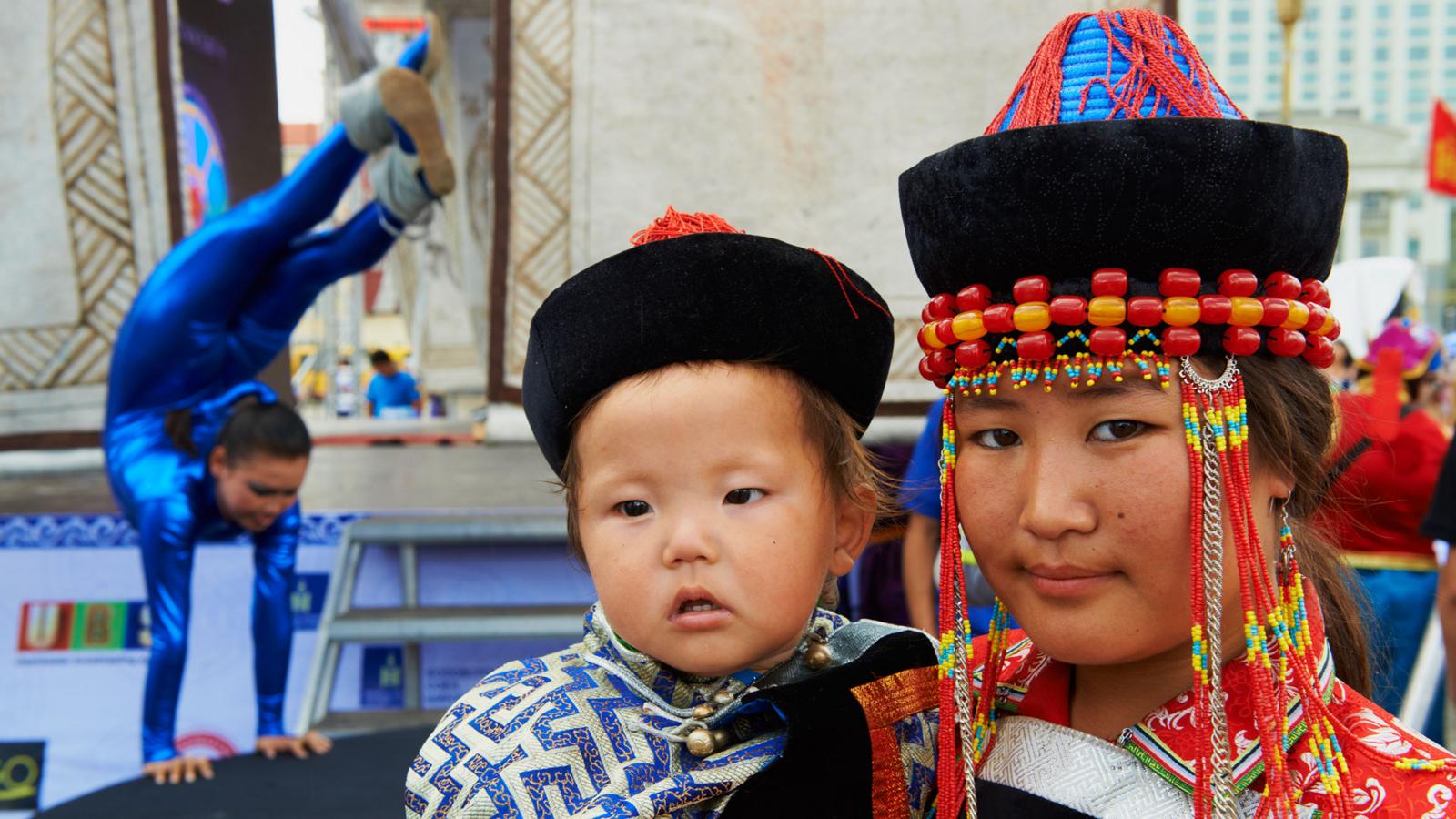
Naadam, Mongolia's largest festival (Credit: Bruno Morandi/Getty)
Traditional attire and a contortionist help celebrate Naadam. (Bruno Morandi/Getty)
The population remains connected to its traditional roots, with 10 to 15% of residents maintaining a traditional nomadic lifestyle. Even so, locals do not sacrifice modern conveniences. “Mongolians hate to be disconnected from the world,” Ganbat said. “For this reason, the internet connection speed is one of the fastest [in the world]” and those that live in the countryside still have cell phones, satellite TV and even solar panels.
GuyanaDhanishry Narine reminded readers that her country was in South America, not in Africa as many think, perhaps due in part to Guyana's yellow, red, green and black flag, or its name’s similarity to Africa’s Guinea Bissau.
Located in the northern part of the continent, Guyana is “more culturally Caribbean than South American”, having been colonized by several nations, including England, France, Spain and the Netherlands. “We’re working on feeling more South American," Narine said. “By having roads that connect to Venezuela, Suriname, and Brazil, this will change our culture again.”
The Guyanese cuisine reflects its history of so many ethnic groups. “[We have] Indian roti and curries, African meterngie (a soup with ground provisions and dumplings), European bread pudding and cheese rolls, and Chinese lowmein and chowmein,” Narine said.
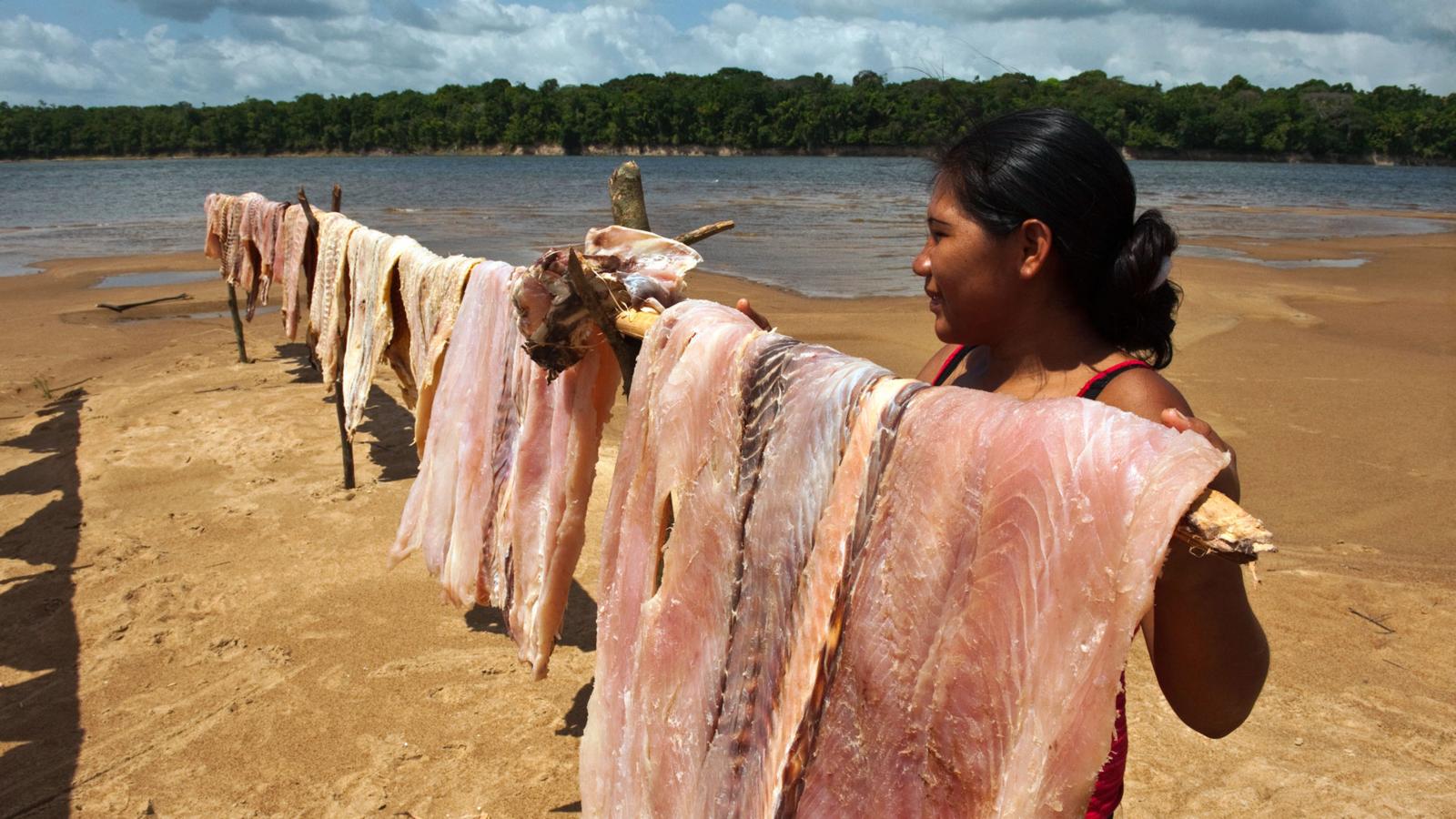
Arapaima in Rupununi, Guyana (Credit: Danita Delimont/Getty)
A woman dries out arapaima, a South American tropical freshwater fish, in Rupununi, Guyana. (Danita Delimont/Getty)
Lucky for visitors, the Guyanese are also a food-sharing people. “If you’re ever over at one of our houses, we’ll probably have to fight the urge to feed you, and to insist that you take leftovers for your family as well.”
KazakhstanThanks to the Sasha Baron Cohen film Borat, Kazakhstan residents felt like they needed to change a few of the misperceptions the film created.
“Kazakhstan actually exists and was not made up by Borat, and it is huge,” said Berik Dossayev. As proof, Dossayev shared photos of his modern city Almaty (the country’s largest city and bidder for the 2022 Olympics), fields of poppies, and rolling meadows and lakes with towering mountains in the distance.
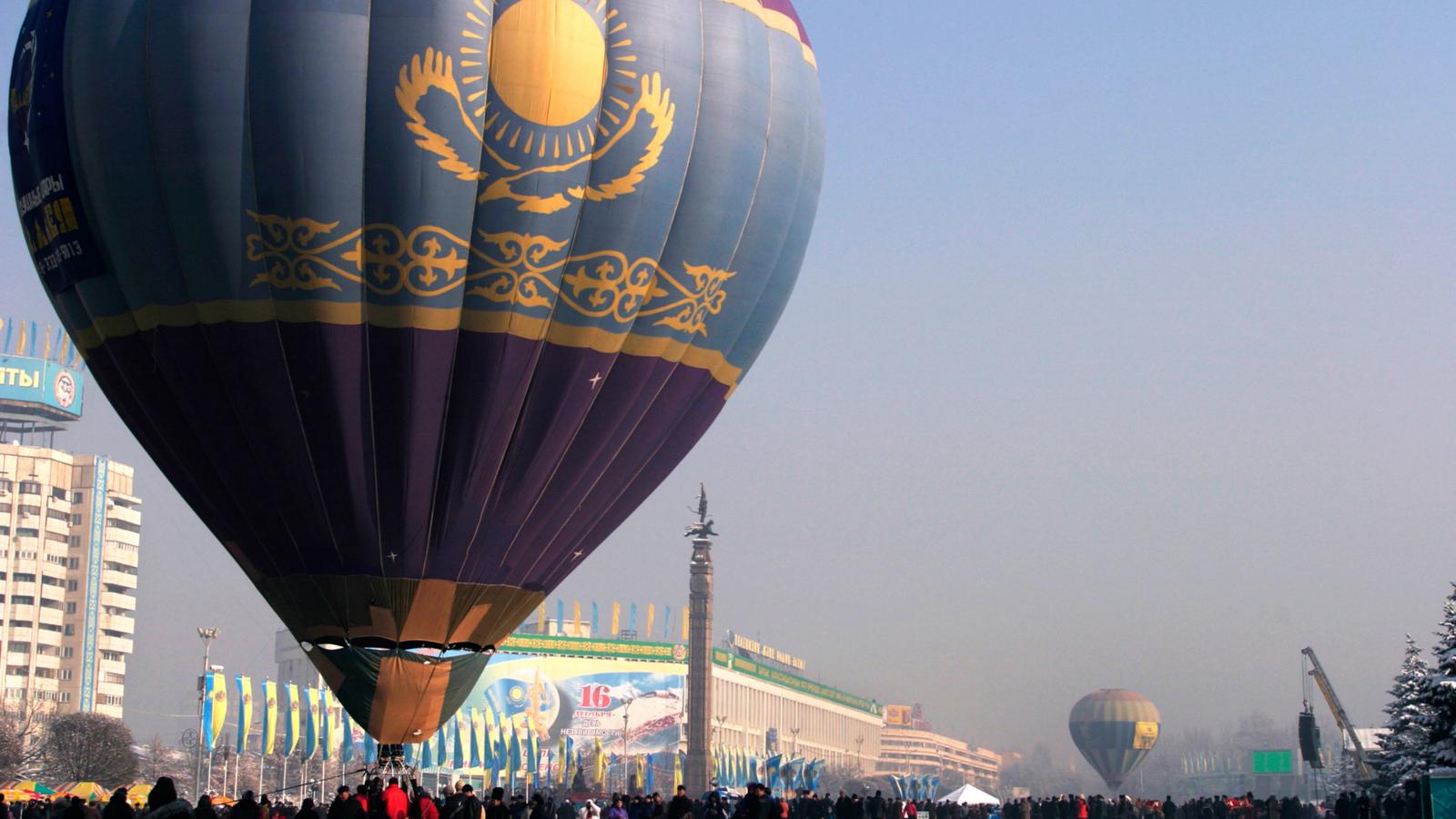
Independence Day in Almaty, Kazakhstan (Credit: Christopher Herwig/LPI/Getty)
Independence Day in Almaty, Kazakhstan. (Christopher Herwig/LPI/Getty)
BurmaThis southeastern Asian country, also known as Myanmar, has seen its fair share of turmoil and government corruption, said Quora user Ei Wai. “The current government has improved, but they still can’t overcome many problems from the past,” she said.
Still, Wai said she is hopeful that leaders like Daw Aung Sann Suu Kyi, a parliament politician and Nobel Peace Prize winner, can change the current situation. She also hopes the country’s history does not deter people from enjoying the hospitable culture and stunning historical sites. 
“Every part of our country has beautiful places,” she said. “I hope you will enjoy your holiday there.”
Her must-see list included Bagan, “an ancient and historic city”; the Shwedagon Pagoda, “famous for the over 40 tons of gold that people donated to the pagoda”; and Kyaik Htee Yo Pagada (or Golden Rock), a rock that “seems to defy gravity, as it perpetually appears to be on the verge of rolling down the hill”.
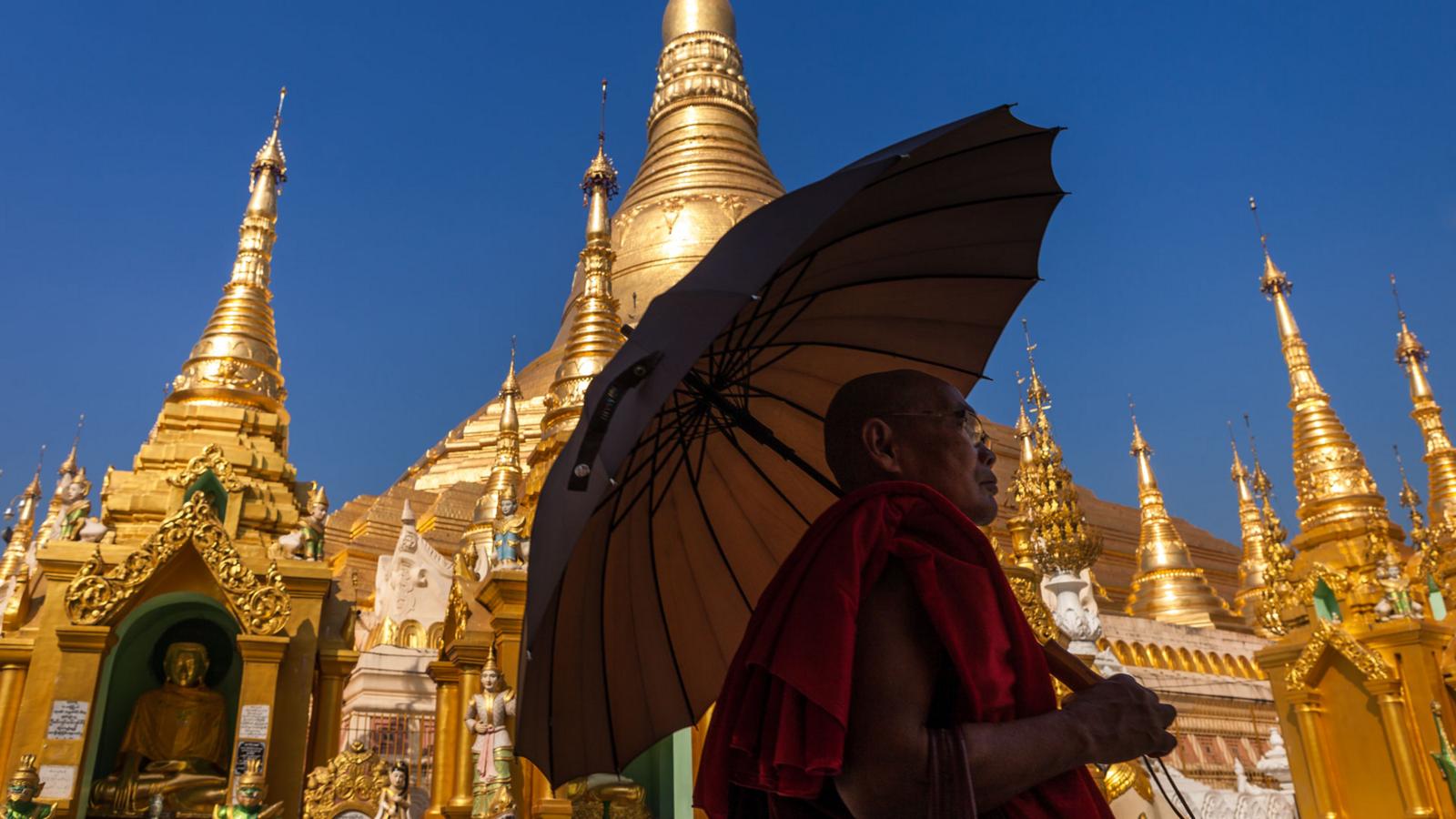
A Buddhist monk walks around Rangoon's Shwedagon Pagoda (Credit: Marjorie Lang/Getty)
A Buddhist monk walks around Rangoon's Shwedagon Pagoda. (Marjorie Lang/Getty)

  • By Lindsey Galloway, www.bbc.com


Wednesday, May 27, 2015

Raffles, Batavia, Majestic: Six Of The Best Colonial Hotels In South-East Asia

English afternoon tea at the Majestic in Malaysia.
English afternoon tea at the Majestic in Malaysia. Photograph: Supplied
Whip out your linen and your Somerset Maugham – high tea and afternoon G&Ts are undergoing a revival at south-east Asia’s refurbished colonial hotels, cafes and bars
You might expect all vestiges of colonial life to be slowly fading from Asia’s modern, busy cities. But instead elements of those days, particularly the ones relating to the tourist trade, are being recreated, preserved and celebrated.
If you are travelling on a budget, many of the region’s colonial-era hotels may seem prohibitively expensive but you can still get a taste of days of yore, should you wish to, in a hotel bar with an afternoon gin and tonic or taking high tea in a hotel lounge.
The Majestic Hotel, Kuala Lumpur, Malaysia
Modern Kuala Lumpur is like any big developing Asian city: malls, traffic, more malls, street hawker stalls, Chinatown, nice bit where diplomats live, shiny towers, malls … But there’s a pocket of KL that will be forever England.
High tea at the Majestic Hotel in Malaysia.
Pinterest
 High tea at the Majestic Hotel in Malaysia. Photograph: Brigid Delaney/The Guardian.
Arriving at the Majestic Hotel – built in 1932 and recently refurbished – is like stepping into a Somerset Maugham novel. There’s a smoking room, where guys in linen suits (seriously!) light up, play pool and drink whisky; there’s a screening room that shows black and white movies from Hollywood’s golden age; and in the suites there are deep, lovely clawfoot baths where you can wash away the humidity and sweat of life in the hot zone.
During my stay at the Majestic (a 51-room hotel that combines neoclassical and art deco style), every afternoon the lobby was full of people enjoying English-style high tea – with plates of cakes, scones and pots of tea. Being serendaded by the piano “takes guests back to 1932”, one of the staff told me.
Recently refurbished – the Majestic Hotel Kuala Lumpur.
Pinterest
 The Majestic Hotel, Kuala Lumpur. Photograph: Roderick Eime/flickr
Galle Fort Hotel, Galle, Sri Lanka
Galle, the capital of the southern part of Sri Lanka, is a Unesco world heritage site, and the Galle fort was built by the Portuguese in 1588 then fortified by the Dutch during the 17th century.
Many of the Portuguese- and Dutch-era buildings have been restored and renovated, but one of my favourites is the Galle Fort Hotel.
Restored to its former glory, the hotel is one of the pricier places to stay in town (up to $320 a night in peak season) – but you can soak up the vibe simply by having a G&T in the hotel’s bar, which is a pleasant porch area out the front where you can sit amid the tropical blossoms and watch the street life pass by.
Cafe Batavia and Hermitage Hotel, Jakarta, Indonesia
Colonial Jakarta is a crumbly mess: beautiful old buildings with white cracked paint and trees growing out the windows; boarded-up windows and creaky narrow staircases where ravens now nest. It’s as if the city doesn’t have the heart to tear down the old buildings but lacks the money to restore them.
There is one notable exception – Cafe Batavia. Originally built circa 1805-1850 as administration offices before becoming an art gallery in 1990, an Australian, Graham James, bought it in 1991 and reopened it as Cafe Batavia in 1993.
There are black and white pictures all over the walls, an old piano and historical trinkets. The food is a pricey by Indonesian standards but the atmosphere is like stepping back in time.
If you want to stay at a heritage hotel in Jakarta, then the Hermitage Hotel is a welcome change from many of the capital’s gleaming chain hotels. Situated in the historical district of Menteng, in central Jakarta, the hotel is in an art deco building from 1923 that was once a Dutch Telecommunications office.
Cafe Batavia in Jakarta.
Pinterest
 Cafe Batavia in Jakarta. Photograph: Brian Giesen/flickr
Mesa Stila, Central Java, Indonesia
On the grounds of a coffee plantation, surrounded by a ring of active volcanos,Mesa Stila in Central Java is strange, almost otherworldly place.
Now branded as a health and wellness resort, with an excellent spa, it’s buildings and furniture hark back to Dutch colonial times. In the central lobby, ceiling fans, wide day beds, a large verandah and a piano all add to the colonial vibe and afternoon tea is served daily.
The hotel was a favorite of the former Indonesian president Susilo Bambang Yudhoyono and only a few hours away from the incredible Borobudur temple complex.
x
Pinterest
 Just down the road from Mesa Stila … Buddhist monks pray at the Borobudur temple during the Vesak festival in Magelang, Central Java. Photograph: Clara Prima/AFP/Getty Images
Strand Hotel, Rangoon, Burma
The Strand’s website declares it was named “the finest hostelry East of Suez” by John Murray in his Handbook for Travelers written in the early 20th century. Built in 1901, the three-story, five-star hotel boasts that it’s one of south-east Asia’s “few grand colonial hotels and one of its most awe inspiring”.
All the rooms were booked out when I visited Rangoon a few months ago (you need to book a long way in advance – there’s a shortage of hotel rooms in the capital) but there were plenty of seats at the bar.
Make sure you bring your copy of George Orwell’s Burmese Days to complete the experience.
An old favourite of Orwell – the Strand Hotel in Burma.
Pinterest
 An old favourite of Orwell … the Strand Hotel in Burma. Photograph: Shaun Dunphy/flickr
Raffles Hotel, Singapore
Raffles is a colonial icon – famous for its liveried Sikh doormen and its Singapore Sling house cocktail.
Open in 1887, Raffles Hotel Singapore is a prime example of colonial architecture, boasting period furniture and a tropical garden.
High tea is popular at Raffles – and you’re encouraged to book ahead. It’s the usual fare of cakes and crustless sandwiches served on a three-tiered stand, in the beautiful Tiffin Room. While you nibble on your sandwiches, a harpist plays in the background.
One thing I noticed at high teas at both the Majestic and Raffles that would have been unheard of in Maugham’s day: pretty much everyone, at every table, photographing their food.

Other notable examples of colonial-era hotels in Asia

Rex Hotel in Ho Chi Minh City, Vietnam
Metropole, Hanoi, Vietnam
Majestic Malacca, Malaysia
The Mandarin Oriental, Bangkok, Thailand
Peace Hotel Shanghai, China
The Peninsula, Hong Kong
Grand Hotel d’Angkor in Siem Reap, Cambodia
The Imperial, New Delhi, India
High tea at the Peninsula in Hong Kong.
 High tea at the Peninsula in Hong Kong. Photograph: finedining indian/flickr
Contributed by , www.theguardian.com
Follow us on Twitter: @TraveloreReport

Tuesday, February 24, 2015

Travelore Tips: Pay $160 For A Month Of Flights On AirAsia


AirAsia launches its new all-you-can-jet option, the AirAsia ASEAN Pass, this month—but is it worth your while? Read on to find out.
How does a month of flying around Southeast Asia for under $200 sound?
That's the question we asked last year, when it was first announced that AirAsia would introduce some sort of pass for unlimited flights. Well, that pass—the AirAsia ASEAN Pass, named for the Association of Southeast Asian Nations—is official and available for purchase, beginning today.
The ASEAN Pass's original promise of travel to ten countries has been kept, and passengers may elect to fly to airports in Malaysia, Indonesia, Singapore, Thailand, Cambodia, Vietnam, the Philippines, Burma, Laos, and Brunei. The greatest variety of destinations is of course offered from AirAsia's base in Kuala Lumpur, although Bangkok also has a bunch. Popular leisure destinations in the passes include Bali, Chiang Mai, Phuket, Langkawi, and Puerto Princesa. With just those it'd be very tempting to turn an ASEAN Pass into a "best exotic beaches of Southeast Asia" pass, but culture and business travelers will find plenty destinations of interest as well.
There are, in fact, two versions of the ASEAN Pass:
ASEAN Pass 10 credits
· Costs $160 USD
· 10 credits for use on flights
· 30 days validity from the start of travel
ASEAN Pass+ 20 credits
· Costs $290 USD
· 20 credits for use on flights
· 60 days validity from the start of travel
Built in (and explained in the official FAQ) are many points of flexibility. For instance, the pass can be handed over to another traveler and the bearer's name can be changed so long as the travel hasn't yet begun. Families can also get in on the fun as the Pass is valid for travelers aged 12 and up. The biggest restriction is that flights need to be booked two weeks ahead and each route may only be used once, so last-minute weekend hops can't happen. The best way for non-residents of Southeast Asia to make use of a pass is to plan for a full three to four weeks of travel, flying in to Bangkok or Kuala Lumpur on a major international airline and beginning the AirAsia Pass from there. Potential ideas for a dot-to-dot itinerary around the region could be visiting friends, hitting some legendary dive sites or surf breaks, scouting for a vacation home, seeking out regional food specialties, or simply adding more stamps to the passport.
The pass was due to debut on January 15, but the tragedy of AirAsia Indonesia flight 8501 on December 28, 2014 placed AirAsia in the world spotlight, and not for the positive reason they had planned. We personally expected AirAsia to drop the idea of the ASEAN Pass, but now that the airline can absolutely use the extra business, the plan proceeds with only a month-and-a-half delay. Overall, the program bears less a resemblance to the original, unlimited "All-You-Can-Jet" Pass from JetBlue and more to the airline's AYCJ successors, called the "GoPacks," though there's no doubt the ASEAN Pass is inspired by both.
View the FAQ and step-by-step use of the ASEAN pass on AirAsia's dedicated website. As of right now, there is no end date to the ASEAN pass promotion for either sale or travel, thought this will likely change once the airline sees action on it.
This piece originally appeared on Jaunted.com.

Saturday, June 14, 2014

5 Ideas for Adventure Travelers In 2014


Antarctica 2014 adventue travel destination
Adrenaline-loving travelers looking to push the boundaries in 2014 have plenty of enticing destinations to choose from next year. Whether it’s the time-warped villages of Burma, or the far-flung shores of Antarctica (which, as it happens, will be in the spotlight for the 100th anniversary of Sir Ernest Shackleton‘s epic adventure), 2014 is sure to be filled with inspiration, adventure, and plenty of good photo ops.

Antarctica: In recent years, this frigid continent has drawn more and more adventure travelers who come to see awe-inspiring winter landscapes of icebergs, glaciers, and whales – and, of course, for the bragging rights of venturing to such distant horizons.

And 2014 could usher in a new crop of visitors, with the 100th anniversary of legendary explorer Ernest Shackleton’s historic (although ultimately failed) expedition to make the first land crossing of Antarctica. In late 1914, Shackleton’s team was less than 100 miles from the continent’s Vahsel Bay when his ship went down in ice-filled waters, preceding Shackleton’s eventual rescue of his 27 crew members – an excursion widely regarded as the greatest adventure in history.

Follow in Shackleton’s footsteps on a trip with modern-day explorer Tim Jarvis and Intrepid Travel, which sponsored Jarvis’s 2013 recreation of Shackleton’s excursions, and which offers several other Antarctic journeys for travelers looking for a little more comfort.

Ecuador: Sure, this coastal country boasts the Galapagos – an epic destination for outdoorsy travelers since Charles Darwin put the biodiverse islands on the map more than 100 years ago as the inspiration for his theory of evolution. But Ecuador’s mainland has also been generating buzz as of late as one of South America’s under-the-radar gems, with an inviting blend of cosmopolitan appeal, colonial charm, and adventurous offerings like the 19,347-foot Cotopaxi, an active volcano that towers over the capital of Quito.

Burma: Yes, Burma, also known as Myanmar, is expensive. No, it’s not easy to reach or get around. But savvy travelers who want to experience Asia’s time-warped, last frontier should still make the trek despite all that. In recent years, developments such as more foreign exchange centers, ATMs, and Internet are evidence of a steady increase in tourism that’s expected to continue.

In June, the country unveiled a new master plan for tourism that projects more than 3 million visitors in 2015 and initiatives such as a new airport and other infrastructure improvements. Go there now, and you’ll still have Burma’s remote villages, welcoming locals, and vastly different customs and culture, almost to yourself.
East Africa: Seeing some of East Africa’s most exotic wildlife – gorillas along with the Big 5 – on the same trip will become much easier for travelers beginning in 2014, when changes to visa regulations in Kenya, Uganda, and Rwanda take effect.

The new joint visa will go into effect in January 2014, costing $100, which promises a much cheaper, and far less complicated process for travelers moving between the three countries than the previous scheme. For those hoping to see the gorillas of Uganda along with the Big 5 in Uganda’s Queen Elizabeth National Park, tour operators such as Africa Adventure Consultants have already introduced new offerings taking advantage of the joint visa.

Outer Space: In August 2014, Sir Richard Branson’s suborbital commercial flights will launch for the first time, with Branson and his two children as the first passengers. But if the quarter-mil ticket on one of Virgin Galactic‘s flights isn’t in your travel budget (ours either) for a trip of your own, you can experience the last frontier from Earth via a live broadcast of the inaugural journey on NBC’s The Today Show.

Contributed by ,  http://blog.shermanstravel.com