Showing posts with label Guyana. Show all posts

Sunday, October 25, 2015

Five 'Bucket List' Destinations You Should Know More About

Whether it is the notion that Brits only drink tea or that all Argentineans dance tango, cultural stereotypes can overshadow a country’s true nuances.
For a more authentic take on the world, we turned to question-and-answer site Quora.com to ask locals: “What do you think every foreigner should know about your country?”Whether to correct assumptions or share a bit of homeland pride, more than 600 users chimed in on behalf of their countries.
While it was hard to narrow the responses down, we wanted to highlight some of the residents who vouched for countries that might not be on traveller’s bucket lists – but, according to the people that live there, should be.
ZambiaThough his family comes from India, Praneet Vizzapu was born and lived most of his life in Zambia, a landlocked country in southern Africa. First, he wanted people to know the Zambia is safe (“no, you won’t get hacked to death walking on the road”) but above all, he encouraged visitors to get to know the country’s spectacular sites.
He shared an image of the native Termitomyces titanicusmushroom, believed to be the largest edible mushroom in the world. The fungus can reach almost a metre in diameter, and grows wild at the start of Zambia’s rainy season, which lasts from December to March. Foragers can trek the Mutinondo Wilderness, in the northern part of the country, for a chance to find the fungi.
A native Termitomyces titanicus mushroom in Zambia (Credit: Herman du Plessis/Getty)
The native Termitomyces titanicus mushroom can reach almost a metre in diameter. (Herman du Plessis/Getty)
While Zambia might be most famous for its Victoria Falls – "also known as Mosi-O-tunya, which translates to ‘Smoke that Thunders’” – Vizzapu suggested travellers expand their horizons to the northeast. “South Luangwa National Park is one of Africa’s best destinations,” he said. “The concentration of wildlife that lives around the Luangwa River is one of the highest in Africa.”
An elephant crosses Zambia's Luangwa River (Credit: Thomas Retterath/Getty)
An elephant crosses Zambia's Luangwa River. (Thomas Retterath/Getty)
MongoliaAmgalan Ganbat was quick to squash the stereotypes that come with Mongolia’s long history as a warrior nation founded by Genghis Khan. “We are not violent warriors anymore, like those guys who made the Chinese build the Great Wall,” he said. “Actually, Mongolians can be one of the most friendly and peaceful people.” 
Even still, Ganbat said visitors can catch a glimpse of the country’s ancient bow and arrow practices at Naadam, the country’s largest festival. Held annually in the capital city Ulaanbaatar in July, the festival showcases horse racing, archery and wresting.
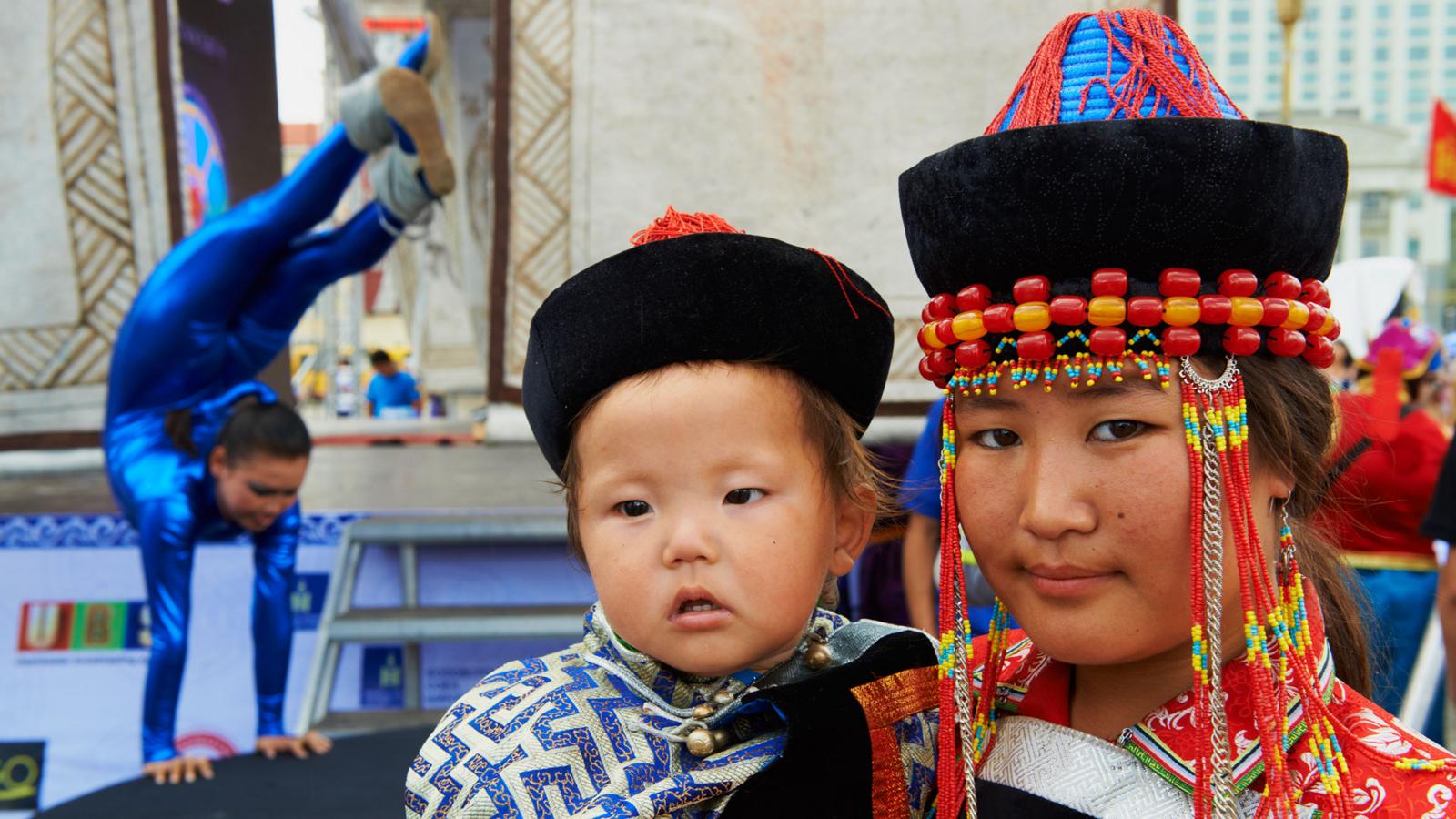
Naadam, Mongolia's largest festival (Credit: Bruno Morandi/Getty)
Traditional attire and a contortionist help celebrate Naadam. (Bruno Morandi/Getty)
The population remains connected to its traditional roots, with 10 to 15% of residents maintaining a traditional nomadic lifestyle. Even so, locals do not sacrifice modern conveniences. “Mongolians hate to be disconnected from the world,” Ganbat said. “For this reason, the internet connection speed is one of the fastest [in the world]” and those that live in the countryside still have cell phones, satellite TV and even solar panels.
GuyanaDhanishry Narine reminded readers that her country was in South America, not in Africa as many think, perhaps due in part to Guyana's yellow, red, green and black flag, or its name’s similarity to Africa’s Guinea Bissau.
Located in the northern part of the continent, Guyana is “more culturally Caribbean than South American”, having been colonized by several nations, including England, France, Spain and the Netherlands. “We’re working on feeling more South American," Narine said. “By having roads that connect to Venezuela, Suriname, and Brazil, this will change our culture again.”
The Guyanese cuisine reflects its history of so many ethnic groups. “[We have] Indian roti and curries, African meterngie (a soup with ground provisions and dumplings), European bread pudding and cheese rolls, and Chinese lowmein and chowmein,” Narine said.
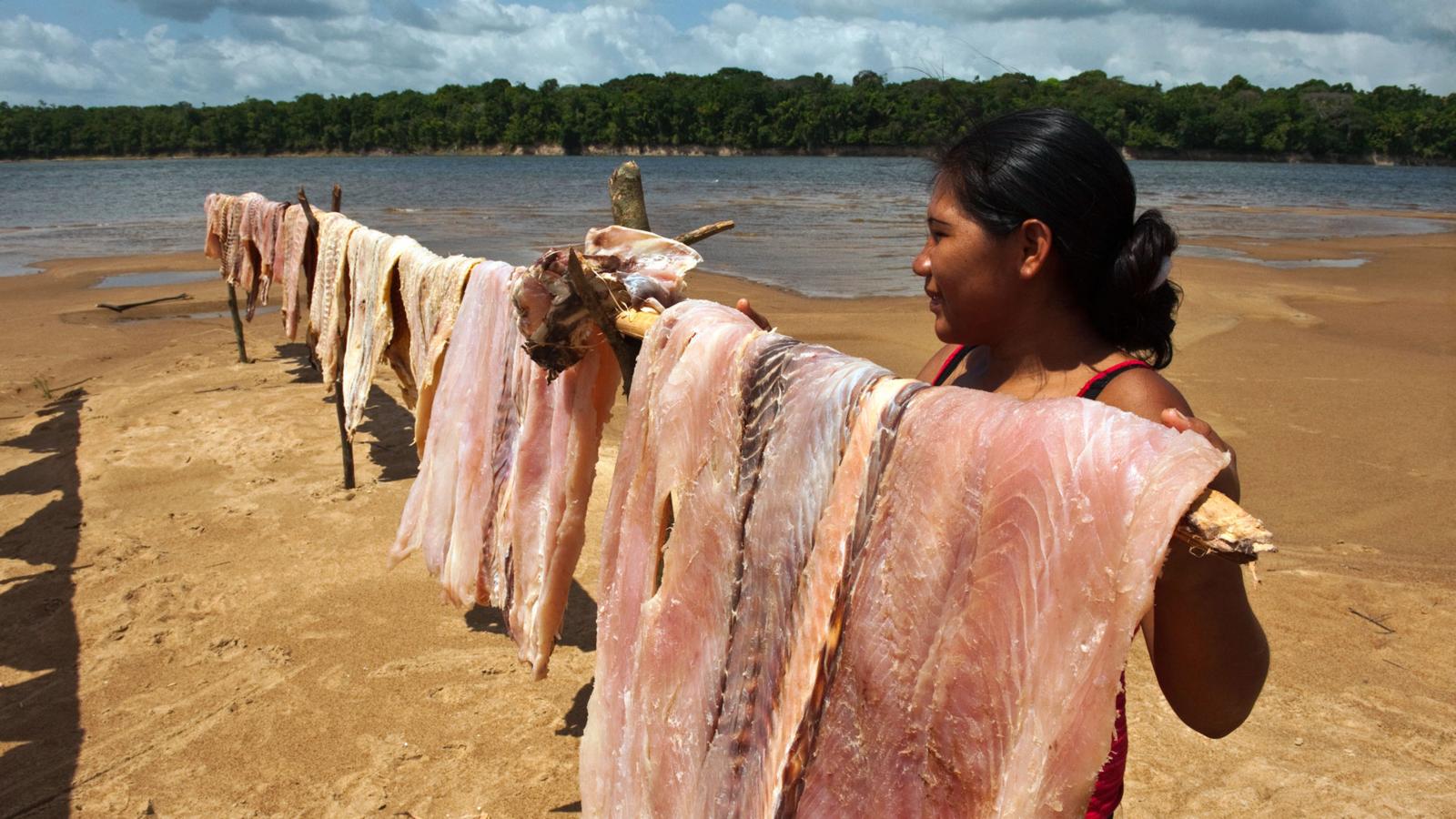
Arapaima in Rupununi, Guyana (Credit: Danita Delimont/Getty)
A woman dries out arapaima, a South American tropical freshwater fish, in Rupununi, Guyana. (Danita Delimont/Getty)
Lucky for visitors, the Guyanese are also a food-sharing people. “If you’re ever over at one of our houses, we’ll probably have to fight the urge to feed you, and to insist that you take leftovers for your family as well.”
KazakhstanThanks to the Sasha Baron Cohen film Borat, Kazakhstan residents felt like they needed to change a few of the misperceptions the film created.
“Kazakhstan actually exists and was not made up by Borat, and it is huge,” said Berik Dossayev. As proof, Dossayev shared photos of his modern city Almaty (the country’s largest city and bidder for the 2022 Olympics), fields of poppies, and rolling meadows and lakes with towering mountains in the distance.
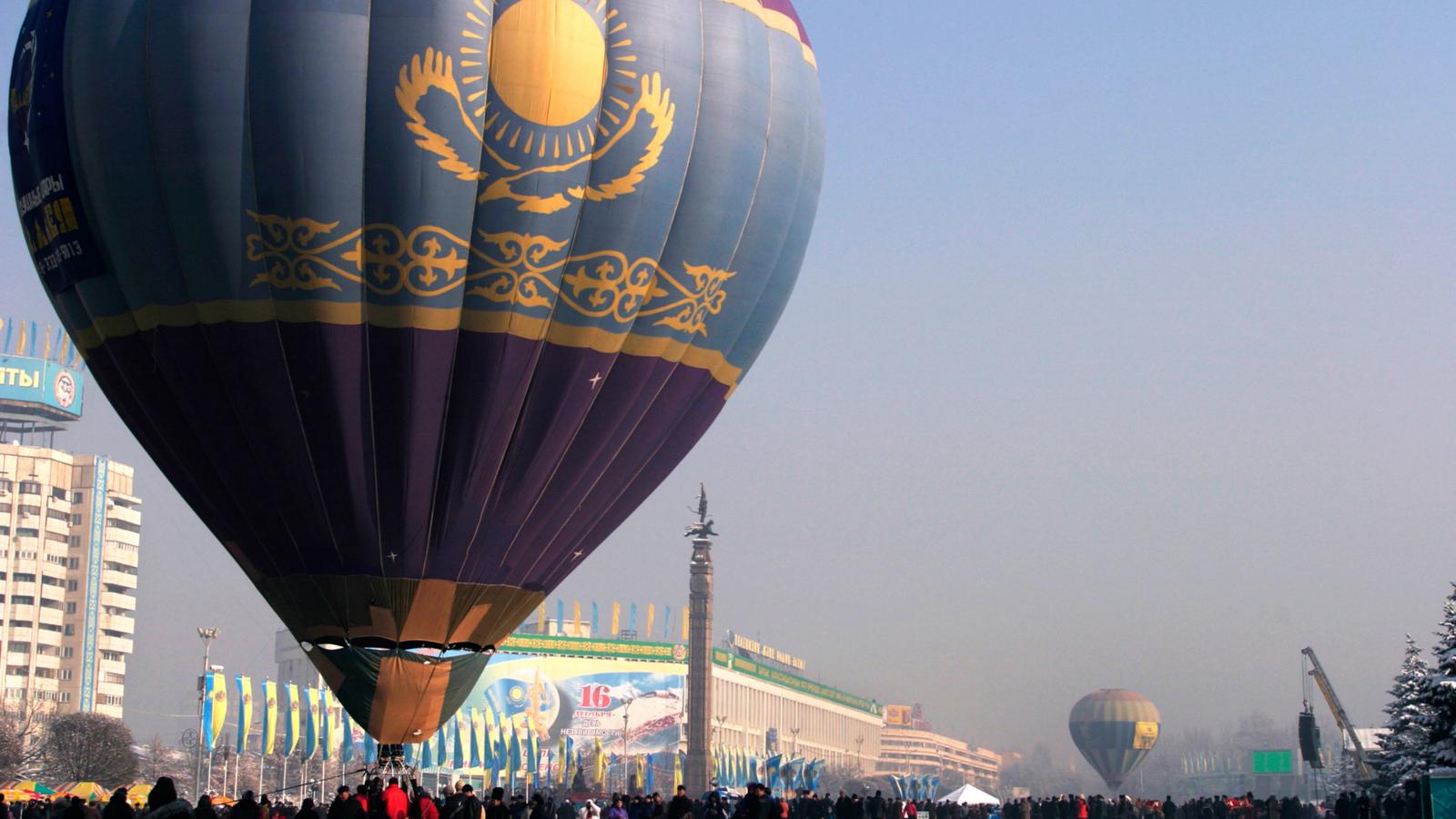
Independence Day in Almaty, Kazakhstan (Credit: Christopher Herwig/LPI/Getty)
Independence Day in Almaty, Kazakhstan. (Christopher Herwig/LPI/Getty)
BurmaThis southeastern Asian country, also known as Myanmar, has seen its fair share of turmoil and government corruption, said Quora user Ei Wai. “The current government has improved, but they still can’t overcome many problems from the past,” she said.
Still, Wai said she is hopeful that leaders like Daw Aung Sann Suu Kyi, a parliament politician and Nobel Peace Prize winner, can change the current situation. She also hopes the country’s history does not deter people from enjoying the hospitable culture and stunning historical sites. 
“Every part of our country has beautiful places,” she said. “I hope you will enjoy your holiday there.”
Her must-see list included Bagan, “an ancient and historic city”; the Shwedagon Pagoda, “famous for the over 40 tons of gold that people donated to the pagoda”; and Kyaik Htee Yo Pagada (or Golden Rock), a rock that “seems to defy gravity, as it perpetually appears to be on the verge of rolling down the hill”.
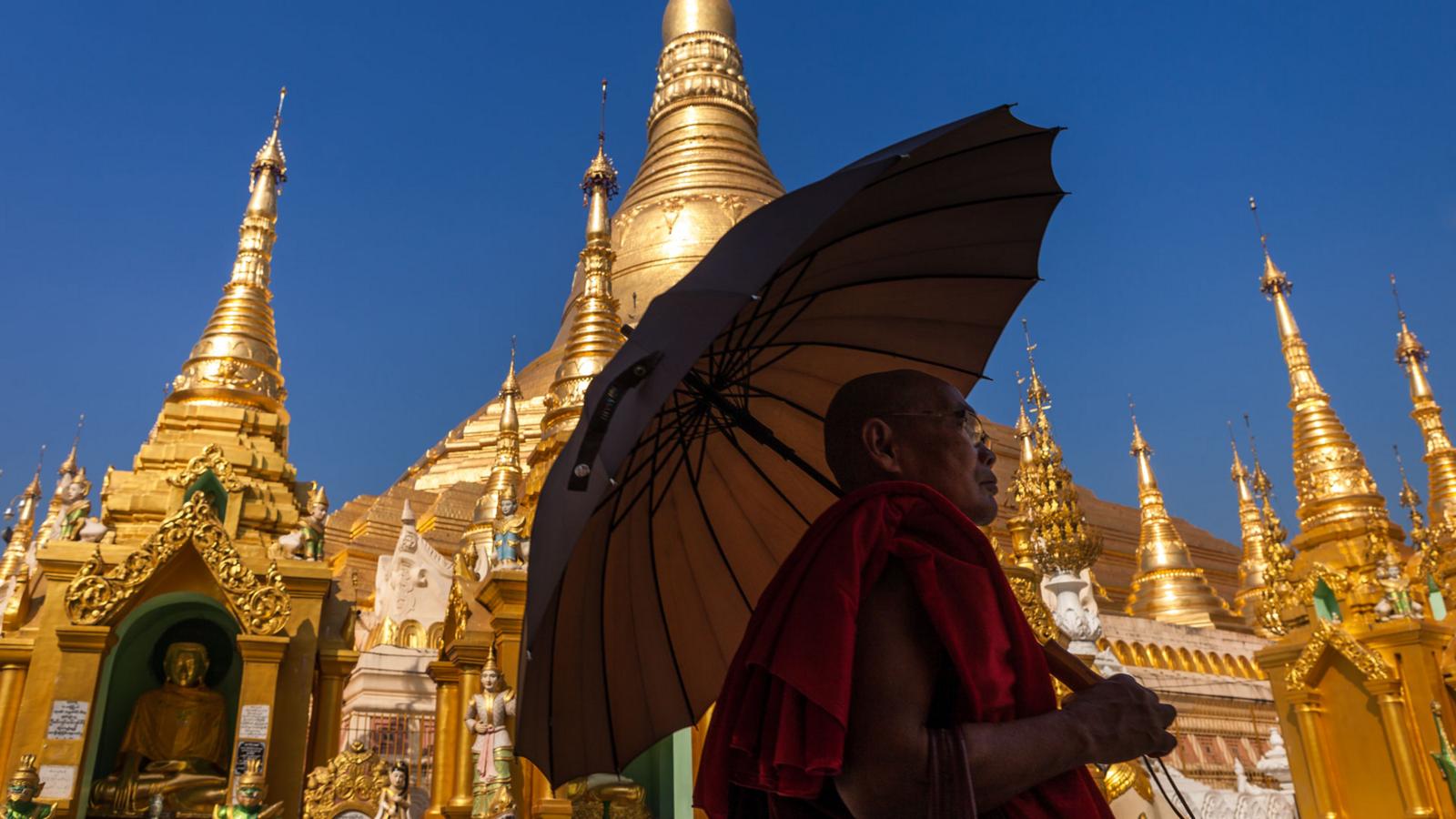
A Buddhist monk walks around Rangoon's Shwedagon Pagoda (Credit: Marjorie Lang/Getty)
A Buddhist monk walks around Rangoon's Shwedagon Pagoda. (Marjorie Lang/Getty)

  • By Lindsey Galloway, www.bbc.com


Friday, April 17, 2015

Travelore News: Marriott Hotel Georgetown, Guyana, Opens

Marriott Hotel Georgetown opens

GEORGETOWN, Guyana - The grand opening of the highly anticipated, internationally branded Marriott Hotel was today undertaken by President Donald Ramotar, in Georgetown Guyana.
The Head of State also unveiled the hotel’s plaque and he was joined by several officials of the hotel, government ministers and members of the local private sector.
While addressing the gathering, President Ramotar noted that the ceremony was indeed an ‘historic’ occasion, as the Marriott Brand is world renowned for its high class and service.
The Tourism, Industry and Commerce Minister, Irfaan Ali noted that this investment this will be a catalyst for tourism development in Guyana and it will help to raise the profile of the destination.
He was presented with a symbolic key, along with other guests while a message from Bill Marriott, first host and General Manager was read, "world- class service comes from more than a building. It comes from people-our brilliant hosts,” he read.
This evening, a grand reception will be held to mark the hotel’s opening for business to local and overseas guests.
The luxury hotel brags of 197 guest rooms and suites that offer views of the ocean at every turn. Its Ballroom has the capacity to accommodate between 400 to 700 persons at any time depending on the set up. It can also be transformed into four sections to host smaller events.
The hotel also has five boardrooms and an open style kitchen to allow patrons to dine in the restaurant and watch their meals being prepared by expert chefs.
Its indoor gym will cater mainly for its guest but membership will eventually be offered to the public. In addition, daily passes will also become available once the hotel is open to the public.
The nine story Hotel is Located at the mouth of the Demerara River in Kingston, Georgetown.
Guyana will also see additional major investments in tourism in the near future, these include the CJIA Airport Expansion, the Hospitality Institute, the Specialty Hospital, the Guyana/Suriname Bridge , the upgrading of the access road from Brazil to Georgetown and the addition of the Ramada Hotel Brand among many others.

Tuesday, August 20, 2013

An Island-by-Island Guide to Caribbean Rum

caribbean-rum-guide.jpg

Contributed by Emily Saladino 
Call it rum, rhum, or ron; just don't call it boring. Often (falsely) portrayed as uniformly saccharine, rum is one of the most diverse spirits on the planet. Today, in honor of National Rum Month (August) and the upcoming National Rum Day (August 16), we're going straight to the source to get the full story. Next stop, the Caribbean islands.
Caribbean rums range from crisp, complex Martinican bottles and subtly sweet Bajan blends to the bold, whiskey-like Haitian distillations. How can one three-letter word encapsulate so many discrepancies? Due to unregulated production laws, anything distilled from sugar cane or its by-products can be classified as rum. Couple that with the broad range of Caribbean cultures, histories, and topographies, and you've got yourself a veritable rum rainbow.
Jamaica: One of the only islands to create an official classification system for its rum varieties, Jamaica's bottles range from light and clear to dark and full-bodied. After distillation in clay pot sills, most Jamaican rums are blended and used in cocktails and seemingly ubiquitous punches. While Appleton is the country's best-known export, island experts like the Tryall Club's Jerome Dellon and Courtney Virgo champion local favorites like J. Wray & Nephew White Overpoof Rum, which has a smooth taste despite its 60+ proof.
Martinique: Arguably the foremost rum destination in the region, this French-Caribbean island produces only Appellation d'Origine Contrôlée (AOC) rums. Translation? Martinican rum standards are so high that the French government monitors its products using the same type of strict guidelines it has for Burgundy wine or Roquefort cheese. Distilled from pure sugarcane juice, Martinique's rhums agricoles have a complex, almost vegetal quality, and range from the delicately spiced Saint James Royal Ambre to clear and crisp Clément Blanc.
Dominican Republic: For proof that all rums aren't sweet, considerDominican distiller Brugal. The 125-year-old label produces a range of light and dark rums, culminating in the distinctive Extra Dry. Something of a gin-drinker's blend, this white Brugal is made from fermented molasses and aged for just three to five years in American oak casks once used for bourbon. The result is crisp, clear, and unlike any other rum from the region.
Barbados: Like Armagnac production, Bajan rums are distilled using both column and copper pot stills. The resulting blends range from light to dark, but al have a light, subtle sweetness. Barbados' best-known brand is Mount Gay, which dates back to 1663 and claims to be the world's oldest operating rum producer. The blended bottles make for great company—Bajan rum enthusiasts use them in carefully guarded rum punch recipes or mixed with fresh coconut water for a simple, straightforward, delicious cocktail.
Guyana: The only Caribbean country that is not, in fact, an island, South America's coastal Guyana is an outlier in more ways than one. Its rich, dark rums get their distinctive terroir from the Demerara River, where Guyanese sugarcane is picked before being crushed into molasses. Distilled in both pot and column stills, they can also be aged for remarkably long periods of time. Consider luxury brand El Dorado cask-aged, 21-year-old Special Reserve, which has a dark, honeyed taste, perfect for sipping straight.
Haiti: Made from pure sugarcane juice, Haitian rhums agricoles have a sharp, layered bite. National brand Barbancourt makes all five of its bottles using a French double distillation process called charentaise. Typically used for bottling cognacs, charentaise gives Haitian bottles a distinctive tang that makes them excellent for drinking neat or with a solitary ice cube. Care to sip with a conscience? As part of Haitian earthquake relief efforts, Barbancourt has created a foundation to house some 1200 displaced people. It continues to accept donations and distribute aid; find out more here.
Photo credits: Rum bottles via Dreamstime.com