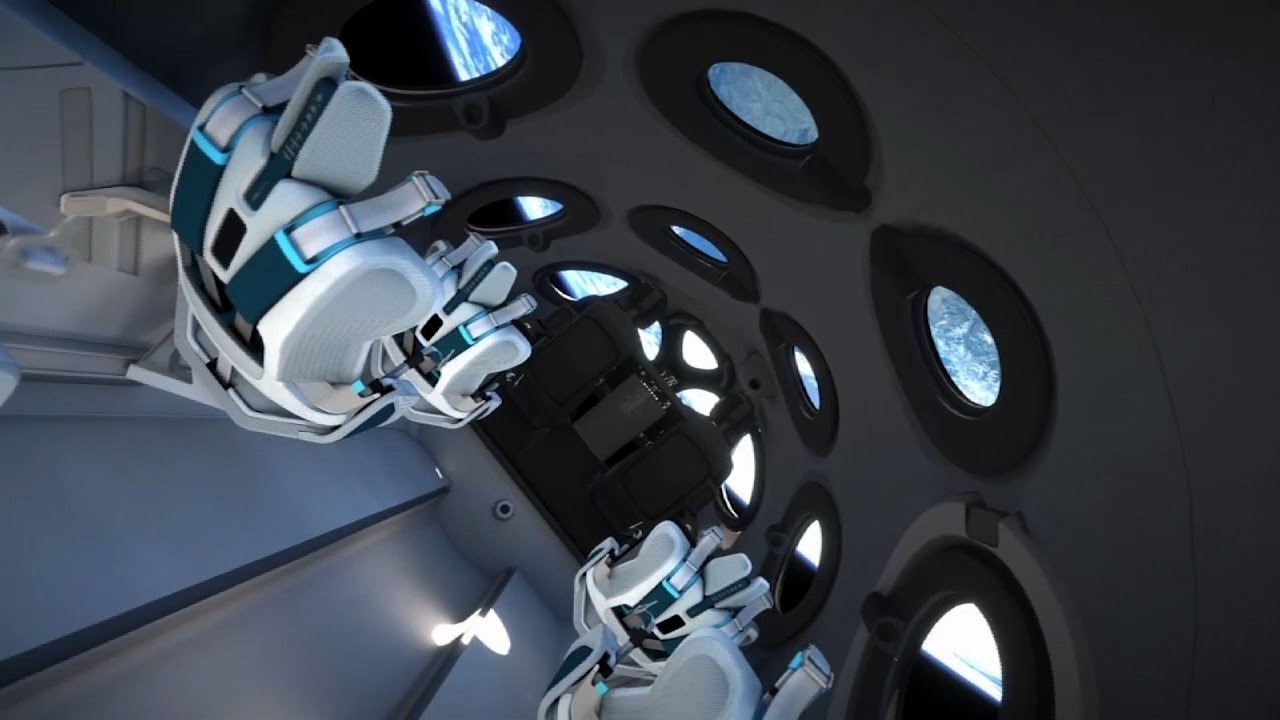
Virgin Galactic has officially resumed ticket sales for its commercial spaceflights, but the price of admission to the "Final Frontier" has reached new heights.
After a two-year hiatus focused on developing its next-generation fleet, the company is back in the business of selling weightlessness—at a premium.
The New Ticket Price: $750,000
The most striking update is the price tag. Previously set around $450,000, a seat on a Virgin Galactic flight now costs $750,000.
This isn't just inflation; it’s a strategic pivot. By reopening sales on a limited basis, Virgin Galactic is leaning into the exclusivity of the experience. They aren't just selling a flight; they are selling a "Spaceflight Expedition" in an era where they currently stand as one of the only active providers for short-duration suborbital tourism.
Out With the Old, In With the "Delta"
The reason for the long pause in sales was a total shift in technology. The company has retired its prototype-style VSS Unity in favor of the Delta-class SpaceShip.
Unlike its predecessors, the Delta-class ships are designed for high-frequency use:Capacity: Each ship can carry up to six passengers (or a mix of passengers and research payloads).Frequency: These ships are built for rapid "turnaround," with the goal of flying up to eight missions per month.Efficiency: The design focuses on lower maintenance and higher reliability, which is the key to the company finally reaching profitability.
The 2026–2027 Flight Roadmap
If you buy a ticket today, when do you actually go? The company has laid out a clear timeline for the next 18 months:
April 2026: Ground testing begins for the first new SpaceShip.
Q3 2026: The flight test phase is scheduled to commence.
Q4 2026: Commercial operations are expected to officially resume with the first Delta-class ship.
Early 2027: A second Delta-class ship is projected to enter service, significantly increasing the "cadence" of flights.
What Does the Experience Include?
For your $750,000, you aren't just getting a 90-minute flight. The "Expedition" includes:
Multi-day Training: Astronaut training at Spaceport America in New Mexico.
The Flight: A Mach 3 boost to the edge of space, several minutes of out-of-seat weightlessness, and views of the Earth’s curvature against the blackness of space.
Astronaut Status: Membership in a very small, exclusive community of humans who have earned their "Commercial Astronaut" wings.
The Bottom Line: Virgin Galactic is moving from the "experimental" phase into a "production" phase. While the price hike may price out all but the ultra-wealthy, it represents the company's bet that the demand for space travel is high enough to sustain a luxury-tier business model.
If you have three-quarters of a million dollars burning a hole in your pocket, the Astronaut Portal is officially open for business at: https://www.virgingalactic.com/
Showing posts with label Consumer space travel. Show all posts
Saturday, April 11, 2026
Thursday, May 5, 2022
First Space Hotel Plans to Open By 2025
A new startup, Orbital Assembly Corporation, announced Tuesday it hopes to launch its first space hotel at some point in 2025. In short, it is set to be the first privately-operated, habitable, free-flying station to orbit the planet.
Ahead of its larger Voyager Station — something that will eventually accommodate upwards of 400 people — Orbital Assembly announced a smaller model called the Pioneer Space Station. The Pioneer will be able to host 28 guests and pods can be customized based on certain commercial requirements.
"We've been able to develop a safe, secure, and reliable modular station that will generate revenue and profitability from both the tourist and commercial sectors sooner than our competitors who are adhering to NASA timetables," Orbital Assembly chief Rhonda Stevenson said in a press release
She added, "Multiple revenue streams from commercial, research and tourism markets will enable us to subsidize the travel market for a one to two-week stay. While launch costs continue to be a barrier, we expect tourists will be motivated to plan shorter, or more frequent, stays as space travel becomes less expensive."
Both Pioneer and Voyager are set to be just a pair of the many private projects companies are working with NASA on as more businesses look toward the stars. With Pioneer set to be ready in 2025, Voyager will open for business two years later in 2027.
Costs on reserving rooms aboard either craft are not yet available.
"For the average person, being in space will be a sci-fi dream experience," Orbital Assembly operating officer Tim Alatorre added. "Our vision is to make space a destination people will yearn to visit, with familiar elements provided by the presence of gravity." Pioneer's gravity experience will enable visitors to move around in weightless environments while eating or drinking out of a cup normally and sleeping without having to be attached to a bed. This is not possible in current space stations.
Wednesday, July 29, 2020
Virgin Galactic Shows Off Passenger Spaceship Cabin Interior
LOS ANGELES (AP) — Passengers flying Virgin Galactic on suborbital trips into space will be able to see themselves floating weightless against the backdrop of the Earth below while 16 cameras document the adventures, the company said Tuesday.
Highly detailed amenities to enhance the customer flight experience were shown in an online event revealing the cabin of the company’s rocket plane, a type called SpaceShipTwo, which is undergoing testing in preparation for commercial service.
There are a dozen windows for viewing, seats that will be customized for each flight’s six passengers and capable of adjusting for G forces, and, naturally, mood lighting.
Yet designer Jeremy Brown said the passengers’ most lasting impression may come from a large mirror at the rear of the cabin.
“We think that there’s a real memory burn that customers are going to have when they see that analog reflection of themselves in the back of the cabin, seeing themselves floating freely in space ... that very personal interaction that they’ll have with the experience,” he said.
Virgin Galactic was founded by British billionaire Richard Branson after the prize-winning flights of the experimental SpaceShipOne in 2004. Branson plans to be the first passenger when commercial flights begin.

Like its predecessor, SpaceShipTwo is a rocket plane that is slung beneath a special jet airplane and released at high altitude.
After a moment of free fall, the two pilots ignite the rocket and the craft pitches up and accelerates vertically at supersonic speed.
The rocket shuts down but momentum carries the craft into the lower reaches of space where it flips upside down so that the windows on the roof of the cabin give a view of the Earth far below.
The passengers, clad in space suits designed by the Under Armour company, will be able to leave their seats and float about the cabin, using handholds tested by chief astronaut trainer Beth Moses during Virgin Galactic’s second flight into space last year.
The test was aimed at helping finalize the design and at learning how to train passenger astronauts for what they will experience as they become weightless and reach the top of the flight profile, known as its apogee, before the descent begins.
Moses said she tested different ways of getting in and out of the seats, moved around the cabin and waved at the mirror, concluding that it was not disorienting.
“I also purposely went to a point in the cabin to most dramatically try to enjoy apogee and a view of Earth from the stillness of space,” she said.
The passengers will need to return to their seats after a few minutes as the craft reorients and begins to interact with the increasing density of the atmosphere and then glides to an unpowered landing.
SpaceShipTwo was developed at Virgin Galactic facilities in Mojave, California, and will operate commercially from Spaceport America in southern New Mexico, where passengers will undergo several days of training before their flights.
George Whitesides, the former longtime company CEO who is now its chief space officer, said upcoming test flights will include four crew members playing the role of passengers.
Whitesides, who will now focus on future technology, recently handed the CEO role to Michael Colglazier, a former president and managing director of Disney Parks International.
The company has yet to set a date for flights with paying passengers.
The company has said more than 600 people have put down deposits. The initial seats were sold at $250,000 apiece. Whitesides said the cost may increase for a while but the long-term goal is to make the adventure more accessible, possibly at a lower cost.
Saturday, July 4, 2020
Firm To Offer Balloon Rides From Alaska To The Edge Of Space
ANCHORAGE, Alaska (AP) — A company wants to use an advanced balloon to fly customers from Earth’s surface in Alaska to the highest reaches of the planet’s atmosphere.
Florida-based startup firm Space Perspective plans to use the Pacific Spaceport Complex in Kodiak to serve as one of the launch sites for the vehicle, called the Spaceship Neptune, The Anchorage Daily News reported Sunday.
The balloon rides will be manned by a flight crew taking eight passengers in a pressurized capsule suspended beneath a hydrogen balloon the size of a football stadium.
Each passenger could pay an estimated $125,000 for a six-hour journey.
Mark Lester, CEO of Alaska Aerospace Corp., said the high-altitude rides will be available from Kodiak in a few years and will support Alaska tourism.
“You will have people from around the world who want to come to Alaska and see the northern lights from the edge of space,” Lester said.
Alaska Aerospace and Space Perspective will test and refine spaceport operations and secure spaceflight licenses from the Federal Aviation Administration.
Space Perspective plans to complete an unmanned test flight from the Shuttle Landing Facility at NASA’s Kennedy Space Center in Florida next year.
Passengers will begin with a two-hour ascent to about 19 miles (31 kilometers) above Earth. They will then be able to post on social media about the experience or send data.
“Neptune then makes a two-hour descent under the balloon and splashes down, where a ship retrieves the passengers,” along with the capsule and balloon, Alaska Aerospace said.
Capsule recovery would occur in the waters around Kodiak Island and the Aleutian Island chain, depending upon the seasonal wind patterns.
The balloon design is derived from technology NASA has used for decades to fly large research telescopes, Space Perspective said.
Thursday, February 27, 2020
Virgin Galactic Reports High Interest In Its Space Flights
LOS ANGELES (AP) — Virgin Galactic has received nearly 8,000 online reservations of interest since its first successful test flight into space 14 months ago, the company said Tuesday as it nears commercial operation and prepares to reopen ticket sales.
Virgin Galactic already had more than 600 firm reservations that were taken from customers in 60 countries until the December 2018 flight, when it closed down ticket sales.
The company said that on Wednesday it will begin a process called “One Small Step” that will allow those online registrants who are serious about becoming passenger astronauts to register online for a firm reservation by paying a fully refundable deposit of $1,000.
Confirming a spaceflight reservation will be a process called ”One Giant Leap,” echoing the words of Apollo 11 astronaut Neil Armstrong when he became the first person to set foot on the moon in 1969.
The company did not say when the new set of seats would be released or the actual cost. The initial seats were sold at $250,000 apiece.
After years of development and testing at Mojave Air & Space Port in Mojave, California, Virgin Galactic has been moving toward starting actual operations at Spaceport America in southern New Mexico — although it has not set a date.
A special carrier aircraft recently ferried its spaceship, VSS Unity, from California to New Mexico and said construction of the next two spacecraft is well underway.
Virgin Galactic is offering suborbital flights to an altitude of at least 50 miles (80.5 kilometers), where passengers will see a vast swath of the Earth far below and experience a few minutes of weightlessness before the spacecraft glides to a landing.
The current 7,957 online registrations are more than double the number the number the company last reported in September 2019.
Stephen Attenborough, the company’s commercial director, said in a statement that the increasing demand for personal spaceflight was encouraging.
“One Small Step allows us to help qualify and build confidence in our direct sales pipeline, as well as to ensure that those who are most keen to make reservations, are able to do so at the earliest opportunity,” he said.
Virgin Galactic was founded by British billionaire Richard Branson after the historic 2004 flights of the experimental SpaceShipOne, which was funded by Microsoft co-founder Paul Allen and won the $10 million Ansari X Prize as the first privately developed, manned rocket to reach space.
Virgin Galactic’s six-passenger spacecraft is a type called SpaceShipTwo. A carrier aircraft carries it to high altitude and releases it before its rocket engine ignites.
The company is now formally named Virgin Galactic Holdings Inc. and went public on the New York Stock Exchange in October. The fleet is being manufactured by The Spaceship Company, a wholly owned subsidiary.
By JOHN ANTCZAK
Subscribe to:
Posts (Atom)