Showing posts with label Cuba travel news. Show all posts

Tuesday, June 13, 2023

U.S. Gives Havana Embassy A Facelift After Years Of Neglect

(Reuters) - When the U.S. embassy in Havana reopened last May to Cubans seeking visas after a nearly five-year hiatus, the once proud 1950s vintage building was in shambles.

Pieces of its stone facade were crumbling from top floors, threatening passersby. A rusty perimeter fence, decrepit and obsolete, wobbled with the trade winds. Hurricane Irma had damaged lower windows, a guard post, and granite facing. Even the ambassador's dramatic perch - a balcony overlooking the Gulf of Mexico - was deemed unsafe.

A $28 million renovation project now underway is a little-known but critical investment in U.S. diplomacy on the island, which has also included an increase in consular staff and programs to "advance human rights" and private business in the communist-run country.

"The important thing to realize about diplomacy is that it is not only policy - it's logistics," said Benjamin Ziff, the top U.S. diplomat in Cuba. "You need to have a presence. You need to have people. You need to have a building."

But the project also underscores the still rocky relationship between Cuba and the U.S., which flared again earlier this week on a U.S. media report that China had reached a secret deal with Cuba to establish a spy base on the island aimed at the United States.

U.S. officials immediately cast doubt on report, and Cuba on Thursday denied it outright. But the Cuban government also seized the opportunity to accuse the U.S. of being behind a fabrication meant to justify Washington's decades-old economic embargo against the island.

The embassy work, which began in May of 2022 and will likely be delayed six months, until March or April of 2024, according to a State Department source, has stumbled amid tensions and a lack of trust between the two countries.

Cuba's government was initially slow to issue visas for U.S. workers and technicians, Ziff told Reuters.

The work crew's headcount of roughly 12, including five Cubans who are required to be accompanied at all times by U.S. contractors with special security clearances, has fluctuated with those bureaucratic hurdles, the state department source said, prompting unpredictable delays in construction.

If a contractor broke a sawblade, for example, work at times ground to a halt, Ziff said.

"They'd have to return to the United States to procure another sawblade, then apply for a new visa which could take two months," he said.

Other challenges, including high-sulfur Cuban fuel that wreaked havoc on machinery imported from the U.S., and local shortages of supplies such as cement and rebar, initially stalled progress.

Some of those problems have been resolved, Ziff said. The Cuban government has streamlined the visa process for workers. The State Department imported high-grade stainless steel for its fencing, and granite from a quarry in Vermont for the building's new facade.

But new obstacles have cropped up. So-called "secure" containers to transport sensitive building materials, sealed with diplomatic privilege, are now facing bureaucratic delays, according to Ziff and State Department sources.

"There is an understanding that it is good for the bilateral relationship to have an embassy that is safe and secure," Ziff said. "However, trying to bring in materials ... remains a problem.

The Cuban government did not respond to a request for comment on this story.

Cuba has insisted on the importance of a functioning U.S. embassy and a robust visa program, agreed upon in migration accords between the two countries, as a necessary step in stemming the record-breaking exodus of Cubans via irregular routes north to the United States.

Reuters spoke with several Havana residents who applauded the embassy overhaul.

"It's one of the most important embassies in our country, and many Cubans visit it when we want to travel," said Alexander Garcia, a 22-year-old worker at a cafeteria facing the embassy.

"I want it to be in top shape when it's my turn to go," he said, smiling.

CASTRO THREATENED TO SEIZE BUILDING

Under former leader Fidel Castro, the jabs and antagonism often went both ways between Cuba and the embassy.

In 1964, Castro threatened to seize the building and convert it into his government's fishing ministry, angered over the arrest of Cuban fishermen in Florida. Castro often alleged the embassy was a hotbed of spies aiming to overthrow his government.

When the embassy under the administration of George W. Bush began to run a Times Square-style electronic ticker with messages promoting human rights and democracy, Castro planted more than a hundred black flags in a park adjacent to the embassy to obscure the sign from the public.

The embassy was not always a point of contention.

Built on Havana's iconic Malecon seafront promenade in 1953 and designed by Harrison & Abramovitz, the architects who designed the United Nations headquarters in New York, its high-profile location and modernist architecture were intended to make a statement after World War Two, said author Jane Loeffler, a Washington-based architectural historian who studies embassies.

The State Department, she said, saw it as a "way of putting America on the diplomatic map as a forward-looking and optimistic nation, home of the world's largest democracy, a place of welcome and a force for good."

But after Castro took power in 1959 and the two countries severed diplomatic relations, the structure was all but abandoned and that initial show of optimism became a "failed dream," she said.

The building, which operated for years as the "U.S. Interests Section," reopened as an embassy in July 2015 when diplomatic relations were restored under Barack Obama. But its staffing was cut sharply two years later after U.S. personnel began to report a mysterious ailment dubbed "Havana Syndrome."

U.S. intelligence investigations have since determined it "very unlikely" a foreign adversary was responsible for the illness, and a more robust staff and agenda have returned to Havana, Ziff said.

"There's a lot of interesting history here, and we will continue to make interesting history here."
Reporting by Dave Sherwood; Additional reporting by Mario Fuentes, Anett Rios and Alexandre Meneghini; Editing by Daniel Wallis

Wednesday, September 28, 2022

Travelore News: Cuba Begins To Turn On Lights After Ian Blacks Out Island

HAVANA (AP) — Cuban officials said they had begun to restore some power Wednesday after Hurricane Ian knocked out electricity to the entire island while devastating some of the country’s most important tobacco farms when it hit the island’s western tip as a major storm.

The Energy and Mines Ministry announced it had restored energy to three regions by activating two large power plants in Felton and Nuevitas and was working to get others back on line.

Lights started to flicker on in the capital, Havana, but much of the city and other parts of western Cuba remained without power on Wednesday in the wake of the major hurricane, which had advanced northward to Florida. It was the first time in memory — perhaps ever — that the whole island had lost power.

On Tuesday, Ian hit a Cuba that has been struggling with an economic crisis and has faced frequent power outages in recent months. It made landfall as a Category 3 storm on the island’s western end, devastating Pinar del Río province, where much of the tobacco used for Cuba’s iconic cigars is grown.

Tens of thousands of people were evacuated and others fled the area ahead of the arrival of Ian, which caused flooding, damaged houses and toppled trees. While state broadcaster Canal Caribe reported two deaths in Pinar del Rio, most other media gave no figures on casualties, saying officials were still calculating the storm’s impacts.

Ian’s winds damaged one of Cuba’s most prestigious tobacco farms, Finca Robaina.

“It was apocalyptic, a real disaster,” said Hirochi Robaina, owner of the farm that bears his name and that his grandfather made known internationally.

Robaina posted photos on social media of wood-and-thatch roofs smashed to the ground, greenhouses in rubble and wagons overturned.

Cuban President Miguel Díaz-Canel visited the affected region, telling the population, “Although the first impact is very painful, there’s nothing to do but overcome the adversity.”

“Being in the hurricane was terrible for me, but we are here alive,” said Pinar del Rio resident Yusimí Palacios, who asked authorities for a roof and a mattress.

Officials had set up 55 shelters and took steps to protect crops, especially tobacco.

The U.S. National Hurricane Center said Cuba suffered “significant wind and storm surge impacts” when the hurricane struck with top sustained winds of 125 mph (205 kph).

Ian was even stronger Wednesday as it approached the coast of Florida with top winds of 155 mph (250 kph), threatening to cause catastrophic damage there.

In Cuba, local government station TelePinar reported heavy damage at the main hospital in Pinar del Rio city, tweeting photos of collapsed ceilings and downed trees. No deaths were reported.

Videos on social media showed downed power lines and cut off roads in the provinces of Pinar del Rio, Artemisa and Mayabeque. A hospital in Pinar del Río was damaged.

“The town is flooded,” said farmer Andy Muñoz, 37, who lives in Playa Cajío in Artemisa.

He said many people lost their belongings due to the storm surge.

“I spent the hurricane at home with my husband and the dog. The masonry and zinc roof of the house had just been installed. But the storm tore it down,” said Mercedes Valdés, who lives along the highway connecting Pinar del Río to San Juan y Martínez. “We couldn’t rescue our things ... we just ran out.”

Thursday, September 22, 2022

US Embassy In Cuba to To Process Full Immigrant Visas In 2023, Making It Easier For Cubans To Reunite With Family Members In The United States.

The Biden administration said Wednesday that the U.S. Embassy in Cuba will begin processing full immigrant visas in early 2023, making it easier for Cubans to reunite with family members in the United States.

The embassy in Havana had last processed full immigrant visas in 2017. The U.S. government will also stop requiring Cubans seeking visas in family preference categories to travel to Georgetown, Guyana, for their interviews.

Additional government personnel will staff the embassy to handle the visa requests. The added personnel are part of the commitment stemming from the resumption of the Cuban Family Reunification Parole program last month. The 2007 program enables U.S. citizens and lawful permanent residents to apply for their family members in Cuba to come to the U.S. sooner than conventionally allowed.

Under accords with Cuba, the U.S. has committed to ensuring the legal migration of at least 20,000 Cubans annually, not including immediate relatives of U.S. citizens.

Attempted border crossings by Cubans has increased sharply over the past year, according to data issued Monday by the U.S. Customs and Border Protection. U.S. officials stopped Cubans who were trying to enter the U.S. 19,057 times in August, a more than four-fold increase from August 2021.

Border crossings have been fueled partly by repeat crossers because there are no legal consequences for getting expelled under a pandemic-era rule known as Title 42. That rule denies a right to seek asylum.

Friday, June 3, 2022

US Lifts Restrictions On Cuba Flights

The U.S. Transportation Department on Wednesday made it easier for Americans to travel to Cuba, lifting flight restrictions that were established during the Trump administration.

The restrictions had prevented U.S. airline flights and chartered flights from going to Cuban cities other than Havana. Secretary of State Antony Blinken sent a letter to the Transportation Department on Tuesday asking it to revoke the restrictions, and the agency followed through Wednesday.

Blinken said opening up flights to Cuba was “in support of the Cuban people and in the foreign policy interests of the United States.” He said that once the Transportation Department followed through on his request, “scheduled and charter air services between the United States and Cuban airports may resume effective immediately.”

The Biden administration announced last month that it would expand flights to Cuba, take steps to loosen restrictions on U.S. travelers to the island, and lift restrictions on money that immigrants can send to people on the island.

The administration said it would also move to reinstate the Cuban Family Reunification Parole Program, which has a backlog of more than 20,000 applications, and increase consular services and visa processing.

“With these actions, we aim to support Cubans’ aspirations for freedom and for greater economic opportunities so that they can lead successful lives at home,” State Department spokesman Ned Price said last month.

Sunday, March 6, 2022

US To Resume Some Visa Services In Cuba After 4 Year Break

The U.S. government has announced that it would resume limited processing of immigrant visas in Havana more than four years after halting that service and removing most diplomats from Cuba over suspicions they had been targeted for mysterious attacks.

The Havana embassy’s chargé d’ affaires, Timothy Zúñiga-Brown, announced that the consulate would soon begin processing some immigrant visas for which documentation already is complete, though he did not give a date.

Most visas will continue to be processed in Guyana on the South American mainland — a costly and difficult journey away for most Cubans.

Zúñiga-Brown said the U.S. is interested in “safe and legal” immigration, particularly for family reunification cases which had been complicated by the withdrawal of diplomats.

Cuba last year saw a surge in unauthorized migration attempts fueled in part by an economic crisis that was exacerbated by the pandemic, increased U.S. sanctions and cutbacks in aid from Venezuela.

Most U.S. diplomats were withdrawn from Cuba in 2017 after the administration of then-President Donald Trump accused Cuba of targeting some at the post with weapons that that caused lingering and sometimes serious brain injuries — allegations Cuba has always denied. Canadian diplomats also reported such incidents.

While the maladies came to be called “Havana Syndrome,” they were also reported by hundreds of American officials at missions around the world and even in Washington.

CIA findings released in January determined it was unlikely that Russia or another foreign adversary had used microwaves or other forms of directed energy to attack the Americans.

That conclusion was not universally accepted. A separate panel of intelligence experts said last month that several potential causes remain plausible, including the use of devices that emit beams of directed energy. The panel said some of the injuries are not compatible with psychological causes.

The uncertainty about the cause of the illnesses has added to friction between officials and those suffering from symptoms.

President Joe Biden had campaigned on easing the Trump administration’s tough series of new sanctions on Cuba, but so far has taken only limited steps toward the sort of relaxation that occurred under Barack Obama, who visited Cuba and made dealings with it far easier.

Thursday, September 3, 2020

Travelore News: Cuba Closes Off Havana To Stamp Out Spread Of Coronavirus

A street vendor wearing a mask as a precaution against the spread of the new coronavirus pushes his cart down a street in Havana, Cuba, Monday, Aug. 31, 2020. Cuban authorities will introduce new measures starting tomorrow Tuesday aimed at containing the spread of the coronavirus in Havana among others a curfew from 7 pm until 5 am and no one without special permission will be able to enter or leave the province. The new measures will last at least 15 days. (AP Photo/Ramon Espinosa)

HAVANA (AP) — Cuban authorities ordered a strict 15-day lockdown of Havana on Tuesday seeking to stamp out the low-level but persistent spread of the novel coronavirus in the capital.
Aggressive anti-virus measures including closing down air travel have virtually eliminated COVID-19 in Cuba with the exception of Havana, where cases have surged from a handful a day to dozens daily over the last month.
Starting September 2nd, Havana is under a 7 p.m. to 5 a.m. curfew. Most stores are barred from selling to shoppers from outside the immediate neighborhood in order to discourage people from moving around the city.
Some Havana residents complained that the measures were complicating the already difficult task of buying food in a city stricken by constant shortages and endless lines for a limited supply of basic goods.
“It’s a good cause, getting rid of all of this (coronavirus), but in the end they aren’t going to get rid of the lines,″ said Josuel Suárez, a 26-year-old engineer. “The situation is already difficult, and on top of that these restrictive measures, and people have to eat, to resolve their problems.″
Others welcomed the tighter control.
“Many people don’t pay attention to medical advice. This is how we’re going to resolve this situation, which isn’t easy,″ said Rosa Rojas, an 80-year-old homemaker. ’’I go out because I need to, but there are people in the street with no reason, drinking rum and hanging out in parks without a face mask.″
Police stationed on every road leaving Havana are supposed to stop everyone who doesn’t have a special permit to travel, meant to be issued only in extraordinary circumstances. Some provinces that saw no new cases for weeks have begun detecting them in recent days, often linked to travelers from Havana.
The start of in-person classes was also indefinitely delayed in Havana, even as schools open normally in the rest of Cuba.
The island of 11 million people has reported slightly more than 4,000 confirmed coronavirus cases, with fewer than 100 deaths, one of the lowest rates in the region during the pandemic.
The government made face masks obligatory in the early stages of its pandemic response and in the first months of the crisis police aggressively fined and even jailed people for violations.
That stance slackened somewhat as Havana moved out of the first, strictest phase of lockdown in July, public transportation restarted and people returned to work. Cases began to climb, and the capital province returned to phase zero last month.
But the measures failed to brake the rise of coronavirus infections, as authorities bemoaned widespread violations of requirements including wearing face masks, avoiding large gatherings and maintaining social distance.
The government announced last week that for at least 15 days the capital would be placed under the strictest measures to date. They include fines of up to $125 per violation, more than triple the average monthly wage.
“We are going to demand people follow the rules with a lot of rigor so that our country sees the results it deserves,″ Dr. Francisco Durán, the country’s head of epidemiology, said Tuesday morning.
A

Friday, June 16, 2017

Trump Restores Some Cuba Penalties, Rejecting ‘Oppressors’

None


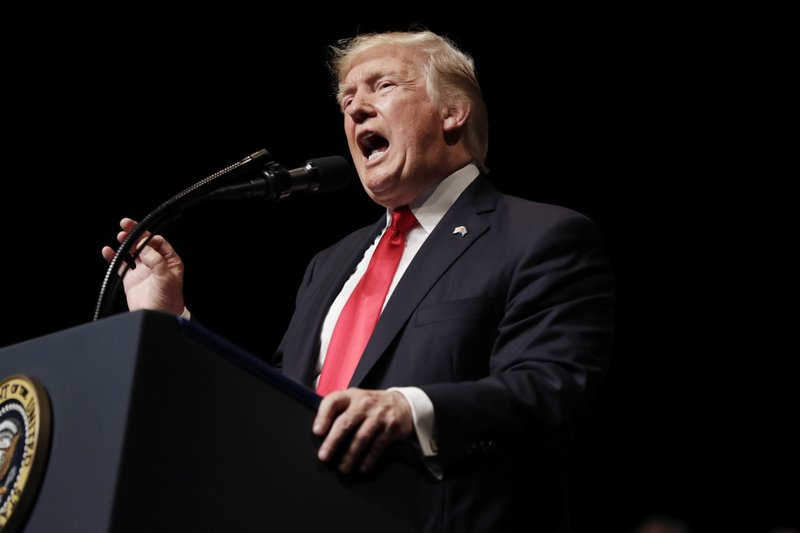
MIAMI (AP) — President Donald Trump declared Friday he was restoring some travel and economic restrictions on Cuba that were lifted as part of the Obama administration’s historic easing. He challenged the communist government of Raul Castro to negotiate a better deal for Cubans and Cuban-Americans.

Announcing the rollback of President Barack Obama’s diplomatic opening during a speech in Miami, Trump said Cuba had secured far too many concessions from the U.S. in the “misguided” deal but “now those days are over.” He said penalties on Cuba would remain in place until its government releases political prisoners, stops abusing dissidents and respects freedom of expression.

“America has rejected the Cuban people’s oppressors,” Trump said in a crowded, sweltering auditorium. “They are rejected officially today — rejected.”

Though Trump’s announcement stops short of a full reversal of the Cuba rapprochement, it targets the travel and economic engagement between the countries that has blossomed in the short time since relations were restored. The goal is to halt the flow of U.S. cash to the country’s military and security services in a bid to increase pressure on Cuba’s government.
Embassies in Havana and Washington will remain open. U.S. airlines and cruise ships will still be allowed to serve the island 90 miles south of Florida. The “wet foot, dry foot” policy, which once let most Cuban migrants stay if they made it to U.S. soil but was terminated under Obama, will remain terminated. Remittances to Cuba won’t be cut off.

But individual “people-to-people” trips by Americans to Cuba, allowed by Obama for the first time in decades, will again be prohibited. And the U.S. government will police other such trips to ensure there’s a tour group representative along making sure travelers are pursuing a “full-time schedule of educational exchange activities.”

Trump described his move as an effort to ramp up pressure to create a “free Cuba” after more than half a century of communism.
“I do believe that end is in the very near future,” he said.

Trump’s move was a direct rebuke to Obama, for whom the diplomatic opening with Cuba was a central accomplishment of his presidency. The new president’s action is broadly opposed by American business groups.

“U.S. private sector engagement can be a positive force for the kind of change we all wish to see in Cuba,” said Myron Brilliant, the U.S. Chamber of Commerce executive vice president and head of international affairs. “Unfortunately, today’s moves actually limit the possibility for positive change on the island and risk ceding growth opportunities to other countries that, frankly, may not share America’s interest in a free and democratic Cuba that respects human rights.”

In Cuba, Granma, the official organ of the nation’s Communist Party, covered Friday’s speech in a real-time blog, saying “Trump’s declarations are a return to imperialist rhetoric and unilateral demands, sending relations between Havana and Washington back into the freezer.”
Travel
On the stage in Miami, Rep. Mario Diaz-Balart, R-Fla., said the U.S. would no longer have to witness the “embarrassing spectacle” of an American president glad-handing with a dictator.
“President Trump will treat the Castro regime as a malevolent dictatorship that it is,” Diaz-Balart said. “Thank you, President Trump, for keeping your commitments. You have not betrayed us — you kept your promise.”

Obama announced in December 2014 that he and Cuban leader Raul Castro were restoring diplomatic ties between their countries, arguing that a new approach was needed because the policy the U.S. had pursued for decades had failed to democratize the island. Less than a year later, the U.S. Embassy in Havana re-opened.

The U.S. severed ties with Cuba in 1961 after Fidel Castro’s revolution, and spent subsequent decades trying to either overthrow the Cuban government or isolate the island, including by toughening an economic embargo first imposed by President Dwight D. Eisenhower.
The trade embargo remains in place under Trump. Only the U.S. Congress can lift it, and lawmakers, especially those of Cuban heritage, like Sen. Marco Rubio, another Florida Republican, have shown no interest in doing so.
Rubio staunchly opposed Obama’s re-engagement with Cuba, and he lauded Trump as he took the stage.
“Today, a new president lands in Miami to reach out his hand to the people of Cuba,” Rubio said.
___
Weissenstein reported from Havana. Associated Press writer Josh Lederman in Washington contributed to this report.
___
Follow Darlene Superville and Michael Weissenstein on Twitter: http://www.twitter.com/dsupervilleap and http://www.twitter.com/mweissenstein