Air Canada said that effective today it is suspending its service to Cuba due to an ongoing shortage of aviation fuel on the island. Over the following days, the airline will operate empty flights southbound to pick up approximately 3,000 customers already at destination and return them home.
Air Canada took the decision following advisories issued by governments (NOTAMs) regarding the unreliability of the aviation fuel supply at Cuban airports. It is projected that as of February 10 aviation fuel will not be commercially available at the island’s airports. For remaining flights, Air Canada will tanker in extra fuel and make a technical stops as necessary to refuel on the return journey if necessary.
Air Canada will continue to monitor the situation to determine an appropriate restart of normal service to Cuba at a future date.
Customers
Air Canada’s immediate priority is to return customers already in Cuba to Canada. It will operate empty ferry flights to the island over the coming days to maintain its regular schedule from Cuba to Canada over the near-term to pick up these customers. Air Canada currently has approximately 3,000 customers in Cuba, most of whom are travelling on Air Canada Vacations Packages.
Throughout the process, Air Canada and Air Canada Vacations monitored the situation closely, first introducing a flexible rebooking policy for customers travelling to Cuba. Air Canada Vacations is now introducing a refund policy, allowing customers who had scheduled departures to Cuba and experienced flight cancellations to automatically receive a full refund in their original form of payment. There is no need for these customers to contact the Air Canada Vacations’ Contact Centre.
Customers currently in Cuba who booked an Air Canada Vacations package can receive direct support from Air Canada Vacations’ local representatives, who are available to address any questions or concerns.
Air Canada Cuba Schedule
Air Canada operates on average 16 weekly flights to four destinations in Cuba from Toronto and Montreal. These include:
From Toronto:
4 times weekly to Jardines del Rey Airport in Cayo Coco,
2 times weekly to Frank País Airport in Holguín,
4 times weekly to Juan Gualberto Gómez Airport in Varadero,
Once weekly to Abel Santamaría Airport in Santa Clara.
From Montreal:
3 times weekly to Jardines del Rey Airport in Cayo Coco,
2 times weekly to Juan Gualberto Gómez Airport in Varadero.
At present, seasonal flights to Holguín and Santa Clara are cancelled for the rest of the season. Flights to Varadero and Cayo Coco are schedule to operate yearround but are currently suspended with a tentative restart, pending review, on May 1. All Flights are normally operated on various narrow body aircraft between Mainline and Rouge. Air Canada will look to redeploy these aircraft to other destinations.
For updates, please visit: aircanada.com
Showing posts with label Cuba. Show all posts
Monday, February 9, 2026
Travelore News: Air Canada Suspending Cuba Service In Response To Aviation Fuel Shortage
Tuesday, July 15, 2025
U.S. Tourist Ban At A Legendary Caribbean Hot Spot Worsens With A New $250,000 Fine
Americans have some of the best Caribbean resorts around the world to choose from. Heck, they can even pick a Caribbean location with the best mountain hikes. The options are indeed endless, with different perks. However, there remains one location that Americans are forbidden from accessing.
Given the new rules, U.S. travelers won't be able to visit this area for at least another five years, primarily for tourism purposes. We are going to take a closer look at the renewed travel ban to the Caribbean destination and what it means for Americans. We'll reveal the steep fine that Americans face if the rules aren't met, while putting the spotlight on other key requirements needed for those who actually plan on visiting the said country for reasons outside of tourism.
It remains to be seen if the policy will be altered. But for now, Americans are being told to look elsewhere for a Caribbean adventure.
Americans Risk A $250,000 Fine For Visiting Cuba Over The Next Five Years
President Donald Trump has strengthened the policy of the United States toward Cuba. President Trump has just signed a National Security Presidential Memorandum (NSPM), which reverses some of the Biden Administration's policies that eased pressure on the Cuban regime, according to the White House report. The National Security Presidential Memorandum (NSPM) also reinforces the ban on Americans visiting Cuba, at least for the next five years.
The White House report states, "It enforces the statutory ban on U.S. tourism to Cuba and ensures compliance through regular audits and mandatory record-keeping of all travel-related transactions for at least five years."
The U.S. Department of State has warned travelers to respect these rules in its advisory to Cuba. Not meeting these standards can lead to major penalties and prosecutions.
"Failure by a person subject to U.S. jurisdiction to act consistently with the regulations may result in penalties and criminal prosecution. Travel to Cuba without an OFAC license is illegal."
The U.S. Department of State did not disclose the potential penalty amount. However, several other publications have linked the fine to a steep $250,000 penalty, applicable over the next five years following the signature of the National Security Presidential Memorandum (NSPM).
There are ways for Americans to enter Cuba despite the latest ban; however, according to the U.S. Embassy, specific criteria must be met, or Americans may face the risk of penalties or prosecution again.
Americans Can Only Visit Cuba Is One Of 12 Categories Of Travel Are Met
The Department of Treasury’s Office of Foreign Assets Control (OFAC) has set 12 general licenses for travel to Cuba. For those who meet those requirements, an additional license from OFAC for travel to Cuba is not required.
Authorized Travel To Cuba Includes:
Family visits
Official business of the U.S. government, foreign governments, and certain intergovernmental organizations
Journalistic activity; professional research and professional meetings
Educational activities
Religious activities
Public performances, clinics, workshops, athletic and other competitions, and exhibitions
Support for the Cuban people
Humanitarian projects;
Activities of private foundations or research or educational institutes
Exportation, importation, or transmission of information or informational materials
Certain authorized export transactions.
For those who are allowed to visit Cuba, a reminder that all U.S. credit and debit cards cannot be used in Cuba.
For Americans that require cash in Cuba, U.S. dollars can be exchanged into Cuban currency at hotels, the airport, and specialized exchange locations.
The U.S. Department of State currently has Cuba under a Level 2 warning, advising tourists to "Exercise increased caution." The main reason for the warning is due to crime and unreliable electrical power.
The Department of State writes, "Petty crime is a risk for travelers in Cuba. This includes pick pocketing, purse snatchings, and car break-ins. Violent crime, including armed robbery and homicide, is also on the rise in Cuba." They added, "Cuba's electrical supply is unreliable. Since October 2024, there have been several prolonged nationwide power outages."
For those that do plan on visiting Cuba outside of tourism purposes, the Department of State has issued a few recommendations.
Advisories For Travel To Cuba:
Stay aware of your surroundings.
Do not physically resist any robbery attempt.
Do not display signs of wealth, such as expensive watches or jewelry.
Prepare for prolonged power outages.
Obtain any required OFAC licenses as it is illegal to travel to Cuba without an appropriate license.
Prepare a plan for emergency situations.
Overall, tourism to Cuba has decreased in recent years. Not only are American travelers banned, but significant decreases have occurred in its tourism.
In 2024, Cuba experienced a 9.6% decline in visitors compared to 2023. With several major power outages in recent years, Cuba's tourism sector has suffered a significant setback. Numbers are still trending downward in 2025, with fewer visits from Canadians compared to years past.
https://www.thetravel.com/author/a-passalalpi/
Given the new rules, U.S. travelers won't be able to visit this area for at least another five years, primarily for tourism purposes. We are going to take a closer look at the renewed travel ban to the Caribbean destination and what it means for Americans. We'll reveal the steep fine that Americans face if the rules aren't met, while putting the spotlight on other key requirements needed for those who actually plan on visiting the said country for reasons outside of tourism.
It remains to be seen if the policy will be altered. But for now, Americans are being told to look elsewhere for a Caribbean adventure.
Americans Risk A $250,000 Fine For Visiting Cuba Over The Next Five Years
President Donald Trump has strengthened the policy of the United States toward Cuba. President Trump has just signed a National Security Presidential Memorandum (NSPM), which reverses some of the Biden Administration's policies that eased pressure on the Cuban regime, according to the White House report. The National Security Presidential Memorandum (NSPM) also reinforces the ban on Americans visiting Cuba, at least for the next five years.
The White House report states, "It enforces the statutory ban on U.S. tourism to Cuba and ensures compliance through regular audits and mandatory record-keeping of all travel-related transactions for at least five years."
The U.S. Department of State has warned travelers to respect these rules in its advisory to Cuba. Not meeting these standards can lead to major penalties and prosecutions.
"Failure by a person subject to U.S. jurisdiction to act consistently with the regulations may result in penalties and criminal prosecution. Travel to Cuba without an OFAC license is illegal."
The U.S. Department of State did not disclose the potential penalty amount. However, several other publications have linked the fine to a steep $250,000 penalty, applicable over the next five years following the signature of the National Security Presidential Memorandum (NSPM).
There are ways for Americans to enter Cuba despite the latest ban; however, according to the U.S. Embassy, specific criteria must be met, or Americans may face the risk of penalties or prosecution again.
Americans Can Only Visit Cuba Is One Of 12 Categories Of Travel Are Met
The Department of Treasury’s Office of Foreign Assets Control (OFAC) has set 12 general licenses for travel to Cuba. For those who meet those requirements, an additional license from OFAC for travel to Cuba is not required.
Authorized Travel To Cuba Includes:
Family visits
Official business of the U.S. government, foreign governments, and certain intergovernmental organizations
Journalistic activity; professional research and professional meetings
Educational activities
Religious activities
Public performances, clinics, workshops, athletic and other competitions, and exhibitions
Support for the Cuban people
Humanitarian projects;
Activities of private foundations or research or educational institutes
Exportation, importation, or transmission of information or informational materials
Certain authorized export transactions.
For those who are allowed to visit Cuba, a reminder that all U.S. credit and debit cards cannot be used in Cuba.
For Americans that require cash in Cuba, U.S. dollars can be exchanged into Cuban currency at hotels, the airport, and specialized exchange locations.
The U.S. Department of State currently has Cuba under a Level 2 warning, advising tourists to "Exercise increased caution." The main reason for the warning is due to crime and unreliable electrical power.
The Department of State writes, "Petty crime is a risk for travelers in Cuba. This includes pick pocketing, purse snatchings, and car break-ins. Violent crime, including armed robbery and homicide, is also on the rise in Cuba." They added, "Cuba's electrical supply is unreliable. Since October 2024, there have been several prolonged nationwide power outages."
For those that do plan on visiting Cuba outside of tourism purposes, the Department of State has issued a few recommendations.
Advisories For Travel To Cuba:
Stay aware of your surroundings.
Do not physically resist any robbery attempt.
Do not display signs of wealth, such as expensive watches or jewelry.
Prepare for prolonged power outages.
Obtain any required OFAC licenses as it is illegal to travel to Cuba without an appropriate license.
Prepare a plan for emergency situations.
Overall, tourism to Cuba has decreased in recent years. Not only are American travelers banned, but significant decreases have occurred in its tourism.
In 2024, Cuba experienced a 9.6% decline in visitors compared to 2023. With several major power outages in recent years, Cuba's tourism sector has suffered a significant setback. Numbers are still trending downward in 2025, with fewer visits from Canadians compared to years past.
https://www.thetravel.com/author/a-passalalpi/
Friday, June 3, 2022
US Lifts Restrictions On Cuba Flights
The U.S. Transportation Department on Wednesday made it easier for Americans to travel to Cuba, lifting flight restrictions that were established during the Trump administration.
The restrictions had prevented U.S. airline flights and chartered flights from going to Cuban cities other than Havana. Secretary of State Antony Blinken sent a letter to the Transportation Department on Tuesday asking it to revoke the restrictions, and the agency followed through Wednesday.
Blinken said opening up flights to Cuba was “in support of the Cuban people and in the foreign policy interests of the United States.” He said that once the Transportation Department followed through on his request, “scheduled and charter air services between the United States and Cuban airports may resume effective immediately.”
The Biden administration announced last month that it would expand flights to Cuba, take steps to loosen restrictions on U.S. travelers to the island, and lift restrictions on money that immigrants can send to people on the island.
The administration said it would also move to reinstate the Cuban Family Reunification Parole Program, which has a backlog of more than 20,000 applications, and increase consular services and visa processing.
“With these actions, we aim to support Cubans’ aspirations for freedom and for greater economic opportunities so that they can lead successful lives at home,” State Department spokesman Ned Price said last month.
The restrictions had prevented U.S. airline flights and chartered flights from going to Cuban cities other than Havana. Secretary of State Antony Blinken sent a letter to the Transportation Department on Tuesday asking it to revoke the restrictions, and the agency followed through Wednesday.
Blinken said opening up flights to Cuba was “in support of the Cuban people and in the foreign policy interests of the United States.” He said that once the Transportation Department followed through on his request, “scheduled and charter air services between the United States and Cuban airports may resume effective immediately.”
The Biden administration announced last month that it would expand flights to Cuba, take steps to loosen restrictions on U.S. travelers to the island, and lift restrictions on money that immigrants can send to people on the island.
The administration said it would also move to reinstate the Cuban Family Reunification Parole Program, which has a backlog of more than 20,000 applications, and increase consular services and visa processing.
“With these actions, we aim to support Cubans’ aspirations for freedom and for greater economic opportunities so that they can lead successful lives at home,” State Department spokesman Ned Price said last month.
Sunday, March 6, 2022
US To Resume Some Visa Services In Cuba After 4 Year Break
The U.S. government has announced that it would resume limited processing of immigrant visas in Havana more than four years after halting that service and removing most diplomats from Cuba over suspicions they had been targeted for mysterious attacks.
The Havana embassy’s chargé d’ affaires, Timothy Zúñiga-Brown, announced that the consulate would soon begin processing some immigrant visas for which documentation already is complete, though he did not give a date.
Most visas will continue to be processed in Guyana on the South American mainland — a costly and difficult journey away for most Cubans.
Zúñiga-Brown said the U.S. is interested in “safe and legal” immigration, particularly for family reunification cases which had been complicated by the withdrawal of diplomats.
Cuba last year saw a surge in unauthorized migration attempts fueled in part by an economic crisis that was exacerbated by the pandemic, increased U.S. sanctions and cutbacks in aid from Venezuela.
Most U.S. diplomats were withdrawn from Cuba in 2017 after the administration of then-President Donald Trump accused Cuba of targeting some at the post with weapons that that caused lingering and sometimes serious brain injuries — allegations Cuba has always denied. Canadian diplomats also reported such incidents.
While the maladies came to be called “Havana Syndrome,” they were also reported by hundreds of American officials at missions around the world and even in Washington.
CIA findings released in January determined it was unlikely that Russia or another foreign adversary had used microwaves or other forms of directed energy to attack the Americans.
That conclusion was not universally accepted. A separate panel of intelligence experts said last month that several potential causes remain plausible, including the use of devices that emit beams of directed energy. The panel said some of the injuries are not compatible with psychological causes.
The uncertainty about the cause of the illnesses has added to friction between officials and those suffering from symptoms.
President Joe Biden had campaigned on easing the Trump administration’s tough series of new sanctions on Cuba, but so far has taken only limited steps toward the sort of relaxation that occurred under Barack Obama, who visited Cuba and made dealings with it far easier.
The Havana embassy’s chargé d’ affaires, Timothy Zúñiga-Brown, announced that the consulate would soon begin processing some immigrant visas for which documentation already is complete, though he did not give a date.
Most visas will continue to be processed in Guyana on the South American mainland — a costly and difficult journey away for most Cubans.
Zúñiga-Brown said the U.S. is interested in “safe and legal” immigration, particularly for family reunification cases which had been complicated by the withdrawal of diplomats.
Cuba last year saw a surge in unauthorized migration attempts fueled in part by an economic crisis that was exacerbated by the pandemic, increased U.S. sanctions and cutbacks in aid from Venezuela.
Most U.S. diplomats were withdrawn from Cuba in 2017 after the administration of then-President Donald Trump accused Cuba of targeting some at the post with weapons that that caused lingering and sometimes serious brain injuries — allegations Cuba has always denied. Canadian diplomats also reported such incidents.
While the maladies came to be called “Havana Syndrome,” they were also reported by hundreds of American officials at missions around the world and even in Washington.
CIA findings released in January determined it was unlikely that Russia or another foreign adversary had used microwaves or other forms of directed energy to attack the Americans.
That conclusion was not universally accepted. A separate panel of intelligence experts said last month that several potential causes remain plausible, including the use of devices that emit beams of directed energy. The panel said some of the injuries are not compatible with psychological causes.
The uncertainty about the cause of the illnesses has added to friction between officials and those suffering from symptoms.
President Joe Biden had campaigned on easing the Trump administration’s tough series of new sanctions on Cuba, but so far has taken only limited steps toward the sort of relaxation that occurred under Barack Obama, who visited Cuba and made dealings with it far easier.
Wednesday, January 19, 2022
The US Government Just Allowed An Icelandic Airline To Offer Flights Between The US And Cuba, But Buying Tickets Comes With Restrictions.
North Americans now have another option when flying to Cuba.
Icelandair is known for connecting North America and Europe through its home country of Iceland. But a new route could see the flag carrier from the Land of Fire and Ice take passengers between Cuba and both Florida and Texas.
On January 13, the US Department of Transportation approved an application by Icelandair to fly 170 round-trip charter flights between Havana and the US cities of Miami, Orlando, and Houston.
The average American won't be able to simply buy a ticket on one of the flights as the US government limits the types of travel to Cuba that US citizens are permitted to do, the Department of the Treasury's Office of Foreign Assets Control said, owing to continuing sanctions.
Travel for tourism purposes is prohibited for American citizens. Some permitted reasons for travel:
Family visits
Official business of the US government, foreign governments, and certain intergovernmental organizations
Journalistic activity
Professional research
Education activities
Religious activities
Athletic competitions by amateur or semiprofessional athletes or athletic teams
Support for the Cuban people
Humanitarian projects
Activities of private foundations or research or educational institutes
Exportation, importation, or transmission of information or information materials
Certain authorized export transactions
US airlines object to Icelandair
US and foreign airlines can bid to operate flights between the US and Cuba under the DOT's public charter system for flights to Cuba, which allows 3,600 annual flights to operate from the US. But Icelandair's request to fly between two countries that aren't its homeland did not come without objection from US airlines.
Swift Air, World Atlantic Airlines, and Global Crossing Airlines — three US airlines that primarily offer charter services using passenger airliners — strongly objected to Icelandair's entry into the market.
"Icelandair's primary reason for seeking approval on an additional 170 flights over a four-month period is to impose an economic hardship on the current US air carriers," Mark Schneider, an attorney for Global Crossing Airlines, wrote to the DOT. Icelandair responded to Global Crossing and Swift Air by saying it wasn't taking slots away from any carriers, and that its charter partner had already ruled out other US carriers.
"With no other applications for allotment from the pool before the Department, Icelandair fails to understand how it is taking any market share to the detriment of US based carriers," Jonathan Fuchs, Icelandair's general counsel for the Americas, wrote to the DOT.
Icelandair said its advantage over US carriers was in the baggage holds of its Boeing 757 aircraft. Even with Icelandair's relatively large aircraft, 54 bags had to be left behind because of space constraints on its first flight from Orlando to Havana.
Carriers operating smaller aircraft, such as the Boeing 737 and Airbus A320 families, Icelandair said, wouldn't be able to carry nearly the same amount of baggage. The DOT sided with Icelandair in the end and authorized the flights. It added that there were still additional slots open for which US airlines could apply.
Airlines have been adapting to the new reality of air travel amid the COVID-19 pandemic, and Icelandair has scaled back its transatlantic flying because of travel restrictions and fluctuations in demand as new coronavirus variants are found. The new route seeks to give Icelandair an additional revenue stream, even if the flights don't touch Iceland at all.
Icelandair plans to operate the 170 flights between February 1 and May 31.
Source: https://www.businessinsider.com/
Icelandair is known for connecting North America and Europe through its home country of Iceland. But a new route could see the flag carrier from the Land of Fire and Ice take passengers between Cuba and both Florida and Texas.
On January 13, the US Department of Transportation approved an application by Icelandair to fly 170 round-trip charter flights between Havana and the US cities of Miami, Orlando, and Houston.
The average American won't be able to simply buy a ticket on one of the flights as the US government limits the types of travel to Cuba that US citizens are permitted to do, the Department of the Treasury's Office of Foreign Assets Control said, owing to continuing sanctions.
Travel for tourism purposes is prohibited for American citizens. Some permitted reasons for travel:
Family visits
Official business of the US government, foreign governments, and certain intergovernmental organizations
Journalistic activity
Professional research
Education activities
Religious activities
Athletic competitions by amateur or semiprofessional athletes or athletic teams
Support for the Cuban people
Humanitarian projects
Activities of private foundations or research or educational institutes
Exportation, importation, or transmission of information or information materials
Certain authorized export transactions
US airlines object to Icelandair
US and foreign airlines can bid to operate flights between the US and Cuba under the DOT's public charter system for flights to Cuba, which allows 3,600 annual flights to operate from the US. But Icelandair's request to fly between two countries that aren't its homeland did not come without objection from US airlines.
Swift Air, World Atlantic Airlines, and Global Crossing Airlines — three US airlines that primarily offer charter services using passenger airliners — strongly objected to Icelandair's entry into the market.
"Icelandair's primary reason for seeking approval on an additional 170 flights over a four-month period is to impose an economic hardship on the current US air carriers," Mark Schneider, an attorney for Global Crossing Airlines, wrote to the DOT. Icelandair responded to Global Crossing and Swift Air by saying it wasn't taking slots away from any carriers, and that its charter partner had already ruled out other US carriers.
"With no other applications for allotment from the pool before the Department, Icelandair fails to understand how it is taking any market share to the detriment of US based carriers," Jonathan Fuchs, Icelandair's general counsel for the Americas, wrote to the DOT.
Icelandair said its advantage over US carriers was in the baggage holds of its Boeing 757 aircraft. Even with Icelandair's relatively large aircraft, 54 bags had to be left behind because of space constraints on its first flight from Orlando to Havana.
Carriers operating smaller aircraft, such as the Boeing 737 and Airbus A320 families, Icelandair said, wouldn't be able to carry nearly the same amount of baggage. The DOT sided with Icelandair in the end and authorized the flights. It added that there were still additional slots open for which US airlines could apply.
Airlines have been adapting to the new reality of air travel amid the COVID-19 pandemic, and Icelandair has scaled back its transatlantic flying because of travel restrictions and fluctuations in demand as new coronavirus variants are found. The new route seeks to give Icelandair an additional revenue stream, even if the flights don't touch Iceland at all.
Icelandair plans to operate the 170 flights between February 1 and May 31.
Source: https://www.businessinsider.com/
Wednesday, November 10, 2021
Now Largely Vaccinated, Cubans Prepare To Welcome Visitors
HAVANA (AP) — Crafts vendors are returning to the streets, transport between provinces is gradually returning to normal and crowds once again line the seafront Malecon boulevard as night falls over the Cuban capital.
The characteristic bustle of the Caribbean nation is gradually rebounding after 20 months of pandemic restrictions, with the key moment set to occur on Nov. 15 with the start of the full opening of airports, gateways to a tourism industry that feeds thousands of families.br />
A significant decrease in infections and mortality caused by the virus has followed an inoculation campaign with three locally developed vaccines — Soberana 02, Soberana Plus and Abdala — even if some fear the reopening could bring a resurgence of COVID-19.
“Thank God we have a job again,” said Manuel Santos, a 58-year-old taxi driver who is awaiting the arrival of tourists after surviving for months delivering packages rather than visitors in his mid-50s Chevrolet convertible. “Let’s see if everything continues like this and this country can move ahead.”
So far, Cuba has registered 956,452 infections of the new coronavirus and 8,265 deaths, according to the Ministry of Health. The vaccination campaign, covering everyone 2 and up, has given all three scheduled doses to 7.3 million people on this island of 11 million people.
What authorities call the “new normal” will retain safeguards: Facemasks and cleansing gel will be mandatory. There may be no quarantine, but all travelers will have to have complete vaccination or a negative PCR test.
Cuba’s gross domestic product fell by 11% in 2020. For the population, that meant long lines, shortages, blackouts, a black market and unemployment. The problems were exacerbated by U.S. sanctions and by the socialist government’s financial reorganization, including the elimination of a dual currency system.br />
have recognized that inflation is a problem. While the U.S. dollar officially is priced at 24 Cuban pesos, it goes for 70 pesos on the street — the only place where you can get a dollar because the government does not sell them.
Opposition groups have called for a protest march on Nov. 15, but the authorities denied permission. Instead, the government of the capital has scheduled several events to commemorate the 502nd anniversary of the city’s founding.
In recent weeks, social isolation measures have been eased in almost every sector. Children are back in classrooms, theaters and cinemas have reopened and the famous Tropicana cabaret will return to the stage. Stores have fewer restrictions and more government offices are open.
Officials dropped a ban on congregating on the Malecon seawall to enjoy the ocean view. A nighttime curfew in the capital was lifted. Interprovincial trains and buses began to schedule departures.
“After two years, I will reunite with my mother, my neighbors, my town, my province. I am very happy,” said Bárbara García, 63, a native of Ciego de Ávila, as she waited at a bus terminal in Havana.
Restaurants are authorized to serve at tables once again after months of take-out or home delivery.
At the privately owned La Guarida restaurant this week, workers were trying to regain their rhythm and restock good that are now sometimes lacking or are only available in dollars.
“We have had a pretty tough financial and emotional time. Many families from many private businesses in Cuba have been at home without work, ” said Vivian Aymerich, manager of La Guarida. “I think that from the 15th, there will be an improvement.”
The restaurant began as a small place with 12 chairs during an early opening to private business 25 years ago. Today it has 50 employees who were unemployed for nearly two years, subsisting on their savings. Celebrities such as Madonna, Jack Nicholson, Robert De Niro, Rihanna and Queen Sofia of Spain have visited La Guarida.
The island received 4.2 million tourists in 2019, generating about $3 billion dollars. That dropped to barely a million visitors in 2020 — concentrated in the first quarter before the pandemic broke in earnest.
This year, from January to September, only 280,000 travelers arrived, mostly Russians who concentrated in relatively isolated tourist areas. some Canadians and Cubans living abroad who came to visit their families.
The authorities estimate that after the reopening, about 100,000 more visitors will arrive this year.
The characteristic bustle of the Caribbean nation is gradually rebounding after 20 months of pandemic restrictions, with the key moment set to occur on Nov. 15 with the start of the full opening of airports, gateways to a tourism industry that feeds thousands of families.br />
A significant decrease in infections and mortality caused by the virus has followed an inoculation campaign with three locally developed vaccines — Soberana 02, Soberana Plus and Abdala — even if some fear the reopening could bring a resurgence of COVID-19.
“Thank God we have a job again,” said Manuel Santos, a 58-year-old taxi driver who is awaiting the arrival of tourists after surviving for months delivering packages rather than visitors in his mid-50s Chevrolet convertible. “Let’s see if everything continues like this and this country can move ahead.”
So far, Cuba has registered 956,452 infections of the new coronavirus and 8,265 deaths, according to the Ministry of Health. The vaccination campaign, covering everyone 2 and up, has given all three scheduled doses to 7.3 million people on this island of 11 million people.
What authorities call the “new normal” will retain safeguards: Facemasks and cleansing gel will be mandatory. There may be no quarantine, but all travelers will have to have complete vaccination or a negative PCR test.
Cuba’s gross domestic product fell by 11% in 2020. For the population, that meant long lines, shortages, blackouts, a black market and unemployment. The problems were exacerbated by U.S. sanctions and by the socialist government’s financial reorganization, including the elimination of a dual currency system.br />
have recognized that inflation is a problem. While the U.S. dollar officially is priced at 24 Cuban pesos, it goes for 70 pesos on the street — the only place where you can get a dollar because the government does not sell them.
Opposition groups have called for a protest march on Nov. 15, but the authorities denied permission. Instead, the government of the capital has scheduled several events to commemorate the 502nd anniversary of the city’s founding.
In recent weeks, social isolation measures have been eased in almost every sector. Children are back in classrooms, theaters and cinemas have reopened and the famous Tropicana cabaret will return to the stage. Stores have fewer restrictions and more government offices are open.
Officials dropped a ban on congregating on the Malecon seawall to enjoy the ocean view. A nighttime curfew in the capital was lifted. Interprovincial trains and buses began to schedule departures.
“After two years, I will reunite with my mother, my neighbors, my town, my province. I am very happy,” said Bárbara García, 63, a native of Ciego de Ávila, as she waited at a bus terminal in Havana.
Restaurants are authorized to serve at tables once again after months of take-out or home delivery.
At the privately owned La Guarida restaurant this week, workers were trying to regain their rhythm and restock good that are now sometimes lacking or are only available in dollars.
“We have had a pretty tough financial and emotional time. Many families from many private businesses in Cuba have been at home without work, ” said Vivian Aymerich, manager of La Guarida. “I think that from the 15th, there will be an improvement.”
The restaurant began as a small place with 12 chairs during an early opening to private business 25 years ago. Today it has 50 employees who were unemployed for nearly two years, subsisting on their savings. Celebrities such as Madonna, Jack Nicholson, Robert De Niro, Rihanna and Queen Sofia of Spain have visited La Guarida.
The island received 4.2 million tourists in 2019, generating about $3 billion dollars. That dropped to barely a million visitors in 2020 — concentrated in the first quarter before the pandemic broke in earnest.
This year, from January to September, only 280,000 travelers arrived, mostly Russians who concentrated in relatively isolated tourist areas. some Canadians and Cubans living abroad who came to visit their families.
The authorities estimate that after the reopening, about 100,000 more visitors will arrive this year.
Thursday, September 3, 2020
Travelore News: Cuba Closes Off Havana To Stamp Out Spread Of Coronavirus
HAVANA (AP) — Cuban authorities ordered a strict 15-day lockdown of Havana on Tuesday seeking to stamp out the low-level but persistent spread of the novel coronavirus in the capital.
Aggressive anti-virus measures including closing down air travel have virtually eliminated COVID-19 in Cuba with the exception of Havana, where cases have surged from a handful a day to dozens daily over the last month.
Starting September 2nd, Havana is under a 7 p.m. to 5 a.m. curfew. Most stores are barred from selling to shoppers from outside the immediate neighborhood in order to discourage people from moving around the city.
Some Havana residents complained that the measures were complicating the already difficult task of buying food in a city stricken by constant shortages and endless lines for a limited supply of basic goods.
“It’s a good cause, getting rid of all of this (coronavirus), but in the end they aren’t going to get rid of the lines,″ said Josuel Suárez, a 26-year-old engineer. “The situation is already difficult, and on top of that these restrictive measures, and people have to eat, to resolve their problems.″
Others welcomed the tighter control.
“Many people don’t pay attention to medical advice. This is how we’re going to resolve this situation, which isn’t easy,″ said Rosa Rojas, an 80-year-old homemaker. ’’I go out because I need to, but there are people in the street with no reason, drinking rum and hanging out in parks without a face mask.″
Police stationed on every road leaving Havana are supposed to stop everyone who doesn’t have a special permit to travel, meant to be issued only in extraordinary circumstances. Some provinces that saw no new cases for weeks have begun detecting them in recent days, often linked to travelers from Havana.
The start of in-person classes was also indefinitely delayed in Havana, even as schools open normally in the rest of Cuba.
The island of 11 million people has reported slightly more than 4,000 confirmed coronavirus cases, with fewer than 100 deaths, one of the lowest rates in the region during the pandemic.
The government made face masks obligatory in the early stages of its pandemic response and in the first months of the crisis police aggressively fined and even jailed people for violations.
That stance slackened somewhat as Havana moved out of the first, strictest phase of lockdown in July, public transportation restarted and people returned to work. Cases began to climb, and the capital province returned to phase zero last month.
But the measures failed to brake the rise of coronavirus infections, as authorities bemoaned widespread violations of requirements including wearing face masks, avoiding large gatherings and maintaining social distance.
The government announced last week that for at least 15 days the capital would be placed under the strictest measures to date. They include fines of up to $125 per violation, more than triple the average monthly wage.
“We are going to demand people follow the rules with a lot of rigor so that our country sees the results it deserves,″ Dr. Francisco Durán, the country’s head of epidemiology, said Tuesday morning.
A
Thursday, January 9, 2020
Can Americans Travel To Cuba?
Last June, President Trump’s administration announced new, more restrictive measures for travel to Cuba.
Those rules suddenly barred Americans from visiting the island by cruise ship or under the “People to People” visa.
Then in October, the rules tightened again, and President Trump eliminated commercial air service to most Cuban airports except Havana. So, does this mean you can’t travel to Cuba? That’s not necessarily true.
Even though the current administration has reinstated many of the restrictions that the Obama administration lifted in 2016, there are still 12 approved categories of authorized travel, including educational travel and religious missions. A number of U.S. companies still offer the trips under these umbrellas.
But the trips offered have much more rigid itineraries, which means you won’t have a lot of free time and may not be spending too much time drinking mojitos at the bar. Just abide by the rules, and you can still get there from here.
Wednesday, December 5, 2018
Cuba To Begin Full Internet Access For Mobile Phones
HAVANA (AP) — Cuba announced Tuesday night that its citizens will be offered full internet access for mobile phones beginning this week, becoming one of the last nations to offer such service.
Mayra Arevich, president of the Cuban state telecom monopoly ETECSA, went on national television to say Cubans can begin contracting 3G service for the first time Thursday.
Until now, Cubans have had access only to state-run email accounts on their phones.
![]() |
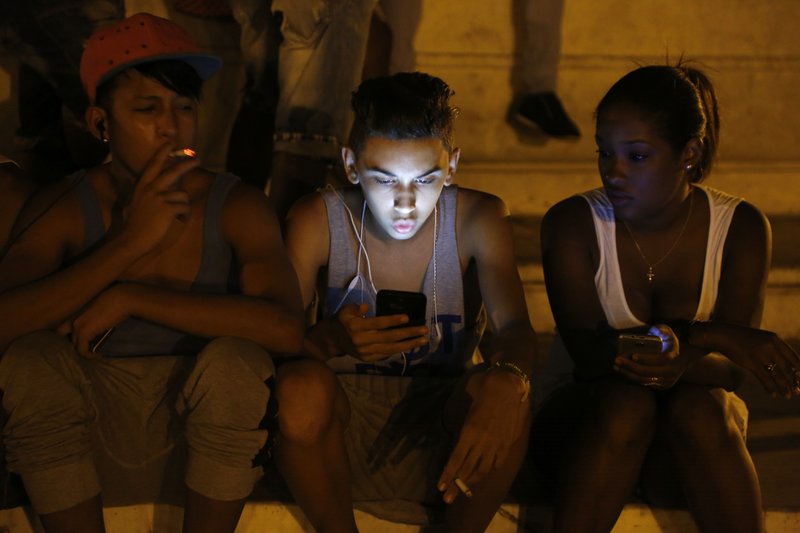
| FILE - In this July 1, 2015 file photo, youths use a password protected wifi network coming from a five star hotel to surf the Internet on their smart phones in downtown Havana, Cuba. Cuba's government announced on Tuesday, Dec. 4, 2018 that its citizens will be offered full internet access on mobile phones starting Thursday, Dec. 6, becoming one of the last nations to do so. (AP Photo/Desmond Boylan, File) |
The Cuban government has been building a 3G network in cities across the island and some tourists, Cuban government officials and foreign businesspeople have had access to it for several years.
The communist-governed island has one of the world’s lowest rates of internet use but that has been expanding rapidly since Presidents Barack Obama and Raul Castro declared detente in 2014. Expansion has not slowed with President Donald Trump’s partial rollback of relations.
Cuba authorized home internet in 2017 and hundreds of public Wi-Fi connection points have opened in parks and plazas around the country.
The new service will cost about 10 cents per megabyte, with packages ranging from 600 megabytes for about $7 to four gigabytes for about $30.
Those prices are roughly in line with global standards but still out of reach for many Cubans who subsist on state salaries of about $30 a month.
Cuba ran a fiber-optic connection to Venezuela in 2012, allowing the island to shift from slow and costly satellite links. It then began the slow process of allowing citizens to get online.
The government opened state-run internet cafes in 2013, joined by Wi-Fi sites two years later. The number of sites has grown to more than 800.
The Cuban internet is mostly uncensored but the government blocks a small number of sites like the U.S.-funded Radio and Television Marti networks and others that advocate for systematic change on the island.
ETECSA vice president Tania Velázquez said the new service would come online in stages from Thursday through Saturday to avoid the congestion that struck the mobile network during a series of heavily criticized tests this year.
___
Andrea Rodriguez on Twitter: www.twitter.com/ARodriguezAP
Wednesday, February 28, 2018
Cuba Travel Services (CTS) First U.S. Travel Company To Open Offices In Cuba
CTS will be the first U.S. based travel company to open its doors in Havana, Cuba
Cuba Travel Services, the leading charter and tour operator serving the destination with offices in California, Florida, New Jersey, and Texas, announced today the upcoming opening of their Havana location on March 31st.

It is considered a significant event as this is the first time a U.S. based travel company is awarded permission to operate in Cuba in over 60 years. Services provided by the California based company in Havana will include:
- Flight ticket sales
- Customer support
- Hotel reservations
- Tour operation support
- Car rentals
- Excursions
- Transfers
- Programmed packages
- Cruise Support Services
- Advisory Services
Opening a new office in Havana will allow Cuba Travel Services to monitor its operations more closely and better assist their clients while in the country. Additionally, CTS will be better positioned to ensure their cruise and tour operator clients continue to offer OFAC compliant programs.
Cuba Travel Services will open its first office in the historic Lonja Del Comercio building located in Plaza de San Francisco just across from the Sierra Maestra cruise terminal and has plans to open additional locations in Havana, Camaguey, Cienfuegos, Varadero and Santiago de Cuba.
"Having the Ministry of Tourism grant this request to have a location in Cuba has been a big win for our organization. Our physical presence means our licensed clients will get faster service and more personalized attention directly from our staff," said Michael Zuccato, General Manager at Cuba Travel Services. "This is a very exciting time for us, to be the first U.S. based Travel Company to open its doors in Havana. We are confident our existing market expertise and knowledge combined with local representation, will result in an improved customer experience."
For questions about the travel to Cuba or to book your next flight, hotel, activity or transfer visit us online at www.CubaTravelServices.com or call 800-963-CUBA (2822).
About Cuba Travel Services
With nearly 20 years of experience providing services to authorized companies, groups and individuals, Cuba Travel Services is the leading travel company serving the destination from the United States. They offer real-time hotel, flight and excursion bookings, transportation, OFAC compliant tour programming and a variety of other turnkey travel solutions. They also serve as key advisors to airlines, cruise companies, tour operators and other businesses entering the Cuba market.
Headquartered in California, Cuba Travel Services currently maintains offices in Texas, New Jersey, North Carolina and Florida. The company provides specialty travel services including charter flights, private aviation services, visa processing, OFAC call center support services, cruise and yachting programs, shipments of authorized cargo and other logistical and travel support services. Follow us on Facebook, Twitter or YouTube
Sunday, December 31, 2017
10 Countries with the Strictest Rules & Regulations for Tourists and Locals
In the United States, it’s easy to take for granted a certain amount of freedom. We can travel freely from state to state, and — by and large — each of us is in control of our own destiny (socioeconomic or intellectual limitations notwithstanding). That’s not the case for several places throughout the world. And while that information may not be particularly revelatory, the extent to which some countries go to crack down on perceived bad behavior for both residents and visitors is pretty amazing. From Singapore to Iran, here are the world’s strictest countries.
10. Cuba
Visitors to Cuba are usually treated very well. In fact, most tourists get easy access to amenities we take for granted (like the internet). For those people who live in the communist nation, however, things are different. Incoming and outgoing news is strictly controlled, for example, and those who are critical of the government are jailed. With the ease on travel restrictions, it’s hoped that the country will gravitate to a more liberal position, but at the moment, living there isn’t exactly a treat.

9. China
Another communist nation with a real jones for controlling the flow of information, China runs a very tight ship for its citizens. Like Cuba, most tourists are allowed a little bit of leeway, but it’s a tough row to hoe if you live there. The biggest hardship is the government’s harsh control over the flow of information into and out of the country. Hollywood films aren’t even regularly allowed in China unless they pass a rigorous screening process — even then there’s a strict limit on the foreign films that can be shown in the country.

8. Eritrea
The concept of religious freedom is nonexistent in Eritrea, an African country located in the region of the Horn of Africa. Though the country represents a mix of both Christianity and Islam, sects like Jehovah’s Witnesses and Seventh Day Adventists are actively forbidden from worshipping openly. The regime also eagerly controls the media and censors most information from the outside world.

7. Syria
Most Americans would get completely shut down if they tried to enter Syria legally. Of course, that’s because the government has bigger fish to fry. These days, you could probably enter Syria illegally with little to no trouble, because the country is in the midst of a years long effort to oust entrenched jerk (and Syrian President) Bashar al-Assad. As a result of the combat, those people struggling to live a normal life in Syria must endure a statewide communication blackout that’s essentially stopped the influx of information.

6. Iran
Iran is still ruled by Sharia Law, a religious tradition that’s especially tough on women. Along with the obligatory prohibitions on speaking out against the government, Sharia Law enforces a whole lot of social crimes with some pretty brutal punishments. Those found guilty of adultery are publicly stoned (women get buried up to their neck first). Men and women’s hair styles are strictly enforced. Women must cover their heads in public, and must adhere to strict dress codes. Most “Western” music and movies are strictly prohibited, as are social media outlets like Facebook and YouTube. For those people trying to gain access to the country, it’s best just to give it up now.

5. Russia
The current American President may have no problem buddying up to the folks who run Russia, but the country still has a reputation for old school oppression. Vladimir Putin has overseen a crackdown on the LGBT community that’s positively draconic. He’s also ransacked the offices of supposed detractors. What’s more, Putin’s political opponents have a weird way of getting shot in the street or disappearing. It’s nuts. If you’re an American hoping to visit Russia, you could experience some issues. Not only do most people need to be explicitly invited, but there’s also an obligatory form that asks entrants to fill out their personal information along the lines of where you went to high school, the last three places you’ve worked, your parents names, etc.

4. Saudi Arabia
In spite of the fact that the United States counts Saudi Arabia as one of its allies in the Middle East, the country’s inner workings are as different as night and day. Its social rules — even for visitors — are strict. Women aren’t allowed to drive, or spend time with a man to whom they are not related. Anyone daring to speak out against the government or its policies faces excoriation and potential job loss. While business travel into the country is increasingly relaxed, it’s still extremely difficult to get into the country on a tourist visa.

3. Equatorial Guinea
The dictator in Equatorial Guinea only approves state-run programming. There’s one newspaper. Citizens are actively discouraged from reading. Of course, thats not a big deal for most Americans, because most people actively petitioning for entry into Africa’s only Spanish speaking country have their visas denied immediately. In fact, to even visit Guinea, you have to go to Lisbon in Portugal, because there’s not an embassy in the US or the United Kingdom.

2. North Korea
The North Koreans make no attempt to hide their suspicion of visitors. Provided you’re not from South Korea or the United States, you can visit, but you’ll be followed by a constant chaperone, called a “minder” whose sole purpose is to make sure tourists don’t break the rules. Locals, meanwhile, are diligently policed to ensure that they’re not doing crazy things like loitering in a park. In North Korea, citizens have to have an express purpose for being on the street and walking around. “I felt like it,” doesn’t work as an excuse in Pyongyang.

1. Singapore
Singapore may have an international reputation for prosperity and safety, but that success comes at a cost. The city is extremely strict for both travelers and residents. Want to behave badly? You better have lots of money or thick skin, because Singaporean authorities will issue fines or corporal punishment for anything from smoking in public to wearing the wrong clothes when you’re traveling. People can’t even spit in public.

Thursday, November 9, 2017
U.S. Tightens Travel Rules To Cuba, Blacklists Many Businesses
WASHINGTON — Americans seeking to visit Cuba must navigate a complicated maze of travel, commerce and financial restrictions unveiled Wednesday by the Trump administration, part
of a new policy to further isolate the island’s communist government.
Now off-limits to U.S. citizens are dozens of Cuban hotels, shops, tour companies and other businesses included on a lengthy American blacklist of entities that have links to Cuba’s military, intelligence or security services. And most Americans will once again be required to travel as part of heavily regulated, organized tour groups run by U.S. companies, rather than voyaging to Cuba on their own.The stricter rules mark a return to the tougher U.S. stance toward Cuba that existed before former President Barack Obama and Cuban President Raul Castro restored diplomatic relations in 2015. They come as President Donald Trump tries to show he’s taking action to prevent U.S. dollars from helping prop up the Cuban government.Still, the policy is only a partial rollback of Obama’s changes.
Cruise ship visits and direct commercial flights between the countries will still be permitted. Embassies in Washington and Havana stay open.The rules are designed to steer U.S. economic activity away from Cuba’s military, intelligence and security services, which dominate much of the economy through state-controlled corporations.
The goal is to encourage financial support for Cuba’s growing private sector, said senior Trump administration officials, who briefed reporters on a conference call on condition they not be quoted by name.To that end, the Treasury Department said it is expanding and simplifying a license that allows some U.S. exports to Cuba despite the embargo. They include tools and equipment to build or renovate privately owned buildings.“We have strengthened our Cuba policies to channel economic activity away from the Cuban military and to encourage the government to move toward greater political and economic freedom for the Cuban people,” Treasury Secretary Steven Mnuchin said.Trump announced his new policy in June during a speech in Miami’s Little Havana neighborhood, the cradle of Cuban-American resistance to Castro’s government. The administration took several months to finalize the details of the new rules, which will take effect Thursday.
The new policy maintains several categories of travel to Cuba that are permitted despite the embargo, which carries on decades after the Cold War’s end. Americans can still travel on educational and “people to people” trips as well as visits designed to support the Cuban people by patronizing privately owned small businesses that have popped up across the island in recent years.But those traveling to support Cuba’s people must have a daylong schedule of activities designed to expose them to Cubans and steer dollars toward citizens, such as renting rooms in private homes. Those on organized, “people to people” or educational visits must be accompanied by a representative of the U.S.-based group organizing the trip.
There was no immediate reaction from Cuba’s government. But the rules were quickly denounced by travel groups and proponents of closer U.S. ties to the island.“Cuba is still open for business,” said Charel van Dam of the Cuba Travel Network. “It is still possible for people to travel, but I think these announcements will serve mainly as something to scare off people who want to visit.”Sen. Patrick Leahy, D-Vt., a vocal advocate of improved U.S.-Cuban relations, noted the announcement came as Trump was in China pushing more U.S. business engagement with another communist-run country. “The hypocrisy of the White House ideologues is glaring,” Leahy said.
The rules come amid deep strains in the U.S.-Cuba relationship stemming from invisible, unexplained attacks that have harmed more than two dozen U.S. government personnel in Havana since 2016. The attacks led the Trump administration to order most of its diplomats to leave Cuba in September and issue a sweeping travel warning urging Americans to stay away.Officials insisted that the new, tougher rules had no connection to the attacks. The U.S. first complained to Cuba’s government about the attacks in February, four months before Trump announced his broader policy intentions.Some exceptions will accommodate Americans who already plan to visit Cuba.
Those who booked “people to people” trips before Trump’s June announcement will be exempt, along with Americans who organized education trips before the rules start on Thursday. Business deals already reached with entities on the prohibited list will be allowed to proceed.It’s unclear how aggressively the U.S. will police the new rules. Officials said they would use information obtained from several U.S. agencies to catch violators, who could be subject to penalties and criminal prosecution.
The blacklist bars business with the large military-run corporations that dominate the Cuban economy. These include GAESA and CIMEX, holding companies that control most retail business on the island; Gaviota, the largest tourism company; and Habaguanex, which runs Old Havana.It also targets a new cargo port and special trade zone outside the city of Mariel that has been the focus of Cuba’s efforts to draw foreign investment in manufacturing and distribution.Blacklisted hotels include the Manzana Kempinski, which opened with great fanfare this year as Cuba’s first to meet the international five-star standard.The overall impact on American business with Cuba will likely be limited. Trade is sparse. Many American travelers already stay at hotels not on the no-go list, and the company that imports most American food products to Cuba is similarly unaffected.Bringing home limited quantities of rum and Cuban cigars is still allowed, officials said.
Friday, June 16, 2017
Trump Restores Some Cuba Penalties, Rejecting ‘Oppressors’
![]() |
MIAMI (AP) — President Donald Trump declared Friday he was restoring some travel and economic restrictions on Cuba that were lifted as part of the Obama administration’s historic easing. He challenged the communist government of Raul Castro to negotiate a better deal for Cubans and Cuban-Americans.
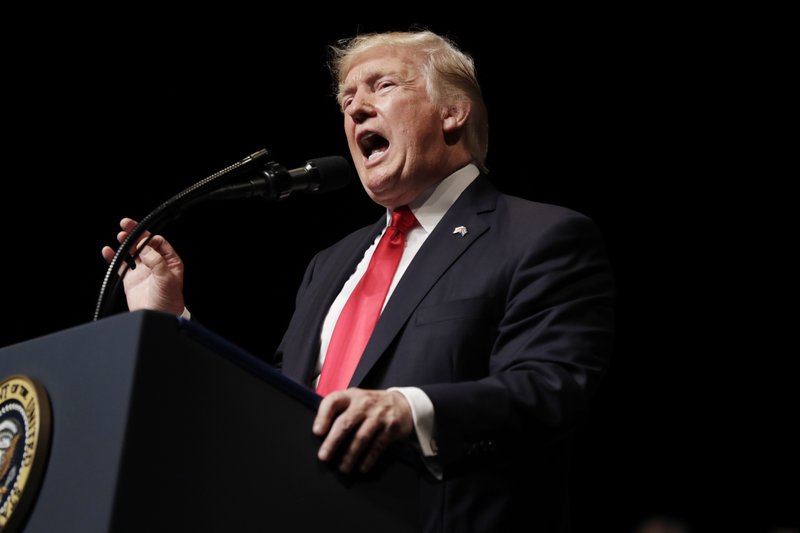
Announcing the rollback of President Barack Obama’s diplomatic opening during a speech in Miami, Trump said Cuba had secured far too many concessions from the U.S. in the “misguided” deal but “now those days are over.” He said penalties on Cuba would remain in place until its government releases political prisoners, stops abusing dissidents and respects freedom of expression.
“America has rejected the Cuban people’s oppressors,” Trump said in a crowded, sweltering auditorium. “They are rejected officially today — rejected.”
Though Trump’s announcement stops short of a full reversal of the Cuba rapprochement, it targets the travel and economic engagement between the countries that has blossomed in the short time since relations were restored. The goal is to halt the flow of U.S. cash to the country’s military and security services in a bid to increase pressure on Cuba’s government.
Embassies in Havana and Washington will remain open. U.S. airlines and cruise ships will still be allowed to serve the island 90 miles south of Florida. The “wet foot, dry foot” policy, which once let most Cuban migrants stay if they made it to U.S. soil but was terminated under Obama, will remain terminated. Remittances to Cuba won’t be cut off.
But individual “people-to-people” trips by Americans to Cuba, allowed by Obama for the first time in decades, will again be prohibited. And the U.S. government will police other such trips to ensure there’s a tour group representative along making sure travelers are pursuing a “full-time schedule of educational exchange activities.”
Trump described his move as an effort to ramp up pressure to create a “free Cuba” after more than half a century of communism.
“I do believe that end is in the very near future,” he said.
Trump’s move was a direct rebuke to Obama, for whom the diplomatic opening with Cuba was a central accomplishment of his presidency. The new president’s action is broadly opposed by American business groups.
“U.S. private sector engagement can be a positive force for the kind of change we all wish to see in Cuba,” said Myron Brilliant, the U.S. Chamber of Commerce executive vice president and head of international affairs. “Unfortunately, today’s moves actually limit the possibility for positive change on the island and risk ceding growth opportunities to other countries that, frankly, may not share America’s interest in a free and democratic Cuba that respects human rights.”
In Cuba, Granma, the official organ of the nation’s Communist Party, covered Friday’s speech in a real-time blog, saying “Trump’s declarations are a return to imperialist rhetoric and unilateral demands, sending relations between Havana and Washington back into the freezer.”
Travel
On the stage in Miami, Rep. Mario Diaz-Balart, R-Fla., said the U.S. would no longer have to witness the “embarrassing spectacle” of an American president glad-handing with a dictator.
“President Trump will treat the Castro regime as a malevolent dictatorship that it is,” Diaz-Balart said. “Thank you, President Trump, for keeping your commitments. You have not betrayed us — you kept your promise.”
Obama announced in December 2014 that he and Cuban leader Raul Castro were restoring diplomatic ties between their countries, arguing that a new approach was needed because the policy the U.S. had pursued for decades had failed to democratize the island. Less than a year later, the U.S. Embassy in Havana re-opened.
The U.S. severed ties with Cuba in 1961 after Fidel Castro’s revolution, and spent subsequent decades trying to either overthrow the Cuban government or isolate the island, including by toughening an economic embargo first imposed by President Dwight D. Eisenhower.
The trade embargo remains in place under Trump. Only the U.S. Congress can lift it, and lawmakers, especially those of Cuban heritage, like Sen. Marco Rubio, another Florida Republican, have shown no interest in doing so.
Rubio staunchly opposed Obama’s re-engagement with Cuba, and he lauded Trump as he took the stage.
“Today, a new president lands in Miami to reach out his hand to the people of Cuba,” Rubio said.
___
Weissenstein reported from Havana. Associated Press writer Josh Lederman in Washington contributed to this report.
___
Follow Darlene Superville and Michael Weissenstein on Twitter: http://www.twitter.com/dsupervilleap and http://www.twitter.com/mweissenstein
Subscribe to:
Posts (Atom)